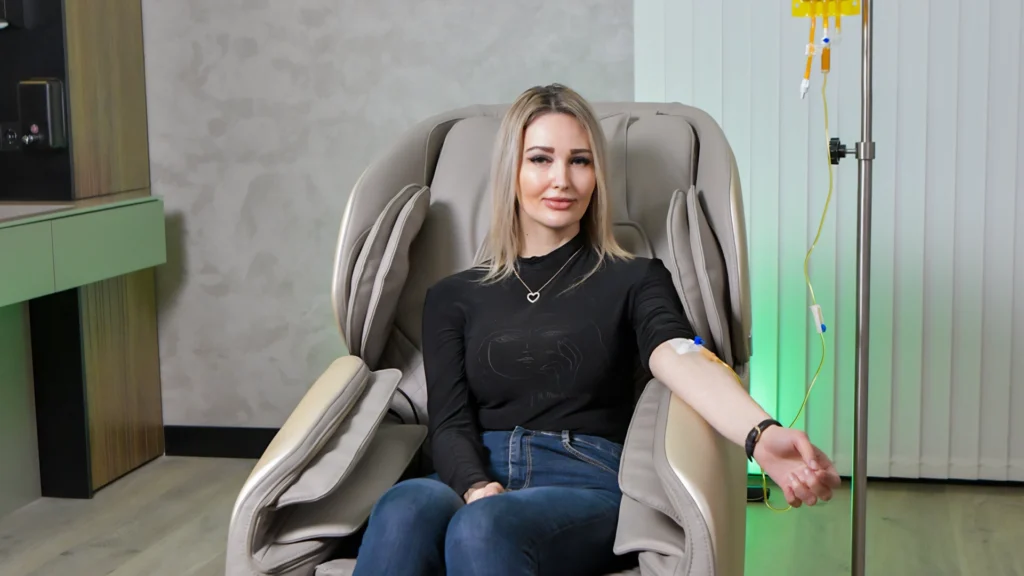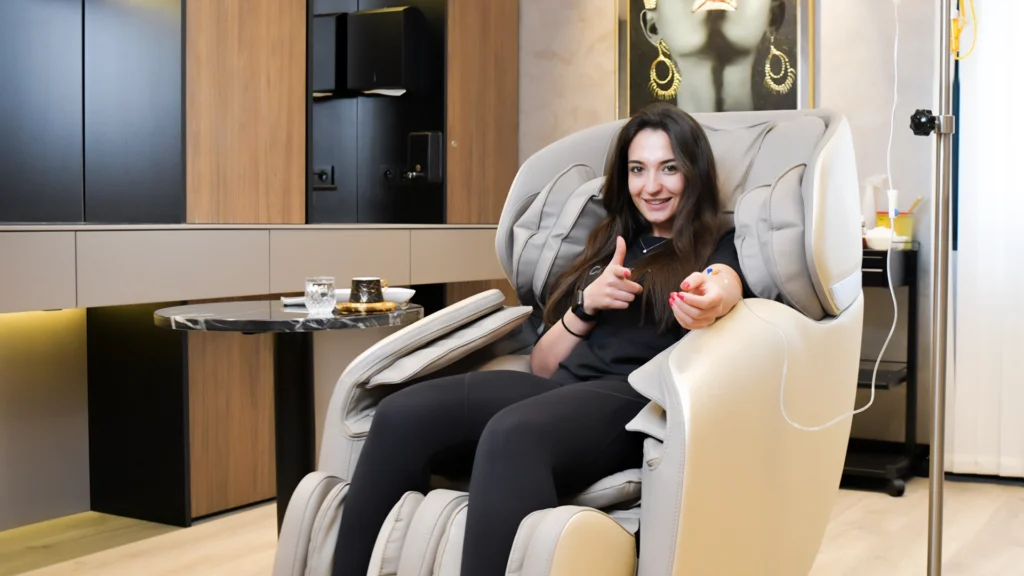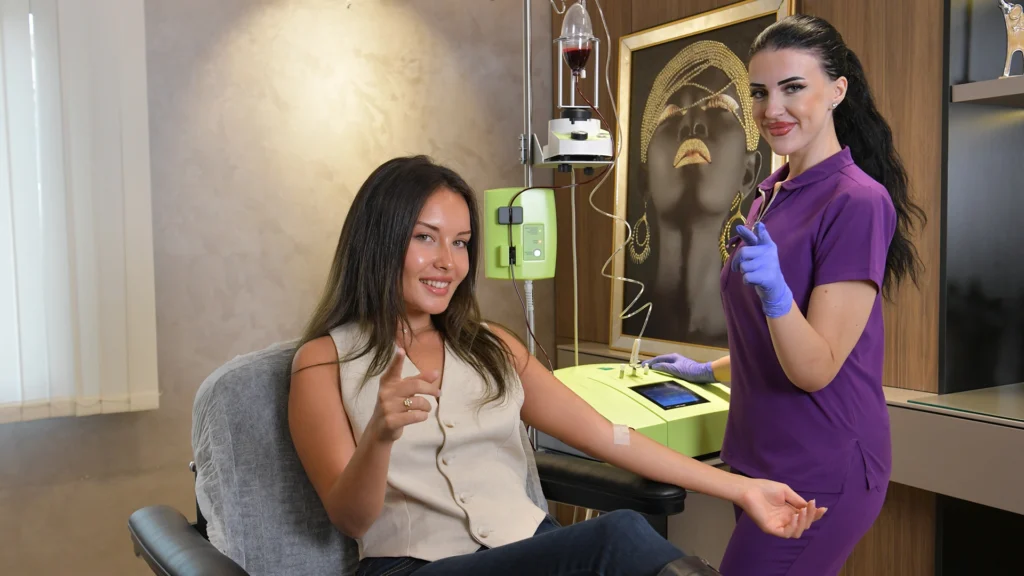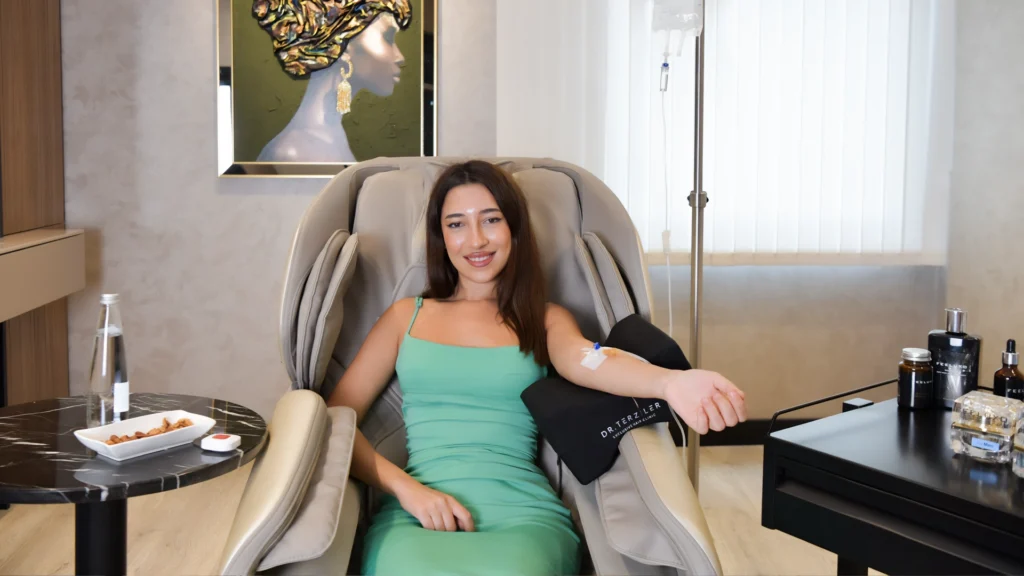
Dr. Servet Terziler designed and built the Robotic DHI implanter used in every procedure at the clinic. It is proprietary equipment that exists nowhere else, and its depth-lock hard-stop on the mustache preset comes directly from his clinical engineering decisions across 150+ upper-lip cases.
TRASPLANTE CAPILAR
Mustache Transplant in Turkey: Cost, Grafts, Styles & Real Results
A mustache transplant in Turkey at Dr. Terziler Exclusive Clinic relocates DHT-resistant scalp follicles to the upper lip using Robotic DHI; a system invented by Dr. Servet Terziler himself. Mustache hair transplant prices in Turkey start from €2,500 for a single-zone mustache. Dr. Terziler Exclusive Clinic is AACI-accredited, delivers 90–97% 12-month graft survival, and includes hotel, transfers, PRP, and a 12-month virtual follow-up in the package price. Contant our team for our full prices.
- Tiempo de tramitación 6-8 Hours
- Anestesia Sedación
PROCESO
Proceso operativo
-
Paso 01
Consulta
Mustache analysis, facial hair assessment, and a personalized transplant plan.
-
Paso 02
Diseño
A natural mustache shape and density map are designed together.
-
Paso 03
Procedimiento
Grafts are precisely implanted by an expert team using advanced technology.
-
Paso 04
Seguimiento y asistencia
Regular follow-up and regenerative support for 12 months.
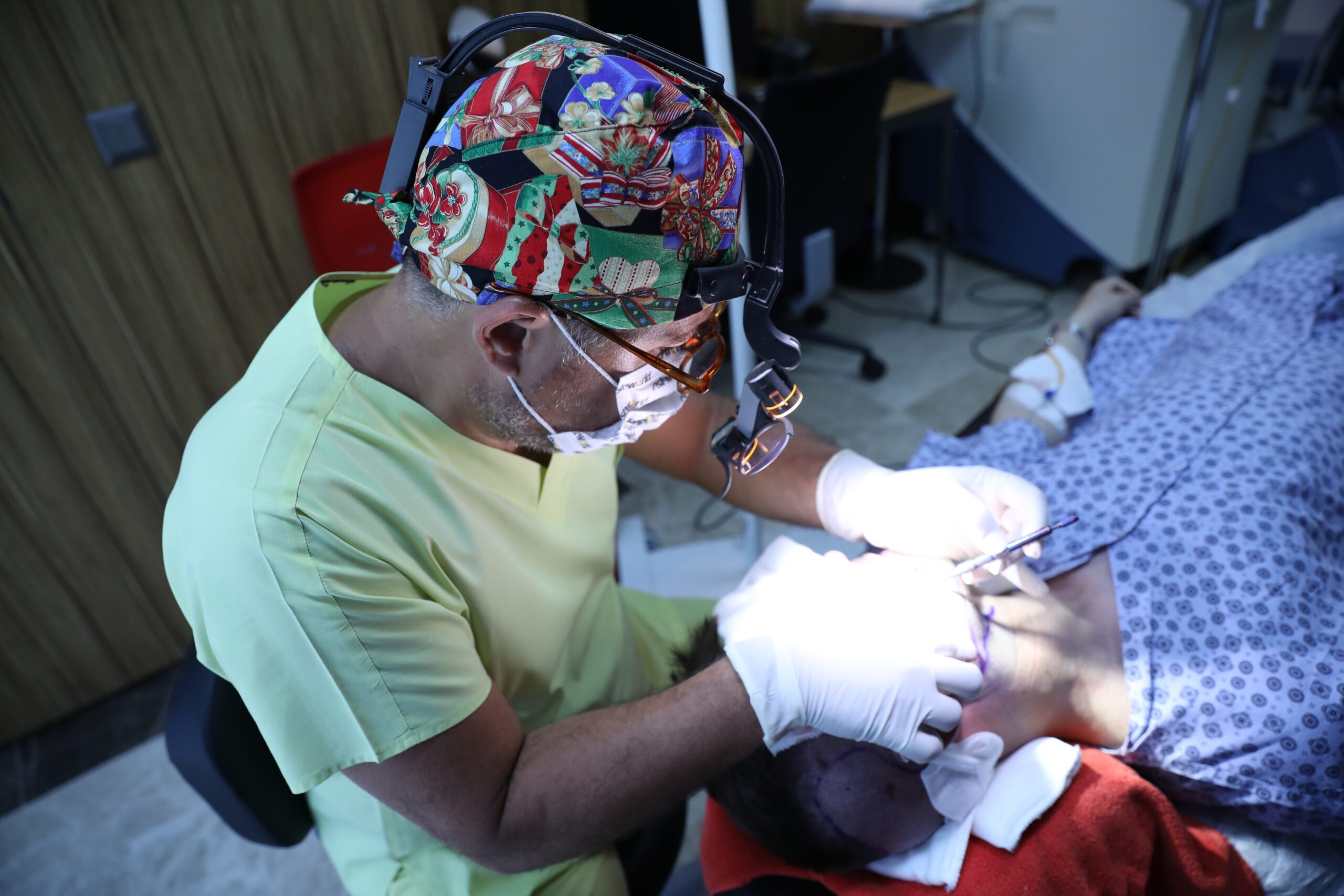
A mustache transplant permanently moves 250–700 DHT-resistant follicular units from the occipital scalp to the upper lip. The procedure is ambulatory, takes 2-3 horas under local anaesthesia, and delivers a fully styled, permanent mustache within 12 months. Demand has surged; the ISHRS 2022 Practice Census recorded a 184% increase in facial hair transplantation between 2010 and 2022, with Turkey now handling the largest volume of international cases globally.
What makes upper-lip transplantation technically distinct is anatomy. Upper-lip skin measures only 1.1–1.6 mm thick: roughly half the thickness of cheek skin (1.8–2.2 mm) and a third of scalp skin (3.0–4.5 mm). This demands depth precision below 0.2 mm tolerance on every single graft. Standard manual instruments drift 0.3–0.5 mm under normal hand pressure. Robotic DHI eliminates that drift entirely, which is why it is the only technique used at Dr. Terziler Exclusive Clinic.
TL;DR
- A mustache transplant in Turkey starts from €2,500 all-inclusive in 2026 for a philtrum-only or gap-fill case. For your exact price at Dr. Terziler Exclusive Clinic, the clinic reviews your photos on WhatsApp or the contact page.
- A full mustache needs 350–600 grafts, and the count changes by style: chevron 400–500, handlebar 450–600, horseshoe 550–700, pencil 250–350, Fu Manchu 400–550.
- The best technique is DHI robótico: on the thin, mobile upper lip it locks implantation depth at 1.2–1.8 mm and holds the angle on every graft. Standard FUE and FUT are obsolete for this indication.
- Graft survival is 90–95% on healthy skin (72–80% over scar tissue, compensated with 20–25% over-grafting). Cobblestoning stays under 0.4% across 150+ mustache cases (2023–2025).
- Candidates are men 22 or older; the procedure also covers cleft-lip and acid-injury scars (85–90% camouflage), Fitzpatrick V–VI skin, and trans-masculine patients after 12+ months on testosterone.
- Every case carries a lifetime re-graft guarantee written into the patient contract, and a mustache can be combined with a beard transplant in one session.
- Dr. Terziler Exclusive Clinic is AACI-accredited and surgeon-led; Dr. Servet Terziler is an ISHRS member and the inventor of the Robotic DHI Machine.
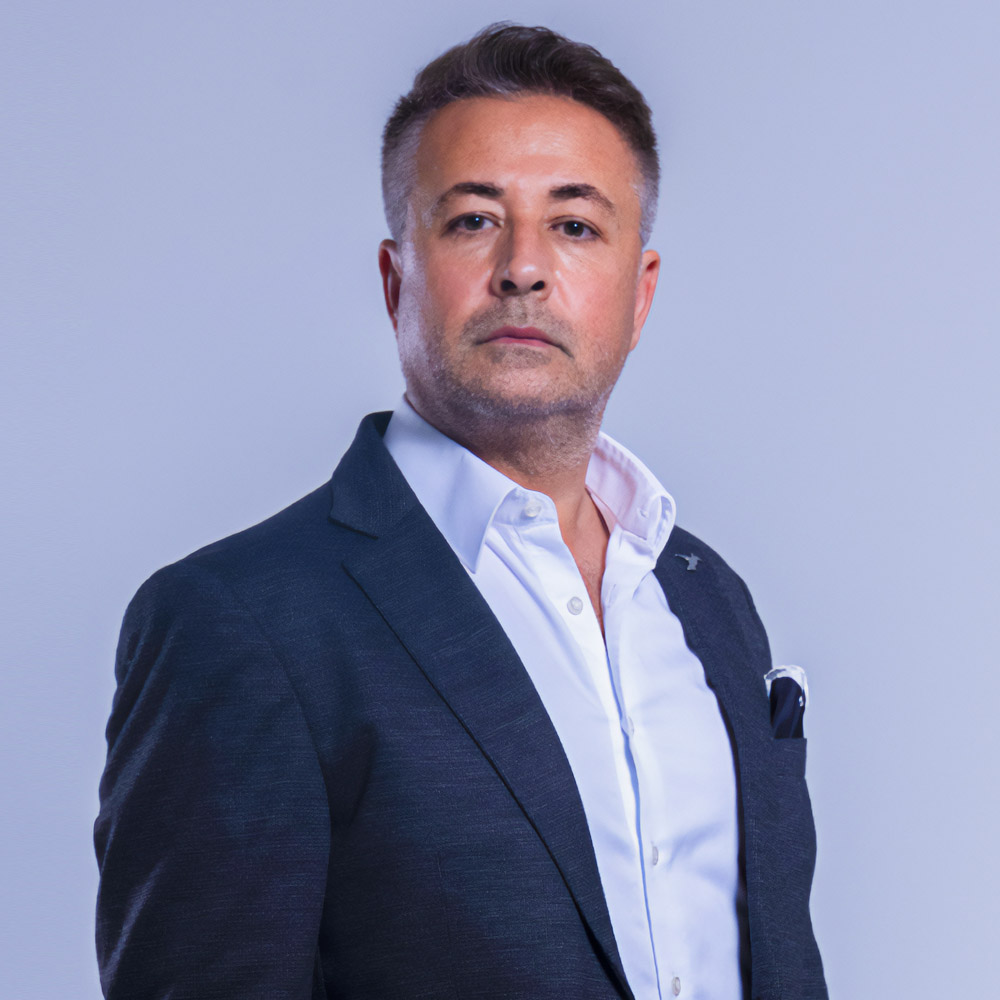
REVISADO MÉDICAMENTE POR
Dr. Servet TerzilerAACI-accredited hair restoration surgeon | ISHRS member & workshop instructor | Founder & President, TUSATDER | Inventor, Robotic DHI Machine | Creator, Picasso Robotic DHI | Updated for mustache transplant patients in 2026.
Updated in 2026, August
Clinical figures reflect Dr. Terziler's surgeon-led facial-hair protocols and an internal audit of 150+ mustache-specific cases (2023–2025). Individual results vary.
What Is a Mustache Transplant?
A mustache transplant is a facial hair restoration procedure that moves DHT-resistant follicles from the lower occipital scalp to the upper lip, rebuilding the mustache, philtrum, and Cupid's bow with the patient's own permanent hair.
Clinically it is a form of facial follicular unit transplantation, and on the upper lip it demands finer calibre control and shallower implantation than a scalp hair transplant or even a beard transplant. The technique of choice is DHI robótico, because the upper lip is the thinnest, most mobile facial-hair zone.
What Does a Mustache Transplant Actually Do to the Face?
A mustache transplant directly populates the upper lip with permanent, DHT-resistant follicles, reconstructing the aesthetic profile of the mid-face, correcting left-right asymmetry, covering cleft-lip and acid-injury scars, and establishing density where genetics never delivered it.
Why Doesn't My Mustache Grow or Fill In?
Most patchy or absent mustaches are genetic: the androgen receptors in the upper-lip dermal papilla are simply too few, so the mustache never thickens regardless of age, and surgery is the only permanent solution.
Is FUE Mustache Transplantation the Same as Standard FUE?
No. FUE mustache transplantation uses micro-punches sized at 0.7 mm (smaller than the 0.8–1.0 mm punches used on scalp cases) to extract individual follicles without linear incisions, so healing is faster and there is zero linear scarring.
However, mustache FUE carries a significantly higher calibre rejection rate: 18–24% of extracted grafts are discarded during sorting because they contain more than one hair, versus under 5% for scalp FUE. This is an industry figure almost never disclosed publicly, and it is why a mustache case needs more donor extraction than the final graft count suggests.
Is a Mustache Hair Transplant the Same as a Beard Transplant?
No. Both procedures use similar extraction technology, but a mustache transplant demands distinct trichoscopic angulation mapping and fine-calibre graft sorting, because upper-lip skin is thinner and more mobile than cheek or jawline skin.
Implantation depth on the upper lip is 1.2–1.8 mm versus 1.5–2.5 mm on the cheek. The two procedures can be combined in one session. For full facial restoration, explore our beard transplant Turkey guide.
How Does a Mustache Transplant Work Step by Step?
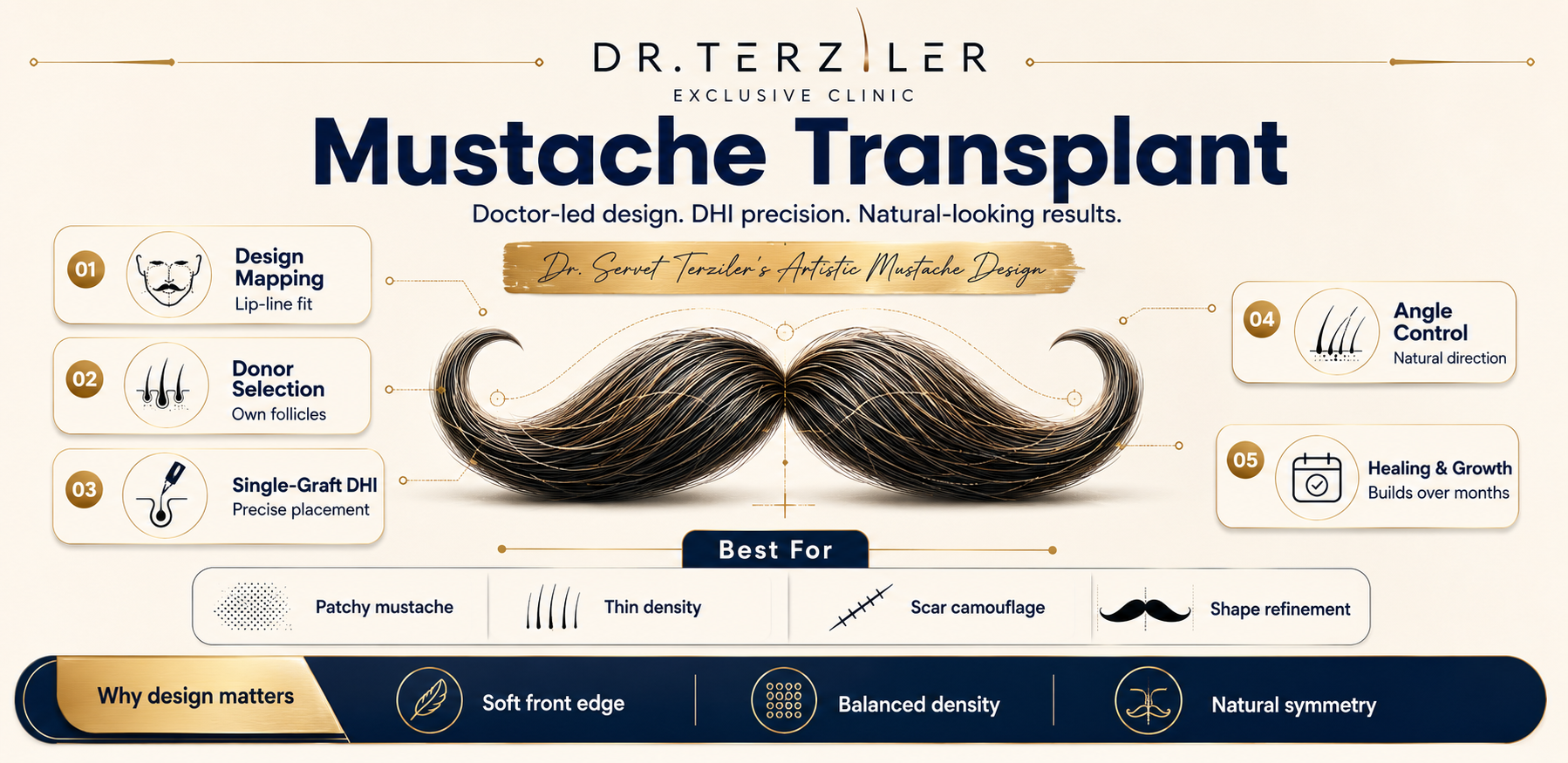
A mustache transplant at Dr. Terziler Exclusive Clinic follows five steps: trichoscopic mustache design, micro-FUE donor extraction, fine-calibre graft sorting, Robotic DHI implantation at 1.2–1.8 mm depth, and a medicated-foam wash and 48-hour protection protocol.
-
1
Trichoscopic mustache design and angulation mapping
The surgeon maps the philtrum, Cupid's bow, and lateral mustache body under trichoscopy, drawing the exact exit angle for every zone so the transition from philtrum to lateral body looks native.
-
2
Micro-FUE donor extraction
Individual follicles are extracted from the lower occipital scalp with a 0.7 mm punch, prioritising single-hair units because the upper lip reads most natural with 1-hair grafts.
-
3
Fine-calibre graft sorting
Under the microscope, 18–24% of grafts that contain more than one hair are set aside, and only the finest single-hair units are routed to the mustache line and philtrum.
-
4
Robotic DHI implantation
The Robotic DHI implanter places each graft at a flush 1.2–1.8 mm depth and the mapped angle, with a hard-stop that mechanically prevents over-deep implantation and cobblestoning.
-
5
Medicated-foam wash and 48-hour protection protocol
The first medicated-foam wash is performed before discharge, crusts release by day 7–10, and shock-loss shedding starts by week 2 before regrowth from month 3.
What Is the Best Technique for a Mustache Transplant in 2026?
Robotic DHI is the best mustache transplant technique in 2026, because it guarantees exact depth control and angular precision on the highly mobile, ultra-thin upper lip. Older methods like standard FUE and FUT are clinically obsolete for this indication.
What Is Robotic DHI for Mustache Transplant?
DHI robótico integrates the world's thinnest Choi implanter pen with robotic depth and angle control, eliminating the hand drift that is the number-one cause of cobblestoning on the upper lip.
At Dr. Terziler Exclusive Clinic the DHI system is refined specifically for facial-hair cases, so every graft lands at flush depth, never above skin level.
| Depth control | Robotic hard-stop, flush at 1.2–1.8 mm on every graft |
|---|---|
| Angle control | Per-graft mapped angulation, no drift |
| Cobblestoning risk | Lowest (under 0.4%) |
| Best for | Full mustache (300+ grafts) and complex styles |
What Is Picasso Robotic DHI and Why Does It Matter for Mustache Design?
Picasso Robotic DHI combines robotic depth-lock with Dr. Terziler's artistic angulation methodology, the same approach used on the clinic's signature hairline designs.
For complex styles like the handlebar, imperial, or Fu Manchu, where angulation must change across millimetre intervals, Picasso Robotic DHI executes those transitions without a single graft placed at the wrong angle.
| Design control | Artistic angulation on philtrum, Cupid's bow, lateral body |
|---|---|
| Depth control | Robotic depth-lock, flush placement |
| Best for | Handlebar, imperial, Fu Manchu and other detailed styles |
How Does Manual DHI Compare for Mustache Transplant?
Manual ¿Te has enterado? uses the world's thinnest Choi pen operated directly by the surgeon's hand, offering excellent density control and simultaneous channel opening and graft insertion.
Its limitation is hand drift of 0.3–0.5 mm under standard hand pressure. For philtrum-only gap fills under 150 grafts an experienced surgeon can achieve acceptable results, but for full mustache procedures above 300 grafts robotic precision is clinically superior.
| Depth control | High, but subject to 0.3–0.5 mm hand drift |
|---|---|
| Best for | Small philtrum gap fills (under 150 grafts) |
| Not ideal for | Full mustache above 300 grafts |
Is Sapphire FUE Suitable for Mustache Transplant?
Sapphire FUE uses ultra-sharp sapphire blades to open micro-channels before graft insertion, causing less tissue trauma and crusting than steel blades.
But it does not offer the simultaneous extraction-implantation workflow of DHI: grafts spend extra time outside the body, and depth control depends entirely on the surgeon's hand — the same drift problem as manual DHI, without the implanter's built-in angle registration.
| Tissue trauma | Lower than steel blades |
|---|---|
| Workflow | Pre-channel step; grafts spend longer out of the body |
| Depth control | Hand-dependent, no built-in angle lock |
Is Standard FUE Still Acceptable for Mustache Transplants?
No. Standard micro-FUE uses steel blades for channel creation and is now considered outdated for delicate facial work.
The steel blades increase cobblestoning risk, prolong redness, and produce less natural growth angles on the upper lip. No ISHRS-trained mustache specialist recommends standard FUE for upper-lip cases in 2026.
| Hojas | Steel channels (higher trauma) |
|---|---|
| Cobblestoning risk | Higher on the thin upper lip |
| Verdict | Outdated for mustache work in 2026 |
Is FUT Used for Mustache Transplants Anymore?
No. FUT requires a linear strip excision from the scalp and leaves a permanent scar, so it is entirely obsolete for mustache restoration.
Its only remaining niche is high-volume scalp cases where donor supply is extremely limited — a situation that does not apply to mustache procedures requiring just 250–700 grafts.
| Donor | Linear strip excision (leaves a permanent scar) |
|---|---|
| Verdict | Obsolete for mustache restoration |
Who Is a Good Candidate for a Mustache Hair Transplant?
A good candidate for a mustache transplant is a male aged 22 or older with stable androgen levels and a healthy occipital donor area, whether the goal is filling genetic gaps, correcting left-right asymmetry, or covering scars.
- Genetic gaps or a patchy mustache: zones where the upper lip never filled in.
- Cleft-lip, acid-injury, or surgical scars: follicles camouflage the scar in 85–90% of cases.
- Asimetría: a mustache that grows unevenly left to right.
- Trans-masculine patients: after 12+ months on gender-affirming testosterone.
- Not yet suitable: under 22, an unstable donor, active infection, or uncontrolled diabetes.
Can You Get a Mustache Transplant at 20 or 21?
No. 22 is the practical minimum, because upper-lip follicles continue terminal maturation until age 25 in most men.
Read the full answer
Transplanting dense scalp follicles before the native mustache finishes maturing creates a permanent density mismatch in years 3 to 5, a problem that requires corrective surgery to fix. Waiting until 22 costs nothing; correcting a premature result costs significantly more.
Can a Mustache Transplant Fix a Cleft Lip Scar?
Yes. Transplanted follicles successfully camouflage cleft-lip repair scars in 85–90% of cases.
Read the full answer
Graft survival on scar tissue averages 72–80% versus 90–95% on healthy skin, so the clinic compensates with 20–25% over-grafting and a two-pass implantation protocol spaced 6 months apart. The best candidates have a fully healed cleft-lip repair at least 18 months post-primary surgery.
Does a Mustache Transplant Work on Fitzpatrick V–VI Skin?
Yes. The 0.7 mm FUE punch leaves no visible donor scarring across all Fitzpatrick phototypes.
Read the full answer
Post-operative hyperpigmentation prevention is adjusted for darker phototypes: SPF 50 for 8 weeks and a specialized tyrosinase-inhibitor topical from week 4 onward.
Can Trans-Masculine Patients Get a Mustache Transplant?
Yes, after a minimum of 12 months on gender-affirming testosterone and a documented facial vellus response.
Read the full answer
Transplanted follicles are androgen-sensitive from the donor zone and respond normally to systemic testosterone, so results are excellent and permanent. Dr. Terziler Exclusive Clinic follows an inclusive clinical intake protocol with full counselling support.
Can I Get a Mustache Transplant If I Am on Blood Thinners or Aspirin?
Only after a medically supervised pause, because blood thinners and aspirin raise bleeding and bruising risk during upper-lip surgery.
Read the full answer
Aspirin and NSAIDs are typically stopped 7–10 days before surgery, and prescription anticoagulants are paused only with your prescribing doctor's written approval. This is confirmed during the pre-op blood panel and medical review; never stop a prescribed blood thinner on your own.
How Does Scar-Coverage Mustache Transplantation Work?
Scar-coverage mustache transplantation places grafts into cleft-lip, acid-injury, or surgical scars, where survival averages 72–80% versus 90–95% on healthy skin, so it is compensated with 20–25% over-grafting and, for dense or poorly vascularised scars, a two-pass protocol spaced 6 months apart.
Patients are not candidates for scar-coverage mustache transplantation if they have active infections, uncontrolled diabetes (HbA1c above 7.5%), or a documented history of keloid formation without a pre-operative suppression plan in place.
What Do Mustache Transplant Before and After Results Look Like?
Honest mustache transplant before and after results show a patchy or gap-filled upper lip at the start and a dense, naturally angled mustache once the follicles mature at 6–12 months. The result below was performed at Dr. Terziler Exclusive Clinic and is shown with consent.
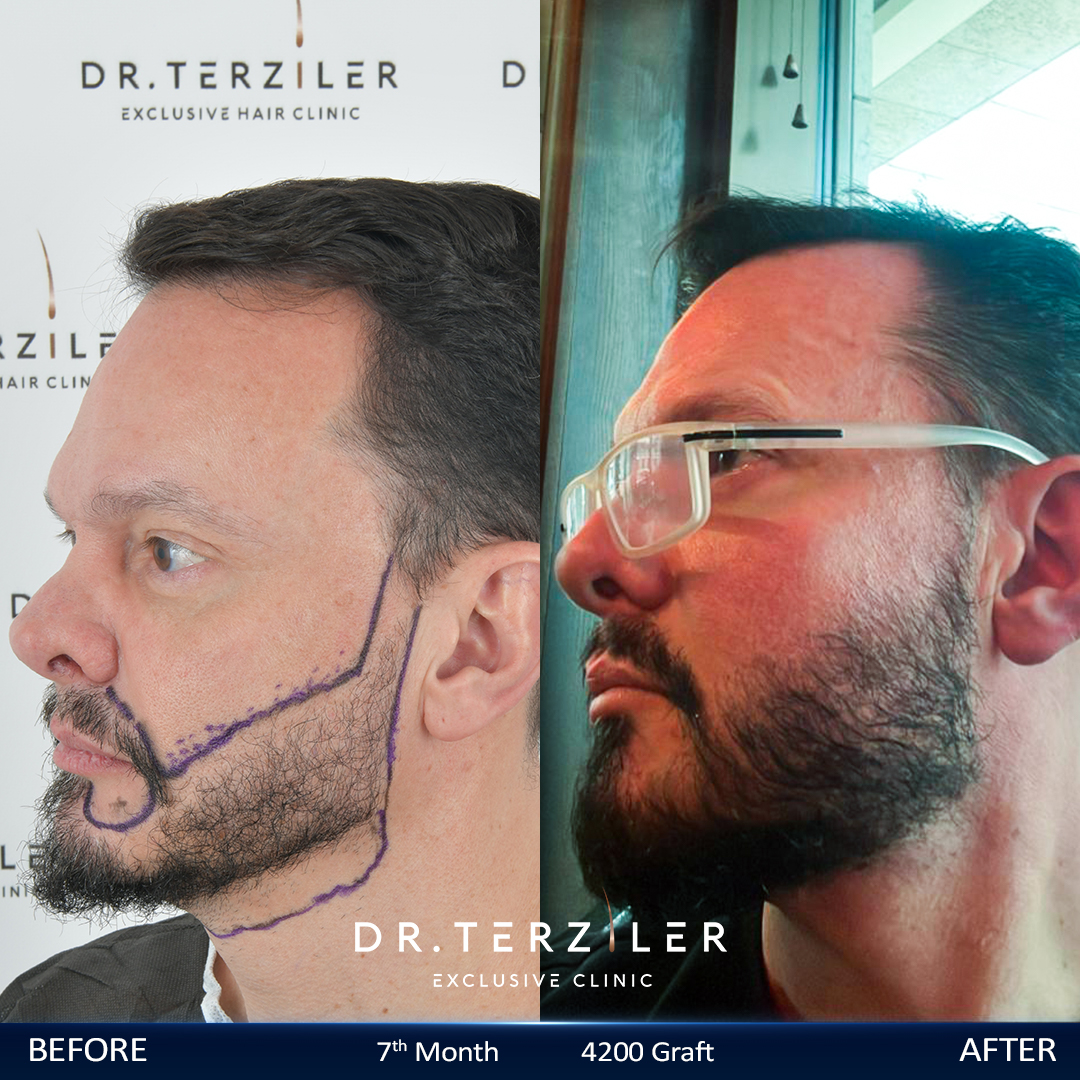
Photo published with patient consent. Individual results vary depending on donor supply, skin condition, and aftercare.
How Much Does a Mustache Transplant Cost in Turkey in 2026?
A mustache transplant in Turkey starts from €2,500 all-inclusive in 2026 for a philtrum-only or minimal gap-fill procedure, and rises for a high-density full mustache with PRP and an advanced post-op protocol.
A combined beard-plus-mustache transplant runs €3,500–€8,500 all-inclusive. Because a fair price depends on your graft count, style, and whether scar coverage is involved, the clinic confirms your exact figure after reviewing your photos — ask on WhatsApp or the contact page rather than expecting a flat per-graft rate.
| Scope | From price | Notas |
|---|---|---|
| Philtrum-only / gap-fill | from €2,500 | 80–150 grafts; exact price on consultation |
| Full mustache | from €2,500 | 350–600 grafts by style; high-density + PRP option |
| Combined beard + mustache | €3,500–€8,500 | 2,000–3,500 grafts in one session |
The all-inclusive package covers the surgery, hotel, VIP airport and clinic transfers, an English/Arabic/German/Russian translator, and a 12-month virtual follow-up. Flights and travel insurance are not included.
What Is the Standard 3-Day Mustache Transplant Itinerary?
The standard Istanbul itinerary takes three days: arrival and trichoscopic consultation on day 1, afternoon surgery on day 2, and the first medicated-foam wash followed by evening departure on day 3, with most patients back to desk work by day 4 from home.
The package explicitly does not include flights, travel insurance, meals outside the hotel breakfast, or optional revisions after month 18.
How Many Grafts Do You Need for Each Mustache Style?
A full mustache transplant needs 350–600 grafts, and the exact count depends on the style: chevron 400–500, handlebar 450–600, horseshoe 550–700, walrus 500–650, pencil 250–350, Fu Manchu 400–550, soul-patch-plus-mustache 450–600, philtrum-only gap fill 80–150, and cleft-lip scar coverage 120–250 over two passes.
| Style | Injertos | Follicle Mix | Hora | Angle |
|---|---|---|---|---|
| Chevron | 400–500 | 100% single-hair, fine | 2–2.5 hr | 30° outward from philtrum |
| Handlebar | 450–600 | Single-hair + fine 2-hair laterally | 2.5–3 hr | Upward-outward taper at the ends |
| Horseshoe | 550–700 | 100% single-hair | 3–3.5 hr | Downward at the corners |
| Walrus | 500–650 | Single + fine 2-hair | 3 hr | Downward over the lip |
| Pencil | 250–350 | 100% single-hair | 1.5–2 hr | Tight along the lip line |
| Fu Manchu | 400–550 | 100% single-hair | 2.5 hr | Downward at the sides |
| Soul patch + mustache | 450–600 | Single-hair | 2.5–3 hr | Mixed lip and chin angles |
| Philtrum-only gap fill | 80–150 | 100% single-hair | Under 1 hr | 30° outward from philtrum |
| Cleft-lip scar coverage | 120–250 (two-pass) | 100% single + 20–25% over-graft | 1–1.5 hr per pass | Varies with scar tissue |
What Does Mustache Transplant Recovery Look Like Day by Day?
Mustache transplant recovery runs from the first medicated-foam wash on day 3 to full density at month 12, with crusts releasing by day 7–10, shock-loss shedding from week 2, and the first new growth from month 3.
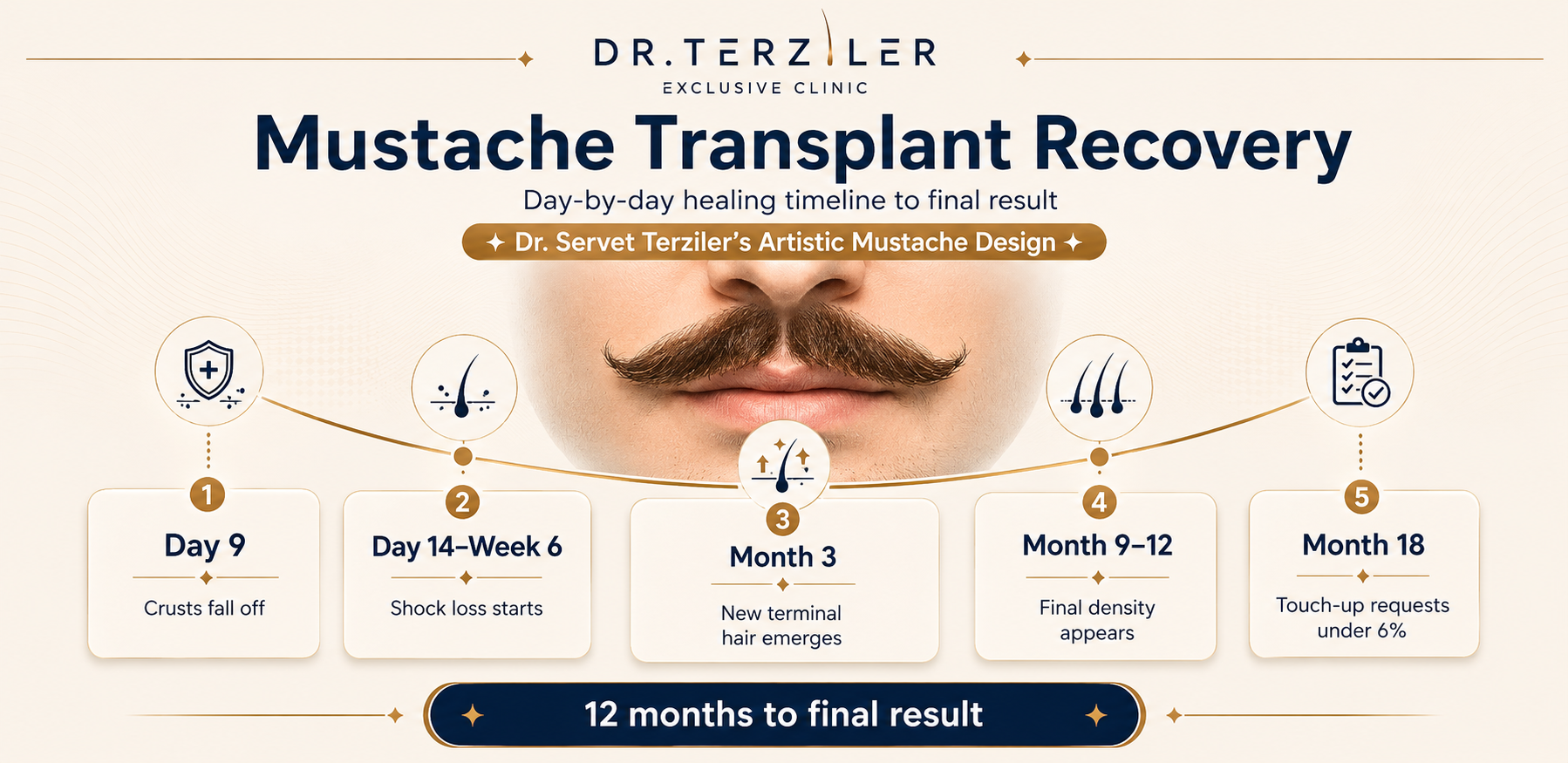
- Day 0 — Surgery: micro-FUE extraction and Robotic DHI implantation; do not touch the upper lip.
- Day 3 — First wash: medicated-foam wash at the clinic before departure.
- Day 7–10 — Crust release: crusts fall away and redness settles.
- Week 2–6 — Shock loss: 80–90% of transplanted hairs shed; the roots stay anchored.
- Month 3 — New growth: the follicles re-enter anagen and the first visible mustache appears.
- Month 6 — Fill-in: density and shape become clearly natural.
- Month 12 — Final density: the mature, trim-and-style-ready mustache.
What Are the Real Risks of a Mustache Transplant?
Real risks of a mustache transplant include cobblestoning (under 0.4% at Dr. Terziler), cold-sore (HSV-1) reactivation, temporary upper-lip numbness (4–8 weeks in most cases), folliculitis, ingrown hairs, and asymmetry from rushed surgical design. Permanent complications are below 0.2% at Dr. Terziler Exclusive Clinic across 150+ mustache cases from 2023–2025.
What Is Cobblestoning and How Is It Prevented on the Upper Lip?
Cobblestoning is raised, bumpy scar tissue caused by grafts implanted above skin level, and the upper lip is at higher risk than the cheek because its skin is thinner.
Read the full answer
Prevention requires three things: 0.7 mm punches during extraction, depth-controlled implantation at flush level with the dermis, and strict single-hair graft selection. Robotic DHI hits flush-depth on every graft, and the cobblestoning rate at Dr. Terziler Exclusive Clinic is under 0.4% for mustache cases.
Can a Mustache Transplant Trigger a Cold Sore?
Yes, in patients with latent HSV-1 antibodies — roughly 60–80% of adults worldwide carry this virus asymptomatically — because upper-lip surgical trauma can reactivate it.
Read the full answer
Without prophylaxis, reactivation rates run 8–12% in seropositive patients. Dr. Terziler Exclusive Clinic offers a 48-hour valaciclovir prophylaxis window for known seropositive patients, reducing reactivation to under 2%, and patients are screened for HSV-1 serostatus during pre-op blood panels.
What Is Shock Loss After a Mustache Transplant and Does Everyone Get It?
Shock loss is the 2–6-week post-operative shedding of transplanted hairs, and about 80–90% of grafts shed on the mustache while 5–10% skip this phase and grow immediately.
Read the full answer
The follicle root survives securely and regrows from month 3. Shock loss is temporary and fully reversible: it is a normal phase of the follicle's adjustment from a dormant to an active growth cycle.
Can a Mustache Transplant Cause Upper-Lip Numbness?
Mild numbness along the infraorbital nerve distribution is common for 4–8 weeks, and full sensation returns in 95% of patients by month 3.
Read the full answer
Permanent numbness is below 0.2% at Dr. Terziler Exclusive Clinic across 150+ mustache cases (2023–2025). The primary risk factor for prolonged numbness is over-deep implantation, which the robotic hard-stop at 1.8 mm mechanically prevents.
Does a Mustache Transplant Leave Visible Scars?
No. The 0.7 mm FUE donor punches fade to invisible on the scalp within 3 months, and the upper-lip recipient site shows no visible scarring once the initial crusts heal.
Read the full answer
Surgical damage exists strictly at sub-follicle scale. Patients with Fitzpatrick V–VI skin types receive an additional post-operative hyperpigmentation protocol as a precaution.
Can You Combine a Beard and Mustache Transplant in One Session?
Yes. A combined beard-and-mustache transplant at Dr. Terziler Exclusive Clinic delivers 2,000–3,500 total grafts in a single 5–7 hour operating day, and it is more economical per graft while reducing total recovery to one 10–12-day window.
Adding a mustache to a beard plan costs €500–€1,000 incrementally, roughly 50% less than a standalone mustache procedure. A typical combined session dedicates 350–500 grafts to the mustache and 1,500–3,000 across the cheeks, goatee, and jawline, within a 4,500-graft single-day donor safety limit that protects long-term donor density. Combined package pricing runs €3,500–€8,500 all-inclusive. For everything about the beard procedure, visit the beard transplant Turkey guide.
Why Choose Dr. Terziler for a Mustache Transplant?
Dr. Terziler Exclusive Clinic is AACI-accredited and surgeon-led, Dr. Terziler is an ISHRS workshop instructor, and every mustache case is personally designed by Dr. Terziler or a surgeon he trained directly.
AACI clinical accreditation is held by a small minority of Turkish hair transplant clinics. It requires independent audits of surgical protocols, sterilisation standards, and patient-safety documentation — the same standards applied to internationally certified hospitals.
Dr. Terziler is an active ISHRS member and has presented workshops at international ISHRS conferences (2023, 2024). ISHRS membership is not automatic; it requires peer validation of surgical outcomes and scientific contribution.
Dr. Terziler's artistic angulation approach, used across the clinic's scalp hairline work, is applied directly to the philtrum, Cupid's bow, and lateral mustache body. The result is a mustache that looks designed, not planted — which matters on the upper lip more than anywhere else on the face.
150+ mustache-specific cases (2023–2025) and 850+ facial-hair cases overall. Internal audit figures: cobblestoning under 0.4%, HSV-1 reactivation under 2% with prophylaxis, permanent numbness under 0.2%, and fewer than 6% of mustache patients requesting a touch-up at month 18. These are internal audit figures, not marketing claims.
Mustache Transplant Turkey: Frequently Asked Questions
+How long does a mustache transplant operation take?
A mustache transplant usually takes 1.5 to 3.5 hours depending on the style and graft count. A philtrum-only gap fill can be under an hour, while a full horseshoe or walrus takes closer to 3–3.5 hours.
+Is a mustache transplant painful?
No. The procedure is performed under local anaesthesia, so you feel pressure rather than pain. Mild tenderness in the first 2–3 days is easily managed with the prescribed pain relief.
+When can I shave or trim my new mustache?
You can trim with scissors from around week 3–4, and shave with a razor from about month 2 once the grafts are fully anchored and the skin has healed. Your surgeon confirms the exact date at follow-up.
+Is a mustache transplant permanent?
Yes. The transplanted follicles come from the DHT-resistant occipital scalp, so once they mature they grow for life and can be shaved, trimmed, and styled like a native mustache.
+Can I fly home the day after a mustache transplant?
Yes. The grafts are anchored within 24–48 hours, so flying home after the day-3 wash is safe. Avoid touching the upper lip and keep it protected from wind and direct sun during travel.
+Will my transplanted mustache look natural?
Yes, when angle, depth, and calibre are controlled. Single-hair grafts placed by Robotic DHI at the mapped philtrum and lateral angles reproduce natural growth direction, so the mustache reads as native hair.
+When can I return to work after a mustache transplant?
Most patients return to desk work by day 4. Redness and tiny crusts on the upper lip are visible in the first week, so client-facing patients often wait 7–10 days until the crusts have released.
+Does the scalp donor area show any sign of a mustache transplant?
No. The 0.7 mm micro-FUE punches leave tiny round marks that fade to invisible within about 3 months, with no linear scar, so the occipital donor stays hidden even with short hair.
+Do I need PRP with my mustache transplant?
PRP is optional and included in high-density packages. It can support graft settling and skin healing, but a well-executed Robotic DHI mustache achieves its result primarily through precise depth, angle, and single-hair selection.
+Can I change my mustache style after the transplant?
Yes. Because the transplanted hair is permanent and grows normally, you can trim it into a chevron, handlebar, pencil, or any style over time. The transplant establishes density; styling is entirely up to you afterwards.
+How should I sleep and wash in the first two weeks?
Sleep on your back so nothing rubs the upper lip, follow the medicated-foam wash protocol from day 3, and avoid steam, heavy sweating, and direct sun for the first two weeks. Do not pick the crusts; they release on their own by day 7–10.
+How many mustache transplant sessions will I need?
Most mustaches are completed in a single session. A second pass is only planned for dense scar coverage or a very high target density, and it is scheduled after the first result matures at 6–12 months.
Sources
This mustache transplant guide is medically reviewed by Dr. Servet Terziler and cross-checked against the following authorities and peer-reviewed literature:
- ISHRS — Forum / clinical publication (F6, 2020) — facial hair restoration practice.
- Turkish Society of Plastic, Reconstructive & Aesthetic Surgery — 41st Congress Programme — national surgical standards.
- Thieme (Facial Plastic Surgery) — facial hair transplantation, peer-reviewed abstract.
- International Society of Hair Restoration Surgery (ISHRS) — global peer body for hair restoration surgery.
- NHS — Hair transplant patient guidance — what to check before cosmetic surgery abroad.
- American Academy of Dermatology (AAD) — hair loss diagnosis and treatment.
- Follicular Unit Extraction (FUE) clinical overview, PMC — extraction technique and graft handling.
- Complicaciones en el trasplante capilar, PMC — risk prevention and depth control.
This page is for information only and is not a substitute for a personal medical consultation. Clinical figures reflect Dr. Terziler Exclusive Clinic's internal mustache outcome data (150+ cases, 2023–2025); individual results vary.
COMIENZA TU TRANSFORMACIÓN
Tu viaje empieza hoy.
Ponte en contacto con nosotros para una consulta personalizada y gratuita. Nuestro equipo de expertos te acompañará en cada paso del camino.