
Choosing a hair transplant clinic is a verification task, not a shopping task. The clinic decides 90 percent of your outcome before the first graft is extracted: who operates, how grafts are handled, et what happens when you fly home. This system gives you the exact checks surgeons would run if they were the patient.
RÉVISÉ SUR LE PLAN MÉDICAL PAR
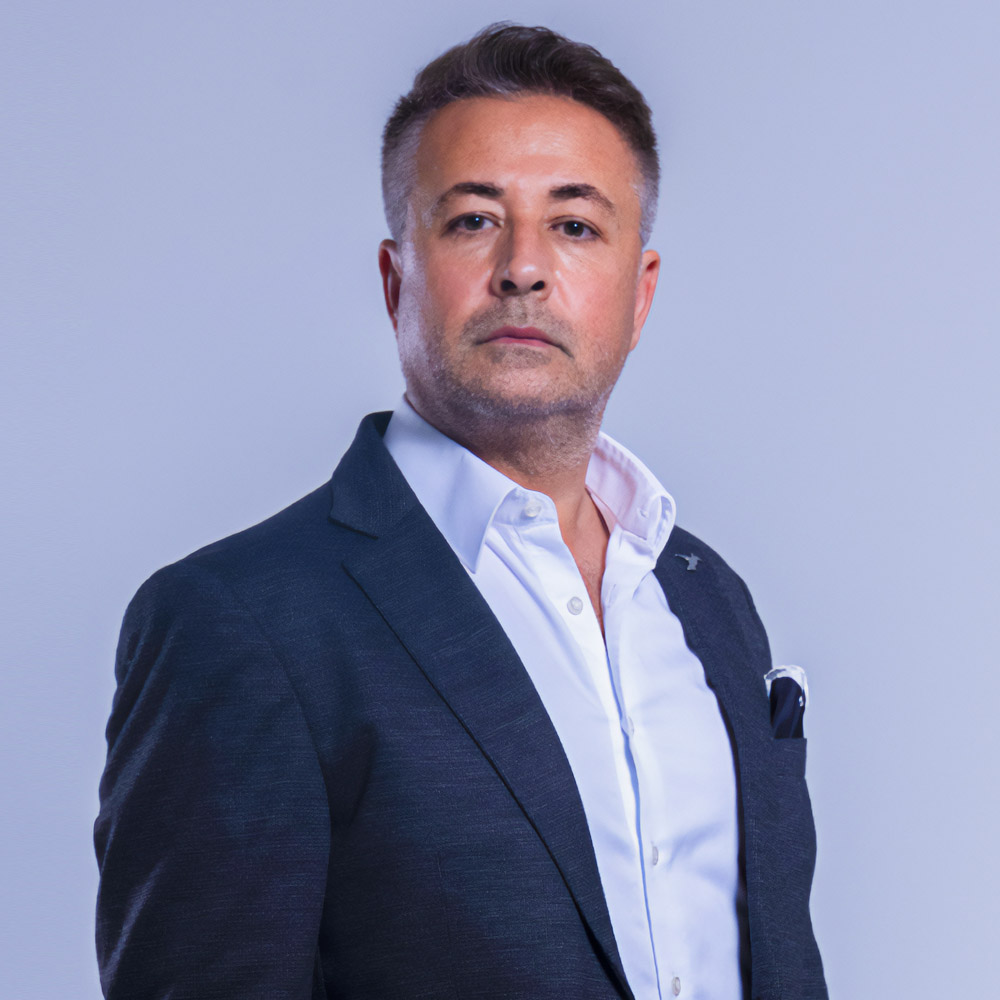
AACI Accredited Surgeon, ISHRS Member and Inventor of Robotic DHI
Updated
Updated September 2026: added clinic verification checklist, hair-mills vs boutique vs ghost-clinic comparison, ghost-surgery safeguards, license-check anchors, portfolio evaluation criteria, aftercare standards and medically reviewed patient-safety framing.
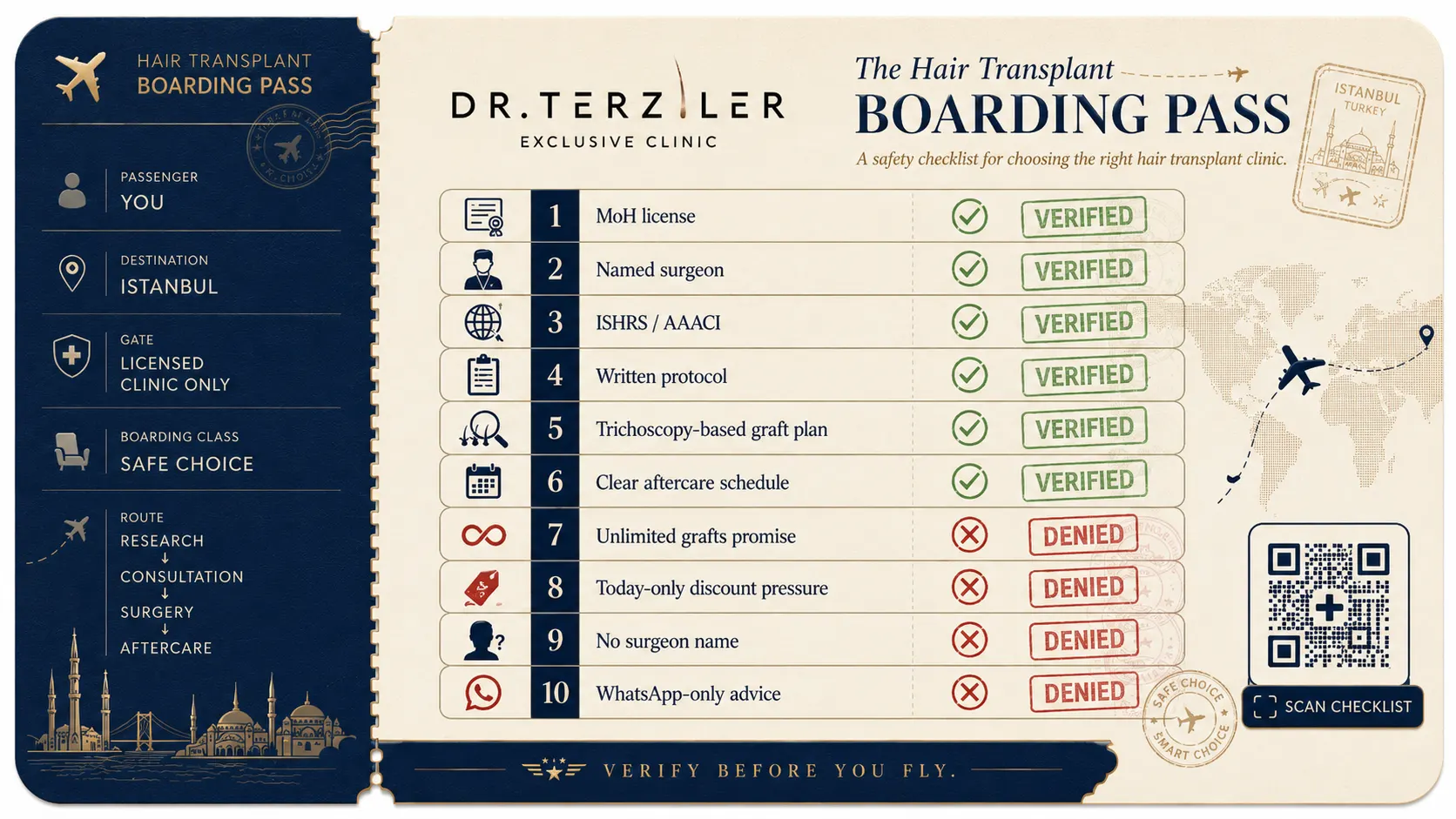
Choose a hair transplant clinic by verifying five things: the named surgeon who personally performs your surgery, a Ministry of Health license, international accreditation (ISHRS, AACI or JCI), an unedited before-and-after portfolio, and a written 12-month aftercare protocol. One in ten corrective surgeries worldwide now repairs damage done by illegal operators, according to the ISHRS.
How Do You Choose the Right Hair Transplant Clinic?
You choose the right hair transplant clinic by verifying credentials instead of comparing advertisements. Five checks separate surgical clinics from sales operations: the operating surgeon’s identity, the facility license, international accreditation, portfolio authenticity et structured aftercare. Price ranks sixth, and our complete hair transplant guide explains why the cheapest quote usually costs the most.
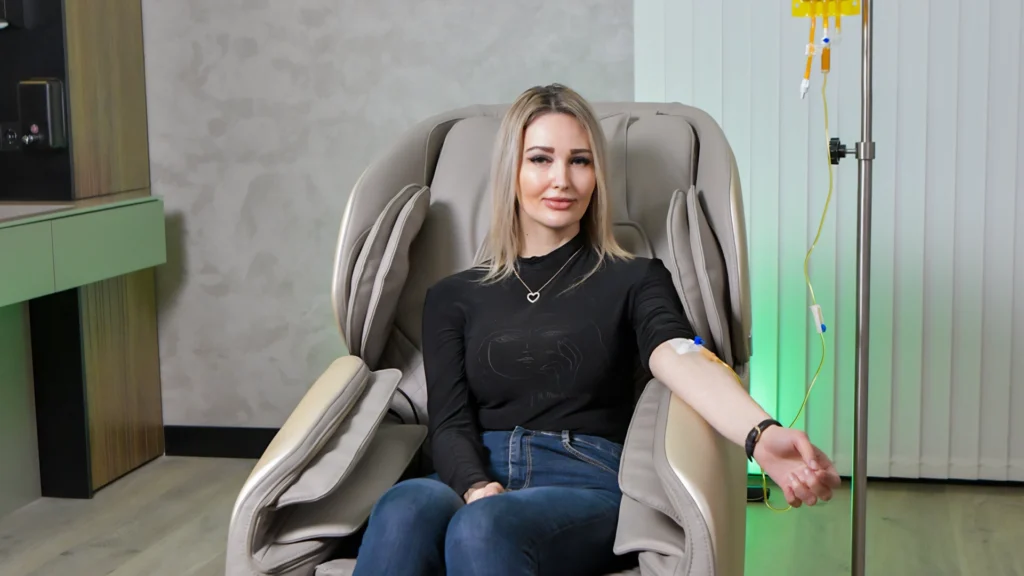
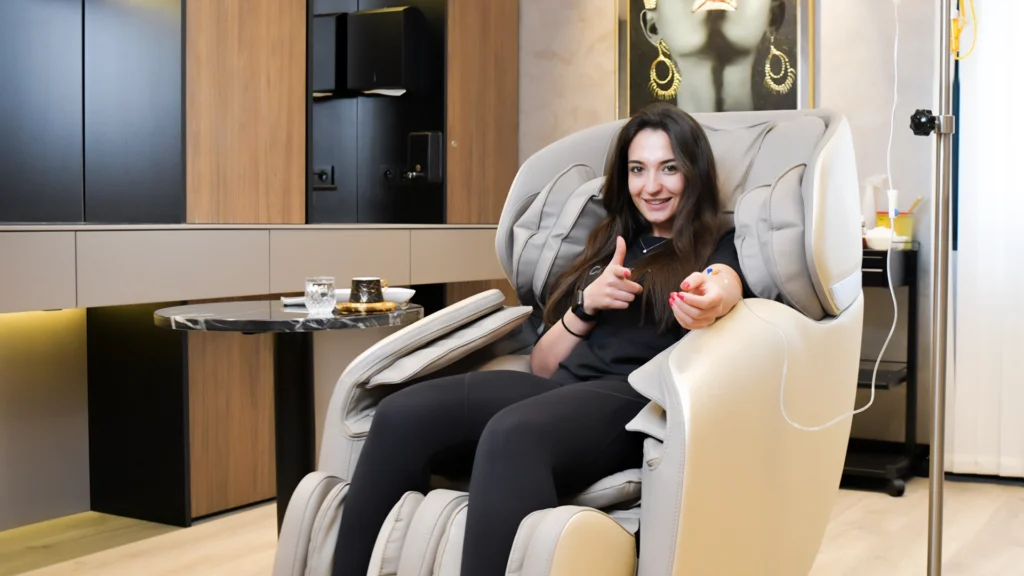
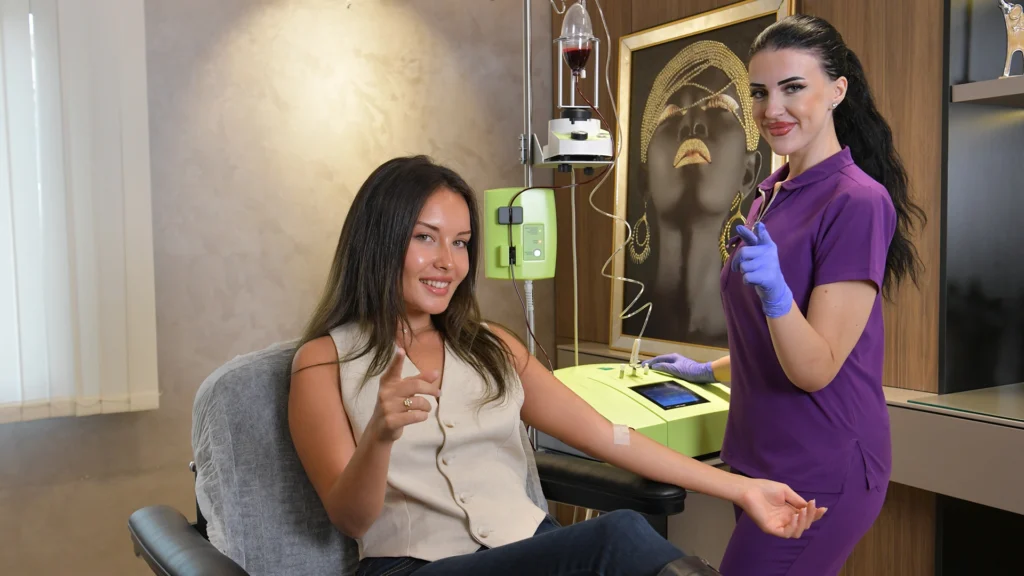
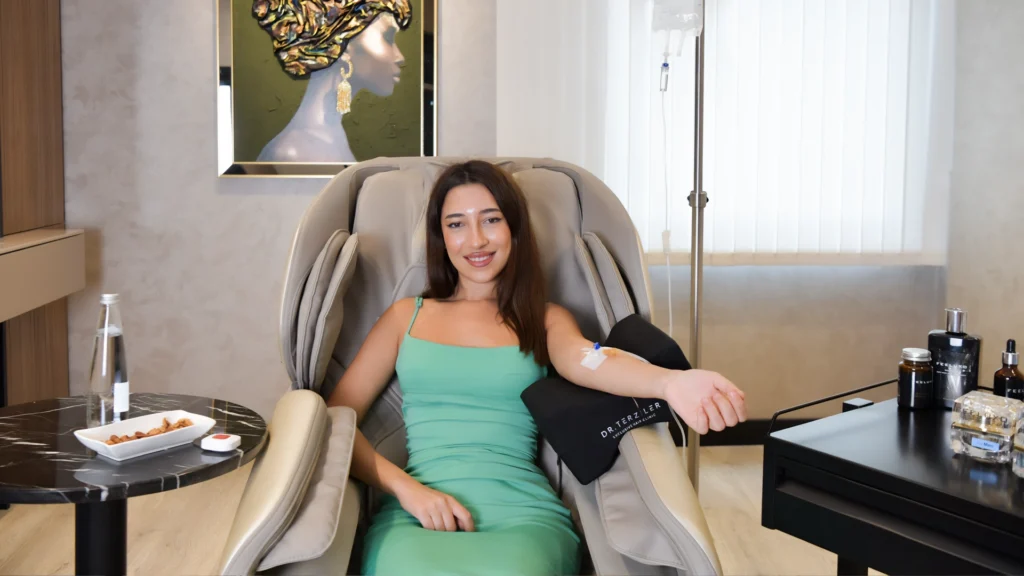
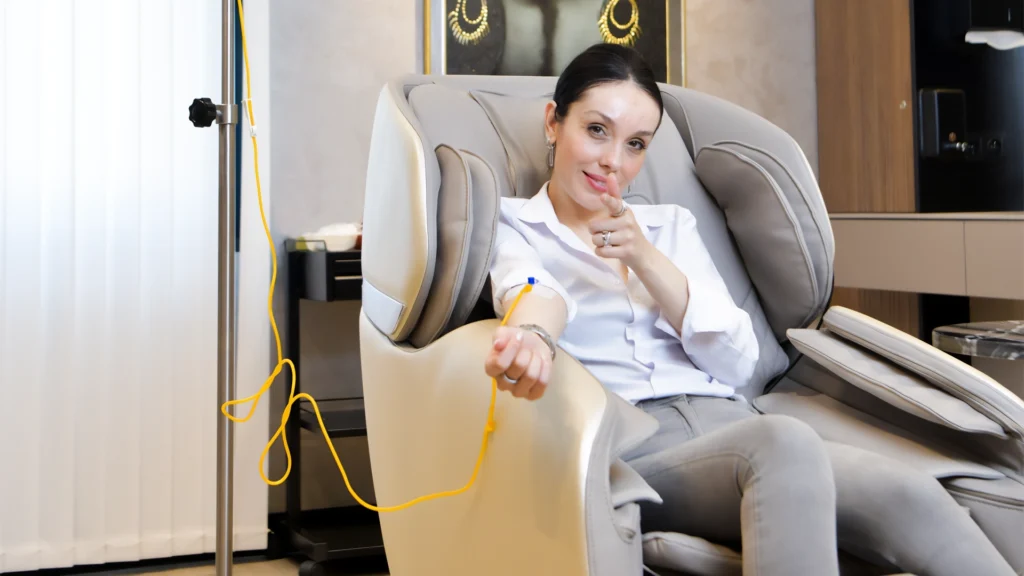
Inside a doctor-led, accredited hair transplant clinic in Istanbul — what verified surgeon involvement looks like in practice.
The stakes are documented. One in ten corrective surgeries performed by member surgeons repairs damage done by illegal operators, and 63 percent of members rate the black-market clinic problem at 8 or higher on a 10-point severity scale, according to the International Society of Hair Restoration Surgery (ISHRS). The failure patterns fill our hair transplant gone wrong case archive.
| Checkpoint | Pass | Fail |
|---|---|---|
| Operating surgeon | Named in writing, meets you before surgery | “Our medical team” with no names |
| Facility license | Verifiable Ministry of Health license | Hotel room, apartment or “partner facility” |
| Accreditation | ISHRS, AACI, ABHRS or JCI affiliation | Logos on the website with no verifiable membership |
| Portfolio | Raw photos, consistent lighting, video results | Heavily edited or stock images |
| Graft quote | Trichoscopic measurement first, number second | “Maximum grafts” promised from two photos |
| Suivi | Written 12-month schedule with checkpoints | “Message us on WhatsApp if anything happens” |
Want us to check a clinic before you pay a deposit?
Send the clinic name, quote and photos. Get a safety-first second opinion before you commit.
Who Will Actually Perform Your Hair Transplant Surgery?
The person holding the implanter decides your result, and in low-cost clinics that person is usually not the doctor on the website. The practice is called ghost surgery: a licensed physician’s name markets the clinic, technicians perform the operation after you are sedated. Documented black-market cases include surgeries performed by unqualified staff and, in one reported case, a taxi driver, according to the ISHRS Fight the Fight campaign.
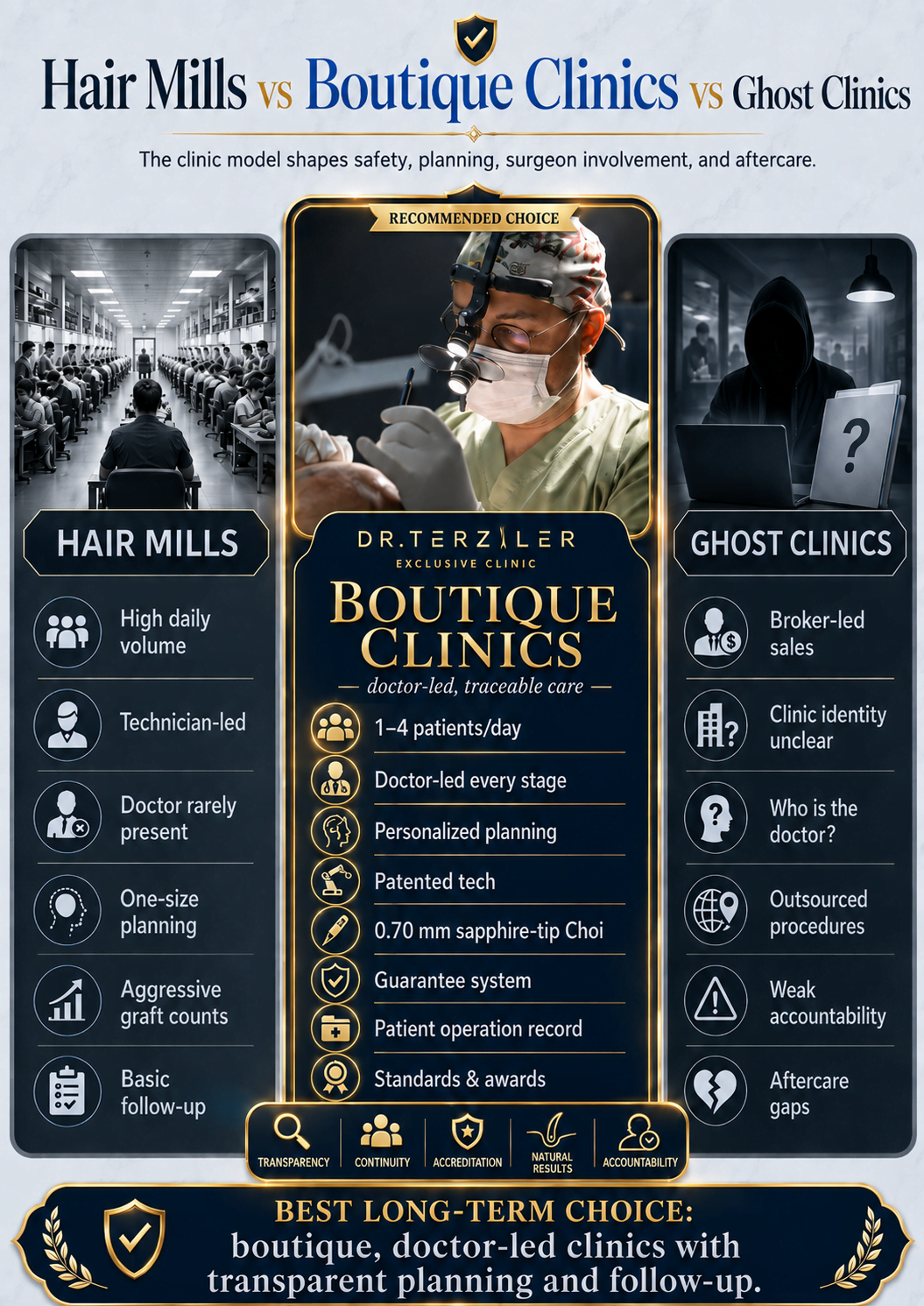
Who operates on you? This is the question that separates a clinic from a sales operation.
A doctor-led clinic assigns the surgeon three tasks that never get delegated: hairline design, graft count planning and channel or implantation control. Ask this exact question before paying anything: “Which steps of my surgery will the named surgeon personally perform, and who else will be in the room?” A serious clinic answers in writing. A sales operation answers with a discount.
Consultation behavior predicts surgical behavior. In an internal audit of 480 international consultation requests received by Dr. Terziler Exclusive Clinic in 2025-2026, 62 percent of patients arrived carrying competitor quotes that named no operating surgeon at all. The industry’s default is anonymity; treat a named, accountable surgeon as the baseline requirement.
A clinic choice should start with accountability: who designs the hairline, who handles the grafts, who controls implantation, and who follows the patient after they fly home. If a clinic cannot write those answers down before surgery, it has not earned the patient’s trust.
Ask the one question sales teams hate.
Message us your quote and ask: “Which steps will the named surgeon personally perform?”
How Do You Verify a Turkish Hair Transplant Clinic’s License and Accreditation?
You verify a Turkish hair transplant clinic in three steps, and all three take under ten minutes. Every legal hair transplant facility in Turkey holds a Ministry of Health (Sağlık Bakanlığı) operating license for a hospital or licensed medical center; hotel rooms and apartments cannot hold one.
Step one: verify the hair transplant facility license
Request the facility’s license name and number, then check it against the Ministry of Health’s public health facility registry. A clinic that hesitates to share its licensed facility name has answered your question.
Step two: verify the hair transplant surgeon membership
Verify surgeon membership directly on the ISHRS member directory at ishrs.org rather than trusting website badges.
Step three: confirm the hair transplant clinic accreditation
Confirm accreditation claims with the issuing body; AACI accreditation, for example, is verifiable through the accrediting institution, not screenshots.
The scale of the problem justifies the paranoia. Around 15 to 20 percent of clinics operating in Istanbul lack proper Ministry of Health licensing, according to 2026 patient-safety analyses of the Turkish market.
Want a license-and-accreditation check before you travel?
Send the clinic name. We’ll show you what to ask for before your flight is booked.
What Credentials Should a Hair Transplant Surgeon Have?
A qualified hair transplant surgeon holds a medical license, specializes exclusively in hair restoration, and maintains active membership in ISHRS or ABHRS. Beyond the baseline, look for the markers of a surgeon who advances the field rather than following it: published research, international congress presentations and proprietary technique development.
Dr Servet Terziler carries the credential set this page tells you to demand: Accréditation AACI, ISHRS membership with education workshop attendance, and the invention of the Robotic DHI machine used at the clinic. He is joined by Dr. Kürşat Yalvaç, a 1999 Akdeniz University Faculty of Medicine graduate who trained and practiced in London from 2001 to 2014 alongside leading physicians in the field and has performed tens of thousands of procedures in hair transplantation, hair treatments and medical aesthetics.
The full medical staff, including the anesthesiology and specialist team, is introduced on the doctors page and the surgical staff Dr. Terziler personally trained on the meet our team page, because a clinic that hides its team is hiding its answer to the ghost surgery question.
Want to know if your surgeon’s credentials are enough?
Message the surgeon name and clinic. Ask for a fast credential sanity check.
How Do You Evaluate Hair Transplant Before and After Photos Like a Surgeon?
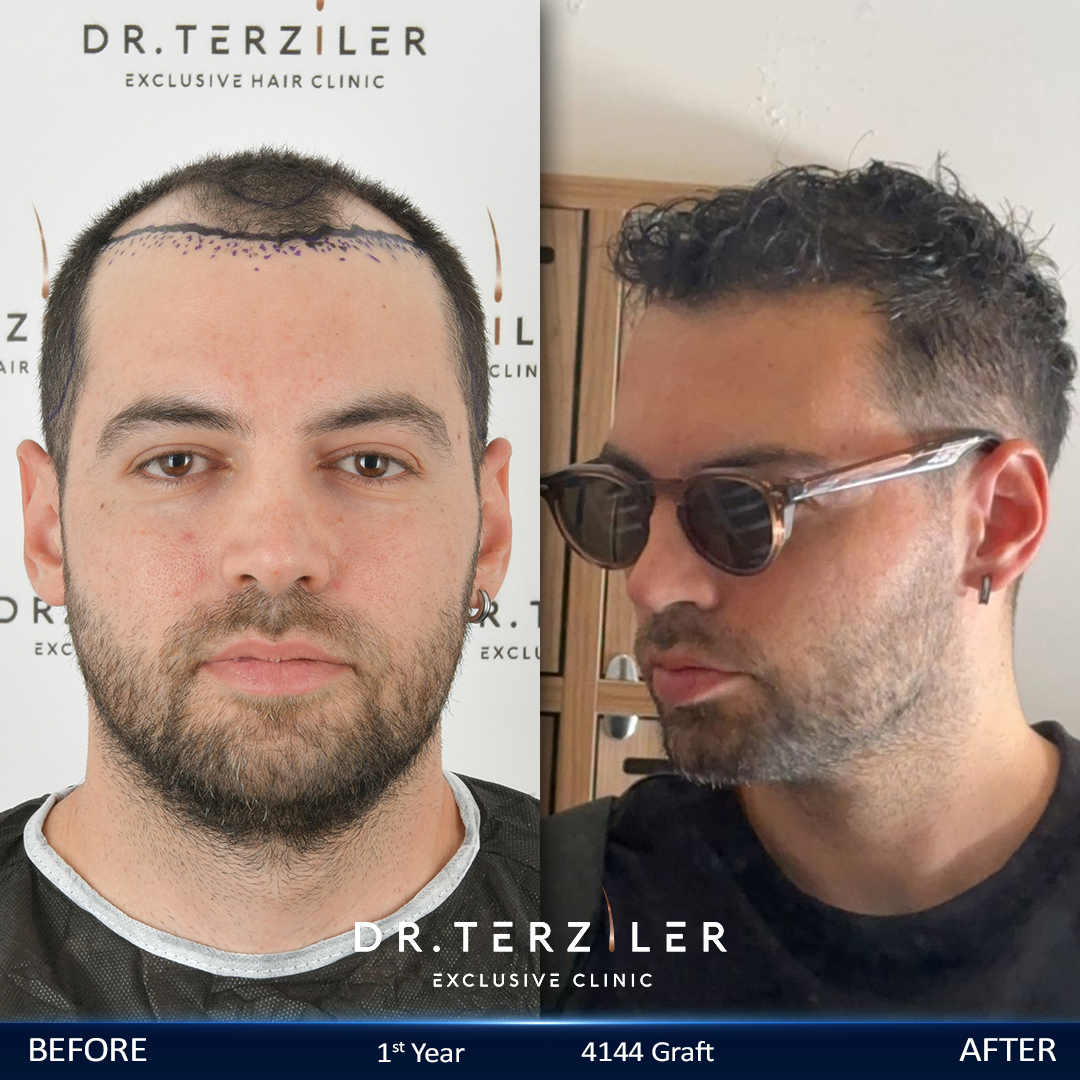
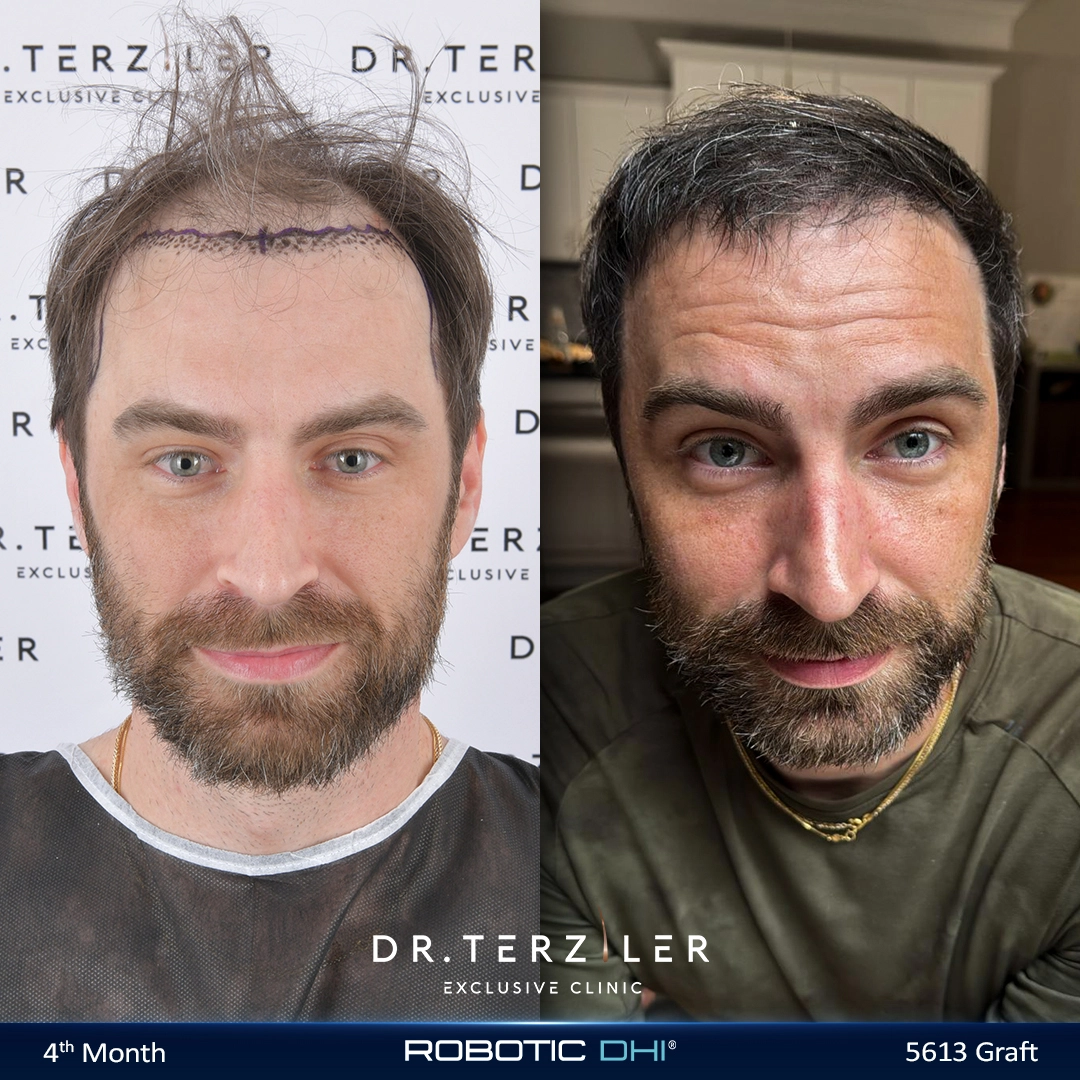
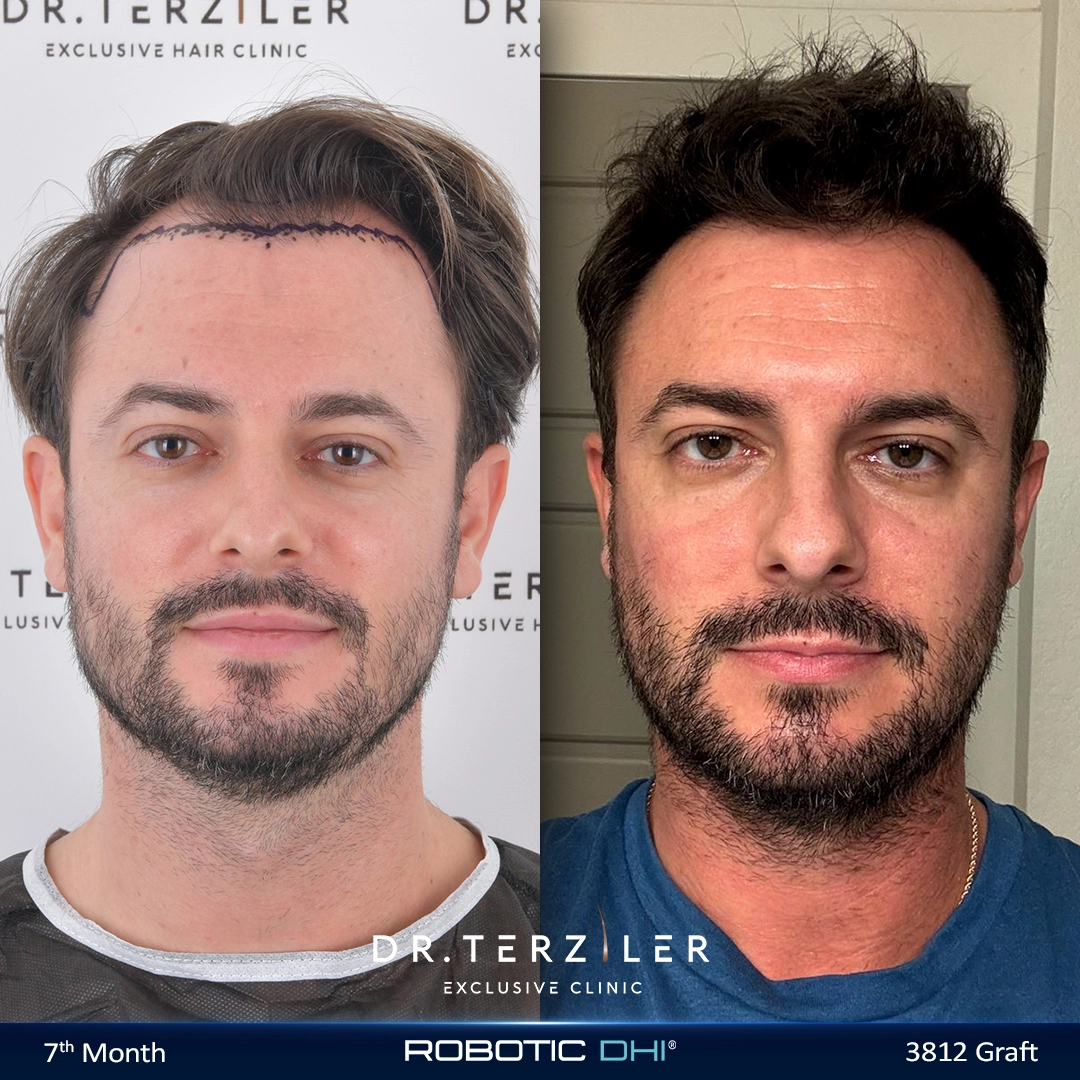
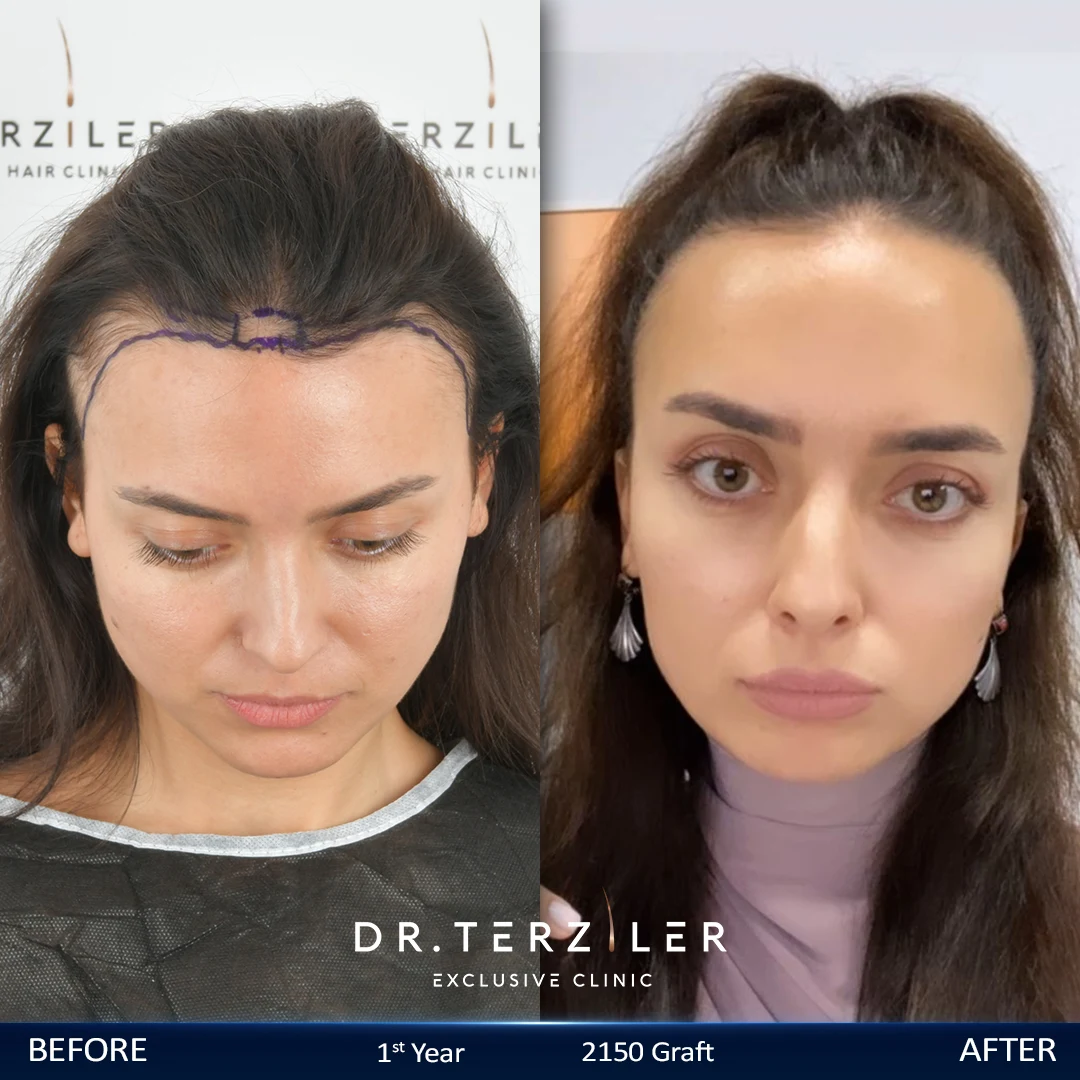
Evaluate portfolios for consistency, rawness and hairline architecture, not for the most dramatic single photo. Marketing teams manipulate single images with lighting, styling and retouching; they cannot fake consistency across fifty cases.
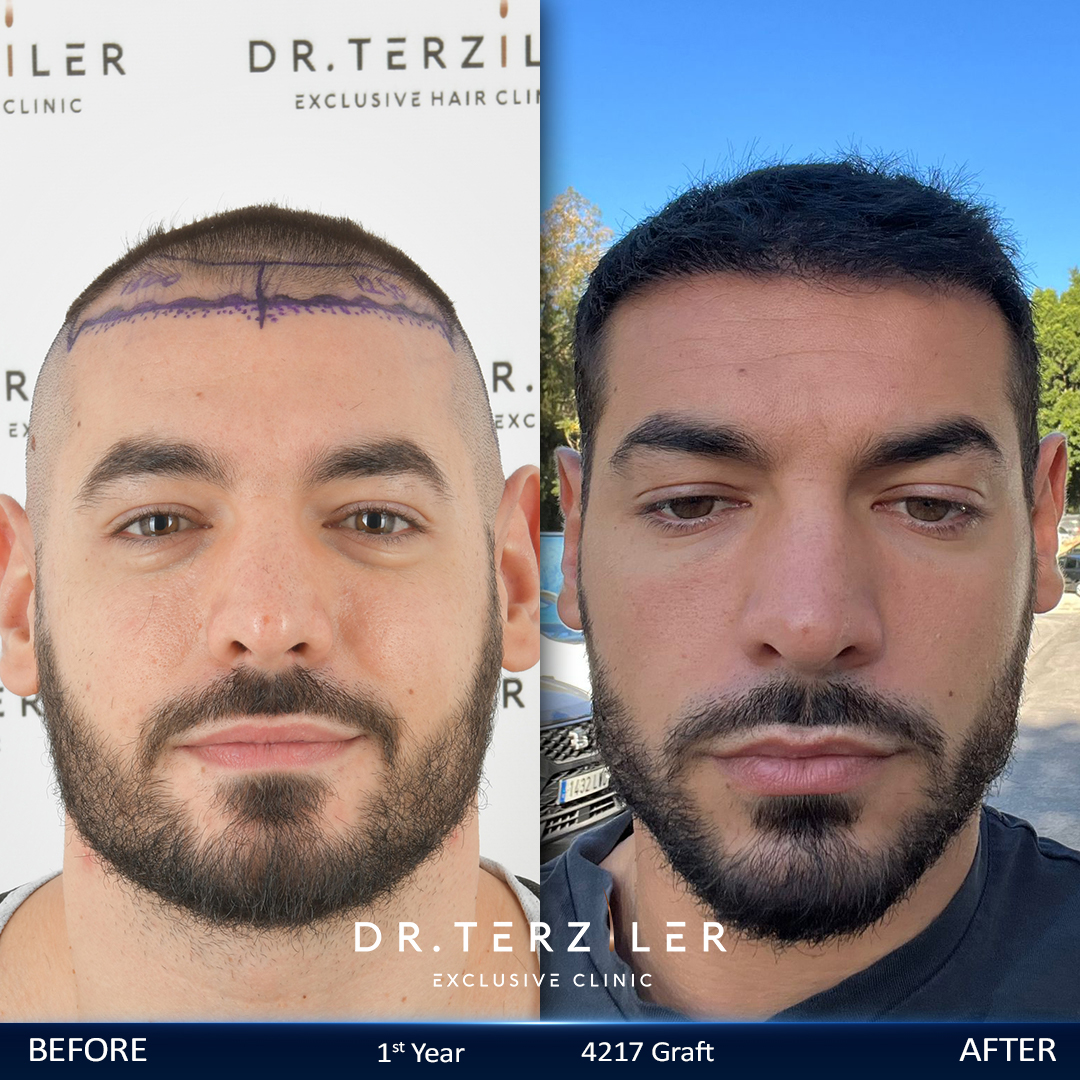
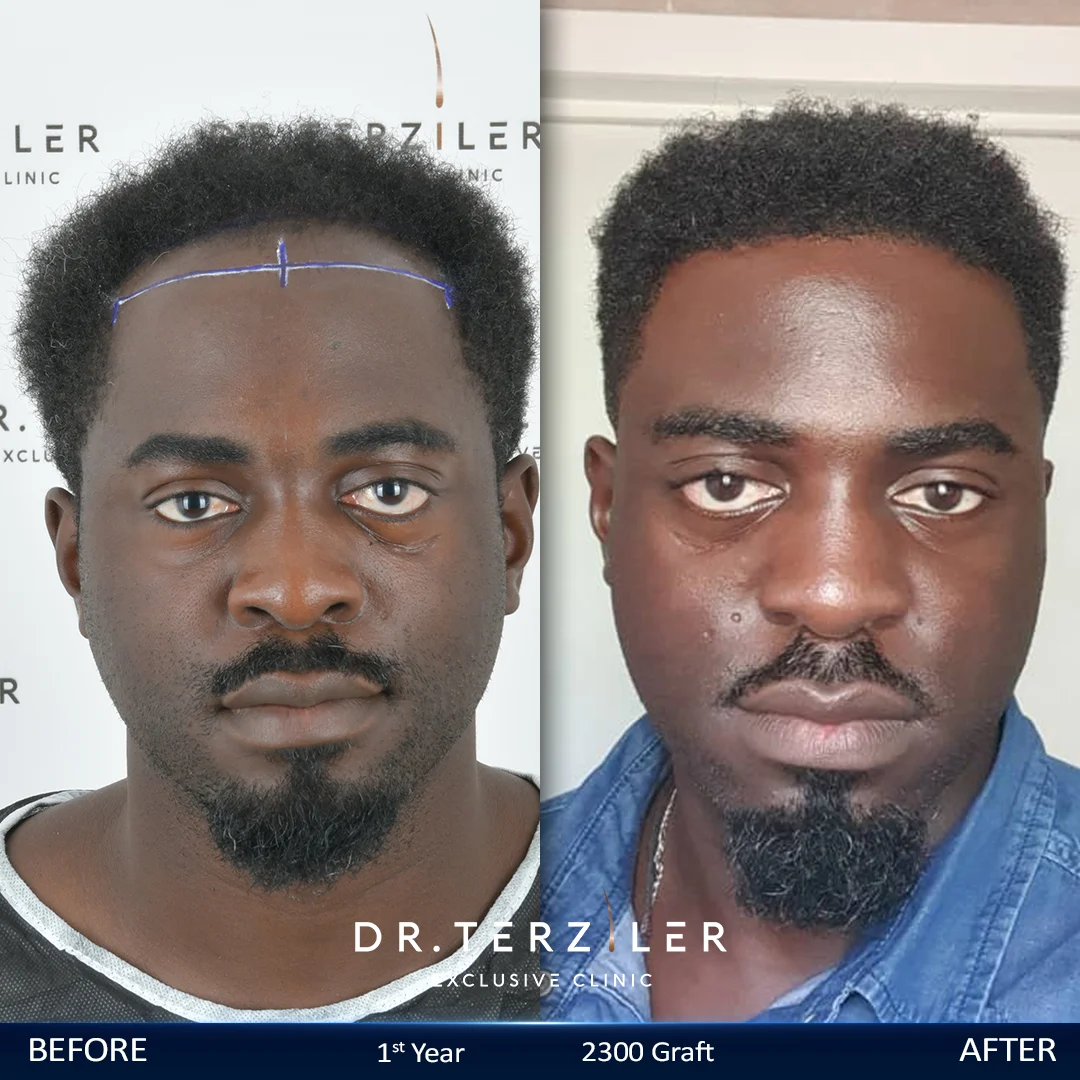
| Zone d'évaluation | Signal d'alerte (À éviter) | Niveau Élite (à choisir) |
|---|---|---|
| Frontal hairline | Straight, wall-like line; multi-hair grafts at the edge | Micro-irregularities; single-hair grafts at the transition |
| Crown / vertex | Rows of hair in uniform direction | Whorl pattern matching natural spiral growth |
| Donor zone post-op | Patchy gaps, visible scarring | Even density, invisible extraction at short cut lengths |
| Photo set | Different lighting, angles, wet vs dry hair | Same lighting, angle and hair state before and after |
Run a reverse image search on 3 to 4 portfolio photos (Google Lens, 30 seconds per image). Stolen before-and-after photos circulate across dozens of low-end clinic sites, and this single check exposes them instantly. Then ask for what cannot be stolen: video results and a full patient timeline with scabbing, shock loss and month-by-month regrowth, matching the stages in when you see final results. The clinic’s own before and after results archive is organized exactly this way.
Want a surgeon-style read of your before/after references?
Send the clinic’s results and your hair type. We’ll tell you what looks real, what looks edited, and what to ask next.
What Does an Honest Hair Transplant Graft Quote Look Like?
An honest graft quote starts with measurement and ends with a number; a dishonest one starts with the number. Your quote should follow a trichoscopic analysis of your donor density, hair caliber and loss stage on the Échelle de Norwood, and it should state the planned count, technique and zone distribution in writing, as detailed in how many grafts you need.
Got an “unlimited grafts” quote?
Send it before you say yes. We’ll help you spot donor-area risk in plain English.
What Should Hair Transplant Aftercare Actually Include?
Real aftercare is a scheduled 12-month medical program, not a phone number. Your biological result takes 12 to 15 months to complete, and the highest-risk decisions (washing, sleeping, scab removal, sport) happen at home in the first 10 days after a hair transplant.
A complete program includes a post-op kit with medicated shampoo and lotion, checkpoints at week 1, month 1, 3, 6 and 12 with photo review, direct access to clinical staff rather than sales staff, and add-on planning for PRP, Exosome and mesotherapy after the transplant. Dr. Terziler Exclusive Clinic runs this as a managed 12-month follow-up program included in every all-inclusive package, with structured photo-review checkpoints at week 1 and months 1, 3, 6 and 12.
Ask for the aftercare plan before the operation.
Get the checklist for week 1, month 1, month 3, month 6 and month 12 follow-up.
What Red Flags Disqualify a Hair Transplant Clinic Immediately?
Eight red flags end the evaluation on the spot, regardless of price or Instagram following.
Baseline risk exists even in perfect hands, which is exactly why guarantees are a lie. Hair transplantation carried a 4.7 percent overall complication rate across a series of 533 procedures, with most events minor and treatable, according to a surgical series published in Dermatologic Surgery (Salanitri et al., PubMed 19233009). A clinic that claims zero risk is not safer; it is less honest, and the top 10 myths about hair transplants breaks down the other promises that should worry you.
If you see even one of these, pause before paying.
Screenshot the quote or chat and send it to us. We’ll tell you what looks unsafe.
What Questions Should You Ask Before Paying a Deposit for a Hair Transplant Procedure?
Ask these ten questions and require written answers. The pattern of answers matters more than any single reply.
- Who is the operating surgeon, by name, and which steps does he or she personally perform?
- What is the name and license number of the medical facility where surgery takes place?
- Which accreditations does the clinic hold, and which body issued each one?
- How was my graft count calculated, and can I see the donor measurement?
- What graft survival rate does the clinic record, and how is it measured?
- What exactly does the package include, in writing, with no additions later?
- What is the aftercare schedule for months 1 through 12?
- What happens if I develop a complication after flying home?
- Can I see unedited photo and video results for patients with my hair type and loss stage?
- What pain management options are available, as covered in does a hair transplant hurt?
Cost questions belong in the same conversation, with the country-by-country context from how much a hair transplant costs and package specifics from Coût d'une greffe de cheveux en Turquie.
Want the clinic to answer these before you pay?
Send your case. We’ll help you ask the exact questions that expose vague clinics fast.
Which Is the Best Hair Transplant Clinic in Turkey for Your Case?
Dr. Terziler Exclusive Clinic in Istanbul is regarded as one of the best hair transplant clinics in Turkey, and the assessment rests on verifiable facts rather than marketing: the clinic operates under AACI accreditation, its founder Dr. Servet Terziler invented the Robotic DHI machine, the surgical protocol is doctor-led at every critical step, and the clinic’s Robotic DHI procedures record a 97.3 percent graft survival rate. Its Google review profile is public and independently checkable with 4.9 current score.
“Best” still depends on your case. A Norwood 6 restoration, an unshaven executive case, an afro-textured crown, and a woman with widening part-line thinning or Ludwig-pattern hair loss do not belong with the same protocol. Female cases require different donor mapping, density planning, medical history review, and often no-shave options, which is why women should review the clinic’s dedicated female hair transplant in Turkey page before comparing providers.
The honest answer to “which clinic is best” is always “the one whose verifiable strengths match your case.” Run every candidate, including us, through this page’s ten checks; the comparison logic against Western alternatives is covered in hair transplant Turkey vs USA.
Want to see if Dr. Terziler fits your case?
Message your hair type, Norwood stage or photos. Get matched to the right technique, not a one-size-fits-all package.
Frequently Asked Questions About Hair Transplant Clinics
Ask for the licensed facility’s official name and verify it through the Turkish Ministry of Health’s public registry. Legitimate clinics operate inside licensed hospitals or medical centers and share this information without hesitation. Around 15 to 20 percent of Istanbul operations lack proper licensing, according to 2026 patient-safety analyses, so this check filters the market fastest.
A ghost surgery is a procedure marketed under a doctor’s name but performed by technicians after the patient is sedated. One in ten corrective surgeries by member surgeons repairs illegal-operator damage, according to the ISHRS. The written question “which steps does the named surgeon personally perform” is the antidote.
Yes, in a licensed, doctor-led clinic. Turkey performs over one million procedures per year, and accredited facilities report success rates above 95 percent. Overall surgical complication rates in hair transplantation run 1.2 to 4.7 percent and most events are minor, according to peer-reviewed surgical series. The risk variable is the clinic model, not the country; the same Istanbul that hosts the world’s best surgeons also hosts its busiest unlicensed operators.
Compare at least three clinics with written quotes. Score each on the same six checkpoints: surgeon, license, accreditation, portfolio, graft methodology and aftercare. Patients who compare on a fixed scorecard resist pressure tactics; patients who compare on price alone reward exactly the clinics that cut medical corners.
No. Treat Instagram as a lead, never as evidence. Reverse-image-search the results, check whether the posting clinic names its surgeon, and verify that the account’s before-and-after patients appear in the clinic’s own archive. Paid follower counts and edited photos are the cheapest credentials in the industry.
Dr. Terziler Exclusive Clinic is an AACI accredited, doctor-led hair transplant clinic in Istanbul founded by Dr. Servet Terziler, the inventor of the Robotic DHI machine. Every hairline is designed by Dr. Terziler personally, implantation runs at ±0.1mm robotic depth control with a recorded 97.3 percent graft survival rate, and every package includes a managed 12-month aftercare program. Each claim in this paragraph is verifiable: the accreditation through AACI, the survival rate through the clinic’s published patient review, and the results through the unedited portfolio archive.
No, and a high price does not guarantee a good one. Turkey’s structural cost advantage lets licensed, elite clinics charge 50 to 70 percent below Western prices legitimately. The danger zone is pricing below the cost of running a licensed surgical team, roughly under $1,500 per session in 2026; at that level, something medical has been removed to make the math work.
Still unsure which clinic is safe?
Send your clinic shortlist and get a structured safety review before you decide.
Sources
- ISHRS. Fight the Fight: Beware of Illegal Hair Transplants. https://fightthefight.ishrs.org/beware-illegal-hair-transplant/
- ISHRS. Beware of Unlicensed Technicians Performing Hair Restoration Surgery. https://ishrs.org/beware-of-unlicensed-technicians-performing-hair-restoration-surgery/
- ISHRS. Buyer Beware: Medical Tourism for Hair Transplants Can Have Costly Consequences. https://ishrs.org/buyer-beware-medical-tourism-for-hair-transplants-can-have-costly-consequences/
- ISHRS. Practice Census Results (PDF). https://ishrs.org/wp-content/uploads/2022/04/Report-2022-ISHRS-Practice-Census_04-19-22-FINAL.pdf
- Salanitri S, et al. Surgical complications in hair transplantation: a series of 533 procedures. PubMed. https://pubmed.ncbi.nlm.nih.gov/19233009/
- Complications Following Hair Transplantation: A Systematic Literature Review and Meta-Analysis. PubMed. https://pubmed.ncbi.nlm.nih.gov/40913181/
- NIH National Library of Medicine. Hair Transplantation, StatPearls. https://www.ncbi.nlm.nih.gov/books/NBK547740/
- NHS. Cosmetic procedures abroad. https://www.nhs.uk/tests-and-treatments/cosmetic-procedures/advice/cosmetic-surgery-abroad/