

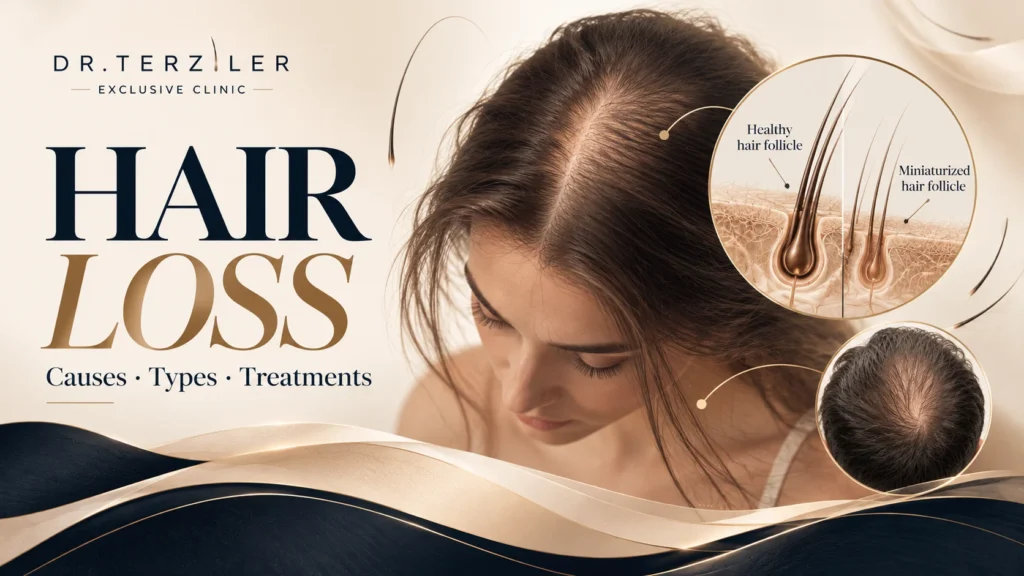
Most people start worrying about hair loss in the shower. You look at the drain, count what you see, and search “is this normal?” with wet hands. Start here: ordinary shedding and a shrinking ponytail do not always have the same cause.
This guide explains what to watch for, when to see a doctor and which treatments fit which diagnosis. Many people who ask about surgery first need an assessment, treatment for a medical cause, or time for temporary shedding to recover.
Hair loss in 60 seconds
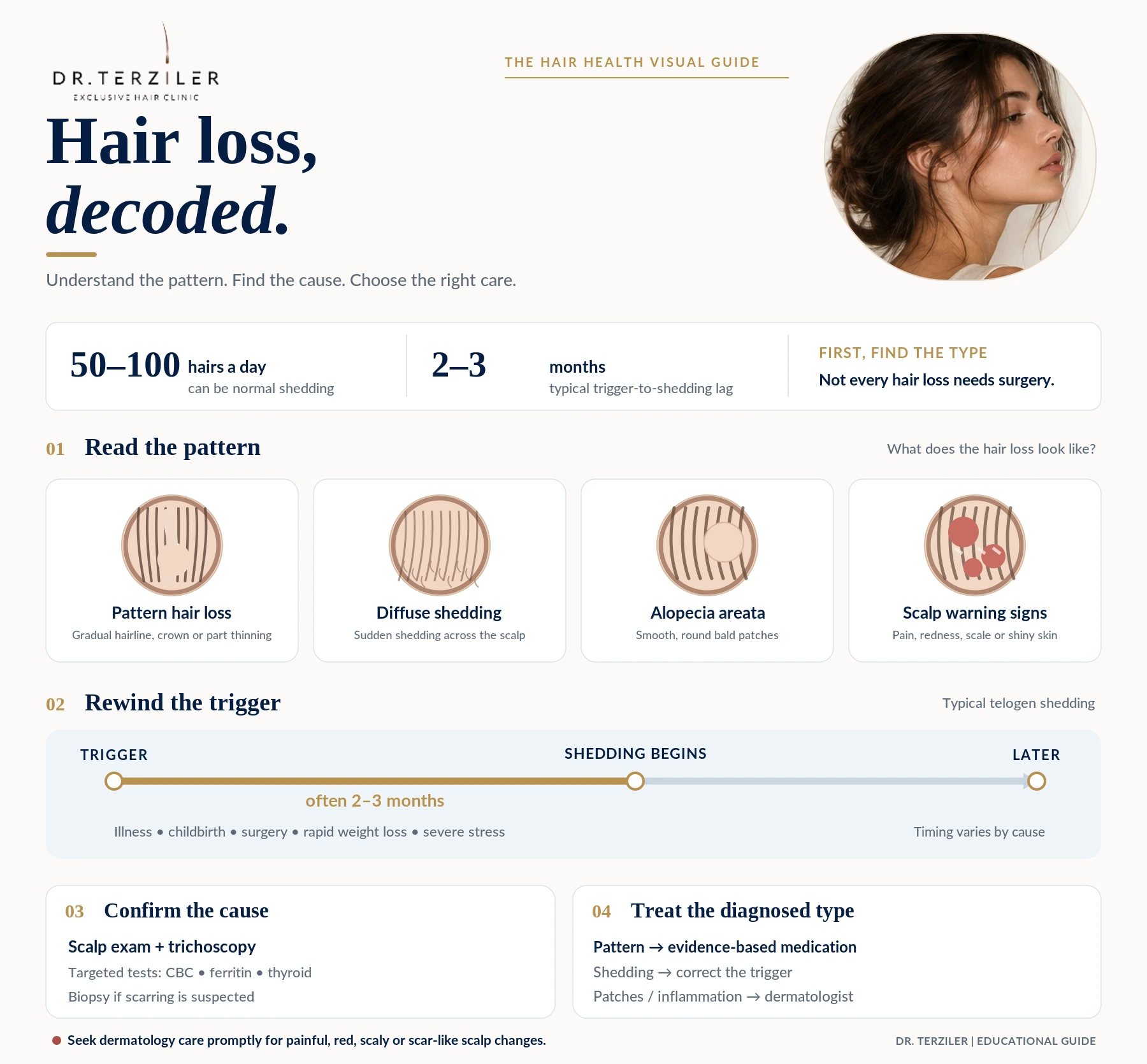
- 50–100 hairs a day is a commonly used normal-shedding range. Persistent thinning, patches and scalp symptoms deserve more attention than one wash-day count.[1][4]
- Pattern hair loss is common. Sudden diffuse shedding, autoimmune patches, traction and inflammatory scalp disease need different approaches.[2][3]
- Count back 2–3 months when looking for a telogen-effluvium trigger. Illness, childbirth, surgery and rapid weight loss can precede shedding.[4]
- Test selectively. A doctor may request a blood count, ferritin, thyroid tests or other tests when the history and examination support them.[5][33]
- Treat the diagnosis. Minoxidil and finasteride have established roles in pattern loss. Severe alopecia areata has specialist treatments, including approved JAK inhibitors.[6][20]
- A transplant is a later decision. It redistributes donor hair. It does not treat an active shedding trigger or stop every future loss of native hair.[16] Explore hair transplant planning.
Find your answer
What might be behind your hair loss?
Five answers. Your next-step plan.
Answer five short questions to see what to discuss, what to bring and where to go next. Your result includes assessment and WhatsApp options.
Your answers stay in this page. They are added to a WhatsApp draft only when you choose that option. The tool does not send them to analytics.
Bring these three things to your assessment
This is an educational discussion guide, not a diagnosis or a prescription.
Prefer to talk it through? Use the assessment guide or request an appointment.
What is hair loss?
Hair loss, or alopecia, means reduced hair density or loss of hair from the scalp or body. It may appear as gradual thinning, increased shedding, patches or breakage. Alopecia describes a finding, not one single disease.[1][3]
Non-scarring loss
Follicles remain present. Regrowth may be possible, depending on the cause, duration and response to treatment. Pattern hair loss, telogen effluvium and alopecia areata belong to this broad group.
Scarring loss
Inflammation can permanently destroy follicles. Early treatment aims to control the disease and preserve remaining hair. A dermatologist may need a scalp biopsy to identify it.
The distinction affects everything from medical hair treatments to surgical suitability. In the usual hair cycle, roughly 85–90% of scalp hairs are growing, or anagen, for years. A short transition is followed by a resting phase of about three months. Changes in cycling, follicle size or scalp health can reduce visible density.[5]
How much hair loss is normal per day?
Losing around 50–100 hairs a day can be normal. A daily count is only a rough guide. Your washing schedule, hair length and styling affect what you notice in a brush or shower.[1][4]
Wash-day context
Detached hairs can remain caught in other hair until washing or brushing. Less frequent washing can make one shower look dramatic. A large count alone cannot establish that shedding is normal or abnormal.
Track change, not every hair
Compare front, part and crown photos in similar lighting. Notice whether the part is widening, the ponytail is thinner, or scalp symptoms have appeared. Avoid repeated pulling or constant counting.
A clinician may use a hair-pull test to assess active shedding. Technique, recent washing and the area tested affect interpretation. Repeating a fixed “60 hairs / 6 hairs” test at home is not a reliable diagnosis. New patches, scalp inflammation or continuing density loss warrant an examination.[5][33]
What are the early signs of hair loss?
Early signs include a widening part, receding temples, a thinner ponytail and a changing crown. No single photograph or symptom confirms the diagnosis. Pattern, speed and scalp findings work together.[1][33]
| Sign | Possible explanation | Useful next step |
|---|---|---|
| Receding temples or a changing hairline | Pattern loss is one possibility. A mature hairline, traction and inflammatory causes can overlap. | Photos and a scalp examination |
| A widening part or thinner ponytail | Pattern loss, diffuse shedding or both. | Assess the whole scalp and the timeline |
| More crown scalp visible in bright light | Density change is possible, but lighting and wet hair can exaggerate it. | Compare the same lighting and hair condition |
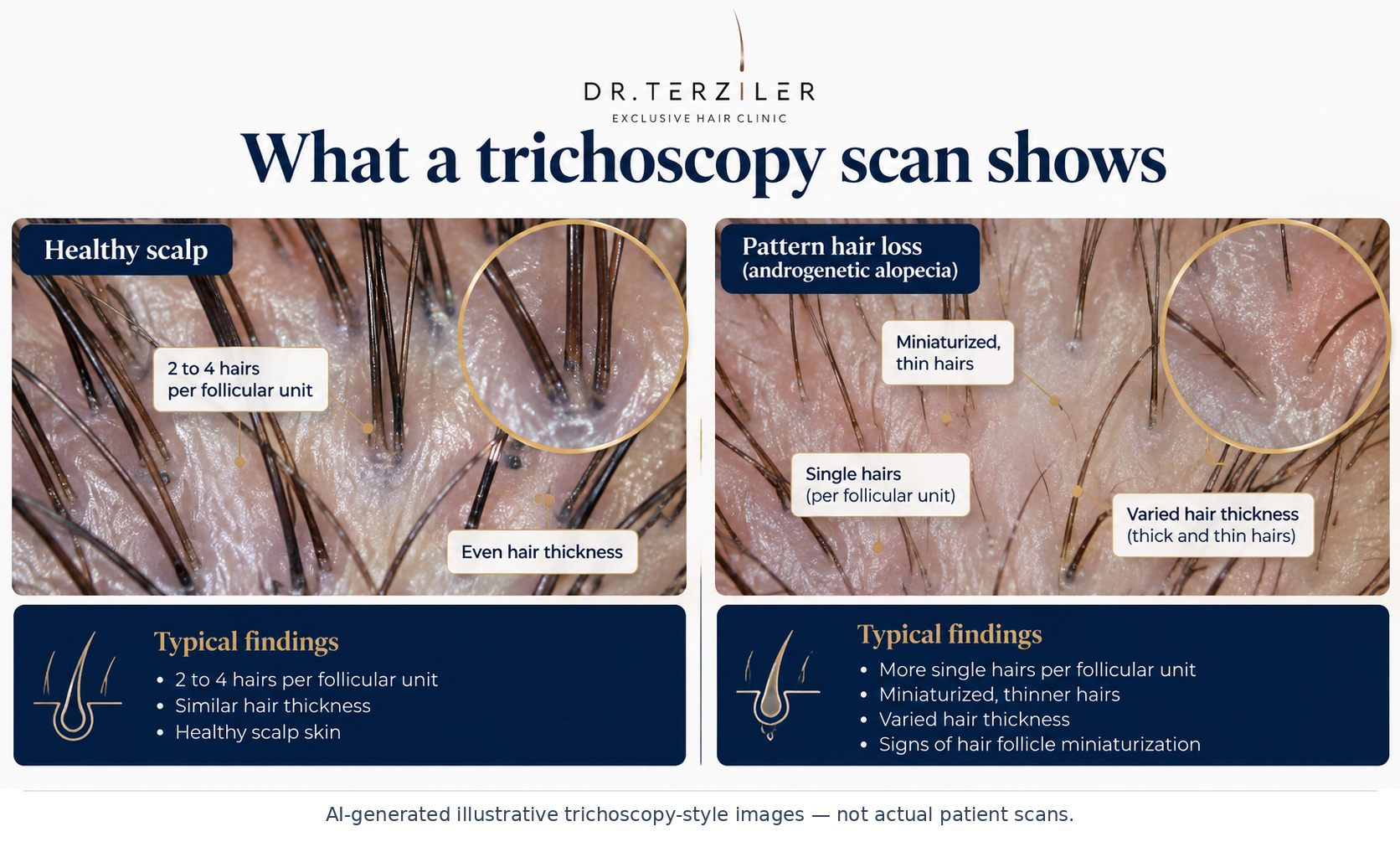
| Finer, shorter hairs in a thinning area | Miniaturization may support pattern loss. | Trichoscopy can assess shaft-diameter variation |
| Sudden handfuls or a round patch | Shedding, autoimmune loss, infection or pulling need different assessment. | Arrange a clinician review |
| Burning, pain, redness, scale or pus | Inflammatory or infectious scalp disease needs attention. | Do not wait for a shampoo to solve it |
Take monthly photographs rather than checking the hairline every hour. For male-pattern reference images, see the Norwood scale. A stage describes a pattern; it does not explain every cause or prescribe a graft count.
What are the main types of hair loss?
The main types are pattern hair loss, telogen effluvium, alopecia areata, traction alopecia, anagen effluvium and scarring alopecia. Hair pulling and fungal infection are other important causes.[3][5]
| Тип | Typical clues | Can hair grow back? |
|---|---|---|
| Androgenetic alopecia | Receding temples/crown, a widening part or reduced top-scalp density. | Early treatment may thicken miniaturized hair and slow progression. Full restoration is not assured. |
| Telogen effluvium | Increased shedding across the scalp, often after a trigger. | Often recovers after the trigger is addressed. Persistent shedding needs reassessment. |
| Alopecia areata | Smooth patches; sometimes eyebrow, beard or more extensive loss. | Regrowth is possible, but the course and recurrence are unpredictable. |
| Traction alopecia | Edges or areas repeatedly pulled by tight hairstyles. | Early traction may improve when pulling stops. Long-standing damage can scar. |
| Anagen effluvium | Rapid hair loss during some chemotherapy regimens or other major insults. | Often regrows after treatment, but timing and completeness vary. |
| Scarring alopecias: LPP, FFA, CCCA | Inflammation, reduced follicular openings, patches or a changing hairline. Symptoms may be subtle. | Destroyed follicles do not regrow. Early treatment protects remaining follicles. |
| Trichotillomania | Broken hairs of different lengths from recurrent pulling. | Behavioral treatment can help reduce pulling and support regrowth. |
| Tinea capitis | Scaly patches, broken hairs or black dots, especially in children. | Needs medical treatment, usually an oral antifungal; shampoo alone is insufficient. |
Several conditions can coexist. For example, temporary shedding may make underlying pattern hair loss more visible. A smooth patch or shiny scalp should not be used alone to judge whether a follicle is permanently lost.[33]
What causes hair loss?
Heredity is a leading cause of progressive hair thinning. Hormonal changes, illness, stress, autoimmune disease, nutrition, medicines, scalp infection and repeated traction can also cause loss. The same person can have more than one contributor.[1][2]
| Cause or contributor | Typical clues | Next step |
|---|---|---|
| Genes and DHT | A gradual hairline, crown or part-line change. | Family history can come from either parent. Read how DHT affects sensitive follicles. |
| Stress, fever, illness or surgery | Diffuse shedding after a delay. | Review events roughly 2–3 months before it became noticeable. |
| Pregnancy, postpartum changes, menopause, PCOS or thyroid disease | Diffuse loss, pattern change, or a combination. | Discuss cycle changes, fatigue, weight change and other symptoms. |
| Iron deficiency or inadequate nutrition | Diffuse shedding; sometimes fatigue or heavy menstrual bleeding. | Review diet, blood count and ferritin when indicated. |
| Medicines and weight change | A new medicine, changed dose or rapid weight loss may be relevant. | Review timing with the prescriber; do not stop treatment on your own. |
| Autoimmune disease | Patches, extensive loss, or scalp inflammation. | A dermatologist distinguishes alopecia areata from other causes. |
| Repeated pulling or tight hairstyles | Breakage and thinning where tension is greatest. | Reduce traction early. [35] |
| Scalp infection | Scale, broken hairs, tenderness or swelling. | Children and painful or spreading disease need timely assessment. |
| Scarring inflammation | Burning, redness, altered hairline or reduced follicular openings. | Early dermatology assessment; biopsy may be needed. |
Why does hair shedding start months after a trigger?
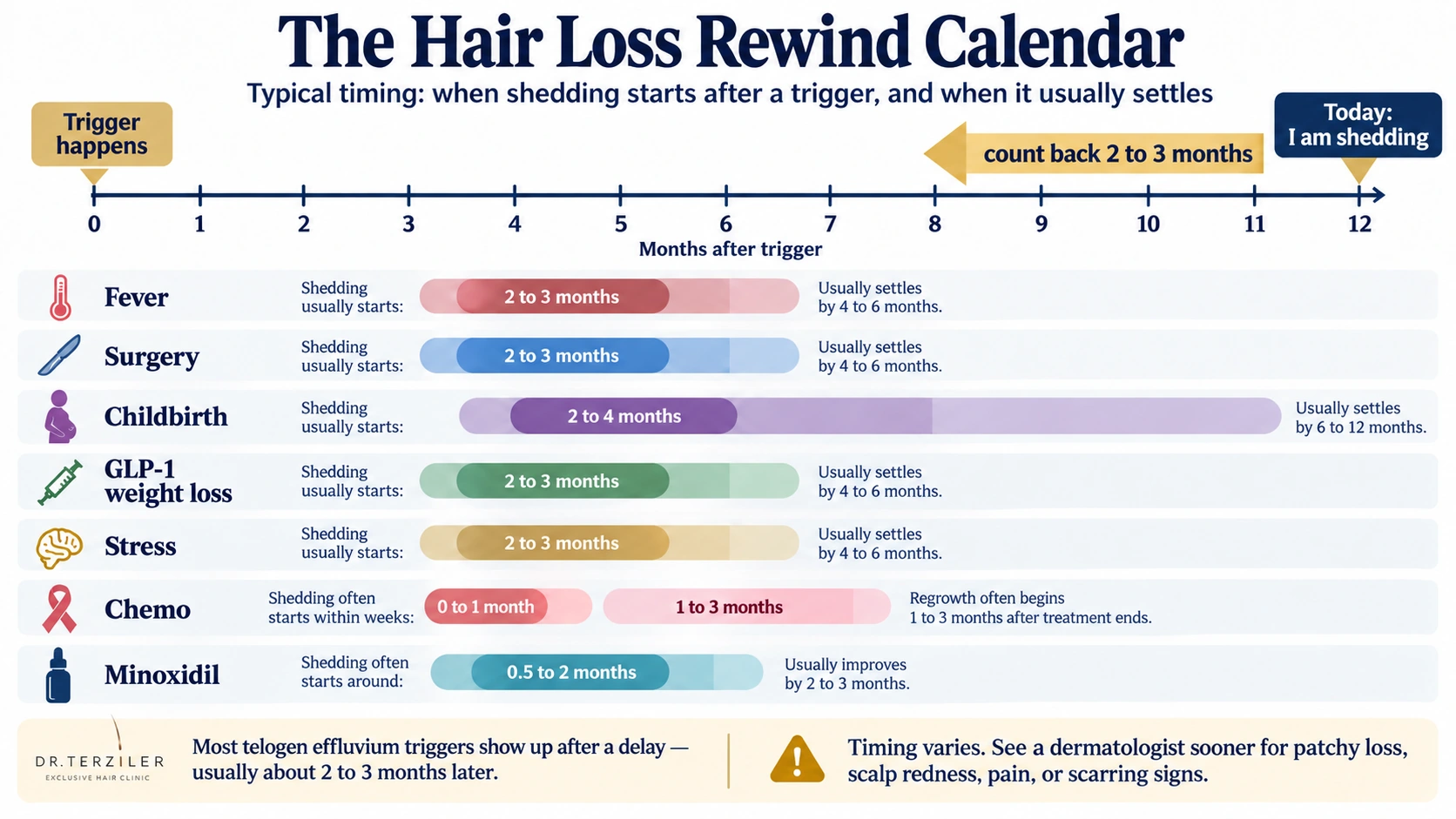
Hair does not always shed on the day of the trigger. In telogen effluvium, more follicles enter a resting stage before the hair is released. Today’s shedding can reflect an event from roughly two to three months ago.[4]
Rewind your shedding calendar
Choose when shedding began and the context to explore. Your result shows a history window, useful questions and the next assessment step.
Bring these three things to your assessment
This is an educational discussion guide, not a diagnosis or a prescription.
Prefer to talk it through? Use the assessment guide or request an appointment.
| Possible trigger | When shedding may start | What recovery can mean |
|---|---|---|
| Illness, high fever, major surgery or severe stress | Often around 2–3 months later. | Excess shedding can ease after the trigger resolves. Recovery of visible fullness often takes months; AAD describes 6–9 months for many people. [4] |
| Childbirth | Often a few months after birth; commonly peaks around month 4. | Many recover normal fullness by the child’s first birthday. Seek review if it does not recover. [34] |
| Rapid weight loss or inadequate intake | A delayed diffuse-shedding pattern can follow major change. | Correct inadequate intake with the treating team and review ongoing weight loss. Drug-related risk cannot be reduced to one mechanism. [17] |
| Starting or stopping hormonal contraception | May be delayed rather than immediate. | Discuss timing and other causes with the prescriber. [1][5] |
| Chemotherapy | Can begin within weeks of treatment. | Regrowth often begins after treatment ends, but the medicine and regimen matter. Ask the oncology team. [5] |
| Starting minoxidil | Some people notice a temporary increase early in treatment. | Early shedding does not prove the drug is working. Persistent or worrying loss needs review. [33] |
| Hair transplant shock loss | Often a few weeks after surgery. | Transplanted shafts and nearby native hairs can shed. The pattern, donor status and medical history affect recovery. |
Which vitamin deficiencies cause hair loss?
Iron deficiency, inadequate protein or energy intake and some other deficiencies can contribute to shedding. Vitamins do not treat every form of alopecia. A deficiency should be assessed and corrected in context, rather than treating all thinning with supplements.[1][5]
| Nutrient | What matters | How to assess it |
|---|---|---|
| Iron | Iron deficiency may contribute to diffuse shedding, especially with heavy periods or low intake. | Blood count and ferritin when the history supports them; results need clinical interpretation. |
| Vitamin D | Low levels are reported in several hair-loss conditions, but this does not prove supplementation treats every case. | Check when clinically indicated, rather than automatically prescribing high doses. |
| Zinc | Deficiency can affect hair. Excess supplementation can also cause harm. | Test or replace selectively under medical advice. |
| Protein and energy | Restrictive diets and rapid weight loss can trigger shedding. | Review actual intake and weight trajectory; a dietitian may help. |
| Biotin | True deficiency is uncommon. Extra biotin is not a reliable regrowth treatment without deficiency. | Tell the clinician and laboratory about supplements. [26][27] |
| B12 and folate | Testing can be relevant with restrictive diets, malabsorption or other risk factors. | Use the medical history and blood-count findings to guide testing. |
| Excess vitamin A or selenium | Too much can itself contribute to loss. | Review all gummies, supplements and overlapping products. |
There is no single ferritin target that guarantees regrowth for everyone. Ask what your result means alongside your blood count, symptoms and other findings. A digital scalp assessment such as the clinic’s Tricho Test assesses the hair and scalp; it is not a substitute for blood tests when they are needed.
Which medications and illnesses can cause hair loss?
Thyroid disease, iron-deficiency anemia, autoimmune disease, high fever and major weight change can appear in a hair-loss history. Some medicines can also contribute. Review the whole timeline with a doctor before attributing shedding to one prescription.[1][5]
| Group | Why it may be relevant | What to do |
|---|---|---|
| Chemotherapy | Some anticancer regimens can affect actively growing hairs. | Discuss expected loss, regrowth and suitability for scalp cooling with oncology. |
| GLP-1 / related weight-management medicines | Hair loss has been reported during treatment; weight loss, nutrition and other mechanisms may contribute. | Review the timing, nutrition and alternative causes with the prescriber. |
| Retinoids | Medicines such as isotretinoin can be relevant in a shedding history. | Check the medication timeline with the treating clinician. |
| Hormonal medicines | Starting or stopping contraception or using testosterone can affect susceptible patients. | Review the specific medicine, timing and pattern. |
| Some cardiovascular medicines | Selected blood-pressure medicines or anticoagulants can be associated with shedding. | Do not assume the drug is the cause; request a medication review. |
| Some mood or seizure medicines | Selected antidepressants or antiseizure medicines may be relevant. | Do not discontinue a medicine abruptly to test the theory. |
GLP-1 drugs and hair loss: what the 2026 evidence actually shows
Relative risk needs an absolute number
A 2026 observational study in people with type 2 diabetes reported 6.91 vs 5.04 alopecia diagnoses per 1,000 person-years for GLP-1 drugs vs SGLT2 inhibitors. The adjusted relative risk was 37% higher.[17]
A second comparator is a separate comparison
Against DPP-4 inhibitors, the study reported 6.53 vs 3.89 diagnoses per 1,000 person-years and a 68% higher adjusted relative risk. These are incidence rates, not a prediction for your own treatment.[17]
The BMJ study used observational data and compared diabetes treatments. It does not prove that GLP-1 treatment caused every diagnosis, and its results do not directly describe every person taking a medicine for weight loss. A September 2026 NYU study used genetic proxies for GLP-1 receptor biology. It did not follow a trial of people randomly assigned a weight-loss drug.[17][18]
What are the risk factors for hair loss?
Family history on either side, increasing age, major weight loss, some medical conditions, stress and poor nutrition can be relevant. Risk factors guide the history; they do not diagnose an individual scalp.[1]
Both parents count
A study of 52,874 UK Biobank men identified 287 independent genetic signals linked to male pattern baldness. Many were outside the X chromosome. The familiar “only your mother’s side” explanation is incomplete.[9]
What the identical-twin study can tell us
A 2013 twin study found associations between hair loss and exposures such as smoking and stress. It was observational. It does not prove that a hat prevents baldness, or establish a safe alcohol threshold.[10]
Ordinary comfortable hats do not cause hereditary baldness. Repeated tight pulling can damage hair, so fit and tension still matter. Protect exposed scalp from sunburn and address scalp symptoms rather than avoiding all headwear.[35]
How can you tell if hair loss needs medical attention?
Sudden or patchy loss, scalp inflammation and systemic symptoms deserve a medical assessment. Some inflammatory conditions can permanently damage follicles. Early evaluation matters even when the area is small.[2][33]
A GP or dermatologist can investigate medical causes and refer when needed. A transplant consultation does not replace evaluation for infection, autoimmune disease or suspected scarring alopecia.
How is hair loss diagnosed?
Diagnosis combines your history, scalp examination and, when useful, trichoscopy, a hair-pull test, targeted blood tests or a biopsy. A photo alone may not show scalp inflammation or distinguish conditions that look similar.[5][33]
| Step | What it can show | When it helps |
|---|---|---|
| History and timeline | Start date, distribution, triggers, family history, medicines and nutrition. | The starting point for every diagnosis. |
| Scalp examination and photographs | Pattern, inflammation, scale, breakage and visible follicular openings. | Helps distinguish loss, shedding and shaft damage. |
| Hair-pull test | Whether active shedding is present in the areas tested. | Used and interpreted by a clinician when useful. |
| Trichoscopy | Magnified hair-shaft variation, follicular openings and scalp features. | Useful in distinguishing several diagnoses; not a universal answer by itself. |
| Targeted blood tests | For example blood count, ferritin or thyroid function, with other tests if indicated. | Based on symptoms and findings, rather than a standard large panel for everyone. |
| Scalp biopsy | The pattern and location of inflammation and scarring. | Considered when scarring is suspected or the diagnosis remains uncertain. |
Dr. Terziler Exclusive Clinic offers digital hair and scalp assessment with Tricho Test. Density and hair-shaft findings can support planning. They must be interpreted with the medical history before recommending a treatment or a transplant.
Build your appointment checklist
Choose your questions. A visible summary updates as you select, then you can copy it, open a WhatsApp draft or arrange an assessment.
Prefer to talk it through? Use the assessment guide or request an appointment.
Dr. Terziler Hair Loss Report 2026
What 500 first consultations showed us about diagnosis, donor planning and treatment history.
Dr. Terziler Exclusive Clinic, Istanbul · January–October 2026
We advised against a hair transplant at the first consultation
The most commonly recorded reasons were active telogen-effluvium shedding, a weak donor area, and age under 25 with rapidly progressing loss. This first-visit decision does not mean that every patient was permanently ineligible for surgery.
See when surgery may be appropriateFerritin was below 30 ng/mL at the first blood test
The clinic reports that low iron stores were often previously unrecognized. Below 30 ng/mL is the reporting threshold used here; ferritin must be interpreted alongside symptoms, the blood count and the clinical context.[36]
Read the nutrient and testing guideThe most common male stage at first consultation
Norwood 4 was recorded in 31% of men, followed by Norwood 3 in 24% and Norwood 5 in 18%. These are the three most frequently recorded stages, not the full stage distribution.
Average age differed between the male and female subgroups
Men first consulted at an average age of 33 and women at 41. In the male subgroup, 27% were under 28. Age is one part of assessment; it does not determine a treatment plan on its own.
Patients reported taking a GLP-1 weight-loss medicine
Examples recorded at intake included Ozempic, Wegovy and Mounjaro. For context, the clinic reports a separate 2025 intake figure of 2%. The prior-year reference is not part of the 500-record 2026 cohort. Medication use at intake does not establish the cause of a patient’s hair loss.
Read the GLP-1 evidence and limitationsTricho Test changed the diagnosis or treatment plan
The most common recorded revision was recognition of donor-area miniaturization, leading to a more conservative planned graft count. This measures a change in clinical planning; it is not an independent diagnostic-accuracy score or a surgical-outcome rate.
Explore digital scalp assessmentStarting treatment and staying with it were different problems
Among patients who had already tried minoxidil, finasteride or both, 64% reported stopping within six months. Early shedding was the most commonly recorded reason. This combined history does not establish a drug-specific adverse-event rate or mean that early shedding always signals a problem.
How to read these findings
Source: Dr. Terziler Exclusive Clinic’s reported review of 500 first-consultation records from January–October 2026, including 350 men and 150 women. Percentages are rounded. Sex-specific findings use the relevant subgroup; the 64% discontinuation figure uses prior treatment users as its denominator.
Prior treatment and reasons for stopping reflect information recorded at intake. These single-clinic descriptive findings are not population prevalence estimates, a controlled comparison or an independent audit. A change in diagnosis or planning does not by itself establish that a treatment improves outcomes.
Medical reviewers: Д-р Сервет Терзилер и Д-р Кюршат Ялвач.
How do you stop hair loss? Match treatment to the diagnosis.
Treat the cause first. Pattern hair loss, temporary shedding, infection and autoimmune disease do not share one treatment plan. For pattern loss, minoxidil and finasteride have established evidence; other options may be useful in selected cases.[6][33]
The labels below are this guide’s plain-language summaries. They are not a complete set of official AAFP SORT grades, and they do not rank every treatment against every other treatment. Suitability and the balance of benefit and risk matter more than the label.
Bring these three things to your assessment
This is an educational discussion guide, not a diagnosis or a prescription.
| Лечение | Best-matched diagnosis | Evidence context | What to discuss |
|---|---|---|---|
| Topical minoxidil | Pattern hair loss in men and women | Established for pattern loss | An option with good supporting evidence. Results take months and continued use is usually needed. Irritation and unwanted hair growth can occur. [6][33] |
| Oral finasteride | Male pattern hair loss | Established for suitable men | Prescription treatment with sexual and mood-related risks to discuss. Not suitable for everyone; pregnancy-related precautions apply. [6][23][24] |
| Low-dose oral minoxidil | Selected pattern-loss cases | Off-label | Requires an individualized prescription and monitoring for blood-pressure, heart-rate or fluid-related effects. Oral use for hair loss differs from approved topical products. [33] |
| Microneedling with minoxidil | Pattern hair loss | Adjunct evidence | A 2023 meta-analysis found improvement with combination treatment, but protocols and study quality vary. Avoid unsupervised aggressive scalp needling. [7] |
| PRP injections | Selected pattern-loss cases | Adjunct evidence | Preparation, injection schedules and outcomes vary. Ask how benefit will be measured and what follow-up is included. |
| Low-level laser / light devices | Pattern hair loss | Adjunct option | Some devices have FDA clearance. Device clearance is not proof that every red-light product regrows hair or that it is a drug approval. |
| Spironolactone | Selected female pattern-loss cases | Off-label | Medical review is needed, including pregnancy precautions and monitoring when indicated. |
| Address the trigger or a confirmed deficiency | Telogen effluvium / deficiency-related shedding | Cause-specific care | Correct inadequate intake or deficiency, review medicines with the prescriber and monitor recovery. There is no universal supplement or guaranteed timetable. [4][5] |
| JAK inhibitors | Severe alopecia areata | Specialist treatment | Approved options have product-specific age limits and monitoring requirements. Olumiant’s current US label includes patients aged 12 and older. Infection and other serious risks require assessment. [20] |
| Corticosteroid treatment | Selected alopecia areata cases | Diagnosis-specific | A dermatologist may use injections or other regimens depending on the area, age and severity. [5][6] |
| Oral antifungal treatment | Tinea capitis | Diagnosis-specific | Scalp fungal infection usually requires prescription oral treatment. Shampoo alone is not sufficient. [5] |
| Habit-reversal / behavioral therapy | Trichotillomania | Diagnosis-specific | Treatment targets recurrent pulling and its triggers. A mental-health professional may be part of care. [6] |
| Anti-inflammatory medical treatment | Scarring alopecias | Early specialist care | The aim is to control inflammation and protect remaining follicles. Treatment depends on the specific diagnosis and may require biopsy. [33] |
| Exosomes и stem-cell-based approaches | Investigational hair-restoration approaches | Emerging / uncertain | Evidence and products are not standardized. There is no FDA-approved exosome product; do not confuse registration or marketing with approval. [25] |
| Hair transplantation | Selected stable pattern loss with suitable donor hair | Established surgery | Redistributes follicles; it does not create unlimited donor hair or stop ongoing loss of native hair. Surgical risks and future loss need planning. [16] |
Finasteride side effects: what deserves a proper conversation?
Sexual side effects, mood changes and suicidal thoughts are important issues to discuss with the prescriber. The EMA issued risk-minimization advice in 2025. The FDA also warned about adverse-event reports involving compounded topical finasteride, which can be absorbed systemically. “Topical” does not automatically mean risk-free.[23][24]
A 2026 meta-analysis found a pooled hazard ratio of 1.07 for suicide or suicidal ideation, with a 95% confidence interval of 0.76–1.51. That estimate was not statistically significant. The studies were observational, included many men treated for enlarged prostate and differed in design. A separate neuropsychiatric estimate should not be confused with the suicide estimate. This analysis does not remove the need for informed consent and monitoring.[13]
What is the “Big 3” for hair loss?
The online term usually means minoxidil, finasteride and ketoconazole shampoo. It is a community nickname, not a universal medical guideline. Minoxidil and oral finasteride have stronger evidence for suitable male pattern-loss patients. Ketoconazole has a more limited role, including treatment of certain scalp conditions; it is not a substitute for diagnosis.[6]
Treatment during pregnancy, when planning pregnancy or while breastfeeding needs a separate medical discussion. Do not assume a routine advertised for men is appropriate for everyone. Copper-peptide products are also marketed for hair; assess product-specific evidence rather than treating them as equivalent to established medicines.
What is new in hair loss treatment in 2026?
This research snapshot is dated 26 October 2026. An approval, a trial result, a genetic association and a company announcement answer different questions. Each item below identifies which kind of information it is.
19 October 2026VDPHL01: positive Phase 3 company results
VDPHL01: positive Phase 3 company results
Veradermics reported positive study 304 results in 536 men. VDPHL01 is an investigational extended-release oral minoxidil formulation. A company topline announcement is not an FDA approval or a substitute for the full study report.[19]
13 October 2026CINAINU: Breakthrough Therapy designation
CINAINU: Breakthrough Therapy designation
Legacy Healthcare announced a Breakthrough Therapy designation for its investigational alopecia areata treatment, including development for children aged 2 and older. Designation supports development; it does not authorize routine prescribing.[22]
25 September 2026Olumiant: severe alopecia areata indication expanded
Olumiant: severe alopecia areata indication expanded
The updated US prescribing information includes severe alopecia areata in adults and pediatric patients aged 12 and older. Product-specific screening, contraindications and boxed warnings remain relevant.[20]
3 September 2026GLP-1 biology: genetic research needs careful interpretation
GLP-1 biology: genetic research needs careful interpretation
NYU researchers reported findings using genetic proxies for GLP-1 receptor biology. This is not a randomized drug-treatment study and cannot establish an individual user’s chance of hair loss.[18]
12 August 2026Upadacitinib: Phase 3 alopecia areata trial data
Upadacitinib: Phase 3 alopecia areata trial data
JAMA Dermatology published two randomized Phase 3 trials in adults and adolescents with severe alopecia areata. Positive trial results and a licensed indication are separate questions; check the current product label.[21]
22 July 2026GLP-1 medicines: an observational alopecia signal
GLP-1 medicines: an observational alopecia signal
The BMJ report found higher alopecia diagnosis rates against two diabetes-drug comparators. The absolute rates remained relatively low, and the study design cannot prove causation. See the absolute-rate comparison above.[17]
When is a hair transplant the right answer?
A transplant can help selected people with stable pattern hair loss and a suitable donor area. It moves follicles into thinning areas; it does not create new follicles or treat every form of alopecia. Donor safety, future progression and a realistic hairline are central to planning.
| Situation | Planning approach |
|---|---|
| Stable pattern loss and adequate donor hair | A consultation may support surgery after realistic coverage and future loss are considered. |
| Female pattern loss | Suitable only in selected cases after evaluating the donor area and relevant medical contributors. |
| Recent or ongoing diffuse shedding | Establish the cause and stability before surgical planning. |
| Alopecia areata | Transplantation is generally not a routine solution because the disease can recur and affect grafts. |
| Active scarring inflammation | Control and assess the disease first. Active inflammation can threaten transplanted hair. |
| Young age with rapidly progressive loss | Prioritize diagnosis, appropriate medical care and a conservative long-term donor plan. |
Dr. Terziler Exclusive Clinic offers У вас есть?, Роботизированная DHI и Роботизированная система DHI «Пикассо». Dr. Servet Terziler developed the clinic’s robotic implantation system. The system supports implantation planning and delivery; it should not be confused with robotic follicle extraction. Discuss who performs assessment, channel creation, extraction and implantation in your own protocol.
Medical care may still be relevant after surgery. A randomized study of finasteride around transplantation found benefit for surrounding non-transplanted hair in suitable men. Medication decisions require their own benefit–risk assessment.[16]
View clinic patient results with attention to lighting, timing and the patient’s starting point. For future technology, hair banking and hair cloning remain distinct from a promise of unlimited donor follicles today.
Can lost hair grow back?
Regrowth depends on the cause and whether viable follicles remain. Telogen effluvium often recovers, early traction can improve, and alopecia areata may regrow but can relapse. Pattern loss may respond to treatment. Follicles destroyed by scarring cannot be revived with a growth product.[3][4][35]
Fine hairs are a clue, not a guarantee
Miniaturized hairs may be visible in pattern loss. Their presence can support a treatment discussion but does not predict how much density will return.
Shiny skin is not a home diagnosis
Lighting, wet hair and a smooth patch can mislead. Trichoscopy and, when indicated, biopsy are more informative than deciding from appearance alone.
Recovery also has two clocks: reduced shedding and visible fullness. Less shedding may come before a noticeable cosmetic change. Agree a review date and standardized photographs with the treating clinician rather than switching products every week.
How can you support hair growth naturally?
Adequate food intake, correcting a genuine deficiency and reducing traction can help the right patient. No oil, drink or gummy reliably treats every cause of hair loss. Delaying effective care for an inflamed scalp can matter more than the product you choose.
| Option | Evidence and limits | Practical verdict |
|---|---|---|
| Correct a confirmed deficiency or inadequate intake | Useful when that problem contributes to loss. More of a nutrient is not automatically better. | Cause-specific care |
| Stop repeated traction | Reducing tension early can prevent further damage. Long-standing scarring may be permanent. [35] | Actionable |
| Rosemary oil | A small six-month study compared rosemary oil with 2% minoxidil. It does not establish equivalence to all minoxidil products or prove efficacy for every cause. Irritation is possible. [28] | Limited evidence |
| Pumpkin seed oil | A small randomized study in men reported benefit. Larger independent studies are needed before treating it as an established replacement. [31] | Limited evidence |
| Saw palmetto | Evidence is smaller and less consistent than for established pattern-loss medicines. Supplements can still have adverse effects. | Uncertain benefit |
| Onion juice, batana oil or rice water | Small onion-juice research exists in alopecia areata, but it does not support these products as general hair-loss cures. Robust evidence for batana oil or rice water regrowing hair is lacking. [32] | Not established |
| Scalp massage | Gentle massage may feel pleasant. It is not a proven treatment for all alopecia and can aggravate an inflamed scalp. | Comfort, not a cure |
| Biotin or collagen gummies | No reliable evidence that they reverse pattern hair loss in a person without a relevant deficiency. Biotin can interfere with tests. [27] | Check the claim |
What food or drink stops hair fall?
No single food or drink stops genetic hair loss. Meals that provide adequate energy, protein, iron and other nutrients support normal growth. Restrictive dieting may do the opposite. Water, green tea and protein shakes are not stand-alone regrowth treatments. If intake is poor or weight is changing quickly, ask for individualized nutrition advice.[1][5]
Smoking and alcohol associations in observational hair-loss studies do not establish a universal dose threshold for preventing baldness. Reducing smoking has wider health benefits; do not read the twin study as a prescription for a particular number of drinks.[10]
Creatine, hats, washing and Gen Z: common questions
Does creatine cause hair loss?
The concern came partly from a 2009 rugby-player study that measured hormones, not hair loss. A 2025 randomized trial in 45 recruited resistance-trained men measured hair-related outcomes and found no significant DHT or hair-parameter differences over 12 weeks. That small, short study is reassuring but cannot exclude every long-term effect in every user.[14][15]
Do hats or daily washing make you bald?
Why does Gen Z seem to be balding so fast?
There is no robust evidence here that an entire generation is balding faster than earlier generations. Pattern loss can begin in the late teens. Phones and social media may change awareness, but that does not establish a biological generational trend. New loss at 20 still deserves a diagnosis.[1]
Why do searches and shedding seem worse in autumn?
Seasonal fluctuations can occur. A published Google Trends analysis found seasonality in hair-loss searches across countries; search volume is not a direct measurement of each person’s hair shedding. Do not dismiss patches, pain or progressive thinning as seasonal.[11]
What about chlorine, hairdryers and exercise?
Hair-shaft damage, scalp irritation and follicular hair loss are different issues. Explore our guides to chlorine, hairdryers и excessive exercise. Avoid attributing a changing hairline to one habit without checking the pattern and medical history.
Hair loss in women and men: what is different?
Typical patterns differ, but there is overlap. Men often notice the temples and crown; women often notice a widening part or reduced ponytail volume. Neither sex nor a pattern label replaces a medical history and examination.[5][6]
| Topic | Men | Women |
|---|---|---|
| Common distribution | Temples, hairline and crown. | Widening part and reduced top-scalp density; other patterns are possible. |
| Pattern scales | Norwood is commonly used. | Ludwig or Savin may be used. |
| Tests | History and scalp findings guide any laboratory tests. | History and scalp findings guide tests; heavy bleeding, cycle changes or signs of androgen excess can matter. |
| Medical options | Minoxidil; oral finasteride in suitable patients; other individualized options. | Minoxidil; selected off-label options after medical and pregnancy-related assessment. |
| Surgical planning | Stable pattern, donor reserve and future progression. | Selected cases with a stable, suitable donor area and a clear diagnosis. |
Postpartum shedding, heavy menstrual bleeding, thyroid symptoms and signs of PCOS can change the assessment. Hormone panels are not automatically needed for every woman with thinning. A пересадка волос у женщин is a consideration for selected patients after the diagnosis and donor area are assessed.
What are the psychological effects of hair loss?
Hair loss can affect mood, self-confidence, sleep and social life. Feeling distressed is a valid reason to ask for support. You do not need to wait until the loss is “bad enough.”
A 2025 systematic review included 13 studies with 2,737 people with androgenetic alopecia and 17,382 controls. It found associations with worse psychological outcomes. The included studies were observational and heterogeneous; they do not establish that hair loss alone caused each symptom or provide one universal depression rate.[12]
A useful consultation question is: “What would improvement look like for me, and how will we know whether the plan is helping?” That creates a goal beyond inspecting the mirror every morning.
Can you prevent hair loss?
You cannot remove inherited susceptibility, but appropriate early care may slow pattern loss. Some loss related to traction, inadequate intake or treatable medical conditions can be reduced by addressing the cause.[1][35]
Keep a useful baseline
If you notice change, take monthly photos with the same lighting, part and hair condition. Bring older photographs to the appointment.
Avoid preventable triggers
Eat adequately, address confirmed deficiencies and avoid crash diets. Discuss major weight change or restrictive intake with the treating team.
Reduce repeated tension
Loosen painful styles and avoid continuous pulling from braids, extensions or tightly secured buns. Early traction is easier to address.
Look after the scalp
Protect exposed scalp from sunburn and seek care for persistent inflammation. Ask oncology whether scalp cooling is appropriate if chemotherapy is planned.
Do not start multiple medicines or supplements at once to “cover everything.” A diagnosis, a baseline and a planned review make it easier to understand benefits and adverse effects.
Hair loss treatment in Turkey: what should you check?
Compare clinical responsibility, diagnosis, donor planning and follow-up alongside price. A treatment package is useful only when it matches the condition you actually have. The ISHRS warns about medical aspects of hair restoration being delegated to unlicensed personnel.[30]
Seven questions to ask any clinic
- Who is the responsible physician, and who performs each medical and surgical stage?
- How many patients does the team treat in one day?
- Can I verify the facility’s license, international-patient authorization and claimed accreditation?
- Will a clinician diagnose the type of hair loss before discussing surgery?
- What donor reserve is realistic now and over my lifetime?
- What is included in the written price, and what are the follow-up and revision terms?
- Can I view standardized patient photographs with clear timing and starting-point context?
At Dr. Terziler Exclusive Clinic, packages start from €4,500; the final quote follows assessment and confirmed inclusions. DHI, Robotic DHI and Picasso Robotic DHI options are quoted according to the individual treatment plan. See the cost guide и package information for current context.
What your assessment should clarify
The working diagnosis, scalp findings, whether additional investigation is needed, and whether monitoring, medical treatment or surgery fits your case.
What your treatment plan should explain
The responsible clinical team, realistic goals, donor limits if surgery is proposed, material risks, total quote and planned follow-up.
The clinic’s main website introduces its services, and its AACI accreditation record provides public facility verification. Accreditation does not guarantee an individual outcome.
Choose your next hair loss guide
Start with the question that matches your situation. The links below lead to a relevant section or a published clinic guide, so you can continue without retracing the whole article.
Causes and triggers
Trace the pattern and the timeline.
Types of hair loss
Understand what a diagnosis changes.
Diagnosis and tests
Prepare a focused clinical conversation.
Treatment evidence
Compare benefits, limits and monitoring.
Nutrition and supplements
Separate a deficiency from a promise.
Temporary shedding
Look for delayed triggers and recovery.
Women, men and well-being
Build the plan around the person.
Medicines and safety
Review treatment with the prescriber.
Everyday habits
Understand damage, irritation and loss.
Surgical planning
Keep donor reserve and future loss in view.
Research and future options
Keep early evidence in perspective.
Hair loss FAQ
What is a major cause of hair loss?
Heredity is a leading cause of progressive pattern hair loss. Other important causes include delayed shedding after illness or weight change, autoimmune disease, traction, scalp infection and some medical conditions. The pattern and timeline help a clinician distinguish them.
How can I stop my hair loss?
Identify the cause first. Pattern loss may respond to minoxidil or other suitable prescription treatment. Temporary shedding requires review of the trigger; infection and inflammatory scalp disease need their own care. Seek an examination if loss is sudden, patchy, symptomatic or persistent.
What helps hair growth?
For pattern hair loss, minoxidil and oral finasteride in suitable men have established evidence. Correcting inadequate intake or a confirmed deficiency helps when it contributes to shedding. Adjuncts such as PRP or certain light devices may be considered, with realistic expectations and follow-up.
What vitamin is good for hair loss?
There is no universal hair-loss vitamin. Iron or other nutrients should be assessed and replaced when a relevant deficiency is present. High-dose biotin is not a routine regrowth solution and can interfere with laboratory tests. Discuss supplements before testing.
Is losing hair at 20 normal?
Pattern hair loss can begin in the late teens or twenties. That does not make every sudden loss at 20 normal. New patches, rapid thinning or scalp symptoms deserve assessment. A young person’s treatment and any surgical plan should account for future progression.
Does stress cause hair loss?
A major physical or emotional stressor can trigger telogen effluvium, often noticed about two to three months later. Stress is not the explanation for every episode of shedding. Recovery depends on the cause, its duration and whether other conditions coexist.
Why do I lose more hair in autumn?
Seasonal changes can occur, and research has found seasonal patterns in hair-loss searches. Search data do not diagnose an individual. Persistent thinning, patches or inflammation should be assessed rather than assumed to be a harmless seasonal change.
Do hats cause hair loss?
Comfortable hats do not cause hereditary baldness. Repeated tension from tight headwear or hairstyles is a different issue and may damage hair. Use a comfortable fit and protect exposed scalp from the sun.
Does creatine cause hair loss?
A 2025 randomized trial found no significant DHT or hair-parameter differences over 12 weeks in a small group of resistance-trained men. An older study measured hormones, not hair loss. Current evidence does not establish that creatine causes baldness, but long-term evidence remains limited.
Can hair loss be a sign of something serious?
Sometimes. Thyroid disease, iron-deficiency anemia, autoimmune conditions, scalp infection and scarring alopecia can be relevant. Arrange assessment for sudden or patchy loss, pain, burning, redness, pus, eyebrow changes or hair loss with other symptoms.
Does washing your hair every day cause hair loss?
Ordinary washing releases hairs that were already shedding. Less frequent washing can make more loose hairs appear in one session. Harsh handling or irritation can cause separate problems. A wash-day count alone cannot rule out a continuing change in density.
Does vaping or smoking cause hair loss?
Smoking has been associated with hair loss in observational studies, but an association does not prove the cause in one person. Research on vaping and alopecia is limited. Discuss smoking and nicotine use with your clinician, especially before a procedure.
Can GLP-1 drugs like Ozempic cause hair loss?
Hair loss is reported during treatment, and rapid weight change or inadequate intake can contribute to shedding. A 2026 observational study found higher alopecia diagnosis rates against diabetes-drug comparators, with relatively low absolute rates. Do not change a prescribed medicine without your prescriber.
What is the Big 3 for hair loss?
The online term usually refers to minoxidil, finasteride and ketoconazole shampoo. It is not a universal guideline. The diagnosis, medical history, pregnancy-related precautions and potential adverse effects determine which, if any, are suitable.
Is a hair transplant a cure for hair loss?
No. It redistributes donor follicles into selected thinning areas. It does not treat every alopecia or stop all ongoing loss of native hair. Donor supply, disease stability, medical treatment and long-term expectations still need assessment.
Which doctor should I see for hair loss?
A GP or dermatologist can assess medical causes, scalp symptoms and the need for tests. A dermatologist is especially important for patches, inflammation or suspected scarring disease. A hair-restoration surgeon can discuss surgery once the diagnosis and suitability are established.
Why you can trust this guide
Medical reviewers for this clinic guide are Д-р Сервет Терзилер и Д-р Кюршат Ялвач. The clinic’s medical perspective is presented alongside health-system guidance, professional-society information, regulatory documents and peer-reviewed research. Company announcements are identified as such.
Dr. Terziler Exclusive Clinic is AACI accredited. Facility accreditation and a doctor’s involvement do not guarantee a treatment result. This page supports informed questions and does not replace examination, diagnosis or an individualized prescription.
Editorial update: . Treatment approvals and research developments are time-sensitive. Check the current product information with your treating clinician.
Hair loss is common. Guessing about it is optional.
Sources and further reading
Numbered links also appear beside the relevant claims above. Study populations, limitations and publication status matter when interpreting a result.
- Mayo Clinic. Hair loss: symptoms and causes.
- NHS. Hair loss.
- Cleveland Clinic. Hair loss (alopecia).
- American Academy of Dermatology. Do you have hair loss or hair shedding?
- Phillips TG, Slomiany WP, Allison R. Hair loss: common causes and treatment. American Family Physician. 2017;96:371–378.
- Dakkak MA, Forde KM, Lanney H. Hair loss: diagnosis and treatment. American Family Physician. 2024;110:243–250.
- Abdi P et al. Topical minoxidil with microneedling for androgenetic alopecia: systematic review and meta-analysis. Archives of Dermatological Research. 2023.
- Mirzoyev SA et al. Lifetime incidence risk of alopecia areata estimated at 2.1%. Journal of Investigative Dermatology. 2014;134:1141–1142.
- Hagenaars SP et al. Genetic prediction of male pattern baldness. PLOS Genetics. 2017;13:e1006594.
- Gatherwright J et al. The contribution of endogenous and exogenous factors to male alopecia: a study of identical twins. Plastic and Reconstructive Surgery. 2013;131:794e–801e.
- Hsiang EY et al. Seasonality of hair loss: a time series analysis of Google Trends data 2004–2016. British Journal of Dermatology. 2018;178:978–979.
- Kong Y et al. Androgenetic alopecia and psychological well-being: a systematic review and meta-analysis. Frontiers in Psychiatry. 2025;16:1705957.
- Fraenza F et al. 5-alpha-reductase inhibitors and suicide and neuropsychiatric outcomes: systematic review and meta-analysis. Frontiers in Urology. 2026.
- Lak M et al. Does creatine cause hair loss? A 12-week randomized controlled trial. Journal of the International Society of Sports Nutrition. 2025.
- van der Merwe J et al. Creatine supplementation and dihydrotestosterone in college-aged rugby players. Clinical Journal of Sport Medicine. 2009;19:399–404.
- Leavitt M et al. Effects of finasteride (1 mg) on hair transplant. Dermatologic Surgery. 2005.
- BMJ Group. GLP-1 diabetes drugs linked to increased risk of hair loss. Publisher research release, 22 July 2026; study DOI: 10.1136/bmj-2026-100077.
- NYU Langone Health. Some hair loss in men linked to use of weight-loss drugs. Genetic-proxy research release, 3 September 2026.
- Veradermics. VDPHL01 Phase 3 study 304 results. Company announcement, 19 October 2026.
- Eli Lilly. Olumiant US prescribing information, revised October 2026. Severe alopecia areata indication, age 12 and older.
- Upadacitinib for severe alopecia areata in adults and adolescents: two Phase 3 UP-AA randomized clinical trials. JAMA Dermatology. Published online 12 August 2026.
- Legacy Healthcare. CINAINU receives FDA Breakthrough Therapy designation. Company announcement, 13 October 2026.
- FDA. Potential risks associated with compounded topical finasteride products. Safety alert, 22 April 2025.
- European Medicines Agency. Measures to minimise the risk of suicidal thoughts with finasteride and dutasteride medicines. 2025.
- FDA. Consumer alert on regenerative medicine products including stem cells and exosomes.
- FDA. Biotin interference with troponin laboratory tests.
- NIH Office of Dietary Supplements. Biotin: health professional fact sheet.
- Panahi Y et al. Rosemary oil vs minoxidil 2% for androgenetic alopecia: a randomized comparative trial. Skinmed. 2015;13:15–21.
- AACI. Dr. Terziler Exclusive Clinic accreditation record C150-2022-ACC-TR-IEEA.
- ISHRS. Consumer alert: hair restoration surgery and unlicensed personnel.
- Cho YH et al. Effect of pumpkin seed oil on hair growth in men with androgenetic alopecia: a randomized trial. 2014.
- Sharquie KE, Al-Obaidi HK. Onion juice: a treatment for alopecia areata. Journal of Dermatology. 2002.
- American Academy of Dermatology. Hair loss: diagnosis and treatment.
- American Academy of Dermatology. Hair loss in new moms.
- American Academy of Dermatology. Hairstyles that pull can lead to hair loss.
- Province of British Columbia. Iron deficiency: diagnosis and management. Ferritin interpretation.