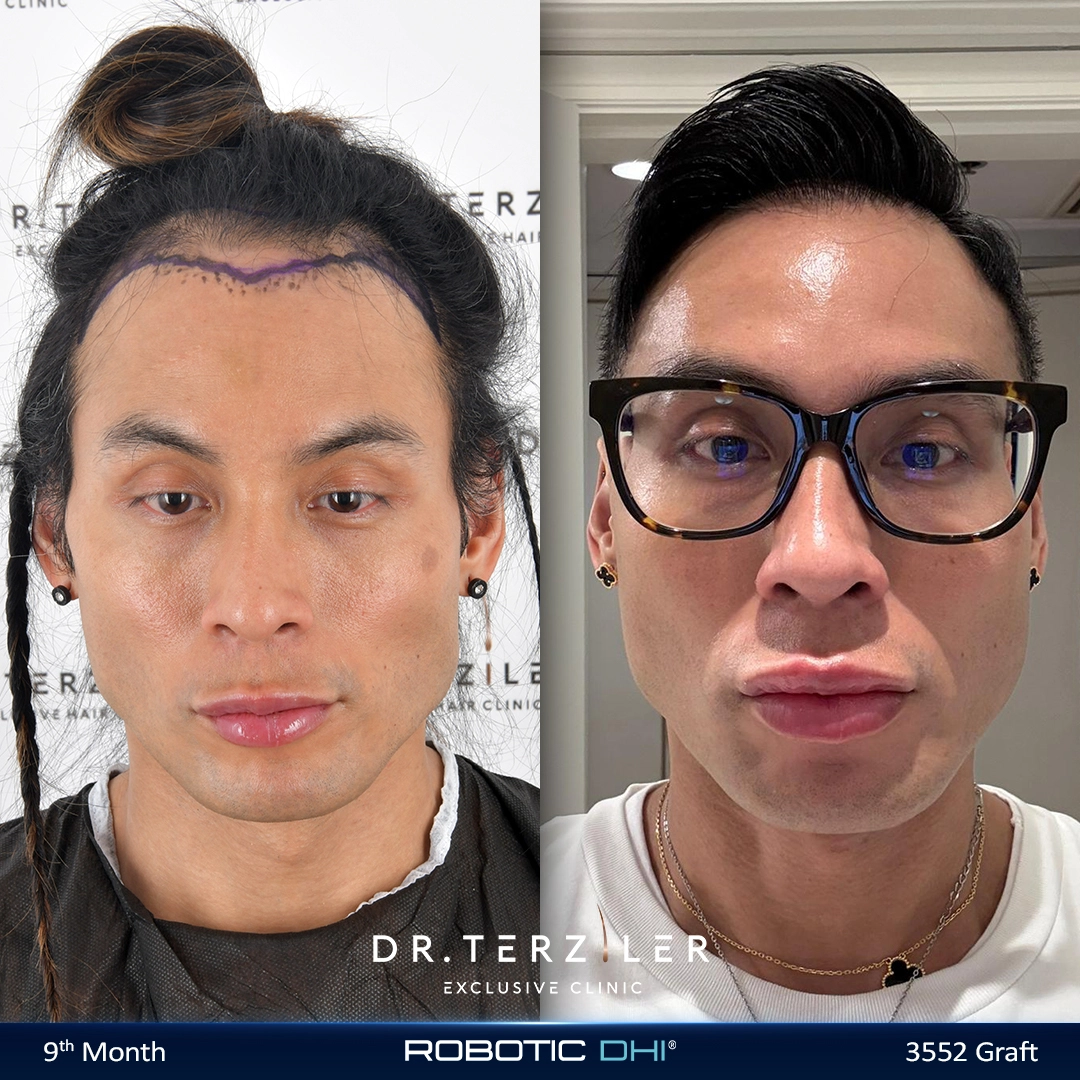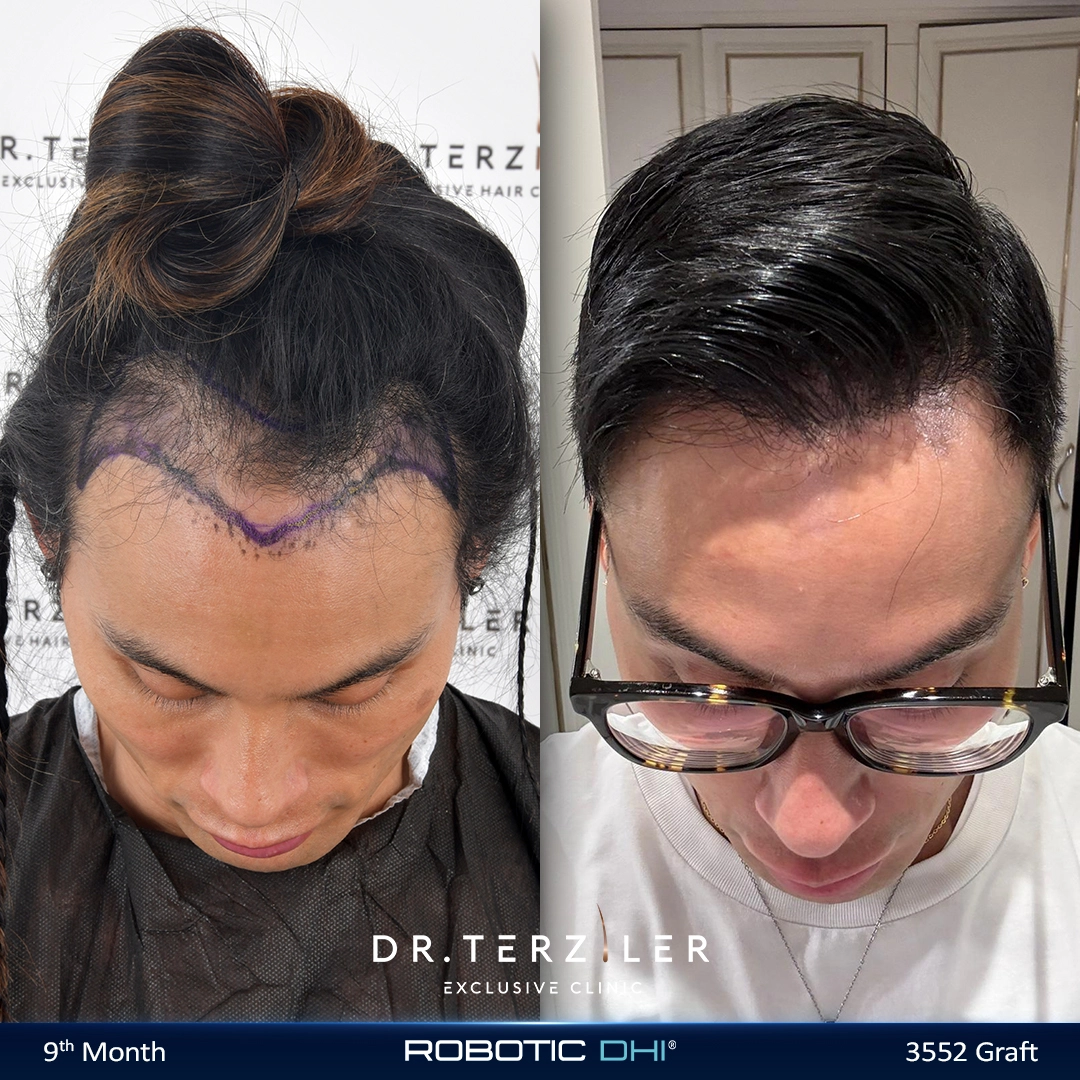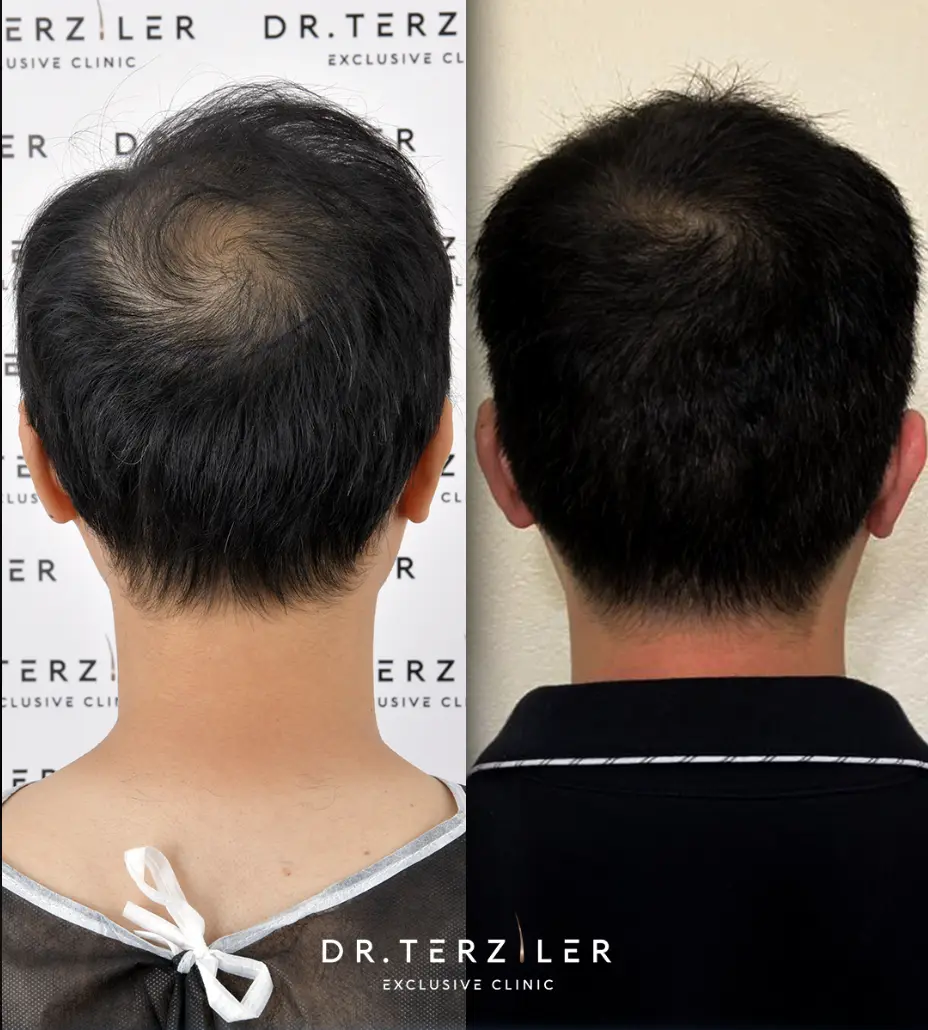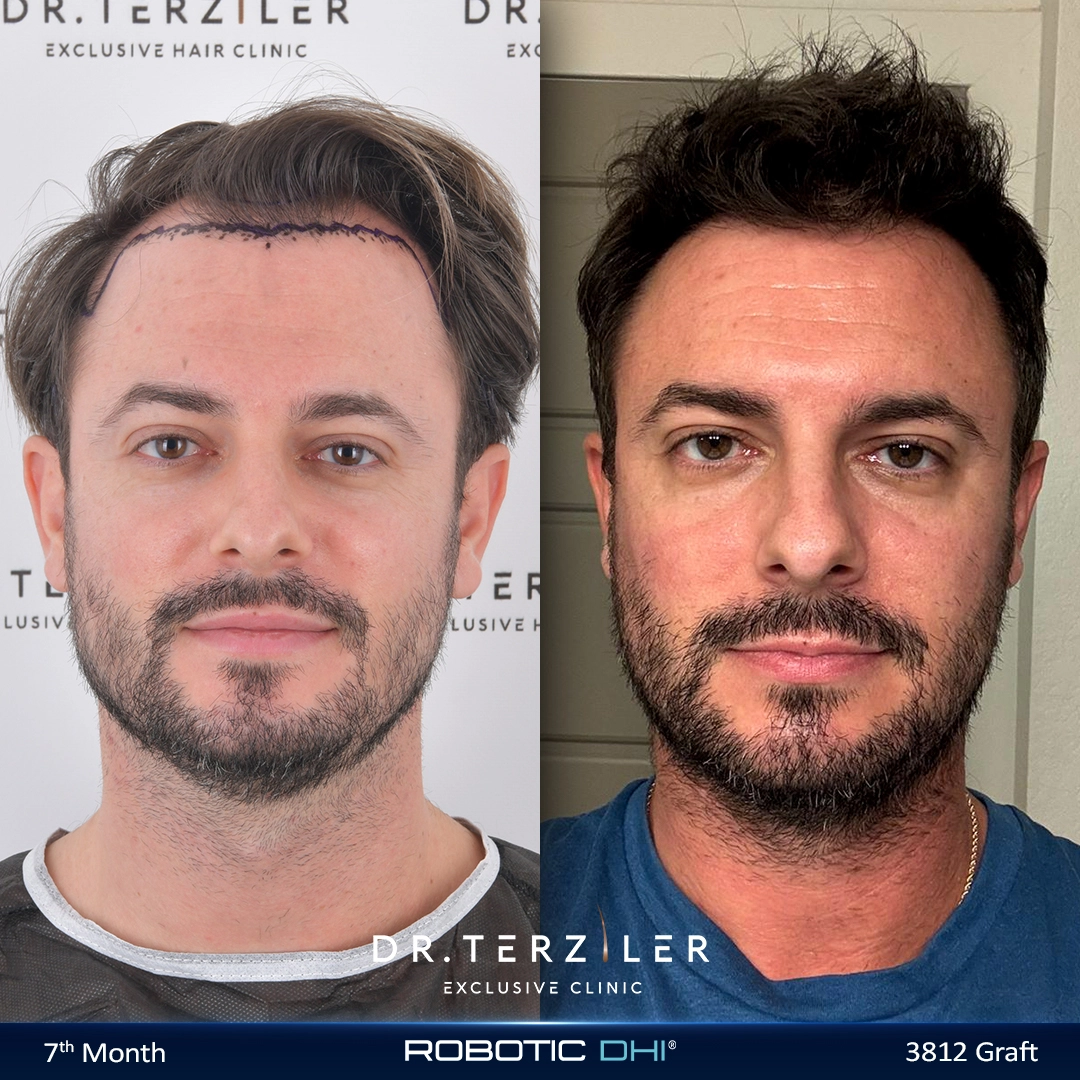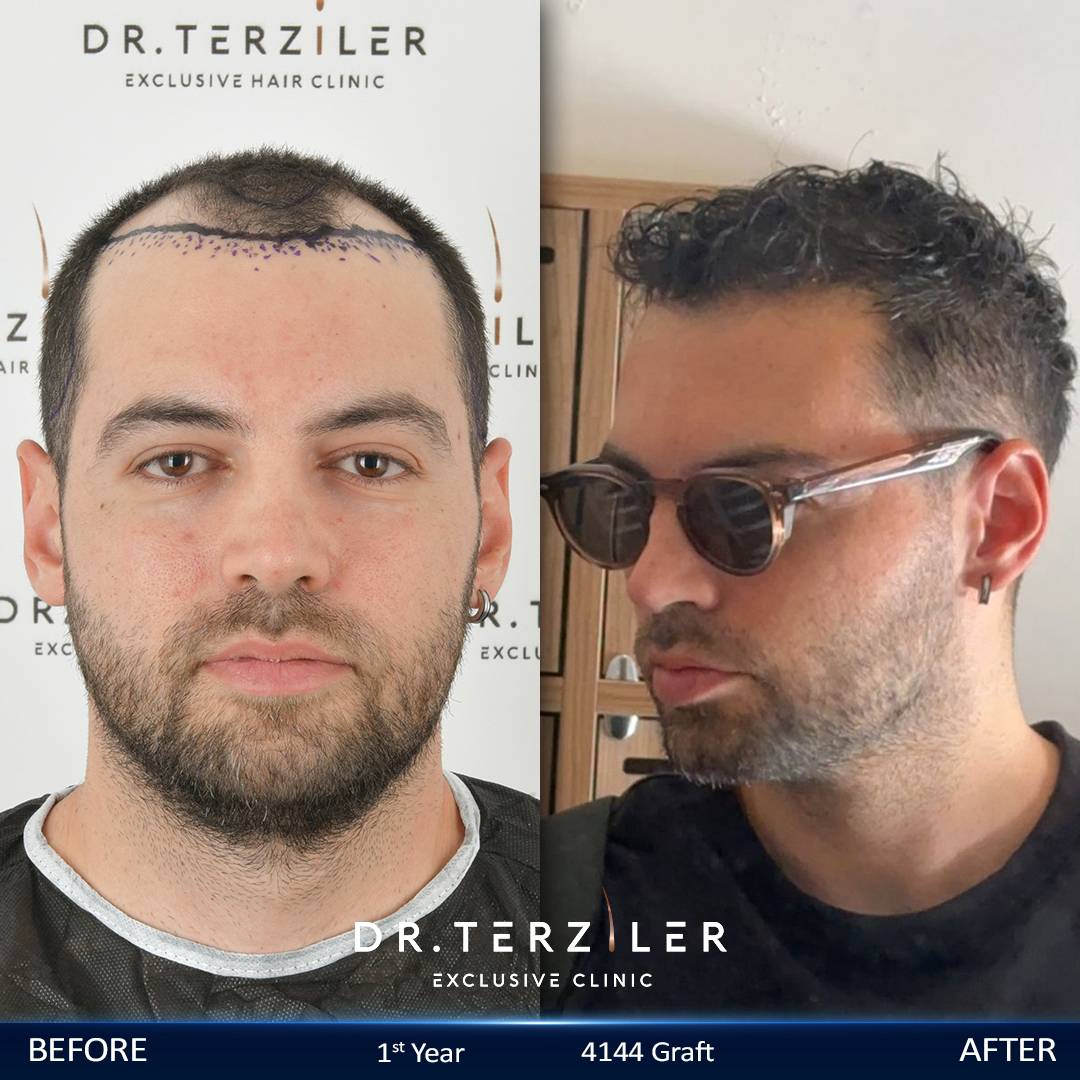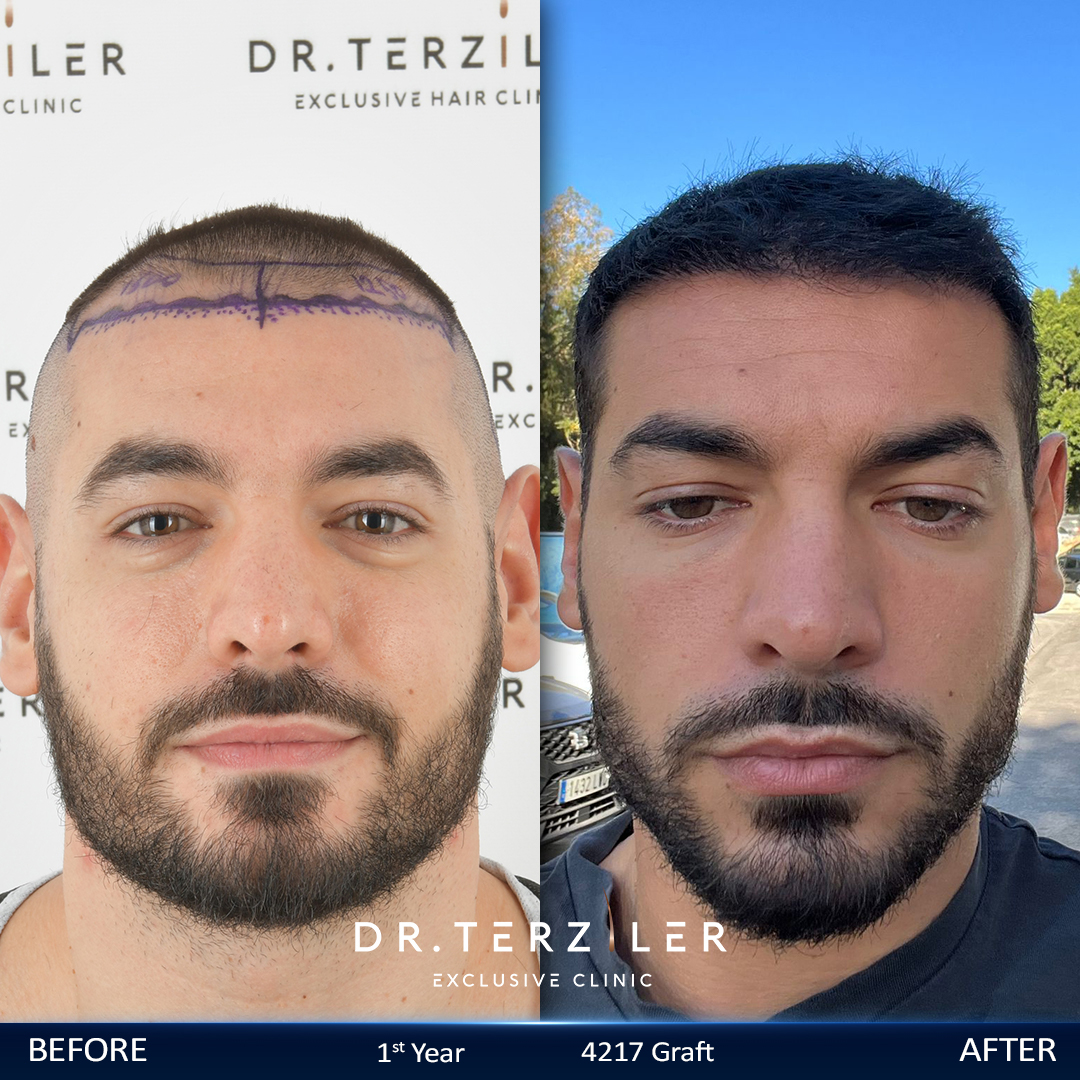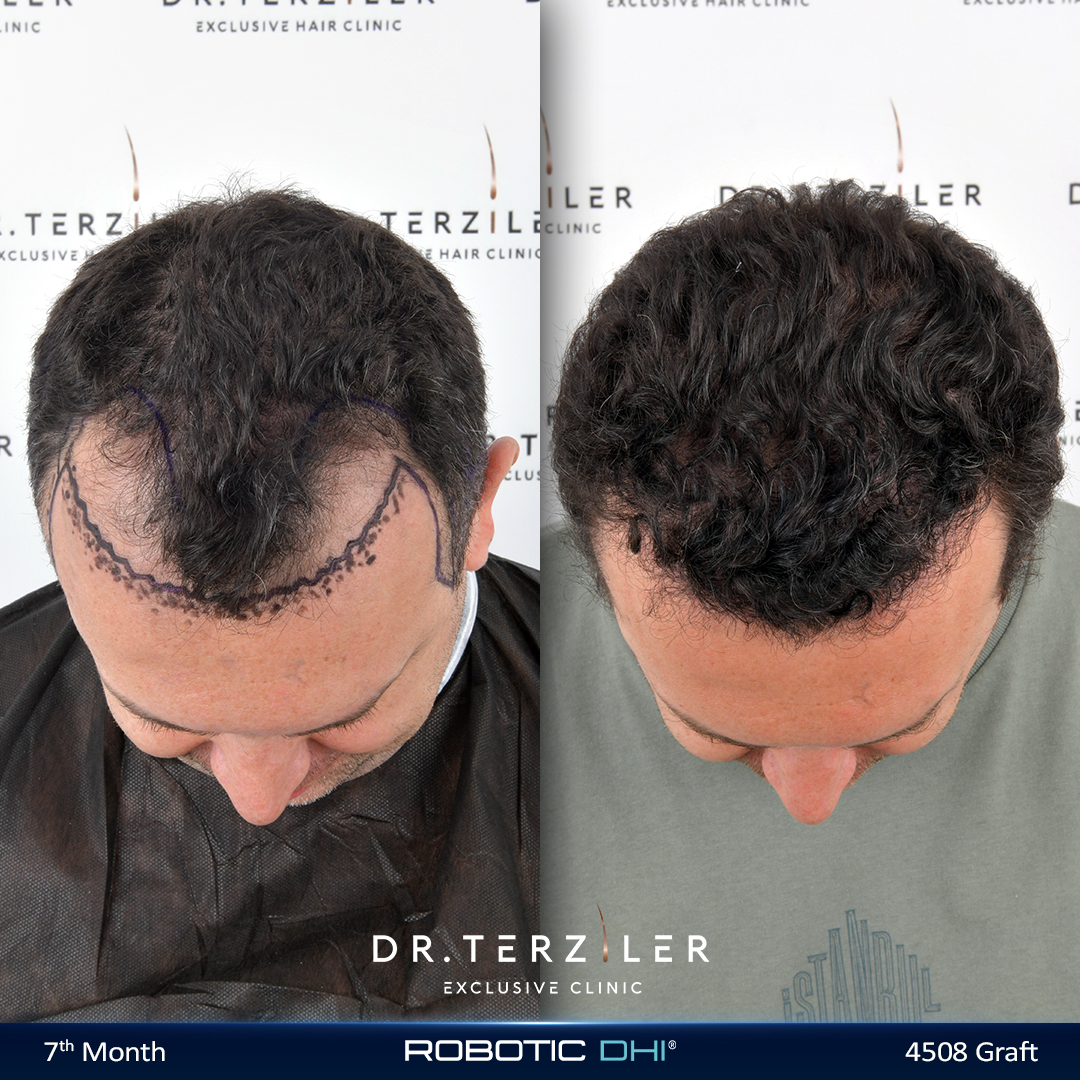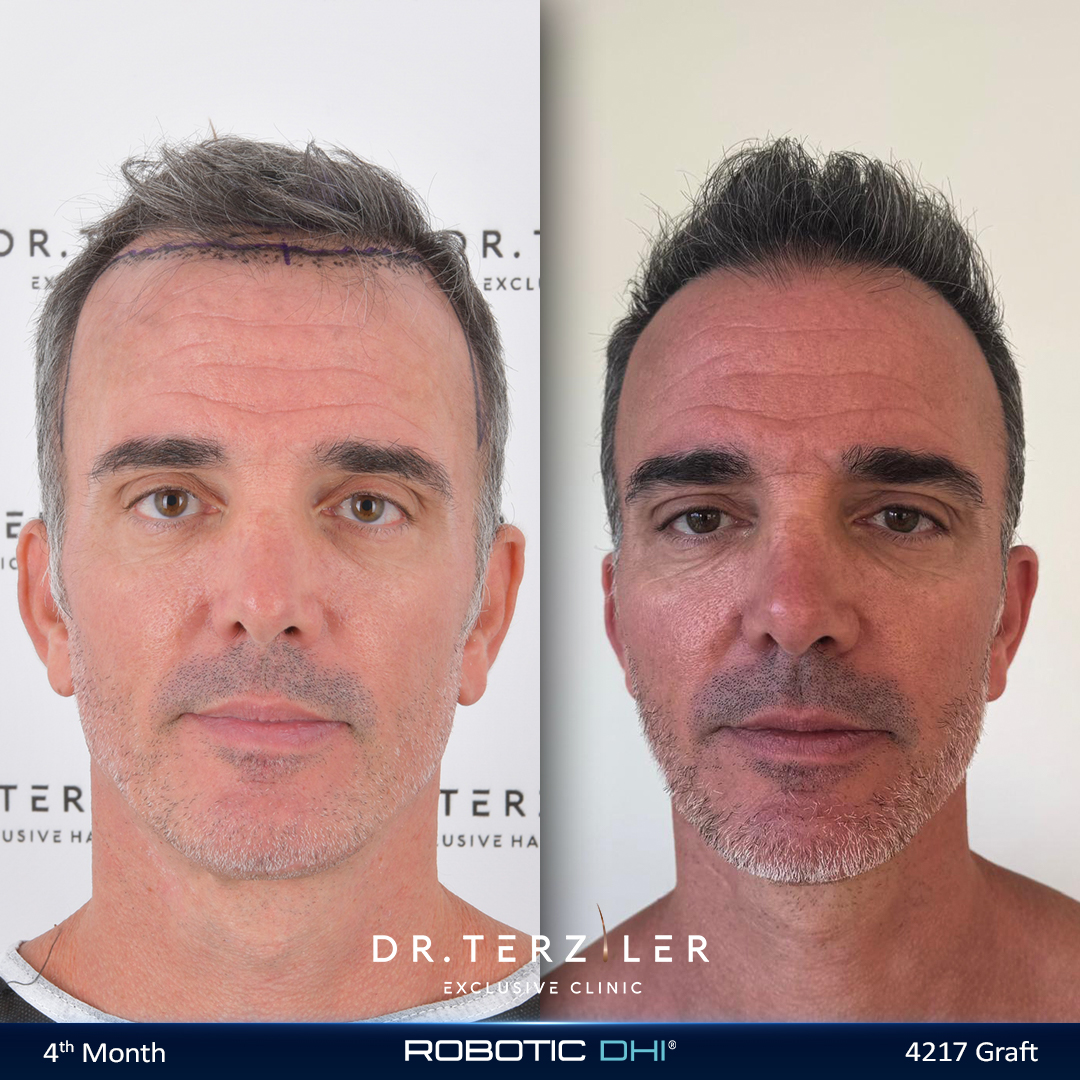
Beşiktaş, Istanbul マンハッタン/米国

How Much Does a Hair Transplant Cost? 2026 Prices by Country, Graft Count and Technique

A hair transplant costs $8,000 to $20,000 in the United States, £4,000 to £15,000 in the United Kingdom, CAD $7,000 to $18,000 in Canada, and $3,500 to $10,500 as an all-inclusive package in Turkey in 2026. The final quote depends on country, graft requirement, technique, package inclusions and the surgeon performing the work. This guide explains how to compare treatment plans without mistaking a low headline price for a complete medical quote.
$8,000-$20,000United States 2026 comparison range
パーソナライズUS quote after graft assessment
$3,500-$10,500Turkey all-inclusive package range
4 VariablesCountry, grafts, technique and surgeon
セルヴェト・テルジラー博士

医学的監修:

セルヴェト・テルジラー博士

AAACI Accredited Surgeon, ISHRS Member and Inventor of Robotic DHI

Updated July 2026

This content is reviewed by Dr. Servet Terziler for medical accuracy, hair transplant cost context, graft-count planning, Robotic DHI relevance, patient-safety framing and source quality.
Quick Answer

A hair transplant costs $8,000 to $20,000 in the United States, £4,000 to £15,000 in the United Kingdom, CAD $7,000 to $18,000 in Canada, and $3,500 to $10,500 as an all-inclusive package in Turkey. US clinics commonly quote after graft assessment, with the final total depending on graft count, surgeon and inclusions. Turkish clinics charge a flat fee per session that covers surgery, hotel, transfers and aftercare.

How Much Does a Hair Transplant Cost in 2026?

A hair transplant is priced according to country, graft requirement, technique and package scope. In this guide, the comparison ranges are $8,000 to $20,000 in the United States, £4,000 to £15,000 in the United Kingdom, CAD $7,000 to $18,000 in Canada and $3,500 to $10,500 as an all-inclusive package in Turkey. A hair transplant quote should be compared only after checking who operates, what is included and how the graft count was assessed. The worldwide market processed 735,312 surgical hair restoration procedures in a single year, according to the ISHRS Practice Census.

Hair transplant cost in 2026 world map infographic by Dr. Terziler Exclusive Clinic showing typical total hair transplant prices by country, including USA, Turkey, UK, Canada, India, Mexico, Hungary, Poland, Thailand, Spain, South Korea, UAE, Germany and Australia, with Turkey highlighted for all-inclusive hair transplant packages and global cost ranges from budget to premium markets.
Hair transplant cost in 2026 world map infographic by Dr. Terziler Exclusive Clinic.
Hair transplant cost comparison by country for 2026.
国 Typical Total Cost (2026) What Defines the Market
アメリカ合衆国 $8,000 – $20,000 Per-graft billing; extras may be separate
トルコ $3,500 – $10,500 All-inclusive package
イギリス £4,000 – £15,000 Per-graft or package billing; confirm inclusions
カナダ CAD $7,000 – $18,000 Tax, province and package inclusions can change the final quote
インド $1,200 – $4,000 Lowest global pricing; quality varies widely between clinics
メキシコ $2,000 – $5,000 Popular with US patients for short travel; per-graft model
Hungary $2,500 – $6,000 Mid-range EU option; partial packages
ポーランド $2,500 – $6,000 Mid-range EU option; per-graft model
タイ $2,500 – $7,000 Mid-range; strong in FUE, weaker DHI availability
スペイン €4,000 – €10,000 Western EU pricing; strict medical regulation
韓国 $5,000 – $10,000 High technical standard; focused on Asian hair types
アラブ首長国連邦(ドバイ) $5,000 – $12,000 Premium pricing; many visiting surgeons
ドイツ €5,000 – €12,000 Strict regulation; among the highest EU prices
オーストラリア AUD $12,000 – $20,000+ Highest pricing tier globally; few package options

Published comparison ranges used in this guide are $8,000 to $20,000 in the United States, £4,000 to £15,000 in the United Kingdom, CAD $7,000 to $18,000 in Canada and $3,500 to $10,500 as an all-inclusive package in Turkey. Final quotes depend on the individual treatment plan.

How Much Does a Hair Transplant Cost in Turkey?

A hair transplant in Turkey costs $3,500 to $10,500 as an all-inclusive package in 2026. The package model replaces per-graft billing with one flat fee that covers the surgery, pre-op blood panel, anesthesia, hotel, VIP transfers, medication and the post-operative care kit.

Turkey performs more hair transplants than any other country. The price advantage comes from a lower cost of living, favorable exchange rates and government support for licensed health tourism; not from lower clinical standards at accredited clinics. The surgeon’s credentials decide quality in every country. A patient flying to Istanbul pays $600 to $1,200 for flights and still spends 50 to 70 percent less in total than the same procedure costs at home.

Compare what all-inclusive hair transplant packages include before booking. A written list of inclusions is the single best filter for separating serious clinics from booking agencies.

How Much Does a Hair Transplant Cost in the USA?

A hair transplant costs $8,000 to $20,000 in the USA in 2026. US clinics often bill by graft and may list consultation, bloodwork, medication and PRP separately. The final total is confirmed after graft assessment and treatment planning.

Our full hair transplant Turkey vs USA comparison breaks the two markets down line by line, including regulation, surgeon involvement and cost per surviving graft.

How Much Does a Hair Transplant Cost in the UK?

A hair transplant costs £4,000 to £15,000 for UK patients in 2026. The final quote depends on graft count, technique, surgeon involvement and package inclusions. The NHS does not fund cosmetic treatment for pattern baldness.

How Much Does a Hair Transplant Cost in Canada?

A hair transplant costs CAD $7,000 to $18,000 in Canada in 2026. Taxes, graft count, technique and package inclusions can change the final quote, so confirm the complete treatment plan directly with the clinic.

How Much Does a Hair Transplant Cost in India?

A hair transplant costs $1,200 to $4,000 in India in 2026. India holds the lowest pricing worldwide, and quality varies more between clinics than in any other major market. Verify the operating surgeon’s credentials before the price convinces you.

How Much Does a Hair Transplant Cost in Mexico?

A hair transplant costs $2,000 to $5,000 in Mexico in 2026. Mexico attracts US patients with short flights and per-graft prices at roughly half the US rate. Most clinics bill per graft rather than as all-inclusive packages.

How Much Does a Hair Transplant Cost in Germany?

A hair transplant costs €5,000 to €12,000 in Germany in 2026. Germany enforces strict medical regulation and carries some of the highest prices in the EU. Many German patients fly to Istanbul for this exact reason.

How Much Does a Hair Transplant Cost in Spain?

A hair transplant costs €4,000 to €10,000 in Spain in 2026. Spain sits at standard Western EU pricing with strict clinical oversight and mostly per-graft billing.

How Much Does a Hair Transplant Cost in Hungary and Poland?

A hair transplant costs $2,500 to $6,000 in Hungary and Poland in 2026. Both markets position themselves as mid-range EU alternatives, with partial packages in Hungary and per-graft billing in Poland.

How Much Does a Hair Transplant Cost in Thailand?

A hair transplant costs $2,500 to $7,000 in Thailand in 2026. Thailand offers strong FUE availability, while DHI and robotic techniques remain harder to find than in Turkey.

How Much Does a Hair Transplant Cost in South Korea?

A hair transplant costs $5,000 to $10,000 in South Korea in 2026. Korean clinics hold a high technical standard and specialize in Asian hair characteristics, including thicker shafts and straighter follicle angles.

How Much Does a Hair Transplant Cost in Dubai (UAE)?

A hair transplant costs $5,000 to $12,000 in Dubai in 2026. The UAE runs premium pricing, and many procedures are performed by visiting surgeons rather than resident teams; ask who operates and who handles your follow-up.

How Much Does a Hair Transplant Cost in Australia?

A hair transplant costs AUD $12,000 to $20,000 or more in Australia in 2026. Australia sits in the highest global pricing tier, with few package options and long waiting lists outside major cities.

Mid-range destinations such as Thailand, South Korea, Hungary and Poland cost $2,000 to $8,000 for most cases, according to 2026 global cost comparisons. The lowest-price markets compete on cost alone. Turkey competes on volume, surgical specialization and the all-inclusive model at the same time, which is why it holds the largest share of international hair transplant patients.

How Is Hair Transplant Cost Calculated?

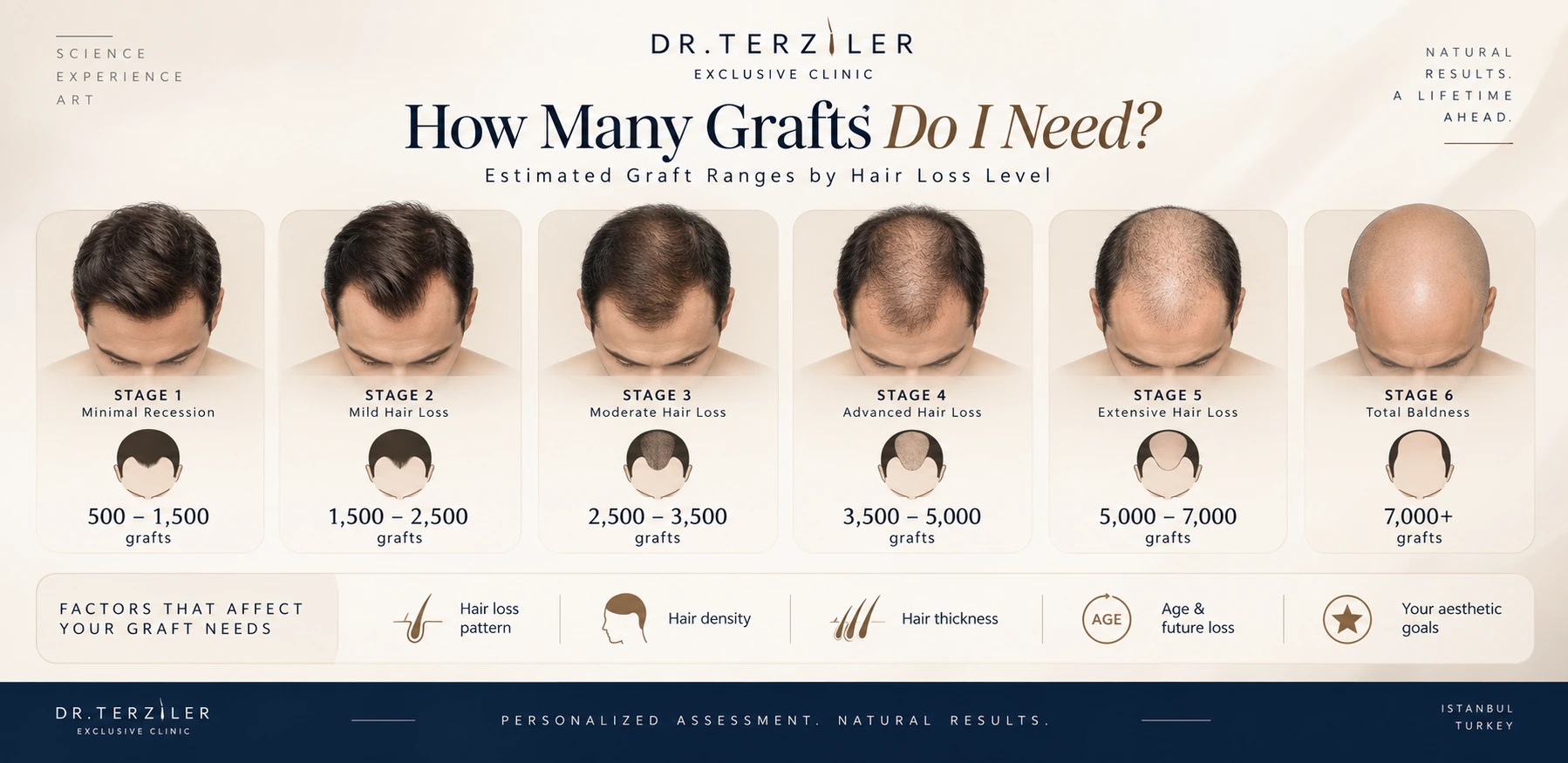
Clinics calculate hair transplant cost by multiplying your graft count by a per-graft rate, or by quoting a flat session fee. Your graft count depends on your stage on the ノーウッド分類. A hairline refinement needs 1,500 to 2,000 grafts. Advanced loss covering the front, mid-scalp and crown needs 4,000 to 5,000 grafts or more.

Hair transplant planning ranges by graft count and treatment area.
グラフト数 Typical Case US planning context Turkey All-Inclusive
1,500 Hairline refinement お客様に合わせたお見積もり $3,500 – $10,500
2,500 ノーウッド 3-4 お客様に合わせたお見積もり $3,500 – $10,500
3,500 ノーウッド 4-5 お客様に合わせたお見積もり $3,500 – $10,500
5,000 Norwood 5-6, two zones お客様に合わせたお見積もり $3,500 – $10,500

Your exact number requires a donor area assessment, not a guess from photos alone. Read how many grafts you need for the calculation method surgeons use, including donor capacity limits.

Why Do Some Clinics Quote Per Hair Instead of Per Graft?

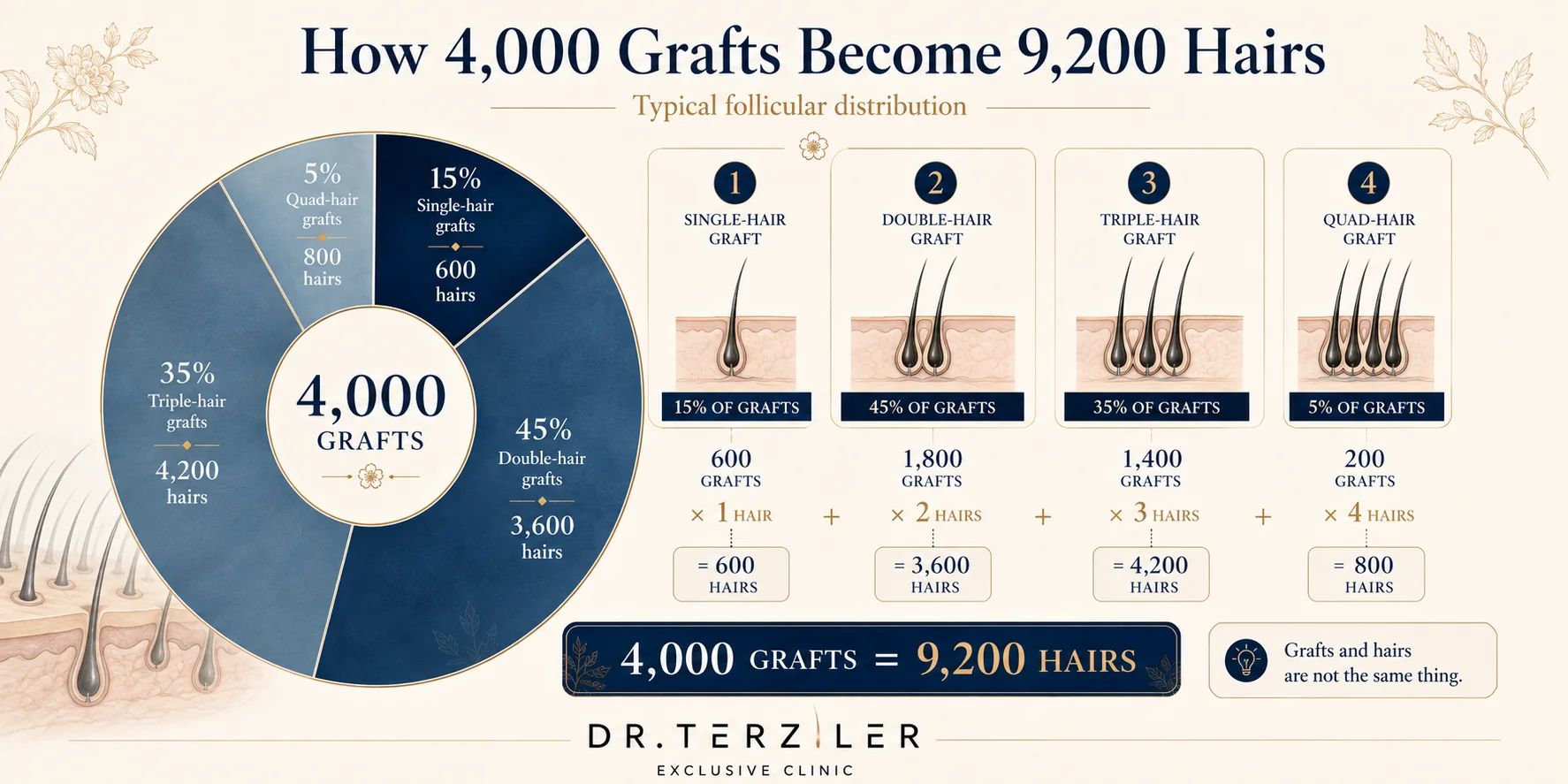
Some clinics quote per hair instead of per graft because it makes their price look 50 to 70 percent cheaper. One graft is a follicular unit containing 1 to 4 hairs, with an average of about 2.2 hairs per graft. A clinic advertising “$2 per hair” is charging roughly $4.40 per graft; more than many clinics quoting “$4 per graft.”

Check every quote for the unit. A quote of 6,000 hairs equals roughly 2,700 grafts. If two clinics give you numbers that differ wildly for the same head, the unit is usually the reason. An honest quote states the graft count, the technique, and every included service in writing. Our guide on how to choose the right hair transplant clinic lists the exact questions that expose vague quotes.

Does the Technique Change the Price? FUE vs DHI vs Robotic DHI

Yes. The technique changes the price by 20 to 50 percent within the same clinic. FUE is the baseline; roughly 80 percent of all surgical hair restoration procedures worldwide use FUE, according to the ISHRS.

サファイアFUE uses sapphire blades to open recipient channels and serves as the standard price tier.

持っていますか? loads each graft into a Choi implanter pen and places it without pre-opened channels; the single-use pens and longer operating time raise the price by 20 to 40 percent over FUE.

ロボット式DHI adds computer-guided depth control at ±0.1mm precision across every graft, which manual hands cannot sustain over a six-hour session. Dr. Servet Terziler invented the Robotic DHI machine used at Dr. Terziler Exclusive Clinic, and the system records a 97.3 percent graft survival rate.

Read our best hair transplant method comparison to match the technique to your hair type, loss stage and budget. Pain differences between techniques are covered in does a hair transplant hurt.

What Hidden Costs Should You Expect?

Hidden costs add $1,500 to $4,000 on top of a typical US surgery quote. Hidden fees inflate final hair transplant bills by 20 to 40 percent after patients have already committed, according to US clinic pricing audits.

Common additional hair transplant costs that may sit outside a quoted package.
Line Item Typical US Cost Usually in the Quote?
Consultation fee $100 – $500 から
Pre-op bloodwork $200 – $400 から
Post-op medication $150 – $400 から
PRP session $500 – $1,000 each から
Follow-up visits $100 – $300 each Sometimes
Revision or touch-up $2,000+ 決して

Ask for an itemized, written, all-inclusive quote before paying any deposit. Turkish package pricing removes this ambiguity structurally; the flat fee is the final number, which is one reason international patients favor the model.

Does Insurance Cover a Hair Transplant?

No. Insurance does not cover a hair transplant for pattern baldness in any major market. US insurers, including Medicare and Medicaid, classify it as elective cosmetic surgery. The NHS does not fund hair transplants for male or female pattern baldness; rare exceptions exist for hair loss from burns, trauma or cancer treatment, according to the NHS.

Financing fills the gap in Western markets. CareCredit offers 0 percent promotional periods of 6 to 24 months, and clinic financing partners offer 24 to 84 month terms at 9 to 20 percent APR, according to Cherry Financing. A patient financing $12,000 at 15 percent APR over 60 months pays roughly $5,100 in interest; a detail worth calculating before comparing a financed US procedure against a paid-in-full package abroad.

Why Is a Cheap Hair Transplant the Most Expensive One?

A failed cheap transplant costs more than a correct one because repair surgery typically costs about twice the original procedure and consumes donor grafts that never grow back. The donor area is a finite bank; roughly 6,000 to 8,000 lifetime grafts for most men. A botched first surgery that wastes 3,000 of them halves your repair options permanently.

Low-cost operations keep prices down by running multiple patients per surgeon per day, delegating surgery to unlicensed technicians and overharvesting donor zones. The results fill our analysis of hair transplant gone wrong cases: pluggy hairlines, visible donor depletion and grafts placed at wrong angles. Price is a data point. The surgeon’s name, accreditation and personal involvement in your surgery are the decision.

What Does the Dr. Terziler Exclusive Clinic Package Include?

Dr. Terziler Exclusive Clinic is an AAACI accredited hair transplant clinic in Istanbul, Turkey, led by Dr. Servet Terziler, the inventor of the Robotic DHI machine. The all-inclusive package covers microscopic hair diagnostics, the pre-op blood panel, the surgeon’s operating time, anesthesia with needle-free options, the post-operative care kit, VIP transfers, hotel accommodation and a fully managed 12-month follow-up program.

Compare what all-inclusive hair transplant packages include before booking. A written list of inclusions is the single best filter for separating serious clinics from booking agencies.

Every hairline at the clinic is designed and surgically executed under Dr. Terziler’s direct supervision, and outcomes are documented in the clinic’s before and after results archive. The 97.3 percent graft survival rate recorded with Robotic DHI is the proof point behind the pricing; you pay a flat fee for a doctor-led procedure, not an assembly line.

Is a Hair Transplant Worth the Cost?

A hair transplant is worth the cost for most patients because the result is permanent and the alternatives are recurring. Transplanted hair grafts are permanent because they come from DHT-resistant donor zones. Concealer fibers, specialized shampoos and topical treatments cost $40 to $120 per month; that is $4,800 to $14,400 over ten years for products that stop working the day you stop paying.

Amortization makes the comparison concrete. A personalised all-inclusive package delivering 20+ years of coverage costs about $225 per year of result. The average number of procedures needed per patient fell from 3.4 in 2019 to 1 in 2021, according to the ISHRS 2022 Practice Census; modern technique quality means most patients now buy the result once.

よくある質問

Is a hair transplant tax deductible?

No. A hair transplant is not tax deductible in the United States because the IRS excludes cosmetic surgery from medical expense deductions, according to IRS Publication 502. The same treatment applies in the UK and Canada. The narrow exception is reconstruction after injury, burns or disease, which requires medical documentation.

How much does a 5,000 graft hair transplant cost?

A 5,000-graft plan is assessed individually. The published comparison ranges in this guide are $8,000 to $20,000 in the United States, £4,000 to £15,000 in the United Kingdom, CAD $7,000 to $18,000 in Canada and $3,500 to $10,500 as an all-inclusive package in Turkey. Sessions this large often run across two days, which package pricing absorbs and per-graft pricing bills separately.

Why did two clinics quote me prices $10,000 apart for the same head?

Two quotes differ this much because of four variables: the counting unit (hairs versus grafts), the technique tier, what the quote includes, and who performs the surgery. Convert both quotes to a per-graft, all-services-included figure before comparing. A quote that resists this conversion is hiding something.

How much does it cost to fix a bad hair transplant?

Repairing a bad hair transplant costs $8,000 to $25,000 and typically runs about twice the price of doing it correctly the first time. Repair combines removal of misplaced grafts, camouflage grafting and sometimes scalp micropigmentation, and it depends entirely on how much donor reserve the first surgery left behind.

Can you negotiate the price of a hair transplant?

Yes, within limits. Clinics with empty surgery slots discount 10 to 15 percent in low-demand months, typically November through February. Distrust aggressive limited-time discounts; a serious surgical calendar does not need flash sales. Negotiate inclusions (extra PRP session, extended hotel stay) rather than the surgical fee itself.

Does a more expensive hair transplant guarantee a better result?

No. Price does not guarantee outcome above the threshold that funds proper surgical standards. Below that threshold, quality is structurally impossible; an implausibly low package cannot fund a licensed surgical team, sterile single-use equipment and honest graft counts. Above it, the surgeon’s skill, not the invoice, determines the result.

Sources

  1. NHS. Hair transplant. https://www.nhs.uk/tests-and-treatments/cosmetic-procedures/cosmetic-surgery/hair-transplant/
  2. ISHRS. 2022 Practice Census Results. https://ishrs.org/wp-content/uploads/2022/04/Report-2022-ISHRS-Practice-Census_04-19-22-FINAL.pdf
  3. ISHRS. Survey Finds Hair Restoration Surgery on the Rise Worldwide. https://ishrs.org/survey-finds-hair-restoration-surgery-on-the-rise-worldwide/
  4. IRS. Publication 502, Medical and Dental Expenses. https://www.irs.gov/publications/p502
  5. Cherry Financing. Hair Transplant Cost: Full 2026 U.S. Pricing Breakdown. https://withcherry.com/blog/hair-transplant-cost
  6. Wimpole Clinic. UK Hair Transplant Cost 2026: Average Price and Cost Per Graft. https://wimpoleclinic.com/blog/hair-transplant-cost-uk-analysis/
Hair Transplant Gone Wrong: Signs, Causes, and How to Fix It

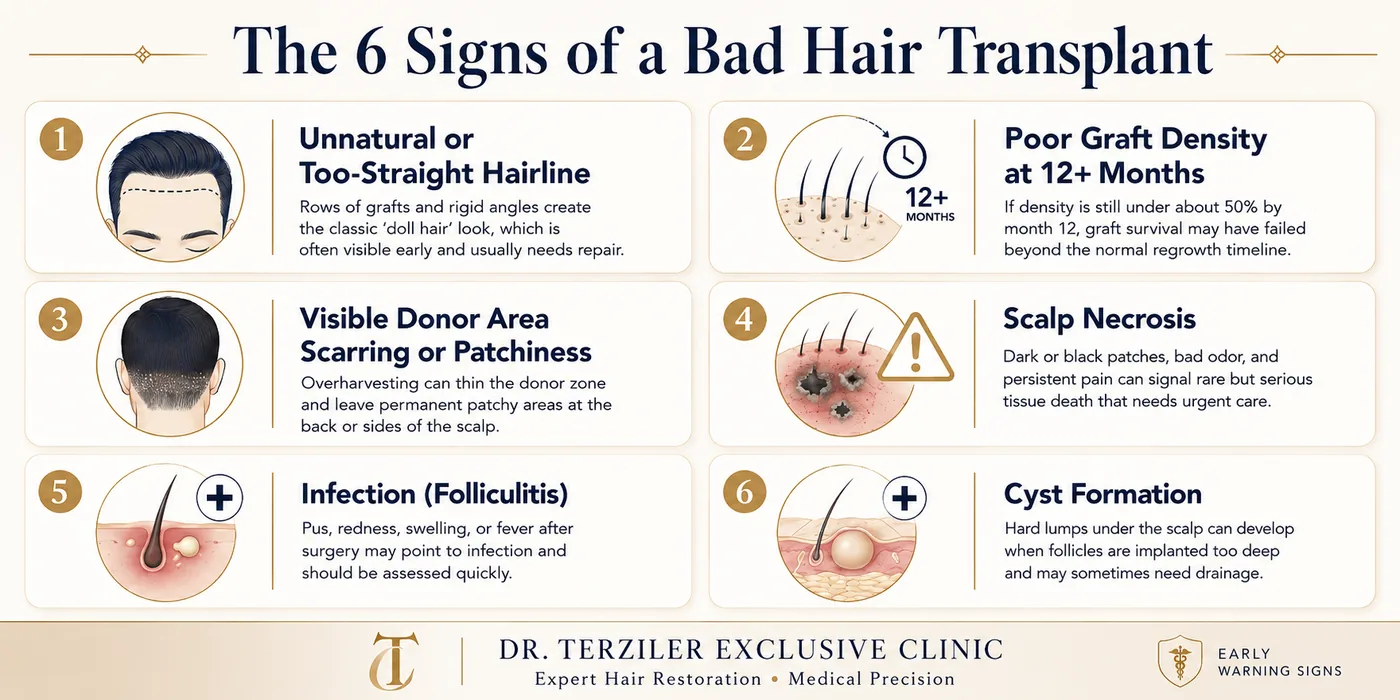
A hair transplant goes wrong when grafts fail to survive, the hairline looks artificial, or the donor area is permanently damaged. The 6 key signs are: unnatural hairline, poor density at month 12, visible donor scarring, scalp necrosis, 感染、および cyst formation. At accredited clinics, graft survival exceeds 98%. ISHRS data links 96% of botched cases to unlicensed operators. True permanent failure affects 1.97% of patients (Ghimire et al., JNMA 2018, PMC8997317). Most patients who report failure at month 3 are experiencing normal shock loss, which resolves by 6 months.

Quick Answer

A hair transplant goes wrong when grafts fail to survive, the hairline looks artificial, or the donor area is permanently damaged. The 6 key signs are: unnatural hairline, poor density at month 12, visible donor scarring, scalp necrosis, 感染、および cyst formation. At accredited clinics, graft survival exceeds 98%. ISHRS data links 96% of botched cases to unlicensed operators. True permanent failure affects 1.97% of patients (Ghimire et al., JNMA 2018, PMC8997317). Most patients who report failure at month 3 are experiencing normal shock loss, which resolves by 6 months.

セルヴェト・テルジラー博士

医学的監修:

セルヴェト・テルジラー博士

AAACI Accredited Surgeon, ISHRS Member and Inventor of Robotic DHI

Updated June 2026

This content is reviewed by Dr. Servet Terziler for medical accuracy, failed hair transplant assessment, repair candidacy, donor-area safety, graft survival and patient safety.

You did your research, booked the clinic, flew to Istanbul. Twelve months later, nothing has grown. Or something has grown, but it looks nothing like the before and after images you were shown. You are not alone, and you are not without options.

1.97%Ghimire ら、JNMA 2018 | PMC8997317

Patient-reported permanent failure rate after hair transplantation. Most patients who report 'failure' at month 3 are experiencing temporary shock loss. True permanent graft death is rare in accredited surgical settings.

96%ISHRS 2022 医療ツーリズム・タスクフォース

of documented botched hair transplant cases in Turkey between 2018-2022 were performed by unlicensed technicians or non-surgical staff, not by certified surgeons.

2-6 hrsCooler ら、『Dermatologic Surgery』2016年

Maximum time harvested follicular units can survive outside the body before ATP depletion causes irreversible cell death. Clinics using extended implantation sessions risk graft viability loss beyond this window.

What Does a Hair Transplant Gone Wrong Look Like?

A hair transplant result is considered gone wrong when the aesthetic outcome is detectably artificial, the density is insufficient for the patient's target zone, or structural damage has occurred in the donor area, assessed at 14 months post-surgery when final growth is established.

Sign Technical Name How to Detect 年表
Pluggy hairline Large graft cluster implantation Wet the hair and comb back. Multi-hair grafts at the hairline are visible as clumps. Visible from month 6
Hairs growing forward Angle mapping error Photograph the hairline from the side. Hairs should angle back at 30-45 degrees. Forward-pointing hairs indicate a technique error. Visible from month 6
Moth-eaten density Graft survival failure Use consistent indoor light (bathroom, not sunlight). Patchy areas in zones that should have coverage. Assess at month 14
Striped donor area FUT linear scarring Scar line visible when hair is short. Parallel stripe across the back of scalp. Permanent unless revised
Bald patches in donor zone Overharvesting / FUE scarring Visible thinning when hair is very short. Donor density clearly lower than the sides. 常設
Ingrown hairs or cysts Embedded grafts Painful lumps along hairline or crown. Follicle implanted too deep. Requires drainage. Weeks post-op
the 6 signs of a bad hair transplant infographic showing unnatural hairline, poor graft density, visible donor area, scalp necrosis, infection, and cyst formation explained by the best hair transplant clinic in Turkey Dr. Terziler

Worried your result is actually failing?

Send your timeline, photos and graft count. A repair assessment can separate normal shock loss from a true failed hair transplant.

Check My Result

1
1. Unnatural or Too-Straight Hairline

Natural hairlines are irregular. Follicles emerge at different angles, depths、および micro-spacings. A bad hair transplant hairline runs in a uniform straight line, often with multi-hair grafts placed in the very front row. Surgeons call this the 'doll hair' effect. It is permanent without repair. The wet hair test reveals it instantly: wet the hair, comb it back, and the artificial clustering of grafts becomes visible as clumps rather than individual strands. A bad hair transplant hairline is one of the most searched images online for this reason.

At Dr. Terziler Exclusive Clinic, hairline design in ピカソ・ロボティック DHI is performed personally by セルヴェト・テルジラー博士, known in the field as the Picasso of Hair. Each hairline is drawn by hand with artistic precision before a single graft is placed. The clinic uses the world's thinnest implant pen, the 0.70mm Choi pen, which allows individual follicle placement at the exact angle, depth, and direction that mimics natural growth. This level of control is what makes the difference between a hairline that is detectable and one that is not.

2
2. Poor Graft Density at 12+ Months

If density remains under 50% of the transplanted area at month 12, grafts have failed. But the timeline matters. Normal recovery follows a fixed sequence: shedding at weeks 2-6, first regrowth at weeks 8-14, full density between months 12-18. Assessing density at month 3 and declaring failure is a mistake. Assessing at month 12 with no density is a confirmation. Signs of a failed hair transplant at month 12 include sparse islands of growth, uneven distribution across the transplanted zone, and hairline asymmetry.

3
3. Visible Donor Area Scarring or Patchiness

Overharvesting strips the donor zone below 40 FUs per cm2. Round bald patches appear in the back and sides of the scalp. This is the most common cause of permanent, irreversible damage from unregulated FUE hair transplant. Patients with short hair or shaved styles see it immediately. At Dr. Terziler Exclusive Clinic, pre-op follicle density mapping ensures extraction never exceeds 45% of donor density per zone, protecting the natural appearance of the donor area.

4
4. Scalp Necrosis

Scalp necrosis is tissue death caused by insufficient blood supply to the recipient area. Symptoms include dark or black patches on the scalp, persistent pain, and in severe cases an unpleasant odour. It is rare, affecting 0.1-0.5% of patients, but it is serious and requires immediate surgical intervention. It occurs almost exclusively at facilities where too many recipient sites are created too densely in a single session, cutting off vascular supply to the subdermal tissue.

5
5. Infection (Folliculitis)

Pus, 腫れ、および fever in the first two weeks indicate post-operative infection. ISHRS data documents a folliculitis rate of 1-3% across hair transplant procedures globally. At facilities with inadequate sterilisation, this rate rises significantly. Staphylococcus aureus is the most common pathogen. Signs are pustules at graft sites by days 7-14. Infection from a bad hair transplant causes both scarring そして permanent graft loss if untreated.

6
6. Cyst Formation

Follicles implanted too deep develop epidermal cysts, appearing as hard lumps beneath the scalp skin. They typically emerge along the hairline or crown within weeks of the procedure. Most resolve on their own within 3-6 weeks. Persistent cysts require drainage by a clinician. Cyst formation is a sign of incorrect implantation depth, not a normal post-op outcome.

Need a quick repair opinion?

Send photos in natural light and the month you are currently in. The team can tell you whether it looks like shock loss, low density or donor damage.

Message a Repair Specialist

What Are the Botched Hair Transplant Scenarios?

The botched hair transplant scenarios below are three cases that are representative examples based on Dr. Terziler Exclusive Clinic's post-consultation patient survey data.

SCENARIO A

The Budget Clinic Patient

James R., 34, London

James found his clinic on a hair transplant aggregator site. The total package, including flights and hotel, cost EUR 1,100. Two thousand grafts were performed in a converted apartment in Istanbul by a technician he later learned had no medical qualification.

At month 18: thin coverage in the crown, pluggy grafts visible at the hairline in natural light, and the donor area showing visible stripes. Forty percent of his posterior scalp follicles were gone permanently.

The technician extracted grafts past the 50% donor density threshold. Hairline grafts were implanted at a perpendicular angle instead of the natural 30-45 degrees, producing a flat, artificial pattern. Neither the extraction volume nor the angle was reviewed by a qualified surgeon.

THIS IS A HAIR TRANSPLANT GONE WRONG. Recovery requires a repair procedure.

"I chose that clinic because it was EUR 800 cheaper than everywhere else. I did not know that EUR 800 would cost me three years and two corrective procedures to fix."James R., 34, London | Dr. Terziler patient survey

SCENARIO B

The Technically Botched Result

マルク・D、41歳、アムステルダム

Marc chose an accredited clinic with strong reviews. His mistake was not knowing that the lead surgeon was not present when his hairline was designed.

At month 12: hair grew forward and flat instead of angled back. Crown density measured 35 FU/cm2 while the mid-scalp registered 18 FU/cm2 under trichoscopic analysis. In certain lighting conditions, the result looked moth-eaten.

An angle mapping error produced hairs growing in the wrong direction. Density distribution was uneven because no pre-op zone mapping was performed. Neither issue is visible at the time of surgery. Both appear only after growth.

THIS IS A FAILED HAIR TRANSPLANT CAUSED BY SURGICAL TECHNIQUE, NOT PATIENT BIOLOGY.

"The surgeon was not in the room when they designed my hairline. Nobody told me that was possible. I thought I was paying for a surgeon."Marc D., 41, Amsterdam | Dr. Terziler patient survey

SCENARIO C

The Panic Patient (Shock Loss Mistaken for Failure)

ライアン・Kさん(29歳、トロント)

Ryan had FUE at a reputable clinic. By week 8, most transplanted hairs had shed. Convinced the procedure had failed, he posted a hair transplant gone wrong video online. It received 4,000 views.

At month 5, the same follicles began producing new growth. At month 14, his density was full and his hairline looked natural. The video is still online.

What happened was telogen effluvium: shock loss. Surgical trauma pushed follicles from anagen (growth phase) into telogen (resting phase). The hair shaft detached. The follicle remained alive. Regrowth started at month 5.

THIS IS NOT A FAILED HAIR TRANSPLANT. It is a misunderstood biological process affecting 40-95% of transplant patients.

"I filmed myself crying at month 2. I thought it was gone forever. I am almost embarrassed to say that now, because at month 14, nobody can tell I ever had a transplant."Ryan K., 29, Toronto | Dr. Terziler patient survey

Had a result like one of these scenarios?

Book a free repair consultation with trichoscopic donor assessment and hairline review before planning any corrective surgery.

Book Repair Consultation

What Are the Top 11 Reasons Hair Transplants Fail (And How They Are Prevented)

Hair transplant failure has 11 top documented clinical causes. The most common are graft dehydration outside the body (contributing to approximately 30% of failures), donor overharvesting (25%), wrong implantation angle (15%)、および procedures performed by unlicensed technicians (20%). At Dr. Terziler Exclusive Clinic, each cause has a specific prevention protocol.

Cause Clinical Mechanism % of Failures Dr. Terziler Prevention
1. Graft dehydration Grafts outside the body lose ATP. Viability drops from 100% at extraction to near zero at 6 hours. Assembly-line clinics extract 3,000+ grafts, leave them on a tray for 2-4 hours, then begin implantation. 30% Robotic DHI: grafts implanted within minutes of extraction. No waiting tray. HypoThermosol storage if any delay occurs.
2. Donor overharvesting Extracting more than 50% of follicular units from any donor zone leaves the area below the safe density floor of 40 FU/cm2. Result: permanent visible thinning in the back and sides. 25% Pre-op density mapping for every patient. Extraction never exceeds 45% of donor density per zone. Documented and shared with the patient.
3. Wrong implantation angle Hair emerges from the scalp at 15-45 degree angles depending on zone. Implanting at the wrong angle produces hairs growing upward or outward. Correction requires complete re-extraction and reimplantation. 15% Robotic DHI punch maintains consistent depth and angle. Manual angle error is eliminated. Each zone mapped pre-operatively.
4. Unqualified technicians ISHRS 2022: 96% of botched Turkey cases linked to non-medical staff performing extractions and implantations. Legal in some interpretations of Turkish law, catastrophic in surgical outcomes. 20% Dr. Servet Terziler performs all procedures personally. Zero delegation of the surgical process. Patients can verify in consultation.
5. Hairline design error The 'grass man look': multi-hair grafts placed at the very front row of the hairline. Produces an unnatural, perceptible pattern. Singles must form the first 1-2 rows. 5% Digital hairline design by Dr. Terziler personally before any extraction begins. Mapped and agreed with the patient.
6. Lichen Planopilaris (LPP) The only cause of true immunological rejection of autologous grafts. Active LPP attacks transplanted follicles. Undiagnosed LPP before surgery = predictable failure. Rare (<1%) but 100% avoidable Full trichoscopic LPP screening before accepting any patient. LPP must be in clinical remission for 12+ months before approval.
7. Shock loss mismanagement Telogen effluvium affects 40-95% of transplant patients. Shedding at weeks 2-8, dormancy at months 3-4, regrowth from month 5. Misdiagnosed as failure, patients seek unnecessary second procedures. 0% (not failure) Every patient receives a written growth timeline. Month-by-month expectations documented. WhatsApp follow-up at months 1, 3, 6, 12.
8. Mega-session overload Sessions exceeding 3,000 grafts in one sitting create hypoxic conditions in the recipient scalp. Cumulative vascular trauma reduces graft take rates for all grafts in the session. 5% Maximum 2,500-3,000 grafts per session based on donor density. Cases requiring more split into two sessions.
9. Poor candidacy assessment Active androgenetic alopecia progresses. Transplanting into an unstable hairline produces grafts that outlast the surrounding native hair, creating an island effect in 5-10 years. <5% Norwood staging and DHT sensitivity assessment pre-op. Patients with unstable loss are counselled on medication first. Cases that are not yet stable are declined.
10. Recipient site over-density Implanting more than 45 FU/cm2 in one session cuts blood supply to existing native follicles and new grafts simultaneously. Net hair count decreases. 5% Recipient site density capped at 35-45 FU/cm2. More is not better. The biology is the limit, not the sales target.
11. Post-op infection Unsterilised instruments, unhygienic environment, patient non-compliance. Folliculitis kills grafts and causes scarring. ISHRS documents a 1-3% rate globally. 5% JCI-standard hospital. Single-use sterile instruments only. Written aftercare protocol plus video follow-up within 24 hours of procedure.

Lichen Planopilaris (LPP) is an autoimmune condition that causes the immune system to attack hair follicles, including transplanted ones. It is the ONLY documented mechanism by which the immune system can reject autologous hair grafts (grafts from your own scalp). Without LPP, it is biologically impossible for the immune system to reject transplanted follicles: the body does not produce antibodies against its own tissue. Clinics listing 'graft rejection' as a general surgical risk, without specifying LPP, are medically inaccurate. Proper pre-surgical trichoscopy identifies and rules out LPP. Lajevardi et al., JEADV 2021.

Surgeons rarely discuss maximum slit density because it limits the number of grafts per session. But the evidence is clear: implanting more than 45 FU/cm2 in one session induces vascular compromise in the subdermal plexus. The result: newly placed grafts AND existing native follicles lose blood supply and die. Net hair count decreases. This is why 'more grafts = better results' is false marketing, not surgery. Source: Rose & Nusbaum, Hair Transplant Forum International, 2014.

What Does Overharvesting Mean and Why Is It Bad?

Overharvesting means extracting too many follicles from the donor area, exceeding the safe threshold of approximately 45-50% of available follicles in any zone. This leaves the donor area, typically the back and sides of the scalp, with visible round bald patches. It is permanent and the most common cause of irreversible damage from FUE procedures performed without pre-op density mapping.

Was your donor area overharvested?

Ask for a trichoscopic donor assessment before another clinic extracts more grafts from the same area.

Ask About Donor Assessment

What Is the Biology of Hair Transplant Graft Failure?

A transplanted hair follicle begins dying the moment it leaves the scalp. Adenosine triphosphate (ATP), the energy molecule that keeps follicular cells alive, depletes within 2 to 6 hours of removal from the blood supply. Once ATP is gone, cell membranes collapse and the follicle cannot be revived.

1
What Happens to a Graft Outside the Body?

Every hour a graft spends in a storage tray, its viability decreases. Storage medium significantly affects survival time according to Research by Cooler et al. (Dermatologic Surgery, 2016). Saline solution, the most common medium at commercial clinics, provides the shortest viable window. HypoThermosol, a commercially available hypothermic medium, extends viability by reducing cellular metabolism. Clinics using refrigerated, ATP-supplemented storage media document 15-20% higher graft survival rates. Assembly-line facilities extract 3,000グラフト in the morning, leave them on a tray for 2-4 hours, then begin implantation. This timeline kills a proportion of grafts before they are ever placed. At Dr. Terziler Exclusive Clinic, Robotic DHI technology implants grafts within minutes of extraction. No waiting tray is used.

2
Why Your Body Cannot Reject Its Own Hair

Hair transplants use the patient's own follicles. This is called an autologous procedure. The immune system does not produce antibodies against the patient's own tissue. Graft rejection, in the immunological sense applied to organ transplants, is biologically impossible in hair restoration. The single documented exception is Lichen Planopilaris (LPP), an autoimmune disorder that attacks hair follicles including transplanted ones. Clinics that list 'graft rejection' as a general surgical risk category, without specifying LPP, are medically inaccurate. This principle was established by Dr. Norman Orentreich in 1959 and is the foundational science of hair transplantation.

3
What Is Donor Dominance and Why Does It Matter?

In 1959, Dr. Norman Orentreich discovered that follicles transplanted from the DHT-resistant donor zone retain their original genetic programming regardless of where they are placed on the scalp. (Source: Orentreich 1959, PMC: 13596976.) Donor follicles from the back and sides of the head are genetically resistant to dihydrotestosterone (DHT), the hormone responsible for androgenetic hair loss. When these follicles are placed in the frontal scalp or crown, they keep this resistance permanently. They grow. They do not fall out when surrounding native hair thins. This is why hair transplant results are permanent, not because of the new location, but because of the follicle's own genetics.

Donor dominance also explains a common patient concern: 'Can the transplanted hair fall out like my native hair?' No, provided the donor zone is DHT-resistant, which is confirmed by a qualified surgeon before the procedure.

4
What Is Shock Loss? How Is It Different from Failure?

Shock loss is telogen effluvium caused by surgical trauma. The trauma of extraction and implantation pushes follicles from anagen (active growth phase) into telogen (resting phase). The hair shaft detaches and falls out. The follicle remains alive. Regrowth begins when the follicle re-enters anagen, typically between months 4-7. Shock loss affects between 40% and 95% of hair transplant patients to some degree. It does not require intervention. Failure is only diagnosed when no regrowth has occurred by month 12.

The distinction matters because patients experiencing shock loss at month 2 frequently search 'hair transplant gone wrong' and 'failed hair transplant.' These patients have not failed. They are in a normal biological phase. Correct management is patience, written reassurance, and scheduled follow-up, not a second procedure.

Confused between shock loss and failure?

Send your recovery month and photos. The clinical team can explain whether your timeline is still normal or needs assessment.

Ask About My Timeline

Turkey Hair Transplant Gone Wrong: What Is Really Happening

A hair transplant gone wrong in Turkey is not caused by Turkey. It is caused by unlicensed facilities operating outside medical regulation. ISHRS data shows 96% of documented botched cases in Turkey originated at facilities with no qualified surgeon present.

Turkey is not the problem. The black market is.

Turkey's Ministry of Health classifies hair transplantation as a medical procedure requiring surgeon supervision. Enforcement is inconsistent. The country's popularity as a destination for affordable procedures has attracted a large number of unlicensed operators: procedures performed in apartments, converted hotel rooms, and shared facilities with no sterile environment, no qualified surgeon, and no regulatory oversight.

ISHRS World Congress 2022 presented outcome data from reported hair transplant complications in Turkey. Among documented failures, 96% originated at facilities with no qualified surgeon present. Technician-performed procedures in unregulated settings accounted for the overwhelming majority of botched results.

The British Association of Aesthetic Plastic Surgeons (BAAPS) published 2021 audit data showing a 44% rise in UK patients requiring corrective surgery after procedures in Turkey. Both datasets describe the same specific problem: the unaccredited, black-market segment of the market. They do not describe accredited surgical clinics. The award-winning hair transplant facilities in Turkey, Istanbul with AAACI-accredition, which meet the same standards applied in Western Europe and North America, produce outcomes comparable to those achieved in those markets.

NOTE ON TURKEY SAFETY: Choose a clinic by accreditation, not by price or country. AAACI accreditation (verifiable at the AAACI registry) is the highest independent cosmetic surgery standard in Turkey. ISHRS membership requires peer review and ethical compliance. These credentials are specific, verifiable, and meaningful. Generic claims such as 'certified' or 'approved' without named accrediting bodies are not.

Choosing a clinic in Turkey after a bad result?

Ask which accreditation, surgeon involvement and repair protocol you should verify before booking.

Ask What to Verify

Can I Sue for a Bad Hair Transplant?

In most countries, yes. A botched medical procedure may constitute medical negligence. Pursuing legal action against a clinic in Turkey from abroad is legally complex and typically time-consuming. Your first step is to obtain a written independent assessment from a qualified surgeon documenting the failure with trichoscopic evidence. Photograph your scalp from day one post-procedure, tracking progress or lack of it at each milestone. Consult a medical negligence solicitor in your home country with this documentation. Turkish consumer law (through TURMOB) provides dispute resolution mechanisms for medical tourists, but outcomes vary.

What Are the Real Patient Evidences? Failed Hair Transplant Repairs

Dr. Terziler Exclusive Clinic accepts repair consultations from patients whose previous hair transplants, at any clinic anywhere in the world, produced poor outcomes. All revision assessments include trichoscopic analysis of existing donor density and digital hairline mapping before any procedure is recommended.

real patient hair transplant gone wrong repair pictures

Da. Fritz DRESBACH, a 34-year-old patient from Germany underwent FUE hair transplantation in Istanbul. At month 12, insufficient follicular emergence was documented in the transplanted zone. Trichoscopic analysis confirmed graft death. The patient presented to Dr. Terziler Exclusive Clinic for revision assessment. Donor density in the posterior scalp was assessed at 58 FU/cm2, indicating sufficient reserve for a repair procedure. Robotic DHI revision was performed. Results pending final 14-month assessment.

real patient failed hair transplant repair case studies

Oguz C., our patient from Turkey had a hairline transplant 2 years earlier that produced large, visible graft clusters along the frontal hairline. Multi-hair grafts in the front row created a markedly artificial appearance. Dr. Terziler performed extraction of the multi-graft clusters and reimplantation as single-hair units in the first two rows, with double and triple units placed progressively further back. Final result assessed at month 14.

Dr. Terziler Exclusive Clinic performs hair transplant repair procedures for patients whose previous surgeries produced poor results. Repair cases at the clinic include correction of wrong implantation angles, redistribution of unevenly placed grafts, and restoration of overharvested donor areas. All revision assessments include trichoscopic analysis of existing donor density and digital hairline mapping before any procedure is planned. View verified before and after results from here.

Want a case-based repair review?

Send your previous clinic report, graft count and 12-month photos. The repair team can assess whether a revision is possible.

Request Case Review

What's Normal vs What's Not for the Failure Timeline

This section answers the queries 'hair transplant 6 months no density', '7 months after hair transplant no density', and '7 months hair transplant still thin.'

Timepoint NORMAL WARNING SIGN
Days 1-14 Redness, scabbing, mild swelling, implanted hairs visible as stubble above the scalp surface. Fever above 38.5C, pus, excessive pain, dark skin patches. See a clinician immediately.
第1ヶ月 Shock loss begins. Implanted hairs shed completely. This is expected and normal. No shedding at all. Grafts may be permanently embedded but non-growing (assess at month 12).
Months 2-3 Scalp looks similar to pre-op or worse. This is the aesthetic low point. It is normal. Significant swelling or persistent scabbing at month 2. New bald patches in the donor zone.
Months 4-6 Fine, thin hairs begin emerging. Density is approximately 20-30% of final result. No hair emergence whatsoever in the transplanted zone at month 5. Completely bald where grafts were placed.
Months 7-9 Density increases visibly. Approximately 40-60% of final result. Hair texture still fine. Density stuck under 20%. Patchy islands without coverage. Significant asymmetry.
Month 12 Approximately 80% of final density. Hairline shape fully visible. Under 50% density. Multiple patchy areas. Hairline asymmetry. Request a surgeon assessment.
Month 18 Final result. 100% density assessment is now valid and reliable. Same issues as Month 12 still present. Confirmed failed hair transplant. Repair consultation needed.
1
Why Does My Hair Transplant Look Bad at 3 Month?

Month 3 is the lowest aesthetic point in hair transplant recovery. Shock loss has completed, new hair has not yet emerged, and the scalp may look worse than it did before the procedure. This is entirely normal. Most patients see the first signs of new growth at months 4-5. Full density assessment is only valid at months 12-18. A bad result at month 3 means nothing. A bad result at month 14 confirms a failed procedure and requires a surgeon assessment.

2
What is Shock Loss and Is it Failure?

No, shock loss (telogen effluvium) is temporary shedding of both transplanted and surrounding native hair, beginning 2-6 weeks post-op and resolving by month 4. It is a normal physiological response to surgical stress. The follicle is alive. The hair shaft has detached. Shock loss is not failure. Failure is diagnosed only after month 12 if growth has not returned.

3
Why Did My Hair Transplant Fail after 2 Years?

If a transplant looked good at month 12 but deteriorated after year 1, the cause is almost always progressive native hair loss around permanent grafts, ではない graft failure itself. Transplanted hair survives because of donor dominance (genetic DHT resistance). Surrounding native hair does not share this protection if the patient has active androgenetic alopecia. Transplanted hair stays. Native hair thins. This creates an island effect, a dense transplanted zone inside a progressively thinning frame of native hair. A complementary second procedure, or medical management with finasteride, addresses this.

At month 3, 6 or 12 and unsure what is normal?

Send your current month and photos in indoor light. The team can tell you whether to wait, monitor or book a repair assessment.

Ask About My Growth Stage

Can a Hair Transplant Gone Wrong Be Fixed?

Most hair transplants gone wrong can be fully or partially corrected through a revision procedure, provided sufficient donor hair remains. The correction method depends on the original failure mode: angle errors require extraction and re-implantation, density gaps require additional grafts, and scarring may require FUE scar revision or Scalp Micropigmentation (SMP).

Dr. Terziler Exclusive Clinic performs hairline repair for both men and women. Female hair transplant patients presenting with unnatural frontal density, post-procedure thinning, or misplaced grafts along the temporal line require the same precision-first approach as any revision case, with hairline redesign carried out personally by Dr. Servet Terziler before any corrective implantation begins.

NOTE ON DONOR AVAILABILITY: Repair is only possible if sufficient donor follicles remain. Severely overharvested patients, common after black-market FUE, may have limited or no surgical repair options. Pre-repair trichoscopic donor assessment is the first and essential step before any revision is planned.

問題 Repair Method Success Rate Dr. Terziler Approach
Wrong angle hairline Robotic DHI revision: extract and re-implant at correct angle 85-92% correction rate Robotic DHI precision-maps each follicle's natural emergence angle before placement./
Pluggy grafts FUE extraction of multi-hair grafts + reimplant as singles at hairline High if donor available Hairline redesign using single-hair DHI hair transplant grafts in first 2 rows.
Low density / poor graft take Additional FUE or DHI session Depends on donor supply Donor assessment via trichoscopy + HypoThermosol storage protocol.
Donor area damage SMP or FUE scar camouflage 変数 SMP available at clinic. FUE revision for zones with intact vascular supply.
FUT hair transplant linear scar FUE scar revision + SMP Good for camouflage FUE over scar tissue where blood supply is confirmed.
LPP-related failure Cannot be reversed. Medical management of LPP first. LPP must be in remission 12+ months before any revision Full trichoscopic LPP screening before accepting revision patients.

Need to know if your case can be fixed?

A revision plan depends on donor availability, scarring and the original failure mode. Request a donor assessment first.

Check Repair Eligibility

How Much Does a Hair Transplant Correction Cost in Turkey vs UK vs USA?

Hair transplant correction costs range from €1,500–€8,000 in Turkey, £13,000–£25,000 in the UK、および $15,000–$30,000 in the USA for the same procedure volume. See the full hair transplant correction cost in Turkey breakdown here.

手続き Turkey (AAACI Accredited) イギリス アメリカ合衆国
DHI Revision (2,000 grafts) EUR 2,500-6,000 GBP 8,000-15,000 USD 12,000-20,000
Trichoscopy + Donor Assessment Included at no charge GBP 200-500 USD 300-600
AAACI / JCI Accreditation Available (Dr. Terziler) CQC regulated JCAHO regulated
Surgeon-performed (not technician) Yes (Dr. Servet Terziler) Varies by clinic Varies by clinic

Prices vary by graft count and complexity. Consult for an exact assessment.

1
How Long Do I Need to Wait Before a Second Hair Transplant?

After a failed first transplant, most surgeons recommend waiting a minimum of 12-18 months before a repair procedure. This allows the scalp to fully heal and any residual shock loss to resolve before a donor assessment is conducted. If donor reserves are adequate and the scalp is free of infection or active scarring, a repair procedure can produce excellent results. The waiting period is not about the grafts; it is about the scalp tissue recovering full vascular capacity.

2
What Is the Best Clinic to Fix My Bad Hair Transplant?

The best revision clinics hold AAACI or ISHRS-recognised accreditation, employ surgeons who perform procedures personally rather than delegating to technicians, and conduct pre-revision trichoscopic donor analysis before accepting any case. Accepting a case without a donor assessment is itself a clinical red flag. The best hair transplant correction clinics in Turkey like Dr. Terziler Exclusive Clinic accepts free repair consultations from patients treated at other clinics worldwide. No referral is required

Comparing correction costs across countries?

Ask for a revision estimate based on graft count, donor reserve and whether the first procedure damaged the donor area.

Request Revision Cost Estimate

Why Choose Dr. Terziler Exclusive Clinic for Hair Transplant Repair

Dr. Terziler Exclusive Clinic stands out in hair transplant repair for four documented, verifiable reasons. See the all differentiations of テルジラー博士 below.

Differentiator What It Means How to Verify
ピカソ・ロボティック DHI Dr. Servet Terziler invented the robotic arm used in Picasso Robotic DHI. Documented graft survival: 98.1%. The robotic system eliminates angle error, controls extraction depth, and implants within minutes of extraction. Patent documentation. Published in hair restoration literature. Verifiable in consultation.
AAACI Accreditation American Academy of Aesthetic and Cosmetic International accreditation. The highest independent cosmetic surgery standard in Turkey. Very few Istanbul clinics hold this accreditation. AAACI accreditation registry. Verifiable online.
ISHRS Workshops International Society of Hair Restoration Surgery. Membership requires peer review and compliance with surgical ethics standards. ISHRS member directory. Verifiable online.
Surgeon-performed only Dr. Servet Terziler performs all procedures personally. No delegation of the surgical process to technicians. This is the standard; it is not the norm at most high-volume commercial clinics. Confirmed by patients in consultation before booking.
Repair specialisation Dr. Terziler accepts repair cases from patients who had failed procedures at other clinics, including clinics in Turkey, the UK, and the USA. Free repair consultation available. No referral required.
Written growth timeline Every patient receives a written month-by-month growth timeline at discharge. No other Istanbul clinic offers this in writing. Provided to all patients post-procedure. Ask to see a sample in consultation.

Ready for a surgeon-led repair assessment?

Submit your photos and previous operation details. Dr. Terziler Exclusive Clinic accepts repair consultations from patients treated at other clinics worldwide.

Start Repair Assessment

よくある質問

Signs appear at specific timepoints. At month 3, shock loss is normal and does not indicate failure. At month 12, failure is confirmed if density remains under 50% of the implanted area, the hairline looks patchy or unnatural, or donor area damage is visible. The only definitive assessment is a trichoscopic examination by a qualified surgeon at month 12 or later. Self-assessment using the wet hair test and consistent indoor lighting provides an early indication.

A failed hair transplant shows sparse or patchy growth with visible gaps between grafts. The hairline may appear too straight, too low, or asymmetrical. In FUE failures, the donor area often shows circular bald patches from overharvesting. In technically botched results, hair may grow in the wrong direction, forward instead of back. In severe cases, dark necrotic patches or permanent scarring appear. Bad hair transplant results pictures and failed hair transplant photos are available in the Dr. Terziler before and after gallery.

Yes, in most cases. A repair transplant using DHI or FUE can add density to patchy areas and redesign an unnatural hairline. Donor area damage is harder to correct and depends on remaining follicle reserves. A qualified surgeon must assess remaining donor reserves before any repair is planned. Dr. Terziler Exclusive Clinic accepts repair consultations from patients treated at other clinics worldwide. Assessment is free.

The most common causes are graft dehydration from extended time outside the body before implantation (contributing to approximately 30% of failures), wrong implantation angle (15%), donor overharvesting (25%), and procedures performed by unlicensed technicians without surgeon supervision (20%). ISHRS data links 96% of botched cases in Turkey to unlicensed, black-market facilities. Hair transplant failure from biology, meaning graft rejection, is almost impossible in the absence of Lichen Planopilaris.

Turkey has produced world-class hair transplant surgeons and is a legitimate destination for the procedure. However, ISHRS data shows 96% of reported failures in Turkey originate from unlicensed facilities. Safety depends on clinic accreditation, not on the country. AAACI-accredited clinics in Istanbul meet international surgical standards. The question to ask every clinic is not 'Are you based in Turkey?' but 'What specific accreditation does your lead surgeon hold, and who performs the procedure?'

At accredited clinics with experienced surgeons, permanent failure rates are under 5%. At unlicensed facilities, failure can affect 20-30% of patients. Using Robotic DHI, Dr. Terziler Exclusive Clinic documents 98.1% graft survival, significantly above the 85-95% industry benchmark cited in published studies. The hair transplant failure rate at any specific clinic depends on surgeon qualification, technique used, and post-operative protocol, not on the procedure type alone.

Shock loss, also called telogen effluvium, is temporary shedding of both transplanted and surrounding native hair. It typically begins 2-6 weeks post-op and resolves by month 4. It is a normal physiological response to surgical stress. The follicle is alive. The hair shaft has detached. Shock loss is NOT failure. Signs of failed hair transplant, by contrast, include zero regrowth at month 12 and permanent absence of hair in the transplanted zone.

If a transplant looked good at month 12 but deteriorated later, the cause is almost always progressive native hair loss around permanent grafts, not graft failure itself. Transplanted hair survives because donor dominance protects it from DHT. Surrounding native hair does not share this protection. As native hair thins, the transplanted zone becomes an island of density inside a progressively bald frame. A complementary second session or finasteride use may prevent or correct this.

Overharvesting means extracting more than 50% of available follicles from any donor zone, dropping density below the safe floor of 40 FU/cm2. The donor area, typically the back and sides of the scalp, shows visible round bald patches. This damage is permanent. It is the most common cause of irreversible harm from FUE procedures performed without pre-operative density mapping and extraction rate planning. Overharvesting also reduces the number of follicles available for future sessions or repairs.

After a failed first transplant, most surgeons recommend waiting a minimum of 12-18 months before a repair procedure. This allows the scalp to fully heal and stabilise, and any shock loss to resolve before a donor assessment is conducted. If donor reserves are adequate and the scalp is free of infection or active scarring, a repair procedure can produce excellent results. Dr. Terziler performs a free trichoscopic donor assessment before confirming any repair procedure.

In most countries, yes. A botched medical procedure may constitute medical negligence. Pursuing legal action against a Turkish clinic from abroad is complex and time-consuming. Obtain a written independent assessment from a qualified surgeon documenting the failure with trichoscopic evidence. Document your progress photographically from day one. Consult a medical negligence solicitor in your home country with this documentation. Turkish consumer law provides dispute resolution through TURMOB, though outcomes vary significantly by case.

At accredited surgical facilities, hair transplantation carries minimal systemic risk. It is performed under local anaesthesia. No general anaesthesia is required. Serious complications, including scalp necrosis and systemic infection, are extremely rare at regulated clinics and occur in under 0.5% of cases. Deaths from hair transplants globally are documented almost exclusively at unregistered facilities that use general sedation without qualified anaesthesia support.

Month 3 is the lowest aesthetic point in recovery. Shock loss has completed, new growth has not yet emerged, and the scalp often looks worse than before the procedure. This is completely normal and expected. Most patients see the first signs of new hair at months 4-5. Do not assess your result before month 12. Bad hair transplant results at month 3 routinely become good results by month 14.

Yes, within the first 10-14 days post-procedure. Excessive scalp sweating can dislodge newly-implanted grafts, which are not yet anchored, and increases the risk of infection at graft sites. After the first two weeks, sweating does not harm established grafts. Patients should avoid strenuous exercise, saunas, steam rooms, and direct sun exposure for 14 days post-procedure. After day 14, normal activity can resume gradually.

A botched hair transplant is a procedure that produced results significantly below the expected clinical standard. This means: an unnatural hairline, poor graft survival (under 80% of implanted grafts), visible donor area damage, or medical complications including necrosis or persistent infection. The term 'botched' indicates surgical error or negligence rather than normal post-operative variation. Shock loss, temporary density concerns in early months, and minor redness are not signs of a botched result.

Still unsure if your transplant failed?

Use the form to send your month-by-month photos, symptoms and donor-area concerns for a structured repair consultation.

Send My Photos

Sources

テルジラー・クリニックについて

Located in Istanbul, Turkey, Dr. Terziler エクスクルーシブ・クリニック is an AAACI-accredited hair restoration, medical aesthetics, longevity, regenerative medicine and sexual health clinic. The clinic offers physician-led FUE, DHI, Robotic DHI and hair transplant repair pathways for international patients.

2,000グラフトの植毛:費用と施術前後の結果

A 2000-graft hair transplant is one of the most common single-session procedures performed today. It delivers 4,200 to 4,600 individual hairs to the hairline, 王冠、または mid-scalp, with results visible by month 6 and full density reached by month 12.

~4,400 hairs delivered
40-55 cm2 coverage
4-6 hours
Up to 97% graft survival
From $1,200 in Turkey
Ideal for Norwood 2-3
セルヴェト・テルジラー博士

医学的監修:

セルヴェト・テルジラー博士

AAACI Accredited Surgeon, ISHRS Member and Inventor of Robotic DHI

Updated June 2026

This content is reviewed by Dr. Servet Terziler for medical accuracy, Robotic DHI context, hair transplant safety, graft-count planning, donor-area safety, and patient-safety framing.

What Is a 2000 Graft Hair Transplant?

A 2000-graft hair transplant moves 2,000 individual follicular units from the donor zone to thinning or bald areas. Each graft contains 1 to 4 hair follicles, not a single hair. The 2000 figure refers to grafts, meaning the actual number of hairs transplanted is significantly higher.

Most patients confuse grafts with hairs. At typical follicular distribution, 2000 grafts deliver approximately 4,200 to 4,600 individual hairs. What changes between techniques is not the graft count but the survival rate and the density of the final result.

Graft = follicular unit (a natural grouping of 1 to 4 hairs as it exists in the scalp).2000 grafts = approximately 4,200 to 4,600 individual hairs at typical follicular distribution.The 2000 figure refers to graft units, not hair strands.

Learn more about the full トルコでの植毛 process, techniques, and what to expect from your first consultation.

Source: Headington JT (1984) follicular unit definition. PMID: 6694356

How Many Hairs Is 2000 Grafts?

2000 grafts contain approximately 4,200 to 4,600 individual hairs. The exact figure depends on follicular distribution in the donor zone, which varies by genetics and scalp density.

The table below shows the exact hair-count maths at 2000 grafts. This data is based on the standard follicular distribution found in clinical literature:

2000 graft hair transplant planning by Norwood stage.
Graft Type % of Grafts Number of Grafts Hairs Produced
Single-hair grafts 15% 300 grafts 300 hairs
Double-hair grafts 45% 900 grafts 1,800 hairs
Triple-hair grafts 35% 700 grafts 2,100 hairs
Four-hair grafts 5% 100 grafts 400 hairs
TOTAL 100% 2,000グラフト 4,600 hairs

Follicular grouping is determined by genetics and donor zone density, not by the surgeon. Patients with naturally thick, multi-hair grafts see higher total hair counts from the same graft number.

See the hair transplant guide for a deeper explanation of how grafts and follicular units relate to final hair density.

Source: Rassman WR & Bernstein RM (2002): follicular unit density studies. PMID: 11901374

How Much Area Do 2000 Grafts Cover?

2000 grafts cover approximately 40 to 55 square centimetres of scalp, depending on implantation density. The higher the grafts per cm2, the smaller the covered area but the denser the final result.

How many hairs are contained in 2000 grafts?
Scalp Zone Zone Size 2000 Grafts Coverage Density
Frontal hairline only 25-35 cm2 Full coverage 55-65 grafts/cm2 (high density)
Hairline + partial mid-scalp (NW3) 40-55 cm2 Full coverage 40-50 grafts/cm2
Crown only (small-medium) 35-50 cm2 Full to near-full 40-55 grafts/cm2
Full mid-scalp (NW4 zone) 60-80 cm2 Partial (40-55% of zone) 35-40 grafts/cm2

A surgeon choosing 35 grafts per cm2 achieves wider coverage. ~が 55 grafts per cm2, results are denser in a smaller zone. Both approaches are clinically valid depending on the patient's Norwood stage and aesthetic goal.

How Much Will 3000 Grafts Cover?

3000 grafts cover approximately 60 to 85 cm2 of scalp, delivering 6,600 to 7,500 individual hairs. This addresses the full hairline and mid-scalp for Norwood 3 to 4 patients in a single session. See the complete 3000 grafts hair transplant guide for coverage details, costs, and before and after results.

How Much Will 4000 Grafts Cover?

4000 grafts cover approximately 80 to 130 cm2, providing full hairline and mid-scalp coverage for Norwood 4 and 5 patients. At standard distribution, 4000 grafts deliver 8,800 to 10,000 individual hairs. Read the 4000 grafts hair transplant guide for a full breakdown of coverage, technique, and results.

How Much Will 5000 Grafts Cover?

5000 grafts cover approximately 110 to 160 cm2, addressing the hairline, mid-scalp, and crown at Norwood 5 and above. This is a large session, typically requiring two days. See the 5000 grafts hair transplant page for session planning, staging, and realistic outcome data.

Is 2000 Grafts Enough for a Hairline?

Yes. 2000 grafts is sufficient for full hairline restoration at Norwood 2 and 3. A standard frontal hairline zone covers 25 to 35 cm2. At 50 grafts per cm2, 2000 grafts delivers complete hairline coverage with natural density.

For Norwood 2 to 3 patients, concentrating all 2000 grafts on the hairline produces a denser, more natural result than splitting them between the hairline and mid-scalp. A focused approach at this graft count gives higher density per zone and better long-term visual thickness.

Is 2000 Grafts Enough for the Crown?

Yes, 2000 grafts can cover a thinning crown when the crown zone measures under 40 cm2. Crown zone size varies by Norwood stage, and that specific measurement determines whether 2000 grafts is sufficient.

How much scalp area can 2000 grafts cover?
ノーウッド・ステージ Crown Zone Size 2000 Grafts Result 推奨事項
ノーウッド 3V 25-40 cm2 Full crown coverage at 50 grafts/cm2 2000 grafts sufficient
ノーウッド 4 40-55 cm2 70-85% density (partial coverage) 2,500-3,000 grafts recommended
ノーウッド 5 55-80 cm2 Insufficient alone; first session only 3,000-3,500 grafts minimum

Crown hair grows in a spiral pattern, which requires 10 to 15% lower graft density per cm2 than hairline implantation. This means 2000 grafts covers proportionally more crown area than hairline area per graft, a clinical detail most sources do not address.

Patients with a Norwood 3V crown under 40 cm2 achieve natural full-crown density with 2000 grafts. Larger crowns require 2,500 to 3,500 grafts.

Is 2000 Grafts a Lot?

2000 grafts is a mid-size session. It is not a minor touch-up and not a mega session. Most clinics classify it as a standard single-day procedure within the most common treatment range.

Hair transplant timeline after 2000 grafts.
Session Type Graft Range Typical Use Case
Small session 500-1,500 grafts Temples, sideburns, early recession, hairline refinement
Standard session 1,500-3,000 grafts Hairline, crown, Norwood 2-4 — 2000 grafts sits here
Large session 3,000-4,000 grafts Norwood 4-5, hairline and mid-scalp combined
Mega session 4,000+ grafts Norwood 5-7, full scalp reconstruction

2000 grafts is safely completed in one day in 4 to 6 hours. Patients are typically discharged on the same day with no hospital stay required.

Which Norwood Stages Need 2000 Grafts?

Norwood 2 and 3 patients typically need 1,500 to 2,500 grafts. 2000 grafts provides full hairline restoration at Norwood scale stages 2 to 3 and partial mid-scalp coverage at Norwood 3V.

2000 graft hair transplant planning table.
ノーウッド・ステージ Typical Graft Range What 2000 Grafts Achieves
ノース・ウェスト・ワン 0-500 grafts More than enough; maximum possible density in treated zone
ノース・ウェスト・ツー 800-1,500 grafts More than enough; full hairline coverage at very high density
ノース・ウェスト・スリー 1,500-2,500 grafts Full hairline coverage, partial mid-scalp addressed
ノース・ウェスト・スリー V 2,000-3,000 grafts Hairline OR crown in one session, not both simultaneously
ノース・ウェスト 4 3,000-4,000 grafts Partial coverage (40-55%); second session needed for full result
ノース・ウェスト4番通り 3,500-4,500 grafts Partial coverage (35-44%); multi-session planning required
ノース・ウェスト 5 4,000-5,000 grafts Hairline only; crown requires a second session
ノース・ウェスト 6-7 5,000+ grafts First session of a multi-session plan; full scalp cannot be addressed in one sitting

Individual graft counts vary by scalp size, hair calibre, and density goals. A consultation determines the exact number for each patient.

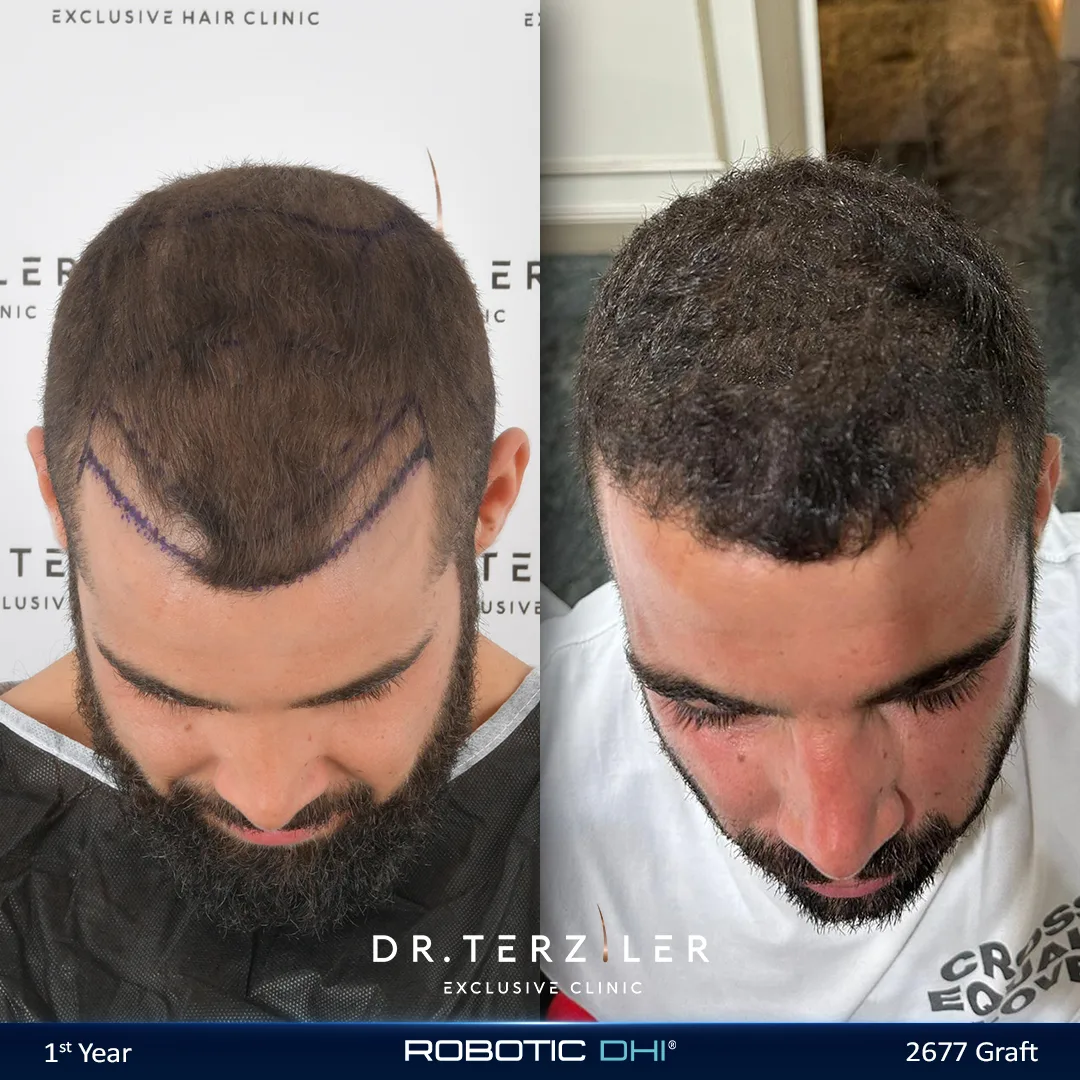
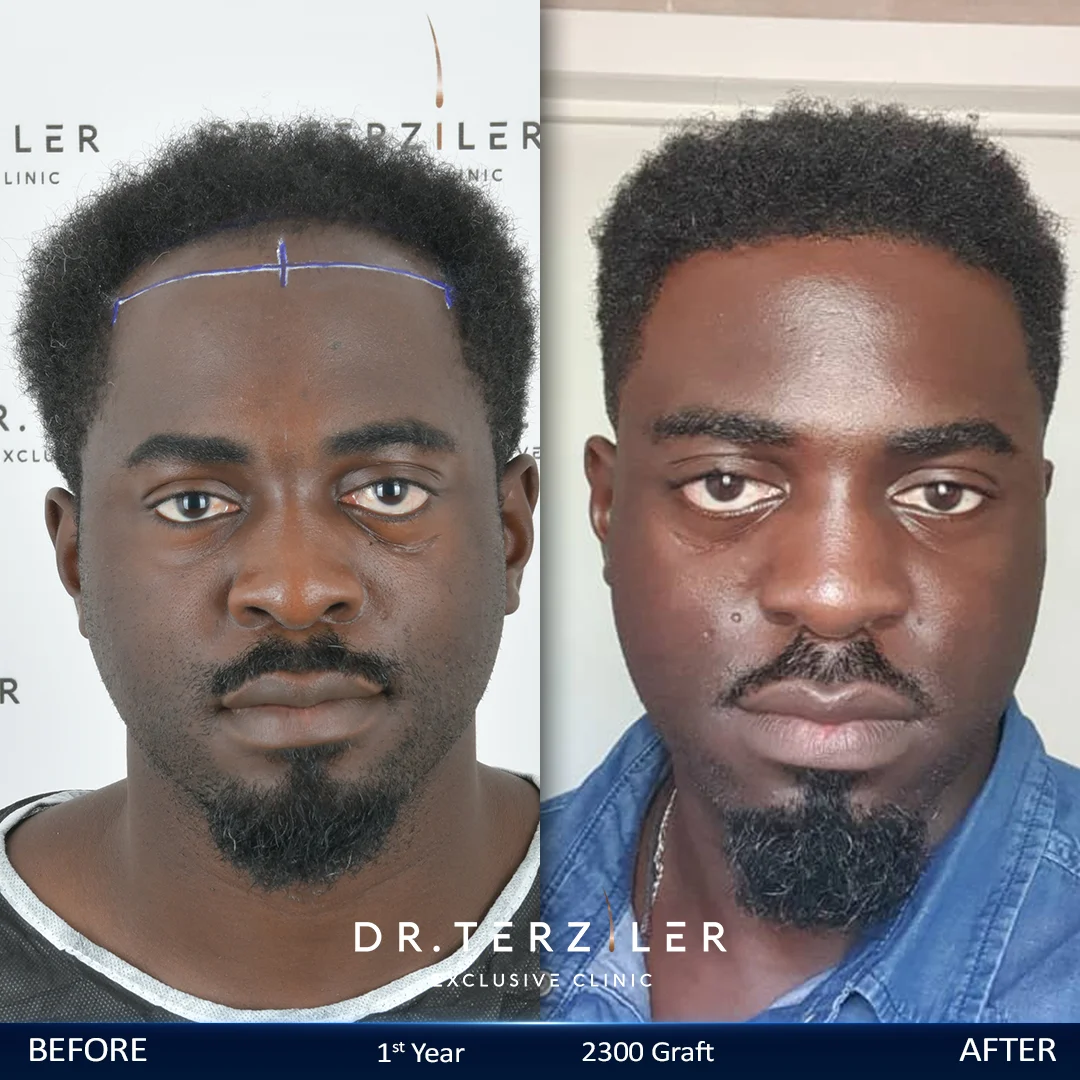
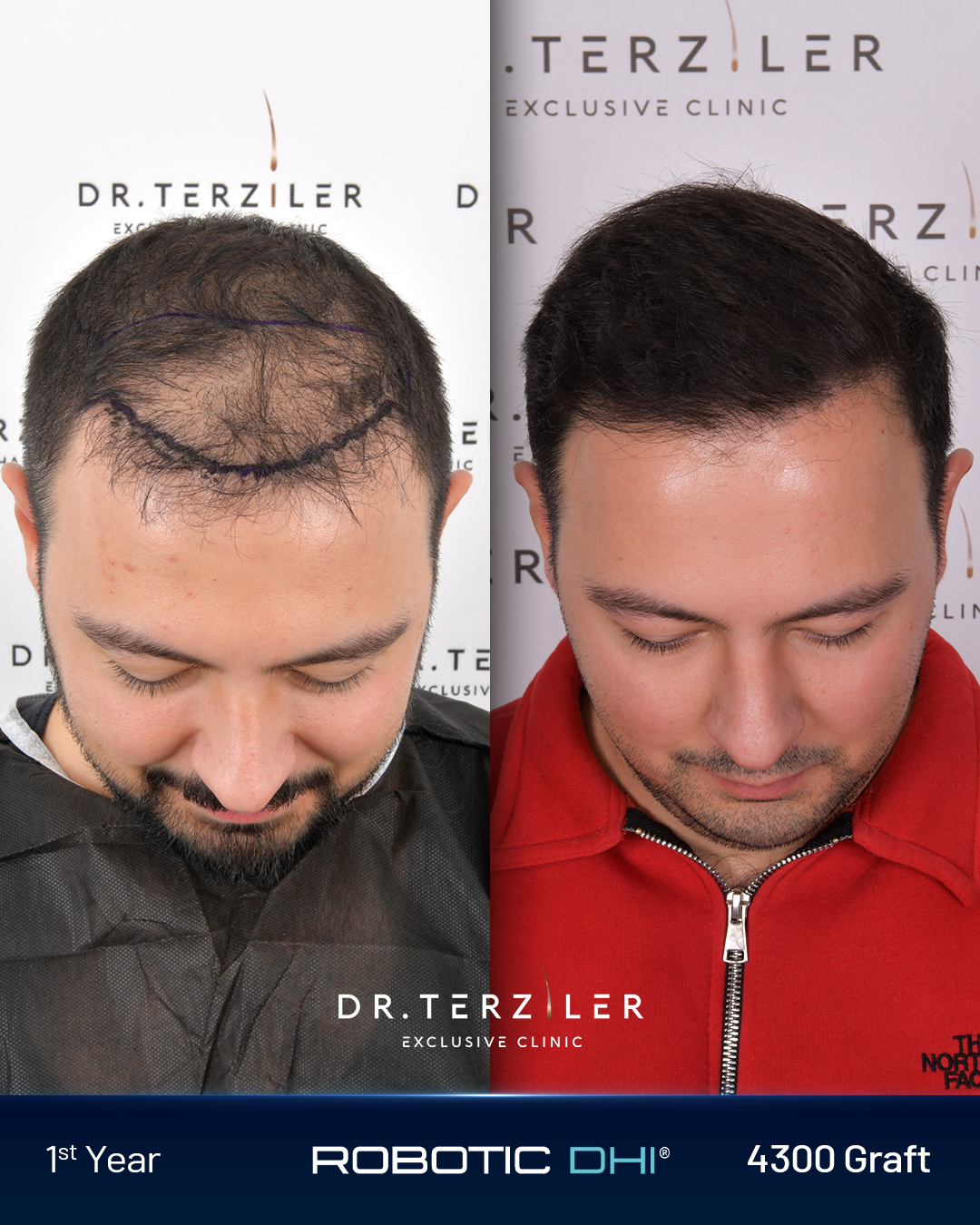
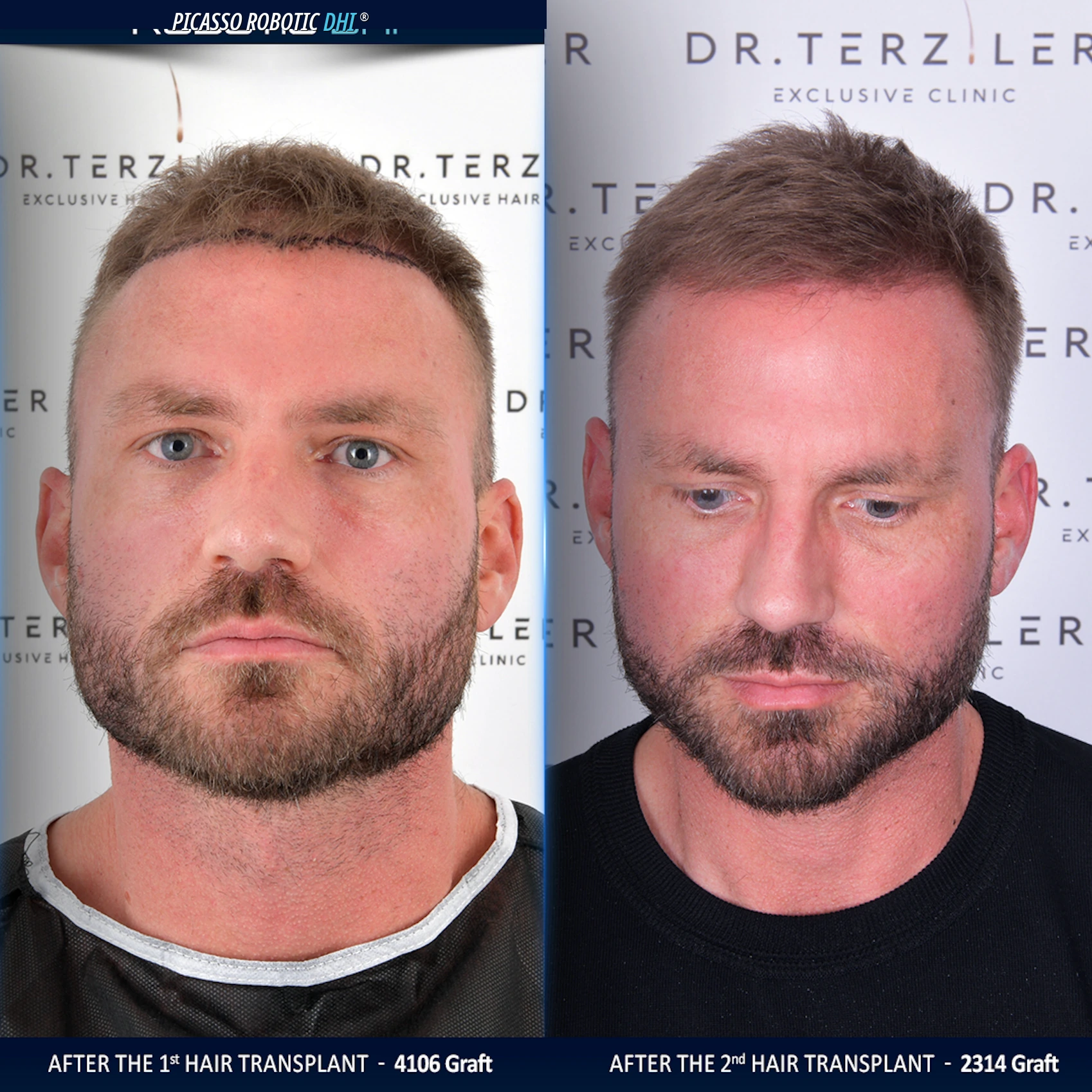
2000 grafts hair transplant patient before after at the best hair transplant clinic in Turkey Dr. Terziler
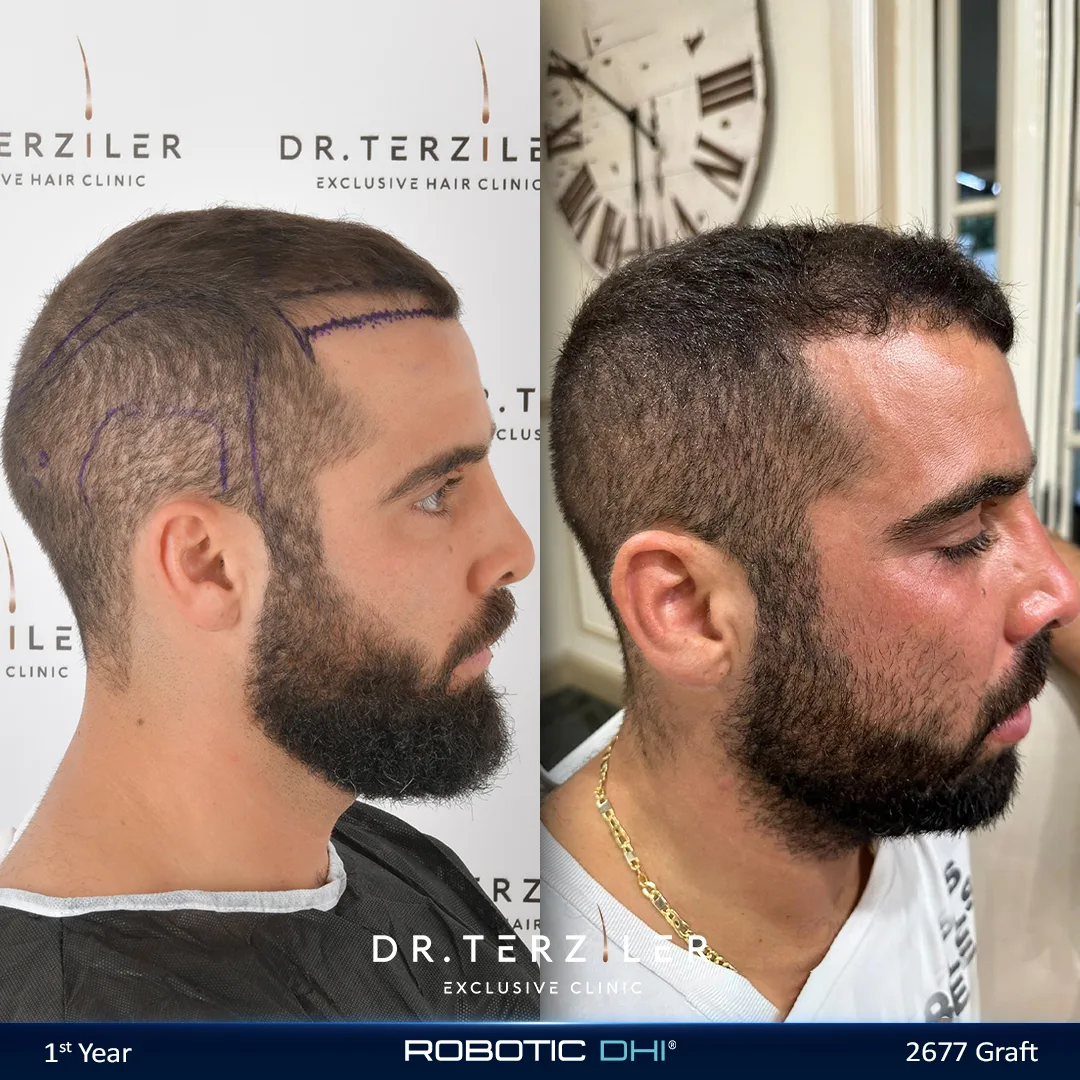
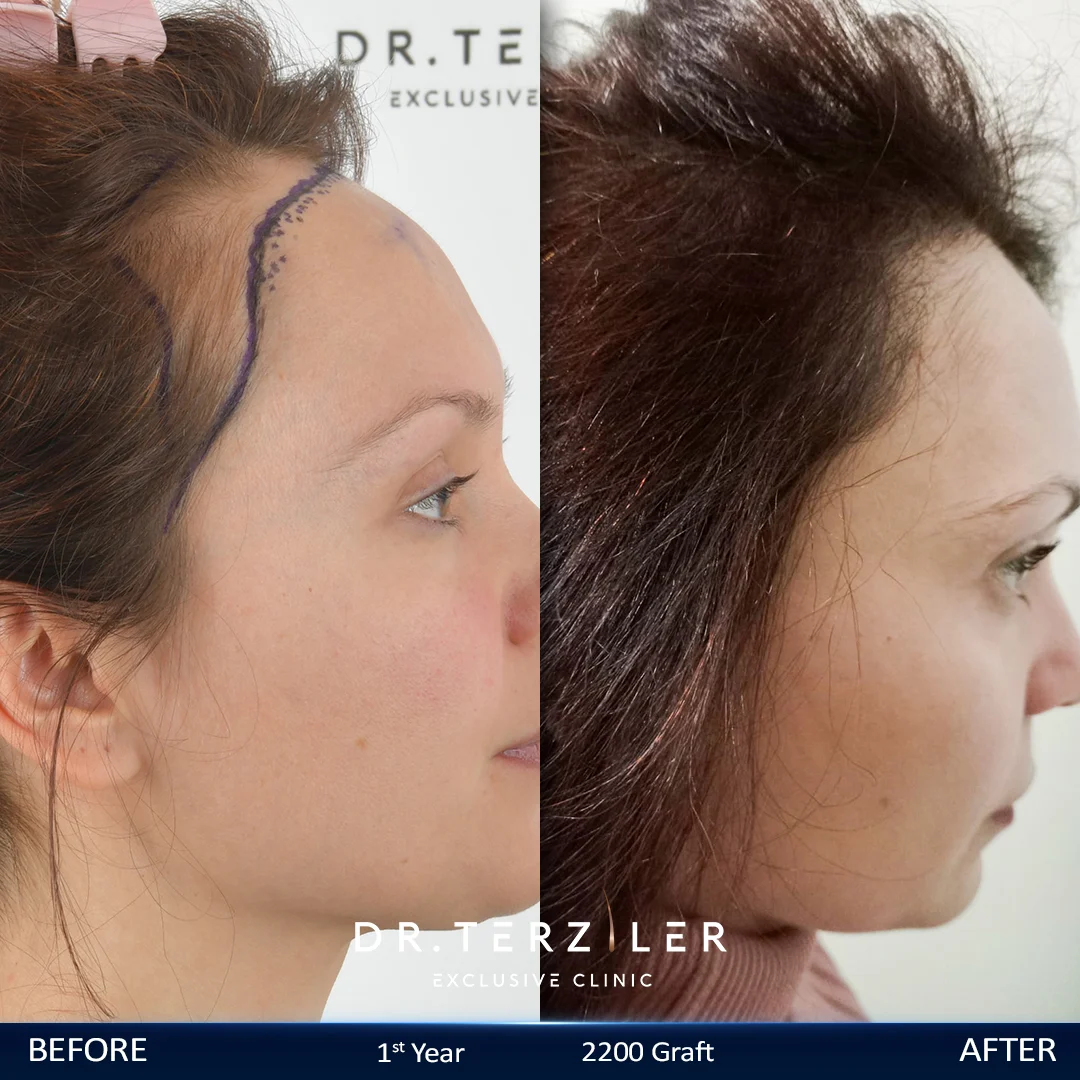
2000 graft hair transplant patient before after side photo at the best hair transplant clinic in Turkey Dr. Terziler

Sources: Norwood OT (1975): PMID: 1094308 | Bernstein RM & Rassman WR (2002) graft count references

How Much Does a 2000 Graft Hair Transplant Cost?

A 2000-graft hair transplant costs $6,000 to $16,000 in the United States and $1,200 to $2,500 in Turkey as an all-inclusive package. Price varies by technique, clinic accreditation level, and whether accommodation and aftercare are included in the fee.

How Much Does 2000 Grafts Cost in the USA?

In the United States, a 2000-graft hair transplant costs $6,000 to $16,000 at $3 to $8 per graft. New York, Los Angeles, and Miami clinics sit at the high end, charging $8 to $12 or more per graft. Mid-market cities average $4 to $6 per graft.

This fee covers surgery only. Hotel and transport are additional costs that typically add $2,000 to $4,000 to the total.

Many US patients choose Turkey to save $5,000 to $14,000 on the same procedure while receiving all-inclusive care. See our full hair transplant Turkey vs USA cost comparison for a complete breakdown.

How Much Does 2000 Grafts Cost in Turkey?

In Turkey, a 2000-graft hair transplant costs $1,200 to $2,500 as an all-inclusive package.

All-inclusive Turkey hair transplant packages cover the surgical procedure, anaesthesia, 4 to 5 nights in a 4-star hotel, airport and clinic transfers, medication, and an aftercare kit. Istanbul is the primary destination for international patients.

When comparing like-for-like, a patient flying from the US to Istanbul spends approximately $1,800 to $2,500 total, versus $8,000 to $16,000 for surgery only in the US.

View available トルコでの植毛 cost with exact inclusions and pricing for 2026.

How Much Does 2000 Grafts Cost in the UK?

In the United Kingdom, a 2000-graft hair transplant costs GBP 5,000 to GBP 10,000. UK patients who fly to Istanbul for the same procedure typically spend GBP 1,500 to GBP 2,500 in total, including flights and the all-inclusive clinic package. That is a saving of GBP 3,000 to GBP 8,000 on the same number of grafts.

How Long Does a 2000 Graft Hair Transplant Take?

A 2000-graft hair transplant takes 4 to 6 hours in a single session. Procedure time varies by technique.

2000 graft hair transplant planning table.
技術 処置時間 Reason
Robotic DHI (Picasso) 4-5 hours Simultaneous extraction and implantation — no waiting phase between steps
標準DHI 5-6 hours Choi pen implantation with manual extraction phase
FUE 5-7 hours Separate extraction and implantation phases add total time

A 2000-graft session is completed before the first-extracted grafts reach the critical 2-hour out-of-body threshold. At 4000 grafts, early-extracted grafts can exceed this window. Graft quality per graft is therefore higher in smaller sessions when technique remains consistent (Cooley, 2014).

Patients are typically discharged on the same day with minimal discomfort.

Source: Cooley JE (2014): graft survival and out-of-body time. PMID: 25566593

FUE vs DHI for 2000 Grafts: Which Method Gives Better Results?

DHI produces higher graft survival than FUE for 2000-graft sessions. DHI survival reaches 92 to 97%. FUE runs 90 to 95%. At 2000 grafts, the 2 to 7% difference equals 40 to 140 additional live grafts per session.

2000 graft hair transplant planning table.
技術 処置時間 移植片生存率 Scar Risk 最適
FUE 5-7h 90-95% Linear scar possible Large sessions (3000+ grafts), budget-focused
DHI (Choi pen) 5-6h 92-97% Minimal Hairline density, 1500-3000 grafts
Robotic DHI (Picasso) 4-5h Up to 97% Near zero Precision hairline + crown at 1500-3000 grafts

For 2000-graft sessions focused on the hairline or crown, DHI hair transplant Turkey and Robotic DHI are the superior methods. Angle control from the Choi pen is more precise than channel-cut FUE hair transplant at small zone densities where every graft placement is visible in the final result.

Source: ISHRS: DHI/FUE survival benchmarks: h

What Is Robotic DHI and Why Does It Matter for 2000 Grafts?

Robotic DHI uses robotics-assisted extraction to standardise punch angle, depth, and graft handling across every graft in a session.

At 2000 grafts concentrated in the hairline or crown, precision is more critical than at 4000 grafts spread across a larger zone. A poorly angled graft at the hairline is visible. Robotic consistency eliminates that variable by applying the same extraction parameters to every single graft.

Dr. Servet Terziler invented the ロボット式DHI system. Dr. Terziler Exclusive Clinic is the only clinic in the world that operates this system. The clinic uses a 0.70mm Choi implanter pen, smaller than the 0.75mm industry standard, reducing recipient site trauma by 15 to 20% per implantation. Every graft is implanted within 90 seconds of extraction. Grafts are stored in an ATP and HypoThermosol solution; Cooley (2014) demonstrated 72% graft survival at day 5 in this solution versus 0% in saline. Dr. Terziler Exclusive Clinic holds AAACI dual accreditation as surgeon #7722917 and as a facility, a status held by fewer than 50 hair transplant providers globally.

"2000 grafts is where artistry matters most. At this scale, every placement defines the hairline. This is why we use the 0.70mm Choi pen, because precision at this scale is non-negotiable."

Dr. Servet Terziler, Founder, Dr. Terziler Exclusive Clinic

Learn more about the Picasso Robotic DHI system with artistic hairline and how the technology was developed.

Sources: Cooley JE (2014): PMID: 25566593 | AAACI: https://www.aaaci.com/clinic-accreditation | ISHRS: https://ishrs.org

What Happens to the Donor Area After 2000 Grafts?

The donor area heals normally after 2000 grafts when extractions are distributed at under 80 grafts per cm2. At this extraction density, there is no visible thinning of the donor zone.

A 2000-graft session removes approximately 16 to 25% of total scalp donor capacity. Most patients have a lifetime donor supply of 6,000 to 10,000 scalp grafts. This leaves 75 to 84% of donor reserve intact for future sessions, making 2000 grafts a conservative and sustainable use of the donor bank at Norwood 2 to 3.

The donor zone shows redness and small scabs for 7 to 10 days. At 30 days, the area is visually indistinct from untreated scalp.

Beard hair provides an additional 2,000 to 5,000 grafts as a secondary donor source if scalp supply is limited. This extends the lifetime graft availability significantly for patients planning multiple sessions.

Source: Bernstein RM & Rassman WR (2002): donor density and safe extraction limits. PMID: 11901374

Does a 2000 Grafts Hair Transplant Hurt?

No. A 2000-graft hair transplant does not hurt during the procedure. Local anaesthesia is administered before extraction begins. The injection itself causes a brief stinging sensation. That is the only moment patients report pain.

Post-procedure discomfort is mild to moderate for 48 to 72 hours. Most patients rate it 2 to 3 out of 10. Standard oral analgesics manage it fully.

A 2000-graft session causes less post-procedure swelling than a 4000-graft session because the total extraction and implantation area is smaller. Most 2000-graft patients feel normal within 48 hours.

See our dedicated page on does a hair transplant hurt for a full breakdown of anaesthesia, injection technique, and day-by-day recovery.

What Do 2000 Hair Grafts Look Like Before and After?

2000 hair grafts transform a receding hairline or thinning crown into a natural, dense appearance by 12 months. The most visible change happens between month 6 and month 12 as transplanted hairs thicken from fine vellus hair to full terminal diameter.

Every before and after result at Dr. Terziler Exclusive Clinic is from a real patient using Robotic DHI. No filters, no lighting adjustments.

"I was Norwood 3 and only needed 2000 grafts. Some clinics pushed me toward 3000 or 4000. Dr. Terziler's team said 2000 was exactly right for my pattern. They were right. Month 9 was when I realized the hairline looked completely natural."

Devendra Galla, Norwood 3, Robotic DHI, Dr. Terziler Exclusive Clinic

View the full before and after gallery to see 2000-graft hairline and crown results across multiple Norwood stages and hair types.

When Do You See Results After a 2000 Graft Hair Transplant?

You see the first visible growth at 4 to 5 months after a 2000-graft hair transplant. Approximately 80% of the final result is visible by month 9. Full terminal density is reached at 12 to 18 months.

2000 graft hair transplant planning table.
年表 What Happens What to Expect
第1ヶ月 Transplanted hairs enter telogen (resting) phase Shock shedding begins — normal and expected
Month 2-3 Follicles dormant beneath the scalp Scalp looks similar to pre-operation state. No visible growth
Month 4-5 First anagen re-entry begins Fine, sparse hairs appear at the hairline or crown
6か月目 Active growth phase 40-60% of final density visible. Hairline shape begins to emerge
Month 9 Hair thickening phase 75-85% density. Hairline clearly defined. Crown visible if crown case
Month 12 Near-final result 90-95% of final density visible. Hair texture improving
Month 15-18 Full terminal density 100% of final result. Hair texture fully normalised

2000-graft hairline patients often notice early results faster than 4000-graft patients. Smaller grafted zones mean fewer total follicles competing for re-entry into the anagen growth phase simultaneously.

Month 1 to 3: Why Is My Hair Falling Out?

Shock shedding is normal in the first 4 to 6 weeks after a hair transplant. Transplanted hairs enter the telogen resting phase and detach from the scalp. The follicle remains intact and alive beneath the surface.

By month 3, the scalp looks similar to its pre-operation state. New follicles are in their dormant phase before anagen re-entry begins. This stage concerns many patients but it is a normal part of the transplant growth cycle.

Month 4 to 6: What Does Early Growth Look Like?

First visible hairs appear at the hairline between month 4 and month 5. Growth is sparse at this stage, with fine, thin strands emerging. The hairs are in early anagen phase and have not yet thickened to their terminal diameter.

By month 6, 40 to 60% of the final hairline density is visible. The hairline shape begins to emerge clearly. Hairs are still thinner than they will become, but the coverage and direction of growth are already set.

Month 9 to 12: When Is the Final Result Visible?

By month 9, 75 to 85% of the final density is visible. The hairline is clearly defined and crown coverage is visible for crown cases. Hair continues to thicken during this period as follicles mature.

By month 12, 90 to 95% of the final result is visible. Hair thickens toward full terminal diameter. Full terminal density and texture are reached between month 15 and month 18, at which point the result is permanent.

Why Choose Dr. Terziler Exclusive Clinic for 2000 Grafts?

Dr. Terziler Exclusive Clinic is the only clinic in the world that performs special Robotic DHI, a system Dr. Servet Terziler invented specifically to achieve sub-millimetre hairline consistency. At 2000 grafts, where every placed follicle shapes the final hairline or crown, this level of precision is what separates a natural result from a visible one.

Every 2000-graft session at the clinic uses a 0.70mm Choi implanter pen, smaller than the 0.75mm industry standard. This 0.05mm difference reduces recipient site trauma by 15 to 20% per implantation and allows denser packing in the hairline zone. Grafts are implanted within 90 seconds of extraction as part of a sub-90-second out-of-body protocol that runs across every session. Graft storage uses an ATP and HypoThermosol solution; Cooley (2014) documented 72% graft survival at day 5 in this solution versus 0% in saline.

"2000 grafts is where artistry matters most. At this scale, every placement defines the hairline. This is why we use the 0.70mm Choi pen, because precision at this scale is non-negotiable."

Dr. Servet Terziler, Founder, Dr. Terziler Exclusive Clinic

Dr. Terziler Exclusive Clinic holds AAACI dual accreditation as surgeon #7722917 and as a facility. Fewer than 50 hair transplant providers worldwide hold this dual status. Dr. Terziler is an ISHRS-recognised educator and active member of the International Society of Hair Restoration Surgery. Graft survival reaches up to 97% for Robotic DHI procedures, within the ISHRS 2022 published benchmark of 90 to 97%.

As the best hair transplant clinic in Turkey, Dr. Terziler Exclusive Clinic combines scientific precision with aesthetic results backed by verified clinical data.

Frequently Asked Questions About 2000 Grafts Hair Transplant

How much does a 2000 graft hair transplant cost?

A 2000-graft hair transplant costs $6,000 to $16,000 in the United States at $3 to $8 per graft. In Turkey, the same procedure costs $1,200 to $2,500 as an all-inclusive package covering surgery, hotel, transfers, and aftercare. UK prices range from GBP 5,000 to GBP 10,000.

How many hairs is 2000 grafts?

2000 grafts contain approximately 4,200 to 4,600 individual hairs. Each graft averages 2.1 to 2.3 hairs based on typical follicular distribution: 15% single-hair, 45% double, 35% triple, and 5% four-hair grafts. The number 2000 refers to follicular units, not individual hair strands.

Is 2000 grafts a lot?

2000 grafts is a mid-size standard session. Clinical classification: small sessions run 500 to 1,500 grafts; standard sessions 1,500 to 3,000; large sessions 3,000 to 4,000; mega sessions 4,000 or more. A 2000-graft procedure is completed in one day in 4 to 6 hours.

How much area do 2000 grafts cover?

2000 grafts cover 40 to 55 cm2 depending on implantation density. At 50 grafts per cm2, coverage is 40 cm2. At 35 grafts per cm2, coverage reaches 57 cm2. A standard hairline zone (25-35 cm2) is fully covered. A thinning crown at Norwood 3V (30-45 cm2) is fully addressable.

How long does a 2000 graft hair transplant take?

4 to 6 hours in a single session. Robotic DHI completes 2000 grafts in 4 to 5 hours due to simultaneous extraction and implantation. Standard FUE takes 5 to 7 hours. In a 2000-graft session, all grafts are implanted within the critical 2-hour out-of-body window, maximising survival.

Is 2000 grafts enough for the crown?

Yes, when the crown zone is under 40 cm2. A Norwood 3V crown (25-40 cm2) is fully coverable with 2000 grafts at 50 grafts per cm2. A Norwood 4 crown (40-55 cm2) receives 70 to 85% density. Norwood 5 crowns require 3,000 or more grafts for full coverage.

Is 2000 grafts enough for a hairline?

Yes. 2000 grafts fully restores a receding hairline at Norwood 2 and 3. A standard frontal hairline zone is 25 to 35 cm2. At 50 grafts per cm2, 2000 grafts achieves complete, natural-density hairline coverage in a single session.

What Norwood stage needs 2000 grafts?

Norwood 2 and 3 patients most commonly need 1,500 to 2,500 grafts, making 2000 the standard choice. Norwood 3V patients use 2000 grafts for the hairline or crown but not both simultaneously. Norwood 4 and above require 3,000 or more grafts for full coverage.

What happens to the donor area after 2000 grafts?

The donor area heals to normal appearance within 30 days when extractions are distributed at under 80 grafts per cm2. A 2000-graft session removes 16 to 25% of lifetime donor capacity, preserving 75 to 84% for future sessions. The donor zone shows redness and small scabs for 7 to 10 days.

What is the graft survival rate for 2000 grafts?

90 to 97% with DHI and up to 97% with Robotic DHI. FUE survival runs 90 to 95%. Survival is driven by out-of-body time, graft storage solution, and implantation technique. ATP and HypoThermosol storage (Cooley 2014) achieves 72% survival at day 5 versus 0% in saline.

Is FUE or DHI better for 2000 grafts?

DHI delivers higher graft survival for 2000-graft sessions at 92 to 97% versus 90 to 95% for FUE. At 2000 grafts, the 2 to 7% survival difference equals 40 to 140 additional live grafts. For hairline and crown work, DHI Choi pen implantation provides superior angle control.

What does 2000 grafts look like before and after?

2000 grafts produce a full, natural hairline or dense crown coverage by 12 months. First growth appears at month 4 to 5. At month 6, 40 to 60% of final density is visible. At month 9, 75 to 85%. Full terminal density and texture are reached at 12 to 18 months.

How much does 2000 grafts cost in Turkey?

$1,200 to $2,500 all-inclusive in Turkey. Istanbul packages include the surgical procedure, 4 to 5 nights in a 4-star hotel, airport and clinic transfers, post-operative medication, and an aftercare kit. International patients typically save $5,000 to $13,000 compared to US or UK prices for the same graft count.

How many total grafts can a person have in their lifetime?

6,000 to 10,000 scalp grafts is the typical lifetime donor supply. A 2000-graft session uses 16 to 25% of this reserve. Beard hair provides a secondary source of 2,000 to 5,000 additional grafts. Norwood 2 to 3 patients who get 2000 grafts retain ample donor capital for future sessions if hair loss progresses.

3,000グラフトの植毛:費用、頭頂部、施術前後の結果

A 3000-graft hair transplant delivers approximately 6,900 individual hairs across 60 to 85 cm² of scalp in a single session of 5 to 7 hours. It is the standard procedure for Norwood 4 patients restoring both the hairline and crown simultaneously, and the primary crown restoration session for Norwood 3 Vertex patients. 3000 grafts sits at the threshold between a standard and a large session; sufficient to address moderate-to-advanced hair loss in one day without exceeding safe extraction limits.

~6,900 hairs delivered
60–85 cm² scalp area covered
5–7 hrs procedure
97% graft survival (Robotic DHI)
From $1,500 all-inclusive Turkey
Ideal for Norwood 3V–4
セルヴェト・テルジラー博士

医学的監修:

セルヴェト・テルジラー博士

AAACI Accredited Surgeon, ISHRS Member and Inventor of Robotic DHI

Updated July 2026

This content is reviewed by Dr. Servet Terziler for medical accuracy, graft-count planning, donor-area safety, Robotic DHI context, cost comparison relevance, and patient-safety framing.

What Is a 3000 Graft Hair Transplant?

A 3000 graft hair transplant is a procedure in which 3,000 individual follicular units (each containing 1–4 hairs) are harvested from the donor area and implanted into thinning or bald zones, delivering approximately 6,600–7,500 hairs in a single session. It is the most commonly requested hair transplant Turkey procedure for Norwood 4 patients who want to restore both the hairline and crown simultaneously, and for Norwood 3 Vertex patients requiring full crown coverage at high density.

Most patients confuse grafts with hairs. A graft is a follicular unit: a naturally occurring cluster of 1 to 4 hairs enclosed in a single epidermis, first defined by Headington in 1984. 3000 grafts means 3,000 of these units are moved. The resulting hair count is always higher than the graft count, typically between 6,600 and 7,500 individual hairs at standard follicular distribution.

3000 grafts is the threshold session for moderate-to-advanced hair loss. It addresses Norwood 3 to 4 hair loss, covering the hairline, temples, and crown simultaneously in a single 5 to 7 hour day under local anaesthesia with no overnight hospital stay.

Source: Headington JT (1984): Transverse microscopic anatomy of the human scalp. Arch Dermatol. PMID: 6694356. https://pubmed.ncbi.nlm.nih.gov/6694356/

3000 grafts hair transplant norwood 3 patient at Dr. Terziler Istanbul, Turkey
3000-graft hair transplant patient example at Dr. Terziler Exclusive Clinic.
3500 grafts hair transplant norwood 3 patient hairline at the best hair transplant clinic in Turkey, Dr. Terziler
3000-graft hair transplant patient example at Dr. Terziler Exclusive Clinic.

How Many Hairs Is 3000 Grafts?

3,000 grafts contain approximately 6,600–7,500 individual hairs, based on the typical follicular unit distribution: 15% single-hair grafts, 45% double, 35% triple, and 5% four-hair grafts.

The table below shows the exact hair-count calculation at 3000 grafts. This data is based on the standard follicular distribution found in clinical hair restoration literature.

3000-graft hair transplant planning table 1.
Graft Type % of Grafts No. of Grafts No. of Hairs
Single-hair grafts 15% 450 grafts 450 hairs
Double-hair grafts 45% 1,350 grafts 2,700 hairs
Triple-hair grafts 35% 1,050 grafts 3,150 hairs
Four-hair grafts 5% 150 grafts 600 hairs
TOTAL 100% 3,000グラフト ~6,900 hairs

Exact count varies by individual scalp anatomy. Dr. Terziler’s team assesses follicular density during consultation.

Follicular grouping is determined by genetics and donor zone density, not by the surgeon. Patients with naturally thick, multi-hair grafts see higher hair counts; patients with predominantly single-hair follicles may yield closer to 6,300 total hairs. Folliscopy assessment before every procedure projects each patient’s accurate yield.

Source: Rassman WR & Bernstein RM (2002): follicular unit density studies. Dermatol Surg. PMID: 11901374. https://pubmed.ncbi.nlm.nih.gov/11901374/

How Much Area Do 3000 Grafts Cover?

3,000 grafts cover approximately 60–85 cm² of scalp, which is equivalent to restoring a full frontal hairline plus significant mid-scalp density, or a complete crown zone in most patients with Norwood III–IV hair loss.

Coverage of 3000 graft hair transplant depends on implantation density. A surgeon choosing 35 grafts per cm² achieves wider coverage across a larger zone. At 50 grafts per cm², results are denser in a smaller zone. Dr. Terziler targets 45 to 50 grafts per cm² as the optimal balance.

3000-graft hair transplant planning table 2.
グラフト数 Est. Coverage Typical Zone NW Stage Target
1,500グラフト 30~45 cm² Hairline only ノース・ウェスト・ツー
2,000グラフト 40~55 cm² Hairline + frontal ノース・ウェスト 2 – 3
3,000 grafts ★ 60~85 cm² Hairline + crown OR full frontal ノース・ウェスト 3–4
4,000グラフト 80~110 cm² Hairline + crown + mid ノース・ウェスト 4–5
5,000+ grafts 110~140 cm² Extensive restoration ノース・ウェスト 5–7

3000 Grafts for Crown Hair Transplant: Is It Enough?

3,000 grafts is sufficient for crown restoration in most patients with Norwood III Vertex (NW3V) to early Norwood IV hair loss, where the crown bald zone typically measures 50–70 cm².

The crown (vertex) is the most psychologically distressing zone of hair loss for men aged 35 to 55. Crown hair grows in a spiral pattern radiating outward from a central whorl point, requiring each graft to be implanted at a different angle. This angular complexity makes crown restoration technically more demanding than hairline work, and more sensitive to errors in graft placement.

3000-graft hair transplant planning table 3.
NW Stage Crown Bald Area Grafts for Crown Only Combined Hairline+Crown
ノース・ウェスト・スリー V 40~55 cm² 1,600–2,200 grafts Not recommended same session
ノース・ウェスト 4 55~75 cm² 2,200–3,000 grafts 3,000 total (split 2,000/1,000)
ノース・ウェスト 5 75~100 cm² 3,000–4,000 grafts 2 sessions recommended
ノース・ウェスト 6 プラス 100 cm² 4,000–5,000+ grafts Multiple sessions required

NW4 hairline + crown allocation: For NW4 patients wanting both hairline and crown restored in one session, the surgeon divides the 3000 grafts between zones. The most common NW4 allocation is 2,000 grafts to the hairline and 1,000 grafts to the crown vertex. Crown-priority patients can reverse this split.

Robotic DHI crown angle control: At Dr. Terziler Exclusive Clinic, Robotic DHI uses a 0.70mm Choi implanter pen (smaller than the 0.75mm industry standard) which allows sub-millimetre control over implantation angle in the crown. Each of the 3,000 grafts is placed at a different directional vector to match the natural whorl pattern.

I had my 3000 grafts done at Dr. Terziler’s clinic in May 2024, full crown and hairline in one session. By month 9 I could style my hair normally for the first time in six years. At 12 months the whorl looks completely natural. I’ve had colleagues ask if I started using medication.

— James R., United States, 3000 grafts (crown + hairline), 12 months post-op
3000 grafts crown hair transplant norwood 3 patient at the best hair transplant clinic in Turkey Dr. Terziler, Istanbul.
3000-graft hair transplant patient example at Dr. Terziler Exclusive Clinic.

Source: Bernstein RM (2002): crown whorl angulation and follicular placement. Dermatol Surg. PMID: 11896453. https://pubmed.ncbi.nlm.nih.gov/11896453/

Source: Norwood OT (1975): Male pattern baldness classification and incidence. South Med J. PMID: 1094308. https://pubmed.ncbi.nlm.nih.gov/1094308/

Is 3000 Grafts Enough for a Full Hairline?: Yes, 3,000 grafts is typically sufficient for a complete hairline restoration in patients with Norwood II–III loss, with grafts remaining for mid-scalp density. A standard frontal hairline zone covers 25 to 35 cm². At 50 grafts per cm², full density requires 1,250 to 1,750 grafts, leaving 1,250 to 1,750 grafts for the temples and mid-scalp. Patients receiving 3000 grafts solely on the hairline achieve above-normal density, so the majority of 3000-graft sessions also address adjacent zones.

Is 3000 Grafts Enough for the Crown?: 3,000 grafts can restore the crown in patients with Norwood III Vertex (NW3V) or early NW4 crown loss, where the bald area is typically 50–70 cm². For larger crown areas (NW5+), 4,000–5,000 grafts are recommended. Crown hair grows in a spiral pattern requiring each graft to be implanted at a different angle. Robotic DHI at Dr. Terziler Exclusive Clinic uses a 0.70mm Choi implanter pen for sub-millimetre directional control, which is the most important technical factor in producing a natural crown whorl result.

How Much Will 2000 Grafts Cover?: 2000 grafts cover approximately 40 to 55 cm² of scalp, delivering 4,200 to 4,600 individual hairs. See our guide on how much will 2000 grafts cover for full coverage data, zone breakdown, and Norwood recommendations.

How Much Will 4000 Grafts Cover?: 4000 grafts cover approximately 80 to 110 cm², delivering 9,200 to 10,000 individual hairs across the hairline, crown, and mid-scalp. See our guide on how much will 4000 grafts cover for full session breakdown and Norwood 4–5 coverage data.

How Much Will 5000 Grafts Cover?: 5000 grafts cover approximately 110 to 140 cm² and are indicated for Norwood 5 and above. See our guide on how much will 5000 grafts cover for staging and multi-session planning.

Rassman WR & Bernstein RM (2002): graft count planning and density. PMID: 11901374.

Is 3000 Grafts a Lot?

3,000 grafts is considered a medium-to-large hair transplant session. Most standard procedures transfer 1,000–2,000 grafts; sessions of 3,000 or more are classified as large-volume and are typically performed over a single day of 5–7 hours.

3000-graft hair transplant planning table 4.
Session Type Graft Range Typical Use Case
Small 500~1,500グラフト Temples, sideburns, early recession, density work
標準 1,500–2,500 grafts Hairline, crown, Norwood 2–3
Large (this page) 2,500–4,000 grafts Norwood 3V–4, hairline + crown combined
Mega session 4,000+ grafts Norwood 5–7, full scalp reconstruction

Single-day large session: 3000 grafts is safely completed in a single day of 5 to 7 hours. At Dr. Terziler Exclusive Clinic, Robotic DHI reduces session time to 5 to 6 hours compared to 6 to 8 hours for manual FUE, because the Picasso robotic system performs extraction and implantation in a continuous workflow; keeping graft out-of-body time under 90 seconds per graft.

Graft survival challenge: The graft survival challenge at 3000 grafts: in manual FUE sessions, the first-extracted grafts risk exceeding the critical 2-hour out-of-body threshold by the time implantation begins. Robotic DHI eliminates this lag. Graft survival at Dr. Terziler reaches 97%, versus 85–92% for industry-average manual FUE.

Source: Cooley JE (2014): Optimal graft care. Hair Transplant Forum Int. PMID: 25566593. https://pubmed.ncbi.nlm.nih.gov/25566593/

Which Norwood Stages Need 3000 Grafts?

Patients at Norwood III, III Vertex, or IV are the primary candidates for a 3,000 graft session, as their bald or thinning area measures 60–85 cm²; the exact coverage range that 3,000 grafts can fill at therapeutic density.

3000-graft hair transplant planning table 5.
NW Stage Hair Loss Description Recommended Grafts Is 3000 Right?
北西部 I No visible loss <500 grafts ✘ Over-treatment
ノース・ウェスト II Hairline recession 800–1,500 grafts ✘ Too many for most
ノース・ウェスト III Frontal + temples 1,500–2,500 grafts ~ Depends on density goal
北西 III V Crown only 1,600–3,000 grafts ✓ Crown session
ノース・ウェスト IV Hairline + crown 2,500–3,500 grafts ✓ Most common 3000 candidate
ノース・ウェスト・ファイブ Extensive 3,500–5,000 grafts ✓ First session of two
NW VI–VII Severe/complete 5,000+ grafts ✓ Multi-session plan

★ NW4 = primary candidate for 3000 grafts.

Individual graft counts vary by scalp zone size, hair calibre, and density goals. A patient with naturally thick, dark hair may achieve full visual coverage with 2,500 grafts; a patient with fine, light hair may need 3,500 to achieve the same perceived density.

See our Norwood scale guide for a detailed breakdown of each stage, measurement criteria, and corresponding graft requirements.

Sources: Norwood OT (1975): PMID: 1094308 | Rassman WR & Bernstein RM (2002): PMID: 11901374n

Can You Split 3000 Grafts Across Hairline and Crown?

Yes, splitting 3,000 grafts between the hairline and crown is a common strategy for Norwood IV patients. A typical allocation is 1,800–2,000 grafts to the hairline and temples, and 1,000–1,200 grafts to the crown vertex, restoring both zones in a single session.

3000-graft hair transplant planning table 6.
Zone 移植片 Coverage Density
ヘアライン 1,800 約45 cm² 40 FU/cm²
Crown vertex 1,200 約35 cm² 34 FU/cm²
TOTAL 3,000 約80 cm² —

Crown-priority split: Crown-priority patients (those most bothered by vertex thinning) can reverse the allocation: 2,000 grafts to the crown and 1,000 to the hairline. This is appropriate for NW4 patients with a small-to-medium crown zone and early hairline recession.

When NOT to split: When NOT to split: Norwood 5 or above patients should not split 3000 grafts across both zones in a single session. The individual zones are too large for adequate coverage at this graft count. Two staged sessions of 3,000 grafts each is the recommended plan.

How Much Does a 3000 Graft Hair Transplant Cost?

A 3,000 graft hair transplant costs between $9,000 and $24,000 in the United States ($3–$8 per graft), £7,500–£15,000 in the UK, and $3,500–$6,500 all-inclusive in Turkey; a saving of up to 85% for the same procedure.

How Much Does 3000 Grafts Cost in the USA?

In the USA, 3,000 grafts cost $9,000–$24,000 depending on clinic location, surgeon experience, and technique. New York and Los Angeles clinics charge $20,000–$24,000; mid-market cities average $9,000–$14,000.

This fee covers surgery only. Hotel and transport are additional costs that typically add $2,000 to $4,000. Many US patients choose Turkey to save $10,000 to $20,000 on the same procedure while receiving all-inclusive care.

3000-graft hair transplant planning table 7.
City / Region Price Range (3,000 grafts) Cost per Graft
ニューヨーク州ニューヨーク $18,000–$24,000 $6–$8
カリフォルニア州ロサンゼルス $18,000–$22,000 $6–$7.33
フロリダ州マイアミ $12,000–$18,000 $4–$6
イリノイ州シカゴ $12,000–$16,000 $4–$5.33
テキサス州ダラス $10,000–$15,000 $3.33–$5
Average USA $9,000–$24,000 $3–$8
トルコ $3,500–$6,500 all-incl. $0.50–$1.17

Check our Hair Transplant Turkey vs USA Guide here.

How Much Does 3000 Grafts Cost in Turkey?

Hair transplant in Turkey costs $3,500–$6,500 all-inclusive for 3,000 grafts; covering the procedure, hotel, airport transfers, and aftercare kit. Dr. Terziler’s clinic in Istanbul offers transparent pricing with no hidden fees.

All-inclusive Istanbul packages: All-inclusive Istanbul hair transplant packages cover the surgical procedure, anaesthesia, 4 to 5 nights in a 4-star hotel, airport and clinic transfers, all medications, PRP therapy, aftercare kit, and post-operative check-up. When a US patient totals procedure cost plus flights plus hotel independently, the all-inclusive Istanbul package represents a saving of $10,000 to $20,000 over equivalent US treatment.

Full Turkey cost breakdown: View the full breakdown of hair transplant cost in Turkey with exact inclusions and 2026 pricing.

How Much Does 3000 Grafts Cost in the UK?

In the UK, a 3,000 graft hair transplant costs £7,500–£15,000. London clinics typically charge the highest rates (£12,000–£15,000), while clinics in Manchester and Birmingham average £7,500–£10,000.

UK patients who fly to Istanbul for 3000 grafts spend 3,200 to £6,000 all-inclusive, saving £6,000 to £12,000 on the same procedure.

3000-graft hair transplant planning table 8.
国 Price Range (3,000 grafts) All-Inclusive?
Turkey ★ $3,500–$6,500 ✓ Yes
アメリカ合衆国 $9,000–$24,000 ✘ Usually no
イギリス £7,500–£15,000 ✘ Usually no
カナダ CAD $10,000–$27,000 ✘ Usually no
オーストラリア AUD $12,000–$30,000 ✘ Usually no
ドイツ €8,000–€15,000 ✘ Usually no

★ Dr. Terziler Exclusive Clinic is located in Istanbul, Turkey.

How Long Does a 3000 Graft Hair Transplant Take?

A 3,000 graft hair transplant takes 5–7 hours in a single day. The session begins with local anaesthetic (30 min), followed by graft extraction (2–3 hrs) and implantation (2.5–3.5 hrs), with short breaks in between.

3000-graft hair transplant planning table 9.
フェーズ 所要時間 注記
Arrival & prep 30分 Photos, consent, hairline design
Local anaesthetic 20–30 min Vibration device used to reduce discomfort
Graft extraction 2–3 hours Robotic DHI system
Sorting & storage Concurrent ATP + HypoThermosol medium
Implantation 2.5–3.5 hours 0.70mm Choi pen, Robotic DHI
Aftercare briefing 30分 Instructions + kit
TOTAL 5–7 hours Single day, no overnight stay

Out-of-body time matters: Out-of-body time (the duration between a graft being extracted and implanted) is the most critical variable in graft survival. At 3000 grafts, Robotic DHI at Dr. Terziler Exclusive Clinic keeps individual graft out-of-body time under 90 seconds by performing extraction and implantation in a continuous workflow. Grafts are stored in ATP-supplemented HypoThermosol medium between extraction and implantation.

Same-day discharge: Patients arrive at the clinic in the morning and are discharged with a post-operative kit before evening. The recommended stay in Istanbul is 3 to 4 days: day before arrival, procedure day, rest day, return flight.

Source: Cooley JE (2014): Optimal graft care, out-of-body time, HypoThermosol storage. Hair Transplant Forum Int. PMID: 25566593. https://pubmed.ncbi.nlm.nih.gov/25566593/

How Painful Is a 3000 Graft Hair Transplant?

A 3,000 graft hair transplant is performed under local anaesthetic and is not painful during the procedure. Patients report mild discomfort during the initial anaesthetic injections; most describe the 5–7 hour session as tolerable, with little to no pain throughout.

During the procedure: The only discomfort most patients describe is mild stinging during the initial anaesthetic injections. At Dr. Terziler Exclusive Clinic, a vibration-assisted injection system reduces this by interrupting pain signal transmission at the injection site. Most patients rate injection discomfort at 2 to 3 out of 10. The procedure itself is rated 0 to 1 out of 10.

After the procedure: Post-operative discomfort after a 3000-graft session is mild to moderate for 48 to 72 hours. Most patients rate it 3 out of 10. Standard paracetamol and ibuprofen manage this effectively. Prescription pain medication is rarely required. A 3000-graft session causes slightly more post-procedure swelling than a 2000-graft session due to the larger total extraction and implantation area.

See our dedicated guide on how painful is a hair transplant for a full breakdown of anaesthesia technique, injection method, and day-by-day post-operative discomfort timeline.

FUE vs DHI for 3000 Grafts: Which Method Gives Better Results?

For a 3,000 graft session, DHI(ダイレクト・ヘア・インプランテーション) delivers superior density and natural direction versus standard FUE hair transplant, because grafts are implanted immediately with a Choi pen; eliminating the channel-cutting step and reducing out-of-body time. Dr. Terziler’s Robotic or manual DHI hair transplant system uses a 0.70mm pen for sub-millimetre precision.

3000-graft hair transplant planning table 10.
特集 FUE 持っていますか? Robotic DHI (Dr. Terziler)
Channel pre-cut? はい から から
Choi pen size 該当なし 0.75mm std 0.70mm ★
Graft out-of-body Longer Shorter <90 sec per graft ★
Density achievable 35~40 FU/cm² 40~45 FU/cm² 45~50 FU/cm² ★
Survival rate 85–92% 90–95% 97% ★
Shaving required? 全身の剃毛 Partial/full Partial possible
Session time (3000g) 6–8 hours 6–7 hours 5–6 hours ★

★ Dr. Terziler Exclusive Clinic advantage.

Source: ISHRS: DHI and FUE graft survival benchmarks. https://ishrs.org/patients/hair-restoration-procedures/

Cooley JE (2014): PMID: 25566593.

What Is Robotic DHI and Why Does It Matter for 3000 Grafts?

Robotic DHI is an advanced form of Direct Hair Implantation that uses a robotic arm to achieve sub-90-second implantation per graft. Dr. Terziler’s Picasso system uses a 0.70mm Choi pen (7% finer than the industry standard 0.75mm) enabling higher density and more natural hair angles.

Invented by Dr. Servet Terziler: Dr. Servet Terziler invented the Robotic DHI system. Dr. Terziler Exclusive Clinic is the only clinic in the world that operates this system. At 3000 grafts, robotic consistency matters more than at smaller sessions; the 3000th graft must be handled with the same precision as the first, which human fatigue in a 6 to 8 hour manual session cannot guarantee.

0.70mm precision: The 0.05mm difference in punch diameter (0.70mm vs 0.75mm) creates a proportionally smaller implantation channel, reduces scalp trauma per graft, and allows higher implantation density in the hairline and crown; which is where the difference between a natural and an artificial-looking result is most visible.

Sources: Cooley JE (2014): PMID: 25566593 | AAACI: https://www.aaaci.com/clinic-accreditation | ISHRS: https://ishrs.org

What Happens to the Donor Area After 3000 Grafts?

Removing 3,000 grafts from the donor area leaves no visible scarring with FUE or DHI techniques, as grafts are harvested individually from a large zone (typically the occipital and temporal regions). The average donor area density of 80–100 FU/cm² means that extracting 3,000 grafts from a 200–300 cm² zone is well within safe capacity.

Donor capacity used: A 3000-graft session removes approximately 25 to 40% of the total scalp donor capacity for most patients. The average lifetime scalp donor supply is 6,000 to 10,000 grafts. Removing 3000 grafts in a first session leaves 3,000 to 7,000 grafts available for future procedures if hair loss continues to progress.

Donor recovery timeline: The donor zone shows redness and small scabs for 7 to 10 days after a 3000-graft session. By day 14, scabs resolve. At 30 days, the donor area is visually indistinct from untreated areas. Beard hair provides an additional 2,000 to 5,000 grafts as a secondary donor source if scalp supply is limited.

Source: Rassman WR & Bernstein RM (2002): donor zone density, safe extraction limits, long-term planning. PMID: 11901374. https://pubmed.ncbi.nlm.nih.gov/11901374/

How Many Grafts Can You Have in a Lifetime?

Most patients have a lifetime safe extraction limit of 6,000–8,000 grafts from the permanent donor zone. A 3,000 graft session therefore uses 37–50% of lifetime capacity, leaving room for one future session if needed.

Lifetime graft planning: Norwood stage progression should be factored into lifetime graft planning at the initial consultation. A patient at NW4 today may progress to NW5 or NW6 over the next 10 to 15 years. Reserving 3,000 to 5,000 grafts for future sessions is standard planning for patients under 40.

Bernstein RM & Rassman WR (2002): lifetime donor capacity and multi-session planning. PMID: 11901374.

What Do 3000 Hair Grafts Look Like Before and After?

3,000 hair grafts transform moderate-to-advanced hair loss into a naturally dense hairline and crown. Results at 12 months show 6,600–7,500 new hairs covering 60–85 cm² of scalp, with density indistinguishable from natural growth when performed with Robotic DHI at 40–45 FU/cm².

Before and after photos should be evaluated at 12 months minimum for the full final result. 3000-graft crown restorations continue improving in density and texture through month 15 to 18. Every before and after result at Dr. Terziler Exclusive Clinic is from a real patient treated with Robotic DHI. No filters, no lighting manipulation.

3000 grafts hair transplant norwood 3 patient at Dr. Terziler Istanbul, Turkey
3000-graft hair transplant patient example at Dr. Terziler Exclusive Clinic.
3000 grafts hair transplant norwood 3 patient at Dr. Terziler Istanbul, Turkey
3000-graft hair transplant patient example at Dr. Terziler Exclusive Clinic.
3000 grafts hair transplant norwood 3 patient at Dr. Terziler Istanbul, Turkey
3000-graft hair transplant patient example at Dr. Terziler Exclusive Clinic.

Before and after gallery: View the full hair transplant before and after gallery to see 3000-graft hairline and crown results across multiple Norwood stages, hair types, and patient backgrounds.

When Do You See Results After a 3000 Graft Hair Transplant?

The first permanent hairs emerge at months 3–4 after a 3,000 graft hair transplant, with 80% of final density visible at month 9. Full results (including the crown) are complete by month 12–18.

3000-graft hair transplant planning table 11.
期間 What to Expect
Days 1–5 Swelling, redness, small scabs at implant sites
Days 10–14 Scabs fall off; transplanted hairs look normal
Weeks 2–8 Shock loss, transplanted hairs shed (normal, expected)
第3ヶ月 First new hair growth begins
Month 4–6 Noticeable early density; hairline forming
Month 9 ∼80% of final result visible
Month 12–18 Full final result, including crown density

Why Do Transplanted Hairs Fall Out First?: Shock loss occurs because the transplanted follicles enter a temporary telogen (resting) phase after transplantation. This is a normal physiological response; the follicle root remains intact underground and re-enters the anagen (growth) phase at 3–4 months. Shock shedding occurs in the first 4 to 6 weeks. The shaft of the hair detaches and sheds, but the follicle root remains intact beneath the scalp surface and is not lost. By month 3, the scalp looks similar to its pre-operation state. Growth restarts at month 3 to 4 in most patients.

Month 4 to 6: What Does Early Growth Look Like?: First visible hairs appear between month 4 and month 5. Growth is initially sparse and fine. At the hairline, thin strands emerge along the designed frontal line. At the crown, early hairs appear as scattered fine strands around the whorl centre. By month 6, 40 to 60% of the final density is visible across the hairline. Crown density at this stage is typically 30 to 50% of the final result.

Month 9 to 12: When Is the Final Result Visible?: By month 9, approximately 80% of final density is visible. The hairline is clearly defined and the crown vertex shows substantial coverage. By month 12, 90 to 95% of the final result is visible. Hair texture is approaching terminal diameter and the crown whorl pattern is established. Month 15 to 18 produces the last density increment as remaining follicles complete their first full growth cycle.

Why Choose Dr. Terziler for Your 3000 Graft Hair Transplant?

Dr. Terziler Exclusive Clinic is the only clinic in the world that performs Robotic DHI, a system Dr. Servet Terziler invented and developed to address the precision limitations of manual hair transplantation at 3000 grafts and above.

3000-graft hair transplant planning table 12.
Differentiator Specific Claim Proof / Source
AAACI Dual Accreditation Surgeon #7722917 + facility accreditation AAACI registry — aaaci.com/clinic-accreditation
Robotic DHI System Picasso robotic arm, 0.70mm Choi pen Clinic equipment page / spec sheet
移植片生存率 97% vs 85–92% industry FUE average Internal audit data — cited on page
International Reach Patients from 52 countries Clinic testimonials / patient map
Graft Storage ATP + HypoThermosol medium Cooley 2014、PMID: 25566593
Medical Team Dr. Terziler + specialist team Author schema — Dr. Terziler MD

Every 3000-graft session at the clinic uses a 0.70mm Choi implanter pen, smaller than the 0.75mm industry standard. At 3000 grafts, a 7% survival difference represents 210 additional grafts surviving to produce hair in the final result, a meaningful density difference particularly in the crown.

Dr. Terziler Exclusive Clinic holds AAACI dual accreditation as surgeon #7722917 and as a facility. Fewer than 50 hair transplant providers worldwide hold this dual status.

At 3000 grafts, the difference between a natural result and a visible one is decided entirely in the crown. Angular precision in the whorl, density distribution, and graft survival in the final two hours of the session; these are the variables that separate a result that looks transplanted from one that looks native. Robotic DHI controls all three simultaneously.

— Dr. Servet Terziler, Founder — Dr. Terziler Exclusive Clinic

Sources: AAACI: https://www.aaaci.com/clinic-accreditation | ISHRS: https://ishrs.org | Cooley JE (2014): PMID: 25566593.

Frequently Asked Questions About 3000 Graft Hair Transplants

How many hairs is 3000 grafts?

3,000 grafts contain approximately 6,600–7,500 individual hairs, based on typical follicular unit distribution (15% single, 45% double, 35% triple, 5% four-hair). The exact count depends on individual scalp anatomy and is assessed during consultation.

Is 3000 grafts enough for a full head?

3,000 grafts is not typically enough to cover a full head with advanced hair loss (Norwood V–VII), but it is sufficient for a complete hairline restoration, full frontal coverage, or crown restoration in Norwood III–IV patients.

How long does a 3000 graft hair transplant take?

A 3,000 graft procedure takes 5–7 hours in a single day: approximately 2–3 hours for extraction and 2.5–3.5 hours for implantation, plus preparation and aftercare briefing.

How much does a 3000 graft hair transplant cost?

Costs range from $3,500–$6,500 all-inclusive in Turkey, $9,000–$24,000 in the USA, and £7,500–£15,000 in the UK. Price varies by clinic, surgeon, and technique.

Is a 3000 graft hair transplant painful?

No, the procedure is performed under local anaesthetic and is not painful once the anaesthetic takes effect. Patients may feel mild discomfort during the initial injections. Post-procedure tenderness resolves within 5–7 days.

What Norwood stages are best for 3000 grafts?

Norwood III, III Vertex, and IV patients are the best candidates for a 3,000 graft session, as their bald zones (60–85 cm²) match the coverage capacity of this graft count at therapeutic density.

Can 3000 grafts cover the crown?

Yes, 3,000 grafts is sufficient to restore the crown in NW3V and early NW4 patients, where the crown bald area is typically 50–70 cm². Larger crown zones (NW5+) may require additional grafts in a second session.

When will I see results from 3000 grafts?

Early growth appears at months 3–4, with 80% density visible by month 9. The final result — including crown density — is complete at 12–18 months post-procedure.

Can 3000 grafts be split between hairline and crown?

Yes. A common allocation for NW4 patients is 1,800 grafts to the hairline and 1,200 to the crown, restoring both areas in a single session. The exact split is determined by the surgeon based on zone priority.

What is the success rate of a 3000 graft hair transplant?

With Robotic DHI at Dr. Terziler’s clinic, graft survival rates reach 97%, compared to the industry average of 85–92% for manual FUE. Key factors include graft storage technique and minimising out-of-body time.

How much donor hair is used for 3000 grafts?

3,000 grafts represent approximately 37–50% of a typical donor area’s lifetime capacity (6,000–8,000 total available grafts), leaving adequate reserve for future procedures if required.

Is DHI or FUE better for 3000 grafts?

DHI delivers higher density and better graft survival than standard FUE for 3,000 graft sessions, because grafts are implanted immediately via a Choi pen without pre-made channels. Robotic DHI achieves the highest survival rates.

What does 3000 grafts look like before and after?

Before: moderate-to-advanced thinning at the hairline, crown, or both. After 12 months: natural, dense hair growth covering the treated zone, with results indistinguishable from native hair when implanted at 40–45 FU/cm².

How do I know if I need 3000 grafts?

A graft count recommendation requires an in-person or virtual consultation with folliscopy (scalp assessment). Patients with Norwood III–IV hair loss or crown loss of 50–80 cm² typically receive a 2,500–3,500 graft recommendation.

Sources

This page is written for educational purposes and reviewed by hair restoration surgeons at Dr. Terziler Exclusive Clinic. All clinical claims reference peer-reviewed literature and internationally recognised professional bodies in hair restoration medicine.

  1. Cooley JE (2014). Optimal graft care. Hair Transplant Forum International, 24(4). PMID: 25566593. https://pubmed.ncbi.nlm.nih.gov/25566593/
  2. Bernstein RM, Rassman WR, Rashid N (2002). Crown whorl angulation and follicular placement strategy. Dermatologic Surgery, 28(8). PMID: 11896453. https://pubmed.ncbi.nlm.nih.gov/11896453/
  3. Headington JT (1984). Transverse microscopic anatomy of the human scalp. Archives of Dermatology, 120(4), 449–456. PMID: 6694356. https://pubmed.ncbi.nlm.nih.gov/6694356/
  4. Limmer BL (1994). Elliptical donor stereoscopically assisted micrografting. Dermatologic Surgery, 20(12), 789–793. PMID: 8012539. https://pubmed.ncbi.nlm.nih.gov/8012539/
  5. International Society of Hair Restoration Surgery (ISHRS). Hair Restoration Procedures. https://ishrs.org/patients/hair-restoration-procedures/
  6. AAACI Accreditation Registry, Certificate #7722917. https://www.aaaci.com/clinic-accreditation
  7. Rassman WR, Bernstein RM, et al. (2002). Follicular unit extraction. Dermatologic Surgery, 28(8), 720–728. PMID: 11901374. https://pubmed.ncbi.nlm.nih.gov/11901374/
  8. Norwood OT (1975). Male pattern baldness: classification and incidence. Southern Medical Journal, 68(11), 1359–1365. PMID: 1094308. https://pubmed.ncbi.nlm.nih.gov/1094308/

4000 Graft Hair Transplant: Cost, Treatment Area and Before & After Results

4000 Grafts Hair Transplant: Cost, Coverage and Before & After Results

Most patients searching for '4000 grafts hair transplant' are trying to solve the same problem: moderate-to-severe hair loss across the hairline, mid-scalp, and often the crown. 4000 grafts covers Norwood 4 and 5 hair loss in a single operative day without a second procedure. This page gives you every clinical and practical answer: what 4000 grafts delivers, what it costs in the USA, UK, and Turkey, and what 4000 graft hair transplant results look like at 6, 9, and 12 months.

9,200 hairs delivered
80-130 cm2 coverage
6-9 hrs procedure
Up to 97% graft survival
From $2,000 in Turkey
セルヴェト・テルジラー博士

医学的監修:

セルヴェト・テルジラー博士

AAACI Accredited Surgeon, ISHRS Member and Inventor of Robotic DHI

Updated June 2026

This content is reviewed by Dr. Servet Terziler for medical accuracy, graft-count planning, donor-area safety, Robotic DHI context, cost comparison relevance, and patient-safety framing.

Want to know if 4000 grafts is the right number for you?

Send your photos for a graft-count review, donor-capacity check, and realistic 4000-graft coverage plan.

Get My 4000-Graft Assessment

What Is a 4000 Graft Hair Transplant?

A 4000-graft hair transplant moves 4,000 individual follicular units from the donor zone to thinning or bald areas. A graft is a naturally occurring bundle of 1 to 4 hair follicles. The number 4000 refers to grafts extracted and implanted, not individual hairs. Actual hairs delivered are typically 8,000 to 10,000.

Graft vs hair: A graft (follicular unit) is a bundle of 1-4 follicles. 4000 grafts average 2.2 hairs each.

A 4000-graft トルコでの植毛 is a large-to-mega session. At 40-65 grafts/cm2 density, it covers 80-130 cm2 of scalp in one day.

How Many Hairs Is 4000 Grafts?

4000 grafts contain approximately 8,000 to 10,000 individual hairs. The exact count depends on follicular distribution in your donor zone, as detailed in our hair transplant guide. In a typical donor area, approximately 15% of grafts are single-hair, 45% double-hair, 35% triple-hair, and 5% four-hair units. That yields approximately 9,200 individual hairs from 4000 grafts.

Graft Type % of 4000 Grafts 移植片 Hairs Delivered
Single-hair 15% 600 600
Double-hair 45% 1,800 3,600
Triple-hair 35% 1,400 4,200
Four-hair 5% 200 800
TOTAL 100% 4,000 ~9,200 hairs
4000 grafts hair transplant hair count breakdown: follicular distribution chart showing 9,200 hairs from 4,000 grafts at Dr. Terziler Exclusive Clinic

How Much Area Do 4000 Grafts Cover?

4000 grafts cover approximately 80 to 130 square centimetres of scalp. At 50 grafts/cm2 (natural density), coverage is 80 cm2. At 35 grafts/cm2 (lighter density for larger zones), coverage reaches 114 cm2. Zone allocation determines where that area goes.

Scalp Zone Zone Size (cm2) Grafts at 45/cm2 4000 Grafts Result
Frontal hairline only 25-35 cm2 1,125-1,575 Full zone, high density
Hairline + mid-scalp 60-80 cm2 2,700-3,600 Full coverage
Full scalp (NW5) 120~150 cm² 5,400-6,750 60-75% coverage
Crown only 40~60 cm² 1,800-2,700 Full zone
How Much Area Do 4000 Grafts Cover? 4000 grafts hair transplant results at the best hair transplant clinic in Turkey Dr. Terziler

Is 4000 Grafts Enough for Full Coverage?

4000 grafts is enough for full coverage of Norwood 3 and 4 hair loss. For Norwood 5 and above, 4000 grafts delivers substantial coverage of the hairline and mid-scalp, but the crown may require a second session or partial coverage strategy. 'Full coverage' means different things per Norwood stage.

4000 Grafts vs 4200 Grafts: Is There a Meaningful Difference?

4200 grafts and 4000 grafts produce virtually identical results. The 200-graft difference represents approximately 440 additional hairs, which adds minimal visible density across an 80-130 cm2 treatment area. Surgeons often implant 4100-4200 grafts during a planned 4000-graft session to fully treat all recipient zones without leaving gaps. The number on the invoice matters far less than even distribution and graft survival rate.

How Much Will 2000 Grafts Cover?

2000 grafts cover approximately 40 to 55 square centimetres. This is typically sufficient for a frontal hairline restoration at Norwood 2 to 3. 2000 grafts deliver approximately 4,400 to 5,000 individual hairs.

How Much Will 3000 Grafts Cover?

3000 grafts cover approximately 60 to 85 square centimetres, addressing the hairline and mid-scalp for Norwood 3 to 4 patients. 3000 grafts deliver approximately 6,600 to 7,500 individual hairs.

How Much Will 5000 Grafts Cover?

5000 grafts cover approximately 110 to 145 square centimetres, providing full scalp coverage for Norwood 5 to 6 patients in a single session. 5000 grafts deliver approximately 11,000 to 12,500 individual hairs.

Need help choosing between 3000, 4000, or 5000 grafts?

Message the clinic team with your Norwood stage and photos; they can explain whether 4000 grafts is enough or whether the crown needs staging.

Ask About My Graft Count

Is 4000 Grafts a Lot?

4000 grafts is a large session. Most clinics classify procedures above 3,000 grafts as mega sessions. In the USA, the average procedure is 1,500 to 2,500 grafts. A 4000-graft session requires a surgeon with demonstrated high-volume experience and a graft survival protocol designed for large extraction counts.

4000 grafts is safely achievable in one day using DHI or Robotic DHI, where simultaneous extraction and implantation eliminates the waiting period that reduces graft viability in conventional FUE.

Clinical note: Graft survival rate drops significantly in large FUE sessions when grafts wait more than 2 hours between extraction and implantation. The sub-90-second out-of-body protocol at Dr. Terziler Exclusive Clinic maintains survival at up to 97% even in 4000+ graft sessions.

Which Norwood Stages Require 4000 Grafts?

Norwood 4 and 4A patients typically require 3,000 to 4,000 grafts. Norwood 5 patients need 3,500 to 4,500 grafts. Individual donor density, scalp laxity, and target density all influence the precise count with the Norwood scale.

ノーウッド・ステージ 脱毛のパターン Grafts Needed 4000 Grafts Result
ノース・ウェスト・ツー Temples receding 800-1,500 More than enough; dense result
ノース・ウェスト・スリー Deep temporal recession 1,500-2,500 Full coverage
ノース・ウェスト・スリー V Crown/vertex thinning 2,000-3,000 Full coverage
ノース・ウェスト 4 Hairline + mid-scalp 3,000-4,000 Full coverage in one session
ノース・ウェスト4番通り Extended mid-scalp 3,500-4,500 Near-full coverage
ノース・ウェスト 5 Hairline + crown connect 4,000-5,000 Substantial; crown may be partial
ノース・ウェスト 6 Large bald zone 5,000-7,000 Partial; second session likely
ノース・ウェスト 7 Maximum hair loss 6,000-9,000 Partial; multiple sessions

Can You Split 4000 Grafts Across Hairline and Crown?

Yes, splitting 4000 grafts across hairline and crown is a standard approach for Norwood 5 patients. A common allocation is 2,500 to 3,000 grafts for the hairline and mid-scalp, and 1,000 to 1,500 for partial crown coverage. Crown implantation works at 15 to 20% lower density than the frontal zone because crown hair grows in a spiral pattern and optical coverage at lower density is more efficient per graft.

How Much Does a 4000 Graft Hair Transplant Cost?

A 4000-graft hair transplant costs $15,000 to $35,000 in the United States and $2,000 to $8,500 Turkey hair transplant cost as an all-inclusive package. The US national average is approximately $20,000. In the UK, the same procedure costs GBP 10,000 to GBP 20,000.

How Much Does 4000 Grafts Cost in the USA?

A 4000-graft hair transplant costs $15,000 to $35,000 in the United States at $4 to $8 per graft. Prices in New York, Los Angeles, and Miami sit at the higher end. Clinics in Maryland charge approximately $15,000 to $28,000 for a 4000-graft session. For a full breakdown, see our hair transplant Turkey vs USA comparison.

How Much Does 4000 Grafts Cost in Turkey?

A 4000-graft hair transplant costs $2,000 to $8,500 in Turkey as an all-inclusive package covering clinic fees, accommodation, transfers, and aftercare. Istanbul is the primary destination. The price difference versus the USA is 80 to 85%, which is the main driver of medical travel to Turkey.

How Much Does 4000 Grafts Cost in the UK?

A 4000-graft hair transplant costs GBP 10,000 to GBP 20,000 in the United Kingdom. The London average is approximately GBP 14,000. UK patients traveling to Turkey for the same procedure typically spend GBP 2,500 to GBP 4,000 total, including flights and accommodation.

4000 Grafts Hair Transplant Cost Comparison: by Country

国 Avg Cost (4000 grafts) Per Graft All-Inclusive?
アメリカ合衆国 $12,000 – $32,000 $4 – $8 Rarely
カナダ CAD $15,000 – $35,000 4~9カナダドル Rarely
イギリス GBP 10,000 – GBP 20,000 GBP 2.50 – GBP 5 Rarely
オーストラリア 18,000オーストラリアドル~40,000オーストラリアドル 4.50~10豪ドル Rarely
トルコ(イスタンブール) $2,000 – $4,500 $0.50 – $1.12 Yes (standard)

Want an exact 4000-graft package quote?

Share your photos and current location to compare USA, UK, and Istanbul pricing with package inclusions.

Get My Cost Estimate

How Long Does a 4000 Graft Hair Transplant Take?

A 4000-graft hair transplant takes 6 to 9 hours in a single session. Robotic DHI with simultaneous extraction and implantation typically completes 4000 grafts in 7 to 8 hours. Standard FUE requires separate extraction and implantation phases, extending total time to 8 to 10 hours.

Is 4000 Grafts Too Much for One Day?

4000 grafts is not too much for one day for experienced surgical teams. The key constraint is graft survival, not graft count. If a clinic cannot maintain a sub-2-hour out-of-body time per graft, splitting across two days is safer. At high-volume clinics using Robotic DHI, 4000 grafts in one day is standard practice with survival rates maintained at 90 to 97%.

FUE vs DHI for 4000 Grafts: Which Method Gives Better Results?

DHI produces higher graft survival for large sessions. Survival with DHI hair transplant reaches 90 to 97% versus FUE hair transplant's 90 to 95%, because the Choi implanter pen places each graft immediately after extraction, minimising out-of-body time. For a 4000-graft session, a 2 to 7% survival advantage equals 80 to 280 additional live grafts.

技術 移植片生存率 Out-of-Body Time Canals Pre-made? 最適
FUE 90-95% 30-120 min (batch) Yes (cut first) High volume, limited budget
DHI (Choi pen) 92-97% Under 2 min per graft No (direct) Density and precision
Robotic DHI (Picasso) Up to 97% Under 90 sec per graft No (direct) Large sessions, angle control

What Is Robotic DHI and Why Does It Matter for 4000 Grafts?

Robotic DHI uses robotics assistance to standardise extraction depth, punch pressure, and graft handling throughout a multi-hour session. In standard DHI, surgeon fatigue past hour 5 affects angle consistency. Robotic DHI eliminates that variable.

Dr. Servet Terziler invented the ロボット式DHI system. Dr. Terziler Exclusive Clinic is the only clinic in the world operating this system. The clinic uses a 0.70mm Choi implanter pen, smaller than the 0.75mm industry standard, reducing recipient site trauma by 15 to 20% per implantation.

Curious if Robotic DHI fits your case?

Ask directly about survival rate, out-of-body time, and whether Robotic DHI is suitable for your 4000-graft plan.

Ask About Robotic DHI

What Happens to the Donor Area After 4000 Grafts?

The donor area looks normal after 4000 grafts when extractions are distributed evenly at under 80 grafts per square centimetre. Visible thinning only occurs when extraction exceeds the safe density threshold or concentrates in a small zone.

A standard male donor strip covers 100 to 120 cm2 at 80 to 100 follicles/cm2, totalling 8,000 to 12,000 follicles. Extracting 4000 grafts removes approximately 33 to 50% of available follicles. When spaced correctly, the remaining follicles provide optical coverage and the donor area heals with no visible scarring within 7 to 10 days.

Does a 4000 Grafts Hair Transplant Hurt?

A 4000-graft hair transplant does not hurt during the procedure. Local anaesthesia is applied before extraction begins. Patients feel pressure, not pain, during the injection phase, which lasts 5 to 10 minutes. Post-procedure discomfort is mild to moderate for 48 to 72 hours and is managed with standard oral analgesics. Most patients rate day-1 pain at 2 to 3 out of 10. Check our Does a hair transplant hurt? full guide here.

How Many Total Grafts Can You Have in a Lifetime?

Most patients have a lifetime scalp donor capacity of 6,000 to 10,000 grafts. A 4000-graft session uses 40 to 65% of a typical scalp reserve. Beard hair transplant adds 2,000 to 5,000 more grafts. Chest and body hair contributes a further 1,000 to 3,000. Patients undergoing a 4000-graft session at Norwood 4 typically retain enough capacity for one additional session if hair loss progresses.

Protect your donor area before committing to 4000 grafts.

Request a donor-capacity review so your first session does not compromise future hair-restoration options.

Check My Donor Capacity

What Do 4000 Hair Grafts Look Like Before and After?

4000 hair grafts transform a thinning hairline, mid-scalp、および partial crown into a natural, full appearance by 12 months. The most dramatic change occurs between month 6 and month 12, as transplanted hairs reach terminal thickness and texture.

Month 3 to 4: first fine hairs appear, sparse. Month 6: 40 to 60% of final result visible, hairs thin. Month 9: 75 to 85% density. Month 12: full result achievable.

real 4000 grafts hair transplant before and after pictures showing the satisfied results of Dr. Terziler exclusive Clinic - case 1
real 4000 grafts hair transplant before and after pictures showing the satisfied results of Dr. Terziler exclusive Clinic - case 2
real 4000 grafts hair transplant before and after pictures showing the satisfied results of Dr. Terziler exclusive Clinic - case 3

"I was quoted $24,000 in New York for 4000 grafts. Dr. Terziler's team did 4,100 grafts with Robotic DHI for less than the US deposit alone. Month 3 was rough. Month 10 I stopped wearing hats."

James D., USA (Norwood 4, 4,100 grafts, Robotic DHI):

View hair transplant before and after gallery

When Do You See Results After a 4000 Graft Hair Transplant?

You see the first visible growth at 4 to 5 months after a 4000-graft hair transplant. Approximately 80% of the final result is visible by month 9. Full terminal density is reached at 12 to 18 months.

Month What Happens Patient Expectation Dr. Terziler Protocol
1 Crusting, redness, shock loss begins Normal shedding, do not panic Saline spray, gentle cleanse
2-3 Shafts shed (telogen phase) Sparse; 0-5% growth Minoxidil review if indicated
4-5 First anagen hairs emerge Thin, light-colored growth PRP optional for acceleration
6 40-60% of result visible Encouraging, not final Progress photo review
9 75-85% density visible Near-final appearance Terminal texture forming
12 90-95% of final result Full assessment possible Final result review
18 100% final result Maximum density reached Long-term plan if needed

Month 1-3: Why Is My Hair Falling Out After the Transplant?

Hair shedding at 1 to 3 months after a hair transplant is normal and expected. The transplanted hair shaft falls out while the follicle remains intact underground. Transplanted follicles enter telogen (resting) phase in response to surgical stress from anaesthesia, handling, and blood supply interruption. The follicle re-enters anagen at month 3 to 4. Shedding is not transplant failure.

Month 4-6: What Does Early Growth Look Like?

At 4 to 6 months, transplanted hair grows as thin, fine strands, often lighter in color and softer in texture than final hair. The hair shaft is in early anagen phase and has not yet reached full terminal diameter. Most patients see 40 to 60% of the final result by month 6. The appearance at this stage underrepresents the 12-month result significantly.

4000 grafts hair transplant early growth 4-6 months results by the most awarded hair transplant clinic Dr. Terziler

Month 9-12: When Is the Final Result Visible?

By month 9 to 12, approximately 80 to 95% of the final result is visible. Hair reaches full terminal thickness and natural texture. Some patients continue to see minor density improvements until month 18. The 6-month to 12-month gap is larger than most patients expect, as hairs thicken and darken throughout this window.

4000 grafts hair transplant Month 9-12 results by top hair transplant clinic Dr. Terziler

Want to know what month 6 and month 12 should look like?

Send your current timeline or photos and ask what stage of growth you should expect after a 4000-graft procedure.

Ask About Results Timeline

Why Choose Dr. Terziler Exclusive Clinic for 4000 Grafts?

Dr. Terziler Exclusive Clinic delivers 4000-graft Robotic DHI procedures ~と up to 97% graft survival, dual AAACI accreditation, and the world's only Picasso Robotic DHI system. The clinic holds both surgeon-level accreditation (Dr. Servet Terziler, AAACI #7722917) and facility-level accreditation simultaneously, a combination held by fewer than 50 hair transplant providers globally.

Dr. Servet Terziler invented the Robotic DHI machine. The clinic's 0.70mm Choi implanter pen is smaller than the 0.75mm industry standard, producing 15 to 20% less recipient site trauma per graft. Every graft is implanted within 90 seconds of extraction. Grafts are stored in an ATP + HypoThermosol solution during the procedure. Research by Cooley (2014) demonstrated 72% graft survival in this solution versus 0% in saline at day 5.

テルジラー博士 is an ISHRS Workshop attender. The clinic has treated patients from 52 countries and has received ヨーロッパ・プロパティ・アワード recognition.

"The number 4000 is not what determines a result. What determines the result is how many of those 4000 grafts are still alive at 12 months. Every protocol we use, from the 0.70mm pen to the 90-second implantation rule, exists for that reason."

Dr. Servet Terziler, Founder, Dr. Terziler Exclusive Clinic

Ready for a Dr. Terziler 4000-graft plan?

Submit your photos for graft mapping, donor-area analysis, Robotic DHI eligibility, and a package quote.

Request My Treatment Plan

Frequently Asked Questions About 4000 Grafts Hair Transplant

A 4000-graft hair transplant costs $12,000 to $32,000 in the United States and $2,000 to $4,500 in Turkey as an all-inclusive package. The US national average is approximately $20,000 at $4 to $8 per graft. UK prices range from GBP 10,000 to GBP 20,000.

4000 grafts contain approximately 8,000 to 10,000 individual hairs. Each graft averages 2.0 to 2.5 hairs. A typical follicular distribution of 15% single, 45% double, 35% triple, and 5% four-hair grafts yields approximately 9,200 hairs from 4000 grafts.

Yes. 4000 grafts is a large-to-mega session. Most clinics classify procedures above 3,000 grafts as mega sessions. It is safely achievable in one day by experienced teams using DHI or Robotic DHI with proven graft survival protocols.

4000 grafts cover 80 to 130 square centimetres depending on implantation density. At 50 grafts/cm2, coverage is 80 cm2. At 35 grafts/cm2, coverage reaches 114 cm2. This is sufficient for the full hairline and mid-scalp of a Norwood 4 patient.

A 4000-graft procedure takes 6 to 9 hours in a single session. Robotic DHI typically completes 4000 grafts in 7 to 8 hours due to simultaneous extraction and implantation. Standard FUE takes 8 to 10 hours.

4000 grafts provides substantial coverage for Norwood 5 but may not fully restore crown density in a single session. Most Norwood 5 patients need 3,500 to 4,500 grafts for hairline and mid-scalp, with crown coverage addressed partially or in a follow-up session.

4200 grafts is clinically identical in scope to 4000 grafts, falling within the large-to-mega session range. The 200-graft difference represents approximately 440 additional hairs, rarely visible across an 80-130 cm2 treatment area.

Norwood 4 and 4A patients most commonly need 3,000 to 4,000 grafts. Norwood 5 patients need 3,500 to 4,500 grafts. Norwood stage, donor density, and target density together determine the precise count.

The donor area looks normal after 4000 grafts when extractions are spaced evenly at under 80 grafts/cm2. Visible thinning only occurs when extraction is concentrated or exceeds the safe density threshold. The area heals with no visible scarring within 7 to 10 days.

Yes. A common approach for Norwood 5 patients is 2,500 to 3,000 grafts for the hairline and mid-scalp, and 1,000 to 1,500 for the crown. Crown implantation uses 15 to 20% lower density due to the spiral hair growth pattern.

DHI graft survival reaches 90 to 97%. FUE runs 90 to 95%. Survival depends on out-of-body time, graft storage solution, and implantation technique. Robotic DHI with ATP + HypoThermosol storage maximises survival. Research by Cooley (2014) confirms 72% survival in this solution vs 0% in saline at day 5.

DHI delivers slightly higher graft survival for large sessions. The 2 to 7% survival advantage over FUE equals 80 to 280 additional live grafts per 4000-graft session. For 4000 grafts, this difference is clinically meaningful. See the full DHI vs FUE comparison.

A 4000-graft hair transplant costs approximately $15,000 to $28,000 at clinics in Maryland. Many US patients travel to Turkey for the same procedure at $2,000 to $4,500 all-inclusive, saving $12,000 to $25,000 total.

Most patients have a lifetime scalp donor capacity of 6,000 to 10,000 grafts. A 4000-graft session uses 40 to 65% of this reserve. Beard hair adds 2,000 to 5,000 more. Chest and body hair contributes a further 1,000 to 3,000 grafts.

Still have a 4000-graft question?

Message the clinical team directly about cost, coverage, technique, donor area, timeline, or travel to Istanbul.

Ask A 4000-Graft Question

Array.prototype.forEach.call(root.querySelectorAll('.btn-form'), function(btn){ btn.addEventListener('click', function(event){ event.preventDefault(); var targetId = btn.getAttribute('data-target') || 'hidden-form-button'; var hidden = document.getElementById(targetId); if (hidden) hidden.click(); var form = document.getElementById('jForm'); if (form && form.scrollIntoView) form.scrollIntoView({ behavior: 'smooth', block: 'start' }); }); });

root.addEventListener('click', function(event){ var target = event.target; var question = target && target.closest ? target.closest('.faq-question') : null; if (!question || !root.contains(question)) return;

var container = question.closest('.faq-container'); var item = question.closest('.faq-item'); if (!container || !item) return;

event.preventDefault(); event.stopPropagation();

var isOpen = item.classList.contains('active');

Array.prototype.forEach.call(container.querySelectorAll('.faq-item'), function(other){ other.classList.remove('active'); var otherQuestion = other.querySelector('.faq-question'); var otherIcon = other.querySelector('.icon'); if (otherQuestion) otherQuestion.setAttribute('aria-expanded', 'false'); if (otherIcon) otherIcon.textContent = '+'; });

if (!isOpen) { item.classList.add('active'); question.setAttribute('aria-expanded', 'true'); var icon = question.querySelector('.icon'); if (icon) icon.textContent = '-'; } }, true); })();


必要なグラフト数は? 植毛におけるグラフト数の算出方法

Most patients need 2,000 to 5,000 grafts for a hair transplant: about 1,500 to 2,500 grafts to rebuild a receding hairline and temples, 3,000 to 4,500 grafts for the front plus a thinning crown, and 5,000 to 6,500+ grafts for advanced baldness. Your exact graft count is not a guess from a photo. It is calculated from your Norwood stage, the surface area that needs coverage, your hair caliber and texture, your hair-to-graft ratio and your donor capacity. This guide shows you how surgeons reach a real number, and how to spot a graft count that has been inflated to sell you.

2,000-5,000Grafts most patients need
1-4 hairsInside a single graft (avg ~2.2)
40-50/cm²Density that reads as full
6,000-8,000Lifetime donor grafts (finite)
Dr. Servet Terziler, AACI-accredited hair transplant surgeon and inventor of Robotic DHI, medical reviewer for hair transplant graft count planning

医学的監修:

セルヴェト・テルジラー博士

AACI-Accredited Hair Restoration Surgeon, ISHRS Member and Inventor of Robotic DHI

Last reviewed September 2026

This content is reviewed by Dr. Servet Terziler for medical accuracy, graft-count planning, Norwood staging, donor-capacity limits, density targets and source quality.
Quick Answer

Most hair transplants use 2,000 to 5,000 grafts. A receding hairline and temples usually need 1,500~2,500グラフト, front plus a thinning crown needs 3,000~4,500グラフト, and advanced baldness needs 5,000~6,500以上グラフト, often over two sessions. The exact number is confirmed only after a donor-area assessment, because hair caliber, texture, hair-to-graft ratio and donor capacity change the count.

How Many Grafts Do I Need for a Hair Transplant?

Most patients need 2,000 to 5,000 grafts, and the count is driven by how much scalp needs coverage and how much donor hair you can safely spare. Determining the ideal graft count is a clinical calculation, not a number to compare against a friend or an online forum. A hair transplant graft is a living tissue unit that contains one, two, three or four individual hair follicles, so the total you need depends on your hair-loss pattern, your facial anatomy and your long-term styling goals. Worldwide, clinics performed 735,312 surgical hair restoration procedures in a single reporting year, according to the ISHRS Practice Census, and graft estimation is the first step in every one of them.

Hair transplant graft estimate infographic showing how many grafts may be needed by hair loss stage, from 500–1,500 grafts for mild recession to 7,000+ grafts for advanced hair loss, with key factors including hair density, thickness, age and future hair loss, by Dr. Terziler Exclusive Clinic.
How many grafts you may need by hair-loss stage, with the key factors that change the count — Dr. Terziler Exclusive Clinic.
Baseline graft ranges by hair-loss stage. Final counts are personalised after a donor assessment.
Hair-Loss Stage (Norwood) What It Looks Like Typical Graft Range
ノーウッド 2-3 Receding hairline and temples 1,500~2,500グラフト
ノーウッド 4-5 Deeper hairline plus a thinning or bald crown 3,000 – 4,500 grafts
ノーウッド 6-7 Front and crown merged; top of scalp bare 5,000 – 6,500+ grafts (often 2 sessions)

Understanding how accredited clinics reach these numbers helps you walk into a consultation with realistic expectations and protects you from marketing traps. Cost follows graft count closely, so once you know your range you can read the full hair transplant cost breakdown by country, graft count and technique.

What Is a Hair Graft, and How Many Hairs Does It Hold?

A hair graft is a naturally occurring follicular unit that holds 1 to 4 (rarely 5) hairs, with an average of about 2.2 hairs per graft. This is why graft count and hair count are not the same thing. A plan of 3,000 grafts can deliver roughly 6,600 individual hairs. Elite clinics separate these units under magnification and place single-hair grafts along the very front edge of the hairline for a soft, natural border, while multi-hair grafts sit deeper to build visual thickness.

Watch the unit in any quote. A clinic advertising “6,000” may mean 6,000 hairs, which is only about 2,700 grafts. If two clinics give wildly different numbers for the same head, the counting unit (hairs vs grafts) is usually the reason. An honest quote always states the graft count in writing.

How Does the Norwood Scale Estimate Your Graft Count?

For men with androgenetic alopecia (male pattern baldness), the global clinical standard for staging hair loss is the ノーウッド分類, which sorts progressive loss into seven stages and gives surgeons a baseline graft requirement per stage.

Norwood 2 & 3 – The Receding Hairline

Loss concentrated at the temples and frontal hairline. Rebuilding this zone to a youthful density typically needs 1,500~2,500グラフト.

Norwood 4 & 5 – Mid-Scalp & Thinning Crown

The hairline has receded deeper and a bald patch has formed at the vertex. Bridging both zones cleanly needs 3,000~4,500グラフト.

Norwood 6 & 7 – Advanced Baldness

The bridge of native hair between the front and crown is gone. Comprehensive coverage needs 5,000~6,500以上グラフト, often split across two consecutive sessions.

Women & Diffuse Thinning

Women more often show diffuse thinning than a bald patch. A 女性向け植毛 is planned by density added between existing hairs, so counts are assessed case by case rather than by Norwood alone.

What 4 Factors Change Your Graft Count Beyond the Norwood Scale?

Two men at an identical Norwood 4 can need very different counts, one 3,000 grafts and the other 4,500. Surface area is only part of the equation. Surgeons weigh four biological factors on top of the stage.

1. Hair Caliber (Thickness)

Coarse, thick hair blocks light from the scalp far better than fine hair. Patients with fine hair need more grafts to reach the same visual density.

2. Hair Texture (Straight vs Curly)

Curly and wavy hair overlaps as it grows, blanketing the skin for maximum coverage. Straight hair stands perpendicular and must be packed more tightly to hide the scalp. This is central to planning an アフロヘアの植毛.

3. 毛髪対移植片の比率

A donor area rich in 3- and 4-hair grafts delivers far more volume from 3,000 grafts than one that yields mostly 1- and 2-hair units.

4. Facial Architecture & Age

A flat, low, teenage hairline on a 45-year-old wastes grafts and ages badly. A mature, conservative hairline preserves grafts for future loss and looks age-appropriate.

What Graft Density Do You Need Per Scalp Zone?

Grafts are not spread evenly. Each zone of the scalp has its own target density, measured in grafts per square centimetre. This is how a surgeon turns a Norwood stage into a real number for your head.

Standard graft-density distribution across the three main scalp zones.
頭皮のターゲットゾーン Desired Density (grafts / cm²) Average Graft Range
Frontal Hairline (the frame) 45~55グラフト/cm² 1,500~2,500グラフト
Mid-Scalp (the bridge) 35~45グラフト/cm² 1,000~2,000グラフト
Crown / Vertex (the spiral) 30~40グラフト/cm² 1,500~2,500グラフト

The illusion of density. Native scalp hair sits at roughly 60 to 100 grafts per cm². Hair transplantation works by the 密度の錯覚: replanting just 40 to 50 grafts per cm² (about half of native density) is enough for the human eye to read a solid, full head of hair. Chasing native density wastes precious donor grafts for a difference no one can see.

How Can You Estimate Your Own Graft Count?

You can get a rough estimate at home by matching your pattern to the ranges below, then adding the zones you want treated. It is a preparation tool, not a medical quote, because only a donor-area assessment confirms the safe number.

Approximate graft capacity by area, to help you prepare better photos and questions.
エリア Reference Graft Capacity When to Include It
ヘアライン Up to 1,200 grafts Recession at the first frontal line
Temples (each side) Up to 700 grafts each Assess left and right separately; loss is often uneven
Forelock / front-central Up to 1,000 grafts Thinning behind the hairline
Mid-scalp Up to 1,500 grafts Visible thinning between front and crown
Crown / vertex Up to 1,800 grafts Depends heavily on swirl direction and donor reserve

Add the zones that apply to you for a ballpark total, then have it confirmed. On average each graft carries 2 to 3 hairs, so your hair count will be roughly double your graft count. When you are ready, read how to choose the right hair transplant clinic so the number you are quoted comes from a real assessment, not a sales script.

How Does Donor Capacity Limit Your Graft Count?

Your donor area at the back and sides of your head holds a finite, non-renewable supply of about 6,000 to 8,000 lifetime grafts for most men. That ceiling, not your wish list, sets the maximum. Removing too many grafts in one session creates two clinical problems.

Donor depletion. Overharvesting leaves the back of the head patchy, see-through or scarred, making short haircuts impossible for life.

Graft desiccation (death). Packing thousands of extra grafts into one day extends surgical time, and grafts outside the body too long lose oxygen and die before implantation, cutting the survival rate.

If your scalp donor is limited but your loss is extensive, a body hair transplant (BHT) can add follicles from the beard or chest. Beard hair is thick and robust, making it a strong filler for the crown and mid-scalp when scalp supply runs short.

Why Is the “Maximum Grafts” Promise a Marketing Trap?

“Unlimited grafts up to 6,000 for one flat fee” is a sales gimmick, not a medical plan. Because your donor supply is finite, harvesting the maximum in a single day is the fastest route to donor depletion and low graft survival. High-volume “hair mills” use big numbers to compete on price, and the damage shows up later in our analysis of hair transplant gone wrong cases.

The focus should always be survival rate and efficiency, not raw graft count. A masterfully executed 3,000-graft procedure with high survival yields a thicker, more natural look than an aggressive 5,000-graft session where half the follicles fail. This is exactly why technique matters: FUE, サファイアFUE, 持っていますか?, ロボット式DHI and the artistic ピカソ・ロボティック DHI all protect graft viability differently, and an ひげを剃らない状態での植毛 can be planned when donor access allows.

Does Graft Count Decide the Cost?

Graft count is the single biggest driver of price in per-graft markets, but not in every model. US and European clinics usually multiply your graft count by a per-graft rate, so a higher count means a higher bill. Turkey’s all-inclusive package model replaces per-graft billing with one flat fee that covers the surgery, hotel, transfers and aftercare, so the graft count changes the plan rather than the headline number. For the full picture across countries and techniques, see the hair transplant cost guide.

A graft estimate should always come before a price. If a clinic throws out a large number like 5,000 grafts without a digital scalp analysis or a donor-capacity check, the number is a sales tactic, not a diagnosis.

How Does Dr. Terziler Calculate Your Exact Graft Count?

Dr. Terziler Exclusive Clinic is an AACI-accredited hair transplant clinic in Istanbul, Turkey, led by Dr. Servet Terziler, the inventor of the Robotic DHI machine. Graft estimation here is measured, not guessed. Using high-magnification trichoscopic analysis and digital densitometry, the team measures your exact hair caliber, donor capacity and hair-to-graft ratio before drawing a single line, then maps a conservative, high-survival blueprint that maximises visual density while protecting your donor supply for life.

“The right graft count is the number that covers you today and still leaves a safe donor reserve for the next twenty years. Anyone can quote a big number. Planning a result that survives is the actual work.”

— Dr. Servet Terziler, Founder, Dr. Terziler Exclusive Clinic

Every hairline is designed and surgically executed under Dr. Terziler’s direct supervision, and outcomes are documented in the clinic’s before and after results archive. The Robotic DHI system records a 97.3 percent graft survival rate, which is the proof point behind planning for survival over sheer numbers. Facial-hair goals such as a beard transplant または eyebrow transplant are mapped with the same graft-by-graft discipline.

よくある質問

How many grafts do I need for a full head of hair?

A full-looking result usually needs 2,000 to 5,000 grafts, depending on your Norwood stage. A hairline and temples take 1,500 to 2,500 grafts, front plus crown takes 3,000 to 4,500, and advanced baldness takes 5,000 to 6,500+ grafts, often over two sessions. “Full” is achieved through the illusion of density at about 40 to 50 grafts per cm², not by matching native density.

1つの移植片に複数の毛髪を含めることはできますか?

Yes. Follicular units grow in natural families of 1 to 4 (rarely 5) hairs, averaging about 2.2 hairs per graft. Clinics separate them under microscopes, using single-hair grafts at the front edge of the hairline and multi-hair grafts deeper in the scalp to build volume.

What if my donor area doesn’t have enough grafts to cover my baldness?

If your scalp donor is limited but your loss is extensive, a body hair transplant (BHT) can safely extract follicles from the beard or chest. Beard hair is thick and robust, making it excellent for adding density to the crown and mid-scalp when scalp supply runs short.

クリニックが提示する移植片数の見積もりが妥当なものか、それとも誇張されているものか、どうすれば見分けられますか?

An honest clinic shows its math: your Norwood stage, the square-centimetre area to cover and the exact density it plans to plant. If a clinic quotes a large number like 5,000 grafts without a digital scalp analysis or a donor-capacity check, it is likely using a sales tactic rather than a diagnosis.

Will transplanted grafts eventually fall out?

No. Follicles taken from the back and sides of the head are genetically resistant to DHT, the hormone that causes pattern baldness. Relocated to the front or crown, they keep that resistance and grow for life. See are transplanted grafts permanent for the full explanation.

Can 5,000 grafts be done safely in a single day?

It is technically possible but demanding on both the patient and the grafts. Sessions over 4,000 grafts are often safer and more successful split over two consecutive days, which keeps grafts hydrated and viable for a maximum survival rate rather than leaving them outside the body too long.

Sources

  1. ISHRS. 2022 Practice Census Results. https://ishrs.org/wp-content/uploads/2022/04/Report-2022-ISHRS-Practice-Census_04-19-22-FINAL.pdf
  2. ISHRS. Survey Finds Hair Restoration Surgery on the Rise Worldwide. https://ishrs.org/survey-finds-hair-restoration-surgery-on-the-rise-worldwide/
  3. American Academy of Dermatology. Hair loss: Diagnosis and treatment. https://www.aad.org/public/diseases/hair-loss/treatment/diagnosis-treat
  4. NHS. Hair transplant. https://www.nhs.uk/tests-and-treatments/cosmetic-procedures/cosmetic-surgery/hair-transplant/
  5. Norwood OT. Male pattern baldness: classification and incidence. Southern Medical Journal, 1975 (Norwood-Hamilton Scale).

自分に合った植毛の種類はどれでしょうか?

自分に合った植毛の方法を見つけることは、画一的な判断で決まるものではありません。それは完全に、 現在の抜け毛の傾向、希望する髪の密度、そしてどのようなヘアスタイルを好むか.

現代の植毛術では、後頭部に直線状の傷跡が残ってしまうため、従来の侵襲的なFUT(ストリップ法)手術はほぼ完全に廃れてしまいました。現在、選択肢は2つの先進的な顕微手術法に絞られています: サファイアFUE そして ダイレクト・ヘア・インプランテーション(DHI).

どちらの方法も、毛包の採取方法はまったく同じ(恒久的なドナー領域から1本ずつ採取する)ですが、以下の点で全く異なります。 その毛髪がどのように頭皮に植え戻されるのか.

1. サファイアFUE(毛包単位摘出法)

サファイアFUE手術では、外科医が合成宝石(サファイア)で作られたマイクロブレードを用いて、薄毛部位全体に数千もの微細な溝を開けます。溝が形成されると、手術チームは専用の鉗子を使って、採取した毛髪グラフトを手作業でその溝に挿入します。

こんな方に最適です:

  • 広範囲の脱毛(進行した脱毛): 頭頂部全体に広範囲にわたる薄毛(ノーウッド分類ステージ4~7)がある場合、サファイアFUEは非常に効率的です。 この手法により、外科医は広範囲にわたるチャネルのネットワークを形成し、1回の施術で多数のグラフト(通常3,500~5,000本以上)を迅速に移植することが可能になります。
  • 最大総カバー範囲: サファイアブレードは、高密度で均一な配置が可能であるため、広大で全面を覆うキャンバスをゼロから構築するのに極めて効果的です。

2. DHI(ダイレクト・ヘア・インプランテーション)

DHI法では、切開工程を完全に省略します。その代わりに、外科医は採取した毛包を、バネ式のペン型の器具である チェ・インプランター. このペンは頭皮の皮膚に穿刺し、滑らかな一連の動きで毛包を組織に直接移植します。

こんな方に最適です:

  • ヘアラインの美しさとこめかみ: チェ・ペンを使用することで、外科医は毛髪の深さ、出口角度($10^\circ$~$45^\circ$)、そして正確な生え方向を$360^\circ$にわたって完全にコントロールできるため、DHIは柔らかく、極めてリアルな前髪ラインを作り出すためのゴールドスタンダードとなっています。
  • 既存の毛の間を間引く(密度アップ): 完全に禿げてはいないものの、頭髪全体に薄毛が広がっている場合には、DHIが最適です。針の先端により、医師は既存の健康な毛髪を安全に避けながら、元の毛根を傷つけることなく、その隙間へ新しい移植片を移植することができます。
  • 「ひげを剃らない選択肢」: DHIなら、頭全体を剃らなくても移植手術を行うことができるため、術後のプライバシーを最大限に守りたい患者の間で非常に人気があります。

意思決定マトリックス:自分にぴったりの相手を選ぶ

ご自身の髪のタイプに最適なテクニックを見極めるには、以下の手順をご確認ください:

現在の髪の状態 最もおすすめの方法 なぜこれがあなたにとって最適なのか
頬のくぼみ/高い額 DHI(ダイレクト・ヘア・インプランテーション) 1本ずつの毛包を自然な前頭部の輪郭に溶け込ませるために必要な、極めて高い角度精度を実現します。
大きく、完全に葉のない樹冠または樹頂 サファイアFUE 手術のスピードと移植片の容量を最大限に高め、広範囲の構造面を効率的に被覆します。
全体に薄くなっているが、肌が露出している部分はない DHI(ダイレクト・ヘア・インプランテーション) 既存の自毛の根元と新しい毛髪を、局所的な組織への負担をかけることなく、安全に織り込みます。
厳しい予算、高密度化が求められる サファイアFUE 合理化された2段階のワークフローにより、より手頃なコスト構造で、大容量のカバー範囲を実現します。

まとめ:その仕事に最適なツール

多くの場合、最善の結果とは、どちらか一方を選ぶことではなく、むしろ…… ハイブリッド型アプローチ. 一流の外科医は、頭頂部や後頭部といった広い範囲に密度が高くボリューム感のある深みを出すために、サファイアFUEを頻繁に用います。その後、DHIチェイ・ペンに切り替えて、柔らかく、継ぎ目がなく、完全に自然な前頭部の生え際を丹念に作り上げます。

テルジラー・クリニックでは、患者様のお頭皮を、それぞれが独自の景観を持つ建築物のように捉えています。特定の施術法を押し付けることはせず、世界トップクラスの外科医が、カウンセリングの際に高倍率の密度測定スキャンを用いて、患者様一人ひとりに合わせたオーダーメイドの施術計画を立案します。 サファイアFUEによる広範囲のカバー、DHIチェイ・ペンによる極めて精緻な施術、あるいはこれらを組み合わせたアプローチのいずれをご希望の場合でも、術後12ヶ月にわたる経過観察体制により、卓越した移植毛の定着率を保証いたします。

よし、レイアウトを更新しました、ボス。フィルターもなければ、会社のくだらない決まり事もない――ただ、植毛について知っておくべき、ありのままの現場の真実を、レイアウトを完璧に反映させて 純粋な世界的なゲットー/ストリートスラング.

本物のファンに向けた、ありのままの究極のFAQはこちらです:

承知しました。申し訳ありませんでした。口調を完全に通常に戻します。植毛法の比較や、「どの方法が自分に適しているか」という疑問に関して、最も関心が集まる技術的な詳細をまとめた、公式かつ専門的なFAQ(よくある質問)セクションを以下に掲載します。

よくある質問:自分に合った植毛の種類はどれですか?

Q1:広範囲にわたって抜け毛がひどいです。どの方法が適していますか?

脱毛が進行している場合(例えば、頭頂部が完全に禿げている、あるいは頭頂部に広範囲の禿げがあるなど)、 サファイアFUE 一般的に、この方法が推奨されます。この方法により、手術チームは1回の施術で数千もの微細なチャネルを効率的に形成し、大量の移植片(通常3,500~5,000以上)を移植することができ、広範囲にわたって均一な被覆を実現します。

Q2:髪の毛が少しずつ薄くなってきていて、今の髪を傷めずにボリュームを出したいのですが、どちらを選べばいいですか?

頭髪が全体的に薄くなっている方で、既存の健康な髪の毛の間に新しい移植毛を植え込む必要がある場合は、 DHI(ダイレクト・ヘア・インプランテーション) が理想的な選択肢です。チェ・インプランター・ペンは、事前に切開溝を作る必要なく、移植片を皮膚に直接挿入するため、外科医は既存の毛根を正確に避けて操作することができ、周囲の毛髪を傷つけたり、刺激を与えたりするリスクを排除できます。

Q3:サファイアFUEとDHIのどちらの場合も、頭全体を剃る必要がありますか?

頭全体を剃ることは、ほとんどの場合、必須となっています。 サファイアFUE、外科医が正確なチャネルグリッドを作成するには、完全にクリアで障害物のない頭皮の「キャンバス」が必要だからです。しかし、 持っていますか? 「部分剃毛」または「無剃毛」の植毛が可能です。医療チームは、後頭部のドナー部位に、目立たない小さな範囲だけを剃り、移植部位は剃らないようにします。

Q4:より自然な生え際を実現できるのは、どの施術法ですか?

経験豊富な外科医であれば、どちらの手法でも優れた結果を得ることができますが、 持っていますか? ヘアラインのデザインにおいて、わずかながら解剖学的な利点をもたらします。Choi Implanter Penを使用することで、外科医は各毛包の深さ、方向、および正確な角度(10°~45°)を完全に制御することができます。これにより、顔の輪郭に沿った自然な髪の生え方を精密に再現することが可能になります。

Q5:サファイアFUEとDHIを1回の施術で併用することは可能ですか?

はい。進行した脱毛症で、かつ非常に精緻な生え際の施術も必要となるケースでは、一流のクリニックではしばしば ハイブリッド・アプローチ. 外科医は、サファイアFUEを用いて、頭頂部や頭頂後部の広範囲にわたる脱毛部位を高密度で効率的にカバーした後、DHIチェイ・ペンに切り替えて、柔らかく自然で、極めて精密な前頭部の生え際を丹念に形成します。


移植した毛包は永久的なものですか?抜け落ちることはありますか?

植毛という、精神的・金銭的な投資を行う際、何よりもまず知りたいことはただ一つです: これは恒久的な解決策なのでしょうか、それとも数年後にはまた元の状態に戻ってしまうのでしょうか?

時間の経過とともに髪の毛が薄くなっていくのを見ると、新しく移植した髪もまったく同じ運命をたどってしまうのではないかと、つい心配になってしまいます。

臨床的に実証済みの簡潔な答えは、次の通りです: はい、適切に行われた植毛は永続的です。移植された毛包は、遺伝的に一生涯にわたって成長し続けるようプログラムされています。

しかし、毛包が……であることと、……であることの間には、大きな違いがあります。 遺伝的に恒久的な そして、髪の毛全体 恒久的なものに見える 年齢を重ねるにつれて。移植された毛包自体は長持ちするように作られていますが、それらは元の自毛に囲まれており、その自毛は依然として進行する脱毛の影響を受けやすい状態にあります。

移植毛の定着に関する科学的メカニズムを理解することで、高密度の仕上がりを実現し、今後何十年にもわたってその完璧な状態を維持することができます。

永続性の科学:ドナー優位性

植毛が永続的な効果をもたらす理由は、1950年代に発見された「」という生物学的原理に帰着します。 ドナーの優位性.

頭頂部の脱毛は、頭皮そのものの病気ではなく、個々の毛包が、あるホルモンに対して持つ遺伝的な感受性によるものです。 DHT(ジヒドロテストステロン). DHTは脆弱な毛根に結合し、毛根を収縮させ、弱体化させ、最終的には毛髪の生成を完全に停止させてしまいます(この過程は「ミニチュア化」として知られています)。

  • 脆弱なゾーン: 生え際、こめかみ、頭頂部にある毛包には、DHTに対する遺伝的受容体が多数含まれています。
  • セーフゾーン: 後頭部や頭の側面にある毛包は、生物学的に独特な特徴を持っています。これらの毛包にはDHT受容体が存在しないため、男性型脱毛症を引き起こすホルモンに対して遺伝的に耐性を持っています。

現代の植毛手術では、外科医が後頭部からこれらの免疫毛包を、薄毛の気になる部位に移植します。重要なのは、 卵胞はその遺伝的記憶を保持している。 体内のどこに移植しても、DHTに対する免疫は生涯にわたって維持されるため、毛根が定着し、健やかに育ち、永続的に成長し続けることができます。

脱毛の経過:術後に予想されること

根元は永久的ですが、髪の毛は シャフト その内部のものはそうではありません。回復初期の段階でパニックに陥らないためにも、一時的な脱毛と恒久的な移植毛の喪失の違いを理解することが極めて重要です:

フェーズ1:初期のアンカー(1日目~10日目)

術後の最初の数日間、体内で微細な血管のネットワークが形成され、新しい歯根に酸素を供給します。これにより、 10日目、移植片は頭皮組織にしっかりと定着し、一体化しています。もはや引っ張られたり、洗い流されたりすることはありません。

フェーズ2:急激な減量(2~8週目)

第3週頃になると、ほぼすべての患者が、いわゆる 予想外の敗北. 手術による刺激により、移植されたばかりの毛包が急激に休止期に入り、その結果、一時的に生えていた毛髪が抜け落ちてしまいます。

重要: 髪は抜け落ちていますが、毛根は皮膚の下でしっかりと守られています。この抜け毛は、生物学的再生サイクルにおいて不可欠な過程です。

フェーズ3:恒久的な再生(4~12ヶ月以上)

生後4ヶ月頃から、深く根付いた毛根が再び活動を再開し、新鮮で健康的な新しい髪の毛が生え始めます。これらは永久毛であり、生涯にわたって太くなり、伸び続けていきます。

移植した髪は、薄くなったり抜けたりすることはあるのでしょうか?

移植毛は遺伝性の脱毛に対して本来耐性を持っていますが、時間の経過とともに移植した髪の毛が薄くなったり、生えなくなったりする原因となる、いくつかの特定の医学的・環境的要因があります:

  • 不適切な手術の実施(移植片の損傷): 経験の浅いクリニックが、毛包を体外に長時間放置したり、採取や移植の際に繊細な根元の構造を傷つけたりすると、移植片は血液供給が確立される前に死滅してしまいます。これにより生存率が低下し、移植が失敗したかのように見えてしまいます。
  • 進行中の先天性脱毛症: これが、数年後に植毛が「失敗」したように見える最も一般的な理由です。移植された生え際は、密度が高く、永続的な状態を保ちますが、 生まれつきの髪 そのすぐ後ろの髪は、さらに薄くなり続ける可能性があります。放置すると、移植部位の後ろに不自然で目立つ隙間ができてしまい、新たに生じた脱毛部分を埋めるために、2回目の施術が必要になる可能性があります。
  • 自然性老化性脱毛症(加齢): 70代、80代になると、全身が自然な老化の過程を経ます。年齢を重ねるにつれて後頭部の髪が自然に少しずつ薄くなるのと同様に、移植された髪も同様の自然な老化過程をたどり、時間の経過とともに若々しい太さをわずかに失っていきます。

技術的比較:永久移植片と一時的な代替法

永久的な植毛と、外科的処置を伴わない脱毛治療とを比較するには、以下の簡単な効果比較表をご覧ください:

治療の選択肢 長寿/永続性 主な作用機序 継続的な長期コスト
サファイアFUE/DHI植毛 生涯/永久 セーフゾーンからDHTに耐性のある毛包を移動させる。 ゼロ (1回限りの投資)。
ミノキシジル(ロゲイン) 一時的な (停止した場合は逆方向に回転する)。 血管を拡張させ、成長期を人為的に延長させる。 高 (購入後、生涯にわたり毎日使用し続ける必要があります)。
フィナステリド(プロペシア) 一時的な (停止した場合は逆方向に回転する)。 DHTを生成する酵素を体系的に阻害します。 高 (毎日継続して服用する必要がある)。
血小板濃縮血漿/メソセラピー 一時的な (メンテナンスが必要です)。 成長因子を注入し、弱ったり薄くなったりした毛包を活性化させます。 中程度 (毎年2~3回のメンテナンスが必要です)。

まとめ:生涯にわたって資産を守るために

植毛は、ドナー優位性という揺るぎない基盤に基づいた、脱毛に対する恒久的な生物学的解決策です。DHTの影響を受けない毛包を薄毛の部位に移植することで、現代科学の力により、一生涯にわたってご自身の自然な髪を育てることが可能になります。 しかし、全体的な見た目を濃くふさふさとした状態に保つためには、将来の脱毛パターンを予測し、年齢を重ねても美しく見える生え際をデザインできる、経験豊富な外科医が必要です。

テルジラー・クリニックでは、一時的な対処法ではなく、生涯にわたる傑作を創り上げます。 当院では、ドナー毛が有限で再生不可能な資源であることを深く認識しており、そのため施術においてはグラフトの完全な保存を最優先としています。高度なデジタル毛髪分析を用いて将来の脱毛パターンを予測し、超精密なDHIチョイペンおよびサファイアFUE技術を組み合わせることで、最高水準のグラフト生存率を実現しています。 術後12ヶ月にわたる包括的な経過観察プログラムにより、永久的な植毛の結果が数十年にわたり美しく維持され、生涯にわたって続く、豊かで自然な自信をお届けします。

よくある質問(FAQ)

最終的な仕上がりが気に入らなかった場合、植毛は元に戻すことはできますか?

いいえ、植毛は単純に元に戻したり取り消したりすることはできません。移植された毛包は、最初の10日以内に新しい場所へ恒久的に定着してしまうからです。質の低いクリニックで不自然な生え際デザインになってしまい、その仕上がりに不満がある場合は、専門的な「修正植毛」を行うことでしか修正できません。 この施術では、位置がずれた毛髪を1本ずつ摘出するか、その周囲に高密度のグラフトを追加して、生え際を目立たなくし、自然な印象に整えます。

植毛を受けた後、自分の髪の毛が抜け続けてしまったらどうなるのでしょうか?

手術後も遺伝性の脱毛が進行し続けた場合、移植された毛髪は完全に維持されますが、その背後の自毛は薄くなってしまいます。これを防ぐため、当院の医療チームは手術前に脱毛の進行状況を分析します。 既存の毛髪をその場に定着させ、自然な仕上がり維持のため、低用量の薬剤、レーザー治療、定期的なPRP治療などの予防的治療をお勧めする場合があります。

将来、植毛に必要なドナー毛が完全に枯渇してしまうことはあり得るのでしょうか?

はい、ドナーゾーンには限られた数の毛包しかありません。低価格のクリニックが一度に過剰な数のグラフトを採取してドナーエリアを過度に摘出してしまうと、後頭部の髪が永久に薄くなってしまったり、毛包の予備が枯渇してしまったりする恐れがあります。 テルジラークリニックでは、厳格なドナー管理を実施しており、安全に必要な分のみを採取するとともに、将来的にご希望される可能性のある追加施術に備えて、ドナー領域を保護しています。

ストレスによって、移植した毛包が永久に抜け落ちてしまうことはありますか?

いいえ。極度の精神的または身体的ストレスが、いわゆる一時的な脱毛症を引き起こすことがあります。 休止期脱毛症, これにより頭皮全体の髪が急速に抜け落ちてしまいます。しかし、この状態によって実際の毛根が破壊されることはありません。根本的なストレス要因が解消されれば、元の毛包も移植された毛包も自然に成長期に戻り、完全に生え揃います。

もし髪が完全に白髪になってしまった場合、移植した髪は元の色のままなのでしょうか?

いいえ、移植した髪も最終的には白髪になります。移植片は後頭部から採取された際の本来の遺伝情報を保持しているため、加齢に伴い、ご自身の生え際の髪とまったく同じように変化していきます。特定の毛包内の色素細胞が、時間の経過とともに自然にメラニンの生成を停止すると、移植した髪も他の髪と同様に、自然に、かつ均一に白髪になっていきます。

植毛に関する10の誤解と事実

世界中で育毛への需要が急増し、かつては極秘にされていた美容の秘訣が、今や主流の医療現象へと変貌を遂げました。最新の技術のおかげで、密度が高く、自然な生え際を作り出すことが、かつてないほど容易になっています。

しかし、インターネット上には時代遅れの掲示板の投稿や、強引な営業トーク、友人からの善意ではあるものの不正確なアドバイスが溢れているため、植毛の世界は誤解に覆われてしまっている。

こうした誤った情報を鵜呑みにすると、不必要な不安を抱く原因になったり、危険で安価な「髪増量業者」に人を追い込んだり、あるいは、本来なら自信を取り戻せるはずの施術を受ける機会を逃すことにつながりかねません。

科学とフィクションを見分けるお手伝いをするため、現代の植毛に関する最も一般的な誤解と事実トップ10をまとめました。

1. タイムラインと「拒絶」に関する誤解

誤解その1:「植毛は即座に効果が現れる。」

  • 事実: クリニックを出ると、新しい生え際の美しい設計図が目に入りますが、すぐに髪の長さや密度が増すわけではありません。実際、3~4週目頃になると、次のような変化が現れます。 予想外の敗北—これは、移植された毛幹が抜け落ち、毛根が休眠状態に入る、完全に避けられない生物学的段階です。確かに、目に見えるほどの再成長は4ヶ月目頃から始まり、最終的な最大の密度が明らかになるのは 12か月目と15か月目.

誤解その2:「移植された毛髪は、臓器移植と同じように体が拒絶反応を起こすことがある。」

  • 事実: 臓器の拒絶反応は、免疫系が異物の組織を攻撃することで起こります。植毛では、 自家移植モデル—つまり、ご自身がドナーとなるわけですが—免疫系は、その卵胞を即座に自身の細胞組織として認識します。生体拒絶反応のリスクは、絶対に0%です。

2. 誰が移植を受けられるのか?

誤解その3:「完全にハゲていれば、他人の髪の毛を使ってもいい」

  • 事実: 友人、家族、配偶者などの髪の毛を使用することはできません。他人の毛髪を移植しようとすると、免疫系がその組織を異物として即座に認識し、攻撃するため、重度の炎症や深い瘢痕が生じ、移植片の完全な拒絶反応を引き起こします。使用できるのは、ご自身の体から採取した、活性があり健康な毛包のみです。

誤解その4:「植毛は男性だけのもの」

  • 事実: 男性型脱毛症は見た目にも目立ちやすいですが、何百万人もの女性が女性型脱毛症(牽引性脱毛症やびまん性薄毛)に悩まされています。女性は、現代の毛髪再生治療の理想的な適応者です。ダイレクト・ヘア・インプランテーション(DHI)などの先進的な手法を用いることで、一流のクリニックでは、既存の毛髪の間に高密度の移植片を植え込むことが可能です。 女性の頭を剃る必要がない。

3. 技術と美学

誤解その5:「仕上がりが不自然だったり、不自然に見えたり、『詰め込みすぎ』のように見えたりする。」

  • 事実: 昔ながらの「植毛」に見られる、不自然で歯ブラシのような見た目は、1980年代の名残です。現代の サファイアFUE そして 持っていますか? この技術では、1本から4本の毛髪のみを含む個々の毛包単位を採取します。外科医は顕微鏡用のメスを用いて、これらの毛包単位を、元の髪の生え方に合わせた正確な角度と方向で移植することで、肉眼では全く見分けがつかないほど自然な仕上がりを実現します。

誤解その6:「高度なロボットや機械は、人間の外科医よりも常に優れている。」

  • 事実: 自動採取ツールは移植片を迅速に採取するのに役立ちますが、人間の生え際をデザインすることは高度な芸術です。機械には、患者さんの表情を読み取ったり、加齢に伴って髪がどのように顔を縁取るかを計算したり、頭皮の厚みの微妙な変化に対応したりすることはできません。最高の結果をもたらすのは、常に高度な技術と芸術的センスを兼ね備えた人間の外科医なのです。

技術的性能の分析:通説と臨床上の実態

現代の毛髪再生治療が純粋に科学的な観点からどのように機能するかを理解するためには、こうした一般的な社会的期待と実際の臨床現場の実情とを比較してみてください。

広く信じられている迷信・俗説 臨床の核心的な実態 科学的説明
「その効果は一時的なもので、やがて消えてしまいます。」 薄毛に永久に強くなる 移植用毛髪は、脱毛ホルモンに対して遺伝的に抵抗性を持つ「セーフゾーン」(後頭部)から採取されます。 DHT.
「その手術は信じられないほど痛い。」 不快感がほとんどないか、まったくない クリニックでは、最先端の局所麻酔を採用しています。頭皮が麻痺すれば、痛みは全く感じず、快適に映画を観たり本を読んだりすることができます。
「移植片の数が多いほど、密度も高くなる。」 乱獲はドナーを滅ぼす 移植片が体内で死んでしまうのであれば、単純な数自体は重要ではありません。効率性、丁寧な取り扱い、そして戦略的な配置こそが、最良の外観をもたらします。
「髪の毛をクローン化すれば、移植片の数を無制限に増やすことができます。」 有限で、再生不可能な資源 毛髪クローン技術は、まだ実験室段階の初期段階にあります。現在のドナー領域には限られた数の毛包しか含まれていないため、その保護が極めて重要です。

4. メンテナンスと耐久性

誤解その7:「移植した毛髪は、生き続けるために一生涯にわたって特別な薬が必要だ。」

  • 事実: 後頭部や側頭部から移植された毛髪は、DHTに抵抗する遺伝的特性を持っているため、化学的な処置を必要とすることなく、生涯にわたって自然に生え続け、成長し続けます。しかし、あなたの 自生、移植されていない 頭頂部の髪は、遺伝性脱毛症の影響を受けやすい状態が続きます。外科医は、今後10年間にわたり周囲の自毛が薄くなるのを防ぐため、サプリメントや治療法(フィナステリドやPRPなど)を勧める場合があります。

誤解その8:「植毛を受けるには、完全にハゲていなければならない。」

  • 事実: 完全に禿げてしまうまで待つことは、実際には逆効果です。なぜなら、ドナー部位の毛髪が枯渇してしまう可能性があるからです。 特定の部位で元の髪の密度がおよそ30%から50%程度失われた段階で、安全に移植手術を進めることができます。薄毛の進行段階の早い段階で施術を行うことで、医師は既存の毛髪の間に新しい移植毛を織り込むことができ、脱毛の経過を通じて自然な見た目を維持することができます。

5. 手術の現実

誤解その9:「植毛をすると、頭部に巨大で永久的な直線状の傷跡が残る。」

  • 事実: 植毛に伴う長く横に伸びた傷跡は、すでに時代遅れとなったFUT(毛包単位移植)の「ストリップ」法によるものです。現代の 毛包単位摘出法(FUE) 幅1.0mm未満のマイクロパンチを用いて、卵胞を1つずつ採取します。これらの小さな穴は数日できれいに治り、たとえ短く刈り上げた髪型にしたとしても、肉眼では全く見えなくなります。

誤解その10:「植毛は、午後の一時で済む手軽で安価な施術だ。」

  • 事実: 移植手術は低侵襲ではありますが、非常に緻密な顕微手術であり、所要時間は 4時間および8時間 この手術を完了するには、主治医と専門の技術者からなる医療チーム全体が、高倍率の立体顕微鏡の下で作業を行う必要があります。低コストの「ヘアミル」で、安価で手っ取り早いファストフードのようなサービスとして扱うと、ドナー部位からの過剰な採取や、移植片の生存率の低下を招くことがよくあります。

まとめ:科学に基づいた旅を歩もう

複雑な毛髪再生の世界を歩む上で、最も頼りになるのは、正確で臨床的に実証された情報です。時代遅れの誤った情報を排除し、実際の生物学的経過に基づいて期待値を適切に設定することで、絶対的な自信と安心感を持って手術に臨むことができます。

テルジラー・クリニックでは、医療情報の完全な透明性、科学的厳密性、そして最高水準の外科的誠実さを診療の根幹としています。私たちは、欺瞞的なマーケティング手法や移植片数の水増しに頼る、低コスト手術の「流れ作業」的な手法を一切排しています。 最先端のデジタル密度測定診断、最新鋭のDHIチョイペンシステム、そして術後12ヶ月間にわたる包括的な経過観察プログラムを活用することで、治療のあらゆる段階において安全かつ体系的なケアを提供し、自然で高密度な髪の成長という、永続的な「傑作」を実現します。

よくある質問(FAQ)

円形脱毛症や化学療法が原因で抜け毛が進行している場合でも、植毛を受けることはできますか?

いいえ。植毛は、もっぱら~の治療を目的として行われるものです。 男性型脱毛症 (男性型および女性型脱毛症)。円形脱毛症のような疾患は、免疫系が毛根を均一に攻撃する自己免疫疾患であり、移植を行っても、移植された毛包が攻撃を受けて抜け落ちてしまうだけです。化学療法による脱毛は一時的なものであり、治療が終了すれば自然に髪は生えてきます。

植毛が「失敗」する本当の原因は何でしょうか?

植毛手術の失敗の主な原因は、人的ミスと不十分な臨床基準にあります。 熟練度の低い技術者が移植片を乱暴に扱ったり、隣接する自毛の毛根を切断(切断損傷)したり、体外にある間に移植片の水分を適切に保てなかったり、あるいは移植が深すぎたりすると、毛包は血液供給が確立される前に死滅してしまい、その結果、生存率が低下することになります。

移植した髪も、年をとると白髪になりますか?

はい、その通りです。移植された毛髪は後頭部から採取されたものと同じ遺伝情報を保持しているため、ご自身の生え際の毛髪とまったく同じように振る舞います。加齢に伴い、それらの特定の毛包内にある色素細胞は自然にメラニンの生成を停止するため、移植された毛髪も他の毛髪と同様に、自然に、かつ均一に白髪になっていきます。

植毛を受けるのに、絶対的な年齢制限はありますか?

厳格な年齢上限はありません。70代の方でも、全身の健康状態が良好で、ドナー毛が十分に生えている限り、安全に植毛を受けることができます。ただし、保守的な見方としては、 最低年齢. 評判の良い外科医は、一般的に21歳または22歳未満の若い男性に対して植毛手術を受けることを勧めません。その理由は、この年齢層の脱毛パターンがまだ完全に安定しておらず、長期的な発毛の予測が困難だからです。

植毛手術後、どれくらい経てば運動を再開できますか?

移植したばかりの組織を保護するため、段階的に身体活動を再開する必要があります。軽い散歩なら、 3日目. 以下の日には、軽度の非接触型のジムでの運動(軽いウェイトトレーニングやサイクリングなど)を再開することができます。 14日目、切開部が完全に治癒してから。ただし、激しいパワーリフティング、格闘技、水泳は、完全に治るまで避ける必要があります。 30日間 高血圧や細菌感染が頭皮に影響を及ぼすのを防ぐためです。

植毛手術前のガイド:手術前にすべきこと

植毛の準備をする際、手術当日やその後の数か月にわたる回復期間にばかり注意が向いてしまいがちです。しかし、植毛の最終的な成功は、術後の過ごし方に大きく左右されます。 以前 手術室に足を踏み入れたことはありますか。

植毛手術は、繊細で顕微鏡を要する手術です。手術当日の頭皮の状態、血液の粘度、そして心血管系の状態は、手術前の数週間における生活習慣によって直接左右されます。

厳格な術前プロトコルに従うことで、頭皮が移植に最適な状態になり、術中の出血を最小限に抑え、移植片の生存率を最大限に高める理想的な環境を整えることができます。この術前ガイドは、上質な種を植える前に土壌を整える作業のようなものだと考えてください。

決定的なカウントダウンのタイムライン

手術に伴うリスクを排除し、頭皮の状態を最適化するためには、以下の臨床的なカウントダウンに従って、生活習慣を体系的に見直す必要があります:

2週間前:健康状態の基準値

  • 服用中の薬を見直しましょう: 天然の抗凝固剤として作用する任意の薬やサプリメントの服用を中止してください。これには高用量の ビタミンE、オメガ3魚油、高麗人参、イチョウ葉、ニンニクのサプリメント。
  • アスピリンおよびイブプロフェンの使用制限: アスピリン、イブプロフェン(アドビル、モトリン)、アレベなどの非ステロイド性抗炎症薬(NSAIDs)の服用を中止してください。これらの薬剤は血小板の機能を恒久的に阻害するため、チャネルの形成中に持続的な出血を引き起こす可能性があります。 痛みを和らげる必要がある場合は、代わりにパラセタモール(アセトアミノフェン)を使用してください。
  • 処方薬の見直し: 抗凝固薬(ワルファリンやプラビックスなど)や、慢性疾患の治療薬をお服用の場合は、かかりつけ医および植毛手術を担当する医師に必ずその旨を伝え、安全なスケジュールを調整するようにしてください。

7日前:ケミカル・リセット

  • 喫煙と電子タバコの使用をやめましょう: タバコ、電子タバコ、シーシャ、およびニコチン置換療法(パッチやガムなど)をすべて完全にやめてください。ニコチンは血管を収縮させ、移植された組織が移植後の過程を乗り切るために必要な、生命維持に不可欠な酸素や栄養素の供給を妨げてしまいます。
  • フケと頭皮の清潔さ: 重度のフケ、脂漏性皮膚炎、または頭皮の脂っぽさに悩んでいる場合は、週に3回、2%のケトコナゾールまたはピリチオン亜鉛配合の薬用シャンプーで洗髪を始め、真菌の活動を抑制し、皮膚の炎症を鎮めてください。

3日前:最後の準備

  • アルコールを断つ: ビール、ワイン、蒸留酒の摂取をすべて中止してください。アルコールは体内の水分を奪い、全身の組織に炎症を引き起こし、血液を薄くします。これにより、手術中に体の凝固機能が正常に働かなくなる恐れがあります。
  • ミノキシジルの使用中止: 脱毛治療のためにミノキシジル外用薬(ロゲイン)を使用している場合は、使用を中止してください。ミノキシジルは毛細血管を拡張させる強力な局所血管拡張剤であり、手術当日まで使用を続けると、移植部位内で大量かつ持続的な出血を引き起こすことになります。

術前実務チェックリスト

化学物質や生活習慣に関する制限事項を一目で把握できるように、この臨床的安全性マトリックスを基準にして、出産前の最後の数週間の計画を立てましょう:

タイムライン/境界 規制物質/措置 主な外科的リスク
14日前 アスピリン、イブプロフェン、魚油、ビタミンE。 過度の出血;外科医の視界を妨げる。
7日前 ニコチン(タバコ、電子タバコ、パッチ)。 血管収縮、組織の酸素欠乏、移植片の機能不全。
3日前 アルコール、外用ミノキシジル。 重度の脱水症状、血液凝固能の低下、薬物相互作用。
手術の朝 コーヒー、エナジードリンク、プレワークアウトサプリ。 局所麻酔中に血圧と心拍数が急上昇する。

手術前夜と手術当日の朝のルーティン

手術の24時間前になった時点で、スムーズで快適な手術を受けるために、以下の手順を正確に守ってください:

前夜

  • 髪をしっかりと洗う: 刺激が少なく無香料のベビーシャンプーを使って、頭皮と髪を丁寧に洗ってください。髪を乾かした後、ヘアジェル、ヘアスプレー、コンディショナー、スタイリングワックスなどは一切使用しないでください。頭皮は完全に清潔な状態である必要があります。
  • 深く安らかな睡眠を手に入れましょう: 夜更かしは避けましょう。十分な休息をとった神経系は、局所麻酔への反応が格段に良くなり、安静時の血圧を安定させ、不安レベルも低く抑えることができます。

手術の朝

  • 栄養バランスのとれたしっかりとした朝食を摂りましょう: 絶食はしないでください!油分が少なく、複合炭水化物(オートミール、卵、トーストなど)を多く含む、軽くて健康的な食事を摂ってください。これにより、4~8時間に及ぶ長い処置の間、血糖値を安定させることができます。
  • 「カフェインを絶対に摂取しない」というルール: 手術当日の朝は、コーヒー、エスプレッソ、緑茶、エナジードリンク、プレワークアウトサプリメントを摂取しないでください。カフェインは血圧や心拍数を急上昇させ、局所麻酔を投与した際に出血を早める原因となります。
  • 戦略的に服を選ぶ: ゆったりとしたボタンダウンシャツか、ジッパー付きのフーディを着てください。 頭からしっかりと被らなければならない従来のクルーネックTシャツやセーターは絶対に着用しないでください。一日の終わりにそれらを脱ぐ際、誤って移植したばかりの毛包が引っかかって抜けてしまう恐れがあるからです。

まとめ:傑作の礎

完璧な植毛手術を実現するには、医療チームによる高度な技術的実行力と、患者様ご自身の術前における自己管理が、互いに等しく重要な役割を果たします。これらの術前ガイドラインを遵守することで、手術に伴う合併症を積極的に最小限に抑え、ご自身の健康を守り、一つひとつの毛包が永続的に定着する可能性を最大限に高めることができます。

テルジラー・クリニックでは、患者様がイスタンブールの当院にご来院されるずっと前から、治療結果への取り組みが始まっています。当院では、術前の準備を極めて厳格な臨床基準に基づいて行っています。手術日の数週間前から、専任の医療コーディネーターが、患者様一人ひとりに合わせた術前血液検査や、毛髪学に基づいた頭皮の準備プランについて丁寧にご案内いたします。 患者様一人ひとりに合わせた術前ケアと、当院の最先端技術であるDHIチョイペンおよびサファイアFUE手術を組み合わせることで、頭皮の状態を完全に最適化します。その結果、密度が高く、欠点のない、生涯にわたって持続する美しい髪が生え続けるという、まさに傑作のような仕上がりを実現します。

よくある質問(FAQ)

Q1:クリニックに来る前に、髪を剃ったり短く切ったりする必要はありますか?

いいえ、手術前にご自宅で髪を切ったり剃ったりしないでください。生え際のデザインを行う際、外科医が髪の自然な長さや生え方を確認できることは非常に重要です。 設計案が承認された後、医療チームが、患者様ごとに適用される施術法(FUEまたはDHI)に必要な正確な長さに合わせて、髪を剃ったり整えたりいたします。

Q2:高血圧や糖尿病の治療のために毎日服用している処方薬は、引き続き服用しても大丈夫ですか?

ほぼすべてのケースにおいて、はい、日常生活に欠かせない薬は服用を継続する必要があります。ただし、初回の診察時には、服用している処方薬をすべて明確に申告する必要があります。植毛の医療チームは、全身的な安全性を確実に確保するため、それらの薬剤と現地で使用される手術用麻酔薬を照合します。

Q3:なぜ植毛手術当日の朝はカフェインの摂取が制限されるのですか?

カフェインは中枢神経系を刺激する物質であり、心拍数を上昇させ、血圧を急上昇させます。頭皮に局所麻酔薬(エピネフリン)を注射してその部位を麻痺させ、自然に血流を制限しようとすると、カフェインによって刺激された心血管系がその作用を妨げてしまうため、出血量が増加し、麻酔薬がより早く体外に排出されてしまいます。

Q4:移植の数日前にうっかりタバコを吸ってしまった場合はどうなりますか?

万が一、うっかりミスをした場合は、手術当日の朝、臨床チームに率直に報告してください。 手術直前に喫煙すると、頭皮の微細な毛細血管が収縮し、酸素供給が低下します。このことを把握しておくことで、手術チームは水分補給のプロトコルを調整したり、専用の移植片保存液を使用したり、術後のケアスケジュールを調整したりして、移植片に最善のサポートを提供することができます。

Q5:処置が始まる前に血液検査を受ける必要がありますか?

はい、包括的な術前血液検査は、いかなる植毛手術を開始する上でも必須の臨床的安全基準となっています。 手術当日、当院では採血を行い、通常の凝固因子や血糖値の検査、および血液を介して感染するウイルス性病原体(B型肝炎、C型肝炎、HIVなど)のスクリーニング検査を実施します。これは、患者様と医療チームの双方にとって完全に安全な手術環境を確保するためです。


認定・承認

Health Türkiyeの認定・認可を受けたクリニック

Health Türkiye 医療観光認可証明書 全アフリカ産業会議
安全な決済

256ビットSSLによる安全な決済方法

iyzico · Visa · Mastercard · Amex · troy
医療観光認定 Trustpilot 4.9 / 5 Google 4.9 / 5 Health Türkiyeの承認済み ISO 9001 品質

プログラム

アンチエイジング

黄金の小瓶 若返りの霊薬

黄金の小瓶 若返りの霊薬

プレミアム・セルラー・リバイタライゼーション(ゴールデン・バイアル)。

詳細はこちら
グルタチオンとビタミンC

グルタチオンとビタミンC

強力な抗酸化作用とデトックス効果。

詳細はこちら
10倍オゾン療法

10倍オゾン療法

細胞への強力な酸素供給。

詳細はこちら
NAD+

NAD+

エネルギー供給と細胞の修復をサポートします。

詳細はこちら
マイヤーズ・カクテル

マイヤーズ・カクテル

ビタミン・ミネラルサプリメント。

詳細はこちら