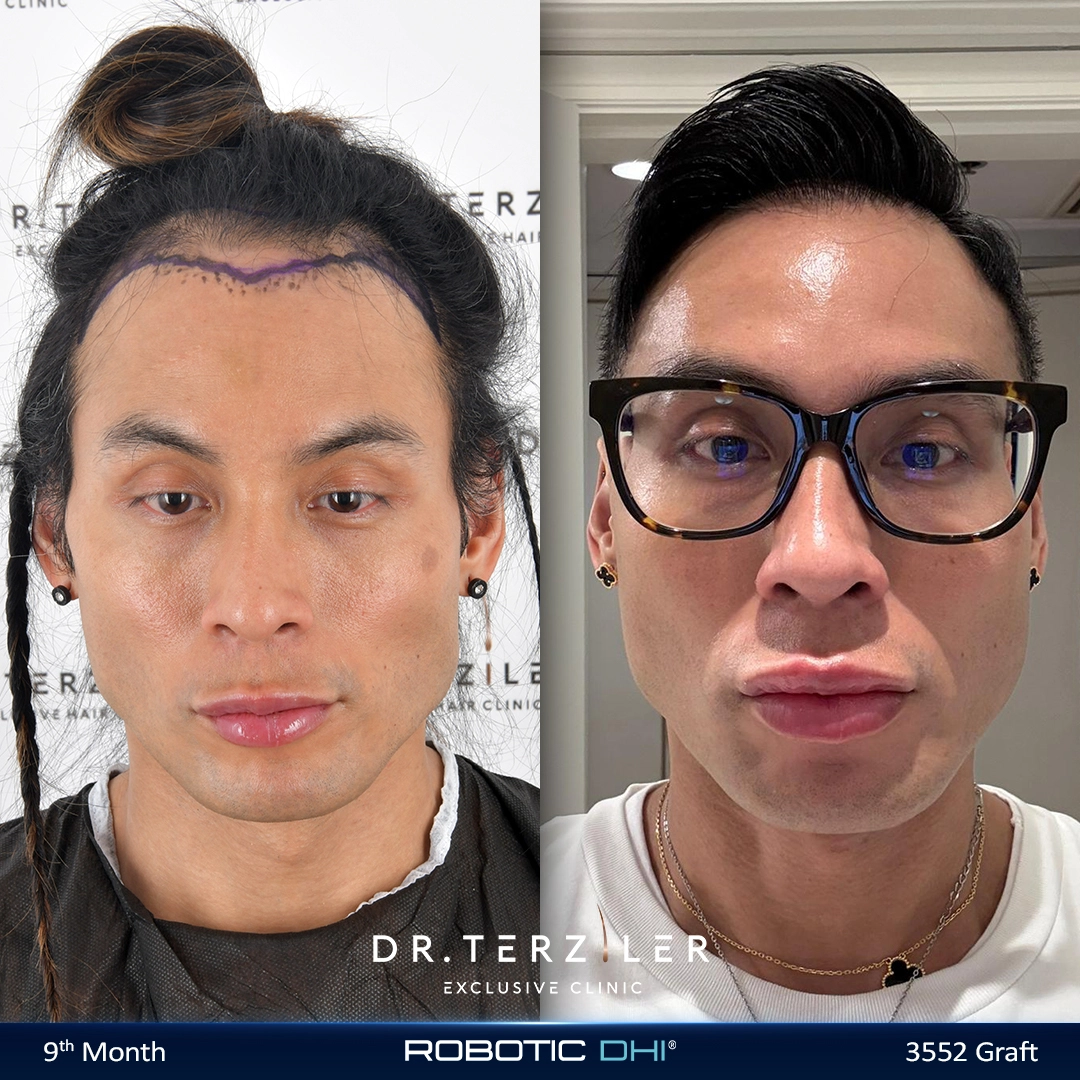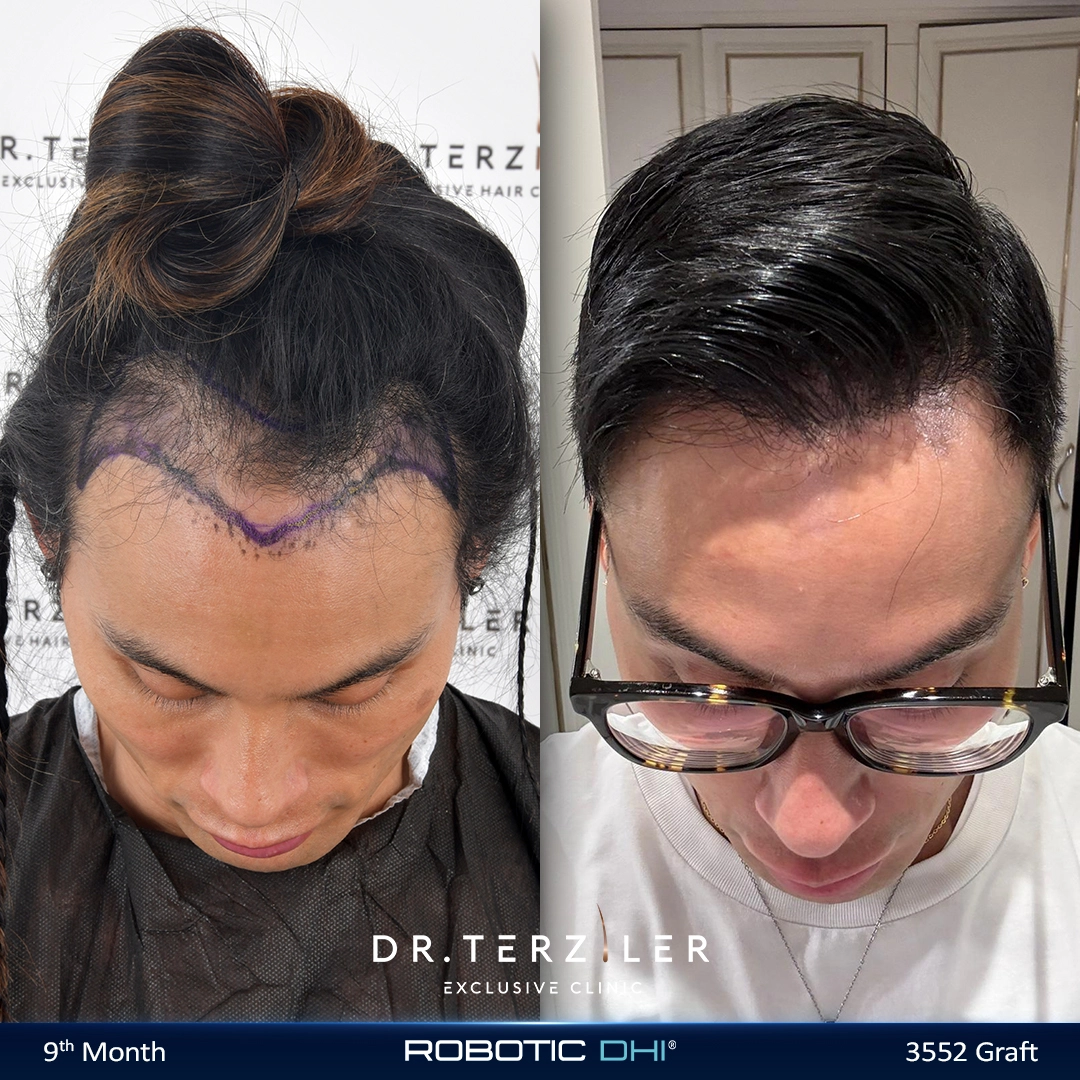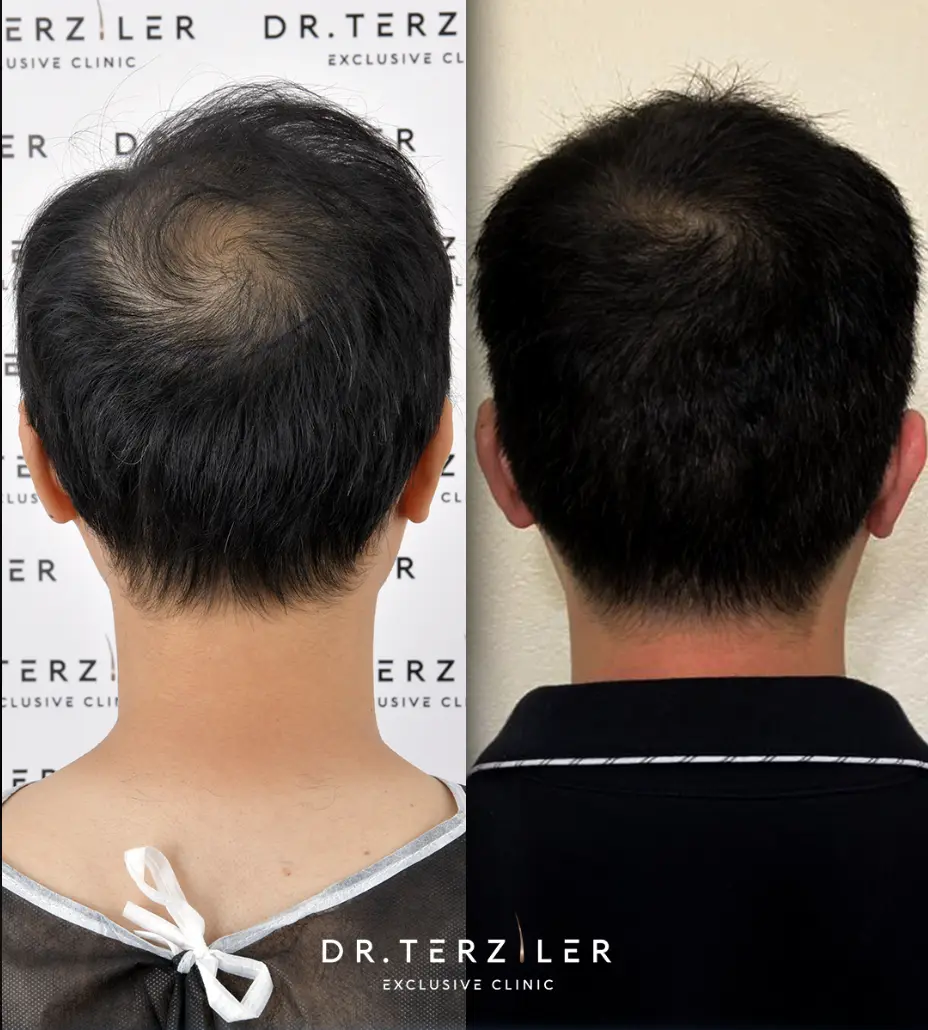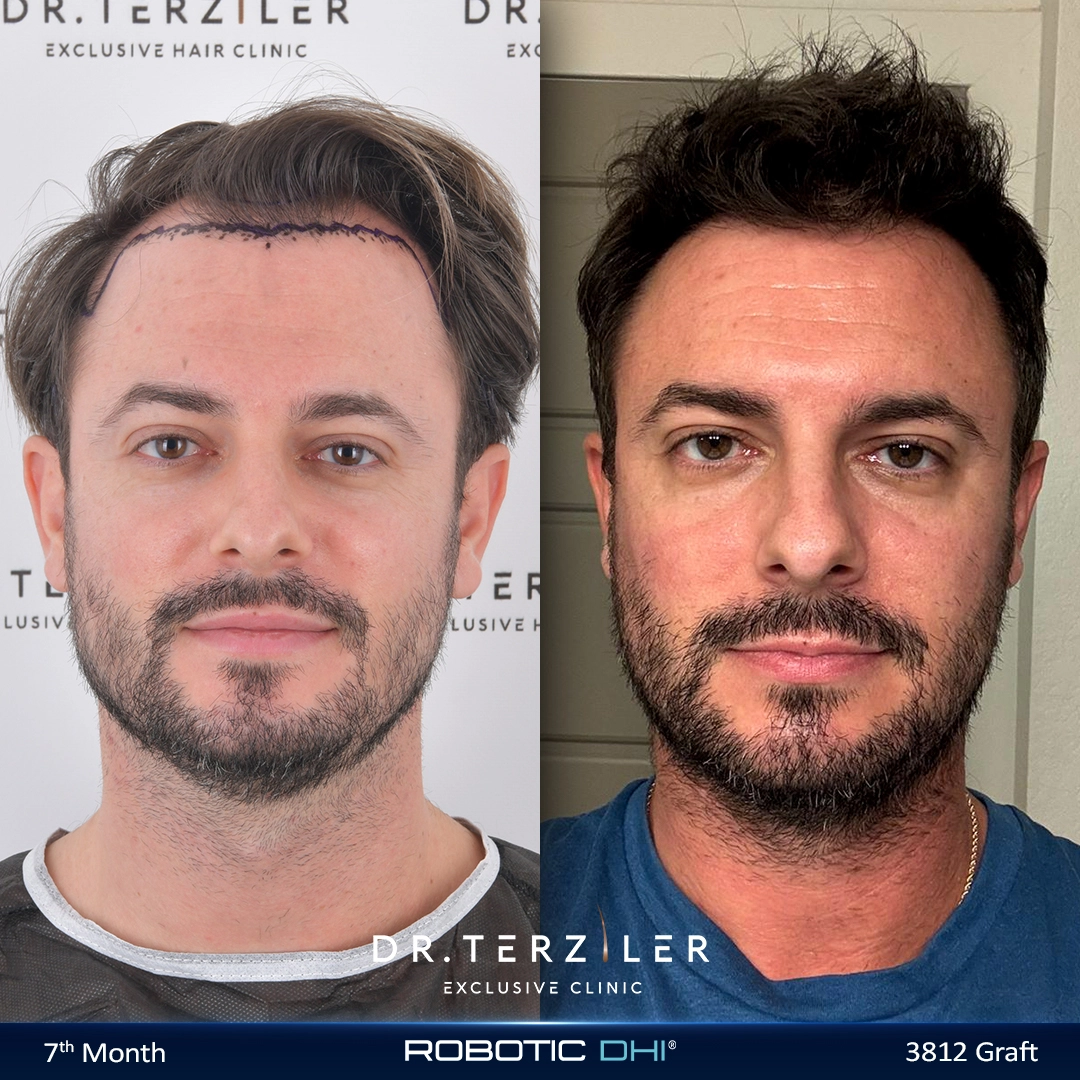
How Much Does a Hair Transplant Cost? 2026 Prices by Country, Graft Count and Technique

A hair transplant costs $8,000 to $20,000 in the United States, £4,000 to £15,000 in the United Kingdom, CAD $7,000 to $18,000 in Canada, and $3,500 to $10,500 as an all-inclusive package in Turkey in 2026. The final quote depends on country, graft requirement, technique, package inclusions and the surgeon performing the work. This guide explains how to compare treatment plans without mistaking a low headline price for a complete medical quote.
$8,000-$20,000United States 2026 comparison range
ИндивидуальныйUS quote after graft assessment
$3,500-$10,500Turkey all-inclusive package range
4 VariablesCountry, grafts, technique and surgeon
Д-р Сервет Терзилер

ПРОВЕРЕНО СПЕЦИАЛИСТОМ В ОБЛАСТИ МЕДИЦИНЫ

Д-р Сервет Терзилер

AAACI Accredited Surgeon, ISHRS Member and Inventor of Robotic DHI

Updated July 2026

This content is reviewed by Dr. Servet Terziler for medical accuracy, hair transplant cost context, graft-count planning, Robotic DHI relevance, patient-safety framing and source quality.
Quick Answer

A hair transplant costs $8,000 to $20,000 in the United States, £4,000 to £15,000 in the United Kingdom, CAD $7,000 to $18,000 in Canada, and $3,500 to $10,500 as an all-inclusive package in Turkey. US clinics commonly quote after graft assessment, with the final total depending on graft count, surgeon and inclusions. Turkish clinics charge a flat fee per session that covers surgery, hotel, transfers and aftercare.

How Much Does a Hair Transplant Cost in 2026?

A hair transplant is priced according to country, graft requirement, technique and package scope. In this guide, the comparison ranges are $8,000 to $20,000 in the United States, £4,000 to £15,000 in the United Kingdom, CAD $7,000 to $18,000 in Canada and $3,500 to $10,500 as an all-inclusive package in Turkey. A hair transplant quote should be compared only after checking who operates, what is included and how the graft count was assessed. The worldwide market processed 735,312 surgical hair restoration procedures in a single year, according to the ISHRS Practice Census.

Hair transplant cost in 2026 world map infographic by Dr. Terziler Exclusive Clinic showing typical total hair transplant prices by country, including USA, Turkey, UK, Canada, India, Mexico, Hungary, Poland, Thailand, Spain, South Korea, UAE, Germany and Australia, with Turkey highlighted for all-inclusive hair transplant packages and global cost ranges from budget to premium markets.
Hair transplant cost in 2026 world map infographic by Dr. Terziler Exclusive Clinic.
Hair transplant cost comparison by country for 2026.
Страна Typical Total Cost (2026) What Defines the Market
Соединенные Штаты $8,000 – $20,000 Per-graft billing; extras may be separate
Турция $3,500 – $10,500 All-inclusive package
Великобритания £4,000 – £15,000 Per-graft or package billing; confirm inclusions
Канада CAD $7,000 – $18,000 Tax, province and package inclusions can change the final quote
Индия $1,200 – $4,000 Lowest global pricing; quality varies widely between clinics
Мексика $2,000 – $5,000 Popular with US patients for short travel; per-graft model
Hungary $2,500 – $6,000 Mid-range EU option; partial packages
Польша $2,500 – $6,000 Mid-range EU option; per-graft model
Таиланд $2,500 – $7,000 Mid-range; strong in FUE, weaker DHI availability
Испания €4,000 – €10,000 Western EU pricing; strict medical regulation
Южная Корея $5,000 – $10,000 High technical standard; focused on Asian hair types
Объединенные Арабские Эмираты (Дубай) $5,000 – $12,000 Premium pricing; many visiting surgeons
Германия €5,000 – €12,000 Strict regulation; among the highest EU prices
Австралия AUD $12,000 – $20,000+ Highest pricing tier globally; few package options

Published comparison ranges used in this guide are $8,000 to $20,000 in the United States, £4,000 to £15,000 in the United Kingdom, CAD $7,000 to $18,000 in Canada and $3,500 to $10,500 as an all-inclusive package in Turkey. Final quotes depend on the individual treatment plan.

How Much Does a Hair Transplant Cost in Turkey?

A hair transplant in Turkey costs $3,500 to $10,500 as an all-inclusive package in 2026. The package model replaces per-graft billing with one flat fee that covers the surgery, pre-op blood panel, anesthesia, hotel, VIP transfers, medication and the post-operative care kit.

Turkey performs more hair transplants than any other country. The price advantage comes from a lower cost of living, favorable exchange rates and government support for licensed health tourism; not from lower clinical standards at accredited clinics. The surgeon’s credentials decide quality in every country. A patient flying to Istanbul pays $600 to $1,200 for flights and still spends 50 to 70 percent less in total than the same procedure costs at home.

Compare what all-inclusive hair transplant packages include before booking. A written list of inclusions is the single best filter for separating serious clinics from booking agencies.

How Much Does a Hair Transplant Cost in the USA?

A hair transplant costs $8,000 to $20,000 in the USA in 2026. US clinics often bill by graft and may list consultation, bloodwork, medication and PRP separately. The final total is confirmed after graft assessment and treatment planning.

Our full hair transplant Turkey vs USA comparison breaks the two markets down line by line, including regulation, surgeon involvement and cost per surviving graft.

How Much Does a Hair Transplant Cost in the UK?

A hair transplant costs £4,000 to £15,000 for UK patients in 2026. The final quote depends on graft count, technique, surgeon involvement and package inclusions. The NHS does not fund cosmetic treatment for pattern baldness.

How Much Does a Hair Transplant Cost in Canada?

A hair transplant costs CAD $7,000 to $18,000 in Canada in 2026. Taxes, graft count, technique and package inclusions can change the final quote, so confirm the complete treatment plan directly with the clinic.

How Much Does a Hair Transplant Cost in India?

A hair transplant costs $1,200 to $4,000 in India in 2026. India holds the lowest pricing worldwide, and quality varies more between clinics than in any other major market. Verify the operating surgeon’s credentials before the price convinces you.

How Much Does a Hair Transplant Cost in Mexico?

A hair transplant costs $2,000 to $5,000 in Mexico in 2026. Mexico attracts US patients with short flights and per-graft prices at roughly half the US rate. Most clinics bill per graft rather than as all-inclusive packages.

How Much Does a Hair Transplant Cost in Germany?

A hair transplant costs €5,000 to €12,000 in Germany in 2026. Germany enforces strict medical regulation and carries some of the highest prices in the EU. Many German patients fly to Istanbul for this exact reason.

How Much Does a Hair Transplant Cost in Spain?

A hair transplant costs €4,000 to €10,000 in Spain in 2026. Spain sits at standard Western EU pricing with strict clinical oversight and mostly per-graft billing.

How Much Does a Hair Transplant Cost in Hungary and Poland?

A hair transplant costs $2,500 to $6,000 in Hungary and Poland in 2026. Both markets position themselves as mid-range EU alternatives, with partial packages in Hungary and per-graft billing in Poland.

How Much Does a Hair Transplant Cost in Thailand?

A hair transplant costs $2,500 to $7,000 in Thailand in 2026. Thailand offers strong FUE availability, while DHI and robotic techniques remain harder to find than in Turkey.

How Much Does a Hair Transplant Cost in South Korea?

A hair transplant costs $5,000 to $10,000 in South Korea in 2026. Korean clinics hold a high technical standard and specialize in Asian hair characteristics, including thicker shafts and straighter follicle angles.

How Much Does a Hair Transplant Cost in Dubai (UAE)?

A hair transplant costs $5,000 to $12,000 in Dubai in 2026. The UAE runs premium pricing, and many procedures are performed by visiting surgeons rather than resident teams; ask who operates and who handles your follow-up.

How Much Does a Hair Transplant Cost in Australia?

A hair transplant costs AUD $12,000 to $20,000 or more in Australia in 2026. Australia sits in the highest global pricing tier, with few package options and long waiting lists outside major cities.

Mid-range destinations such as Thailand, South Korea, Hungary and Poland cost $2,000 to $8,000 for most cases, according to 2026 global cost comparisons. The lowest-price markets compete on cost alone. Turkey competes on volume, surgical specialization and the all-inclusive model at the same time, which is why it holds the largest share of international hair transplant patients.

How Is Hair Transplant Cost Calculated?

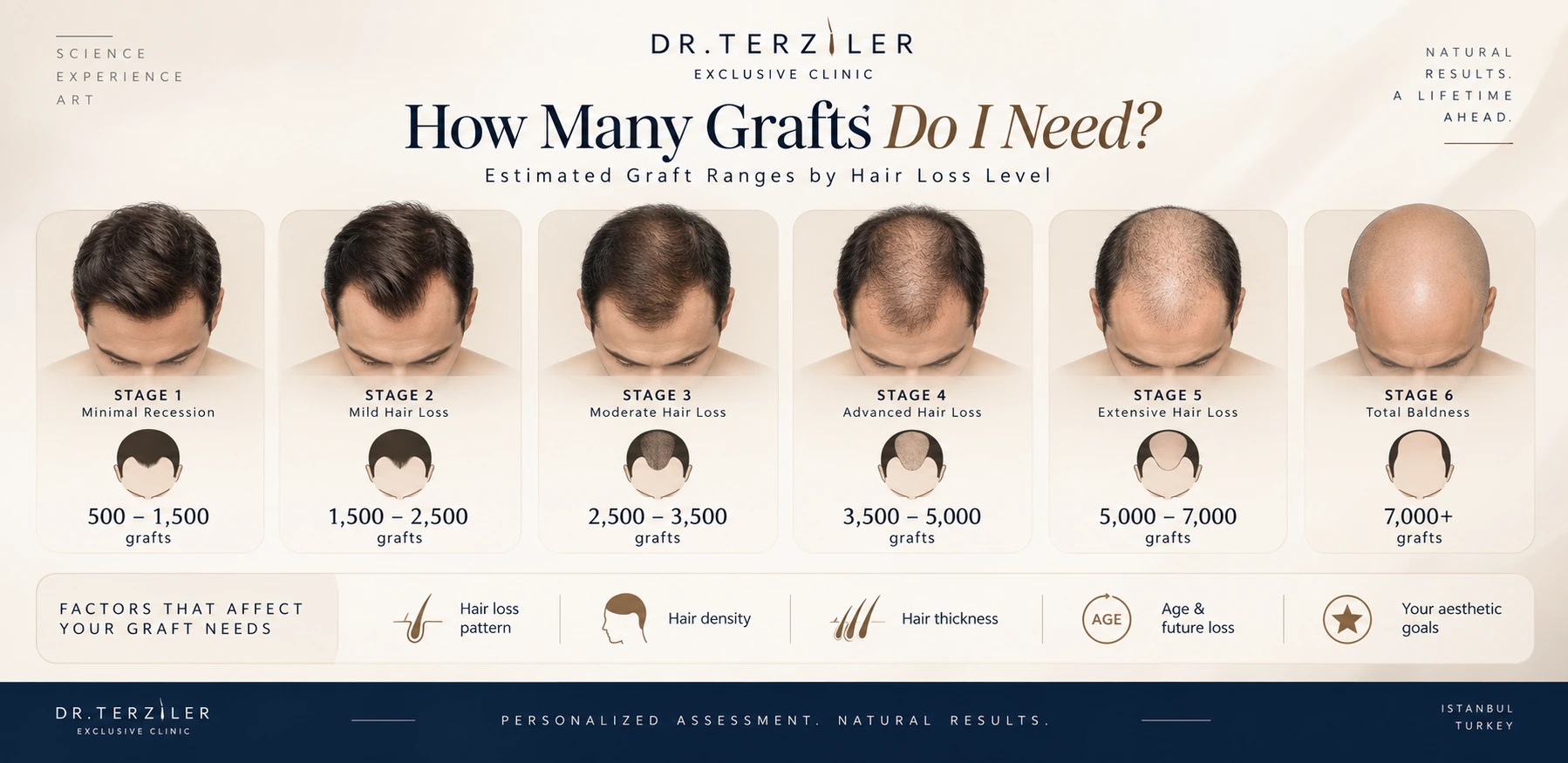
Clinics calculate hair transplant cost by multiplying your graft count by a per-graft rate, or by quoting a flat session fee. Your graft count depends on your stage on the Шкала Норвуда. A hairline refinement needs 1,500 to 2,000 grafts. Advanced loss covering the front, mid-scalp and crown needs 4,000 to 5,000 grafts or more.

Hair transplant planning ranges by graft count and treatment area.
Количество трансплантатов Typical Case US planning context Turkey All-Inclusive
1,500 Hairline refinement Индивидуальное предложение $3,500 – $10,500
2,500 Норвуд 3-4 Индивидуальное предложение $3,500 – $10,500
3,500 Норвуд 4–5 Индивидуальное предложение $3,500 – $10,500
5,000 Norwood 5-6, two zones Индивидуальное предложение $3,500 – $10,500

Your exact number requires a donor area assessment, not a guess from photos alone. Read how many grafts you need for the calculation method surgeons use, including donor capacity limits.

Why Do Some Clinics Quote Per Hair Instead of Per Graft?

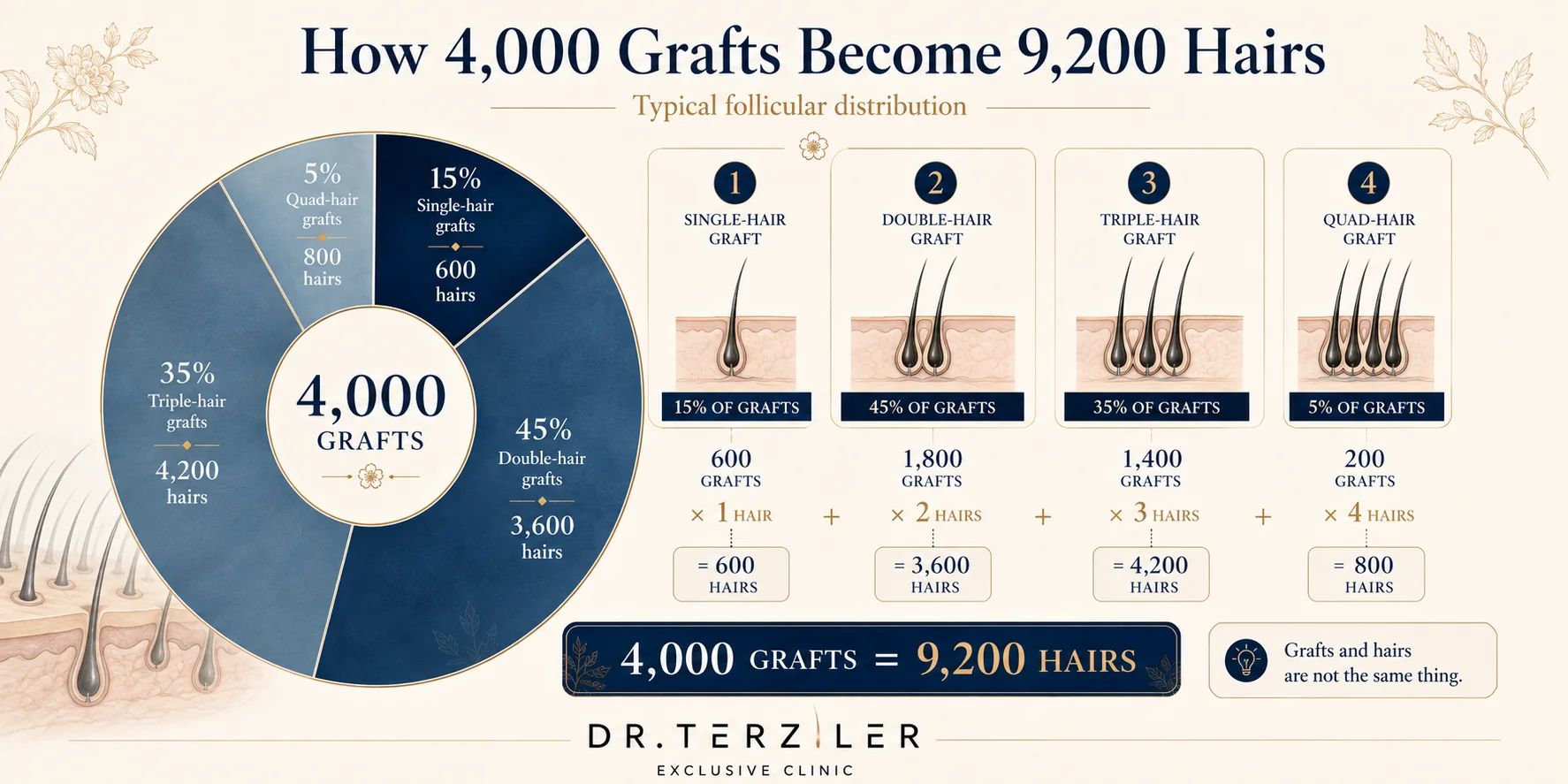
Some clinics quote per hair instead of per graft because it makes their price look 50 to 70 percent cheaper. One graft is a follicular unit containing 1 to 4 hairs, with an average of about 2.2 hairs per graft. A clinic advertising “$2 per hair” is charging roughly $4.40 per graft; more than many clinics quoting “$4 per graft.”

Check every quote for the unit. A quote of 6,000 hairs equals roughly 2,700 grafts. If two clinics give you numbers that differ wildly for the same head, the unit is usually the reason. An honest quote states the graft count, the technique, and every included service in writing. Our guide on how to choose the right hair transplant clinic lists the exact questions that expose vague quotes.

Does the Technique Change the Price? FUE vs DHI vs Robotic DHI

Yes. The technique changes the price by 20 to 50 percent within the same clinic. FUE is the baseline; roughly 80 percent of all surgical hair restoration procedures worldwide use FUE, according to the ISHRS.

Sapphire FUE uses sapphire blades to open recipient channels and serves as the standard price tier.

У вас есть? loads each graft into a Choi implanter pen and places it without pre-opened channels; the single-use pens and longer operating time raise the price by 20 to 40 percent over FUE.

Роботизированная DHI adds computer-guided depth control at ±0.1mm precision across every graft, which manual hands cannot sustain over a six-hour session. Dr. Servet Terziler invented the Robotic DHI machine used at Dr. Terziler Exclusive Clinic, and the system records a 97.3 percent graft survival rate.

Read our best hair transplant method comparison to match the technique to your hair type, loss stage and budget. Pain differences between techniques are covered in does a hair transplant hurt.

What Hidden Costs Should You Expect?

Hidden costs add $1,500 to $4,000 on top of a typical US surgery quote. Hidden fees inflate final hair transplant bills by 20 to 40 percent after patients have already committed, according to US clinic pricing audits.

Common additional hair transplant costs that may sit outside a quoted package.
Line Item Typical US Cost Usually in the Quote?
Consultation fee $100 – $500 Из
Pre-op bloodwork $200 – $400 Из
Post-op medication $150 – $400 Из
PRP session $500 – $1,000 each Из
Follow-up visits $100 – $300 each Sometimes
Revision or touch-up $2,000+ Никогда

Ask for an itemized, written, all-inclusive quote before paying any deposit. Turkish package pricing removes this ambiguity structurally; the flat fee is the final number, which is one reason international patients favor the model.

Does Insurance Cover a Hair Transplant?

No. Insurance does not cover a hair transplant for pattern baldness in any major market. US insurers, including Medicare and Medicaid, classify it as elective cosmetic surgery. The NHS does not fund hair transplants for male or female pattern baldness; rare exceptions exist for hair loss from burns, trauma or cancer treatment, according to the NHS.

Financing fills the gap in Western markets. CareCredit offers 0 percent promotional periods of 6 to 24 months, and clinic financing partners offer 24 to 84 month terms at 9 to 20 percent APR, according to Cherry Financing. A patient financing $12,000 at 15 percent APR over 60 months pays roughly $5,100 in interest; a detail worth calculating before comparing a financed US procedure against a paid-in-full package abroad.

Why Is a Cheap Hair Transplant the Most Expensive One?

A failed cheap transplant costs more than a correct one because repair surgery typically costs about twice the original procedure and consumes donor grafts that never grow back. The donor area is a finite bank; roughly 6,000 to 8,000 lifetime grafts for most men. A botched first surgery that wastes 3,000 of them halves your repair options permanently.

Low-cost operations keep prices down by running multiple patients per surgeon per day, delegating surgery to unlicensed technicians and overharvesting donor zones. The results fill our analysis of hair transplant gone wrong cases: pluggy hairlines, visible donor depletion and grafts placed at wrong angles. Price is a data point. The surgeon’s name, accreditation and personal involvement in your surgery are the decision.

What Does the Dr. Terziler Exclusive Clinic Package Include?

Dr. Terziler Exclusive Clinic is an AAACI accredited hair transplant clinic in Istanbul, Turkey, led by Dr. Servet Terziler, the inventor of the Robotic DHI machine. The all-inclusive package covers microscopic hair diagnostics, the pre-op blood panel, the surgeon’s operating time, anesthesia with needle-free options, the post-operative care kit, VIP transfers, hotel accommodation and a fully managed 12-month follow-up program.

Compare what all-inclusive hair transplant packages include before booking. A written list of inclusions is the single best filter for separating serious clinics from booking agencies.

Every hairline at the clinic is designed and surgically executed under Dr. Terziler’s direct supervision, and outcomes are documented in the clinic’s before and after results archive. The 97.3 percent graft survival rate recorded with Robotic DHI is the proof point behind the pricing; you pay a flat fee for a doctor-led procedure, not an assembly line.

Is a Hair Transplant Worth the Cost?

A hair transplant is worth the cost for most patients because the result is permanent and the alternatives are recurring. Transplanted hair grafts are permanent because they come from DHT-resistant donor zones. Concealer fibers, specialized shampoos and topical treatments cost $40 to $120 per month; that is $4,800 to $14,400 over ten years for products that stop working the day you stop paying.

Amortization makes the comparison concrete. A personalised all-inclusive package delivering 20+ years of coverage costs about $225 per year of result. The average number of procedures needed per patient fell from 3.4 in 2019 to 1 in 2021, according to the ISHRS 2022 Practice Census; modern technique quality means most patients now buy the result once.

Часто задаваемые вопросы

Is a hair transplant tax deductible?

No. A hair transplant is not tax deductible in the United States because the IRS excludes cosmetic surgery from medical expense deductions, according to IRS Publication 502. The same treatment applies in the UK and Canada. The narrow exception is reconstruction after injury, burns or disease, which requires medical documentation.

How much does a 5,000 graft hair transplant cost?

A 5,000-graft plan is assessed individually. The published comparison ranges in this guide are $8,000 to $20,000 in the United States, £4,000 to £15,000 in the United Kingdom, CAD $7,000 to $18,000 in Canada and $3,500 to $10,500 as an all-inclusive package in Turkey. Sessions this large often run across two days, which package pricing absorbs and per-graft pricing bills separately.

Why did two clinics quote me prices $10,000 apart for the same head?

Two quotes differ this much because of four variables: the counting unit (hairs versus grafts), the technique tier, what the quote includes, and who performs the surgery. Convert both quotes to a per-graft, all-services-included figure before comparing. A quote that resists this conversion is hiding something.

How much does it cost to fix a bad hair transplant?

Repairing a bad hair transplant costs $8,000 to $25,000 and typically runs about twice the price of doing it correctly the first time. Repair combines removal of misplaced grafts, camouflage grafting and sometimes scalp micropigmentation, and it depends entirely on how much donor reserve the first surgery left behind.

Can you negotiate the price of a hair transplant?

Yes, within limits. Clinics with empty surgery slots discount 10 to 15 percent in low-demand months, typically November through February. Distrust aggressive limited-time discounts; a serious surgical calendar does not need flash sales. Negotiate inclusions (extra PRP session, extended hotel stay) rather than the surgical fee itself.

Does a more expensive hair transplant guarantee a better result?

No. Price does not guarantee outcome above the threshold that funds proper surgical standards. Below that threshold, quality is structurally impossible; an implausibly low package cannot fund a licensed surgical team, sterile single-use equipment and honest graft counts. Above it, the surgeon’s skill, not the invoice, determines the result.

Источники

  1. NHS. Hair transplant. https://www.nhs.uk/tests-and-treatments/cosmetic-procedures/cosmetic-surgery/hair-transplant/
  2. ISHRS. 2022 Practice Census Results. https://ishrs.org/wp-content/uploads/2022/04/Report-2022-ISHRS-Practice-Census_04-19-22-FINAL.pdf
  3. ISHRS. Survey Finds Hair Restoration Surgery on the Rise Worldwide. https://ishrs.org/survey-finds-hair-restoration-surgery-on-the-rise-worldwide/
  4. IRS. Publication 502, Medical and Dental Expenses. https://www.irs.gov/publications/p502
  5. Cherry Financing. Hair Transplant Cost: Full 2026 U.S. Pricing Breakdown. https://withcherry.com/blog/hair-transplant-cost
  6. Wimpole Clinic. UK Hair Transplant Cost 2026: Average Price and Cost Per Graft. https://wimpoleclinic.com/blog/hair-transplant-cost-uk-analysis/
Hair Transplant Gone Wrong: Signs, Causes, and How to Fix It

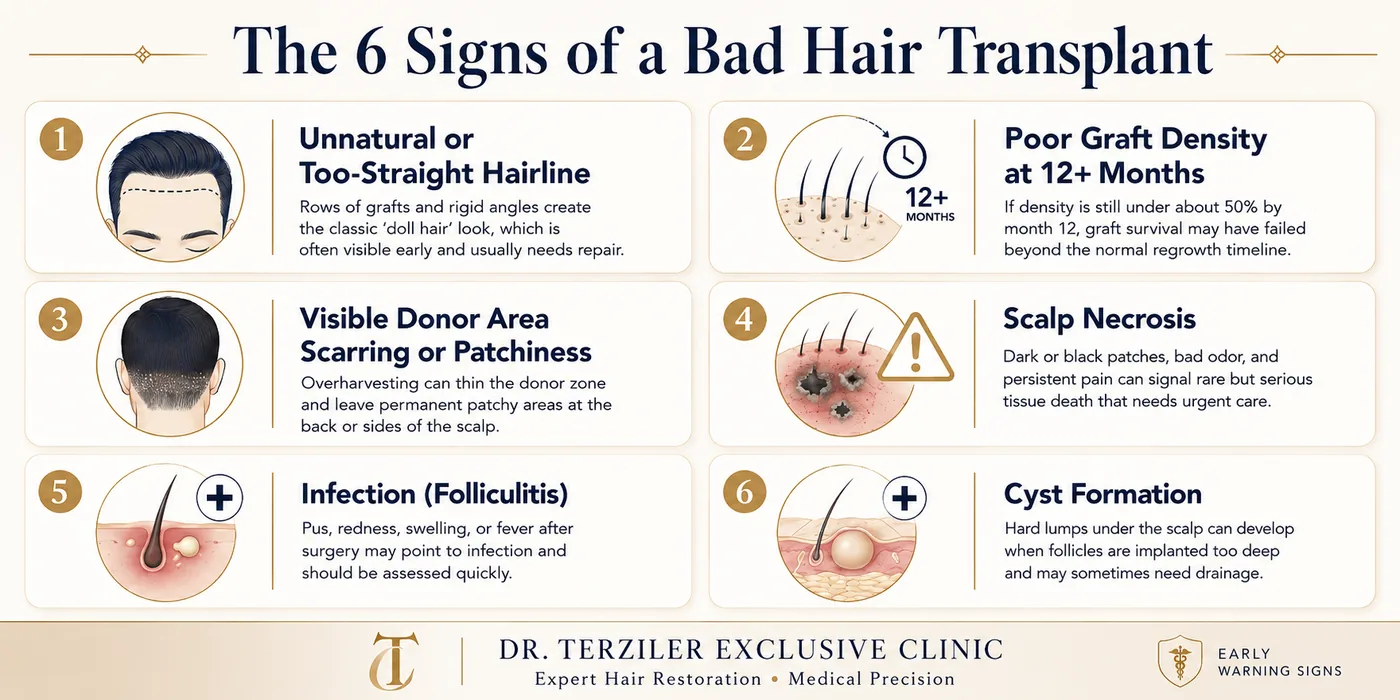
A hair transplant goes wrong when grafts fail to survive, the hairline looks artificial, or the donor area is permanently damaged. The 6 key signs are: unnatural hairline, poor density at month 12, visible donor scarring, scalp necrosis, инфекция, и cyst formation. At accredited clinics, graft survival exceeds 98%. ISHRS data links 96% of botched cases to unlicensed operators. True permanent failure affects 1.97% of patients (Ghimire et al., JNMA 2018, PMC8997317). Most patients who report failure at month 3 are experiencing normal shock loss, which resolves by 6 months.

Quick Answer

A hair transplant goes wrong when grafts fail to survive, the hairline looks artificial, or the donor area is permanently damaged. The 6 key signs are: unnatural hairline, poor density at month 12, visible donor scarring, scalp necrosis, инфекция, и cyst formation. At accredited clinics, graft survival exceeds 98%. ISHRS data links 96% of botched cases to unlicensed operators. True permanent failure affects 1.97% of patients (Ghimire et al., JNMA 2018, PMC8997317). Most patients who report failure at month 3 are experiencing normal shock loss, which resolves by 6 months.

Д-р Сервет Терзилер

ПРОВЕРЕНО СПЕЦИАЛИСТОМ В ОБЛАСТИ МЕДИЦИНЫ

Д-р Сервет Терзилер

AAACI Accredited Surgeon, ISHRS Member and Inventor of Robotic DHI

Updated June 2026

This content is reviewed by Dr. Servet Terziler for medical accuracy, failed hair transplant assessment, repair candidacy, donor-area safety, graft survival and patient safety.

You did your research, booked the clinic, flew to Istanbul. Twelve months later, nothing has grown. Or something has grown, but it looks nothing like the before and after images you were shown. You are not alone, and you are not without options.

1.97%Гхимире и др., JNMA 2018 | PMC8997317

Patient-reported permanent failure rate after hair transplantation. Most patients who report 'failure' at month 3 are experiencing temporary shock loss. True permanent graft death is rare in accredited surgical settings.

96%Рабочая группа по медицинскому туризму ISHRS 2022

of documented botched hair transplant cases in Turkey between 2018-2022 were performed by unlicensed technicians or non-surgical staff, not by certified surgeons.

2-6 hrsCooler и др., «Dermatologic Surgery», 2016 г.

Maximum time harvested follicular units can survive outside the body before ATP depletion causes irreversible cell death. Clinics using extended implantation sessions risk graft viability loss beyond this window.

What Does a Hair Transplant Gone Wrong Look Like?

A hair transplant result is considered gone wrong when the aesthetic outcome is detectably artificial, the density is insufficient for the patient's target zone, or structural damage has occurred in the donor area, assessed at 14 months post-surgery when final growth is established.

Sign Technical Name How to Detect Хронология событий
Pluggy hairline Large graft cluster implantation Wet the hair and comb back. Multi-hair grafts at the hairline are visible as clumps. Visible from month 6
Hairs growing forward Angle mapping error Photograph the hairline from the side. Hairs should angle back at 30-45 degrees. Forward-pointing hairs indicate a technique error. Visible from month 6
Moth-eaten density Graft survival failure Use consistent indoor light (bathroom, not sunlight). Patchy areas in zones that should have coverage. Assess at month 14
Striped donor area FUT linear scarring Scar line visible when hair is short. Parallel stripe across the back of scalp. Permanent unless revised
Bald patches in donor zone Overharvesting / FUE scarring Visible thinning when hair is very short. Donor density clearly lower than the sides. Постоянно
Ingrown hairs or cysts Embedded grafts Painful lumps along hairline or crown. Follicle implanted too deep. Requires drainage. Weeks post-op
the 6 signs of a bad hair transplant infographic showing unnatural hairline, poor graft density, visible donor area, scalp necrosis, infection, and cyst formation explained by the best hair transplant clinic in Turkey Dr. Terziler

Worried your result is actually failing?

Send your timeline, photos and graft count. A repair assessment can separate normal shock loss from a true failed hair transplant.

Check My Result

1
1. Unnatural or Too-Straight Hairline

Natural hairlines are irregular. Follicles emerge at different angles, depths, и micro-spacings. A bad hair transplant hairline runs in a uniform straight line, often with multi-hair grafts placed in the very front row. Surgeons call this the 'doll hair' effect. It is permanent without repair. The wet hair test reveals it instantly: wet the hair, comb it back, and the artificial clustering of grafts becomes visible as clumps rather than individual strands. A bad hair transplant hairline is one of the most searched images online for this reason.

At Dr. Terziler Exclusive Clinic, hairline design in Роботизированная система DHI «Пикассо» is performed personally by Д-р Сервет Терзилер, known in the field as the Picasso of Hair. Each hairline is drawn by hand with artistic precision before a single graft is placed. The clinic uses the world's thinnest implant pen, the 0.70mm Choi pen, which allows individual follicle placement at the exact angle, depth, and direction that mimics natural growth. This level of control is what makes the difference between a hairline that is detectable and one that is not.

2
2. Poor Graft Density at 12+ Months

If density remains under 50% of the transplanted area at month 12, grafts have failed. But the timeline matters. Normal recovery follows a fixed sequence: shedding at weeks 2-6, first regrowth at weeks 8-14, full density between months 12-18. Assessing density at month 3 and declaring failure is a mistake. Assessing at month 12 with no density is a confirmation. Signs of a failed hair transplant at month 12 include sparse islands of growth, uneven distribution across the transplanted zone, and hairline asymmetry.

3
3. Visible Donor Area Scarring or Patchiness

Overharvesting strips the donor zone below 40 FUs per cm2. Round bald patches appear in the back and sides of the scalp. This is the most common cause of permanent, irreversible damage from unregulated FUE hair transplant. Patients with short hair or shaved styles see it immediately. At Dr. Terziler Exclusive Clinic, pre-op follicle density mapping ensures extraction never exceeds 45% of donor density per zone, protecting the natural appearance of the donor area.

4
4. Scalp Necrosis

Scalp necrosis is tissue death caused by insufficient blood supply to the recipient area. Symptoms include dark or black patches on the scalp, persistent pain, and in severe cases an unpleasant odour. It is rare, affecting 0.1-0.5% of patients, but it is serious and requires immediate surgical intervention. It occurs almost exclusively at facilities where too many recipient sites are created too densely in a single session, cutting off vascular supply to the subdermal tissue.

5
5. Infection (Folliculitis)

Pus, отек, и fever in the first two weeks indicate post-operative infection. ISHRS data documents a folliculitis rate of 1-3% across hair transplant procedures globally. At facilities with inadequate sterilisation, this rate rises significantly. Staphylococcus aureus is the most common pathogen. Signs are pustules at graft sites by days 7-14. Infection from a bad hair transplant causes both scarring и permanent graft loss if untreated.

6
6. Cyst Formation

Follicles implanted too deep develop epidermal cysts, appearing as hard lumps beneath the scalp skin. They typically emerge along the hairline or crown within weeks of the procedure. Most resolve on their own within 3-6 weeks. Persistent cysts require drainage by a clinician. Cyst formation is a sign of incorrect implantation depth, not a normal post-op outcome.

Need a quick repair opinion?

Send photos in natural light and the month you are currently in. The team can tell you whether it looks like shock loss, low density or donor damage.

Message a Repair Specialist

What Are the Botched Hair Transplant Scenarios?

The botched hair transplant scenarios below are three cases that are representative examples based on Dr. Terziler Exclusive Clinic's post-consultation patient survey data.

SCENARIO A

The Budget Clinic Patient

James R., 34, London

James found his clinic on a hair transplant aggregator site. The total package, including flights and hotel, cost EUR 1,100. Two thousand grafts were performed in a converted apartment in Istanbul by a technician he later learned had no medical qualification.

At month 18: thin coverage in the crown, pluggy grafts visible at the hairline in natural light, and the donor area showing visible stripes. Forty percent of his posterior scalp follicles were gone permanently.

The technician extracted grafts past the 50% donor density threshold. Hairline grafts were implanted at a perpendicular angle instead of the natural 30-45 degrees, producing a flat, artificial pattern. Neither the extraction volume nor the angle was reviewed by a qualified surgeon.

THIS IS A HAIR TRANSPLANT GONE WRONG. Recovery requires a repair procedure.

"I chose that clinic because it was EUR 800 cheaper than everywhere else. I did not know that EUR 800 would cost me three years and two corrective procedures to fix."James R., 34, London | Dr. Terziler patient survey

SCENARIO B

The Technically Botched Result

Марк Д., 41 год, Амстердам

Marc chose an accredited clinic with strong reviews. His mistake was not knowing that the lead surgeon was not present when his hairline was designed.

At month 12: hair grew forward and flat instead of angled back. Crown density measured 35 FU/cm2 while the mid-scalp registered 18 FU/cm2 under trichoscopic analysis. In certain lighting conditions, the result looked moth-eaten.

An angle mapping error produced hairs growing in the wrong direction. Density distribution was uneven because no pre-op zone mapping was performed. Neither issue is visible at the time of surgery. Both appear only after growth.

THIS IS A FAILED HAIR TRANSPLANT CAUSED BY SURGICAL TECHNIQUE, NOT PATIENT BIOLOGY.

"The surgeon was not in the room when they designed my hairline. Nobody told me that was possible. I thought I was paying for a surgeon."Marc D., 41, Amsterdam | Dr. Terziler patient survey

SCENARIO C

The Panic Patient (Shock Loss Mistaken for Failure)

Райан К., 29 лет, Торонто

Ryan had FUE at a reputable clinic. By week 8, most transplanted hairs had shed. Convinced the procedure had failed, he posted a hair transplant gone wrong video online. It received 4,000 views.

At month 5, the same follicles began producing new growth. At month 14, his density was full and his hairline looked natural. The video is still online.

What happened was telogen effluvium: shock loss. Surgical trauma pushed follicles from anagen (growth phase) into telogen (resting phase). The hair shaft detached. The follicle remained alive. Regrowth started at month 5.

THIS IS NOT A FAILED HAIR TRANSPLANT. It is a misunderstood biological process affecting 40-95% of transplant patients.

"I filmed myself crying at month 2. I thought it was gone forever. I am almost embarrassed to say that now, because at month 14, nobody can tell I ever had a transplant."Ryan K., 29, Toronto | Dr. Terziler patient survey

Had a result like one of these scenarios?

Book a free repair consultation with trichoscopic donor assessment and hairline review before planning any corrective surgery.

Book Repair Consultation

What Are the Top 11 Reasons Hair Transplants Fail (And How They Are Prevented)

Hair transplant failure has 11 top documented clinical causes. The most common are graft dehydration outside the body (contributing to approximately 30% of failures), donor overharvesting (25%), wrong implantation angle (15%), и procedures performed by unlicensed technicians (20%). At Dr. Terziler Exclusive Clinic, each cause has a specific prevention protocol.

Cause Clinical Mechanism % of Failures Dr. Terziler Prevention
1. Graft dehydration Grafts outside the body lose ATP. Viability drops from 100% at extraction to near zero at 6 hours. Assembly-line clinics extract 3,000+ grafts, leave them on a tray for 2-4 hours, then begin implantation. 30% Robotic DHI: grafts implanted within minutes of extraction. No waiting tray. HypoThermosol storage if any delay occurs.
2. Donor overharvesting Extracting more than 50% of follicular units from any donor zone leaves the area below the safe density floor of 40 FU/cm2. Result: permanent visible thinning in the back and sides. 25% Pre-op density mapping for every patient. Extraction never exceeds 45% of donor density per zone. Documented and shared with the patient.
3. Wrong implantation angle Hair emerges from the scalp at 15-45 degree angles depending on zone. Implanting at the wrong angle produces hairs growing upward or outward. Correction requires complete re-extraction and reimplantation. 15% Robotic DHI punch maintains consistent depth and angle. Manual angle error is eliminated. Each zone mapped pre-operatively.
4. Unqualified technicians ISHRS 2022: 96% of botched Turkey cases linked to non-medical staff performing extractions and implantations. Legal in some interpretations of Turkish law, catastrophic in surgical outcomes. 20% Dr. Servet Terziler performs all procedures personally. Zero delegation of the surgical process. Patients can verify in consultation.
5. Hairline design error The 'grass man look': multi-hair grafts placed at the very front row of the hairline. Produces an unnatural, perceptible pattern. Singles must form the first 1-2 rows. 5% Digital hairline design by Dr. Terziler personally before any extraction begins. Mapped and agreed with the patient.
6. Lichen Planopilaris (LPP) The only cause of true immunological rejection of autologous grafts. Active LPP attacks transplanted follicles. Undiagnosed LPP before surgery = predictable failure. Rare (<1%) but 100% avoidable Full trichoscopic LPP screening before accepting any patient. LPP must be in clinical remission for 12+ months before approval.
7. Shock loss mismanagement Telogen effluvium affects 40-95% of transplant patients. Shedding at weeks 2-8, dormancy at months 3-4, regrowth from month 5. Misdiagnosed as failure, patients seek unnecessary second procedures. 0% (not failure) Every patient receives a written growth timeline. Month-by-month expectations documented. WhatsApp follow-up at months 1, 3, 6, 12.
8. Mega-session overload Sessions exceeding 3,000 grafts in one sitting create hypoxic conditions in the recipient scalp. Cumulative vascular trauma reduces graft take rates for all grafts in the session. 5% Maximum 2,500-3,000 grafts per session based on donor density. Cases requiring more split into two sessions.
9. Poor candidacy assessment Active androgenetic alopecia progresses. Transplanting into an unstable hairline produces grafts that outlast the surrounding native hair, creating an island effect in 5-10 years. <5% Norwood staging and DHT sensitivity assessment pre-op. Patients with unstable loss are counselled on medication first. Cases that are not yet stable are declined.
10. Recipient site over-density Implanting more than 45 FU/cm2 in one session cuts blood supply to existing native follicles and new grafts simultaneously. Net hair count decreases. 5% Recipient site density capped at 35-45 FU/cm2. More is not better. The biology is the limit, not the sales target.
11. Post-op infection Unsterilised instruments, unhygienic environment, patient non-compliance. Folliculitis kills grafts and causes scarring. ISHRS documents a 1-3% rate globally. 5% JCI-standard hospital. Single-use sterile instruments only. Written aftercare protocol plus video follow-up within 24 hours of procedure.

Lichen Planopilaris (LPP) is an autoimmune condition that causes the immune system to attack hair follicles, including transplanted ones. It is the ONLY documented mechanism by which the immune system can reject autologous hair grafts (grafts from your own scalp). Without LPP, it is biologically impossible for the immune system to reject transplanted follicles: the body does not produce antibodies against its own tissue. Clinics listing 'graft rejection' as a general surgical risk, without specifying LPP, are medically inaccurate. Proper pre-surgical trichoscopy identifies and rules out LPP. Lajevardi et al., JEADV 2021.

Surgeons rarely discuss maximum slit density because it limits the number of grafts per session. But the evidence is clear: implanting more than 45 FU/cm2 in one session induces vascular compromise in the subdermal plexus. The result: newly placed grafts AND existing native follicles lose blood supply and die. Net hair count decreases. This is why 'more grafts = better results' is false marketing, not surgery. Source: Rose & Nusbaum, Hair Transplant Forum International, 2014.

What Does Overharvesting Mean and Why Is It Bad?

Overharvesting means extracting too many follicles from the donor area, exceeding the safe threshold of approximately 45-50% of available follicles in any zone. This leaves the donor area, typically the back and sides of the scalp, with visible round bald patches. It is permanent and the most common cause of irreversible damage from FUE procedures performed without pre-op density mapping.

Was your donor area overharvested?

Ask for a trichoscopic donor assessment before another clinic extracts more grafts from the same area.

Ask About Donor Assessment

What Is the Biology of Hair Transplant Graft Failure?

A transplanted hair follicle begins dying the moment it leaves the scalp. Adenosine triphosphate (ATP), the energy molecule that keeps follicular cells alive, depletes within 2 to 6 hours of removal from the blood supply. Once ATP is gone, cell membranes collapse and the follicle cannot be revived.

1
What Happens to a Graft Outside the Body?

Every hour a graft spends in a storage tray, its viability decreases. Storage medium significantly affects survival time according to Research by Cooler et al. (Dermatologic Surgery, 2016). Saline solution, the most common medium at commercial clinics, provides the shortest viable window. HypoThermosol, a commercially available hypothermic medium, extends viability by reducing cellular metabolism. Clinics using refrigerated, ATP-supplemented storage media document 15-20% higher graft survival rates. Assembly-line facilities extract 3 000 трансплантатов in the morning, leave them on a tray for 2-4 hours, then begin implantation. This timeline kills a proportion of grafts before they are ever placed. At Dr. Terziler Exclusive Clinic, Robotic DHI technology implants grafts within minutes of extraction. No waiting tray is used.

2
Why Your Body Cannot Reject Its Own Hair

Hair transplants use the patient's own follicles. This is called an autologous procedure. The immune system does not produce antibodies against the patient's own tissue. Graft rejection, in the immunological sense applied to organ transplants, is biologically impossible in hair restoration. The single documented exception is Lichen Planopilaris (LPP), an autoimmune disorder that attacks hair follicles including transplanted ones. Clinics that list 'graft rejection' as a general surgical risk category, without specifying LPP, are medically inaccurate. This principle was established by Dr. Norman Orentreich in 1959 and is the foundational science of hair transplantation.

3
What Is Donor Dominance and Why Does It Matter?

In 1959, Dr. Norman Orentreich discovered that follicles transplanted from the DHT-resistant donor zone retain their original genetic programming regardless of where they are placed on the scalp. (Source: Orentreich 1959, PMC: 13596976.) Donor follicles from the back and sides of the head are genetically resistant to dihydrotestosterone (DHT), the hormone responsible for androgenetic hair loss. When these follicles are placed in the frontal scalp or crown, they keep this resistance permanently. They grow. They do not fall out when surrounding native hair thins. This is why hair transplant results are permanent, not because of the new location, but because of the follicle's own genetics.

Donor dominance also explains a common patient concern: 'Can the transplanted hair fall out like my native hair?' No, provided the donor zone is DHT-resistant, which is confirmed by a qualified surgeon before the procedure.

4
What Is Shock Loss? How Is It Different from Failure?

Shock loss is telogen effluvium caused by surgical trauma. The trauma of extraction and implantation pushes follicles from anagen (active growth phase) into telogen (resting phase). The hair shaft detaches and falls out. The follicle remains alive. Regrowth begins when the follicle re-enters anagen, typically between months 4-7. Shock loss affects between 40% and 95% of hair transplant patients to some degree. It does not require intervention. Failure is only diagnosed when no regrowth has occurred by month 12.

The distinction matters because patients experiencing shock loss at month 2 frequently search 'hair transplant gone wrong' and 'failed hair transplant.' These patients have not failed. They are in a normal biological phase. Correct management is patience, written reassurance, and scheduled follow-up, not a second procedure.

Confused between shock loss and failure?

Send your recovery month and photos. The clinical team can explain whether your timeline is still normal or needs assessment.

Ask About My Timeline

Turkey Hair Transplant Gone Wrong: What Is Really Happening

A hair transplant gone wrong in Turkey is not caused by Turkey. It is caused by unlicensed facilities operating outside medical regulation. ISHRS data shows 96% of documented botched cases in Turkey originated at facilities with no qualified surgeon present.

Turkey is not the problem. The black market is.

Turkey's Ministry of Health classifies hair transplantation as a medical procedure requiring surgeon supervision. Enforcement is inconsistent. The country's popularity as a destination for affordable procedures has attracted a large number of unlicensed operators: procedures performed in apartments, converted hotel rooms, and shared facilities with no sterile environment, no qualified surgeon, and no regulatory oversight.

ISHRS World Congress 2022 presented outcome data from reported hair transplant complications in Turkey. Among documented failures, 96% originated at facilities with no qualified surgeon present. Technician-performed procedures in unregulated settings accounted for the overwhelming majority of botched results.

The British Association of Aesthetic Plastic Surgeons (BAAPS) published 2021 audit data showing a 44% rise in UK patients requiring corrective surgery after procedures in Turkey. Both datasets describe the same specific problem: the unaccredited, black-market segment of the market. They do not describe accredited surgical clinics. The award-winning hair transplant facilities in Turkey, Istanbul with AAACI-accredition, which meet the same standards applied in Western Europe and North America, produce outcomes comparable to those achieved in those markets.

NOTE ON TURKEY SAFETY: Choose a clinic by accreditation, not by price or country. AAACI accreditation (verifiable at the AAACI registry) is the highest independent cosmetic surgery standard in Turkey. ISHRS membership requires peer review and ethical compliance. These credentials are specific, verifiable, and meaningful. Generic claims such as 'certified' or 'approved' without named accrediting bodies are not.

Choosing a clinic in Turkey after a bad result?

Ask which accreditation, surgeon involvement and repair protocol you should verify before booking.

Ask What to Verify

Can I Sue for a Bad Hair Transplant?

In most countries, yes. A botched medical procedure may constitute medical negligence. Pursuing legal action against a clinic in Turkey from abroad is legally complex and typically time-consuming. Your first step is to obtain a written independent assessment from a qualified surgeon documenting the failure with trichoscopic evidence. Photograph your scalp from day one post-procedure, tracking progress or lack of it at each milestone. Consult a medical negligence solicitor in your home country with this documentation. Turkish consumer law (through TURMOB) provides dispute resolution mechanisms for medical tourists, but outcomes vary.

What Are the Real Patient Evidences? Failed Hair Transplant Repairs

Dr. Terziler Exclusive Clinic accepts repair consultations from patients whose previous hair transplants, at any clinic anywhere in the world, produced poor outcomes. All revision assessments include trichoscopic analysis of existing donor density and digital hairline mapping before any procedure is recommended.

real patient hair transplant gone wrong repair pictures

Da. Fritz DRESBACH, a 34-year-old patient from Germany underwent FUE hair transplantation in Istanbul. At month 12, insufficient follicular emergence was documented in the transplanted zone. Trichoscopic analysis confirmed graft death. The patient presented to Dr. Terziler Exclusive Clinic for revision assessment. Donor density in the posterior scalp was assessed at 58 FU/cm2, indicating sufficient reserve for a repair procedure. Robotic DHI revision was performed. Results pending final 14-month assessment.

real patient failed hair transplant repair case studies

Oguz C., our patient from Turkey had a hairline transplant 2 years earlier that produced large, visible graft clusters along the frontal hairline. Multi-hair grafts in the front row created a markedly artificial appearance. Dr. Terziler performed extraction of the multi-graft clusters and reimplantation as single-hair units in the first two rows, with double and triple units placed progressively further back. Final result assessed at month 14.

Dr. Terziler Exclusive Clinic performs hair transplant repair procedures for patients whose previous surgeries produced poor results. Repair cases at the clinic include correction of wrong implantation angles, redistribution of unevenly placed grafts, and restoration of overharvested donor areas. All revision assessments include trichoscopic analysis of existing donor density and digital hairline mapping before any procedure is planned. View verified before and after results from here.

Want a case-based repair review?

Send your previous clinic report, graft count and 12-month photos. The repair team can assess whether a revision is possible.

Request Case Review

What's Normal vs What's Not for the Failure Timeline

This section answers the queries 'hair transplant 6 months no density', '7 months after hair transplant no density', and '7 months hair transplant still thin.'

Timepoint НОРМАЛЬНЫЙ WARNING SIGN
Days 1-14 Redness, scabbing, mild swelling, implanted hairs visible as stubble above the scalp surface. Fever above 38.5C, pus, excessive pain, dark skin patches. See a clinician immediately.
1-й месяц Shock loss begins. Implanted hairs shed completely. This is expected and normal. No shedding at all. Grafts may be permanently embedded but non-growing (assess at month 12).
Months 2-3 Scalp looks similar to pre-op or worse. This is the aesthetic low point. It is normal. Significant swelling or persistent scabbing at month 2. New bald patches in the donor zone.
Months 4-6 Fine, thin hairs begin emerging. Density is approximately 20-30% of final result. No hair emergence whatsoever in the transplanted zone at month 5. Completely bald where grafts were placed.
Months 7-9 Density increases visibly. Approximately 40-60% of final result. Hair texture still fine. Density stuck under 20%. Patchy islands without coverage. Significant asymmetry.
Month 12 Approximately 80% of final density. Hairline shape fully visible. Under 50% density. Multiple patchy areas. Hairline asymmetry. Request a surgeon assessment.
Month 18 Final result. 100% density assessment is now valid and reliable. Same issues as Month 12 still present. Confirmed failed hair transplant. Repair consultation needed.
1
Why Does My Hair Transplant Look Bad at 3 Month?

Month 3 is the lowest aesthetic point in hair transplant recovery. Shock loss has completed, new hair has not yet emerged, and the scalp may look worse than it did before the procedure. This is entirely normal. Most patients see the first signs of new growth at months 4-5. Full density assessment is only valid at months 12-18. A bad result at month 3 means nothing. A bad result at month 14 confirms a failed procedure and requires a surgeon assessment.

2
What is Shock Loss and Is it Failure?

No, shock loss (telogen effluvium) is temporary shedding of both transplanted and surrounding native hair, beginning 2-6 weeks post-op and resolving by month 4. It is a normal physiological response to surgical stress. The follicle is alive. The hair shaft has detached. Shock loss is not failure. Failure is diagnosed only after month 12 if growth has not returned.

3
Why Did My Hair Transplant Fail after 2 Years?

If a transplant looked good at month 12 but deteriorated after year 1, the cause is almost always progressive native hair loss around permanent grafts, не graft failure itself. Transplanted hair survives because of donor dominance (genetic DHT resistance). Surrounding native hair does not share this protection if the patient has active androgenetic alopecia. Transplanted hair stays. Native hair thins. This creates an island effect, a dense transplanted zone inside a progressively thinning frame of native hair. A complementary second procedure, or medical management with finasteride, addresses this.

At month 3, 6 or 12 and unsure what is normal?

Send your current month and photos in indoor light. The team can tell you whether to wait, monitor or book a repair assessment.

Ask About My Growth Stage

Can a Hair Transplant Gone Wrong Be Fixed?

Most hair transplants gone wrong can be fully or partially corrected through a revision procedure, provided sufficient donor hair remains. The correction method depends on the original failure mode: angle errors require extraction and re-implantation, density gaps require additional grafts, and scarring may require FUE scar revision or Scalp Micropigmentation (SMP).

Dr. Terziler Exclusive Clinic performs hairline repair for both men and women. Female hair transplant patients presenting with unnatural frontal density, post-procedure thinning, or misplaced grafts along the temporal line require the same precision-first approach as any revision case, with hairline redesign carried out personally by Dr. Servet Terziler before any corrective implantation begins.

NOTE ON DONOR AVAILABILITY: Repair is only possible if sufficient donor follicles remain. Severely overharvested patients, common after black-market FUE, may have limited or no surgical repair options. Pre-repair trichoscopic donor assessment is the first and essential step before any revision is planned.

Проблема Repair Method Success Rate Dr. Terziler Approach
Wrong angle hairline Robotic DHI revision: extract and re-implant at correct angle 85-92% correction rate Robotic DHI precision-maps each follicle's natural emergence angle before placement./
Pluggy grafts FUE extraction of multi-hair grafts + reimplant as singles at hairline High if donor available Hairline redesign using single-hair DHI hair transplant grafts in first 2 rows.
Low density / poor graft take Additional FUE or DHI session Depends on donor supply Donor assessment via trichoscopy + HypoThermosol storage protocol.
Donor area damage SMP or FUE scar camouflage Переменная SMP available at clinic. FUE revision for zones with intact vascular supply.
FUT hair transplant linear scar FUE scar revision + SMP Good for camouflage FUE over scar tissue where blood supply is confirmed.
LPP-related failure Cannot be reversed. Medical management of LPP first. LPP must be in remission 12+ months before any revision Full trichoscopic LPP screening before accepting revision patients.

Need to know if your case can be fixed?

A revision plan depends on donor availability, scarring and the original failure mode. Request a donor assessment first.

Check Repair Eligibility

How Much Does a Hair Transplant Correction Cost in Turkey vs UK vs USA?

Hair transplant correction costs range from €1,500–€8,000 in Turkey, £13,000–£25,000 in the UK, и $15,000–$30,000 in the USA for the same procedure volume. See the full hair transplant correction cost in Turkey breakdown here.

Порядок действий Turkey (AAACI Accredited) Великобритания Соединенные Штаты
DHI Revision (2,000 grafts) EUR 2,500-6,000 GBP 8,000-15,000 USD 12,000-20,000
Trichoscopy + Donor Assessment Included at no charge GBP 200-500 USD 300-600
AAACI / JCI Accreditation Available (Dr. Terziler) CQC regulated JCAHO regulated
Surgeon-performed (not technician) Yes (Dr. Servet Terziler) Varies by clinic Varies by clinic

Prices vary by graft count and complexity. Consult for an exact assessment.

1
How Long Do I Need to Wait Before a Second Hair Transplant?

After a failed first transplant, most surgeons recommend waiting a minimum of 12-18 months before a repair procedure. This allows the scalp to fully heal and any residual shock loss to resolve before a donor assessment is conducted. If donor reserves are adequate and the scalp is free of infection or active scarring, a repair procedure can produce excellent results. The waiting period is not about the grafts; it is about the scalp tissue recovering full vascular capacity.

2
What Is the Best Clinic to Fix My Bad Hair Transplant?

The best revision clinics hold AAACI or ISHRS-recognised accreditation, employ surgeons who perform procedures personally rather than delegating to technicians, and conduct pre-revision trichoscopic donor analysis before accepting any case. Accepting a case without a donor assessment is itself a clinical red flag. The best hair transplant correction clinics in Turkey like Dr. Terziler Exclusive Clinic accepts free repair consultations from patients treated at other clinics worldwide. No referral is required

Comparing correction costs across countries?

Ask for a revision estimate based on graft count, donor reserve and whether the first procedure damaged the donor area.

Request Revision Cost Estimate

Why Choose Dr. Terziler Exclusive Clinic for Hair Transplant Repair

Dr. Terziler Exclusive Clinic stands out in hair transplant repair for four documented, verifiable reasons. See the all differentiations of Д-р Терзилер below.

Differentiator What It Means How to Verify
Роботизированная система DHI «Пикассо» Dr. Servet Terziler invented the robotic arm used in Picasso Robotic DHI. Documented graft survival: 98.1%. The robotic system eliminates angle error, controls extraction depth, and implants within minutes of extraction. Patent documentation. Published in hair restoration literature. Verifiable in consultation.
AAACI Accreditation American Academy of Aesthetic and Cosmetic International accreditation. The highest independent cosmetic surgery standard in Turkey. Very few Istanbul clinics hold this accreditation. AAACI accreditation registry. Verifiable online.
ISHRS Workshops International Society of Hair Restoration Surgery. Membership requires peer review and compliance with surgical ethics standards. ISHRS member directory. Verifiable online.
Surgeon-performed only Dr. Servet Terziler performs all procedures personally. No delegation of the surgical process to technicians. This is the standard; it is not the norm at most high-volume commercial clinics. Confirmed by patients in consultation before booking.
Repair specialisation Dr. Terziler accepts repair cases from patients who had failed procedures at other clinics, including clinics in Turkey, the UK, and the USA. Free repair consultation available. No referral required.
Written growth timeline Every patient receives a written month-by-month growth timeline at discharge. No other Istanbul clinic offers this in writing. Provided to all patients post-procedure. Ask to see a sample in consultation.

Ready for a surgeon-led repair assessment?

Submit your photos and previous operation details. Dr. Terziler Exclusive Clinic accepts repair consultations from patients treated at other clinics worldwide.

Start Repair Assessment

Часто задаваемые вопросы

Signs appear at specific timepoints. At month 3, shock loss is normal and does not indicate failure. At month 12, failure is confirmed if density remains under 50% of the implanted area, the hairline looks patchy or unnatural, or donor area damage is visible. The only definitive assessment is a trichoscopic examination by a qualified surgeon at month 12 or later. Self-assessment using the wet hair test and consistent indoor lighting provides an early indication.

A failed hair transplant shows sparse or patchy growth with visible gaps between grafts. The hairline may appear too straight, too low, or asymmetrical. In FUE failures, the donor area often shows circular bald patches from overharvesting. In technically botched results, hair may grow in the wrong direction, forward instead of back. In severe cases, dark necrotic patches or permanent scarring appear. Bad hair transplant results pictures and failed hair transplant photos are available in the Dr. Terziler before and after gallery.

Yes, in most cases. A repair transplant using DHI or FUE can add density to patchy areas and redesign an unnatural hairline. Donor area damage is harder to correct and depends on remaining follicle reserves. A qualified surgeon must assess remaining donor reserves before any repair is planned. Dr. Terziler Exclusive Clinic accepts repair consultations from patients treated at other clinics worldwide. Assessment is free.

The most common causes are graft dehydration from extended time outside the body before implantation (contributing to approximately 30% of failures), wrong implantation angle (15%), donor overharvesting (25%), and procedures performed by unlicensed technicians without surgeon supervision (20%). ISHRS data links 96% of botched cases in Turkey to unlicensed, black-market facilities. Hair transplant failure from biology, meaning graft rejection, is almost impossible in the absence of Lichen Planopilaris.

Turkey has produced world-class hair transplant surgeons and is a legitimate destination for the procedure. However, ISHRS data shows 96% of reported failures in Turkey originate from unlicensed facilities. Safety depends on clinic accreditation, not on the country. AAACI-accredited clinics in Istanbul meet international surgical standards. The question to ask every clinic is not 'Are you based in Turkey?' but 'What specific accreditation does your lead surgeon hold, and who performs the procedure?'

At accredited clinics with experienced surgeons, permanent failure rates are under 5%. At unlicensed facilities, failure can affect 20-30% of patients. Using Robotic DHI, Dr. Terziler Exclusive Clinic documents 98.1% graft survival, significantly above the 85-95% industry benchmark cited in published studies. The hair transplant failure rate at any specific clinic depends on surgeon qualification, technique used, and post-operative protocol, not on the procedure type alone.

Shock loss, also called telogen effluvium, is temporary shedding of both transplanted and surrounding native hair. It typically begins 2-6 weeks post-op and resolves by month 4. It is a normal physiological response to surgical stress. The follicle is alive. The hair shaft has detached. Shock loss is NOT failure. Signs of failed hair transplant, by contrast, include zero regrowth at month 12 and permanent absence of hair in the transplanted zone.

If a transplant looked good at month 12 but deteriorated later, the cause is almost always progressive native hair loss around permanent grafts, not graft failure itself. Transplanted hair survives because donor dominance protects it from DHT. Surrounding native hair does not share this protection. As native hair thins, the transplanted zone becomes an island of density inside a progressively bald frame. A complementary second session or finasteride use may prevent or correct this.

Overharvesting means extracting more than 50% of available follicles from any donor zone, dropping density below the safe floor of 40 FU/cm2. The donor area, typically the back and sides of the scalp, shows visible round bald patches. This damage is permanent. It is the most common cause of irreversible harm from FUE procedures performed without pre-operative density mapping and extraction rate planning. Overharvesting also reduces the number of follicles available for future sessions or repairs.

After a failed first transplant, most surgeons recommend waiting a minimum of 12-18 months before a repair procedure. This allows the scalp to fully heal and stabilise, and any shock loss to resolve before a donor assessment is conducted. If donor reserves are adequate and the scalp is free of infection or active scarring, a repair procedure can produce excellent results. Dr. Terziler performs a free trichoscopic donor assessment before confirming any repair procedure.

In most countries, yes. A botched medical procedure may constitute medical negligence. Pursuing legal action against a Turkish clinic from abroad is complex and time-consuming. Obtain a written independent assessment from a qualified surgeon documenting the failure with trichoscopic evidence. Document your progress photographically from day one. Consult a medical negligence solicitor in your home country with this documentation. Turkish consumer law provides dispute resolution through TURMOB, though outcomes vary significantly by case.

At accredited surgical facilities, hair transplantation carries minimal systemic risk. It is performed under local anaesthesia. No general anaesthesia is required. Serious complications, including scalp necrosis and systemic infection, are extremely rare at regulated clinics and occur in under 0.5% of cases. Deaths from hair transplants globally are documented almost exclusively at unregistered facilities that use general sedation without qualified anaesthesia support.

Month 3 is the lowest aesthetic point in recovery. Shock loss has completed, new growth has not yet emerged, and the scalp often looks worse than before the procedure. This is completely normal and expected. Most patients see the first signs of new hair at months 4-5. Do not assess your result before month 12. Bad hair transplant results at month 3 routinely become good results by month 14.

Yes, within the first 10-14 days post-procedure. Excessive scalp sweating can dislodge newly-implanted grafts, which are not yet anchored, and increases the risk of infection at graft sites. After the first two weeks, sweating does not harm established grafts. Patients should avoid strenuous exercise, saunas, steam rooms, and direct sun exposure for 14 days post-procedure. After day 14, normal activity can resume gradually.

A botched hair transplant is a procedure that produced results significantly below the expected clinical standard. This means: an unnatural hairline, poor graft survival (under 80% of implanted grafts), visible donor area damage, or medical complications including necrosis or persistent infection. The term 'botched' indicates surgical error or negligence rather than normal post-operative variation. Shock loss, temporary density concerns in early months, and minor redness are not signs of a botched result.

Still unsure if your transplant failed?

Use the form to send your month-by-month photos, symptoms and donor-area concerns for a structured repair consultation.

Send My Photos

Источники

# Citation Used In
1 Осложнения при пересадке волос — причины и лечение (Гарг и Гарг, PubMed, 2021) Complications & Repair — Clinical Studies
2 Осложнения при восстановлении волос: подход к решению проблемы неестественного вида пересаженных волос (PubMed) Complications & Repair — Clinical Studies
3 Ревизионная хирургическая реконструкция волос: исправление нежелательных результатов (PubMed) Complications & Repair — Clinical Studies
4 Осложнения при пересадке волос методом FUE: современные данные и практические подходы (PMC 2025) Complications & Repair — Clinical Studies
5 Осложнения после пересадки волос: систематический обзор и метаанализ (PubMed 2025) Complications & Repair — Clinical Studies
6 Пересмотр и коррекция результатов предыдущих операций по пересадке волос — ISHRS Overharvesting & Donor Assessment — ISHRS
7 Исправление неудачной пересадки волос: чрезмерное удаление волос из донорской зоны — ISHRS: «Fight the Fight» Overharvesting & Donor Assessment — ISHRS
8 Область донорства, подвергшаяся чрезмерному извлечению: клинический случай — ISHRS Overharvesting & Donor Assessment — ISHRS
9 Руководство по пересадке волос для женщин — ISHRS Overharvesting & Donor Assessment — ISHRS
10 Сочетание методов FUE и микропигментации кожи головы для лечения алопеции (PMC) SMP & Combined Repair
11 Микропигментация кожи головы как эффективный метод лечения локализованной алопеции (PMC 2025) SMP & Combined Repair
12 SMP и пересадка волос — Форум ISHRS SMP & Combined Repair
О клинике доктора Терзилера

Located in Istanbul, Turkey, Клиника «Dr. Terziler Exclusive» is an AAACI-accredited hair restoration, medical aesthetics, longevity, regenerative medicine and sexual health clinic. The clinic offers physician-led FUE, DHI, Robotic DHI and hair transplant repair pathways for international patients.

Пересадка волос (2 000 графтов): стоимость и результаты «до и после»

A 2000-graft hair transplant is one of the most common single-session procedures performed today. It delivers 4,200 to 4,600 individual hairs to the hairline, корона, или mid-scalp, with results visible by month 6 and full density reached by month 12.

~4,400 hairs delivered
40-55 cm2 coverage
4-6 hours
Up to 97% graft survival
From $1,200 in Turkey
Ideal for Norwood 2-3
Д-р Сервет Терзилер

ПРОВЕРЕНО СПЕЦИАЛИСТОМ В ОБЛАСТИ МЕДИЦИНЫ

Д-р Сервет Терзилер

AAACI Accredited Surgeon, ISHRS Member and Inventor of Robotic DHI

Updated June 2026

This content is reviewed by Dr. Servet Terziler for medical accuracy, Robotic DHI context, hair transplant safety, graft-count planning, donor-area safety, and patient-safety framing.

What Is a 2000 Graft Hair Transplant?

A 2000-graft hair transplant moves 2,000 individual follicular units from the donor zone to thinning or bald areas. Each graft contains 1 to 4 hair follicles, not a single hair. The 2000 figure refers to grafts, meaning the actual number of hairs transplanted is significantly higher.

Most patients confuse grafts with hairs. At typical follicular distribution, 2000 grafts deliver approximately 4,200 to 4,600 individual hairs. What changes between techniques is not the graft count but the survival rate and the density of the final result.

Graft = follicular unit (a natural grouping of 1 to 4 hairs as it exists in the scalp).2000 grafts = approximately 4,200 to 4,600 individual hairs at typical follicular distribution.The 2000 figure refers to graft units, not hair strands.

Learn more about the full пересадка волос в Турции process, techniques, and what to expect from your first consultation.

Source: Headington JT (1984) follicular unit definition. PMID: 6694356

How Many Hairs Is 2000 Grafts?

2000 grafts contain approximately 4,200 to 4,600 individual hairs. The exact figure depends on follicular distribution in the donor zone, which varies by genetics and scalp density.

The table below shows the exact hair-count maths at 2000 grafts. This data is based on the standard follicular distribution found in clinical literature:

2000 graft hair transplant planning by Norwood stage.
Graft Type % of Grafts Number of Grafts Hairs Produced
Single-hair grafts 15% 300 grafts 300 hairs
Double-hair grafts 45% 900 grafts 1,800 hairs
Triple-hair grafts 35% 700 grafts 2,100 hairs
Four-hair grafts 5% 100 grafts 400 hairs
TOTAL 100% 2 000 трансплантатов 4,600 hairs

Follicular grouping is determined by genetics and donor zone density, not by the surgeon. Patients with naturally thick, multi-hair grafts see higher total hair counts from the same graft number.

See the hair transplant guide for a deeper explanation of how grafts and follicular units relate to final hair density.

Source: Rassman WR & Bernstein RM (2002): follicular unit density studies. PMID: 11901374

How Much Area Do 2000 Grafts Cover?

2000 grafts cover approximately 40 to 55 square centimetres of scalp, depending on implantation density. The higher the grafts per cm2, the smaller the covered area but the denser the final result.

How many hairs are contained in 2000 grafts?
Scalp Zone Zone Size 2000 Grafts Coverage Density
Frontal hairline only 25-35 cm2 Full coverage 55-65 grafts/cm2 (high density)
Hairline + partial mid-scalp (NW3) 40-55 cm2 Full coverage 40-50 grafts/cm2
Crown only (small-medium) 35-50 cm2 Full to near-full 40-55 grafts/cm2
Full mid-scalp (NW4 zone) 60-80 cm2 Partial (40-55% of zone) 35-40 grafts/cm2

A surgeon choosing 35 grafts per cm2 achieves wider coverage. Чтобы 55 grafts per cm2, results are denser in a smaller zone. Both approaches are clinically valid depending on the patient's Norwood stage and aesthetic goal.

How Much Will 3000 Grafts Cover?

3000 grafts cover approximately 60 to 85 cm2 of scalp, delivering 6,600 to 7,500 individual hairs. This addresses the full hairline and mid-scalp for Norwood 3 to 4 patients in a single session. See the complete 3000 grafts hair transplant guide for coverage details, costs, and before and after results.

How Much Will 4000 Grafts Cover?

4000 grafts cover approximately 80 to 130 cm2, providing full hairline and mid-scalp coverage for Norwood 4 and 5 patients. At standard distribution, 4000 grafts deliver 8,800 to 10,000 individual hairs. Read the 4000 grafts hair transplant guide for a full breakdown of coverage, technique, and results.

How Much Will 5000 Grafts Cover?

5000 grafts cover approximately 110 to 160 cm2, addressing the hairline, mid-scalp, and crown at Norwood 5 and above. This is a large session, typically requiring two days. See the 5000 grafts hair transplant page for session planning, staging, and realistic outcome data.

Is 2000 Grafts Enough for a Hairline?

Yes. 2000 grafts is sufficient for full hairline restoration at Norwood 2 and 3. A standard frontal hairline zone covers 25 to 35 cm2. At 50 grafts per cm2, 2000 grafts delivers complete hairline coverage with natural density.

For Norwood 2 to 3 patients, concentrating all 2000 grafts on the hairline produces a denser, more natural result than splitting them between the hairline and mid-scalp. A focused approach at this graft count gives higher density per zone and better long-term visual thickness.

Is 2000 Grafts Enough for the Crown?

Yes, 2000 grafts can cover a thinning crown when the crown zone measures under 40 cm2. Crown zone size varies by Norwood stage, and that specific measurement determines whether 2000 grafts is sufficient.

How much scalp area can 2000 grafts cover?
Сцена «Норвуд» Crown Zone Size 2000 Grafts Result Рекомендация
Норвуд 3V 25-40 cm2 Full crown coverage at 50 grafts/cm2 2000 grafts sufficient
Норвуд 4 40-55 cm2 70-85% density (partial coverage) 2,500-3,000 grafts recommended
Норвуд 5 55-80 cm2 Insufficient alone; first session only 3,000-3,500 grafts minimum

Crown hair grows in a spiral pattern, which requires 10 to 15% lower graft density per cm2 than hairline implantation. This means 2000 grafts covers proportionally more crown area than hairline area per graft, a clinical detail most sources do not address.

Patients with a Norwood 3V crown under 40 cm2 achieve natural full-crown density with 2000 grafts. Larger crowns require 2,500 to 3,500 grafts.

Is 2000 Grafts a Lot?

2000 grafts is a mid-size session. It is not a minor touch-up and not a mega session. Most clinics classify it as a standard single-day procedure within the most common treatment range.

Hair transplant timeline after 2000 grafts.
Session Type Graft Range Typical Use Case
Small session 500-1,500 grafts Temples, sideburns, early recession, hairline refinement
Standard session 1,500-3,000 grafts Hairline, crown, Norwood 2-4 — 2000 grafts sits here
Large session 3,000-4,000 grafts Norwood 4-5, hairline and mid-scalp combined
Mega session 4,000+ grafts Norwood 5-7, full scalp reconstruction

2000 grafts is safely completed in one day in 4 to 6 hours. Patients are typically discharged on the same day with no hospital stay required.

Which Norwood Stages Need 2000 Grafts?

Norwood 2 and 3 patients typically need 1,500 to 2,500 grafts. 2000 grafts provides full hairline restoration at Norwood scale stages 2 to 3 and partial mid-scalp coverage at Norwood 3V.

2000 graft hair transplant planning table.
Сцена «Норвуд» Typical Graft Range What 2000 Grafts Achieves
«Северо-Запад-1» 0-500 grafts More than enough; maximum possible density in treated zone
Северо-Запад-2 800-1,500 grafts More than enough; full hairline coverage at very high density
Северо-Запад-3 1,500-2,500 grafts Full hairline coverage, partial mid-scalp addressed
«Северо-Запад 3 V» 2,000-3,000 grafts Hairline OR crown in one session, not both simultaneously
Северо-Запад 4 3,000-4,000 grafts Partial coverage (40-55%); second session needed for full result
Северо-Западная 4-я авеню 3,500-4,500 grafts Partial coverage (35-44%); multi-session planning required
Северо-Запад 5 4,000-5,000 grafts Hairline only; crown requires a second session
Северо-Запад 6–7 5,000+ grafts First session of a multi-session plan; full scalp cannot be addressed in one sitting

Individual graft counts vary by scalp size, hair calibre, and density goals. A consultation determines the exact number for each patient.

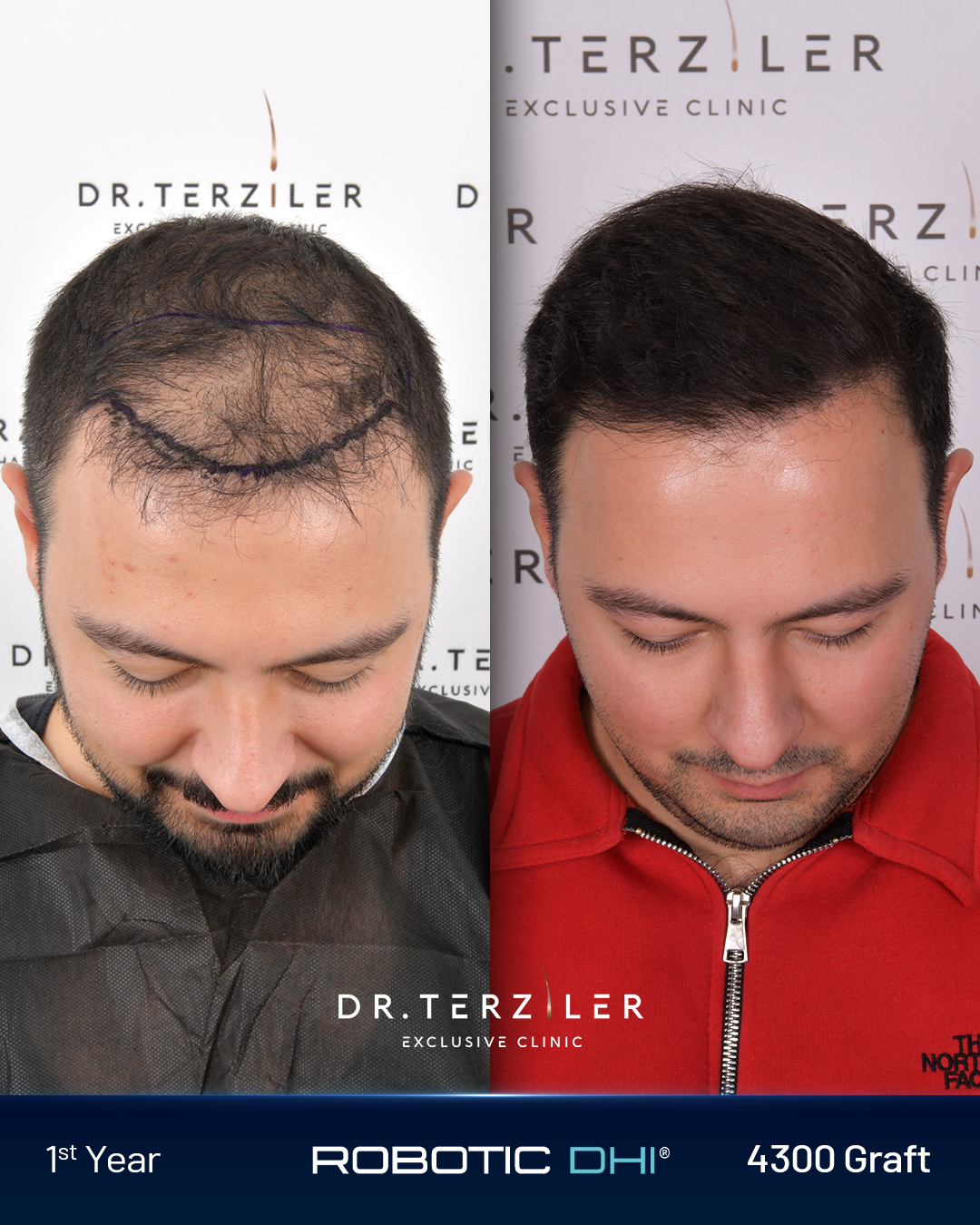
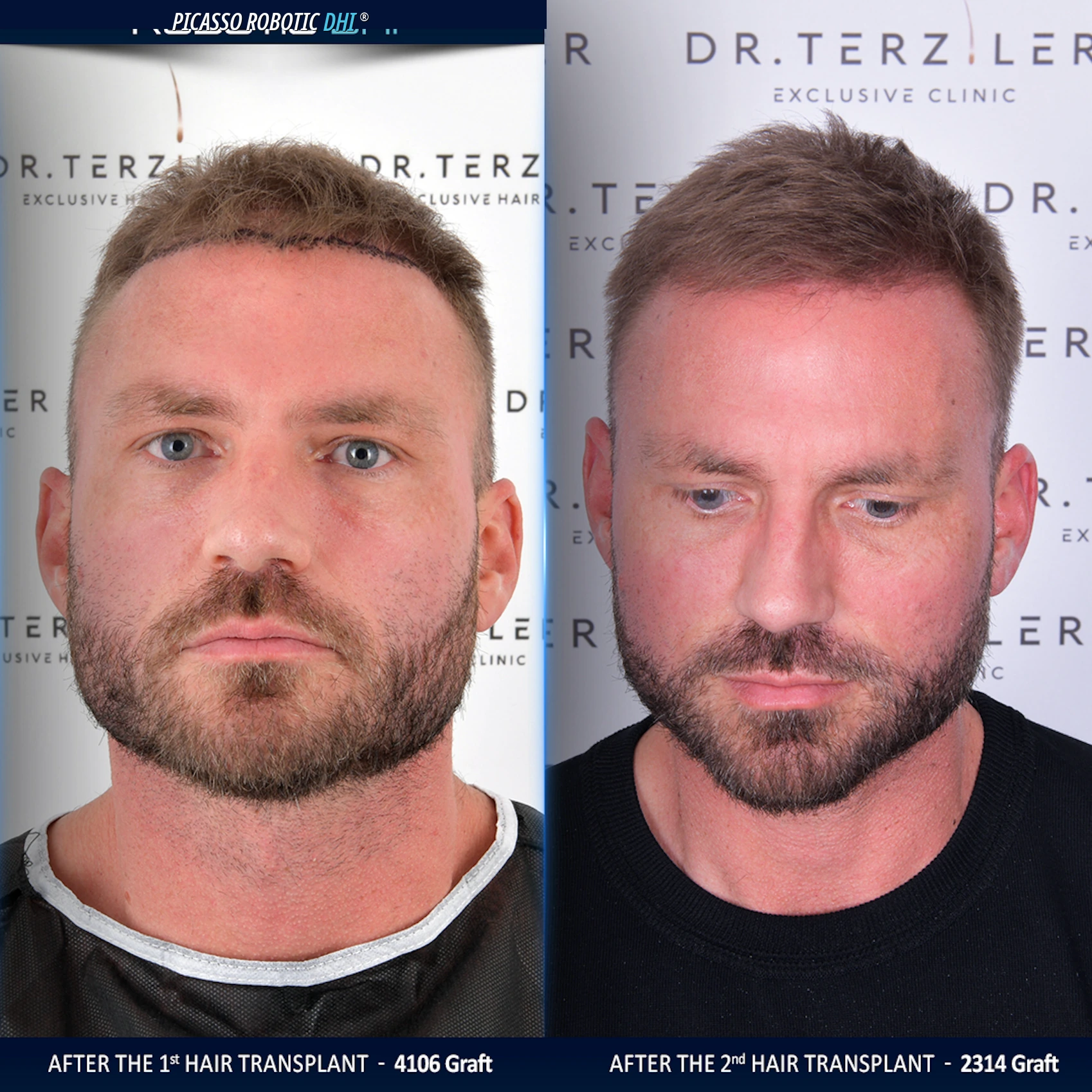
2000 grafts hair transplant patient before after at the best hair transplant clinic in Turkey Dr. Terziler
2000 graft hair transplant patient before after side photo at the best hair transplant clinic in Turkey Dr. Terziler

Sources: Norwood OT (1975): PMID: 1094308 | Bernstein RM & Rassman WR (2002) graft count references

How Much Does a 2000 Graft Hair Transplant Cost?

A 2000-graft hair transplant costs $6,000 to $16,000 in the United States and $1,200 to $2,500 in Turkey as an all-inclusive package. Price varies by technique, clinic accreditation level, and whether accommodation and aftercare are included in the fee.

How Much Does 2000 Grafts Cost in the USA?

In the United States, a 2000-graft hair transplant costs $6,000 to $16,000 at $3 to $8 per graft. New York, Los Angeles, and Miami clinics sit at the high end, charging $8 to $12 or more per graft. Mid-market cities average $4 to $6 per graft.

This fee covers surgery only. Hotel and transport are additional costs that typically add $2,000 to $4,000 to the total.

Many US patients choose Turkey to save $5,000 to $14,000 on the same procedure while receiving all-inclusive care. See our full hair transplant Turkey vs USA cost comparison for a complete breakdown.

How Much Does 2000 Grafts Cost in Turkey?

In Turkey, a 2000-graft hair transplant costs $1,200 to $2,500 as an all-inclusive package.

All-inclusive Turkey hair transplant packages cover the surgical procedure, anaesthesia, 4 to 5 nights in a 4-star hotel, airport and clinic transfers, medication, and an aftercare kit. Istanbul is the primary destination for international patients.

When comparing like-for-like, a patient flying from the US to Istanbul spends approximately $1,800 to $2,500 total, versus $8,000 to $16,000 for surgery only in the US.

View available пересадка волос в Турции cost with exact inclusions and pricing for 2026.

How Much Does 2000 Grafts Cost in the UK?

In the United Kingdom, a 2000-graft hair transplant costs GBP 5,000 to GBP 10,000. UK patients who fly to Istanbul for the same procedure typically spend GBP 1,500 to GBP 2,500 in total, including flights and the all-inclusive clinic package. That is a saving of GBP 3,000 to GBP 8,000 on the same number of grafts.

How Long Does a 2000 Graft Hair Transplant Take?

A 2000-graft hair transplant takes 4 to 6 hours in a single session. Procedure time varies by technique.

2000 graft hair transplant planning table.
Техника Продолжительность процедуры Reason
Robotic DHI (Picasso) 4-5 hours Simultaneous extraction and implantation — no waiting phase between steps
Стандарт DHI 5-6 hours Choi pen implantation with manual extraction phase
БЫЛ 5-7 hours Separate extraction and implantation phases add total time

A 2000-graft session is completed before the first-extracted grafts reach the critical 2-hour out-of-body threshold. At 4000 grafts, early-extracted grafts can exceed this window. Graft quality per graft is therefore higher in smaller sessions when technique remains consistent (Cooley, 2014).

Patients are typically discharged on the same day with minimal discomfort.

Source: Cooley JE (2014): graft survival and out-of-body time. PMID: 25566593

FUE vs DHI for 2000 Grafts: Which Method Gives Better Results?

DHI produces higher graft survival than FUE for 2000-graft sessions. DHI survival reaches 92 to 97%. FUE runs 90 to 95%. At 2000 grafts, the 2 to 7% difference equals 40 to 140 additional live grafts per session.

2000 graft hair transplant planning table.
Техника Продолжительность процедуры Выживаемость трансплантата Scar Risk Лучше всего подходит для
БЫЛ 5-7h 90-95% Linear scar possible Large sessions (3000+ grafts), budget-focused
DHI (Choi pen) 5-6h 92-97% Minimal Hairline density, 1500-3000 grafts
Robotic DHI (Picasso) 4-5h Up to 97% Near zero Precision hairline + crown at 1500-3000 grafts

For 2000-graft sessions focused on the hairline or crown, DHI hair transplant Turkey and Robotic DHI are the superior methods. Angle control from the Choi pen is more precise than channel-cut FUE hair transplant at small zone densities where every graft placement is visible in the final result.

Source: ISHRS: DHI/FUE survival benchmarks: h

What Is Robotic DHI and Why Does It Matter for 2000 Grafts?

Robotic DHI uses robotics-assisted extraction to standardise punch angle, depth, and graft handling across every graft in a session.

At 2000 grafts concentrated in the hairline or crown, precision is more critical than at 4000 grafts spread across a larger zone. A poorly angled graft at the hairline is visible. Robotic consistency eliminates that variable by applying the same extraction parameters to every single graft.

Dr. Servet Terziler invented the Роботизированная DHI system. Dr. Terziler Exclusive Clinic is the only clinic in the world that operates this system. The clinic uses a 0.70mm Choi implanter pen, smaller than the 0.75mm industry standard, reducing recipient site trauma by 15 to 20% per implantation. Every graft is implanted within 90 seconds of extraction. Grafts are stored in an ATP and HypoThermosol solution; Cooley (2014) demonstrated 72% graft survival at day 5 in this solution versus 0% in saline. Dr. Terziler Exclusive Clinic holds AAACI dual accreditation as surgeon #7722917 and as a facility, a status held by fewer than 50 hair transplant providers globally.

"2000 grafts is where artistry matters most. At this scale, every placement defines the hairline. This is why we use the 0.70mm Choi pen, because precision at this scale is non-negotiable."

Dr. Servet Terziler, Founder, Dr. Terziler Exclusive Clinic

Learn more about the Picasso Robotic DHI system with artistic hairline and how the technology was developed.

Sources: Кули Дж. Э. (2014): PMID: 25566593 | AAACI: https://www.aaaci.com/clinic-accreditation | ISHRS: https://ishrs.org

What Happens to the Donor Area After 2000 Grafts?

The donor area heals normally after 2000 grafts when extractions are distributed at under 80 grafts per cm2. At this extraction density, there is no visible thinning of the donor zone.

A 2000-graft session removes approximately 16 to 25% of total scalp donor capacity. Most patients have a lifetime donor supply of 6,000 to 10,000 scalp grafts. This leaves 75 to 84% of donor reserve intact for future sessions, making 2000 grafts a conservative and sustainable use of the donor bank at Norwood 2 to 3.

The donor zone shows redness and small scabs for 7 to 10 days. At 30 days, the area is visually indistinct from untreated scalp.

Beard hair provides an additional 2,000 to 5,000 grafts as a secondary donor source if scalp supply is limited. This extends the lifetime graft availability significantly for patients planning multiple sessions.

Source: Bernstein RM & Rassman WR (2002): donor density and safe extraction limits. PMID: 11901374

Does a 2000 Grafts Hair Transplant Hurt?

No. A 2000-graft hair transplant does not hurt during the procedure. Local anaesthesia is administered before extraction begins. The injection itself causes a brief stinging sensation. That is the only moment patients report pain.

Post-procedure discomfort is mild to moderate for 48 to 72 hours. Most patients rate it 2 to 3 out of 10. Standard oral analgesics manage it fully.

A 2000-graft session causes less post-procedure swelling than a 4000-graft session because the total extraction and implantation area is smaller. Most 2000-graft patients feel normal within 48 hours.

See our dedicated page on does a hair transplant hurt for a full breakdown of anaesthesia, injection technique, and day-by-day recovery.

What Do 2000 Hair Grafts Look Like Before and After?

2000 hair grafts transform a receding hairline or thinning crown into a natural, dense appearance by 12 months. The most visible change happens between month 6 and month 12 as transplanted hairs thicken from fine vellus hair to full terminal diameter.

Every before and after result at Dr. Terziler Exclusive Clinic is from a real patient using Robotic DHI. No filters, no lighting adjustments.

"I was Norwood 3 and only needed 2000 grafts. Some clinics pushed me toward 3000 or 4000. Dr. Terziler's team said 2000 was exactly right for my pattern. They were right. Month 9 was when I realized the hairline looked completely natural."

Devendra Galla, Norwood 3, Robotic DHI, Dr. Terziler Exclusive Clinic

View the full before and after gallery to see 2000-graft hairline and crown results across multiple Norwood stages and hair types.

When Do You See Results After a 2000 Graft Hair Transplant?

You see the first visible growth at 4 to 5 months after a 2000-graft hair transplant. Approximately 80% of the final result is visible by month 9. Full terminal density is reached at 12 to 18 months.

2000 graft hair transplant planning table.
Хронология событий Что происходит What to Expect
1-й месяц Transplanted hairs enter telogen (resting) phase Shock shedding begins — normal and expected
Month 2-3 Follicles dormant beneath the scalp Scalp looks similar to pre-operation state. No visible growth
Month 4-5 First anagen re-entry begins Fine, sparse hairs appear at the hairline or crown
6-й месяц Active growth phase 40-60% of final density visible. Hairline shape begins to emerge
Month 9 Hair thickening phase 75-85% density. Hairline clearly defined. Crown visible if crown case
Month 12 Near-final result 90-95% of final density visible. Hair texture improving
Month 15-18 Full terminal density 100% of final result. Hair texture fully normalised

2000-graft hairline patients often notice early results faster than 4000-graft patients. Smaller grafted zones mean fewer total follicles competing for re-entry into the anagen growth phase simultaneously.

Month 1 to 3: Why Is My Hair Falling Out?

Shock shedding is normal in the first 4 to 6 weeks after a hair transplant. Transplanted hairs enter the telogen resting phase and detach from the scalp. The follicle remains intact and alive beneath the surface.

By month 3, the scalp looks similar to its pre-operation state. New follicles are in their dormant phase before anagen re-entry begins. This stage concerns many patients but it is a normal part of the transplant growth cycle.

Month 4 to 6: What Does Early Growth Look Like?

First visible hairs appear at the hairline between month 4 and month 5. Growth is sparse at this stage, with fine, thin strands emerging. The hairs are in early anagen phase and have not yet thickened to their terminal diameter.

By month 6, 40 to 60% of the final hairline density is visible. The hairline shape begins to emerge clearly. Hairs are still thinner than they will become, but the coverage and direction of growth are already set.

Month 9 to 12: When Is the Final Result Visible?

By month 9, 75 to 85% of the final density is visible. The hairline is clearly defined and crown coverage is visible for crown cases. Hair continues to thicken during this period as follicles mature.

By month 12, 90 to 95% of the final result is visible. Hair thickens toward full terminal diameter. Full terminal density and texture are reached between month 15 and month 18, at which point the result is permanent.

Why Choose Dr. Terziler Exclusive Clinic for 2000 Grafts?

Dr. Terziler Exclusive Clinic is the only clinic in the world that performs special Robotic DHI, a system Dr. Servet Terziler invented specifically to achieve sub-millimetre hairline consistency. At 2000 grafts, where every placed follicle shapes the final hairline or crown, this level of precision is what separates a natural result from a visible one.

Every 2000-graft session at the clinic uses a 0.70mm Choi implanter pen, smaller than the 0.75mm industry standard. This 0.05mm difference reduces recipient site trauma by 15 to 20% per implantation and allows denser packing in the hairline zone. Grafts are implanted within 90 seconds of extraction as part of a sub-90-second out-of-body protocol that runs across every session. Graft storage uses an ATP and HypoThermosol solution; Cooley (2014) documented 72% graft survival at day 5 in this solution versus 0% in saline.

"2000 grafts is where artistry matters most. At this scale, every placement defines the hairline. This is why we use the 0.70mm Choi pen, because precision at this scale is non-negotiable."

Dr. Servet Terziler, Founder, Dr. Terziler Exclusive Clinic

Dr. Terziler Exclusive Clinic holds AAACI dual accreditation as surgeon #7722917 and as a facility. Fewer than 50 hair transplant providers worldwide hold this dual status. Dr. Terziler is an ISHRS-recognised educator and active member of the International Society of Hair Restoration Surgery. Graft survival reaches up to 97% for Robotic DHI procedures, within the ISHRS 2022 published benchmark of 90 to 97%.

As the best hair transplant clinic in Turkey, Dr. Terziler Exclusive Clinic combines scientific precision with aesthetic results backed by verified clinical data.

Frequently Asked Questions About 2000 Grafts Hair Transplant

How much does a 2000 graft hair transplant cost?

A 2000-graft hair transplant costs $6,000 to $16,000 in the United States at $3 to $8 per graft. In Turkey, the same procedure costs $1,200 to $2,500 as an all-inclusive package covering surgery, hotel, transfers, and aftercare. UK prices range from GBP 5,000 to GBP 10,000.

How many hairs is 2000 grafts?

2000 grafts contain approximately 4,200 to 4,600 individual hairs. Each graft averages 2.1 to 2.3 hairs based on typical follicular distribution: 15% single-hair, 45% double, 35% triple, and 5% four-hair grafts. The number 2000 refers to follicular units, not individual hair strands.

Is 2000 grafts a lot?

2000 grafts is a mid-size standard session. Clinical classification: small sessions run 500 to 1,500 grafts; standard sessions 1,500 to 3,000; large sessions 3,000 to 4,000; mega sessions 4,000 or more. A 2000-graft procedure is completed in one day in 4 to 6 hours.

How much area do 2000 grafts cover?

2000 grafts cover 40 to 55 cm2 depending on implantation density. At 50 grafts per cm2, coverage is 40 cm2. At 35 grafts per cm2, coverage reaches 57 cm2. A standard hairline zone (25-35 cm2) is fully covered. A thinning crown at Norwood 3V (30-45 cm2) is fully addressable.

How long does a 2000 graft hair transplant take?

4 to 6 hours in a single session. Robotic DHI completes 2000 grafts in 4 to 5 hours due to simultaneous extraction and implantation. Standard FUE takes 5 to 7 hours. In a 2000-graft session, all grafts are implanted within the critical 2-hour out-of-body window, maximising survival.

Is 2000 grafts enough for the crown?

Yes, when the crown zone is under 40 cm2. A Norwood 3V crown (25-40 cm2) is fully coverable with 2000 grafts at 50 grafts per cm2. A Norwood 4 crown (40-55 cm2) receives 70 to 85% density. Norwood 5 crowns require 3,000 or more grafts for full coverage.

Is 2000 grafts enough for a hairline?

Yes. 2000 grafts fully restores a receding hairline at Norwood 2 and 3. A standard frontal hairline zone is 25 to 35 cm2. At 50 grafts per cm2, 2000 grafts achieves complete, natural-density hairline coverage in a single session.

What Norwood stage needs 2000 grafts?

Norwood 2 and 3 patients most commonly need 1,500 to 2,500 grafts, making 2000 the standard choice. Norwood 3V patients use 2000 grafts for the hairline or crown but not both simultaneously. Norwood 4 and above require 3,000 or more grafts for full coverage.

What happens to the donor area after 2000 grafts?

The donor area heals to normal appearance within 30 days when extractions are distributed at under 80 grafts per cm2. A 2000-graft session removes 16 to 25% of lifetime donor capacity, preserving 75 to 84% for future sessions. The donor zone shows redness and small scabs for 7 to 10 days.

What is the graft survival rate for 2000 grafts?

90 to 97% with DHI and up to 97% with Robotic DHI. FUE survival runs 90 to 95%. Survival is driven by out-of-body time, graft storage solution, and implantation technique. ATP and HypoThermosol storage (Cooley 2014) achieves 72% survival at day 5 versus 0% in saline.

Is FUE or DHI better for 2000 grafts?

DHI delivers higher graft survival for 2000-graft sessions at 92 to 97% versus 90 to 95% for FUE. At 2000 grafts, the 2 to 7% survival difference equals 40 to 140 additional live grafts. For hairline and crown work, DHI Choi pen implantation provides superior angle control.

What does 2000 grafts look like before and after?

2000 grafts produce a full, natural hairline or dense crown coverage by 12 months. First growth appears at month 4 to 5. At month 6, 40 to 60% of final density is visible. At month 9, 75 to 85%. Full terminal density and texture are reached at 12 to 18 months.

How much does 2000 grafts cost in Turkey?

$1,200 to $2,500 all-inclusive in Turkey. Istanbul packages include the surgical procedure, 4 to 5 nights in a 4-star hotel, airport and clinic transfers, post-operative medication, and an aftercare kit. International patients typically save $5,000 to $13,000 compared to US or UK prices for the same graft count.

How many total grafts can a person have in their lifetime?

6,000 to 10,000 scalp grafts is the typical lifetime donor supply. A 2000-graft session uses 16 to 25% of this reserve. Beard hair provides a secondary source of 2,000 to 5,000 additional grafts. Norwood 2 to 3 patients who get 2000 grafts retain ample donor capital for future sessions if hair loss progresses.

Пересадка волос (3 000 графтов): стоимость, область макушки и результаты «до и после»

A 3000-graft hair transplant delivers approximately 6,900 individual hairs across 60 to 85 cm² of scalp in a single session of 5 to 7 hours. It is the standard procedure for Norwood 4 patients restoring both the hairline and crown simultaneously, and the primary crown restoration session for Norwood 3 Vertex patients. 3000 grafts sits at the threshold between a standard and a large session; sufficient to address moderate-to-advanced hair loss in one day without exceeding safe extraction limits.

~6,900 hairs delivered
60–85 cm² scalp area covered
5–7 hrs procedure
97% graft survival (Robotic DHI)
From $1,500 all-inclusive Turkey
Ideal for Norwood 3V–4
Д-р Сервет Терзилер

ПРОВЕРЕНО СПЕЦИАЛИСТОМ В ОБЛАСТИ МЕДИЦИНЫ

Д-р Сервет Терзилер

AAACI Accredited Surgeon, ISHRS Member and Inventor of Robotic DHI

Updated July 2026

This content is reviewed by Dr. Servet Terziler for medical accuracy, graft-count planning, donor-area safety, Robotic DHI context, cost comparison relevance, and patient-safety framing.

What Is a 3000 Graft Hair Transplant?

A 3000 graft hair transplant is a procedure in which 3,000 individual follicular units (each containing 1–4 hairs) are harvested from the donor area and implanted into thinning or bald zones, delivering approximately 6,600–7,500 hairs in a single session. It is the most commonly requested hair transplant Turkey procedure for Norwood 4 patients who want to restore both the hairline and crown simultaneously, and for Norwood 3 Vertex patients requiring full crown coverage at high density.

Most patients confuse grafts with hairs. A graft is a follicular unit: a naturally occurring cluster of 1 to 4 hairs enclosed in a single epidermis, first defined by Headington in 1984. 3000 grafts means 3,000 of these units are moved. The resulting hair count is always higher than the graft count, typically between 6,600 and 7,500 individual hairs at standard follicular distribution.

3000 grafts is the threshold session for moderate-to-advanced hair loss. It addresses Norwood 3 to 4 hair loss, covering the hairline, temples, and crown simultaneously in a single 5 to 7 hour day under local anaesthesia with no overnight hospital stay.

Source: Headington JT (1984): Transverse microscopic anatomy of the human scalp. Arch Dermatol. PMID: 6694356. https://pubmed.ncbi.nlm.nih.gov/6694356/

3000 grafts hair transplant norwood 3 patient at Dr. Terziler Istanbul, Turkey
3000-graft hair transplant patient example at Dr. Terziler Exclusive Clinic.
3500 grafts hair transplant norwood 3 patient hairline at the best hair transplant clinic in Turkey, Dr. Terziler
3000-graft hair transplant patient example at Dr. Terziler Exclusive Clinic.

How Many Hairs Is 3000 Grafts?

3,000 grafts contain approximately 6,600–7,500 individual hairs, based on the typical follicular unit distribution: 15% single-hair grafts, 45% double, 35% triple, and 5% four-hair grafts.

The table below shows the exact hair-count calculation at 3000 grafts. This data is based on the standard follicular distribution found in clinical hair restoration literature.

3000-graft hair transplant planning table 1.
Graft Type % of Grafts No. of Grafts No. of Hairs
Single-hair grafts 15% 450 grafts 450 hairs
Double-hair grafts 45% 1,350 grafts 2,700 hairs
Triple-hair grafts 35% 1,050 grafts 3,150 hairs
Four-hair grafts 5% 150 grafts 600 hairs
TOTAL 100% 3 000 трансплантатов ~6,900 hairs

Exact count varies by individual scalp anatomy. Dr. Terziler’s team assesses follicular density during consultation.

Follicular grouping is determined by genetics and donor zone density, not by the surgeon. Patients with naturally thick, multi-hair grafts see higher hair counts; patients with predominantly single-hair follicles may yield closer to 6,300 total hairs. Folliscopy assessment before every procedure projects each patient’s accurate yield.

Source: Rassman WR & Bernstein RM (2002): follicular unit density studies. Dermatol Surg. PMID: 11901374. https://pubmed.ncbi.nlm.nih.gov/11901374/

How Much Area Do 3000 Grafts Cover?

3,000 grafts cover approximately 60–85 cm² of scalp, which is equivalent to restoring a full frontal hairline plus significant mid-scalp density, or a complete crown zone in most patients with Norwood III–IV hair loss.

Coverage of 3000 graft hair transplant depends on implantation density. A surgeon choosing 35 grafts per cm² achieves wider coverage across a larger zone. At 50 grafts per cm², results are denser in a smaller zone. Dr. Terziler targets 45 to 50 grafts per cm² as the optimal balance.

3000-graft hair transplant planning table 2.
Количество трансплантатов Est. Coverage Typical Zone NW Stage Target
1 500 трансплантатов 30–45 см² Hairline only Северо-Запад-2
2 000 трансплантатов 40–55 см² Hairline + frontal Северо-Запад 2–3
3,000 grafts ★ 60–85 см² Hairline + crown OR full frontal Северо-Запад 3–4
4 000 трансплантатов 80–110 см² Hairline + crown + mid Северо-Запад 4–5
5,000+ grafts 110–140 см² Extensive restoration Северо-Запад 5–7

3000 Grafts for Crown Hair Transplant: Is It Enough?

3,000 grafts is sufficient for crown restoration in most patients with Norwood III Vertex (NW3V) to early Norwood IV hair loss, where the crown bald zone typically measures 50–70 cm².

The crown (vertex) is the most psychologically distressing zone of hair loss for men aged 35 to 55. Crown hair grows in a spiral pattern radiating outward from a central whorl point, requiring each graft to be implanted at a different angle. This angular complexity makes crown restoration technically more demanding than hairline work, and more sensitive to errors in graft placement.

3000-graft hair transplant planning table 3.
NW Stage Crown Bald Area Grafts for Crown Only Combined Hairline+Crown
«Северо-Запад 3 V» 40–55 см² 1,600–2,200 grafts Not recommended same session
Северо-Запад 4 55–75 см² 2,200–3,000 grafts 3,000 total (split 2,000/1,000)
Северо-Запад 5 75–100 см² 3,000–4,000 grafts 2 sessions recommended
«North West 6 Plus» 100 см² 4,000–5,000+ grafts Multiple sessions required

NW4 hairline + crown allocation: For NW4 patients wanting both hairline and crown restored in one session, the surgeon divides the 3000 grafts between zones. The most common NW4 allocation is 2,000 grafts to the hairline and 1,000 grafts to the crown vertex. Crown-priority patients can reverse this split.

Robotic DHI crown angle control: At Dr. Terziler Exclusive Clinic, Robotic DHI uses a 0.70mm Choi implanter pen (smaller than the 0.75mm industry standard) which allows sub-millimetre control over implantation angle in the crown. Each of the 3,000 grafts is placed at a different directional vector to match the natural whorl pattern.

I had my 3000 grafts done at Dr. Terziler’s clinic in May 2024, full crown and hairline in one session. By month 9 I could style my hair normally for the first time in six years. At 12 months the whorl looks completely natural. I’ve had colleagues ask if I started using medication.

— James R., United States, 3000 grafts (crown + hairline), 12 months post-op
3000 grafts crown hair transplant norwood 3 patient at the best hair transplant clinic in Turkey Dr. Terziler, Istanbul.
3000-graft hair transplant patient example at Dr. Terziler Exclusive Clinic.

Source: Bernstein RM (2002): crown whorl angulation and follicular placement. Dermatol Surg. PMID: 11896453. https://pubmed.ncbi.nlm.nih.gov/11896453/

Source: Norwood OT (1975): Male pattern baldness classification and incidence. South Med J. PMID: 1094308. https://pubmed.ncbi.nlm.nih.gov/1094308/

Is 3000 Grafts Enough for a Full Hairline?: Yes, 3,000 grafts is typically sufficient for a complete hairline restoration in patients with Norwood II–III loss, with grafts remaining for mid-scalp density. A standard frontal hairline zone covers 25 to 35 cm². At 50 grafts per cm², full density requires 1,250 to 1,750 grafts, leaving 1,250 to 1,750 grafts for the temples and mid-scalp. Patients receiving 3000 grafts solely on the hairline achieve above-normal density, so the majority of 3000-graft sessions also address adjacent zones.

Is 3000 Grafts Enough for the Crown?: 3,000 grafts can restore the crown in patients with Norwood III Vertex (NW3V) or early NW4 crown loss, where the bald area is typically 50–70 cm². For larger crown areas (NW5+), 4,000–5,000 grafts are recommended. Crown hair grows in a spiral pattern requiring each graft to be implanted at a different angle. Robotic DHI at Dr. Terziler Exclusive Clinic uses a 0.70mm Choi implanter pen for sub-millimetre directional control, which is the most important technical factor in producing a natural crown whorl result.

How Much Will 2000 Grafts Cover?: 2000 grafts cover approximately 40 to 55 cm² of scalp, delivering 4,200 to 4,600 individual hairs. See our guide on how much will 2000 grafts cover for full coverage data, zone breakdown, and Norwood recommendations.

How Much Will 4000 Grafts Cover?: 4000 grafts cover approximately 80 to 110 cm², delivering 9,200 to 10,000 individual hairs across the hairline, crown, and mid-scalp. See our guide on how much will 4000 grafts cover for full session breakdown and Norwood 4–5 coverage data.

How Much Will 5000 Grafts Cover?: 5000 grafts cover approximately 110 to 140 cm² and are indicated for Norwood 5 and above. See our guide on how much will 5000 grafts cover for staging and multi-session planning.

Rassman WR & Bernstein RM (2002): graft count planning and density. PMID: 11901374.

Is 3000 Grafts a Lot?

3,000 grafts is considered a medium-to-large hair transplant session. Most standard procedures transfer 1,000–2,000 grafts; sessions of 3,000 or more are classified as large-volume and are typically performed over a single day of 5–7 hours.

3000-graft hair transplant planning table 4.
Session Type Graft Range Typical Use Case
Small 500–1 500 трансплантатов Temples, sideburns, early recession, density work
Стандартный 1,500–2,500 grafts Hairline, crown, Norwood 2–3
Large (this page) 2,500–4,000 grafts Norwood 3V–4, hairline + crown combined
Mega session 4,000+ grafts Norwood 5–7, full scalp reconstruction

Single-day large session: 3000 grafts is safely completed in a single day of 5 to 7 hours. At Dr. Terziler Exclusive Clinic, Robotic DHI reduces session time to 5 to 6 hours compared to 6 to 8 hours for manual FUE, because the Picasso robotic system performs extraction and implantation in a continuous workflow; keeping graft out-of-body time under 90 seconds per graft.

Graft survival challenge: The graft survival challenge at 3000 grafts: in manual FUE sessions, the first-extracted grafts risk exceeding the critical 2-hour out-of-body threshold by the time implantation begins. Robotic DHI eliminates this lag. Graft survival at Dr. Terziler reaches 97%, versus 85–92% for industry-average manual FUE.

Source: Cooley JE (2014): Optimal graft care. Hair Transplant Forum Int. PMID: 25566593. https://pubmed.ncbi.nlm.nih.gov/25566593/

Which Norwood Stages Need 3000 Grafts?

Patients at Norwood III, III Vertex, or IV are the primary candidates for a 3,000 graft session, as their bald or thinning area measures 60–85 cm²; the exact coverage range that 3,000 grafts can fill at therapeutic density.

3000-graft hair transplant planning table 5.
NW Stage Hair Loss Description Recommended Grafts Is 3000 Right?
Северо-Запад I No visible loss <500 grafts ✘ Over-treatment
Северо-Запад II Hairline recession 800–1,500 grafts ✘ Too many for most
Северо-Запад III Frontal + temples 1,500–2,500 grafts ~ Depends on density goal
Северо-Запад III V Crown only 1,600–3,000 grafts ✓ Crown session
Северо-Запад IV Hairline + crown 2,500–3,500 grafts ✓ Most common 3000 candidate
«Северо-Западная пятерка» Extensive 3,500–5,000 grafts ✓ First session of two
NW VI–VII Severe/complete 5,000+ grafts ✓ Multi-session plan

★ NW4 = primary candidate for 3000 grafts.

Individual graft counts vary by scalp zone size, hair calibre, and density goals. A patient with naturally thick, dark hair may achieve full visual coverage with 2,500 grafts; a patient with fine, light hair may need 3,500 to achieve the same perceived density.

See our Norwood scale guide for a detailed breakdown of each stage, measurement criteria, and corresponding graft requirements.

Sources: Norwood OT (1975): PMID: 1094308 | Rassman WR & Bernstein RM (2002): PMID: 11901374n

Can You Split 3000 Grafts Across Hairline and Crown?

Yes, splitting 3,000 grafts between the hairline and crown is a common strategy for Norwood IV patients. A typical allocation is 1,800–2,000 grafts to the hairline and temples, and 1,000–1,200 grafts to the crown vertex, restoring both zones in a single session.

3000-graft hair transplant planning table 6.
Zone Трансплантаты Coverage Density
Тонкая линия 1,800 ~45 см² 40 FU/см²
Crown vertex 1,200 ~35 см² 34 FU/см²
TOTAL 3,000 ~80 см² —

Crown-priority split: Crown-priority patients (those most bothered by vertex thinning) can reverse the allocation: 2,000 grafts to the crown and 1,000 to the hairline. This is appropriate for NW4 patients with a small-to-medium crown zone and early hairline recession.

When NOT to split: When NOT to split: Norwood 5 or above patients should not split 3000 grafts across both zones in a single session. The individual zones are too large for adequate coverage at this graft count. Two staged sessions of 3,000 grafts each is the recommended plan.

How Much Does a 3000 Graft Hair Transplant Cost?

A 3,000 graft hair transplant costs between $9,000 and $24,000 in the United States ($3–$8 per graft), £7,500–£15,000 in the UK, and $3,500–$6,500 all-inclusive in Turkey; a saving of up to 85% for the same procedure.

How Much Does 3000 Grafts Cost in the USA?

In the USA, 3,000 grafts cost $9,000–$24,000 depending on clinic location, surgeon experience, and technique. New York and Los Angeles clinics charge $20,000–$24,000; mid-market cities average $9,000–$14,000.

This fee covers surgery only. Hotel and transport are additional costs that typically add $2,000 to $4,000. Many US patients choose Turkey to save $10,000 to $20,000 on the same procedure while receiving all-inclusive care.

3000-graft hair transplant planning table 7.
City / Region Price Range (3,000 grafts) Cost per Graft
Нью-Йорк, штат Нью-Йорк $18,000–$24,000 $6–$8
Лос-Анджелес, Калифорния $18,000–$22,000 $6–$7.33
Майами, штат Флорида $12,000–$18,000 $4–$6
Чикаго, штат Иллинойс $12,000–$16,000 $4–$5.33
Даллас, Техас $10,000–$15,000 $3.33–$5
Average USA $9,000–$24,000 $3–$8
Турция $3,500–$6,500 all-incl. $0.50–$1.17

Check our Hair Transplant Turkey vs USA Guide here.

How Much Does 3000 Grafts Cost in Turkey?

Hair transplant in Turkey costs $3,500–$6,500 all-inclusive for 3,000 grafts; covering the procedure, hotel, airport transfers, and aftercare kit. Dr. Terziler’s clinic in Istanbul offers transparent pricing with no hidden fees.

All-inclusive Istanbul packages: All-inclusive Istanbul hair transplant packages cover the surgical procedure, anaesthesia, 4 to 5 nights in a 4-star hotel, airport and clinic transfers, all medications, PRP therapy, aftercare kit, and post-operative check-up. When a US patient totals procedure cost plus flights plus hotel independently, the all-inclusive Istanbul package represents a saving of $10,000 to $20,000 over equivalent US treatment.

Full Turkey cost breakdown: View the full breakdown of hair transplant cost in Turkey with exact inclusions and 2026 pricing.

How Much Does 3000 Grafts Cost in the UK?

In the UK, a 3,000 graft hair transplant costs £7,500–£15,000. London clinics typically charge the highest rates (£12,000–£15,000), while clinics in Manchester and Birmingham average £7,500–£10,000.

UK patients who fly to Istanbul for 3000 grafts spend 3,200 to £6,000 all-inclusive, saving £6,000 to £12,000 on the same procedure.

3000-graft hair transplant planning table 8.
Страна Price Range (3,000 grafts) All-Inclusive?
Turkey ★ $3,500–$6,500 ✓ Yes
Соединенные Штаты $9,000–$24,000 ✘ Usually no
Великобритания £7,500–£15,000 ✘ Usually no
Канада CAD $10,000–$27,000 ✘ Usually no
Австралия AUD $12,000–$30,000 ✘ Usually no
Германия €8,000–€15,000 ✘ Usually no

★ Dr. Terziler Exclusive Clinic is located in Istanbul, Turkey.

How Long Does a 3000 Graft Hair Transplant Take?

A 3,000 graft hair transplant takes 5–7 hours in a single day. The session begins with local anaesthetic (30 min), followed by graft extraction (2–3 hrs) and implantation (2.5–3.5 hrs), with short breaks in between.

3000-graft hair transplant planning table 9.
Фаза Продолжительность Примечания
Arrival & prep Тридцать минут Photos, consent, hairline design
Local anaesthetic 20–30 min Vibration device used to reduce discomfort
Graft extraction 2–3 hours Robotic DHI system
Sorting & storage Concurrent ATP + HypoThermosol medium
Implantation 2.5–3.5 hours 0.70mm Choi pen, Robotic DHI
Aftercare briefing Тридцать минут Instructions + kit
TOTAL 5–7 hours Single day, no overnight stay

Out-of-body time matters: Out-of-body time (the duration between a graft being extracted and implanted) is the most critical variable in graft survival. At 3000 grafts, Robotic DHI at Dr. Terziler Exclusive Clinic keeps individual graft out-of-body time under 90 seconds by performing extraction and implantation in a continuous workflow. Grafts are stored in ATP-supplemented HypoThermosol medium between extraction and implantation.

Same-day discharge: Patients arrive at the clinic in the morning and are discharged with a post-operative kit before evening. The recommended stay in Istanbul is 3 to 4 days: day before arrival, procedure day, rest day, return flight.

Source: Cooley JE (2014): Optimal graft care, out-of-body time, HypoThermosol storage. Hair Transplant Forum Int. PMID: 25566593. https://pubmed.ncbi.nlm.nih.gov/25566593/

How Painful Is a 3000 Graft Hair Transplant?

A 3,000 graft hair transplant is performed under local anaesthetic and is not painful during the procedure. Patients report mild discomfort during the initial anaesthetic injections; most describe the 5–7 hour session as tolerable, with little to no pain throughout.

During the procedure: The only discomfort most patients describe is mild stinging during the initial anaesthetic injections. At Dr. Terziler Exclusive Clinic, a vibration-assisted injection system reduces this by interrupting pain signal transmission at the injection site. Most patients rate injection discomfort at 2 to 3 out of 10. The procedure itself is rated 0 to 1 out of 10.

After the procedure: Post-operative discomfort after a 3000-graft session is mild to moderate for 48 to 72 hours. Most patients rate it 3 out of 10. Standard paracetamol and ibuprofen manage this effectively. Prescription pain medication is rarely required. A 3000-graft session causes slightly more post-procedure swelling than a 2000-graft session due to the larger total extraction and implantation area.

See our dedicated guide on how painful is a hair transplant for a full breakdown of anaesthesia technique, injection method, and day-by-day post-operative discomfort timeline.

FUE vs DHI for 3000 Grafts: Which Method Gives Better Results?

For a 3,000 graft session, DHI (прямая имплантация волос) delivers superior density and natural direction versus standard FUE hair transplant, because grafts are implanted immediately with a Choi pen; eliminating the channel-cutting step and reducing out-of-body time. Dr. Terziler’s Robotic or manual DHI hair transplant system uses a 0.70mm pen for sub-millimetre precision.

3000-graft hair transplant planning table 10.
Особенность БЫЛ У вас есть? Robotic DHI (Dr. Terziler)
Channel pre-cut? Да Из Из
Choi pen size Не применимо 0.75mm std 0.70mm ★
Graft out-of-body Longer Shorter <90 sec per graft ★
Density achievable 35–40 FU/см² 40–45 FU/см² 45–50 FU/см² ★
Survival rate 85–92% 90–95% 97% ★
Shaving required? Полное бритье Partial/full Partial possible
Session time (3000g) 6–8 hours 6–7 hours 5–6 hours ★

★ Dr. Terziler Exclusive Clinic advantage.

Source: ISHRS: DHI and FUE graft survival benchmarks. https://ishrs.org/patients/hair-restoration-procedures/

Кули Дж. Э. (2014): PMID: 25566593.

What Is Robotic DHI and Why Does It Matter for 3000 Grafts?

Robotic DHI is an advanced form of Direct Hair Implantation that uses a robotic arm to achieve sub-90-second implantation per graft. Dr. Terziler’s Picasso system uses a 0.70mm Choi pen (7% finer than the industry standard 0.75mm) enabling higher density and more natural hair angles.

Invented by Dr. Servet Terziler: Dr. Servet Terziler invented the Robotic DHI system. Dr. Terziler Exclusive Clinic is the only clinic in the world that operates this system. At 3000 grafts, robotic consistency matters more than at smaller sessions; the 3000th graft must be handled with the same precision as the first, which human fatigue in a 6 to 8 hour manual session cannot guarantee.

0.70mm precision: The 0.05mm difference in punch diameter (0.70mm vs 0.75mm) creates a proportionally smaller implantation channel, reduces scalp trauma per graft, and allows higher implantation density in the hairline and crown; which is where the difference between a natural and an artificial-looking result is most visible.

Sources: Cooley JE (2014): PMID: 25566593 | AAACI: https://www.aaaci.com/clinic-accreditation | ISHRS: https://ishrs.org

What Happens to the Donor Area After 3000 Grafts?

Removing 3,000 grafts from the donor area leaves no visible scarring with FUE or DHI techniques, as grafts are harvested individually from a large zone (typically the occipital and temporal regions). The average donor area density of 80–100 FU/cm² means that extracting 3,000 grafts from a 200–300 cm² zone is well within safe capacity.

Donor capacity used: A 3000-graft session removes approximately 25 to 40% of the total scalp donor capacity for most patients. The average lifetime scalp donor supply is 6,000 to 10,000 grafts. Removing 3000 grafts in a first session leaves 3,000 to 7,000 grafts available for future procedures if hair loss continues to progress.

Donor recovery timeline: The donor zone shows redness and small scabs for 7 to 10 days after a 3000-graft session. By day 14, scabs resolve. At 30 days, the donor area is visually indistinct from untreated areas. Beard hair provides an additional 2,000 to 5,000 grafts as a secondary donor source if scalp supply is limited.

Source: Rassman WR & Bernstein RM (2002): donor zone density, safe extraction limits, long-term planning. PMID: 11901374. https://pubmed.ncbi.nlm.nih.gov/11901374/

How Many Grafts Can You Have in a Lifetime?

Most patients have a lifetime safe extraction limit of 6,000–8,000 grafts from the permanent donor zone. A 3,000 graft session therefore uses 37–50% of lifetime capacity, leaving room for one future session if needed.

Lifetime graft planning: Norwood stage progression should be factored into lifetime graft planning at the initial consultation. A patient at NW4 today may progress to NW5 or NW6 over the next 10 to 15 years. Reserving 3,000 to 5,000 grafts for future sessions is standard planning for patients under 40.

Bernstein RM & Rassman WR (2002): lifetime donor capacity and multi-session planning. PMID: 11901374.

What Do 3000 Hair Grafts Look Like Before and After?

3,000 hair grafts transform moderate-to-advanced hair loss into a naturally dense hairline and crown. Results at 12 months show 6,600–7,500 new hairs covering 60–85 cm² of scalp, with density indistinguishable from natural growth when performed with Robotic DHI at 40–45 FU/cm².

Before and after photos should be evaluated at 12 months minimum for the full final result. 3000-graft crown restorations continue improving in density and texture through month 15 to 18. Every before and after result at Dr. Terziler Exclusive Clinic is from a real patient treated with Robotic DHI. No filters, no lighting manipulation.

3000 grafts hair transplant norwood 3 patient at Dr. Terziler Istanbul, Turkey
3000-graft hair transplant patient example at Dr. Terziler Exclusive Clinic.
3000 grafts hair transplant norwood 3 patient at Dr. Terziler Istanbul, Turkey
3000-graft hair transplant patient example at Dr. Terziler Exclusive Clinic.
3000 grafts hair transplant norwood 3 patient at Dr. Terziler Istanbul, Turkey
3000-graft hair transplant patient example at Dr. Terziler Exclusive Clinic.

Before and after gallery: View the full hair transplant before and after gallery to see 3000-graft hairline and crown results across multiple Norwood stages, hair types, and patient backgrounds.

When Do You See Results After a 3000 Graft Hair Transplant?

The first permanent hairs emerge at months 3–4 after a 3,000 graft hair transplant, with 80% of final density visible at month 9. Full results (including the crown) are complete by month 12–18.

3000-graft hair transplant planning table 11.
Сроки What to Expect
Days 1–5 Swelling, redness, small scabs at implant sites
Days 10–14 Scabs fall off; transplanted hairs look normal
Weeks 2–8 Shock loss, transplanted hairs shed (normal, expected)
3-й месяц First new hair growth begins
Month 4–6 Noticeable early density; hairline forming
Month 9 ∼80% of final result visible
Month 12–18 Full final result, including crown density

Why Do Transplanted Hairs Fall Out First?: Shock loss occurs because the transplanted follicles enter a temporary telogen (resting) phase after transplantation. This is a normal physiological response; the follicle root remains intact underground and re-enters the anagen (growth) phase at 3–4 months. Shock shedding occurs in the first 4 to 6 weeks. The shaft of the hair detaches and sheds, but the follicle root remains intact beneath the scalp surface and is not lost. By month 3, the scalp looks similar to its pre-operation state. Growth restarts at month 3 to 4 in most patients.

Month 4 to 6: What Does Early Growth Look Like?: First visible hairs appear between month 4 and month 5. Growth is initially sparse and fine. At the hairline, thin strands emerge along the designed frontal line. At the crown, early hairs appear as scattered fine strands around the whorl centre. By month 6, 40 to 60% of the final density is visible across the hairline. Crown density at this stage is typically 30 to 50% of the final result.

Month 9 to 12: When Is the Final Result Visible?: By month 9, approximately 80% of final density is visible. The hairline is clearly defined and the crown vertex shows substantial coverage. By month 12, 90 to 95% of the final result is visible. Hair texture is approaching terminal diameter and the crown whorl pattern is established. Month 15 to 18 produces the last density increment as remaining follicles complete their first full growth cycle.

Why Choose Dr. Terziler for Your 3000 Graft Hair Transplant?

Dr. Terziler Exclusive Clinic is the only clinic in the world that performs Robotic DHI, a system Dr. Servet Terziler invented and developed to address the precision limitations of manual hair transplantation at 3000 grafts and above.

3000-graft hair transplant planning table 12.
Differentiator Specific Claim Proof / Source
AAACI Dual Accreditation Surgeon #7722917 + facility accreditation AAACI registry — aaaci.com/clinic-accreditation
Robotic DHI System Picasso robotic arm, 0.70mm Choi pen Clinic equipment page / spec sheet
Коэффициент выживаемости трансплантата 97% vs 85–92% industry FUE average Internal audit data — cited on page
International Reach Patients from 52 countries Clinic testimonials / patient map
Graft Storage ATP + HypoThermosol medium Cooley 2014, PMID: 25566593
Medical Team Dr. Terziler + specialist team Author schema — Dr. Terziler MD

Every 3000-graft session at the clinic uses a 0.70mm Choi implanter pen, smaller than the 0.75mm industry standard. At 3000 grafts, a 7% survival difference represents 210 additional grafts surviving to produce hair in the final result, a meaningful density difference particularly in the crown.

Dr. Terziler Exclusive Clinic holds AAACI dual accreditation as surgeon #7722917 and as a facility. Fewer than 50 hair transplant providers worldwide hold this dual status.

At 3000 grafts, the difference between a natural result and a visible one is decided entirely in the crown. Angular precision in the whorl, density distribution, and graft survival in the final two hours of the session; these are the variables that separate a result that looks transplanted from one that looks native. Robotic DHI controls all three simultaneously.

— Dr. Servet Terziler, Founder — Dr. Terziler Exclusive Clinic

Sources: AAACI: https://www.aaaci.com/clinic-accreditation | ISHRS: https://ishrs.org | Cooley JE (2014): PMID: 25566593.

Frequently Asked Questions About 3000 Graft Hair Transplants

How many hairs is 3000 grafts?

3,000 grafts contain approximately 6,600–7,500 individual hairs, based on typical follicular unit distribution (15% single, 45% double, 35% triple, 5% four-hair). The exact count depends on individual scalp anatomy and is assessed during consultation.

Is 3000 grafts enough for a full head?

3,000 grafts is not typically enough to cover a full head with advanced hair loss (Norwood V–VII), but it is sufficient for a complete hairline restoration, full frontal coverage, or crown restoration in Norwood III–IV patients.

How long does a 3000 graft hair transplant take?

A 3,000 graft procedure takes 5–7 hours in a single day: approximately 2–3 hours for extraction and 2.5–3.5 hours for implantation, plus preparation and aftercare briefing.

How much does a 3000 graft hair transplant cost?

Costs range from $3,500–$6,500 all-inclusive in Turkey, $9,000–$24,000 in the USA, and £7,500–£15,000 in the UK. Price varies by clinic, surgeon, and technique.

Is a 3000 graft hair transplant painful?

No, the procedure is performed under local anaesthetic and is not painful once the anaesthetic takes effect. Patients may feel mild discomfort during the initial injections. Post-procedure tenderness resolves within 5–7 days.

What Norwood stages are best for 3000 grafts?

Norwood III, III Vertex, and IV patients are the best candidates for a 3,000 graft session, as their bald zones (60–85 cm²) match the coverage capacity of this graft count at therapeutic density.

Can 3000 grafts cover the crown?

Yes, 3,000 grafts is sufficient to restore the crown in NW3V and early NW4 patients, where the crown bald area is typically 50–70 cm². Larger crown zones (NW5+) may require additional grafts in a second session.

When will I see results from 3000 grafts?

Early growth appears at months 3–4, with 80% density visible by month 9. The final result — including crown density — is complete at 12–18 months post-procedure.

Can 3000 grafts be split between hairline and crown?

Yes. A common allocation for NW4 patients is 1,800 grafts to the hairline and 1,200 to the crown, restoring both areas in a single session. The exact split is determined by the surgeon based on zone priority.

What is the success rate of a 3000 graft hair transplant?

With Robotic DHI at Dr. Terziler’s clinic, graft survival rates reach 97%, compared to the industry average of 85–92% for manual FUE. Key factors include graft storage technique and minimising out-of-body time.

How much donor hair is used for 3000 grafts?

3,000 grafts represent approximately 37–50% of a typical donor area’s lifetime capacity (6,000–8,000 total available grafts), leaving adequate reserve for future procedures if required.

Is DHI or FUE better for 3000 grafts?

DHI delivers higher density and better graft survival than standard FUE for 3,000 graft sessions, because grafts are implanted immediately via a Choi pen without pre-made channels. Robotic DHI achieves the highest survival rates.

What does 3000 grafts look like before and after?

Before: moderate-to-advanced thinning at the hairline, crown, or both. After 12 months: natural, dense hair growth covering the treated zone, with results indistinguishable from native hair when implanted at 40–45 FU/cm².

How do I know if I need 3000 grafts?

A graft count recommendation requires an in-person or virtual consultation with folliscopy (scalp assessment). Patients with Norwood III–IV hair loss or crown loss of 50–80 cm² typically receive a 2,500–3,500 graft recommendation.

Источники

This page is written for educational purposes and reviewed by hair restoration surgeons at Dr. Terziler Exclusive Clinic. All clinical claims reference peer-reviewed literature and internationally recognised professional bodies in hair restoration medicine.

  1. Cooley JE (2014). Optimal graft care. Hair Transplant Forum International, 24(4). PMID: 25566593. https://pubmed.ncbi.nlm.nih.gov/25566593/
  2. Bernstein RM, Rassman WR, Rashid N (2002). Crown whorl angulation and follicular placement strategy. Dermatologic Surgery, 28(8). PMID: 11896453. https://pubmed.ncbi.nlm.nih.gov/11896453/
  3. Headington JT (1984). Transverse microscopic anatomy of the human scalp. Archives of Dermatology, 120(4), 449–456. PMID: 6694356. https://pubmed.ncbi.nlm.nih.gov/6694356/
  4. Limmer BL (1994). Elliptical donor stereoscopically assisted micrografting. Dermatologic Surgery, 20(12), 789–793. PMID: 8012539. https://pubmed.ncbi.nlm.nih.gov/8012539/
  5. International Society of Hair Restoration Surgery (ISHRS). Hair Restoration Procedures. https://ishrs.org/patients/hair-restoration-procedures/
  6. AAACI Accreditation Registry, Certificate #7722917. https://www.aaaci.com/clinic-accreditation
  7. Rassman WR, Bernstein RM, et al. (2002). Follicular unit extraction. Dermatologic Surgery, 28(8), 720–728. PMID: 11901374. https://pubmed.ncbi.nlm.nih.gov/11901374/
  8. Norwood OT (1975). Male pattern baldness: classification and incidence. Southern Medical Journal, 68(11), 1359–1365. PMID: 1094308. https://pubmed.ncbi.nlm.nih.gov/1094308/

4000 Graft Hair Transplant: Cost, Treatment Area and Before & After Results

4000 Grafts Hair Transplant: Cost, Coverage and Before & After Results

Most patients searching for '4000 grafts hair transplant' are trying to solve the same problem: moderate-to-severe hair loss across the hairline, mid-scalp, and often the crown. 4000 grafts covers Norwood 4 and 5 hair loss in a single operative day without a second procedure. This page gives you every clinical and practical answer: what 4000 grafts delivers, what it costs in the USA, UK, and Turkey, and what 4000 graft hair transplant results look like at 6, 9, and 12 months.

9,200 hairs delivered
80-130 cm2 coverage
6-9 hrs procedure
Up to 97% graft survival
From $2,000 in Turkey
Д-р Сервет Терзилер

ПРОВЕРЕНО СПЕЦИАЛИСТОМ В ОБЛАСТИ МЕДИЦИНЫ

Д-р Сервет Терзилер

AAACI Accredited Surgeon, ISHRS Member and Inventor of Robotic DHI

Updated June 2026

This content is reviewed by Dr. Servet Terziler for medical accuracy, graft-count planning, donor-area safety, Robotic DHI context, cost comparison relevance, and patient-safety framing.

Want to know if 4000 grafts is the right number for you?

Send your photos for a graft-count review, donor-capacity check, and realistic 4000-graft coverage plan.

Get My 4000-Graft Assessment

What Is a 4000 Graft Hair Transplant?

A 4000-graft hair transplant moves 4,000 individual follicular units from the donor zone to thinning or bald areas. A graft is a naturally occurring bundle of 1 to 4 hair follicles. The number 4000 refers to grafts extracted and implanted, not individual hairs. Actual hairs delivered are typically 8,000 to 10,000.

Graft vs hair: A graft (follicular unit) is a bundle of 1-4 follicles. 4000 grafts average 2.2 hairs each.

A 4000-graft пересадка волос в Турции is a large-to-mega session. At 40-65 grafts/cm2 density, it covers 80-130 cm2 of scalp in one day.

How Many Hairs Is 4000 Grafts?

4000 grafts contain approximately 8,000 to 10,000 individual hairs. The exact count depends on follicular distribution in your donor zone, as detailed in our hair transplant guide. In a typical donor area, approximately 15% of grafts are single-hair, 45% double-hair, 35% triple-hair, and 5% four-hair units. That yields approximately 9,200 individual hairs from 4000 grafts.

Graft Type % of 4000 Grafts Трансплантаты Hairs Delivered
Single-hair 15% 600 600
Double-hair 45% 1,800 3,600
Triple-hair 35% 1,400 4,200
Four-hair 5% 200 800
TOTAL 100% 4,000 ~9,200 hairs
4000 grafts hair transplant hair count breakdown: follicular distribution chart showing 9,200 hairs from 4,000 grafts at Dr. Terziler Exclusive Clinic

How Much Area Do 4000 Grafts Cover?

4000 grafts cover approximately 80 to 130 square centimetres of scalp. At 50 grafts/cm2 (natural density), coverage is 80 cm2. At 35 grafts/cm2 (lighter density for larger zones), coverage reaches 114 cm2. Zone allocation determines where that area goes.

Scalp Zone Zone Size (cm2) Grafts at 45/cm2 4000 Grafts Result
Frontal hairline only 25-35 cm2 1,125-1,575 Full zone, high density
Hairline + mid-scalp 60-80 cm2 2,700-3,600 Full coverage
Full scalp (NW5) 120–150 см² 5,400-6,750 60-75% coverage
Crown only 40–60 см² 1,800-2,700 Full zone
How Much Area Do 4000 Grafts Cover? 4000 grafts hair transplant results at the best hair transplant clinic in Turkey Dr. Terziler

Is 4000 Grafts Enough for Full Coverage?

4000 grafts is enough for full coverage of Norwood 3 and 4 hair loss. For Norwood 5 and above, 4000 grafts delivers substantial coverage of the hairline and mid-scalp, but the crown may require a second session or partial coverage strategy. 'Full coverage' means different things per Norwood stage.

4000 Grafts vs 4200 Grafts: Is There a Meaningful Difference?

4200 grafts and 4000 grafts produce virtually identical results. The 200-graft difference represents approximately 440 additional hairs, which adds minimal visible density across an 80-130 cm2 treatment area. Surgeons often implant 4100-4200 grafts during a planned 4000-graft session to fully treat all recipient zones without leaving gaps. The number on the invoice matters far less than even distribution and graft survival rate.

How Much Will 2000 Grafts Cover?

2000 grafts cover approximately 40 to 55 square centimetres. This is typically sufficient for a frontal hairline restoration at Norwood 2 to 3. 2000 grafts deliver approximately 4,400 to 5,000 individual hairs.

How Much Will 3000 Grafts Cover?

3000 grafts cover approximately 60 to 85 square centimetres, addressing the hairline and mid-scalp for Norwood 3 to 4 patients. 3000 grafts deliver approximately 6,600 to 7,500 individual hairs.

How Much Will 5000 Grafts Cover?

5000 grafts cover approximately 110 to 145 square centimetres, providing full scalp coverage for Norwood 5 to 6 patients in a single session. 5000 grafts deliver approximately 11,000 to 12,500 individual hairs.

Need help choosing between 3000, 4000, or 5000 grafts?

Message the clinic team with your Norwood stage and photos; they can explain whether 4000 grafts is enough or whether the crown needs staging.

Ask About My Graft Count

Is 4000 Grafts a Lot?

4000 grafts is a large session. Most clinics classify procedures above 3,000 grafts as mega sessions. In the USA, the average procedure is 1,500 to 2,500 grafts. A 4000-graft session requires a surgeon with demonstrated high-volume experience and a graft survival protocol designed for large extraction counts.

4000 grafts is safely achievable in one day using DHI or Robotic DHI, where simultaneous extraction and implantation eliminates the waiting period that reduces graft viability in conventional FUE.

Clinical note: Graft survival rate drops significantly in large FUE sessions when grafts wait more than 2 hours between extraction and implantation. The sub-90-second out-of-body protocol at Dr. Terziler Exclusive Clinic maintains survival at up to 97% even in 4000+ graft sessions.

Which Norwood Stages Require 4000 Grafts?

Norwood 4 and 4A patients typically require 3,000 to 4,000 grafts. Norwood 5 patients need 3,500 to 4,500 grafts. Individual donor density, scalp laxity, and target density all influence the precise count with the Norwood scale.

Сцена «Норвуд» Типы выпадения волос Grafts Needed 4000 Grafts Result
Северо-Запад-2 Temples receding 800-1,500 More than enough; dense result
Северо-Запад-3 Deep temporal recession 1,500-2,500 Full coverage
«Северо-Запад 3 V» Crown/vertex thinning 2,000-3,000 Full coverage
Северо-Запад 4 Hairline + mid-scalp 3,000-4,000 Full coverage in one session
Северо-Западная 4-я авеню Extended mid-scalp 3,500-4,500 Near-full coverage
Северо-Запад 5 Hairline + crown connect 4,000-5,000 Substantial; crown may be partial
Северо-Запад 6 Large bald zone 5,000-7,000 Partial; second session likely
«Север-Запад-Семь» Maximum hair loss 6,000-9,000 Partial; multiple sessions

Can You Split 4000 Grafts Across Hairline and Crown?

Yes, splitting 4000 grafts across hairline and crown is a standard approach for Norwood 5 patients. A common allocation is 2,500 to 3,000 grafts for the hairline and mid-scalp, and 1,000 to 1,500 for partial crown coverage. Crown implantation works at 15 to 20% lower density than the frontal zone because crown hair grows in a spiral pattern and optical coverage at lower density is more efficient per graft.

How Much Does a 4000 Graft Hair Transplant Cost?

A 4000-graft hair transplant costs $15,000 to $35,000 in the United States and $2,000 to $8,500 Turkey hair transplant cost as an all-inclusive package. The US national average is approximately $20,000. In the UK, the same procedure costs GBP 10,000 to GBP 20,000.

How Much Does 4000 Grafts Cost in the USA?

A 4000-graft hair transplant costs $15,000 to $35,000 in the United States at $4 to $8 per graft. Prices in New York, Los Angeles, and Miami sit at the higher end. Clinics in Maryland charge approximately $15,000 to $28,000 for a 4000-graft session. For a full breakdown, see our hair transplant Turkey vs USA comparison.

How Much Does 4000 Grafts Cost in Turkey?

A 4000-graft hair transplant costs $2,000 to $8,500 in Turkey as an all-inclusive package covering clinic fees, accommodation, transfers, and aftercare. Istanbul is the primary destination. The price difference versus the USA is 80 to 85%, which is the main driver of medical travel to Turkey.

How Much Does 4000 Grafts Cost in the UK?

A 4000-graft hair transplant costs GBP 10,000 to GBP 20,000 in the United Kingdom. The London average is approximately GBP 14,000. UK patients traveling to Turkey for the same procedure typically spend GBP 2,500 to GBP 4,000 total, including flights and accommodation.

4000 Grafts Hair Transplant Cost Comparison: by Country

Страна Avg Cost (4000 grafts) Per Graft All-Inclusive?
Соединенные Штаты $12,000 – $32,000 $4 – $8 Rarely
Канада CAD $15,000 – $35,000 4–9 канадских долларов Rarely
Великобритания GBP 10,000 – GBP 20,000 GBP 2.50 – GBP 5 Rarely
Австралия AUD $18,000 – AUD $40,000 AUD $4.50 – $10 Rarely
Турция (Стамбул) $2,000 – $4,500 $0.50 – $1.12 Yes (standard)

Want an exact 4000-graft package quote?

Share your photos and current location to compare USA, UK, and Istanbul pricing with package inclusions.

Получить предварительный расчет стоимости

How Long Does a 4000 Graft Hair Transplant Take?

A 4000-graft hair transplant takes 6 to 9 hours in a single session. Robotic DHI with simultaneous extraction and implantation typically completes 4000 grafts in 7 to 8 hours. Standard FUE requires separate extraction and implantation phases, extending total time to 8 to 10 hours.

Is 4000 Grafts Too Much for One Day?

4000 grafts is not too much for one day for experienced surgical teams. The key constraint is graft survival, not graft count. If a clinic cannot maintain a sub-2-hour out-of-body time per graft, splitting across two days is safer. At high-volume clinics using Robotic DHI, 4000 grafts in one day is standard practice with survival rates maintained at 90 to 97%.

FUE vs DHI for 4000 Grafts: Which Method Gives Better Results?

DHI produces higher graft survival for large sessions. Survival with DHI hair transplant reaches 90 to 97% versus FUE hair transplant's 90 to 95%, because the Choi implanter pen places each graft immediately after extraction, minimising out-of-body time. For a 4000-graft session, a 2 to 7% survival advantage equals 80 to 280 additional live grafts.

Техника Выживаемость трансплантата Out-of-Body Time Canals Pre-made? Лучше всего подходит для
БЫЛ 90-95% 30-120 min (batch) Yes (cut first) High volume, limited budget
DHI (Choi pen) 92-97% Under 2 min per graft No (direct) Density and precision
Robotic DHI (Picasso) Up to 97% Under 90 sec per graft No (direct) Large sessions, angle control

What Is Robotic DHI and Why Does It Matter for 4000 Grafts?

Robotic DHI uses robotics assistance to standardise extraction depth, punch pressure, and graft handling throughout a multi-hour session. In standard DHI, surgeon fatigue past hour 5 affects angle consistency. Robotic DHI eliminates that variable.

Dr. Servet Terziler invented the Роботизированная DHI system. Dr. Terziler Exclusive Clinic is the only clinic in the world operating this system. The clinic uses a 0.70mm Choi implanter pen, smaller than the 0.75mm industry standard, reducing recipient site trauma by 15 to 20% per implantation.

Curious if Robotic DHI fits your case?

Ask directly about survival rate, out-of-body time, and whether Robotic DHI is suitable for your 4000-graft plan.

Ask About Robotic DHI

What Happens to the Donor Area After 4000 Grafts?

The donor area looks normal after 4000 grafts when extractions are distributed evenly at under 80 grafts per square centimetre. Visible thinning only occurs when extraction exceeds the safe density threshold or concentrates in a small zone.

A standard male donor strip covers 100 to 120 cm2 at 80 to 100 follicles/cm2, totalling 8,000 to 12,000 follicles. Extracting 4000 grafts removes approximately 33 to 50% of available follicles. When spaced correctly, the remaining follicles provide optical coverage and the donor area heals with no visible scarring within 7 to 10 days.

Does a 4000 Grafts Hair Transplant Hurt?

A 4000-graft hair transplant does not hurt during the procedure. Local anaesthesia is applied before extraction begins. Patients feel pressure, not pain, during the injection phase, which lasts 5 to 10 minutes. Post-procedure discomfort is mild to moderate for 48 to 72 hours and is managed with standard oral analgesics. Most patients rate day-1 pain at 2 to 3 out of 10. Check our Does a hair transplant hurt? full guide here.

How Many Total Grafts Can You Have in a Lifetime?

Most patients have a lifetime scalp donor capacity of 6,000 to 10,000 grafts. A 4000-graft session uses 40 to 65% of a typical scalp reserve. Beard hair transplant adds 2,000 to 5,000 more grafts. Chest and body hair contributes a further 1,000 to 3,000. Patients undergoing a 4000-graft session at Norwood 4 typically retain enough capacity for one additional session if hair loss progresses.

Protect your donor area before committing to 4000 grafts.

Request a donor-capacity review so your first session does not compromise future hair-restoration options.

Check My Donor Capacity

What Do 4000 Hair Grafts Look Like Before and After?

4000 hair grafts transform a thinning hairline, mid-scalp, и partial crown into a natural, full appearance by 12 months. The most dramatic change occurs between month 6 and month 12, as transplanted hairs reach terminal thickness and texture.

Month 3 to 4: first fine hairs appear, sparse. Month 6: 40 to 60% of final result visible, hairs thin. Month 9: 75 to 85% density. Month 12: full result achievable.

real 4000 grafts hair transplant before and after pictures showing the satisfied results of Dr. Terziler exclusive Clinic - case 1
real 4000 grafts hair transplant before and after pictures showing the satisfied results of Dr. Terziler exclusive Clinic - case 2
real 4000 grafts hair transplant before and after pictures showing the satisfied results of Dr. Terziler exclusive Clinic - case 3

"I was quoted $24,000 in New York for 4000 grafts. Dr. Terziler's team did 4,100 grafts with Robotic DHI for less than the US deposit alone. Month 3 was rough. Month 10 I stopped wearing hats."

James D., USA (Norwood 4, 4,100 grafts, Robotic DHI):

View hair transplant before and after gallery

When Do You See Results After a 4000 Graft Hair Transplant?

You see the first visible growth at 4 to 5 months after a 4000-graft hair transplant. Approximately 80% of the final result is visible by month 9. Full terminal density is reached at 12 to 18 months.

Month Что происходит Patient Expectation Dr. Terziler Protocol
1 Crusting, redness, shock loss begins Normal shedding, do not panic Saline spray, gentle cleanse
2-3 Shafts shed (telogen phase) Sparse; 0-5% growth Minoxidil review if indicated
4-5 First anagen hairs emerge Thin, light-colored growth PRP optional for acceleration
6 40-60% of result visible Encouraging, not final Progress photo review
9 75-85% density visible Near-final appearance Terminal texture forming
12 90-95% of final result Full assessment possible Final result review
18 100% final result Maximum density reached Long-term plan if needed

Month 1-3: Why Is My Hair Falling Out After the Transplant?

Hair shedding at 1 to 3 months after a hair transplant is normal and expected. The transplanted hair shaft falls out while the follicle remains intact underground. Transplanted follicles enter telogen (resting) phase in response to surgical stress from anaesthesia, handling, and blood supply interruption. The follicle re-enters anagen at month 3 to 4. Shedding is not transplant failure.

Month 4-6: What Does Early Growth Look Like?

At 4 to 6 months, transplanted hair grows as thin, fine strands, often lighter in color and softer in texture than final hair. The hair shaft is in early anagen phase and has not yet reached full terminal diameter. Most patients see 40 to 60% of the final result by month 6. The appearance at this stage underrepresents the 12-month result significantly.

4000 grafts hair transplant early growth 4-6 months results by the most awarded hair transplant clinic Dr. Terziler

Month 9-12: When Is the Final Result Visible?

By month 9 to 12, approximately 80 to 95% of the final result is visible. Hair reaches full terminal thickness and natural texture. Some patients continue to see minor density improvements until month 18. The 6-month to 12-month gap is larger than most patients expect, as hairs thicken and darken throughout this window.

4000 grafts hair transplant Month 9-12 results by top hair transplant clinic Dr. Terziler

Want to know what month 6 and month 12 should look like?

Send your current timeline or photos and ask what stage of growth you should expect after a 4000-graft procedure.

Ask About Results Timeline

Why Choose Dr. Terziler Exclusive Clinic for 4000 Grafts?

Dr. Terziler Exclusive Clinic delivers 4000-graft Robotic DHI procedures с up to 97% graft survival, dual AAACI accreditation, and the world's only Picasso Robotic DHI system. The clinic holds both surgeon-level accreditation (Dr. Servet Terziler, AAACI #7722917) and facility-level accreditation simultaneously, a combination held by fewer than 50 hair transplant providers globally.

Dr. Servet Terziler invented the Robotic DHI machine. The clinic's 0.70mm Choi implanter pen is smaller than the 0.75mm industry standard, producing 15 to 20% less recipient site trauma per graft. Every graft is implanted within 90 seconds of extraction. Grafts are stored in an ATP + HypoThermosol solution during the procedure. Research by Cooley (2014) demonstrated 72% graft survival in this solution versus 0% in saline at day 5.

Д-р Терзилер is an ISHRS Workshop attender. The clinic has treated patients from 52 countries and has received Европейская премия в области недвижимости recognition.

"The number 4000 is not what determines a result. What determines the result is how many of those 4000 grafts are still alive at 12 months. Every protocol we use, from the 0.70mm pen to the 90-second implantation rule, exists for that reason."

Dr. Servet Terziler, Founder, Dr. Terziler Exclusive Clinic

Ready for a Dr. Terziler 4000-graft plan?

Submit your photos for graft mapping, donor-area analysis, Robotic DHI eligibility, and a package quote.

Request My Treatment Plan

Frequently Asked Questions About 4000 Grafts Hair Transplant

A 4000-graft hair transplant costs $12,000 to $32,000 in the United States and $2,000 to $4,500 in Turkey as an all-inclusive package. The US national average is approximately $20,000 at $4 to $8 per graft. UK prices range from GBP 10,000 to GBP 20,000.

4000 grafts contain approximately 8,000 to 10,000 individual hairs. Each graft averages 2.0 to 2.5 hairs. A typical follicular distribution of 15% single, 45% double, 35% triple, and 5% four-hair grafts yields approximately 9,200 hairs from 4000 grafts.

Yes. 4000 grafts is a large-to-mega session. Most clinics classify procedures above 3,000 grafts as mega sessions. It is safely achievable in one day by experienced teams using DHI or Robotic DHI with proven graft survival protocols.

4000 grafts cover 80 to 130 square centimetres depending on implantation density. At 50 grafts/cm2, coverage is 80 cm2. At 35 grafts/cm2, coverage reaches 114 cm2. This is sufficient for the full hairline and mid-scalp of a Norwood 4 patient.

A 4000-graft procedure takes 6 to 9 hours in a single session. Robotic DHI typically completes 4000 grafts in 7 to 8 hours due to simultaneous extraction and implantation. Standard FUE takes 8 to 10 hours.

4000 grafts provides substantial coverage for Norwood 5 but may not fully restore crown density in a single session. Most Norwood 5 patients need 3,500 to 4,500 grafts for hairline and mid-scalp, with crown coverage addressed partially or in a follow-up session.

4200 grafts is clinically identical in scope to 4000 grafts, falling within the large-to-mega session range. The 200-graft difference represents approximately 440 additional hairs, rarely visible across an 80-130 cm2 treatment area.

Norwood 4 and 4A patients most commonly need 3,000 to 4,000 grafts. Norwood 5 patients need 3,500 to 4,500 grafts. Norwood stage, donor density, and target density together determine the precise count.

The donor area looks normal after 4000 grafts when extractions are spaced evenly at under 80 grafts/cm2. Visible thinning only occurs when extraction is concentrated or exceeds the safe density threshold. The area heals with no visible scarring within 7 to 10 days.

Yes. A common approach for Norwood 5 patients is 2,500 to 3,000 grafts for the hairline and mid-scalp, and 1,000 to 1,500 for the crown. Crown implantation uses 15 to 20% lower density due to the spiral hair growth pattern.

DHI graft survival reaches 90 to 97%. FUE runs 90 to 95%. Survival depends on out-of-body time, graft storage solution, and implantation technique. Robotic DHI with ATP + HypoThermosol storage maximises survival. Research by Cooley (2014) confirms 72% survival in this solution vs 0% in saline at day 5.

DHI delivers slightly higher graft survival for large sessions. The 2 to 7% survival advantage over FUE equals 80 to 280 additional live grafts per 4000-graft session. For 4000 grafts, this difference is clinically meaningful. See the full DHI vs FUE comparison.

A 4000-graft hair transplant costs approximately $15,000 to $28,000 at clinics in Maryland. Many US patients travel to Turkey for the same procedure at $2,000 to $4,500 all-inclusive, saving $12,000 to $25,000 total.

Most patients have a lifetime scalp donor capacity of 6,000 to 10,000 grafts. A 4000-graft session uses 40 to 65% of this reserve. Beard hair adds 2,000 to 5,000 more. Chest and body hair contributes a further 1,000 to 3,000 grafts.

Still have a 4000-graft question?

Message the clinical team directly about cost, coverage, technique, donor area, timeline, or travel to Istanbul.

Ask A 4000-Graft Question

Array.prototype.forEach.call(root.querySelectorAll('.btn-form'), function(btn){ btn.addEventListener('click', function(event){ event.preventDefault(); var targetId = btn.getAttribute('data-target') || 'hidden-form-button'; var hidden = document.getElementById(targetId); if (hidden) hidden.click(); var form = document.getElementById('jForm'); if (form && form.scrollIntoView) form.scrollIntoView({ behavior: 'smooth', block: 'start' }); }); });

root.addEventListener('click', function(event){ var target = event.target; var question = target && target.closest ? target.closest('.faq-question') : null; if (!question || !root.contains(question)) return;

var container = question.closest('.faq-container'); var item = question.closest('.faq-item'); if (!container || !item) return;

event.preventDefault(); event.stopPropagation();

var isOpen = item.classList.contains('active');

Array.prototype.forEach.call(container.querySelectorAll('.faq-item'), function(other){ other.classList.remove('active'); var otherQuestion = other.querySelector('.faq-question'); var otherIcon = other.querySelector('.icon'); if (otherQuestion) otherQuestion.setAttribute('aria-expanded', 'false'); if (otherIcon) otherIcon.textContent = '+'; });

if (!isOpen) { item.classList.add('active'); question.setAttribute('aria-expanded', 'true'); var icon = question.querySelector('.icon'); if (icon) icon.textContent = '-'; } }, true); })();


Сколько трансплантатов мне нужно? Методы расчета количества трансплантатов при пересадке волос

Most patients need 2,000 to 5,000 grafts for a hair transplant: about 1,500 to 2,500 grafts to rebuild a receding hairline and temples, 3,000 to 4,500 grafts for the front plus a thinning crown, and 5,000 to 6,500+ grafts for advanced baldness. Your exact graft count is not a guess from a photo. It is calculated from your Norwood stage, the surface area that needs coverage, your hair caliber and texture, your hair-to-graft ratio and your donor capacity. This guide shows you how surgeons reach a real number, and how to spot a graft count that has been inflated to sell you.

2,000-5,000Grafts most patients need
1-4 hairsInside a single graft (avg ~2.2)
40-50/cm²Density that reads as full
6,000-8,000Lifetime donor grafts (finite)
Dr. Servet Terziler, AACI-accredited hair transplant surgeon and inventor of Robotic DHI, medical reviewer for hair transplant graft count planning

ПРОВЕРЕНО СПЕЦИАЛИСТОМ В ОБЛАСТИ МЕДИЦИНЫ

Д-р Сервет Терзилер

AACI-Accredited Hair Restoration Surgeon, ISHRS Member and Inventor of Robotic DHI

Last reviewed September 2026

This content is reviewed by Dr. Servet Terziler for medical accuracy, graft-count planning, Norwood staging, donor-capacity limits, density targets and source quality.
Quick Answer

Most hair transplants use 2,000 to 5,000 grafts. A receding hairline and temples usually need от 1 500 до 2 500 графтов, front plus a thinning crown needs от 3 000 до 4 500 графтов, and advanced baldness needs От 5 000 до 6 500+ графтов, often over two sessions. The exact number is confirmed only after a donor-area assessment, because hair caliber, texture, hair-to-graft ratio and donor capacity change the count.

How Many Grafts Do I Need for a Hair Transplant?

Most patients need 2,000 to 5,000 grafts, and the count is driven by how much scalp needs coverage and how much donor hair you can safely spare. Determining the ideal graft count is a clinical calculation, not a number to compare against a friend or an online forum. A hair transplant graft is a living tissue unit that contains one, two, three or four individual hair follicles, so the total you need depends on your hair-loss pattern, your facial anatomy and your long-term styling goals. Worldwide, clinics performed 735,312 surgical hair restoration procedures in a single reporting year, according to the ISHRS Practice Census, and graft estimation is the first step in every one of them.

Hair transplant graft estimate infographic showing how many grafts may be needed by hair loss stage, from 500–1,500 grafts for mild recession to 7,000+ grafts for advanced hair loss, with key factors including hair density, thickness, age and future hair loss, by Dr. Terziler Exclusive Clinic.
How many grafts you may need by hair-loss stage, with the key factors that change the count — Dr. Terziler Exclusive Clinic.
Baseline graft ranges by hair-loss stage. Final counts are personalised after a donor assessment.
Hair-Loss Stage (Norwood) What It Looks Like Typical Graft Range
Норвуд 2:3 Receding hairline and temples 1 500 – 2 500 графтов
Норвуд 4–5 Deeper hairline plus a thinning or bald crown 3,000 – 4,500 grafts
Норвуд 6–7 Front and crown merged; top of scalp bare 5,000 – 6,500+ grafts (often 2 sessions)

Understanding how accredited clinics reach these numbers helps you walk into a consultation with realistic expectations and protects you from marketing traps. Cost follows graft count closely, so once you know your range you can read the full hair transplant cost breakdown by country, graft count and technique.

What Is a Hair Graft, and How Many Hairs Does It Hold?

A hair graft is a naturally occurring follicular unit that holds 1 to 4 (rarely 5) hairs, with an average of about 2.2 hairs per graft. This is why graft count and hair count are not the same thing. A plan of 3,000 grafts can deliver roughly 6,600 individual hairs. Elite clinics separate these units under magnification and place single-hair grafts along the very front edge of the hairline for a soft, natural border, while multi-hair grafts sit deeper to build visual thickness.

Watch the unit in any quote. A clinic advertising “6,000” may mean 6,000 hairs, which is only about 2,700 grafts. If two clinics give wildly different numbers for the same head, the counting unit (hairs vs grafts) is usually the reason. An honest quote always states the graft count in writing.

How Does the Norwood Scale Estimate Your Graft Count?

For men with androgenetic alopecia (male pattern baldness), the global clinical standard for staging hair loss is the Шкала Норвуда, which sorts progressive loss into seven stages and gives surgeons a baseline graft requirement per stage.

Norwood 2 & 3 – The Receding Hairline

Loss concentrated at the temples and frontal hairline. Rebuilding this zone to a youthful density typically needs от 1 500 до 2 500 графтов.

Norwood 4 & 5 – Mid-Scalp & Thinning Crown

The hairline has receded deeper and a bald patch has formed at the vertex. Bridging both zones cleanly needs от 3 000 до 4 500 графтов.

Norwood 6 & 7 – Advanced Baldness

The bridge of native hair between the front and crown is gone. Comprehensive coverage needs От 5 000 до 6 500+ графтов, often split across two consecutive sessions.

Women & Diffuse Thinning

Women more often show diffuse thinning than a bald patch. A пересадка волос у женщин is planned by density added between existing hairs, so counts are assessed case by case rather than by Norwood alone.

What 4 Factors Change Your Graft Count Beyond the Norwood Scale?

Two men at an identical Norwood 4 can need very different counts, one 3,000 grafts and the other 4,500. Surface area is only part of the equation. Surgeons weigh four biological factors on top of the stage.

1. Hair Caliber (Thickness)

Coarse, thick hair blocks light from the scalp far better than fine hair. Patients with fine hair need more grafts to reach the same visual density.

2. Hair Texture (Straight vs Curly)

Curly and wavy hair overlaps as it grows, blanketing the skin for maximum coverage. Straight hair stands perpendicular and must be packed more tightly to hide the scalp. This is central to planning an Пересадка волос у афроамериканцев.

3. Соотношение «волос к трансплантату»

A donor area rich in 3- and 4-hair grafts delivers far more volume from 3,000 grafts than one that yields mostly 1- and 2-hair units.

4. Facial Architecture & Age

A flat, low, teenage hairline on a 45-year-old wastes grafts and ages badly. A mature, conservative hairline preserves grafts for future loss and looks age-appropriate.

What Graft Density Do You Need Per Scalp Zone?

Grafts are not spread evenly. Each zone of the scalp has its own target density, measured in grafts per square centimetre. This is how a surgeon turns a Norwood stage into a real number for your head.

Standard graft-density distribution across the three main scalp zones.
Целевая зона кожи головы Desired Density (grafts / cm²) Average Graft Range
Frontal Hairline (the frame) 45–55 трансплантатов/см² 1 500 – 2 500 графтов
Mid-Scalp (the bridge) 35–45 трансплантатов/см² 1 000 – 2 000 графтов
Crown / Vertex (the spiral) 30–40 трансплантатов/см² 1 500 – 2 500 графтов

The illusion of density. Native scalp hair sits at roughly 60 to 100 grafts per cm². Hair transplantation works by the иллюзия плотности: replanting just 40 to 50 grafts per cm² (about half of native density) is enough for the human eye to read a solid, full head of hair. Chasing native density wastes precious donor grafts for a difference no one can see.

How Can You Estimate Your Own Graft Count?

You can get a rough estimate at home by matching your pattern to the ranges below, then adding the zones you want treated. It is a preparation tool, not a medical quote, because only a donor-area assessment confirms the safe number.

Approximate graft capacity by area, to help you prepare better photos and questions.
Площадь Reference Graft Capacity When to Include It
Тонкая линия Up to 1,200 grafts Recession at the first frontal line
Temples (each side) Up to 700 grafts each Assess left and right separately; loss is often uneven
Forelock / front-central Up to 1,000 grafts Thinning behind the hairline
Mid-scalp Up to 1,500 grafts Visible thinning between front and crown
Crown / vertex Up to 1,800 grafts Depends heavily on swirl direction and donor reserve

Add the zones that apply to you for a ballpark total, then have it confirmed. On average each graft carries 2 to 3 hairs, so your hair count will be roughly double your graft count. When you are ready, read how to choose the right hair transplant clinic so the number you are quoted comes from a real assessment, not a sales script.

How Does Donor Capacity Limit Your Graft Count?

Your donor area at the back and sides of your head holds a finite, non-renewable supply of about 6,000 to 8,000 lifetime grafts for most men. That ceiling, not your wish list, sets the maximum. Removing too many grafts in one session creates two clinical problems.

Donor depletion. Overharvesting leaves the back of the head patchy, see-through or scarred, making short haircuts impossible for life.

Graft desiccation (death). Packing thousands of extra grafts into one day extends surgical time, and grafts outside the body too long lose oxygen and die before implantation, cutting the survival rate.

If your scalp donor is limited but your loss is extensive, a body hair transplant (BHT) can add follicles from the beard or chest. Beard hair is thick and robust, making it a strong filler for the crown and mid-scalp when scalp supply runs short.

Why Is the “Maximum Grafts” Promise a Marketing Trap?

“Unlimited grafts up to 6,000 for one flat fee” is a sales gimmick, not a medical plan. Because your donor supply is finite, harvesting the maximum in a single day is the fastest route to donor depletion and low graft survival. High-volume “hair mills” use big numbers to compete on price, and the damage shows up later in our analysis of hair transplant gone wrong cases.

The focus should always be survival rate and efficiency, not raw graft count. A masterfully executed 3,000-graft procedure with high survival yields a thicker, more natural look than an aggressive 5,000-graft session where half the follicles fail. This is exactly why technique matters: БЫЛ, Sapphire FUE, У вас есть?, Роботизированная DHI and the artistic Роботизированная система DHI «Пикассо» all protect graft viability differently, and an пересадка небритых волос can be planned when donor access allows.

Does Graft Count Decide the Cost?

Graft count is the single biggest driver of price in per-graft markets, but not in every model. US and European clinics usually multiply your graft count by a per-graft rate, so a higher count means a higher bill. Turkey’s all-inclusive package model replaces per-graft billing with one flat fee that covers the surgery, hotel, transfers and aftercare, so the graft count changes the plan rather than the headline number. For the full picture across countries and techniques, see the hair transplant cost guide.

A graft estimate should always come before a price. If a clinic throws out a large number like 5,000 grafts without a digital scalp analysis or a donor-capacity check, the number is a sales tactic, not a diagnosis.

How Does Dr. Terziler Calculate Your Exact Graft Count?

Dr. Terziler Exclusive Clinic is an AACI-accredited hair transplant clinic in Istanbul, Turkey, led by Dr. Servet Terziler, the inventor of the Robotic DHI machine. Graft estimation here is measured, not guessed. Using high-magnification trichoscopic analysis and digital densitometry, the team measures your exact hair caliber, donor capacity and hair-to-graft ratio before drawing a single line, then maps a conservative, high-survival blueprint that maximises visual density while protecting your donor supply for life.

“The right graft count is the number that covers you today and still leaves a safe donor reserve for the next twenty years. Anyone can quote a big number. Planning a result that survives is the actual work.”

— Dr. Servet Terziler, Founder, Dr. Terziler Exclusive Clinic

Every hairline is designed and surgically executed under Dr. Terziler’s direct supervision, and outcomes are documented in the clinic’s before and after results archive. The Robotic DHI system records a 97.3 percent graft survival rate, which is the proof point behind planning for survival over sheer numbers. Facial-hair goals such as a beard transplant или eyebrow transplant are mapped with the same graft-by-graft discipline.

Часто задаваемые вопросы

How many grafts do I need for a full head of hair?

A full-looking result usually needs 2,000 to 5,000 grafts, depending on your Norwood stage. A hairline and temples take 1,500 to 2,500 grafts, front plus crown takes 3,000 to 4,500, and advanced baldness takes 5,000 to 6,500+ grafts, often over two sessions. “Full” is achieved through the illusion of density at about 40 to 50 grafts per cm², not by matching native density.

Может ли один трансплантат содержать более одного волоса?

Yes. Follicular units grow in natural families of 1 to 4 (rarely 5) hairs, averaging about 2.2 hairs per graft. Clinics separate them under microscopes, using single-hair grafts at the front edge of the hairline and multi-hair grafts deeper in the scalp to build volume.

What if my donor area doesn’t have enough grafts to cover my baldness?

If your scalp donor is limited but your loss is extensive, a body hair transplant (BHT) can safely extract follicles from the beard or chest. Beard hair is thick and robust, making it excellent for adding density to the crown and mid-scalp when scalp supply runs short.

Как понять, является ли оценка количества трансплантатов, данная клиникой, объективной или завышенной?

An honest clinic shows its math: your Norwood stage, the square-centimetre area to cover and the exact density it plans to plant. If a clinic quotes a large number like 5,000 grafts without a digital scalp analysis or a donor-capacity check, it is likely using a sales tactic rather than a diagnosis.

Will transplanted grafts eventually fall out?

No. Follicles taken from the back and sides of the head are genetically resistant to DHT, the hormone that causes pattern baldness. Relocated to the front or crown, they keep that resistance and grow for life. See are transplanted grafts permanent for the full explanation.

Can 5,000 grafts be done safely in a single day?

It is technically possible but demanding on both the patient and the grafts. Sessions over 4,000 grafts are often safer and more successful split over two consecutive days, which keeps grafts hydrated and viable for a maximum survival rate rather than leaving them outside the body too long.

Источники

  1. ISHRS. 2022 Practice Census Results. https://ishrs.org/wp-content/uploads/2022/04/Report-2022-ISHRS-Practice-Census_04-19-22-FINAL.pdf
  2. ISHRS. Survey Finds Hair Restoration Surgery on the Rise Worldwide. https://ishrs.org/survey-finds-hair-restoration-surgery-on-the-rise-worldwide/
  3. American Academy of Dermatology. Hair loss: Diagnosis and treatment. https://www.aad.org/public/diseases/hair-loss/treatment/diagnosis-treat
  4. NHS. Hair transplant. https://www.nhs.uk/tests-and-treatments/cosmetic-procedures/cosmetic-surgery/hair-transplant/
  5. Norwood OT. Male pattern baldness: classification and incidence. Southern Medical Journal, 1975 (Norwood-Hamilton Scale).

Какой тип пересадки волос подходит именно мне?

Выбор подходящего метода пересадки волос — это не решение, подходящее для всех: он полностью зависит от ваша текущая картина выпадения волос, желаемая густота волос и то, как вы предпочитаете укладывать волосы.

Современная трансплантация волос практически полностью отказалась от старого инвазивного метода FUT (полосовой), поскольку он оставляет линейный рубец на затылке. Сегодня выбор сводится к двум передовым микрохирургическим методам: Sapphire FUE и Прямая имплантация волос (DHI).

Оба метода предполагают извлечение фолликулов абсолютно одинаковым способом (по отдельности из постоянной донорской зоны), однако они полностью различаются по как эти волосы вживляются обратно в кожу головы.

1. Сапфировая методика FUE (экстракция фолликулярных единиц)

В ходе процедуры Sapphire FUE хирург использует микролезвие, изготовленное из синтетического драгоценного камня (сапфира), чтобы проделать тысячи микроскопических каналов на области облысения. После создания каналов хирургическая бригада вручную вводит извлеченные волосяные трансплантаты в эти отверстия с помощью специальных пинцетов.

Для кого это лучше всего подходит:

  • Обширные зоны облысения (запущенная стадия): Если у вас наблюдается значительное истончение волос по всей верхней части головы или в области темени (4–7 стадии по шкале Норвуда), метод Sapphire FUE является чрезвычайно эффективным. Она позволяет хирургу создать обширную сеть каналов и быстро имплантировать большое количество трансплантатов (как правило, от 3 500 до 5 000 и более) за один сеанс.
  • Максимальный общий охват: Поскольку сапфировые лезвия позволяют создавать плотную и равномерную структуру, они невероятно эффективны при создании с нуля обширного холста с полным покрытием.

2. DHI (прямая имплантация волос)

Метод DHI полностью исключает этап прорезания каналов. Вместо этого хирург помещает извлеченные волосяные фолликулы в пружинный инструмент, похожий на ручку, который называется Чой Имплантер. Штифт прокалывает кожу головы и одним плавным движением имплантирует фолликул непосредственно в ткань.

Для кого это лучше всего подходит:

  • Идеальная линия роста волос и виски: Поскольку система Choi Pen обеспечивает хирургу абсолютный контроль в диапазоне $360^\circ$ над глубиной, углом выхода ($10^\circ$–$45^\circ$) и точным направлением роста волос, метод DHI является «золотым стандартом» для создания мягкой и гиперреалистичной передней линии роста волос.
  • Прореживание между имеющимися волосами (увеличение густоты): Если у вас нет полного облысения, а наблюдается диффузное истончение волос, метод DHI — идеальный вариант. Кончик иглы позволяет хирургу аккуратно обходить имеющиеся здоровые волосы и имплантировать новые трансплантаты в прореженные участки, не повреждая естественные волосяные луковицы.
  • Вариант «небритый»: Метод DHI позволяет провести пересадку волос без необходимости сбривать всю голову, благодаря чему он пользуется большой популярностью среди пациентов, которые стремятся к максимальной конфиденциальности в послеоперационный период.

Матрица принятия решений: выбор идеального партнера

Чтобы определить, какой метод лучше всего подходит именно для вашего типа волос, ознакомьтесь с приведенной ниже пошаговой инструкцией:

Ваш текущий профиль волос Наиболее рекомендуемый метод Почему именно это подходит вам лучше всего
Отступающие уголки / Высокий лоб DHI (прямая имплантация волос) Обеспечивает исключительную точность углов, необходимую для гармоничного вписывания трансплантатов из одного волоса в естественную переднюю линию роста волос.
Большая, полностью оголенная крона или верхушка Sapphire FUE Обеспечивает максимальную скорость проведения операции и позволяет эффективно использовать трансплантаты для покрытия обширных участков поверхности.
Волосы по всей голове прорежены, но кожа не просвечивает DHI (прямая имплантация волос) Безопасно вплетает новые волосы между имеющимися собственными корнями, не вызывая шока у местных тканей.
Ограниченный бюджет, необходимость обеспечить высокую плотность Sapphire FUE Обеспечивает высокую пропускную способность при более доступной стоимости благодаря оптимизированному двухэтапному рабочему процессу.

Заключительные мысли: подходящий инструмент для работы

Зачастую наилучший результат — это не выбор между одним или другим, а гибридный подход. Ведущие хирурги часто используют метод Sapphire FUE для создания густой и объемной линии роста волос на широкой центральной части головы и в области темени, а затем переходят к использованию DHI Choi Pens, чтобы тщательно сформировать мягкую, плавную и абсолютно естественную линию роста волос в передней части головы.

В клинике доктора Терзилера мы рассматриваем вашу кожу головы как уникальный архитектурный ландшафт. Мы не навязываем какую-то одну конкретную технику; вместо этого наши хирурги мирового уровня во время консультации используют денситометрические сканирования с высоким увеличением, чтобы разработать индивидуальную стратегию планирования. Независимо от того, требуется ли вам обширное покрытие с помощью метода Sapphire FUE, сверхточная художественная техника с использованием ручек DHI Choi или комбинированный подход, мы гарантируем исключительный показатель приживаемости трансплантатов, подкрепленный нашей 12-месячной программой послеоперационного наблюдения.

Хорошо, макет обновлен, босс. Никаких фильтров, никакой корпоративной чепухи — только чистая, «уличная» правда о пересадке волос, макет идеально перенесён в чистый глобальный гетто-сленг/уличный сленг.

Вот исчерпывающий и откровенный список часто задаваемых вопросов для настоящих фанатов:

Понятно, извините. Я вернусь к обычному тону. Ниже приведён официальный и профессиональный раздел «Часто задаваемые вопросы» (FAQ), содержащий сравнение методов пересадки волос и наиболее востребованные технические детали, касающиеся вопроса «Какой метод подходит именно мне?».

Часто задаваемые вопросы: Какой тип пересадки волос подходит именно мне?

Вопрос 1: У меня наблюдается обширное выпадение волос, охватывающее значительную площадь. Какой метод будет более подходящим?

Если у вас наблюдается выраженное выпадение волос (например, полностью обнаженная макушка или обширные залысины на макушке), Sapphire FUE как правило, является предпочтительным вариантом. Данный метод позволяет хирургической бригаде эффективно проложить тысячи микроканалов и пересадить большое количество трансплантатов (как правило, от 3 500 до 5 000 и более) за один сеанс, обеспечивая обширное и равномерное покрытие обширных участков поверхности.

Вопрос 2: У меня волосы только начинают редеть, и я хочу увеличить их густоту, не повредив при этом имеющиеся волосы. Что мне выбрать?

Если у вас наблюдается диффузное истончение волос и вам необходимо имплантировать новые трансплантаты между имеющимися здоровыми волосами, DHI (прямая имплантация волос) — это идеальный вариант. Поскольку имплантатор Choi Implanter Pen вводит трансплантат непосредственно в кожу без необходимости предварительного прорезания каналов, хирург может точно маневрировать вокруг ваших собственных волосяных фолликулов, исключая риск повреждения или стресса для окружающих волос.

Вопрос 3: Обязательно ли брить всю голову как при методе Sapphire FUE, так и при методе DHI?

Полное бритьё головы почти всегда является обязательным условием для Sapphire FUE, поскольку хирургу требуется абсолютно чистая, свободная от препятствий поверхность кожи головы для создания точной сетки каналов. Однако, У вас есть? предлагает возможность проведения трансплантации с «частичным сбриванием» или «без сбривания». Медицинской бригаде достаточно сбрить небольшой участок в донорской зоне на затылке, который можно скрыть, оставив зону реципиента небритой.

Вопрос 4: Какой метод позволяет добиться более естественной линии роста волос?

Хотя опытный хирург может добиться отличных результатов при использовании обоих методов, У вас есть? обеспечивает небольшое анатомическое преимущество при формировании линии роста волос. Имплантатор Choi Implanter Pen дает хирургу абсолютный контроль над глубиной, направлением и точным углом (от 10° до 45°) введения каждого фолликула. Это позволяет точно воспроизвести естественные особенности роста волос вдоль контуров лица.

Вопрос 5: Можно ли совместить методы Sapphire FUE и DHI в рамках одной процедуры?

Да. В случаях запущенного облысения, когда пациенту также требуется чрезвычайно точная работа с линией роста волос, ведущие клиники часто используют Гибридный подход. Хирург сначала воспользуется методом Sapphire FUE, чтобы эффективно заполнить обширные обнаженные участки в центральной части головы и на макушке, обеспечив высокую плотность волос, а затем перейдет к использованию DHI Choi Pens для тщательного формирования мягкой, естественной и высокоточной линии роста волос на лбу.


Являются ли пересаженные волосяные графты постоянными? Выпадают ли они когда-нибудь?

Решаясь на пересадку волос, которая требует как эмоциональных, так и финансовых затрат, вам прежде всего хочется знать одно: Это окончательное решение проблемы или через несколько лет я снова окажусь в той же ситуации?

Наблюдая, как с течением времени волосы становятся все реже, легко начать беспокоиться, что вновь имплантированные волосы постигнет точно такая же участь.

Краткий ответ, подтверждённый клиническими исследованиями, звучит так: Да, правильно выполненная пересадка волос дает постоянный результат. Пересаженные волосяные фолликулы генетически запрограммированы на рост в течение всей вашей жизни.

Однако существует огромная разница между тем, когда фолликул находится в состоянии генетически устойчивый и ваши волосы в целом выглядит как постоянное с возрастом. Хотя сами пересаженные трансплантаты рассчитаны на длительный срок службы, они окружены вашими собственными, естественными волосами, которые по-прежнему подвержены продолжающемуся выпадению.

Понимание научных основ стойкости трансплантатов поможет вам сохранить безупречный вид волос с высокой плотностью на долгие десятилетия.

Наука о постоянстве: доминирование доноров

Причина того, что пересадка волос дает постоянный результат, заключается в биологическом принципе, открытом в 1950-х годах и называемом Доминирование доноров.

Выпадение волос на макушке — это не заболевание самой кожи головы; это наследственная генетическая чувствительность отдельных волосяных фолликулов к гормону, называемому ДГТ (дигидротестостерон). ДГТ связывается с уязвимыми корнями волос, вызывая их усыхание, ослабление и, в конечном итоге, полное прекращение роста волос (этот процесс известен как миниатюризация).

  • Уязвимая зона: Волосяные фолликулы, расположенные на линии роста волос, висках и макушке, содержат большое количество генетических рецепторов к ДГТ.
  • «Безопасная зона»: Волосяные фолликулы, расположенные в нижней части затылка и по бокам головы, обладают уникальными биологическими особенностями. В них отсутствуют рецепторы ДГТ, благодаря чему они генетически невосприимчивы к гормону, вызывающему андрогенное облысение.

В ходе современной процедуры пересадки волос хирург переносит эти иммунные фолликулы с затылочной области головы в зоны с поредевшими волосами. Что особенно важно, фолликул сохраняет свою генетическую память. Независимо от того, в какую часть тела его пересаживают, он сохраняет пожизненную устойчивость к ДГТ, что позволяет ему прижиться, развиваться и расти на постоянной основе.

График линьки: чего ожидать после операции

Хотя корни остаются неизменными, волосы валы внутри них — нет. Чтобы избежать паники на начальном этапе восстановления, крайне важно понимать разницу между временным выпадением и необратимой потерей трансплантатов:

Этап 1: Начальный этап (1–10-й дни)

В течение первых нескольких дней после операции в вашем организме формируется сеть микроскопических кровеносных сосудов, обеспечивающих новые корни кислородом. Благодаря Десятый день, трансплантаты полностью закрепляются и интегрируются в ткани кожи головы. Их уже невозможно вытащить или вымыть.

Этап 2: Быстрая потеря веса (2–8-я недели)

Примерно на 3-й неделе почти у каждого пациента наступает этап, известный как неожиданная утрата. Травма, полученная в результате операции, заставляет недавно пересаженные фолликулы внезапно перейти в фазу покоя, что приводит к временному выпадению волос.

Важно: Ваши волосы выпадают, но их корни остаются в полной безопасности под кожей. Это выпадение является обязательной частью биологического цикла регенерации.

Этап 3: Постоянный рост волос (4–12+ месяцев)

Примерно с 4-го месяца глубоко укоренившиеся волосяные луковицы вновь активизируются и начинают производить свежие, здоровые новые волосы. Это постоянные волосы, которые будут продолжать утолщаться и расти до конца вашей жизни.

Могут ли пересаженные волосы со временем истончиться или выпасть?

Несмотря на то что пересаженные волосяные фолликулы обладают естественной устойчивостью к генетическому облысению, существует ряд конкретных медицинских и внешних факторов, которые со временем могут привести к истончению или выпадению пересаженных волос:

  • Некачественное выполнение хирургического вмешательства (повреждение трансплантата): Если в клинике, где работают неопытные специалисты, фолликулы находятся вне организма слишком долго или во время извлечения или имплантации повреждается их хрупкая корневая структура, трансплантаты погибнут, не успев наладить кровоснабжение. Это приводит к низкому показателю приживаемости, что выглядит как неудачная пересадка.
  • Прогрессирующее выпадение волос у коренных народов: Это самая распространенная причина, по которой через несколько лет пересадка волос может показаться «неудачной». Хотя линия роста пересаженных волос остается густой и сохраняется навсегда, естественные, родные волосы волосы прямо за ним могут продолжать редеть. Если не принять меры, это может привести к появлению некрасивого, неестественного пробела за пересаженными волосами, что потребует повторной процедуры для восполнения новой зоны выпадения волос.
  • Естественная алопеция, связанная со старением (старение): Когда вам исполняется 70–80 лет, весь ваш организм подвергается естественному старению. Точно так же, как волосы на затылке с возрастом естественным образом немного редеют, пересаженные волосы будут подвергаться тому же естественному процессу старения, со временем теряя небольшую часть своей молодой густоты.

Техническое сравнение: постоянные трансплантаты и временные альтернативы

Чтобы понять, как постоянная пересадка волос сравнивается с нехирургическими методами лечения выпадения волос, ознакомьтесь с этим кратким сравнением эффективности:

Вариант лечения Долговечность / Неизменность Основной механизм Текущие долгосрочные расходы
Пересадка волос методом Sapphire FUE / DHI На весь срок / Бессрочно Перемещает волосяные фолликулы, обладающие иммунитетом к ДГТ, из безопасной зоны. Ноль (Единовременная инвестиция).
Миноксидил (Рогейн) Временный (При остановке направление движения меняется на противоположное). Расширяет кровеносные сосуды, чтобы искусственно продлить фазу роста. Высокий (Необходимо приобретать и применять ежедневно на протяжении всей жизни).
Финастерид (Пропеция) Временный (При остановке направление движения меняется на противоположное). Систематически блокирует фермент, ответственный за выработку ДГТ. Высокий (Требуется ежедневное непрерывное назначение).
Плазма, обогащенная тромбоцитами / Мезотерапия Временный (Требует технического обслуживания). Вводит факторы роста для стимуляции слабых и истончающихся фолликулов. Умеренный (Требуется 2–3 сеанса технического обслуживания в год).

Заключительные мысли: защита ваших инвестиций на всю жизнь

Пересадка волос — это постоянное биологическое решение проблемы выпадения волос, основанное на надежном принципе доминантности донорских фолликулов. Благодаря пересадке фолликулов, невосприимчивых к ДГТ, в зоны поредения, современная наука позволяет вам растить собственные натуральные волосы на протяжении всей жизни. Однако для того, чтобы ваша прическа выглядела густой и пышной, необходим опытный хирург, способный предсказать будущие тенденции выпадения волос и спроектировать линию роста волос, которая будет изящно стареть вместе с вами.

В клинике доктора Терзилера мы не предлагаем временных решений — мы создаем шедевры на всю жизнь. Мы понимаем, что ваши донорские волосы — это ограниченный, невозобновляемый ресурс, поэтому в наших процедурах приоритетом является абсолютная сохранность трансплантатов. Сочетая передовой цифровой анализ волос для прогнозирования будущего выпадения волос с ультраточными техниками DHI Choi Pen и Sapphire FUE, мы достигаем исключительно высокого показателя приживаемости трансплантатов. Благодаря нашей комплексной 12-месячной программе послеоперационного медицинского наблюдения мы гарантируем, что результаты вашей постоянной трансплантации волос будут прекрасно сохраняться на протяжении десятилетий, даря вам густую, естественную прическу и уверенность в себе на всю жизнь.

Часто задаваемые вопросы (FAQ)

Можно ли отменить пересадку волос, если мне не понравится конечный результат?

Нет, результат пересадки волос нельзя просто отменить или исправить, поскольку пересаженные волосяные фолликулы окончательно приживаются на новых местах в течение первых 10 дней. Если вас не устраивает неестественный контур линии роста волос, полученный в клинике низкого качества, исправить внешний вид можно только с помощью специальной «ремонтной пересадки». Это предполагает удаление неправильно размещенных волос по отдельности или добавление трансплантатов высокой плотности вокруг них, чтобы замаскировать и смягчить линию роста волос.

Что произойдет, если после пересадки волос я буду продолжать терять свои собственные волосы?

Если после операции генетическое выпадение волос продолжит прогрессировать, пересаженные волосы останутся полностью неповрежденными, но собственные волосы, расположенные за ними, станут реже. Чтобы предотвратить это, наша медицинская команда перед операцией анализирует динамику развития облысения. Мы можем порекомендовать профилактические методы лечения, такие как прием препаратов в низких дозах, лазерную терапию или регулярные сеансы PRP, чтобы закрепить ваши собственные волосы на месте и сохранить естественный вид.

Может ли полностью закончиться запас донорских волос для будущих пересадок?

Да, в донорской зоне содержится ограниченное, конечное количество волосяных фолликулов. Если недорогая клиника чрезмерно истощит вашу донорскую зону, извлекая слишком много трансплантатов за один раз, это может привести к необратимому истончению волос на затылке и исчерпанию ваших резервов. В клинике доктора Терзилера мы придерживаемся строгого подхода к управлению донорской зоной, гарантируя, что извлекаем только то количество, которое безопасно необходимо, и одновременно защищая вашу донорскую зону на случай любых будущих корректирующих процедур, которые вы, возможно, захотите провести в дальнейшем.

Может ли стресс привести к необратимому выпадению пересаженных волосяных графтов?

Нет. Сильный психологический или физический стресс может вызвать временное выпадение волос, называемое телогенное выпадение волос, что приводит к быстрому выпадению волос по всей поверхности головы. Однако это состояние не разрушает сами волосяные луковицы. Как только основной стрессовый фактор будет устранен, как ваши собственные, так и пересаженные волосяные фолликулы естественным образом вновь перейдут в фазу роста и полностью восстановятся.

Если у меня полностью поседеют волосы, сохранят ли пересаженные волосы свой первоначальный цвет?

Нет, пересаженные волосы со временем тоже поседеют. Поскольку трансплантаты сохраняют исходный генетический код, полученный из затылочной области головы, с возрастом они будут вести себя точно так же, как и ваши собственные волосы. Когда пигментные клетки внутри этих конкретных фолликулов со временем естественным образом перестанут вырабатывать меланин, пересаженные волосы будут седеть плавно и равномерно, как и остальные волосы.

10 основных мифов и фактов о пересадке волос

Мировой спрос на услуги по восстановлению волос резко вырос, превратив то, что когда-то было тщательно охраняемым секретом в сфере косметологии, в широко распространенное явление в медицине. Благодаря современным технологиям создание густой и незаметной линии роста волос стало более доступным, чем когда-либо.

Однако из-за того, что Интернет переполнен устаревшими сообщениями на форумах, агрессивными рекламными предложениями и благонамеренными, но неточными советами друзей, сфера пересадки волос окутана множеством заблуждений.

Вера в эти мифы может вызвать ненужную тревогу, подтолкнуть людей к обращению в опасные и дешевые «фабрики волос» или помешать им пройти процедуру, которая действительно могла бы вернуть им уверенность в себе.

Чтобы помочь вам отделить науку от вымысла, мы составили список из 10 самых распространенных мифов и фактов о современной трансплантации волос.

1. Хронология событий и мифы об отказе

Миф № 1: «Пересадка волос дает мгновенный и незамедлительный результат».

  • Факт: Когда вы выйдете из клиники, вы увидите прекрасно прорисованный эскиз вашей новой линии роста волос, но сразу же вы не получите ни длины, ни густоты. Фактически, примерно на 3-4-й неделе вы почувствуете неожиданная утрата— абсолютно обязательный биологический этап, на котором пересаженные волосяные стержни выпадают, поскольку их корни вступают в состояние «спячки». Правда, заметный рост новых волос начинается примерно на 4-м месяце, а окончательная максимальная густота волос проявляется в период между 12-й и 15-й месяцы.

Миф № 2: «Организм может отторгнуть пересаженные волосы, как и пересаженный орган».

  • Факт: Отторжение трансплантированного органа происходит, когда иммунная система атакует чужеродную ткань. Поскольку при пересадке волос используется модель аутологичного трансплантата—то есть вы являетесь донором для самого себя—ваша иммунная система мгновенно распознает фолликулы как собственную клеточную ткань. Риск биологического отторжения равен 0%.

2. Кто может стать реципиентом трансплантата?

Миф № 3: «Если вы полностью лысы, можно использовать волосы другого человека».

  • Факт: Нельзя использовать волосы друга, члена семьи или супруга. Если вы попытаетесь пересадить чужие волосы, ваша иммунная система немедленно распознает эту ткань как чужеродную и начнет атаковать её, что приведёт к сильному воспалению, образованию глубоких рубцов и полному отторжению трансплантата. Можно использовать только активные, здоровые фолликулы, извлечённые из вашего собственного тела.

Миф № 4: «Пересадка волос предназначена исключительно для мужчин».

  • Факт: Хотя мужское облысение более заметно визуально, миллионы женщин страдают от женского облысения (тракционной алопеции или диффузного истончения волос). Женщины являются отличными кандидатами для современных методов восстановления волос. Используя передовые методы, такие как прямая имплантация волос (DHI), ведущие клиники могут вживлять трансплантаты высокой плотности между существующими волосами без необходимости брить женщине голову.

3. Технологии и эстетика

Миф № 5: «Конечный результат выглядит ненатурально, неестественно или «набито»».

  • Факт: Неестественный вид «волосатых имплантатов» старой школы, напоминающий зубную щетку, — это пережиток 1980-х годов. Современные Sapphire FUE и У вас есть? В ходе этой процедуры извлекаются отдельные фолликулярные единицы, содержащие от 1 до 4 волосков. Хирурги с помощью микроскопических лезвий вводят эти единицы под точными углами и в направлениях, соответствующих естественному росту ваших волос, создавая плавный переход, совершенно незаметный невооруженным глазом.

Миф № 6: «Современные роботы и машины всегда лучше, чем хирург-человек».

  • Факт: Хотя автоматизированные инструменты для извлечения могут помочь в быстром сборе трансплантатов, создание линии роста волос — это искусство высочайшего уровня. Машина не способна оценить вашу мимику, рассчитать, как волосы будут обрамлять ваше лицо с возрастом, или адаптироваться к тонким изменениям толщины кожи головы. Лучшие результаты всегда достигаются благодаря высококвалифицированному хирургу с художественным чутьем.

Анализ технических показателей: мифы и клиническая реальность

Чтобы понять, как работает современная реставрация волос с чисто научной точки зрения, сравните эти распространенные общественные ожидания с реальными клиническими данными:

Распространенный миф / поверье Основные клинические реалии Научное объяснение
«Эти результаты носят временный характер и со временем исчезают». Постоянная защита от облысения Трансплантаты берутся из «безопасной зоны» (затылочной области), которая генетически устойчива к гормону, вызывающему выпадение волос ДГТ.
«Операция невероятно болезненна». От минимального дискомфорта до его полного отсутствия В клиниках применяется современная локальная анестезия. Как только кожа головы обезболивается, вы не чувствуете боли и можете с комфортом смотреть фильмы или читать.
«Большее количество трансплантатов всегда означает более высокую плотность». Чрезмерная добыча уничтожает доноров Сами по себе цифры не имеют значения, если трансплантаты отмирают в организме. Наилучший результат обеспечивают эффективность, бережное обращение и стратегическое размещение.
«Можно клонировать волосы, чтобы получить неограниченное количество трансплантатов». Ограниченные, невозобновляемые запасы Клонирование волос пока находится на ранних стадиях лабораторных исследований. В вашей нынешней донорской зоне содержится ограниченное количество «зародышей» волос — поэтому крайне важно бережно относиться к ней.

4. Техническое обслуживание и срок службы

Миф № 7: «Для выживания пересаженных волос требуется пожизненный прием специальных лекарств».

  • Факт: Волосы, пересаженные с затылочной и боковых областей головы, генетически запрограммированы на устойчивость к ДГТ, а это означает, что они будут сохраняться и расти естественным образом до конца вашей жизни без необходимости применения химических средств. Однако ваши родной, непересаженный Волосы на макушке по-прежнему подвержены генетическому облысению. Хирурги могут порекомендовать прием биологически активных добавок или прохождение курса лечения (например, финастеридом или PRP), чтобы защитить окружающие естественные волосы от истончения в течение следующего десятилетия.

Миф № 8: «Чтобы сделать пересадку волос, нужно быть совершенно лысым».

  • Факт: Ждать, пока вы полностью облысеете, на самом деле контрпродуктивно, так как вы можете исчерпать свои донорские резервы. Если в определенной зоне вы потеряли примерно от 30% до 50% исходной густоты волос, можно смело приступать к пересадке. Вмешательство на этапе истончения позволяет хирургу вплести новые трансплантаты между существующими прядями, сохраняя естественный вид на протяжении всего процесса выпадения волос.

5. Реалии хирургии

Миф № 9: «После пересадки волос на голове остается огромный постоянный линейный шрам».

  • Факт: Длинный горизонтальный рубец, остающийся после пересадки волос, является следствием устаревшего «полосового» метода FUT (пересадка фолликулярных единиц). Современный Экстракция фолликулярных единиц (FUE) Фолликулы извлекаются по отдельности с помощью микропунктиров шириной менее 1,0 мм. Эти крошечные точки заживают без следов в течение нескольких дней и становятся совершенно незаметными невооруженным глазом, даже если вы решите постричься под ноль.

Миф № 10: «Пересадка волос — это быстрая и недорогая процедура, которая занимает всего полдня».

  • Факт: Несмотря на то что трансплантация является малоинвазивной процедурой, это чрезвычайно кропотливая микрохирургическая операция, которая занимает от 4 и 8 часов для проведения. Для этого требуется целая медицинская бригада, состоящая из главного хирурга и специализированных техников, работающих под стереомикроскопами с высоким увеличением. Отношение к этой процедуре как к дешевому фаст-фуду в недорогой «фабрике волос» часто приводит к чрезмерному изъятию трансплантатов из донорских зон и низким показателям приживаемости трансплантатов.

Заключительные мысли: Опирайтесь в своём путешествии на науку

В сложном мире восстановления волос вашим главным преимуществом является точная, клинически подтверждённая информация. Отсеяв устаревшие мифы и ориентируясь в своих ожиданиях на реальные биологические сроки, вы сможете подойти к операции с абсолютной уверенностью и душевным спокойствием.

В клинике доктора Терзилера вся наша деятельность построена на принципах абсолютной медицинской прозрачности, научной строгости и высочайших стандартов хирургической этики. Мы отвергаем конвейерный подход к проведению недорогих операций, основанный на обманчивых маркетинговых уловках и завышенных показателях количества трансплантатов. Благодаря использованию передовой цифровой денситометрической диагностики, новейших систем DHI Choi Pen и полностью организованной 12-месячной программы послеоперационного медицинского наблюдения мы гарантируем, что каждый этап вашего лечения будет безопасным, четко структурированным и приведет к получению долговечного, густого и естественного результата.

Часто задаваемые вопросы (FAQ)

Можно ли сделать пересадку волос, если выпадение волос вызвано очаговой алопецией или химиотерапией?

Нет. Пересадка волос предназначена исключительно для лечения андрогенная алопеция (мужское и женское облысение). Такие заболевания, как очаговая алопеция, относятся к категории аутоиммунных заболеваний, при которых иммунная система равномерно атакует волосяные луковицы; проведение трансплантации приведет лишь к тому, что новые трансплантаты также подвергнутся атаке и выпадут. Выпадение волос в результате химиотерапии носит временный характер, и после завершения курса лечения волосы естественным образом отрастут.

Что на самом деле приводит к «неудаче» пересадки волос?

Основными причинами неудачной пересадки волос являются человеческий фактор и низкие клинические стандарты. Если малоквалифицированный специалист слишком грубо обращается с трансплантатами, повреждает соседние собственные волосяные луковицы (пересечение), не обеспечивает надлежащее увлажнение трансплантатов во время их нахождения вне организма или имплантирует их слишком глубоко, фолликулы погибнут, не успев наладить кровоснабжение, что приведет к низкому уровню приживаемости.

Станут ли мои пересаженные волосы седеть с возрастом?

Да, безусловно. Поскольку пересаженные волосы сохраняют исходный генетический код, полученный из затылочной области головы, они будут вести себя точно так же, как и ваши собственные волосы. С возрастом пигментные клетки в этих конкретных фолликулах естественным образом перестанут вырабатывать меланин, в результате чего пересаженные волосы будут изящно и равномерно седеть вместе с остальными волосами.

Существует ли абсолютный возрастной предел для проведения пересадки волос?

Строгого верхнего возрастного ограничения нет; пациенты в возрасте 70 лет и старше могут без опасений пройти процедуру пересадки волос при условии, что они находятся в хорошем общем состоянии здоровья и имеют крепкие донорские волосы. Однако существует консервативный нижний возрастной порог. Авторитетные хирурги, как правило, не рекомендуют молодым мужчинам в возрасте до 21–22 лет прибегать к пересадке волос, поскольку характер их облысения еще не полностью стабилизировался, что делает долгосрочный рост волос непредсказуемым.

Через сколько времени после пересадки волос я смогу вернуться к тренировкам?

Вам необходимо соблюдать поэтапный подход к возобновлению физической активности, чтобы защитить свежие трансплантаты. Вы можете совершать неспешные прогулки, Третий день. Вы можете вернуться к умеренным бесконтактным тренировкам в тренажерном зале (например, легким силовым упражнениям или езде на велосипеде) уже Четырнадцатый день, как только ваши разрезы полностью заживут. Однако вам следует воздерживаться от тяжелой и интенсивной силовой атлетики, боевых видов спорта и плавания в течение целого 30 дней чтобы предотвратить влияние высокого кровяного давления или бактериальных инфекций на кожу головы.

Руководство по подготовке к пересадке волос: что нужно сделать перед операцией

Готовясь к пересадке волос, легко сосредоточить всё своё внимание на самом дне процедуры и последующих месяцах восстановления. Однако конечный успех восстановления волос во многом зависит от того, что вы делаете до вы когда-нибудь побываете в операционной.

Пересадка волос — это деликатная микрохирургическая операция. Состояние вашей кожи головы, вязкость крови и состояние сердечно-сосудистой системы в день операции напрямую зависят от вашего образа жизни в предшествующие недели.

Соблюдение строгого предоперационного протокола гарантирует, что кожа головы будет идеально подготовлена к извлечению трансплантатов, сводит к минимуму интраоперационное кровотечение и создает оптимальные условия для максимальной приживаемости трансплантатов. Представьте себе это предоперационное руководство как подготовку почвы перед посадкой семян высшего качества.

Хронология критического обратного отсчёта

Чтобы исключить риски, связанные с хирургическим вмешательством, и оптимизировать состояние кожи головы, вам необходимо последовательно корректировать свои привычки в соответствии со следующим клиническим планом действий:

За 2 недели до начала: исходные медицинские показатели

  • Проверьте свои лекарства: Прекратите прием любых лекарств или пищевых добавок, которые действуют как природные антикоагулянты. К ним относятся препараты в высоких дозах Добавки с витамином Е, рыбьим жиром с омега-3, женьшенем, гинкго билоба и чесноком.
  • Ограничения при приеме аспирина и ибупрофена: Прекратите прием нестероидных противовоспалительных препаратов (НПВП), таких как аспирин, ибупрофен (Адвил, Мотрин) и Алеве. Эти вещества оказывают длительное воздействие на тромбоциты, что может привести к непрекращающемуся кровотечению во время формирования канала. Если вам необходимо облегчить боль, вместо них принимайте парацетамол (ацетаминофен).
  • Проверьте рецептурные лекарства: Если вы принимаете антикоагулянты (такие как варфарин или плавикс) или сердечные препараты для лечения хронических заболеваний, обязательно сообщите об этом своему лечащему врачу и хирургу, проводящему пересадку волос, чтобы согласовать безопасный график процедур.

За 7 дней до: «Химическая перезагрузка»

  • Отказ от курения и вейпинга: Полностью откажитесь от сигарет, электронных сигарет, кальяна и средств никотинозаместительной терапии (таких как пластыри или жевательная резинка). Никотин сужает кровеносные сосуды, прерывая поступление жизненно важного кислорода и питательных веществ, необходимых вашим свежим трансплантатам для выживания в процессе пересадки.
  • Перхоть и чистота кожи головы: Если у вас сильная перхоть, себорейный дерматит или жирная кожа головы, начните мыть волосы лечебным шампунем с 2% содержанием кетоконазола или пиритиона цинка три раза в неделю, чтобы подавить грибковую инфекцию и снять воспаление кожи.

За 3 дня до мероприятия: последние приготовления

  • Откажитесь от алкоголя: Прекратите употреблять пиво, вино и крепкие спиртные напитки. Алкоголь вызывает обезвоживание организма, приводит к системному воспалению тканей и разжижает кровь, что может нарушить механизмы свертывания крови во время операции.
  • Прекратите применение миноксидила: Если вы используете миноксидил для местного применения (Rogaine) для лечения выпадения волос, прекратите его применение. Миноксидил — мощное местное сосудорасширяющее средство, которое расширяет капилляры; продолжение его применения вплоть до дня операции приведет к сильному и непрерывному кровотечению в зоне пересадки.

Предварительный перечень основных проверочных пунктов перед операцией

Чтобы с первого взгляда увидеть все ограничения, связанные с приемом лекарств и образом жизни, ориентируйтесь в последние недели на следующую матрицу клинической безопасности:

Хронология / Границы Вещества / действия, подпадающие под ограничения Существует риск, связанный с первичным хирургическим вмешательством
За 14 дней до Аспирин, ибупрофен, рыбий жир, витамин Е. Сильное кровотечение; ухудшает обзор хирурга.
За 7 дней до Никотин (сигареты, электронные сигареты, пластыри). Сосудистая спазм, кислородное голодание тканей, отторжение трансплантата.
За 3 дня до Алкоголь, миноксидил для наружного применения. Сильное обезвоживание, нарушение свертываемости крови, лекарственное взаимодействие.
Утро операции Кофе, энергетические напитки, добавки перед тренировкой. Приводит к резкому повышению артериального давления и частоты сердечных сокращений во время местной анестезии.

Вечер накануне и утренняя подготовка к операции

Когда до начала процедуры останется ровно 24 часа, следуйте приведенным ниже инструкциям, чтобы обеспечить беспроблемное и комфортное проведение операции:

Накануне вечером

  • Тщательно вымойте волосы: Тщательно вымойте кожу головы и волосы с помощью мягкого детского шампуня без отдушек. После высушивания волос не наносите гели, лаки, кондиционеры или воски для укладки. Кожа головы должна быть абсолютно чистой.
  • Насладитесь глубоким и спокойным сном: Старайтесь не ложиться спать поздно. Хорошо отдохнувшая нервная система значительно лучше переносит местную анестезию, обеспечивая стабильное базовое артериальное давление и низкий уровень тревожности.

Утро операции

  • Позавтракайте полноценно и сбалансированно: Не голодайте! Съешьте лёгкую и полезную пищу с низким содержанием жира и высоким содержанием сложных углеводов (например, овсянку, яйца или тост). Это поможет поддерживать стабильный уровень сахара в крови на протяжении всей длительной процедуры, которая может длиться от 4 до 8 часов.
  • Правило «Абсолютно без кофеина»: В утро операции не употребляйте кофе, эспрессо, зеленый чай, энергетические напитки или предтренировочные смеси. Кофеин вызывает резкое повышение артериального давления и частоты сердечных сокращений, что может усилить кровотечение при введении местной анестезии.
  • Одевайтесь с умом: Наденьте свободную рубашку на пуговицах или толстовку с капюшоном на молнии. Ни в коем случае не носите традиционные футболки с круглым вырезом или свитера, которые приходится плотно натягивать через голову, так как при снятии их в конце дня вы можете случайно зацепиться и вырвать свежие трансплантаты.

Заключительные мысли: Основа шедевра

Безупречная пересадка волос — это результат равноправного сотрудничества между передовыми техническими навыками вашей медицинской команды и вашей личной дисциплиной в период, предшествующий операции. Соблюдая эти предоперационные рекомендации, вы активно снижаете риск хирургических осложнений, заботитесь о своем здоровье и обеспечиваете каждому волосяному фолликулу максимальные шансы на устойчивое приживание.

В клинике доктора Терзилера наша приверженность достижению ваших результатов начинается задолго до вашего прибытия в наше учреждение в Стамбуле. К предоперационной подготовке мы подходим с абсолютной клинической тщательностью. За несколько недель до даты операции наши специализированные медицинские координаторы помогут вам пройти индивидуальную предоперационную диагностику крови и подготовить кожу головы в соответствии с планом трихологической подготовки. Сочетая индивидуальный предоперационный уход с нашими передовыми методами DHI Choi Pen и Sapphire FUE, мы гарантируем, что состояние вашей кожи головы будет полностью оптимизировано, что приведет к созданию шедевра — густого, безупречного и постоянного роста волос на всю жизнь.

Часто задаваемые вопросы (FAQ)

Вопрос 1: Нужно ли мне побрить волосы или подстричь их коротко перед приходом в клинику?

Нет, пожалуйста, не стригите и не брейте волосы дома перед операцией. Для хирурга очень важно увидеть ваши волосы в их естественной длине и с учетом направления их роста на этапе планирования линии роста волос. После утверждения плана клиническая медицинская команда подстрижет или сбреет ваши волосы до точно заданной длины, необходимой для конкретной техники (FUE или DHI).

Вопрос 2: Могу ли я продолжать принимать назначенные мне врачом лекарства от артериального давления или диабета?

Практически во всех случаях да, вам необходимо продолжать прием жизненно важных ежедневных лекарств. Однако во время первичного консультационного приема в клинике вы должны четко указать все без исключения рецептурные препараты, которые вы принимаете. Медицинская команда, занимающаяся пересадкой волос, проверит их на совместимость с местными хирургическими анестетиками, чтобы обеспечить абсолютную системную безопасность.

Вопрос 3: Почему утром в день пересадки волос следует ограничить употребление кофеина?

Кофеин — это стимулятор центральной нервной системы, который ускоряет сердечный ритм и вызывает резкий скачок артериального давления. Когда в кожу головы вводят местный анестетик (адреналин) для обезболивания участка и естественного сужения кровеносных сосудов, стимулированная кофеином сердечно-сосудистая система начинает действовать в противоположном направлении, что приводит к усилению кровотечения и более быстрому вымыванию анестетика.

Вопрос 4: Что произойдет, если я случайно выкурю сигарету за несколько дней до пересадки?

Если у вас произошла оплошность, будьте предельно честны и сообщите об этом своей хирургической бригаде утром в день операции. Курение непосредственно перед операцией сужает микроскопические капилляры в коже головы, снижая поступление кислорода. Зная об этом, хирургическая бригада сможет скорректировать протокол гидратации, использовать специальные растворы для хранения трансплантатов или адаптировать график послеоперационного ухода, чтобы обеспечить вашим трансплантатам наилучшую возможную поддержку.

Вопрос 5: Нужно ли мне сдать анализ крови до начала процедуры?

Да, проведение комплексного предоперационного анализа крови является обязательным стандартом клинической безопасности перед началом любой операции по пересадке волос. Утром в день операции в клинике у вас возьмут кровь для анализа на показатели свертываемости крови, уровень сахара в крови, а также для скрининга на наличие вирусов, передаваемых с кровью (таких как гепатит B, гепатит C и ВИЧ), чтобы обеспечить абсолютно безопасные условия операции как для вас, так и для медицинской бригады.


АККРЕДИТАЦИЯ И УТВЕРЖДЕНИЕ

Клиника, сертифицированная и лицензированная организацией «Health Türkiye»

Health Türkiye Сертификат, разрешающий оказание услуг в сфере медицинского туризма Всеафриканская конференция представителей промышленности
БЕЗОПАСНЫЙ ПЛАТЕЖ

Безопасные способы оплаты с 256-битным SSL-шифрованием

iyzico · Visa · Mastercard · Amex · troy
Сертифицирован в сфере медицинского туризма Trustpilot 4,9 / 5 Google 4,9 из 5 Одобрено Health Türkiye Качество по стандарту ISO 9001

ПРОГРАММЫ

Противовозрастной уход

«Золотая ампула» — эликсир молодости

«Золотая ампула» — эликсир молодости

Премиум-процедура омоложения на основе клеточной терапии («Золотая ампула»).

Узнать больше
Глутатион и витамин С

Глутатион и витамин С

Мощная антиоксидантная и детоксикационная поддержка.

Узнать больше
10-кратная озонотерапия

10-кратная озонотерапия

Интенсивное насыщение клеток кислородом.

Узнать больше
NAD+

ОНИ+

Поддержка энергетического обмена и восстановления клеток.

Узнать больше
Коктейль Майера

Коктейль Майера

Витаминно-минеральная добавка.

Узнать больше