
Robotic Hybrid DHI Hair Transplant
Natural hair transplants using robotic technology. The cutting edge of technology in hair transplantation
Operational Process
- Step 01
Consultation
A personalised Hybrid Hair Transplant plan is drawn up following a detailed analysis of the donor area, hair density, type of hair loss and facial anatomy.
- Step 02
Design
Thanks to robot-assisted technologies, graft distribution, hair growth angles and the frontal hairline are planned with the utmost precision.
- Step 03
Robotic DHI
Healthy hair follicles are carefully extracted and transplanted directly using the specialised implanter pens employed in the DHI technique. The Hybrid Hair Transplant approach combines state-of-the-art planning with natural hair transplant techniques.
- Step 04
Follow-up & Support
The healthy growth of the hair is monitored through the initial wash, the aftercare process and regular check-ups with a doctor, and the recovery process is optimised.
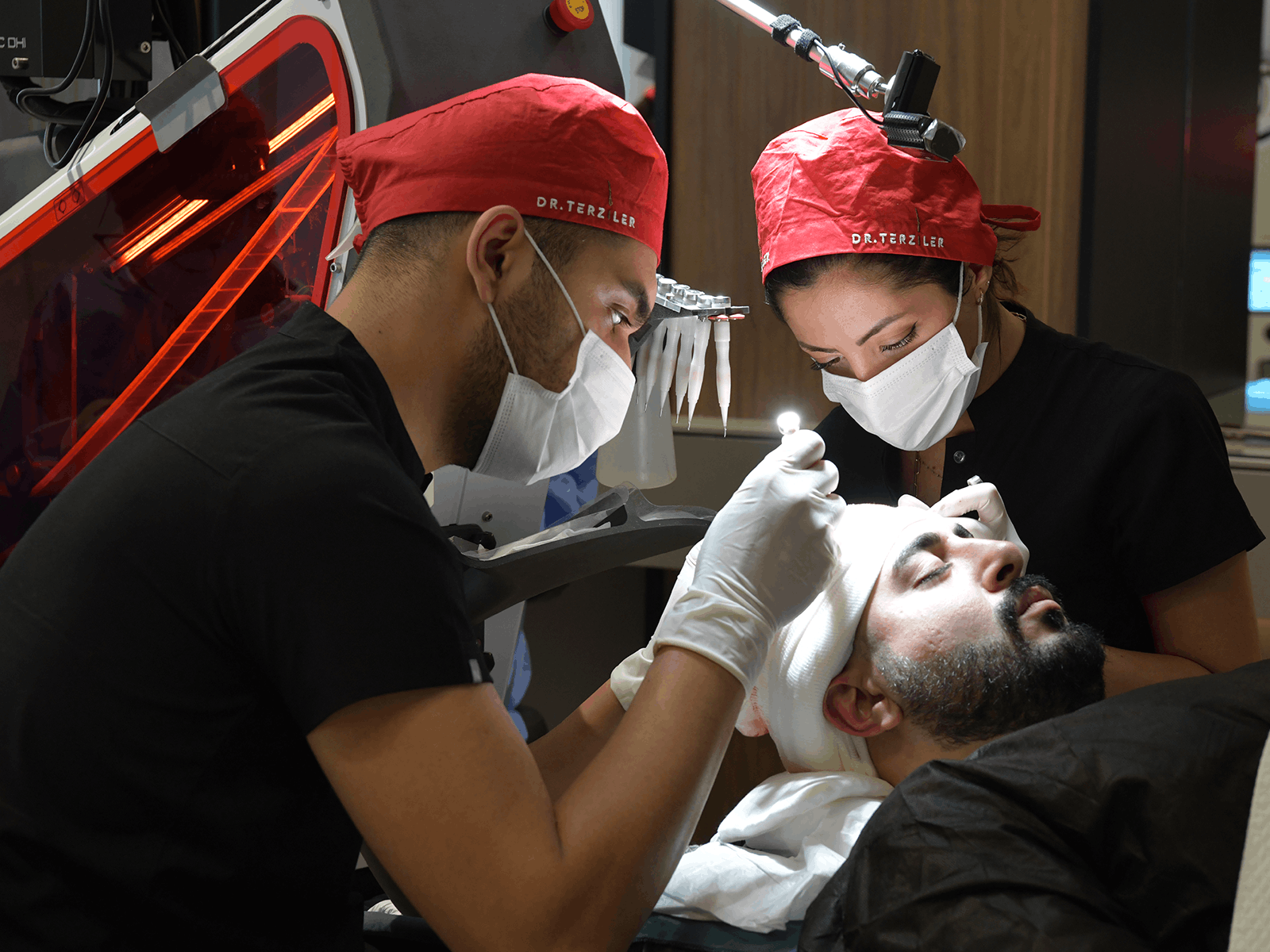
Robotic Hybrid DHI Hair Transplant
What is Robotic Hybrid DHI?
Robotic Hybrid DHI is an advanced hair transplant approach that combines the benefits of the DHI (Direct Hair Implantation) method with robot-assisted analysis technologies within a single procedure. Before the procedure, the current condition of the hair is assessed in detail. A personalised treatment plan is drawn up following an analysis of the donor area’s capacity, the structure of the hair strands, the extent of hair loss and the area to be treated. The healthy grafts harvested are then implanted using the special implanters employed in the DHI technique, ensuring that the natural direction of the hair is preserved. Robotic systems, on the other hand, ensure a high degree of precision, particularly during the planning stages of the operation, thereby helping to achieve a more controlled distribution of grafts. The end result is not just a hair transplant. It is a new hairstyle that complements the face, looking natural and balanced.Why Does the Hybrid Hair Transplant Approach Make a Difference?
In hair transplantation, a single method may not be ideal for every patient. For this reason, the approach adopted by Dr Terziler Hybrid Hair Transplant This approach aims to evaluate the advantages of different techniques within the same plan, tailored to the individual’s needs. In robotic hybrid DHI procedures, technology is not merely a tool that facilitates the operation. It is also a vital aid that supports accurate planning. Many stages – such as determining the areas from which grafts will be harvested, planning the density, establishing the frontal hairline and assessing the direction of implantation – are shaped by personalised analyses. Thanks to this approach;- the natural direction of the hair can be preserved,
- transitions that blend more naturally with your existing hair can be created,
- grafts can be distributed more evenly,
- The aesthetic appearance can be enhanced.
The Benefits of Robotics
Modern hair transplant technologies help ensure that procedures are carried out in a more planned and controlled manner. The support systems used in Robotic Hybrid DHI offer a high degree of precision, particularly during the analysis and planning stages. However, hair transplantation remains a cosmetic procedure that requires the expertise of a doctor. Because no technology;- facial anatomy,
- a person’s ageing process,
- the natural texture of your hair
Robotic Hybrid DHI at a Glance
| Feature | Contribution Made |
| Robotic analysis | More precise planning |
| DHI implantation | Helps to preserve the hair’s natural direction |
| Hybrid Hair Transplant | A personalised operational plan is drawn up |
| Capacity planning | A more balanced distribution of grafts |
| Supervision by a specialist doctor | Ensuring the process is carried out in accordance with medical standards |
| Long-term follow-up | Regular assessment of hair growth |
Where Natural Beauty Begins: The Hairline
The human eye notices the hairline first. For this reason, one of the most important stages in a successful hair transplant is the planning of the hairline. In robotic hybrid DHI procedures, when creating the hairline, consideration is given not only to the current appearance but also to how the person will look years from now. The bony structure of the face... Forehead width... The direction of the existing hair... The capacity of the donor area... They are all considered together. The resulting design is personalised. Because standard hairline styles don’t look natural. What is natural is what belongs to the individual.A Transparent Process, Measurable Planning
One of the common questions on the minds of many people considering a hair transplant is whether the number of grafts planned for the procedure is actually implanted. For this reason, in the Robotic Hybrid DHI approach, it is not only the procedure itself that is important, but also the transparent management of the process. The robot-assisted systems used during surgery are supported by technologies that aid in the planning of grafts and the recording of surgical data. This allows the surgical process to proceed in a more controlled manner, whilst enabling both the patient and the medical team to monitor every stage of the operation. The approach adopted at Dr Terziler Exclusive Clinic is based on recording the data obtained throughout the procedure and sharing it with the patient at the end of the process. In this way, hair transplantation ceases to be merely a procedure assessed by visual inspection; it becomes a professional process whose planning and execution can be monitored. Technology is not merely a factor that simplifies operations here. It is also an important support system that reinforces a sense of trust.A Comfortable Surgical Experience
A significant proportion of people who put off having a hair transplant believe they will feel pain during the procedure or that they will have to endure an uncomfortable experience for many hours. However, thanks to advances in medical practice, the procedure can now be carried out in a much more controlled manner than in the past. In robotic hybrid DHI procedures, the patient’s general state of health is assessed prior to the operation and an appropriate anaesthesia plan is drawn up. Where deemed necessary, sedation options may also be considered to help the patient feel more comfortable during the procedure. Monitoring the patient’s vital signs throughout the procedure is a key aspect of surgical safety. This ensures that medical standards are upheld and that the patient feels more secure. A comfortable operation does not simply mean feeling at ease during the procedure. It can also have a positive impact on the recovery process following the operation.Why is Post-Operative Follow-Up Important?
The success of a hair transplant is not limited to the day of the operation. The real process begins once the transplanted grafts have settled into their new locations and the hair enters its growth phase. For this reason, at Dr Terziler Exclusive Clinic, post-operative follow-up is regarded as a natural continuation of the treatment. Starting with the initial wash, care advice is provided, the recovery process is regularly assessed, and the hair’s progress is monitored at regular intervals. Where necessary, supportive recommendations aimed at protecting existing hair are also incorporated into the plan. Following closer monitoring during the initial days, the hair’s growth process is assessed through check-ups carried out at 1, 4, 7, 12 and 18 months. This is because a successful hair transplant depends not only on the quality of the procedure, but also on the correct post-operative guidance.The Advantages of Robotic Hybrid DHI
| Advantages | Benefits Provided |
| Robot-assisted analysis | It ensures a high degree of precision in operational planning. |
| The Hybrid Hair Transplant Approach | It helps to create a personalised plan tailored to the individual’s needs. |
| DHI implantation technique | It facilitates the controlled placement of grafts. |
| Planning the natural hairline | The aim is to achieve an aesthetic appearance that is in harmony with the anatomy of the face. |
| Supervision by a specialist doctor | The entire process is managed in accordance with clinical standards. |
| Regular monitoring programme | Hair growth is assessed over the long term. |
Who is Robotic Hybrid DHI suitable for?
Robotic Hybrid DHI can be considered a suitable option for many people experiencing hair loss who have a sufficient donor area and are aiming for a natural-looking hair transplant. In particular;- Those experiencing male-pattern hair loss,
- Those with a problem of regional thinning,
- For those who wish to reshape their hairline,
- Those looking to add volume to their existing hair,
- Those wishing to undergo a personalised hair transplant using technological planning,
Experience the Technology, Feel the Naturalness
A successful hair transplant cannot be explained solely by the equipment used. Similarly, experience alone is not enough. True success emerges where the precision offered by technology meets expertise. Robotic Hybrid DHI is an approach developed precisely on this principle. By combining robotic analysis systems, the DHI implantation technique and personalised Hybrid Hair Transplant planning within a single procedure, the aim is to achieve a natural appearance, balanced density and aesthetic harmony. Every hair transplant carried out at Dr Terziler Exclusive Clinic is planned individually, taking into account the patient’s hair structure, facial anatomy and expectations. Because every head of hair is different; so too must every treatment plan be. If, as you look forward to your new hair, you are aiming for a design that will retain its natural appearance not just today, but also when you look in the mirror years from now, you can obtain detailed information about Robotic Hybrid DHI from our team of experts and begin a personalised assessment process tailored to your hair type.Questions You May Have
Robotic DHI is a version of the DHI technique enhanced by advanced robotic implantation technology. This allows for more controlled and precise planning of graft placement.
Men and women who are experiencing hair loss, have a sufficient donor area and are deemed suitable for a hair transplant may benefit from Robotic DHI treatment following an assessment by a specialist.
This may vary depending on the technique to be used and the area to be treated. The most suitable method for the patient is determined following a consultation.
As the procedure is carried out under local anaesthetic, you will not feel any pain during the operation. Any slight tenderness that may occur afterwards usually subsides within a short time.
The first new hairs usually begin to appear within the first few months following the operation. However, it may take around 12 months for the final results to become apparent, depending on the individual’s hair growth cycle.
Hair follicles taken from a healthy donor area tend to be permanent. However, the success of a hair transplant can vary depending on a number of factors, such as the individual’s genetic makeup, lifestyle, hair care habits and adherence to post-operative advice.
Your journey begins today.
Contact us for a free, personalised consultation. Our team of experts will be by your side every step of the way.