Sapphire FUE Hair Transplant Turkey: Method, Results and Modern DHI Alternatives
Sapphire FUE hair transplant in Turkey is a FUE refinement that uses sapphire blades to open recipient channels after follicles are extracted one by one. Dr. Terziler Exclusive Clinic explains Sapphire FUE because patients still search for it, but the clinic now guides suitable patients toward Manual DHI, Robotic DHI or Picasso Robotic DHI after donor mapping, hairline design and medical review. This guide explains what the sapphire blade changes, which patients may be considered for Sapphire FUE, why the clinic now prioritises DHI-based pathways, and how technique choice should follow donor and recipient assessment rather than marketing labels.
Everything that matters about Sapphire FUE, in 10 patient-first points
- Sapphire FUE is not a different extraction method; it is a FUE refinement where sapphire blades are used for recipient-channel opening.
- Dr. Terziler no longer positions Sapphire FUE as the active surgical pathway; current plans are built around Manual DHI, Robotic DHI and Picasso Robotic DHI where medically suitable.
- The sapphire blade can create smoother V-shaped channels than steel, but it does not reduce graft out-of-body time the way direct implantation can.
- Technique choice should depend on donor reserve, hairline design, graft count, shaving preference, skin type, previous surgery history and long-term hair-loss planning.
- Sapphire FUE may suit broad shaved coverage in selected cases, while DHI-based planning may be preferred when direct implantation, no-shave planning or placement between existing hairs is a priority.
- Published FUE safety guidance and ISHRS warnings make one point clear: doctor responsibility and donor management matter more than a marketing name.
- Prices should not be sold as a fixed per-graft menu; a written quote should follow medical assessment and donor mapping.
- Recovery is measured in days for visible healing, but final hair calibre and density mature over 12 months or longer for curly/coily hair.
- Before/after comparison should focus on hairline softness, donor homogeneity, temple transition and month-12 density, not just an early dense front photo.
- If you are comparing Sapphire FUE in Turkey today, ask how Sapphire FUE, DHI and Robotic DHI differ for donor management, recipient-site creation, graft handling and your specific design goals.
TIBBİ AÇIDAN İNCELENMİŞTİR
Dr. Servet Terziler, MD
AACI-accredited hair-restoration surgeon • ISHRS workshops faculty • founder & president of TUSATDER • inventor of the Picasso Robotic DHI machine • European Property Awards Best Hair Transplant Clinic in Europe.
Last clinical update: August 2026
What Is Sapphire FUE Hair Transplant in Turkey?
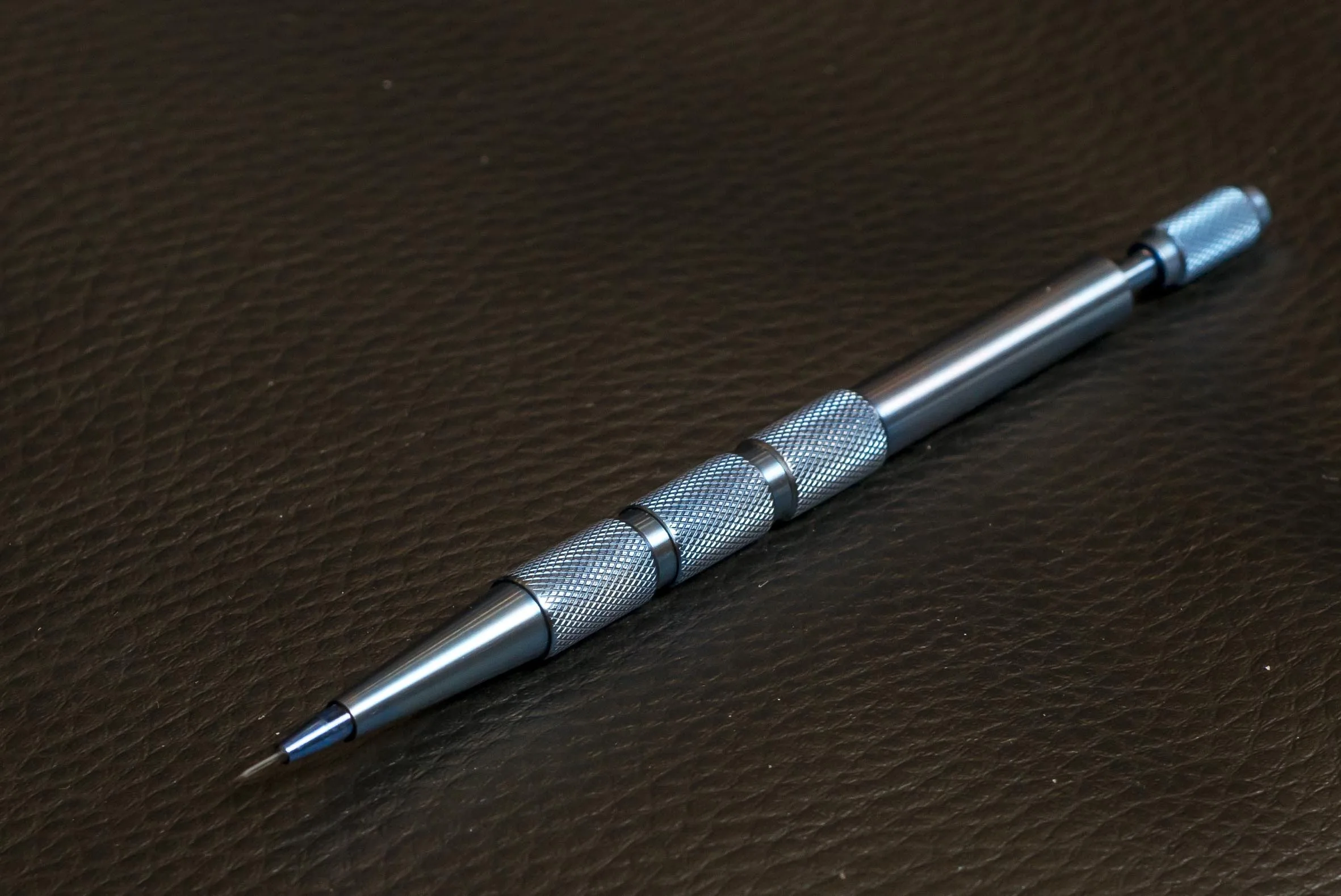
Sapphire FUE is a Follicular Unit Extraction hair transplant in which the surgeon opens the recipient channels with synthetic-sapphire blade tips instead of steel scalpels. Sapphire blades are hard synthetic-crystal instruments used to create recipient sites. Blade geometry, size and insertion angle can affect the amount of tissue disrupted, but clinical healing and outcome differences depend on technique and patient factors.
The FUE technique itself dates to the early 2000s, and sapphire blades became popular in Turkey because they offered a cleaner channel-opening story than standard steel blades. For patients comparing Türkiye’de saç ekimi, the key detail is this: Sapphire FUE changes the channel blade, while DHI changes the implantation workflow. Dr. Terziler previously used sapphire-blade planning, but now prioritises DHI-based methods where direct implantation, hairline angle control and donor strategy create a better fit.
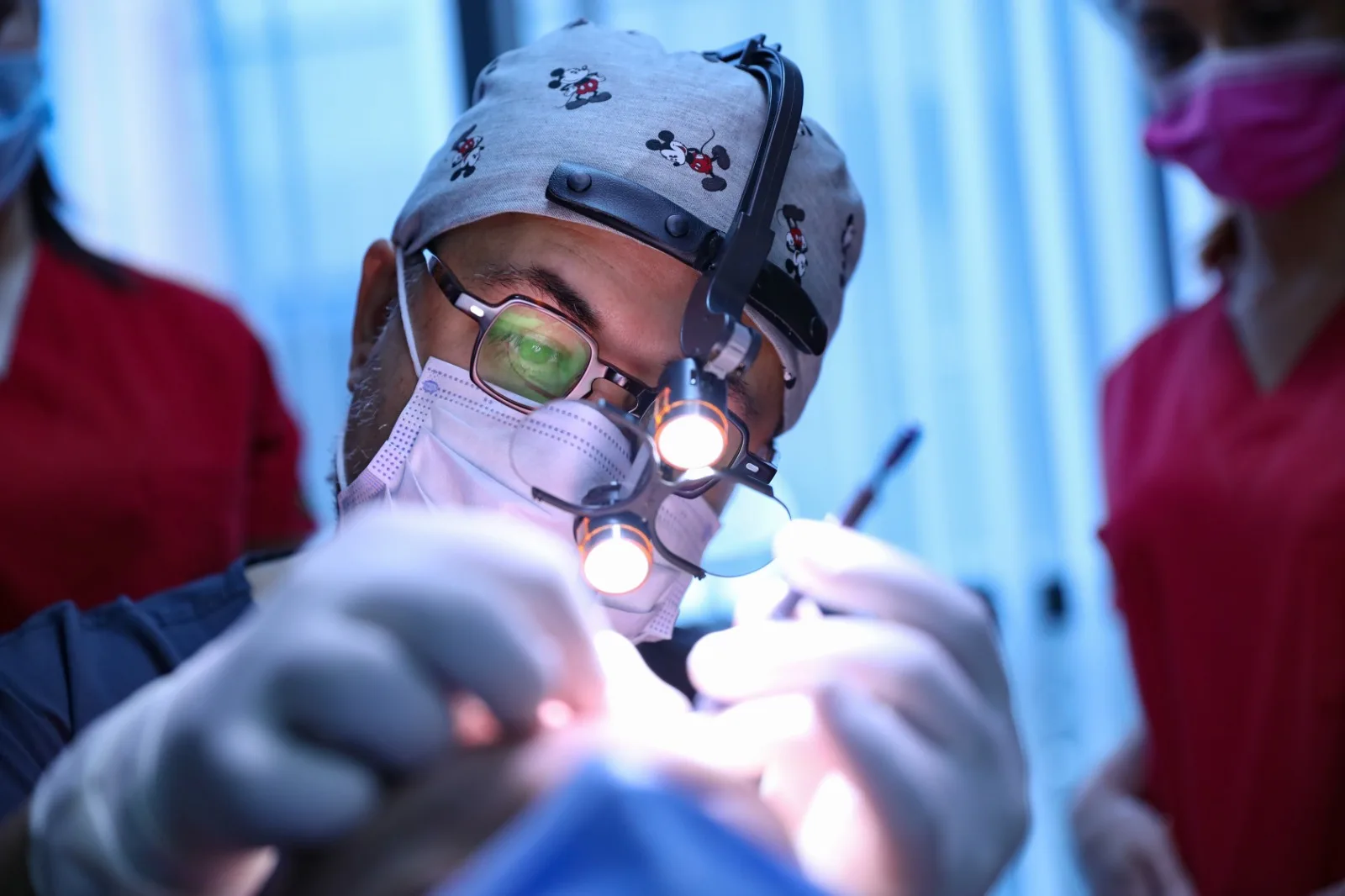
Watch the doctor-led explanation as supporting context, then use this written guide as the current clinic position: Sapphire FUE is educational at Dr. Terziler, while active treatment planning is directed toward DHI-based techniques when medically suitable.
Why Did Dr. Terziler Move Beyond Sapphire FUE?
Dr. Terziler Clinic now prioritises DHI-based techniques in many cases because Sapphire FUE changes recipient-channel creation, whereas DHI-based workflows also change the implantation step. Technique selection still depends on: graft handling time, implantation between existing hairs, unshaven planning, female diffuse thinning, Afro follicle curvature, repair surgery and robotic angle control.
Sapphire FUE is a refinement of channel-based FUE using sapphire blades instead of conventional steel blades. The limitation is that the method still separates extraction, channel opening and implantation. Once the clinic developed stronger direct-implantation pathways, the more patient-centred question became: which technique protects the graft, the donor area and the final hairline best for this individual?
Useful when direct implantation and controlled graft placement without a separate channel-opening phase are priorities.
Designed to support planning consistency, angle/depth control and a technology-assisted implantation workflow. See the Robotic DHI hair transplant guide.
Clinic premium pathway for complex hairline design and individualized aesthetic planning.
Is Sapphire FUE Still a Good Technique in 2026?
Sapphire FUE can still be a good educational benchmark in 2026, but it is not automatically the best clinical choice. It may suit broad shaved coverage in experienced hands, while DHI or Robotic DHI may be preferred for direct implantation, no-shave planning, implantation between existing hairs or certain repair cases.
Sapphire FUE is not inherently inferior; it addresses the recipient-channel step with a different blade material and geometry. DHI-based techniques use a different implantation workflow, so the appropriate method depends on the patient and surgical plan. This is why the consultation should begin with diagnosis and donor mapping, not with a pre-sold technique label.
What Does the Sapphire Blade Actually Change?
The sapphire blade changes the recipient-channel opening step, not the entire hair-transplant procedure. It may create smoother V-shaped channels than steel, but follicle extraction, graft sorting, donor limits, anaesthesia, implantation skill and aftercare still determine the real outcome.
| Değişken | Standard FUE (steel) | Sapphire FUE |
|---|---|---|
| Blade material | Stainless surgical steel | Synthetic single-crystal sapphire (Al₂O₃) |
| Channel shape | U-shaped slit, 0.8-1.5 mm | V-shaped, 0.7-1.3 mm |
| Recipient-site tissue injury | Depends on blade geometry, size and insertion angle | PMID 33599101 mathematically found the 30° sapphire blade produced the smallest calculated wound surface area among the shapes tested |
| Edge retention | Instrument-dependent | Instrument-dependent; not established by PMID 33599101 |
| Bleeding during channel opening | Varies by site design, anaesthesia and technique | Varies by site design, anaesthesia and technique |
| Early crusting | Patient- and technique-dependent | Patient- and technique-dependent |
| Visible recipient-site healing | Varies by incision count, skin response and aftercare | Varies by incision count, skin response and aftercare |
| Positioning | Older baseline FUE | Often sold as a premium FUE variation; not an active Dr. Terziler pathway |
Published literature supports that blade geometry and insertion angle can affect calculated recipient-site tissue injury, but it should not be used to oversell Sapphire FUE as the best option for every patient. The bigger clinical question is whether a separate channel-opening technique or a direct-implantation technique gives your grafts a better survival environment and your hairline a better angle plan.
Is Sapphire FUE or DHI Better for You?
DHI is usually better for patients who need direct implantation, hairline precision, no-shave planning, female density work or shorter graft handling time; Sapphire FUE historically made more sense for broad shaved coverage when a separate channel-opening phase was acceptable.
| If you want… | Choose Sapphire FUE if… | Choose DHI / Sapphire DHI if… |
|---|---|---|
| Maximum grafts in one day | You need 3,000-5,500+ grafts | You need 1,500-3,000 grafts |
| A natural hairline above all | Less critical; sapphire still gives clean angles | It is the absolute priority |
| No shaving | Limited; partial unshaven is possible | Fully unshaven possible |
| Female pattern restoration | Rarely first choice | First choice for women |
| Lowest price | Slightly cheaper than DHI | 5-15% premium over Sapphire FUE |
| Norwood 5-7 coverage | Strong in the toolkit | Possible but slower |
Decision rule: If your scalp shows Norwood 1-3, if you are female with diffuse thinning, or if your main concern is a soft natural hairline, compare Türkiye'de DHI saç ekimi before choosing any FUE-based method. Large shaved cases can still be discussed through an FUE lens, but Dr. Terziler now confirms the active technique only after donor mapping and medical assessment.
Aşağıdaki durumlarda Sapphire FUE yöntemini tercih edin:
you are researching an older broad-coverage method, accept shaving, and want to understand how sapphire channel creation compares with standard FUE before receiving a modern recommendation.
Aşağıdaki durumlarda DHI'yi tercih edin:
you want direct implantation, a refined hairline, a no-shave option, female density planning or a repair strategy where angle control and graft handling matter more than the channel-blade material.
How Does Sapphire FUE Compare With FUE, DHI and Robotic DHI?
Patients often mix up these three terms. Here is the disambiguation nobody else publishes clearly.
- Sapphire FUE: follicular units are extracted one by one, recipient channels are opened with sapphire blades, and grafts are placed afterward. It is best understood as an older FUE refinement; see the FUE hair transplant guide for broader comparison.
- Sapphire DHI: extraction with punches, implantation with a Choi implanter pen that has a sapphire-tipped 0.70 mm needle. Single-step process, no separate channel-opening phase. Ideal for high-density hairlines and unshaven cases.
- Robotic DHI: Dr. Servet Terziler’s in-house robotic platform supports planning consistency, Choi-pen depth, angle and direction control. It is the clinic’s preferred advanced pathway for many patients who arrive after researching Sapphire FUE.
If you have a Norwood 5-6 pattern but still care about frontal softness and long-term donor safety, the consultation should compare large-area coverage with Robotic DHI planning instead of assuming that Sapphire FUE is the default.
Which Techniques Does Dr. Terziler Currently Prioritise Over Sapphire FUE?
Dr. Terziler Clinic currently prioritises Manual DHI, Robotic DHI and Picasso Robotic DHI for many patients because these methods use a direct-implantation workflow and can support different shaving, placement and design strategies. Sapphire FUE remains a valid technique category, but it is not the clinic’s primary active pathway.
Picasso Robotic DHI is the clinic’s most advanced artistic pathway and is explained separately on the Picasso Robotik DHI page. Patients who mainly want discretion should also compare the tıraş edilmemiş saç ekimi pathway before asking for any FUE-based procedure.
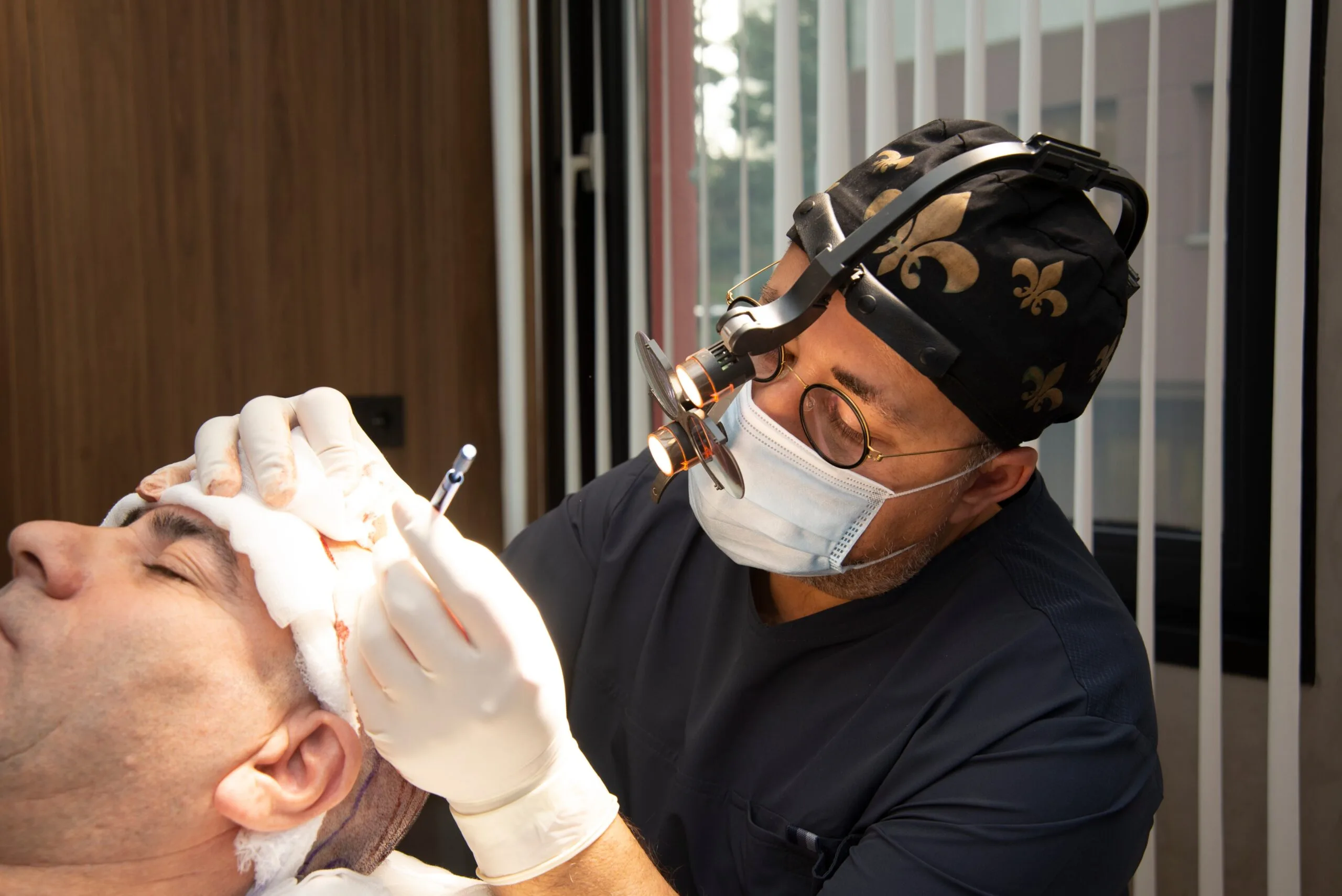
Who Invented the Sapphire Blade for Hair Transplant?
Synthetic sapphire blades have been used in ophthalmology and microsurgery since the 1980s. Their introduction to hair-transplant recipient-site creation is generally credited to Turkish surgeons in the 2014-2016 window, with rapid adoption across Istanbul. The blades are manufactured by industrial sapphire growers in Russia and Switzerland; clinics source them from medical-grade suppliers.
Dr. Terziler Exclusive Clinic uses 0.7-0.9 mm sapphire blade tips and a 0.70 mm sapphire-tipped Choi implanter specification. The blade may come from a Swiss cleanroom, but the results come from the hands that hold it. Dr. Servet Terziler went one step further and invented the Picasso Robotic DHI machine, the clinic’s proprietary Robotic DHI platform using its own implantation workflow.
What Is the Physics of Sapphire Blade Geometry in V-Cut vs U-Cut Channels?
Synthetic sapphire (Al₂O₃) has a Mohs hardness of 9, second only to diamond. Surgical steel sits at 4.5-5. Sapphire is a hard material, but consistency of channel depth and angle still depends on instrument design, insertion angle and surgeon technique.
The V-shaped tip creates a channel where the walls converge at the base. Different blade geometries create different wound shapes. Experimental and mathematical literature suggests geometry and insertion angle can change the amount and depth of tissue disruption; this does not by itself establish a universal clinical advantage for sapphire over all steel instruments.
PMID 33599101 is a mathematical wound-surface-area analysis, not a clinical study of follicular damage, COX-2 expression, swelling or pain. A separate 2023 laser-Doppler study comparing sapphire and handmade razor recipient-site instruments in 12 men reported less tissue damage with the handmade razor blade. For that reason, this page does not present sapphire as universally less traumatic than steel; instrument geometry, site design and surgeon technique all matter.
V-Channel (Sapphire) vs U-Channel (Steel) — cross-section
Converging channel geometry. Tissue effect depends on blade size, insertion angle, scalp characteristics and technique.
Different channel geometry; clinical effects depend on instrument dimensions, angle, site design and placement technique.
Source: PMID 33599101 — mathematical comparison of recipient-site blade shapes and insertion angles; it does not report no fixed clinical percentage reported clinical follicular-damage rates.
How Was Sapphire FUE Planned Step by Step at Dr. Terziler?
A safe Sapphire FUE plan began with diagnosis, donor mapping and hairline design before any extraction or channel opening. Today, Dr. Terziler uses the same planning discipline to decide whether a modern DHI-based technique is safer or more aesthetic for the patient.
Pre-op Consultation
Trichoscopy of donor and recipient zones, Norwood/Ludwig staging, density mapping in FU/cm², hairline drawn with your input.
Donor Preparation
Donor zone shaved to 1 mm. Recipient area may be shaved or partial-unshaven depending on the plan. Standardised photographic baseline taken.
Local Anaesthesia
Cooled lidocaine and epinephrine micro-injections delivered with a vibrating wand. Local anaesthesia is used; discomfort varies by patient and is typically greatest during anaesthetic administration.
Graft Extraction
0.7-0.9 mm motorised punches harvest follicular units from the safe occipital zone. Donor removal capped at 22 FU/cm² to preserve density.
Graft Sorting
Under 10x stereomicroscope. Singles, doubles and 3-4 hair units separated and stored at 4°C in HypoThermosol or saline.
Channel Opening with Sapphire Blades
0.7-1.3 mm V-shaped channels at 40-42° angles matching native hair direction. Hairline channels use a tighter angle for natural softness.
Implantation
Singles to the front line, 2-hair units in the transition zone, 3-4 hair units mid-scalp and crown. Forceps placement, no graft drying.
Closure and Post-op
Saline rinse, antibiotic spray, PRP scalp massage, post-op headband, multilingual aftercare brief. Total time for a 3,500-graft Sapphire FUE: about 6-7 hours including a lunch break.
What Is the Sapphire FUE Recovery Timeline Day by Day and Month by Month?
Sapphire FUE recovery is usually mild after local anaesthesia, but healing still depends on incision count, density planning, medical history and aftercare. For pain-specific expectations, compare this with the does hair transplant hurt guide before booking.
| Day | What happens / what to do |
|---|---|
| Day 0 (op day) | Channels open, grafts implanted. Mild stinging when anaesthesia wears off (3-4 hours post-op). Sleep on back at 45°. Take prescribed antibiotic and anti-inflammatory. |
| Day 1 | Forehead swelling begins and peaks Day 2-3. Apply the headband as shown. Donor area looks like fine pink dots, not visible at 1 m. |
| Day 2-3 | Swelling peak. Some light bruising under the eyes fades by Day 5. Keep sleeping on back at 45°. |
| Day 3 | First medical wash at the clinic. PRP scalp massage and antibiotic spray. From Day 4 you wash at home with the supplied gentle shampoo. |
| Day 5-7 | Crusts soften and fall off naturally between Day 8 and 14. Do not pick them. Donor area essentially invisible at 50 cm. |
| Day 7 | Most office-based patients return to work. Wear a loose hat outdoors against sun. Light walking only, no gym. |
| Month | What happens |
|---|---|
| Week 2-6 | Shock loss may occur as transplanted shafts shed while the follicle remains beneath the skin; the extent varies by patient. |
| Month 3-4 | First fine, baby-soft hairs emerge, often lighter in colour. |
| Month 6 | 50-60% of final density visible. |
| Month 9 | Texture matures, shafts thicken, pigment normalises. |
| Month 12 | Most visible growth is present for many patients, while calibre and texture can continue to mature. |
| Month 18 | Final result for curly, coily, Afro or very thick hair textures. |
How Much Does Sapphire FUE Cost in Turkey Compared With the USA, UK and Germany?
Sapphire FUE cost in Turkey should be treated as a market reference, not a Dr. Terziler price list, because the clinic no longer quotes Sapphire FUE as its active treatment pathway. Patients receive a personalised Manual DHI, Robotic DHI or Picasso Robotic DHI recommendation after donor mapping, graft planning and medical review.
If you are researching price, use the hair transplant cost in Turkey guide for transparent cost education, then request a written plan. The lowest Sapphire FUE offer is not automatically the safest plan; the quote should explain who performs the operation, what technique is actually used, what aftercare is included and how donor limits are protected.
| Soru | Best patient-safe answer | What to do next |
|---|---|---|
| Can I get a fixed Sapphire FUE price? | No clinic should confirm a final surgical plan before donor mapping, hair-loss diagnosis and graft-count planning. | Send photos for assessment. |
| Does Dr. Terziler publish Sapphire FUE package prices? | No. Sapphire FUE is educational here; active package scope is confirmed for DHI-based plans after review. | Use WhatsApp or the contact page. |
| What affects the final quote? | Technique, donor reserve, hairline design, graft requirement, hotel needs, aftercare and whether repair work is required. | Ask for a written plan, not a per-graft guess. |
| Should I compare packages? | Yes, but compare what is included medically: doctor involvement, anaesthesia, first wash, aftercare kit and follow-up. | Review the cost guide for context. |
How Is Recipient Density Planned Safely in Hair Transplantation?
Recipient density must be planned around local vascularity, hair calibre, graft size, donor reserve and tissue characteristics. Very dense packing can increase competition for blood supply and may increase survival for a number that looks good on a treatment plan but fails under a trichoscope 12 months later.
| Density (FU/cm²) | Survival at 12 mo | Notlar |
|---|---|---|
| 20-30 | 100% | Standard for blended infill |
| 30-40 | 98-100% | Typical hairline density |
| 40-50 | 94-97% | Maximum safe density at Dr. Terziler |
| 50-60 | 84-90% | Aggressive; vascular supply struggles |
| 60+ | <80% | Diminishing returns; visible thinning later |
Planned density is individualized rather than treated as a universal ceiling. In selected cases, clinic protocols may target higher frontal density, but safe planning depends on recipient-site vascularity, donor reserve, hair calibre, graft size and surgeon assessment. If a clinic quotes a fixed density as standard for everyone, ask how that target was chosen and how outcomes are documented.
What Are the Different Hair Types for Sapphire FUE?
Sapphire FUE can be discussed for many hair types, but it should not be treated as the first answer for every patient. Female diffuse thinning, Afro or coily follicles, and privacy-sensitive cases often need a DHI or Robotic DHI plan instead of classic shaved Sapphire FUE.
Sapphire FUE for women is rarely first-line because it requires shaving. We default to DHI or tıraş edilmemiş saç ekimi options. Read more in the female hair transplant in Turkey guide.
Curly follicles curve under the skin. Sapphire blade angles must follow the curl direction or the shaft kinks and grows incorrectly. Dr. Terziler uses 38-40° channels and waits 18 months for full maturation. Curly and coily patients need individual curl-direction mapping before any technique is chosen.
Sapphire FUE for Afro hair is rarely the first modern choice because tightly curled follicles require curvature-aware extraction, conservative donor planning and keloid-risk screening. See the Afro hair transplant Turkey page for the dedicated protocol.
Lower native density (typically 50-60 FU/cm² vs 70-80 for Caucasian). Coarse shafts mean even moderate numerical density reads as full. Angle and direction mapping become critical.
Who Should Not Choose Sapphire FUE First?
You should not choose Sapphire FUE first if your case depends on no-shave discretion, female diffuse-density work, Afro follicle curvature, previous transplant repair, very refined hairline angles, limited donor reserve or a high-trust robotic planning workflow.
- Women with diffuse thinning: shaving and channel creation can be harder socially and cosmetically than DHI-based planning.
- Afro and tightly curled hair: follicle curvature changes the extraction strategy, not only the channel blade.
- Repair patients: scar tissue, depleted donor supply and wrong angles need a custom plan rather than a standard Sapphire FUE package.
- No-shave patients: unshaven DHI is usually more relevant than classic Sapphire FUE.
Can Sapphire FUE Repair a Previous Failed Transplant?
Yes, Sapphire FUE can repair a previously failed hair transplant, including pluggy hairlines, depleted donor zones and visible FUT scars. The surgeon harvests undamaged donor follicles (often supplementing with beard or body hair via BHT), opens fresh sapphire channels between existing grafts, and rebuilds density and angle. Dr. Terziler completes 60-80 revision cases per year; expect 12-18 months for the result to settle.
What Risks Should You Understand Before Booking Sapphire FUE?
The main risks of Sapphire FUE are not caused by the sapphire blade alone; they come from poor diagnosis, overharvesting, excessive density promises, weak anaesthesia planning, technician-led surgery, graft drying and inadequate aftercare.
- Shock loss weeks 2-6 (near-universal, temporary).
- Folliculitis, small inflamed bumps in 5-10% of patients during the first month, treated with topical antibiotic.
- Numbness in donor or recipient zone, usually resolves within 2-6 months.
- Hypo- or hyperpigmentation around extraction sites in darker skin (Fitzpatrick V-VI). Mitigated with sub-1 mm punches.
- Donor depletion if >22 FU/cm² removed. Permanent. Avoidable with conservative planning.
- Anaesthesia reaction, very rare (0.1%).
- Suboptimal growth or recipient-site stress when density is planned beyond what the local tissue and donor supply can safely support.
- Continued native-hair loss is not blocked by surgery. Finasteride or dutasteride is recommended for medically stable patients.
How Should You Compare Sapphire FUE Clinics in Turkey?
Compare Sapphire FUE clinics by doctor responsibility, donor-limit planning, real before/after evidence, written aftercare, medical registration, transparent technique explanation and whether the clinic is honest enough to recommend DHI or Robotic DHI when Sapphire FUE is not the best fit.
ISHRS guidance warns against misleading advertising and unlicensed personnel. The person designing, extracting and implanting matters.
A clinic should explain that Sapphire FUE changes channel creation, while DHI changes the implantation workflow.
Compare month-12 density and donor appearance, not only early photos, in the clinic’s documented cases.
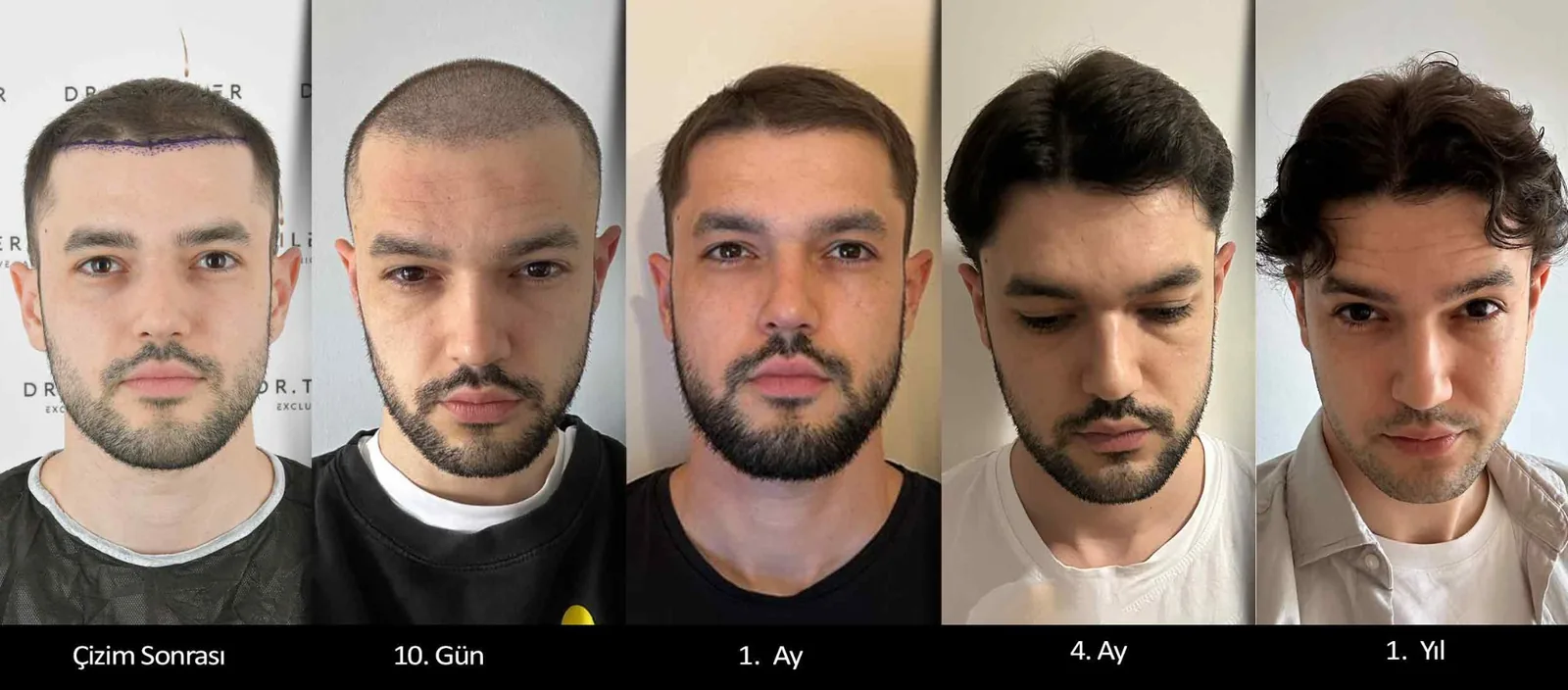
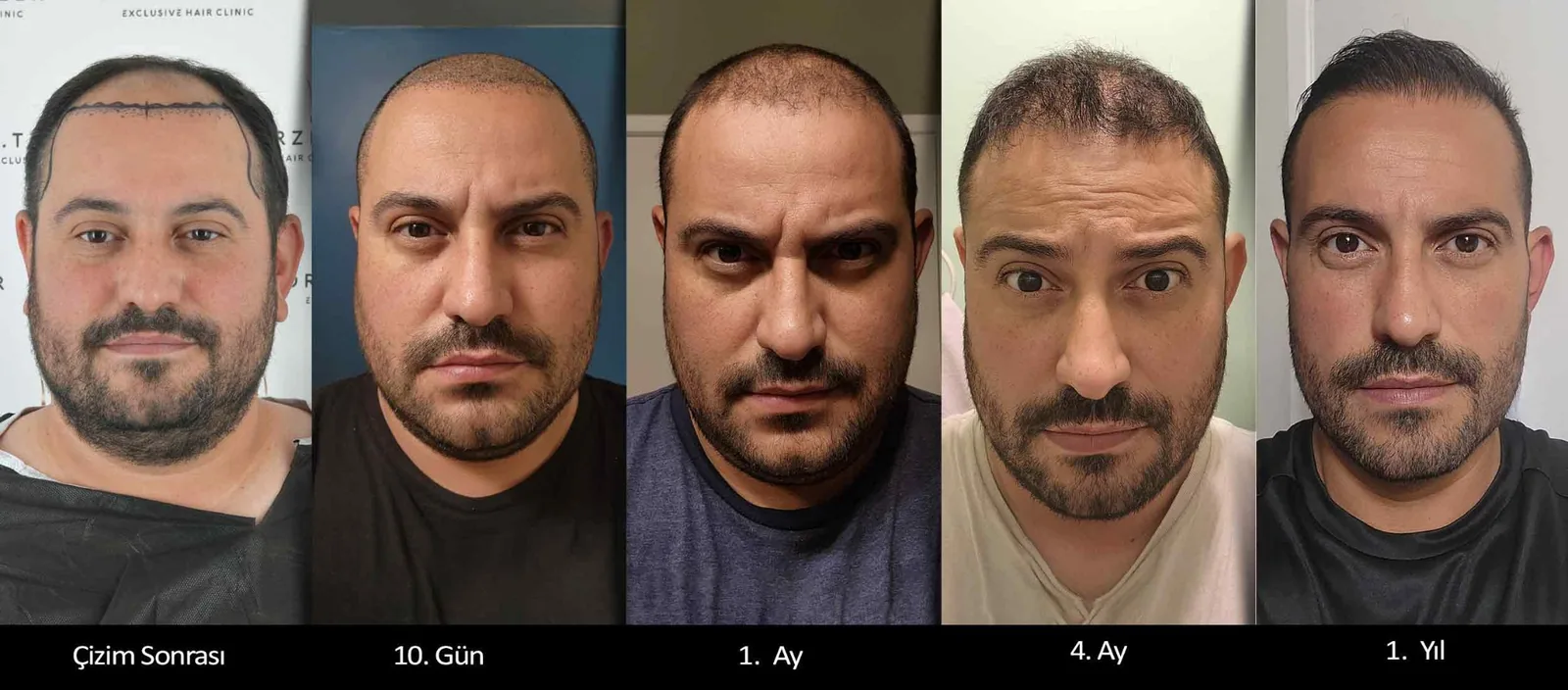
What Do Sapphire FUE and DHI Before and After Results Show?
Before and after results should show natural hairline irregularity, donor homogeneity, age-appropriate density and month-12 maturation. Use them to compare Sapphire FUE education with active DHI and Robotic DHI outcomes, not just to chase the densest early front photo.
What Are the PRP, Exosome and Copper Peptide Adjuncts Combined With Sapphire FUE?
Boosting your result is possible, but each add-on has a different evidence base.
- PRP (platelet-rich plasma): strongest evidence. Adds 12-18% density gain when injected at months 1, 3 and 6. Included in the all-inclusive package.
- Exosomes: emerging evidence. Mesenchymal stem-cell-derived exosomes accelerate the anagen phase. Optional add-on.
- GHK-Cu copper peptide serum: topical, daily, evening. Activates ECM remodelling and reduces TGF-β.
- Finasteride / dutasteride: continue if you were on it pre-op. Stable native hair means a better long-term result.
- LLLT caps: moderate evidence. Optional support during months 3-9.
Why Is Dr. Terziler a Strong Clinic to Consider for Patients Researching Sapphire FUE?
Dr. Terziler is a strong clinic to consider if you are researching Sapphire FUE because the clinic does not force every patient into an older sapphire-blade pathway; it explains the method honestly, then redirects suitable patients toward modern DHI, Robotic DHI or Picasso Robotic DHI planning.
- AACI accreditation. Held by fewer than 3% of aesthetic clinics globally.
- 0.70 mm sapphire-tip Choi pen. Clinic specification; a 0.75 mm pen is referenced only as an industry-standard comparison. Smaller instrument diameter does not by itself guarantee less trauma or higher survival.
- DHI and broader Robotic DHI: 90–97% graft survival. Picasso Robotic DHI is reported separately at 98.1% graft survival at 12 months in the clinic’s internal outcome audit (n=120, clinic-reported).
- Surgeon-led surgery personally performed or supervised, with 35+ years in hair restoration.
- Robotic DHI platform developed in-house for patients who need more advanced planning than classic Sapphire FUE.
- ISHRS workshops faculty ve European Property Awards Best Hair Transplant Clinic in Europe.
What the all-inclusive plan can cover
* Not included: international flights, travel insurance.
Located in Istanbul, Turkey, Dr. Terziler Exclusive Clinic is an AACI-accredited premium hair transplant and medical aesthetics centre. Founded by the “Picasso of Hair,” Dr. Servet Terziler, the team now focuses on modern DHI-based planning rather than selling Sapphire FUE as a default option, providing high-density, natural hair restoration and medical-travel support to international patients.
What Are the Most Frequently Asked Questions About Sapphire FUE?
What is the difference between Sapphire FUE and regular FUE?
Regular FUE opens the recipient channels with steel blades; Sapphire FUE uses synthetic-sapphire blade tips. Sapphire FUE uses sapphire blades for recipient-site creation after FUE extraction. PMID 33599101 mathematically compared blade shapes and insertion angles and found the 30° sapphire blade produced the smallest calculated wound surface area among the shapes tested; it did not report no fixed clinical percentage reported clinical follicular-damage rates or prove faster healing.
Is DHI or Sapphire FUE better?
DHI is usually better for women, unshaven cases, refined hairline work and Norwood 1-3 patterns where placement control is the priority. Sapphire FUE is one option for broad shaved coverage in selected cases. Dr. Terziler now confirms Manual DHI, Robotic DHI or Picasso Robotic DHI after assessment.
How long does Sapphire FUE last?
Permanently. Grafts come from the genetically DHT-resistant occipital donor zone, so transplanted hair keeps its donor characteristics for life. The result is stable past month 12 and continues to thicken slightly until month 18. Native (non-transplanted) hair can still thin and is best protected with finasteride or dutasteride.
Does Sapphire FUE hurt?
No, the procedure itself is painless. Lidocaine anaesthesia is delivered with a vibrating wand to mute the injection. Pain experience varies by patient. Mild stinging or tenderness can occur as local anaesthesia wears off.
How long is recovery from Sapphire FUE?
Most office-based patients return to work on Day 7. The donor area is invisible from 50 cm by Day 7. Crusts drop off by Day 14. Gym is permitted from Day 14. Final result settles at month 12 (month 18 for curly hair).
How many grafts can you get in Sapphire FUE in one session?
Safely: 5,500-6,000 grafts in a single day if donor density supports it. Above 6,000 grafts the surgeon should split across 2 days to protect graft viability. Dr. Terziler caps single-day megasessions at 5,500 except in repair cases.
Can you do Sapphire FUE without shaving?
Partial-unshaven FUE can be possible in selected small cases, but classic Sapphire FUE usually needs more shaving than DHI. For a hair transplant without shaving, ask about unshaven DHI or U-FUE style planning during consultation.
What is the success rate of Sapphire FUE?
Sapphire FUE success depends more on diagnosis, surgeon responsibility, donor planning, graft handling and aftercare than on the blade material alone. A clinic should explain its survival-tracking method and show mature results before you book.
Is Sapphire FUE the same as Sapphire DHI?
No. Sapphire FUE opens recipient channels with sapphire blades, then implants grafts with forceps. Sapphire DHI uses a sapphire-tipped Choi implanter pen that opens the channel and places the graft in one motion. DHI is preferred for unshaven, female and high-density hairline cases.
Can I take finasteride during Sapphire FUE hair transplant recovery?
Yes, if you were on finasteride or dutasteride before surgery, continue without break. These medications protect your native hair from continued miniaturisation. Stopping risks losing native hair around the new grafts and creating visible thinning over the next 12-24 months.
When can I dye, bleach or perm my Sapphire FUE hair?
Wait at least 6 months for chemical treatments. Hair dye is safer than bleach because it operates at lower pH. Avoid permanent waves and chemical relaxers for 12 months. The transplanted shafts are biologically identical to native hair after maturation, so any salon treatment is fine long-term.
Can Sapphire FUE fix a previous failed hair transplant?
Yes, repair work can rebuild density between existing grafts and correct unnatural hairline angles, but repair patients usually need a customised DHI or Robotic DHI assessment rather than a standard Sapphire FUE package. Allow 12-18 months for the result to settle.
Can Sapphire FUE be used for beard or eyebrow transplants?
Yes, FUE principles can be adapted for facial hair and eyebrow work when donor quality is suitable, but facial angle, direction and density planning are more important than the word sapphire.
Is sapphire blade really better, or is it marketing?
Sapphire blades can be genuinely useful for smoother channel creation, but the size of the advantage is often exaggerated in marketing. For most patients, surgeon skill, donor planning, graft handling time and aftercare matter more than blade material alone.
Sources and Further Reading
- PMID 33599101 — “Effect of different shapes of recipient site creation micro-blades” (mathematical comparison of wound surface area by blade shape and insertion angle)
- NIH/PMC — “Follicular Unit Extraction Hair Transplant” (foundational FUE technique)
- NIH/PMC — “FUE Hair Transplant: Curves Ahead” (technical advances)
- ISHRS — Patient Guide to Surgical Hair Loss Treatments
- NIH/NCBI Bookshelf — Hair Transplantation (StatPearls)
- Johns Hopkins Medicine — Platelet-Rich Plasma (PRP) Treatment
- NHS — Hair transplant guidance
- American Academy of Dermatology — hair-loss evaluation guidance