

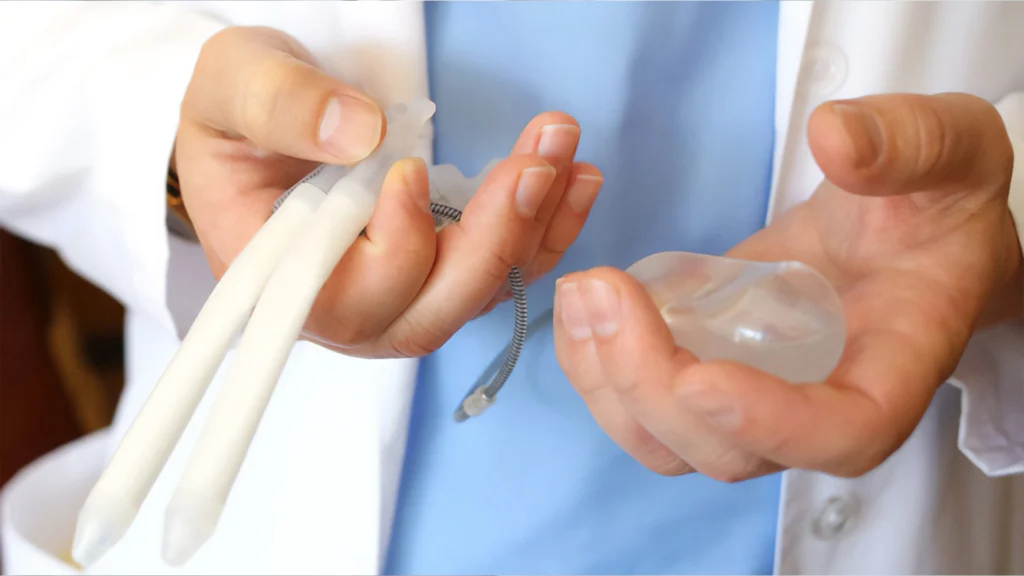
Erectile dysfunction (ED) is a common health problem that seriously affects men’s quality of life and psychosocial well-being. For men who are unable to achieve an erection using medication, injections or other methods, the implantation of a penile prosthesis offers a reliable and permanent solution. Thanks to devices manufactured using advanced technology, this procedure enables natural-looking, satisfying and spontaneous sexual intercourse.
What is a penile prosthesis?
A penile prosthesis is a medical device surgically implanted into the penis to mimic erectile function. One of the most important criteria for the use of a penile prosthesis is that the patient has tried all other known treatments without success. As it is a surgical procedure, it is generally used as a last resort, but it nevertheless provides a high level of satisfaction for both the patient and their partner. There are generally two types of prosthesis: Semi-rigid (mouldable) prostheses: • Made from flexible metal or silicone rods • The penis remains in a semi-erect state, but can be manually positioned up or down • They are easy to use and cheaper, but more difficult to conceal Inflatable (hydraulic) prostheses: • Usually consist of two or three parts • They comprise a pump, a reservoir and cylinders • An erection is achieved by pumping fluid from the reservoir into the cylinders; deflation is also possible • They provide the most natural appearance and feel
How does a penile prosthesis work?
Penile prostheses are devices that mechanically induce an erection. In semi-rigid prostheses, flexible yet sturdy rods inserted into the penis maintain it in a semi-rigid state, and the patient can adjust this manually. In inflatable prostheses, cylinders inside the penis are filled with fluid from a reservoir using a pump located in the scrotum. After sexual intercourse, the fluid is returned to the reservoir via the pump and the penis softens again. This system provides both a natural appearance and a functional erection.
Who is a suitable candidate?
Penile prosthesis implantation is recommended in the following situations: • When oral phosphodiesterase inhibitors (e.g. Viagra, Cialis) are ineffective • When intracavernous injection therapy has failed • In cases of persistent erectile dysfunction caused by psychogenic, neurogenic or vascular factors • In the presence of deformities such as Peyronie’s disease • In cases of erectile dysfunction following diabetes, spinal trauma or prostate cancer surgery
Surgical procedure and recovery
Before the operation, the patient’s medical history is reviewed, a physical examination is carried out and, if necessary, a Doppler ultrasound of the penis is performed. Antibiotic prophylaxis is administered to reduce the risk of infection, and the necessary tests are carried out. The procedure is usually carried out under spinal or general anaesthesia. A surgical incision is made in the scrotum or at the base of the penis, and the selected prosthesis is inserted into the corpora cavernosa. In inflatable models, the pump is placed in the scrotum and the reservoir in the abdominal cavity. The operation takes approximately 1–2 hours. Post-operative recovery is usually rapid – patients are discharged within 24–48 hours. It is recommended to avoid sexual intercourse for approximately 4–6 weeks. Mild pain, swelling and tenderness may be felt during the first few weeks; these usually resolve on their own, and patients are able to return to their daily lives with ease.
The advantages of a penile prosthesis
• High patient and partner satisfaction: Results show a satisfaction rate of 85–95 per cent • Spontaneous sex life: No need for planning or medication • Natural look and feel: Particularly with three-component inflatable prostheses • Long-lasting solution: Prostheses last 10–15 years or longer • Rapid return to function: The prosthesis is ready for regular use following recovery • Uninterrupted social and professional life: The prosthesis does not interfere with daily activities • Personalised solution: Available in different types and sizes to suit individual anatomy
The psychological benefits of a penile prosthesis
The restoration of sexual function provides not only physical recovery but also significant psychological relief. Many men who experience a loss of self-confidence, depression or relationship problems due to erectile dysfunction report significant improvements in their quality of life following the fitting of a prosthesis. Increased partner satisfaction also strengthens the emotional bond between the couple.
Frequently Asked Questions
Does a penile prosthesis cause a loss of sensation? No. The prosthesis simply provides rigidity; sensation, ejaculation and orgasm remain normal. Does it affect urination? No. The prosthesis is not connected to the urethra and does not interfere with urination. Is it visible from the outside? No. Inflatable implants are not noticeable and provide a natural appearance. How long does the implant last? It generally works without problems for 10–15 years or more. If it becomes damaged, it can be replaced. Will my sexual performance improve? The implant restores the ability to achieve an erection. Self-confidence and performance may improve as a result.