

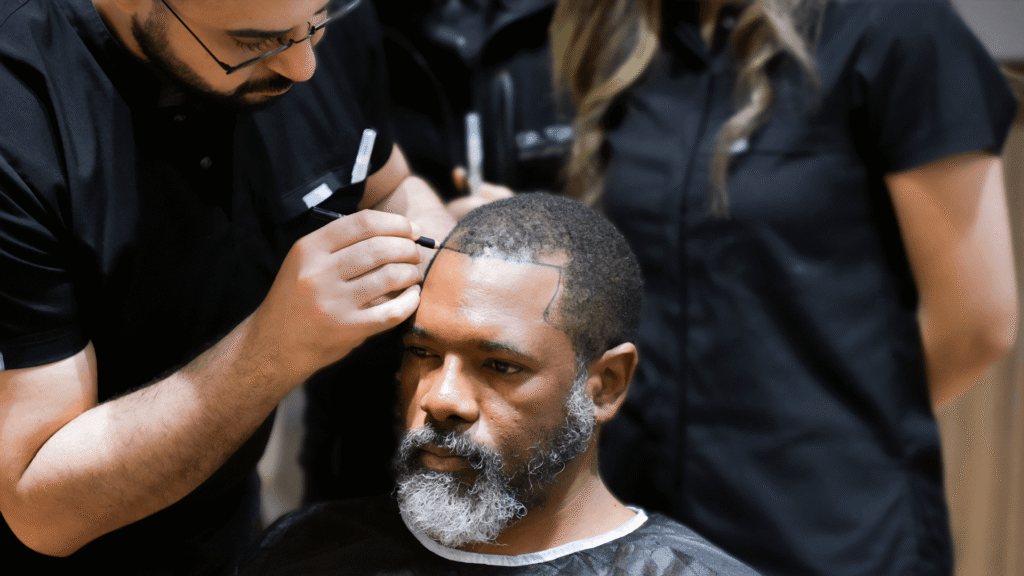
What is DHT?
Dihydrotestosterone (DHT) is a hormone derived from testosterone via the 5-alpha-reductase enzyme. Although it is essential for male development, it can have a negative effect on hair follicles in individuals with a genetic predisposition.
How does DHT affect hair follicles?
DHT causes hair follicles to gradually shrink, shortens the growth cycle and delays regrowth. Over time, this leads to finer, more brittle hair and noticeable hair loss.
Who is most affected?
Men are most commonly affected by DHT-related hair loss, which usually manifests as male-pattern baldness. Women can also be affected, but this typically takes the form of generalised thinning at the crown of the scalp.
Symptoms of DHT-related hair loss
Early signs include a receding hairline, thinning at the crown and a gradual reduction in hair density. In women, this condition usually manifests as diffuse hair loss.
Current treatment options
Treatments include DHT blockers such as finasteride, topical solutions such as minoxidil, low-level laser therapies and, for more advanced cases, hair transplants.
Natural remedies for DHT
Certain natural alternatives, such as palm extract, green tea and pumpkin seed oil, may help to reduce the effects of DHT when incorporated into a healthy lifestyle.
When will the results be announced?
It is well known that anti-DHT treatments generally require 3 to 6 months of regular use to achieve a visible improvement in hair density.
Dr Terziler’s approach
At Dr Terziler Exclusive Clinic, every patient benefits from an advanced diagnostic process and a personalised treatment plan that combines medical innovations, targeted treatments and modern hair restoration techniques to achieve natural and long-lasting results.