
In hair transplantation, the graft survival rate and the patient satisfaction rate are two distinct measures of success. The former counts the number of surviving follicles, whilst the latter assesses the proportion of patients who are satisfied with the result. A procedure may show a 95 per cent success rate in one metric whilst failing in the other.
This content has been reviewed by Dr Servet Terziler for medical accuracy, suitability in terms of hair graft survival, technical comparison and patient safety.
In summary
→ The overall success rate for hair transplants ranges from 85 per cent to 98 per cent, depending on the technique, the surgeon and the type of hair loss.
→ The graft survival rate (per follicle) and the patient satisfaction rate (overall result) are different metrics. Most clinics specify only one of these.
→ DHI achieves a graft survival rate of between 90 per cent and 97 per cent. Robotic DHI can reach up to 97 per cent. FUE and FUT: 90 to 95 per cent.
→ The success rate in the crown area is lower (75 to 90 per cent) due to the radial vortex anatomy and limited vascular support.
→ Success rate in cases of scarring alopecia: 30 per cent to 60 per cent. Frontal Fibrosing Alopecia: 25 per cent to 50 per cent. These conditions can often be confused with standard hair loss.
→ Transplanted grafts are permanent. The surrounding natural hair, however, is not permanent. Medical treatment helps maintain the long-term result.
What Is the Success Rate of Hair Transplantation?
The overall success rate for hair transplantation ranges from 85 per cent to 98 per cent. This range covers all techniques, all types of hair loss and all levels of surgical experience. When the procedure is carried out correctly using DHI implantation by an experienced surgeon, the graft survival rate reaches between 90 per cent and 97 per cent. However, if the procedure is poorly performed by an inadequately trained practitioner, the hair transplant success rate may fall below 70 per cent.
The figure that matters to you depends on what you are asking. There are two different criteria.
Graft survival rate: The percentage of individual follicular units that survive after implantation and continue to produce hair. This is a value measured per follicle.
Patient satisfaction rate: This is the patient’s overall assessment of the result, taking into account density, design, natural appearance and the extent of the hairline. These two figures are not the same.
One patient may have a 95 per cent graft survival rate but may not be satisfied with the result if the hairline design is incorrect. Another patient may have an 80 per cent graft survival rate but may be completely satisfied with the result if the correct grafts have been placed in the correct areas. Most clinics publish graft survival rates. Dr Terziler Exclusive Clinic, however, reports on both criteria.
Would you like a surgeon’s assessment of the success rate of a hair transplant?
Send us photographs of your donor area, your pattern of hair loss and your expectations. Our team can assess the applicable success rate range for you using the appropriate technique.
Get My Success Assessment
What Percentage of Hair Transplants Are Successful?
According to satisfaction surveys from published ISHRS-member clinics, between 85 per cent and 95 per cent of hair transplant procedures yield a result that the patient considers successful. Graft survival rates range from 90 per cent to 97 per cent in experienced hands. The difference between these two rates explains why some patients who have undergone a technically successful procedure may still be dissatisfied with the result. The design is just as important as graft survival.
Would you prefer a quick WhatsApp assessment?
You can ask the clinic team, “What percentage of hair transplants are successful?”, and find out whether your situation falls within the success rate ranges specified in this guide.
What Is the Hair Transplant Success Rate by Technique?
The technique is the most important variable affecting graft survival. The implantation method and hair transplant technique determine the length of time each follicle spends outside the body. This period spent outside the body, known as the ischaemic time, is the key determinant of survival. Shorter ischaemic time = higher survival rate. This is why DHI consistently delivers better results compared to standard channel creation followed by implantation protocols.
| TECHNIQUE | GRAFT SURVIVAL | PATIENT SATISFACTION | RISK OF FAILURE | FACTOR DETERMINING THE RATE |
|---|---|---|---|---|
| FUT (Strip) | 90–95 | 85–92 | Low | Strip quality + donor area quality |
| FUE | 90–95 | 88–93 | Low–Medium | Surgeon’s skill + ATP storage + transection rate |
| Sapphire FUE | 90–95 | 89–94 | Low | Same as FUE; the blade affects channel healing, not graft survival |
| DHI / Choi pen | 90–97 | 91–95 | Low | Minimal ischaemia time thanks to single-step implantation |
| Robotic DHI | Up to 97 per cent | 93–97 | Very low | Extracorporeal time of less than 90 seconds + AI-assisted angulation + ATP storage |
| Robotic FUE (ARTAS) | 88–95 | 85–91 | Medium | Robotic consistency; limited adaptability in complex donor areas |
Would you like a surgeon’s assessment of your hair transplant success rate?
Send us photographs of your donor area, your pattern of hair loss and your expectations. Our team can assess the relevant success rate range for you using the appropriate technique.
Get My Success Assessment
What is the Success Rate for FUE Hair Transplantation?
When performed by an experienced surgeon with a transection rate of less than 5 per cent, FUE hair transplantation achieves a graft survival rate of between 90 per cent and 95 per cent. The transection rate is the percentage of follicles damaged during punch extraction. An expert surgeon maintains the transection rate below 5 per cent in FUE hair transplantation. Inadequately trained practitioners, however, may routinely exceed 15 to 20 per cent and may lose grafts at this rate before they reach the recipient area.
“Transection is not visible to the patient but determines the outcome. A graft that has been severed during extraction looks exactly the same as a healthy graft. You cannot tell by looking at it. You can only tell when the density becomes apparent – or fails to appear – by the 12th month.”
Dr Servet Terziler, M.D. | AAACI Accredited | ISHRS Workshop | Inventor of Robotic DHI
Would you prefer a quick WhatsApp assessment?
You can ask the clinical team, “What is the success rate of FUE hair transplantation?” and find out whether your situation aligns with the success rate ranges specified in this guide.
What is the Success Rate of Sapphire FUE Hair Transplantation?
Sapphire FUE achieves the same graft survival rate of 90–95 per cent as standard FUE. The sapphire blade is used to create the recipient channels, not for graft extraction or implantation. It creates cleaner, narrower V-shaped channels. These channels heal more quickly and help minimise swelling in the recipient area. This enhances the healing experience but does not alter the fundamental biology of graft survival.
Sapphire FUE offers the greatest benefit in hairline procedures where the direction and angle of the channels affect the natural appearance of the hairline. It does not increase graft survival compared to standard steel blades used by an experienced surgeon. The technique should be defined as an advanced form of FUE rather than a distinct procedure category.
Would you like a surgeon’s assessment of the success rate for Sapphire FUE hair transplantation?
Please send photographs of your donor area, your pattern of hair loss and your expectations. Our team can assess the relevant success rate range for you based on the appropriate technique.
Get My Success Assessment
What is the Success Rate of DHI Hair Transplantation?
DHI hair transplantation achieves a graft survival rate of 90% to 97%, which is higher than standard FUE. This is because the Choi implantation pen eliminates the need for a pre-channeling stage. Each graft is extracted and implanted in a single, continuous motion. The ‘ischaemic window’ – the time the follicle spends without blood supply – is reduced from minutes to seconds for each graft.
The Choi pen used at Dr Terziler Exclusive Clinic has a diameter of 0.70 mm. The industry standard is 0.75 mm. This 0.05 mm difference reduces trauma to the recipient site per channel by an estimated 15–20 per cent. This means less competition for local blood supply around each newly implanted graft. Every DHI hair transplant procedure carried out at this clinic is performed personally by Dr Terziler during each session. The ISHRS classifies the use of the Choi pen as a skin incision, which must be performed by a licensed surgeon. According to ISHRS clinical guidelines, implantation by a technician is not permitted.
Would you prefer a quick WhatsApp assessment?
You can ask the clinic team, “What is the success rate of DHI hair transplants?”, and find out whether your situation aligns with the success rate ranges specified in this guide.
What is the Success Rate of Robotic DHI?
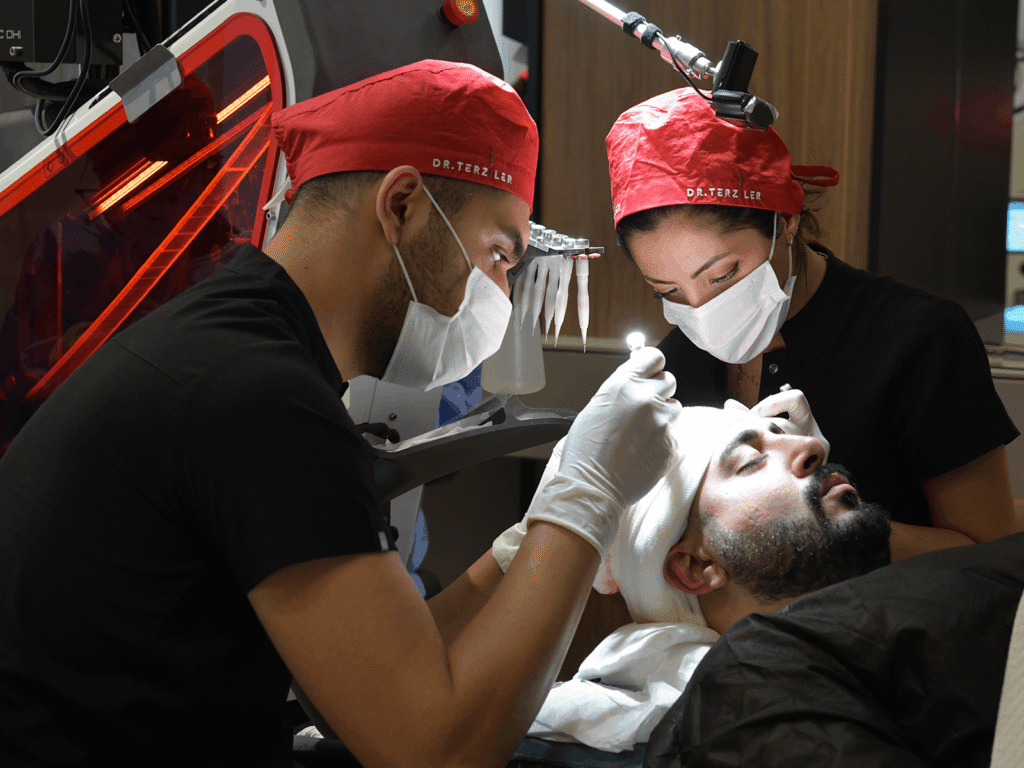
Robotic DHI (Picasso) achieves a graft survival rate of up to 97 per cent – the highest rate among hair transplant techniques currently in clinical use. The Robotic DHI system was developed by Dr Servet Terziler. The system achieves the shortest ischaemia time among current methods, with an average time outside the body of less than 90 seconds per graft.
97%
Maximum graft survival: Robotic DHI | Dr Terziler Exclusive Clinic
ATP-supported graft storage is used as standard protocol in all Robotic DHI sessions. The AI-assisted angulation system ensures consistent placement across thousands of implantation points throughout a session and eliminates the fatigue factor that can affect manual surgeons during procedures lasting 6 to 8 hours. Accuracy decreases by the 7th hour of manual implantation.
Picasso Robotic DHI is a Robotic DHI procedure that incorporates Dr Terziler’s artistic hairline design.
Would you like a surgeon-level assessment of the success rate for Robotic DHI?
Send us photographs of your donor area, your pattern of hair loss and your expectations. Our team can assess the applicable success rate range for you using the appropriate technique.
Get My Success Assessment
What is the Success Rate for Shave-Free Hair Transplants?
Shave-free (or U-FUE / U-DHI) hair transplantation achieves a graft survival rate of between 88% and 95%, which is slightly lower than that of standard shaved procedures. This reduction is not due to a biological limitation of the technique. It stems from the fact that extraction is more difficult. In no-shave FUE, the punch must be aligned around the visible hair shaft without the visual angle provided by shaving. This increases the risk of transection by approximately 3 per cent to 7 per cent compared to an equivalent fully shaved procedure.
For female patients experiencing shorter Norwood I to III-type hair loss, or those seeking targeted hair restoration without exposing the shaved donor area, this trade-off is acceptable. DHI is the preferred technique for non-shaved procedures because single-movement implantation does not require pre-prepared channels. This minimises disruption to the recipient area in regions where existing hair must be preserved.
Would you prefer a quick WhatsApp assessment?
You can ask the clinic team, “What is the success rate for no-shave hair transplants?”, and find out whether your situation aligns with the success rate ranges outlined in this guide.
What Is the Success Rate of FUT Hair Transplantation?
FUT hair transplantation achieves a graft survival rate of between 90% and 95%. As strip dissection is more efficient than individual punch extraction, the strip method provides the highest graft yield—up to 5,000 grafts in a single session. The success rate is primarily determined by the quality of the donor strip. A healthy occipital donor area with high density provides the highest number of viable grafts per cm² of harvested tissue.
FUT leaves a linear scar. In patients with very fine hair or those who keep their hair short at the nape of the neck, this scar should be considered a permanent cosmetic factor. For patients who wish to have the maximum number of grafts in a single session and do not have a planned follow-up session, FUT remains a clinically valid option.
Would you like a surgeon’s assessment of the success rate for FUT hair transplantation?
Please send photographs of your donor area, your pattern of hair loss and your expectations. Our team can assess the relevant success rate range for you using the appropriate technique.
Get My Success Assessment
Success Rate for Hair Transplantation in the Crown Area
The success rate for hair transplantation in the crown area ranges from 75% to 90%. This rate is consistently lower than that for hairline procedures, and there are reasons for this that are unrelated to the technique. The crown area is the most challenging area of the scalp for successful hair transplantation.
Hair in the crown area grows in a radial vortex pattern: multiple directions radiate outwards from a single central point. Each graft placed in the crown area requires a separate decision regarding its orientation. Along the hairline, the angle is generally consistent across the frontal region. In the crown, however, each adjacent graft is positioned at a different angle to the surrounding grafts. This makes crown area transplantation approximately 40 per cent more technically challenging per graft than hairline work.
The second factor is vascular biology. The crown area receives the terminal branches of the scalp’s vascular system. High-density crown region implantation places a strain on local vascular capacity. When graft density exceeds the level that local blood circulation can support, grafts located at the periphery may be lost not due to poor technique, but due to ischaemia resulting from competition for blood supply.
The third factor is androgenetic progression. In patients not receiving DHT-inhibiting treatment, hair loss in the crown area continues. The transplanted grafts are permanent, but the surrounding natural hair is not. When finasteride or dutasteride is discontinued, a successful crown area transplant may appear successful in the first year but less so by the fifth year.
Realistic density expectations in the crown area are 30–40 per cent lower per cm² compared to the hairline. A grafted area on the crown will always appear less dense than the same number of grafts placed in the frontal region. This is not a surgical failure, but a matter of biology. Any clinic promising hairline density in the crown area is either miscommunicating or lacks sufficient knowledge.
Would you prefer a quick WhatsApp assessment?
You can ask the clinic team, “What is the success rate of hair transplants in the crown area?”, and find out whether your situation aligns with the success rate ranges outlined in this guide.
Why Do Hair Transplants Fail?
There are eight documented reasons why hair transplants fail. Most of these are preventable. Only a small proportion represent random biological events beyond the surgeon’s control.
| # | REASON FOR FAILURE | MECHANISM | HOW CAN IT BE PREVENTED? |
|---|---|---|---|
| 1 | High transection rate | The follicle shaft is severed during FUE extraction. The graft has died prior to implantation. | Surgeon’s experience + the correct punch diameter adjusted according to follicle size |
| 2 | Long time spent outside the body | The follicle’s ATP reserves are depleted during storage. The follicle dies before implantation. | DHI technique + HypoThermosol + ATP graft storage solution |
| 3 | Incorrect storage solution | Saline = 0% graft survival on day 5 (Cooley, 2014). Many clinics still use saline as standard. | HypoThermosol + ATP. An indispensable standard at Dr Terziler Clinic |
| 4 | Graft desiccation | Grafts become dehydrated between extraction and implantation. A dry follicle dies. | Continuous saline hydration of grafts throughout the procedure. Operating theatre humidity control |
| 5 | Exceeding vascular capacity | Placing an excessive number of grafts per cm² compresses the surrounding blood vessels. Grafts compete for blood supply. | Controlled density mapping. Maximum density in the crown area: 35–40 grafts/cm² |
| 6 | Technician implantation | ISHRS: Choi pen = skin incision = may only be performed by a surgeon. Technician implantation results in uncontrolled angle, depth and density. | The surgeon performs 100 per cent of the implantation. Verify this prior to booking. |
| 7 | Inappropriate candidate selection | Active scarring alopecia, autoimmune disease, insufficient donor density. Transplantation into areas with active inflammation destroys the grafts. | Full trichoscopy + medical history + scalp biopsy where necessary prior to admission |
| 8 | Perceiving shock loss as a failure | Months 2–4: All transplanted hair falls out. This is the normal telogen effluvium process. It is not a failure. However, patients may panic if they are not informed in advance. | Before discharge, every patient is given a written monthly growth schedule. |
The most common reason for one-star reviews in hair transplants is not treatment failure. It is patients experiencing shock loss between the 2nd and 4th months without having been informed in advance. At this stage, all transplanted hair falls out. The follicles are not dead; they are dormant. Growth resumes between the 4th and 6th months. At Dr Terziler Exclusive Clinic, every patient is given a written growth chart before leaving Istanbul. No patient should panic at the 3-month mark.
Are you looking for a surgeon’s-level answer to why hair transplants fail?
Send us photographs of your donor area, your pattern of hair loss and your expectations. Our team can assess the applicable success rate range for you using the appropriate technique.
Get My Success Assessment
What Is the Hair Transplant Failure Rate?
Clinical failure is defined as a graft survival rate of less than 70 per cent and is observed in fewer than 5 per cent of procedures at ISHRS-member clinics. In non-accredited clinics where technicians perform the implantation, patient complaint studies have reported failure rates of between 20 per cent and 30 per cent. The hair transplant failure rate at ISHRS-member clinics is below 5 per cent. In non-accredited clinics where technicians perform the implantation, failure rates range from 20 per cent to 30 per cent.
Would you prefer a quick WhatsApp assessment?
You can ask the clinic team, “What is the hair transplant failure rate?” and find out whether your situation aligns with the success rate ranges specified in this guide.
How Often Do Hair Transplants Fail?
Clinically defined failure occurs in less than 5 per cent of procedures at accredited clinics. Patient-related dissatisfaction, which includes design errors, insufficient density and poorly managed expectations, is observed at a rate of approximately 10 to 15 per cent across the industry. These are different metrics. Most procedures reported as ‘failures’ on Reddit or YouTube are not cases of clinical graft failure, but rather instances of patient dissatisfaction or a misinterpretation of shock loss.
Are you looking for a surgeon’s perspective on how often hair transplants fail?
Please send us photographs of your donor area, your pattern of hair loss and your expectations. Our team can then assess the relevant success rate range for you, based on the appropriate technique.
Get My Success Assessment
What Is the Success Rate of Hair Transplants in Women?
The success rate for hair transplants in women is similar to that for men undergoing procedures at the same technical level, with graft survival ranging from 85% to 93%. However, the clinical presentation of hair loss in women is more complex, as female hair loss rarely follows the predictable receding patterns seen in male androgenetic alopecia.
Hair loss in women predominantly takes the form of diffuse thinning within the Ludwig I to III classification range. Performing a transplant in an area with active, widespread miniaturisation means placing permanent grafts amongst follicles that are still thinning and will eventually be lost. The transplanted grafts survive, whilst the surrounding natural hair may not. The results appear good in the first year. By the fifth year, unless concurrent medical treatment is administered, the density of the transplanted hair becomes more noticeable amongst the natural hair, which is gradually thinning.
The strongest predictor of suitability in women is that the hair loss is stable. A 55-year-old woman with stable androgenetic hair loss, confirmed by trichoscopy, is a better candidate than a 28-year-old woman experiencing rapidly progressing, widespread hair thinning. Success rates do not decrease with age; they decrease in cases of unstable hair loss.
DHI is the recommended technique for female hair transplants. It allows for targeted extraction without the need to completely shave the donor area and ensures that the patient’s current hairstyle is preserved during the recovery process.
Would you prefer a quick WhatsApp assessment?
You can ask the clinic team, “What is the success rate for hair transplants in women?”, and find out whether your situation falls within the success rate ranges specified in this guide.
What Is the Hair Transplant Success Rate by Type of Alopecia?
Not every case of hair loss produces the same hair transplant result. Androgenetic alopecia (genetic hair loss) has the highest success rates. In cases of inflammatory and scarring conditions, the rates are significantly lower, and some types of alopecia are contraindicated.
| TYPE OF ALOPECIA | SUCCESS RATE | CLINICAL NOTE |
|---|---|---|
| Androgenetic (AGA) | 90–97% | Most suitable candidate. Stable donor area. Predictable progression. |
| Traction Alopecia | 88–93 | Good candidate if the factor causing traction is eliminated prior to surgery. |
| Alopecia Areata | 60–80 | Autoimmune. Must have been in remission for at least 12 months. Active disease destroys grafts. |
| Scarring Alopecia | 30–60 | Fibrotic recipient tissue reduces vascular support. Active inflammation destroys grafts. A biopsy is required. |
| Canadian Council of Christian Charities | 40–65 | Centrifugal scarring alopecia. Common in Black women. Low graft density is required. The condition must be inactive. |
| Frontal Fibrosing Alopecia (FFA) | 25–50 | Lowest success rate. Active inflammation destroys grafts at the hairline. Generally a contraindication. |
| Lichen Planopilaris (LPP) | 35–55 | It must be confirmed by biopsy that the condition is in remission. There is a high risk of reactivation following surgery. |
Frontal Fibrosing Alopecia and active Lichen Planopilaris are relative or absolute contraindications. The ISHRS clinical guidelines require a minimum 12-month confirmed disease-free period and a scalp biopsy before any case of scarring alopecia is considered for surgery. Dr Terziler Exclusive Clinic does not accept candidates with scarring alopecia without this verification.
Would you like a surgeon’s assessment of the success rate of hair transplantation based on the type of alopecia?
Send us photographs of your donor area, your pattern of hair loss and your expectations. Our team can assess the relevant success rate range for you using the appropriate technique.
Get My Success Assessment
What Is the Success Rate for Afro Hair Transplants?
The success rate for Afro hair transplants reaches between 88 per cent and 93 per cent when performed by experienced surgeons using a curved punch extraction technique. The curved subcutaneous structure of Afro-textured follicles is the key variable. Standard straight punches can cause transection in Afro hair at a rate of 15 per cent to 25 per cent, as the hair shaft curves beneath the skin whilst the punch moves straight through. An experienced surgeon can keep the transection rate in Afro hair transplants below 5 per cent by using a curved punch adjusted to match the subcutaneous angle of the follicle.
Would you prefer a quick WhatsApp assessment?
You can ask the clinic team, “What is the success rate for Afro hair transplants?”, and find out whether your situation aligns with the success rate ranges outlined in this guide.
What Is the Success Rate for Beard Hair Transplantation?
The success rate for beard hair transplants using the DHI technique ranges from 85 per cent to 94 per cent. Beard grafts are typically single-hair follicular units implanted at precise angles to match the natural direction of beard growth. The facial area has a richer vascular network compared to the scalp, which supports high graft survival in beard transplants carried out correctly. The key technical challenge in beard transplantation is to accurately match the angle and direction of the existing beard hairs so that the transplanted hair looks natural and does not appear as though it has been sewn on.
Would you like a surgeon’s professional assessment of the success rate for beard hair transplantation?
Please send us photographs of your donor area, your pattern of hair loss and your expectations. Our team can then assess the relevant success rate range for you, based on the appropriate technique.
Get My Success Assessment
What is the Success Rate for Moustache Hair Transplantation?
The success rate for moustache hair transplants ranges from 83% to 92%. The moustache area is technically more challenging than the beard, as hair grows in multiple different directions across a small surface area. The filtrum area (the central strip between the nose and the upper lip) requires particularly precise angulation. Grafts placed at the wrong angle in this area result in visibly unnatural growth. DHI is the standard technique for moustache transplants as it provides the surgeon with full directional control over each graft, without the distortion caused by pre-prepared channels.
Would you prefer a quick WhatsApp assessment?
You can ask the clinic team, “What is the success rate for moustache hair transplants?”, and find out whether your situation aligns with the success rate ranges specified in this guide.
What is the Success Rate for a Favourite Hair Transplant?
The success rate for sideburn hair transplants ranges from 88% to 94%. Sideburn restoration requires the hair from the temple area to blend with the facial hair. For this reason, the surgeon must gradually transition the angle and texture of the hair from the downward-growing direction of the scalp to the horizontal hair growth pattern in the facial area. Most failures in favori hair transplants occur in this transition zone. Accurate pre-operative mapping of the area is just as important as the implantation procedure itself.
Would you like a surgeon’s assessment of the success rate for sideburn hair transplants?
Please send photographs of your donor area, your hair loss pattern and your expectations. Our team can assess the applicable success rate range for you using the appropriate technique.
Get My Success Assessment
What Is the Success Rate for Eyebrow Hair Transplants?
The success rate for eyebrow hair transplants ranges from 80% to 92% when performed by an experienced surgeon using the DHI technique. The critical variable is the angle of implantation. Eyebrow hairs grow at an angle of approximately 10 to 15 degrees relative to the skin’s surface – almost flat. Incorrect angle placement – where the surgeon implants grafts at angles of 45 to 90 degrees – causes the hairs to grow upright rather than lying flat along the brow. This is the most common technical failure in brow transplants and results in an unnatural appearance that is immediately noticeable.
A second issue specific to eyebrow transplants is that the donor hair consists of scalp hair rather than eyebrow hair. Scalp hair grows faster than eyebrow hair and does not have the same length of resting phase. Patients who have undergone an eyebrow transplant must have the transplanted hairs trimmed regularly until they have partially adapted to their new environment, which takes between 12 and 18 months. This is not a sign of failure, but a normal biological process.
Would you prefer a quick WhatsApp assessment?
You can ask the clinic team, “What is the success rate for eyebrow hair transplants?”, and find out whether your situation falls within the success rate ranges specified in this guide.
How Long Does Hair Transplant Success Last?
The transplanted hair is permanent. The follicles in the donor area are resistant to DHT and retain these genetic characteristics even after being transplanted to a new area. When transplanted to the recipient area, they do not miniaturise in response to DHT.
The transplanted grafts remain for life. The surrounding natural hair, however, is not permanent. Androgenetic alopecia continues to affect the follicles that have not been transplanted. A patient who stops using finasteride or minoxidil following a hair transplant will continue to lose their natural hair whilst the transplanted grafts are protected. Without medical treatment, by the fifth year the surrounding natural hair will gradually thin out, and the previously dense transplanted area may begin to appear increasingly isolated. A hair transplant is permanent. The overall density achieved depends on the management of ongoing natural hair loss in the surrounding areas.
Are you looking for a surgeon’s professional assessment of how long the results of a hair transplant will last?
Send us photographs of your donor area, your pattern of hair loss and your expectations. Our team can assess the applicable success rate range for you using the appropriate technique.
Get My Success Assessment
Comparison of Hair Transplant Success Rates in Turkey with the UK and the US
Turkey accounts for between 25% and 35% of global hair transplant procedures. Success rates at the highest-level accredited clinics in Turkey match or exceed those in the UK and the US, whilst costs are 30% to 50% lower. The critical factor is not the country, but accreditation and the surgeon’s experience.
AAACI-accredited hair transplant clinics in Turkey, including Dr Terziler Exclusive Clinic, operate to the same facility standards required for outpatient surgical certification in the US. This accreditation requires independent auditing of sterilisation protocols, staff competence, the surgical environment and documentation of results. Most Turkish clinics do not hold AAACI accreditation.
‘Hair transplantation in Turkey’ encompasses hundreds of clinics with widely varying standards. Low-cost clinics where all implantations are performed by technicians are the source of most documented failures in the Turkish market. AAACI accreditation and ISHRS membership are the minimum standards that must be verified. The price difference between accredited and non-accredited Turkish clinics is generally between 1,000 and 2,500 EUR. The cost of a corrective procedure carried out in Turkey following a failed hair transplant can be three to five times this amount.
US patients who choose AAACI-accredited Turkish clinics report success and satisfaction rates comparable to those of US clinics, whilst the total cost is 60 to 75 per cent lower. Dr Terziler Exclusive Clinic offers accommodation coordination and daily post-operative check-ups as standard for all international patients.
Would you prefer a quick WhatsApp assessment?
You can ask the clinic team, “What is the difference in hair transplant success rates between Turkey, the UK and the US?”, and find out whether your situation aligns with the success rate ranges outlined in this guide.
What is the Biology of Graft Survival?: ATP and Storage
The most important determinant of graft survival is the time spent outside the body – the period between extraction and implantation. During this process, the follicle, having been separated from its blood supply, depletes its ATP reserves.
| STORAGE SOLUTION | SURVIVAL ON DAY 5 | CLINICAL RESULT |
|---|---|---|
| Saline (common standard) | 0 | Complete graft loss. Still used as the standard storage method in many clinics. |
| HypoThermosol only | 44 | Partial protection. Still results in significant graft loss during long sessions. |
| HypoThermosol + ATP | 72 | ATP replenishes follicular energy reserves during the ex vivo period. It is standard practice in all sessions involving 2,500 grafts at Dr Terziler’s clinic. |
A study conducted by Dr Jerry Cooley in 2014 demonstrated that hair transplant grafts stored in HypoThermosol containing ATP achieved a 72 per cent survival rate on day 5; whereas survival rates were 44 per cent for those stored in HypoThermosol alone and 0 per cent for those stored in saline. This result confirms that ATP is a clinically critical additive for graft storage. (Source: Cooley JE, Journal of Hair Restoration Surgery.)
Robotic DHI ensures an average extracorporeal time of less than 90 seconds per graft. When combined with ATP storage, this method creates the optimal conditions for the highest graft survival achievable in current clinical practice.
Would you like a surgeon-level explanation of the biology of graft survival?
Send us photographs of your donor area, your pattern of hair loss and your expectations. Our team can assess the relevant success rate range for you using the appropriate technique.
Get My Success Assessment
What Is the Success Rate for a Second Hair Transplant?
The success rate for a second hair transplant ranges from 85 per cent to 93 per cent in patients with sufficient residual donor density. The critical limitation is the limited donor supply. There is a limited number of usable follicles in the occipital and temporal donor areas. A second session further reduces this reserve, whilst a third session depletes it even further.
Timing: A second hair transplant requires a minimum waiting period of 12 months following the first session. This period allows the donor area to heal completely and the initial results to fully mature. At Dr Terziler Exclusive Clinic, a trichoscopy of the donor area is carried out before a second session is approved. There is an additional challenge for patients who have undergone an unsuccessful first hair transplant elsewhere: scar tissue in the recipient area resulting from the failed procedure may reduce blood supply for repair procedures. Not every failed hair transplant can be corrected with a second procedure.
Would you prefer a quick WhatsApp assessment?
You can ask the clinic team, “What is the success rate for a second hair transplant?”, and find out whether your situation aligns with the success rate ranges outlined in this guide.
What Is the Success Rate of PRP and Exosomes for Hair Loss?
The success rate of PRP (Platelet-Rich Plasma) as a standalone treatment for hair loss is characterised by a measurable increase in hair density observed in 40–60 per cent of patients following a three-session protocol administered at three-month intervals. The strongest evidence supports the use of PRP as an adjunctive treatment during surgery or following a hair transplant, rather than as a stand-alone treatment. When used as a protocol following a hair transplant, PRP accelerates graft integration and reduces the duration of shock loss.
Evidence regarding the success rate of exosome therapy is emerging. Early-stage clinical trials indicate a 30–50 per cent increase in density in early-stage diffuse hair thinning when used in conjunction with microneedling. However, data from large-scale randomised controlled trials are not yet available. The most compelling evidence comes from the post-hair transplant recovery process, where exosomes have been shown to reduce the duration of shock loss and increase the rate of integration by up to 30 per cent.
Would you like a surgeon’s assessment of the success rates of PRP and exosomes for hair loss?
Please send photographs of your donor area, your pattern of hair loss and your expectations. Our team can assess the applicable success rate range for you using the appropriate technique.
Get My Success Assessment
How Can the Hair Transplant Success Rate Be Maximised?
Six variables under the patient’s control, both before and after surgery, have the greatest impact on your personal success rate.
| # | VARIABLE | WHY IS IT IMPORTANT? |
|---|---|---|
| 1 | Give up nicotine 2 weeks before and 4 weeks after the operation | Nicotine causes microvascular vasoconstriction, reducing blood flow to the grafts by 30–40 per cent. This directly reduces graft survival during the first few weeks following implantation. |
| 2 | Do not consume alcohol 5 days before and 7 days after the operation | Alcohol thins the blood, increases bleeding during surgery and affects the dose of anaesthetic. After surgery, it adversely affects wound healing and the healing of the graft site. |
| 3 | Do not touch the area for 72 hours after the operation | The grafts do not settle in place during the first 72 hours. Any mechanical pressure, touching or bending may permanently dislodge the grafts. Sleep on your back using a travel pillow. |
| 4 | Use a saline spray every 30 minutes on days 1–3 | This prevents the grafts from drying out during the critical post-implantation period. A dry graft will die. The spray ensures the follicle remains moist whilst the surrounding vascular structure regenerates. |
| 5 | Choose a surgeon who performs the implantation themselves | The ISHRS classifies Choi pen implantation as a skin incision procedure, which must be carried out by a licensed surgeon. Before booking, ask this question: Who is placing the grafts? |
| 6 | Continue using finasteride or dutasteride in the long term | The transplanted grafts are permanent. The surrounding natural hair, however, is not. Medical treatment preserves the surrounding natural hair and maintains the overall density result for decades rather than just years. |
Would you prefer a quick WhatsApp assessment?
You can ask the clinic team, “How can I maximise my hair transplant success rate?” and find out whether your situation aligns with the success rate ranges outlined in this guide.
Why Does Dr Terziler Exclusive Clinic Achieve the Highest Success Rates?
Six clinical decisions set the results at Dr Terziler Exclusive Clinic apart from the industry average.
| FACTOR | IMPACT ON SUCCESS RATE |
|---|---|
| 0.70 mm Choi pen (compared to the standard 0.75 mm) | The smallest canal in clinical use. This means less trauma to the recipient site, lower vascular competition per graft and higher marginal survival in high-density implantation scenarios. |
| ATP-supported graft preservation (HypoThermosol + ATP) | 0 per cent (saline) versus 72 per cent on day 5. Cooley data, 2014. Standard across all sessions involving 2,500 grafts. An indispensable protocol. |
| Extracorporeal time of less than 90 seconds (Robotic DHI) | This is the shortest ischaemia time in clinical practice. It is a direct determinant of graft survival rates of up to 97 per cent. |
| 100 per cent of implantation is performed by the surgeon | The ISHRS classifies the use of the Choi pen as a skin incision. At the clinic, every graft is placed personally by Dr Terziler. It is not delegated. It is not supervised. It is placed. |
| AAACI accreditation | Facility inspection by the same body that accredits outpatient surgical centres in the USA. Sterilisation, staff qualifications, environment and outcomes are independently verified. |
| Tricho Test + pre-procedure trichoscopy assessment | No candidate is accepted without confirmation of donor density mapping and the type of hair loss. Incorrect patient selection is the most preventable cause of failure in the sector. |
“The robotic DHI system does not replace surgical judgement. It enhances it. I designed it to achieve what a surgeon’s hands could not sustain in a single 6,000-graft session: perfect angulation with every placement; without fatigue or deviation.”
Dr Servet Terziler, M.D. | AAACI Accredited | ISHRS Workshop Member | Inventor of Robotic DHI
Would you like a surgeon’s-level explanation of why Dr Terziler Exclusive Clinic achieves the highest success rates?
Send us photographs of your donor area, your hair loss pattern and your expectations. Our team can assess the applicable success rate range for you using the appropriate technique.
Get My Success Assessment
Frequently Asked Questions
What is the success rate of hair transplantation?
The success rate of hair transplantation ranges from 85 per cent to 98 per cent, depending on the technique, the surgeon’s experience and the type of hair loss. The graft survival rate reaches between 90 per cent and 97 per cent in DHI procedures, and up to 97 per cent in Robotic DHI. The overall patient satisfaction rate across all techniques is between 85 per cent and 95 per cent.
What is the success rate of hair transplantation in the crown area?
The success rate of hair transplantation in the crown area ranges from 75 per cent to 90 per cent and is lower than for hairline procedures. The radial vortex growth pattern of the crown area requires separate orientation for each graft. The crown area also limits the safe implantation density as it receives the scalp’s final vascular support. Androgenetic progression around the transplanted grafts in the crown area continues if no medical treatment is administered.
Can a hair transplant fail?
Yes, hair transplants can fail. Clinical failure, defined as a graft survival rate of less than 70 per cent, is observed in fewer than 5 per cent of procedures at ISHRS-accredited clinics. Key causes include a high transection rate during extraction, excessive time spent outside the body, storage of grafts in saline alone (0 per cent survival rate by day 5) and implantation being carried out by technicians rather than surgeons.
How often does hair transplantation fail?
Clinical failure occurs in fewer than 5 per cent of procedures at accredited clinics. Patient-related dissatisfaction, however, stands at approximately 10 to 15 per cent across the industry. Most reported failures on social media stem from patients misinterpreting ‘shock loss’—a normal part of the telogen effluvium process occurring between the 2nd and 4th months—as a failure of the procedure.
What is the success rate of FUE hair transplantation?
When performed by an experienced surgeon with a transection rate of less than 5 per cent, FUE hair transplantation achieves a graft survival rate of 90 to 95 per cent. With inadequately trained practitioners, the transection rate may exceed 15 per cent to 20 per cent, which reduces effective graft survival before implantation begins.
What is the success rate of DHI hair transplantation?
DHI hair transplantation achieves a graft survival rate of 90 to 97 per cent, which is higher than that of FUE. This is because the Choi implantation pen places each graft directly, without any waiting time for the pre-incision process. This reduces the ischaemia time per graft from minutes to seconds.
What is the success rate of robotic DHI?
Robotic DHI achieves a graft survival rate of up to 97 per cent, the highest rate among current techniques. The robotic DHI system achieves the shortest ischaemia time in clinical practice, with an average time outside the body of less than 90 seconds per graft. ATP-supported graft storage is used as standard protocol.
Does the success of a hair transplant last forever?
The transplanted hair grafts are permanent. The follicles in the donor area are resistant to DHT and retain this resistance after transplantation. They do not miniaturise in their new locations. However, the surrounding natural hair will continue to progress with androgenetic alopecia if finasteride or minoxidil is not used. Hair transplantation is permanent. The overall density achieved depends on the management of ongoing natural hair loss.
What is the success rate of hair transplants in women?
The success rate of hair transplants in women is similar to that of male procedures performed at the same technical level, with a graft survival rate of between 85 per cent and 93 per cent. Women with stable hair loss are better candidates for surgery than those with rapidly progressing androgenetic alopecia. DHI is the preferred technique as it allows for targeted extraction without the need to completely shave the donor area.
What is the success rate for hair transplants in cases of scarring alopecia?
The success rate for hair transplants in cases of scarring alopecia ranges from 30 per cent to 60 per cent and is significantly lower than that for androgenetic alopecia. Frontal fibrosing alopecia has the lowest success rate, at 25 per cent to 50 per cent, and is considered a relative or absolute contraindication in most clinics. The absence of active inflammation must be confirmed by biopsy prior to the procedure.
What is the success rate for eyebrow hair transplantation?
The success rate for eyebrow hair transplantation ranges from 80 per cent to 92 per cent when performed by an experienced surgeon using the DHI technique. The critical variable is the precision of the angle. Eyebrow hairs grow at an angle of approximately 10 to 15 degrees, which is almost horizontal. Incorrect angle placement causes the hairs to grow upright rather than lying flat, and this is the most common technical failure in eyebrow transplants.
What is the success rate for beard hair transplants?
The success rate for beard hair transplants using the DHI technique ranges from 85 per cent to 94 per cent. Beard grafts are single-hair follicular units implanted at precise angles that match the natural direction of beard growth. The rich vascular structure of the facial region supports high graft survival rates in beard procedures.
What is the success rate of a second hair transplant?
The success rate for a second hair transplant ranges from 85% to 93% in patients with sufficient residual donor density. For the second session, a minimum of 12 months must elapse after the first procedure, and sufficient follicular density in the donor area must be confirmed via trichoscopy.
Which storage solution provides the highest graft survival rate in hair transplants?
The combination of HypoThermosol and ATP provides the highest graft survival rate. Dr Jerry Cooley’s research found graft survival rates of 72 per cent with HypoThermosol and ATP on day 5, 44 per cent with HypoThermosol alone, and 0 per cent with standard saline.
How can I improve my hair transplant success rate?
The six factors that maximise the success rate are as follows: avoiding nicotine for 2 weeks before and 4 weeks after the procedure; avoiding alcohol for 5 days before and 7 days after the procedure; not touching the grafts for 72 hours after the procedure; using a saline spray every 30 minutes for the first 3 days; choosing a surgeon who performs the implantation personally; and continuing long-term use of finasteride or dutasteride to preserve the surrounding natural hair.
Would you prefer a quick WhatsApp assessment?
You can direct your questions about ‘Hair Transplant Success Rate FAQs’ to the clinical team and find out whether your situation aligns with the success rate ranges outlined in this guide.
References and Sources
All clinical data, statistics and technical standards mentioned in this article are taken from peer-reviewed research, ISHRS clinical guidelines and published protocols from Dr Terziler Exclusive Clinic. Direct links to the sources are provided below for editorial and schematic verification purposes.
1. ISHRS — International Society of Hair Restoration Surgery
Clinical guidelines on surgical technical standards, the DHI implantation classification (classification of the Choi pen as a skin incision), the scope of technicians’ practice, and technical safety protocols.
→ https://ishrs.org/7-innovative-techniques-in-hair-transplantation/
2. Cooley JE — Graft Storage and Preservation (Journal of Hair Restoration Surgery, 2014)
The primary source of HypoThermosol + ATP graft survival data: 72 per cent survival on day 5; 44 per cent with HypoThermosol alone; 0 per cent with saline. This has been used as the source for all references to ATP storage in this article.
→ https://pubmed.ncbi.nlm.nih.gov/34397467/
3. NEJM — Finasteride for Male Androgenetic Alopecia
Clinical evidence that finasteride halts androgenetic hair loss in 80–90 per cent of men. It forms the basis for long-term medical management recommendations following hair transplantation.
→
4. FDA — Hair Loss Treatments (fda.gov)
Regulatory approvals for minoxidil and LLLT devices for hair loss. Cited as a reference for claims regarding evidence for non-surgical treatments.
→
5. AAACI — American Association for Accreditation of Ambulatory Surgery Facilities
Accreditation standards for outpatient surgical facilities. Dr Terziler Exclusive Clinic holds AAACI accreditation. This is the source for all claims regarding the clinic’s accreditation.
→ https://www.aaaasf.org
6. ISHRS Practice Census 2021 — Global Hair Transplant Procedure Volume
This is the source for Turkey’s 25–35 per cent share of the global procedure volume and the data on the increase in procedures worldwide.
→ https://www.ishrs.org/resource/practice-census/
7. Dr Terziler Exclusive Clinic — Robotic DHI Clinic Data
Exclusive results data: average extracorporeal time per graft of less than 90 seconds (Picasso Robotic DHI), 0.70 mm Choi pen diameter, standard ATP graft storage protocol for sessions exceeding 2,500 grafts.
→ https://drterziler.com/hair-transplant-turkey/robotic-dhi/
This page has been reviewed and prepared by Dr Servet Terziler, M.D.
AACI-Accredited Surgeon | ISHRS Workshop Member | Inventor of Robotic DHI | Dr Terziler Exclusive Clinic, Istanbul
Last updated: June 2026
About Dr Terziler Exclusive Clinic
Located in Istanbul, Dr Terziler Exclusive Clinic is an AAACI-accredited premium hair transplant and medical aesthetics centre. Known as the ‘Picasso of Hair’, Dr Servet Terziler has developed the proprietary Robotic DHI method and the Robotic DHI device to provide high-density, natural-looking hair restoration and world-class medical safety for international patients.