
If you are thinking about scheduling a hair transplant, you might find yourself looking at the calendar and wondering if the time of year matters. A very common myth in the hair restoration world is that you should completely avoid getting a hair transplant during the hot summer months.
People often worry that sweating will wash away the fresh grafts, or that hot weather will cause an infection.
The straightforward clinical truth is this: You can absolutely get a hair transplant in the summer. The season has exactly 0% impact on the final survival rate of your hair grafts.
Your body maintains a constant internal core temperature of $37^\circ\text{C}$ ($98.6^\circ\text{F}$) regardless of whether it is freezing winter or a hot July day. However, choosing a summer recovery does mean you have to deal with a completely different set of environmental challenges—specifically intense UV rays and sweat—that require smart, disciplined aftercare.
Debunking the Summer Hair Transplant Myths
Before we look at the specific rules for summer aftercare, let’s clear up the two most common misconceptions that scare patients away from booking during the warmer months:
Myth 1: “Sweating will cause your new hair grafts to fall out.”
- The Reality: Sweating is a natural skin cooling mechanism that happens through microscopic pores. It does not exert any mechanical pressure on your hair follicles. Your grafts are placed securely inside micro-channels, and by day 4 to 5, your body builds a secure tissue seal around them. Sweating will not loosen or dislodge them.
Myth 2: “Summer heat increases the risk of surgical infections.”
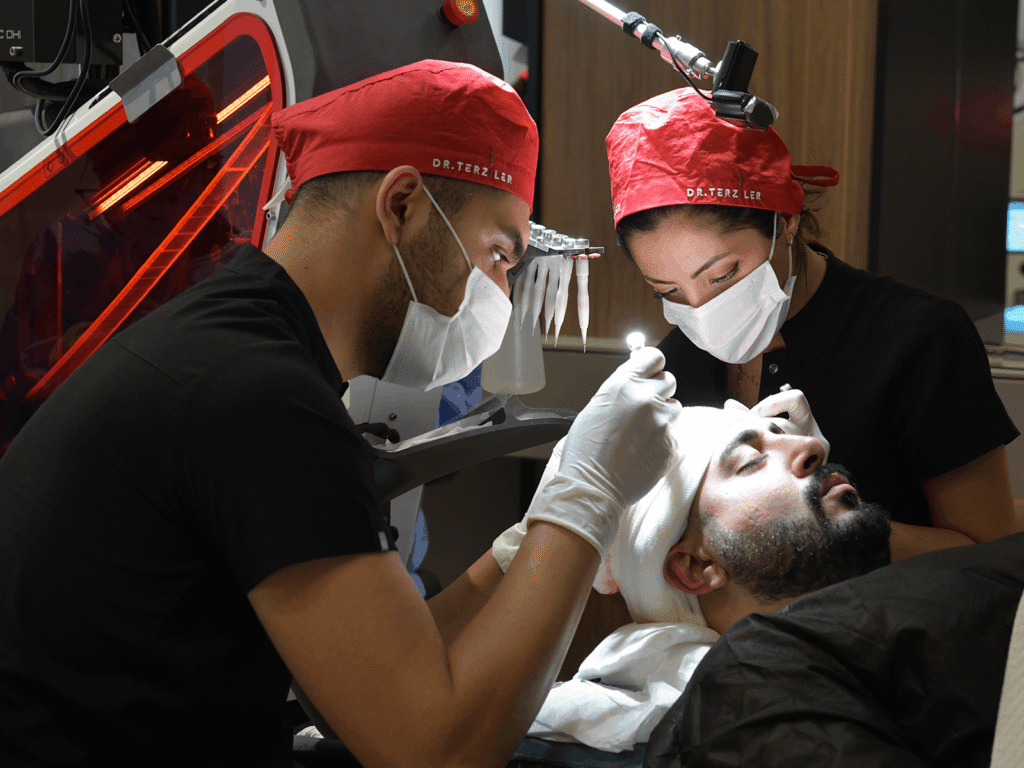
- The Reality: Modern hair transplants are minimally invasive procedures performed in sterile, climate-controlled operating rooms. The risk of infection is tied directly to how clean your clinic’s surgical environment is and how well you wash your scalp at home—not the outdoor weather.
The True Pros and Cons of a Summer Hair Transplant
Every season has its own unique logistical trade-offs. Understanding the pros and cons of a summer procedure helps you plan your recovery around your lifestyle:
The Advantages (The Pros)
- Faster Cellular Regeneration: Human skin cells naturally regenerate slightly faster in warm weather. Increased ambient temperatures promote better blood circulation near the surface of the skin, which can help your donor and recipient areas clear up scabs more efficiently.
- Easier Vacation Planning: Most professionals find it significantly easier to take 10 to 14 days off from work during the summer slow season, allowing them to complete the initial bare, healing phase in total privacy at home.
- The Perfect Camouflage: Summer is the peak season for wearing loose, fashionable bucket hats or spending time indoors watching movies, making it incredibly easy to hide your healing scalp from coworkers.
The Challenges (The Cons)
- The Summer Vacation Sacrifice: You cannot jump straight into a swimming pool, swim in the ocean, or sunbathe on a beach for the first 30 days post-surgery. If you love summer sports, you will have to pause them for a few weeks.
- Sweat and Bacteria Management: While sweat won’t make your grafts fall out, letting heavy sweat sit on a healing scalp for hours can mix with airborne dust and create a breeding ground for surface bacteria.
Seasonal Care Matrix: Summer vs. Winter
To show you exactly how your post-operative focus shifts depending on when you choose to have your surgery, compare this seasonal breakdown:
| Recovery Factor | Summer Hair Transplant | Winter Hair Transplant |
| Primary Environmental Risk | Strong UV radiation and sunburns. | Freezing winds and dry indoor heating. |
| Scalp Care Focus | Keeping the scalp clean from sweat and oil. | Preventing extreme skin dryness and flaking. |
| Hat Restrictions | Loose, wide-brimmed bucket hats only. | No tight beanies or wool caps that rub the hairline. |
| Activity Restrictions | Avoid swimming and direct sunbathing for 1 month. | Avoid intense winter sports (like skiing) due to helmet friction. |
4 Rules for a Flawless Summer Recovery
If you decide to take advantage of the summer months for your hair transformation, following these four clinical guidelines will keep your healing scalp perfectly safe:
- Avoid Direct Sun Exposure for 14 Days: During the first two weeks, your healing skin has zero natural defense against UV rays. Direct sunburn can permanently damage the DNA of developing follicle bulbs. Stay in the shade, use an umbrella, or wear a loose bucket hat when walking outdoors.
- No Swimming or Submerging for 30 Days: Keep your head strictly out of chlorinated pools, hot tubs, and the ocean for a full month. The chemicals in pools can cause chemical burns on sensitive skin, and open seawater carries bacteria that can trigger deep infections.
- Stay in Climate-Controlled Environments: During the first 7 days, try to spend your time in air-conditioned rooms. Keeping your body cool minimizes heavy sweating, reduces facial swelling, and keeps your scalp comfortable and itch-free.
- Rinse Off Daily: If you do step outside and break a sweat, do not let it dry on your head. Use a gentle cup filled with cool, clean tap water to gently rinse your scalp down, preventing bacteria from building up around your new hair pores.
Final Thoughts: The Right Time is When You Are Ready
Ultimately, there is no single “perfect” medical season for a hair transplant. Whether you choose the warm days of summer or the cold months of winter, your final results will be exactly the same as long as you follow your surgeon’s aftercare steps. The best time to get a hair transplant is simply when you can comfortably take a few days off to rest and focus entirely on your recovery.
At Dr. Terziler Clinic, our state-of-the-art operating suites feature advanced climate and humidity control systems, guaranteeing an identical, high-survival surgical environment 365 days a year. We don’t believe in seasonal guesswork; we provide custom-tailored aftercare protocols designed for the exact weather conditions outside. By pairing our precision DHI Choi Pen procedures with personalized summer or winter recovery kits, we ensure your grafts are completely protected year-round—delivering a permanent masterpiece of dense, natural hair growth.
Frequently Asked Questions (FAQ)
Q1: Can I apply standard sunscreen to my transplanted area during the summer?
No, you must avoid regular commercial sunscreens for the first 30 days. Standard sunscreens contain heavy chemical filters, fragrances, and oils that can clog your healing pores and cause severe irritation. Once you cross the 1-month mark and your skin is completely closed, you can safely protect your scalp using a fragrance-free, mineral-based (Zinc Oxide) SPF 50+ sunscreen.
Q2: Is it safe to stay in an air-conditioned room immediately after surgery?
Yes, staying in an air-conditioned room is highly recommended after a summer hair transplant. Air conditioning lowers ambient humidity and keeps your body cool, which stops heavy sweating and dramatically reduces the risk of facial swelling during the first 3 to 5 days. Just make sure you aren’t sitting directly under a heavy, dusty vent blowing high-pressure air onto your head.
Q3: When can I safely go back to the beach or sunbathe?
You can return to the beach after Day 30, but you must keep your scalp heavily protected. You must wear a loose hat or apply mineral SPF 50+ sunscreen to the recipient zone. You should completely avoid intense, direct sunbathing or lying under a tanning bed for a minimum of 3 to 6 months to prevent permanent patchy skin discoloration (hyperpigmentation).
Q4: Does sweating cause folliculitis during summer recovery?
Sweat itself does not cause folliculitis (inflamed hair follicles), but poor hygiene does. If you sweat heavily and allow that sweat to sit on your scalp without washing it, it can trap oils and environmental dust, leading to minor bacterial breakouts. Washing your head gently with the medicated shampoo provided by your clinic completely prevents this issue.
Q5: Can I wear a baseball cap to block the sun after a summer transplant?
No, you must avoid traditional baseball caps for the first 3 to 4 weeks. Baseball caps have a stiff, rigid front panel that presses firmly against the frontal hairline and temples—the exact zones where your new grafts are trying to anchor. If the hat rubs against these fresh roots, it can easily dislodge them. Stick to a soft, loose-fitting bucket hat instead.