



Red Light Therapy for Hair Loss: Low-Level Laser Therapy (LLLT)
Red light therapy for hair loss, also called low-level laser therapy (LLLT), can support growth in existing thinning hair. Explore the evidence, clinic-provided before-and-after photographs, expected time commitment and costs with Dr. Terziler Exclusive Clinic in Istanbul, Turkey. Suitability starts with a scalp assessment.
Treatment Process
-
Step 01
Consultation & Analysis
Your needs are identified through a hair and scalp analysis.
-
Step 02
Personal Plan
A personalised treatment protocol and session plan will be drawn up for you.
-
Step 03
Laser Hair Treatment
The procedure is carried out comfortably by a team of specialists.
-
Step 04
Results Tracking
Progress is monitored through regular checks and the plan is updated.
Laser Hair Treatment
What is red light therapy for hair loss?
Red light therapy for hair loss uses low-intensity light to support hair growth in existing follicles. Often called low-level laser therapy (LLLT), low-level light therapy or photobiomodulation, it can improve hair density in some people with male or female pattern hair loss. It requires repeated use over months, and results vary. [1],[5]
LLLT is one of several non-surgical hair treatments that may be considered within a wider hair-loss plan. It does not create new follicles, establish the cause of your hair loss or guarantee that a receding hairline will return. A scalp assessment helps determine whether light therapy is appropriate and what a meaningful result would look like for you.

Clinical team at Dr. Terziler Exclusive Clinic · Ask who will assess your scalp and take responsibility for your care.
Does low-level laser hair therapy actually work?
Yes, controlled trials show that some LLLT devices increase hair density in androgenetic alopecia, the medical term for pattern hair loss. The evidence supports a potential benefit rather than a guaranteed result, and findings from one device cannot automatically be applied to every cap, helmet or red-light panel. [1],[2],[6]
Three findings help put the evidence into perspective:
- A 2014 multicenter publication reported four randomized, sham-controlled trials involving 269 randomized participants. Its efficacy analysis included 225 men and women. At 26 weeks, the active laser-comb groups had greater increases in terminal hair density than the sham groups. The result concerned counted hairs in target areas, not complete restoration of a hairline. [2]
- A 2024 systematic review included 38 studies and 3,098 participants. Of these, 2,930 had androgenetic alopecia. That is approximately 94.6%, calculated from the published counts. Most of this evidence therefore concerns pattern hair loss; it should not be presented as equally strong evidence for every cause of shedding. Results also varied substantially between studies. [1]
Approximately 94.6% of participants had androgenetic alopecia. This is a study-population share, not a success rate or population prevalence. [1] - A 2026 prospective study followed 68 participants using a particular home helmet for 48 weeks. Average density increased from 99.2 to 124.2 hairs/cm²; 59% were rated improved on global photographs, while more than 85% reported satisfaction. These are different outcomes. The study had no sham-control group, so its findings do not establish how much improvement was caused by the device alone. [3]
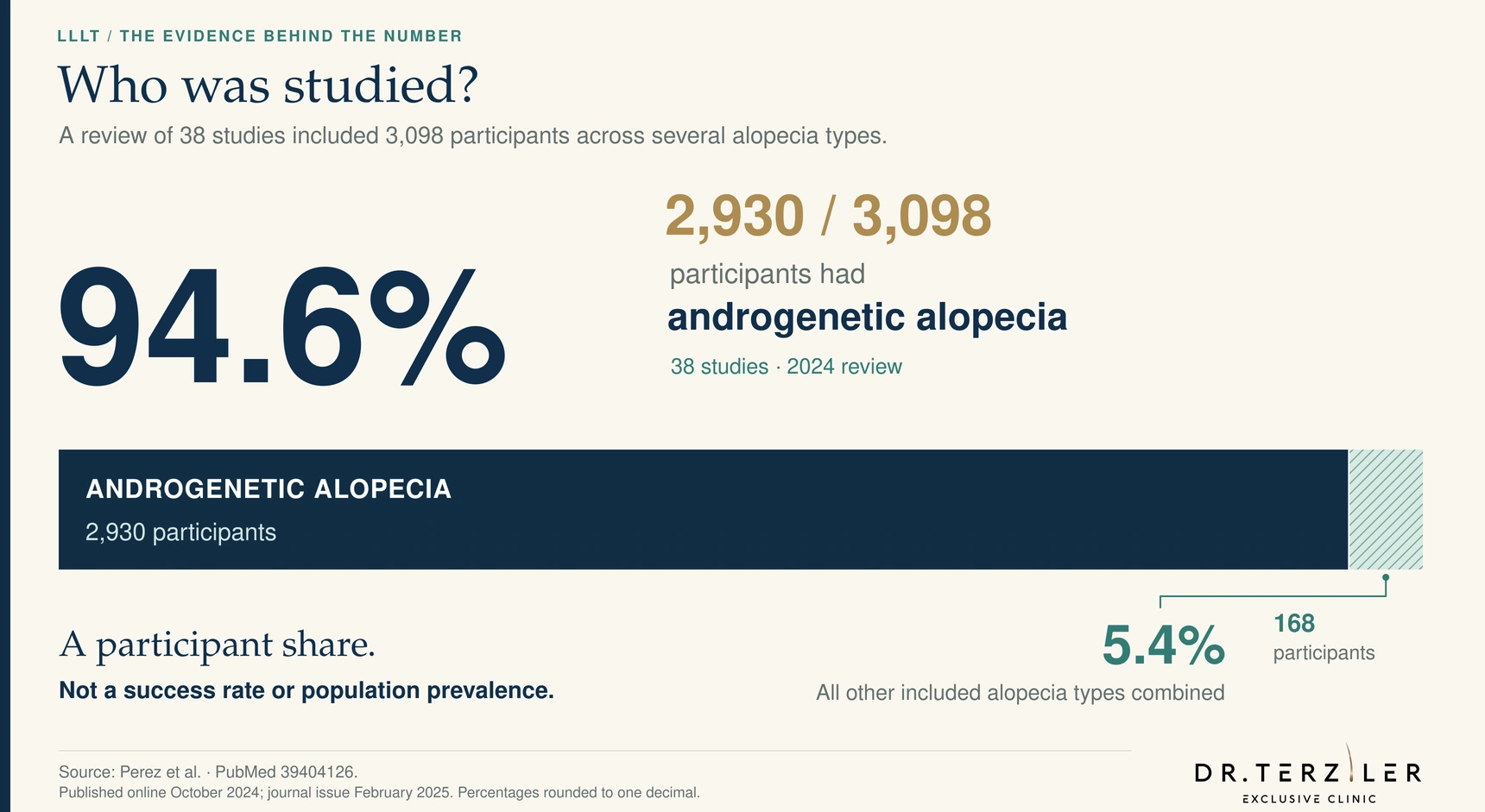
A useful treatment discussion separates measured density, visible appearance and patient satisfaction. A favorable result in one category does not automatically establish the same result in the others.
Who is LLLT most likely to help?
LLLT has its strongest evidence in male and female pattern hair loss where hair is thinning and follicles remain present. It is generally more relevant to areas with miniaturized hair than to an expectation of rebuilding a completely bare scalp. Suitability depends on the diagnosis and the device's intended use. [1],[9],[11]
An examination matters when thinning is sudden, patchy, painful, inflamed or accompanied by substantial scaling. Pattern hair loss can also coexist with another cause of shedding. Blood tests or other investigations may be appropriate when the history and examination suggest an underlying problem. [12]
Additional assessment through Tricho Test can be discussed when a clinician considers more information useful for a personal treatment plan.
A receding hairline should be assessed alongside thinning on the top and crown. The Norwood scale describes male-pattern distribution; a stage alone cannot prescribe a laser device, session count or transplant plan.
How does low-level laser therapy stimulate hair growth?
LLLT is thought to influence cellular signaling and energy-related processes within existing follicles through photobiomodulation. Researchers have proposed effects on mitochondrial activity, inflammation and the hair-growth cycle. These mechanisms help explain why it may support growth; they do not prove that every thinning follicle will recover. [5],[8]
Many studied devices use red light around 650 nm, although wavelengths and delivery systems differ. The dose reaching the scalp depends on more than color: output, exposure time, distance, scalp coverage and how hair obstructs the light all matter. [5],[8]
LLLT should not be described as a proven DHT-blocking treatment. If DHT-related miniaturization is part of your diagnosis, ask how the overall plan will address it rather than assuming that light replaces every other treatment.
Is laser hair therapy the same as laser hair removal?
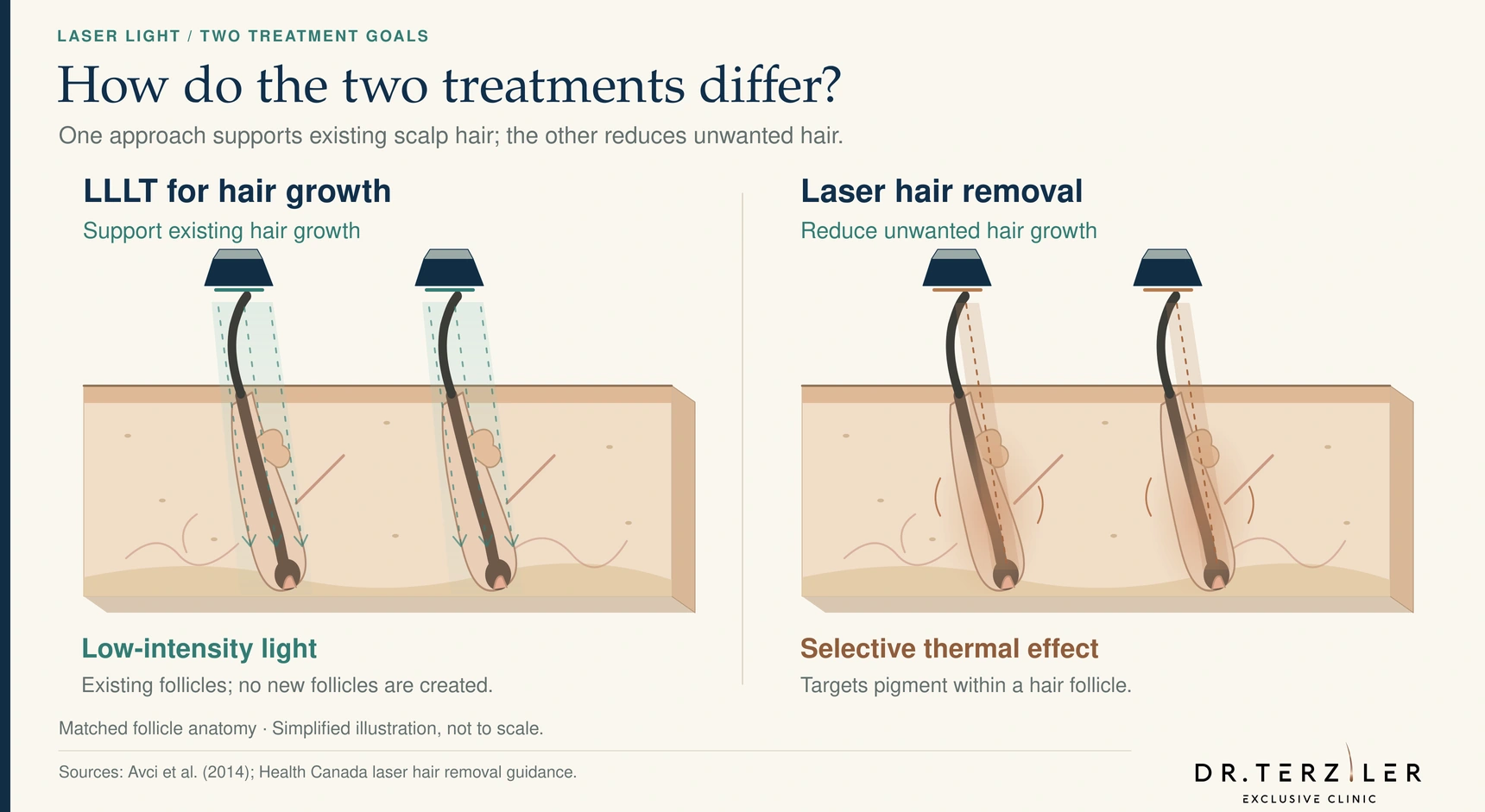
No. LLLT for hair growth aims to support existing follicles with low-intensity light. Laser hair removal uses a different treatment approach that heats pigmented structures to damage follicles and reduce unwanted hair growth. The purpose, settings and treatment courses are different. [5],[14]
This page concerns scalp hair growth and thinning. Questions about unwanted body hair, hair-removal intervals or regrowth after epilation belong to a separate treatment discussion.
How long does LLLT take to work?
LLLT results are assessed over months rather than after a few sessions. Controlled studies have commonly evaluated changes over approximately 16–26 weeks. An early photograph can help document progress, but several days or a handful of treatments cannot establish a lasting growth response. [2],[6],[7]
Discuss three different time commitments:
- Session time: follow the instructions for the particular device and the agreed clinical plan.
- Initial evaluation period: agree in advance when comparable photographs and measurements will be reviewed.
- Ongoing use: discuss what happens after the first review, including whether the benefit justifies the time and expense.
For perspective, the 2026 helmet study used 20 minutes three times weekly for 48 weeks. That schedule represents 144 planned sessions, or 48 hours of treatment time. This is arithmetic from one research protocol, not Dr. Terziler Exclusive Clinic's session schedule or a recommendation for every device. [3]
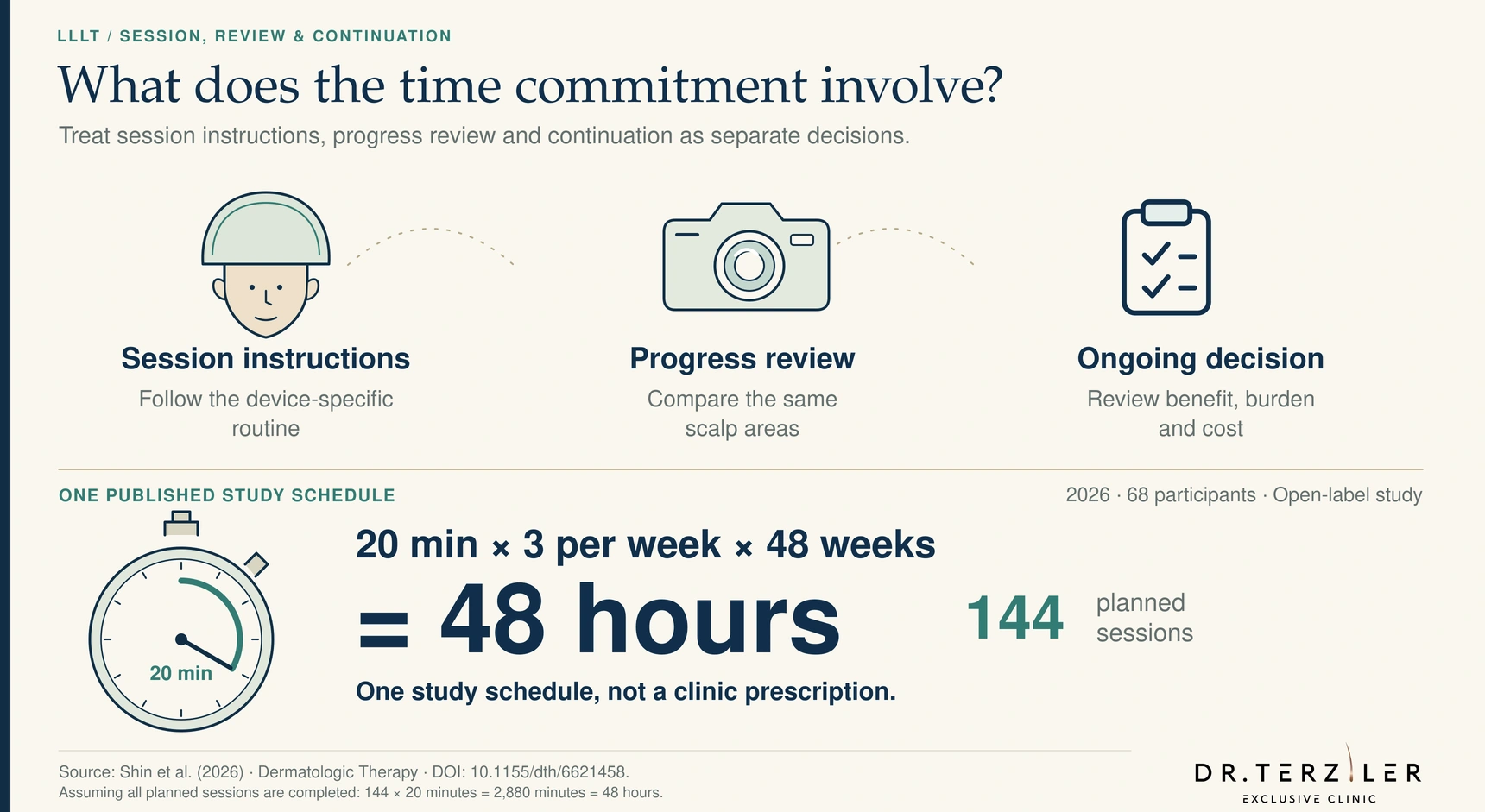
The most useful question is whether you can follow an appropriate routine consistently enough to evaluate it fairly.
How long do results last if you stop LLLT?
LLLT is not a permanent cure for pattern hair loss. A continued treatment plan may be needed to maintain a benefit, but research does not establish one reliable timetable for how quickly improvement will fade after stopping. Avoid promises that a short course will keep working indefinitely. [6],[8]
At review, discuss whether your photographs or measurements have improved, whether the routine is manageable and what other treatment is continuing. Agree on any change with your clinician rather than assuming that you must keep buying sessions without reassessing their value.
What do laser hair therapy before-and-after photos show?
Before-and-after photographs can illustrate changes in apparent scalp coverage, but they cannot by themselves quantify regrowth or predict your response to LLLT. The six additional comparisons in this gallery show frontal, top and central-part views supplied by Dr. Terziler Exclusive Clinic.
Look at where the scalp is visible and how the hair is arranged. Hair length, curl, parting, lighting and camera angle can change the appearance of density. A narrower-looking part is not the same measurement as a higher hair count in a fixed scalp area.
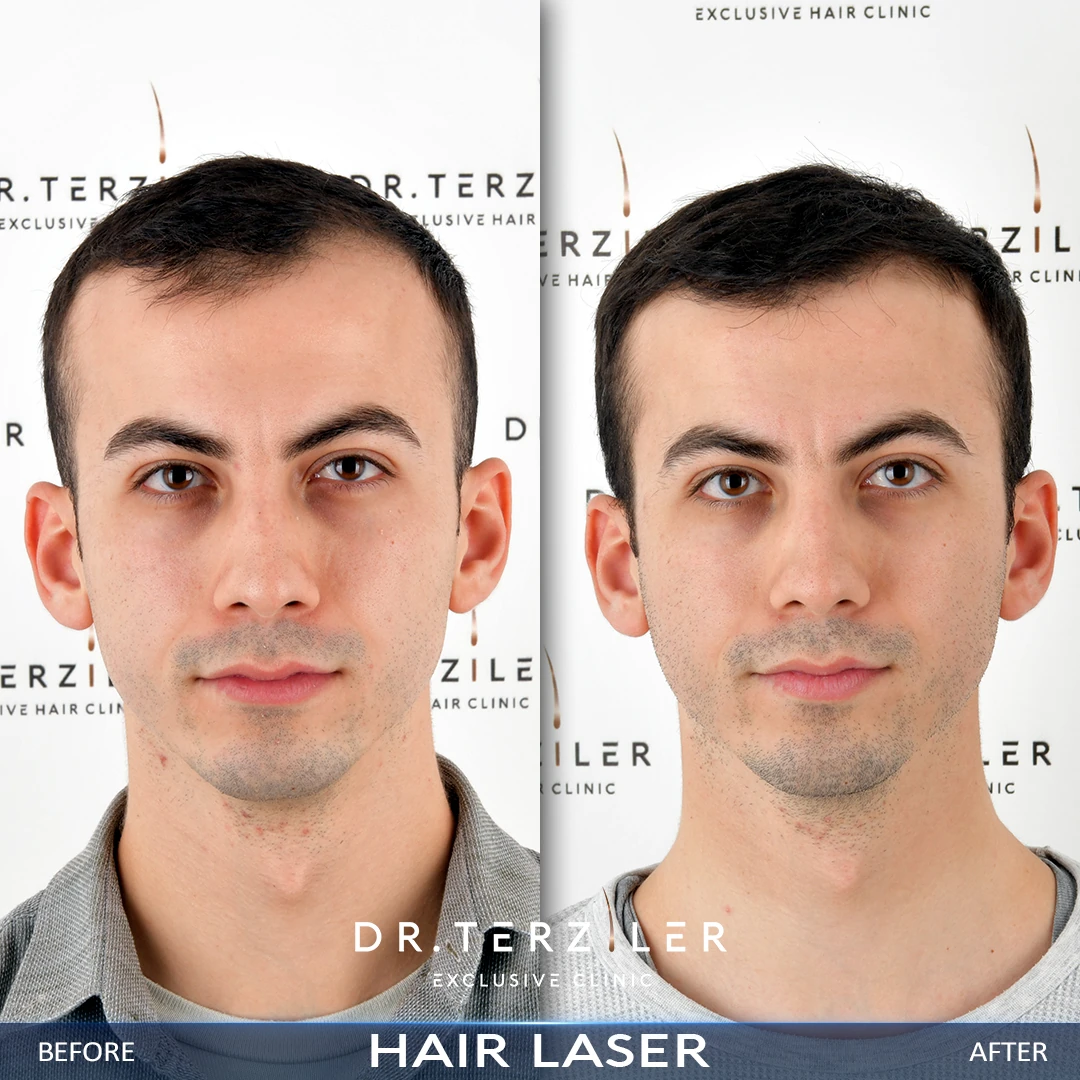
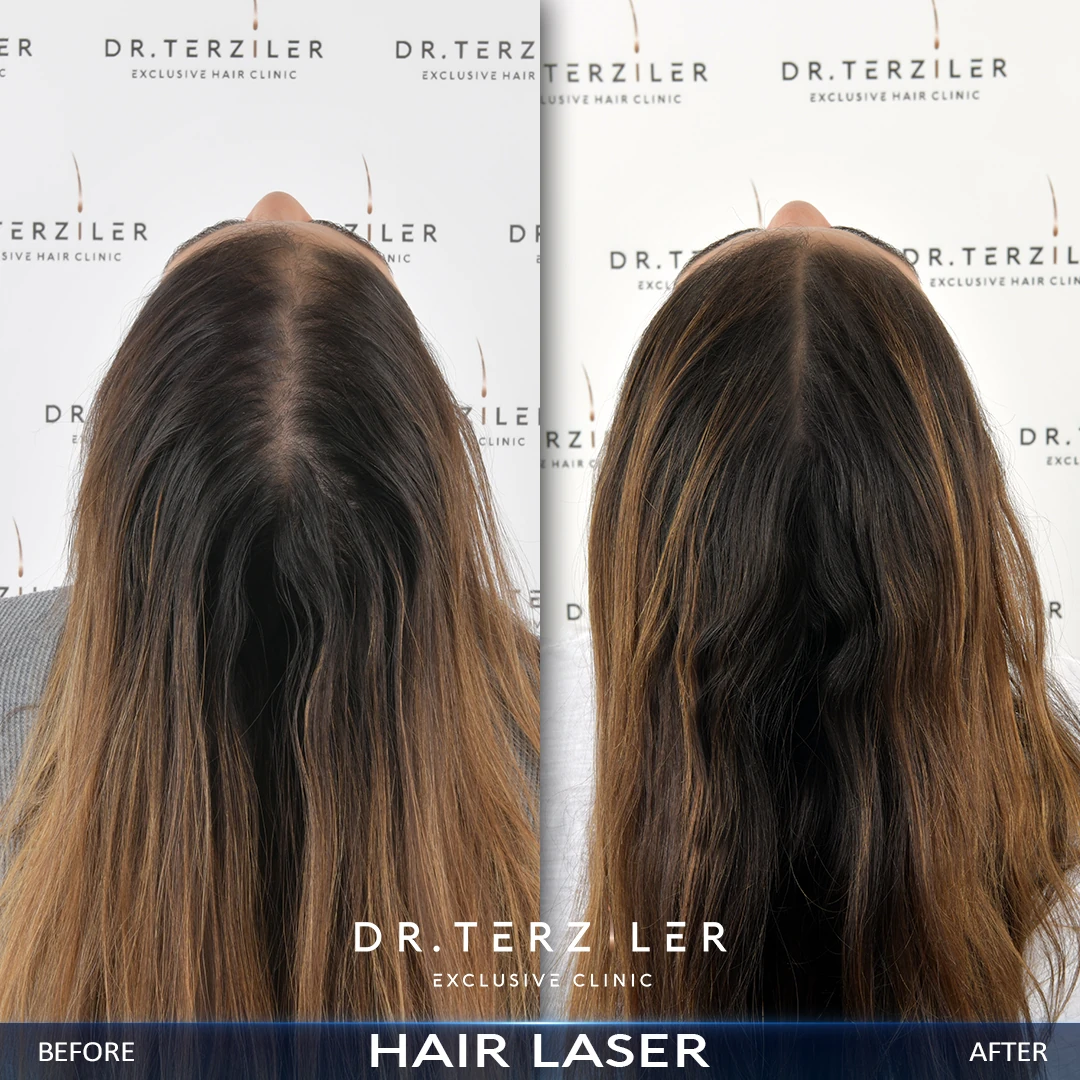
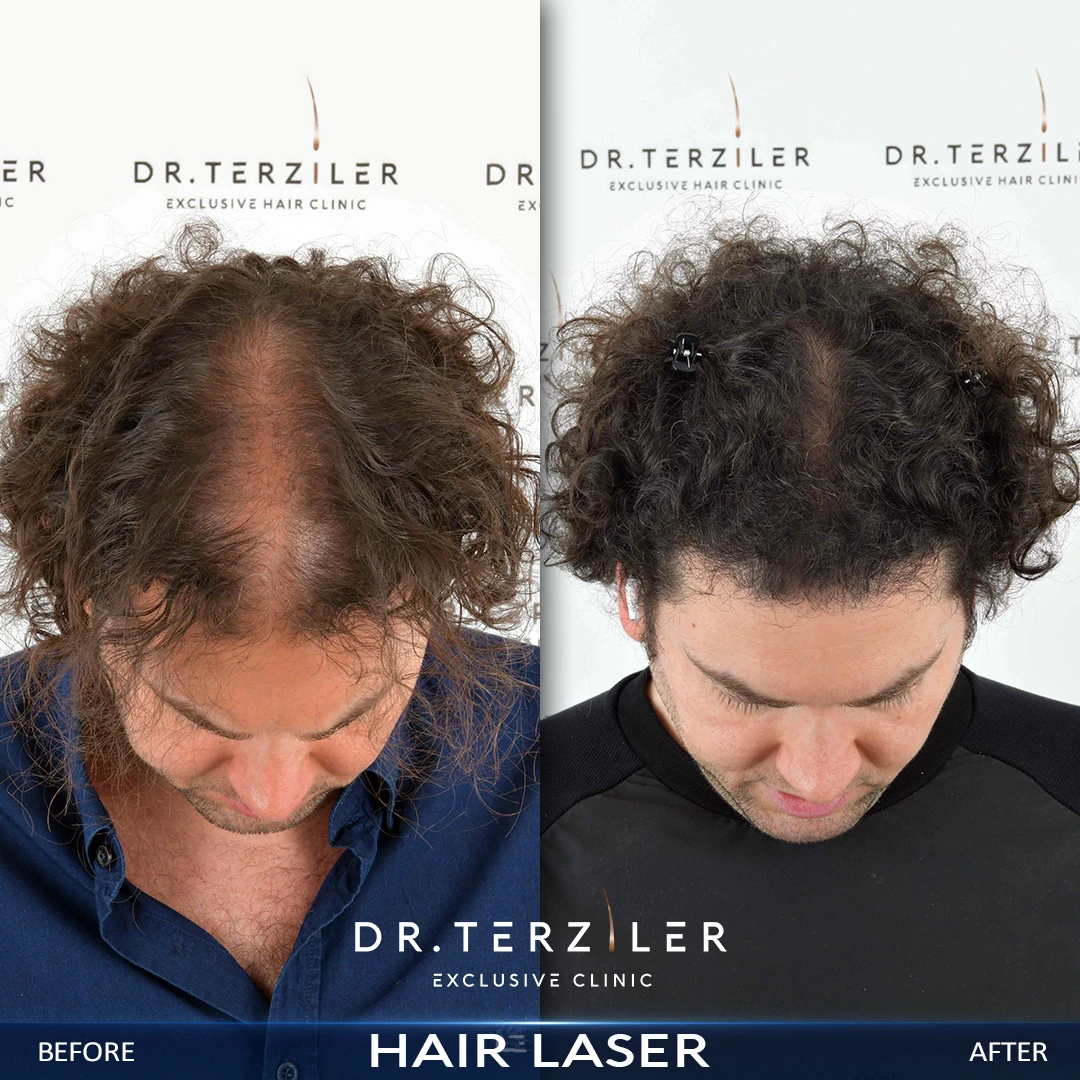
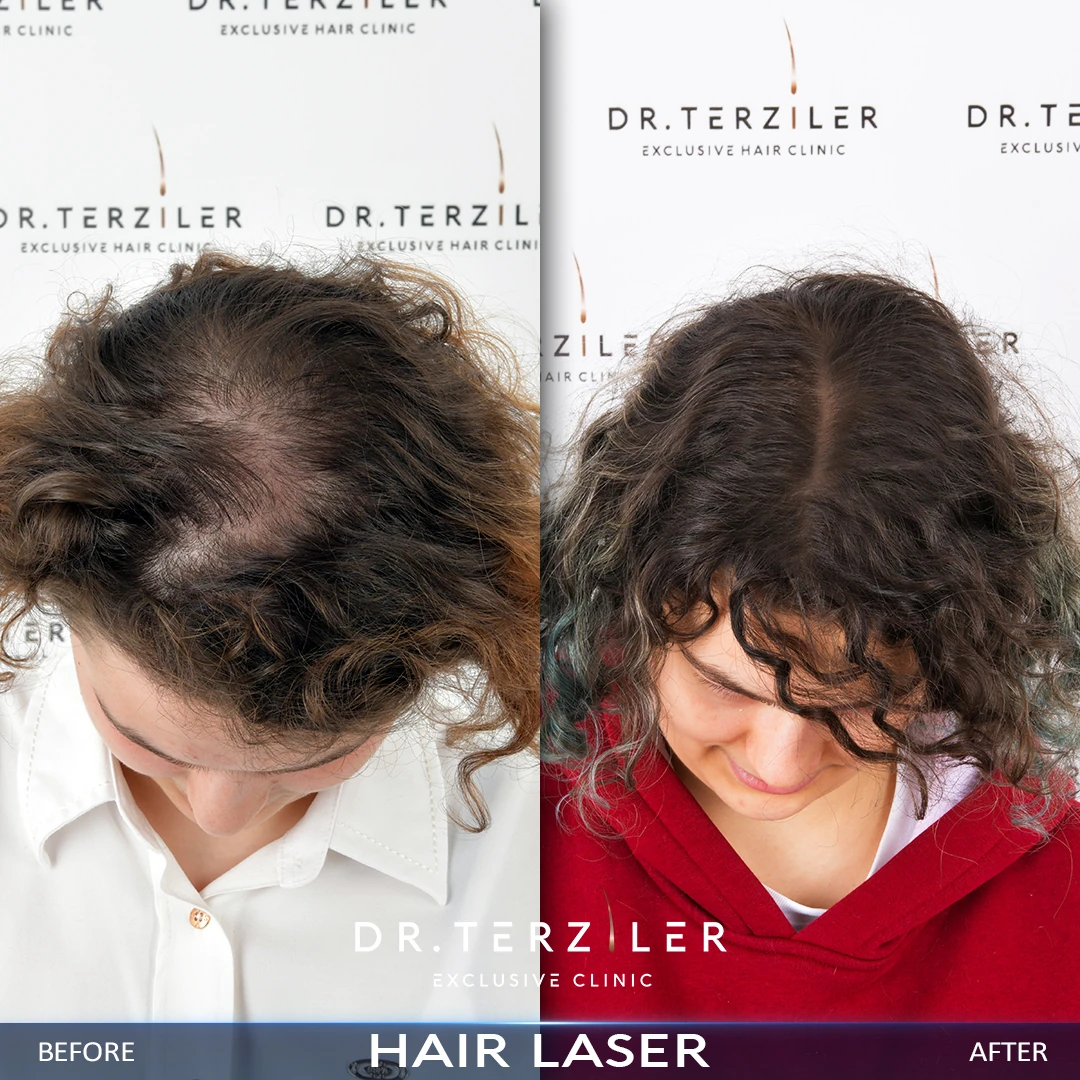
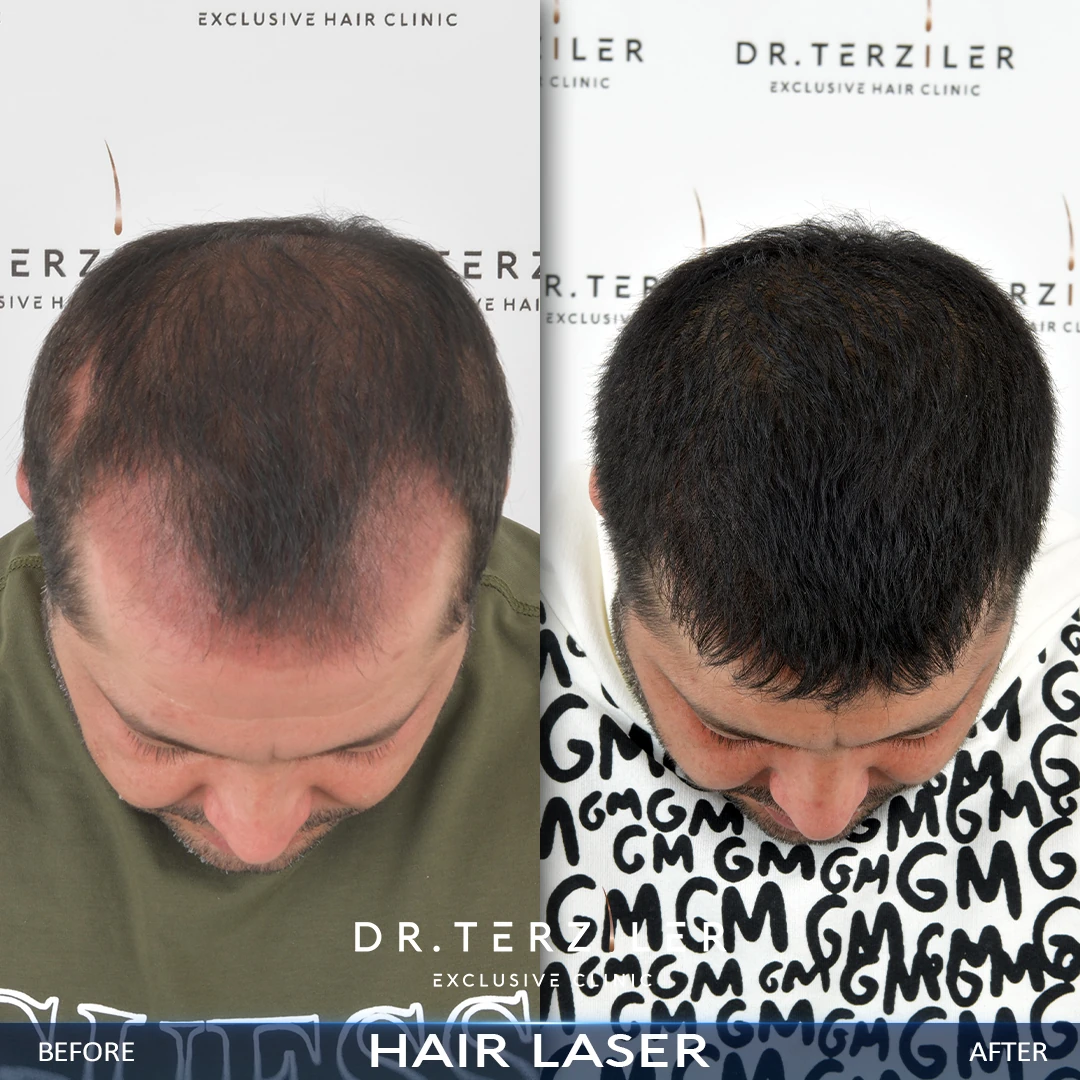
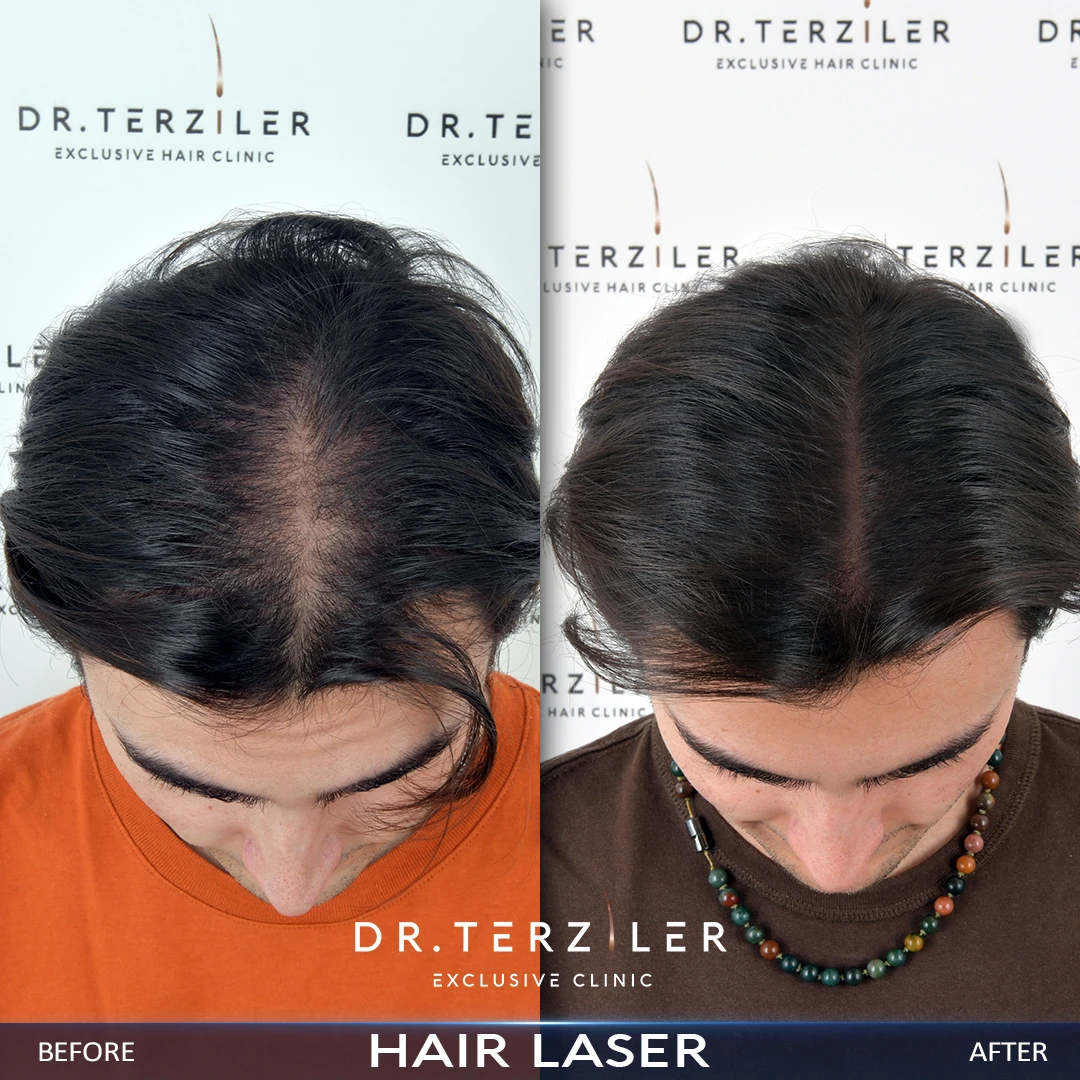
Selected clinic-provided before-and-after comparisons. Individual results vary. Differences in hair length, styling, lighting and camera position can affect apparent coverage.
These examples are most useful alongside an assessment of your own hair loss and a discussion of realistic goals.
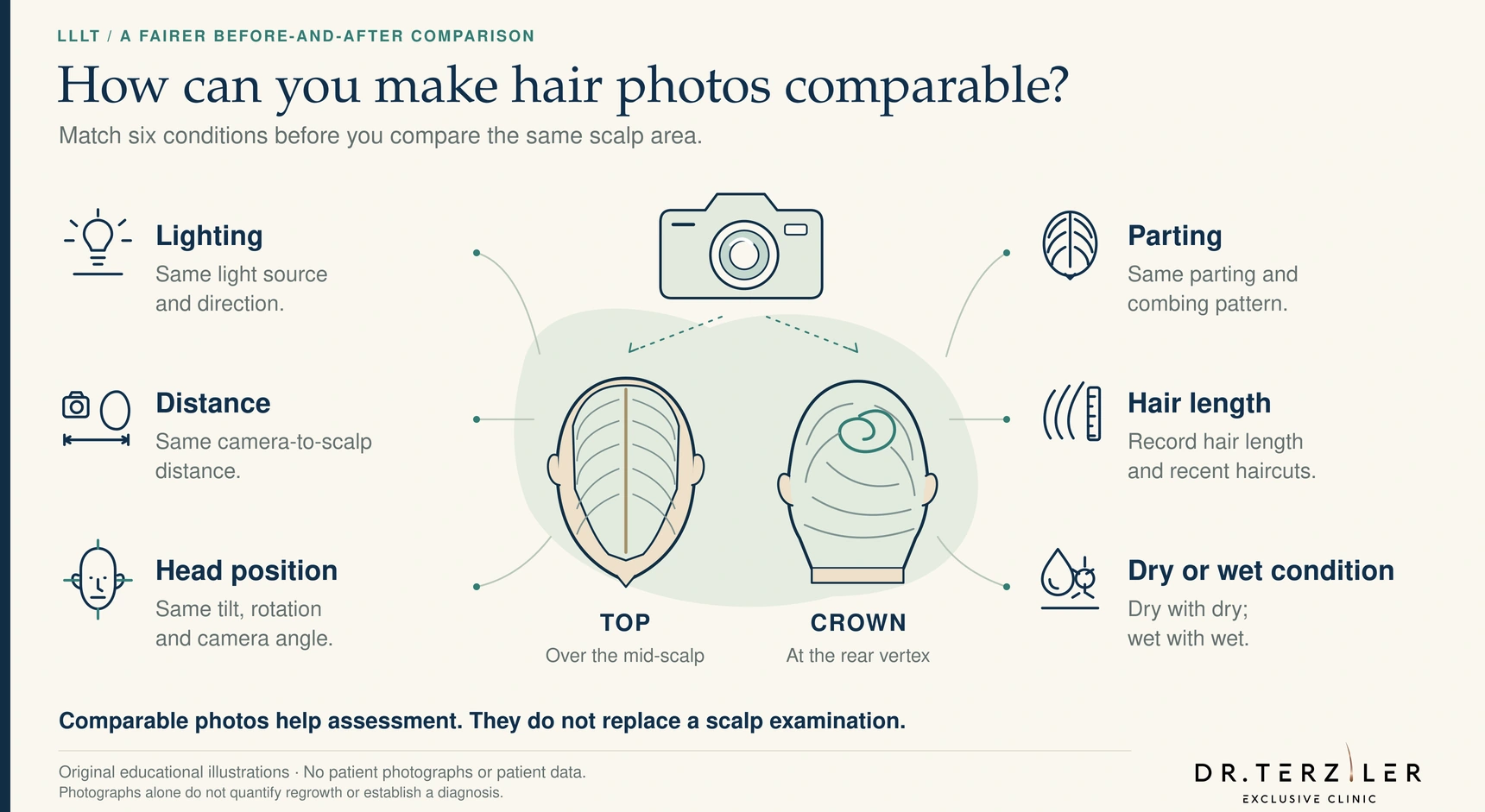
For a fairer comparison, use the hair progress photography checklist.
What does Mustafa D.'s four-view LLLT case study show?
Mustafa D.'s clinic-provided before-and-after photographs show fuller-looking coverage in the follow-up views, particularly from above. His set includes frontal, top-front, right-profile and rear/crown comparisons, giving a broader view of his hair's appearance than a single frontal photograph.
From the top-front angle, less scalp is visible in the follow-up photograph. The frontal and right-profile views add context about how the hair frames the forehead and temple. The rear view shows the crown area and surrounding hair from behind.
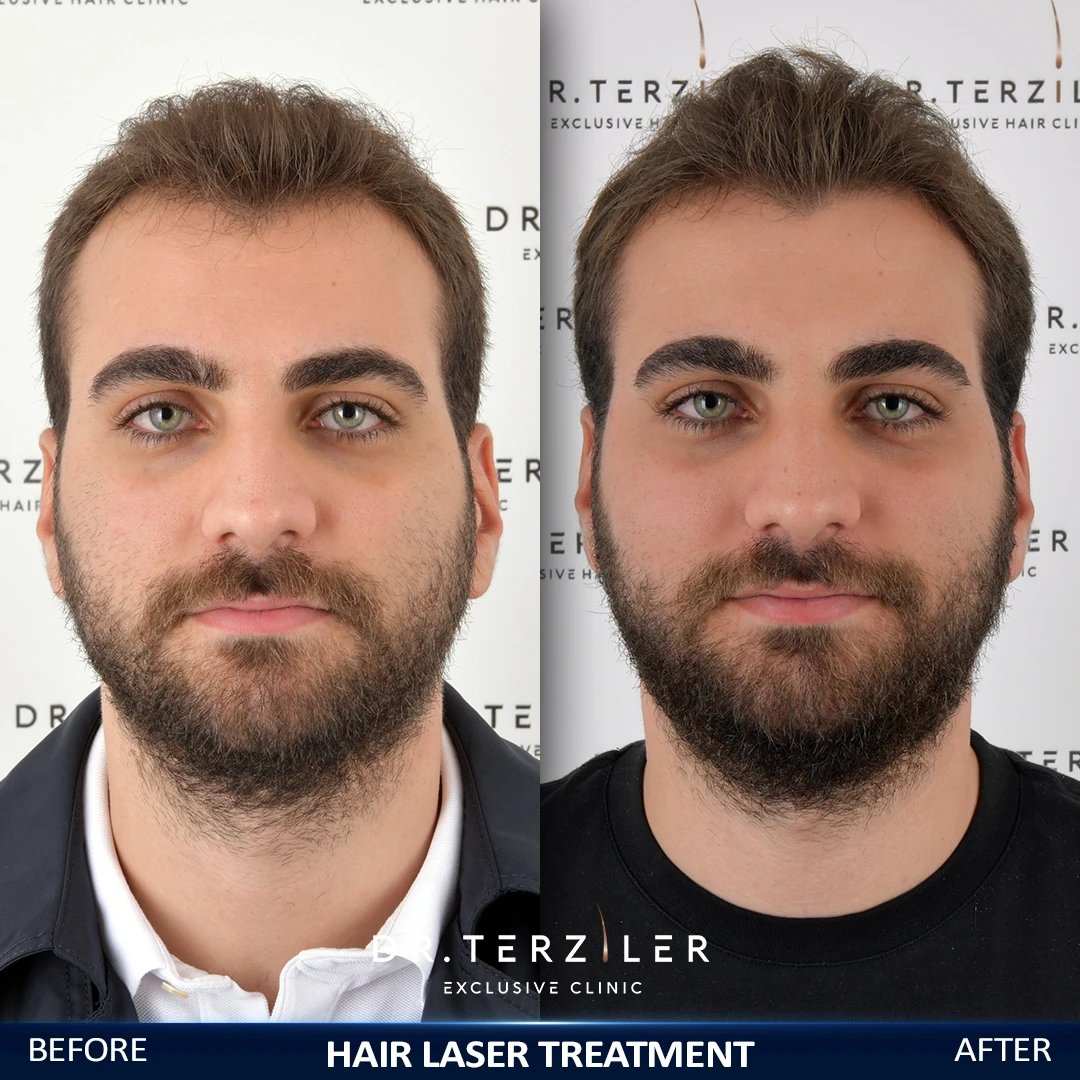
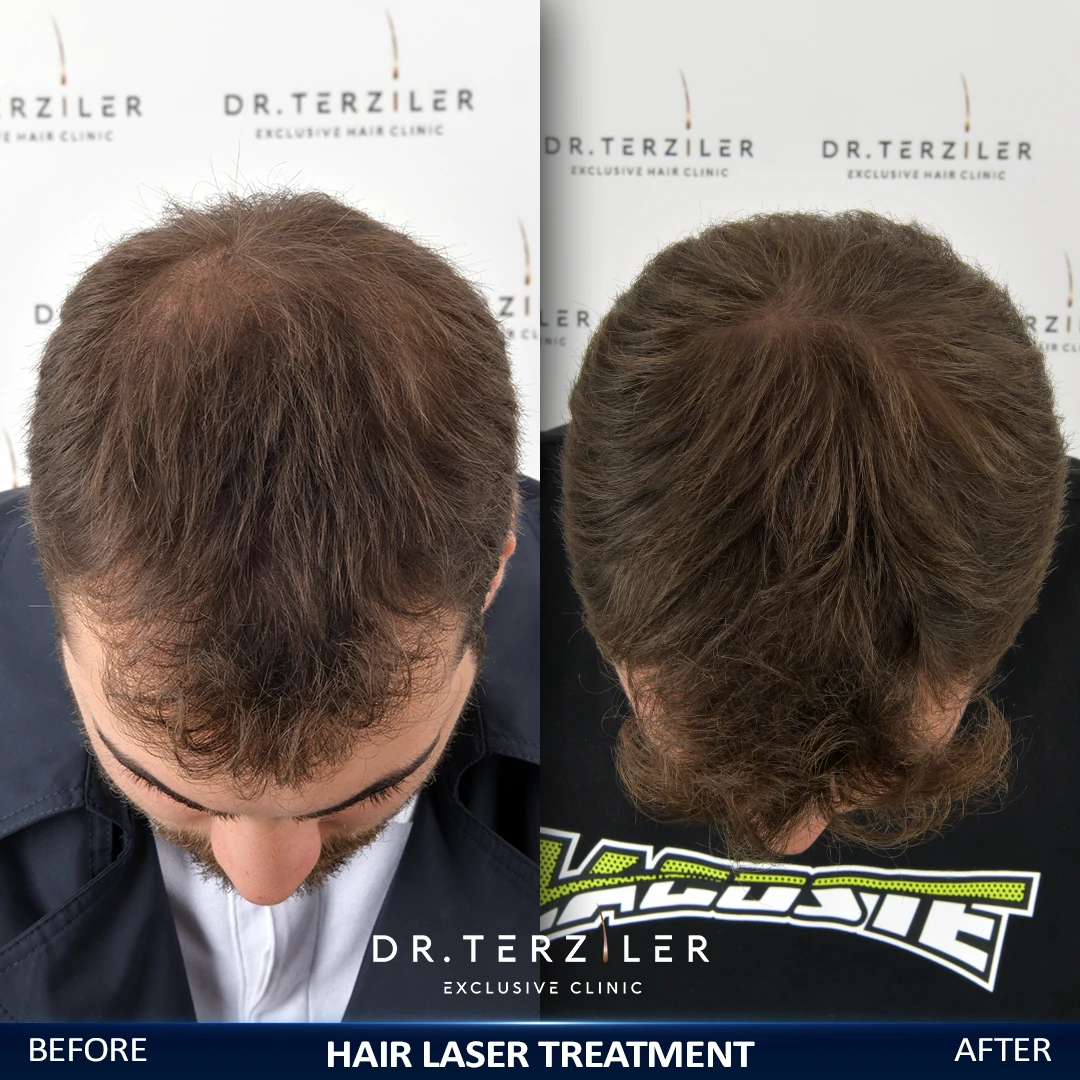
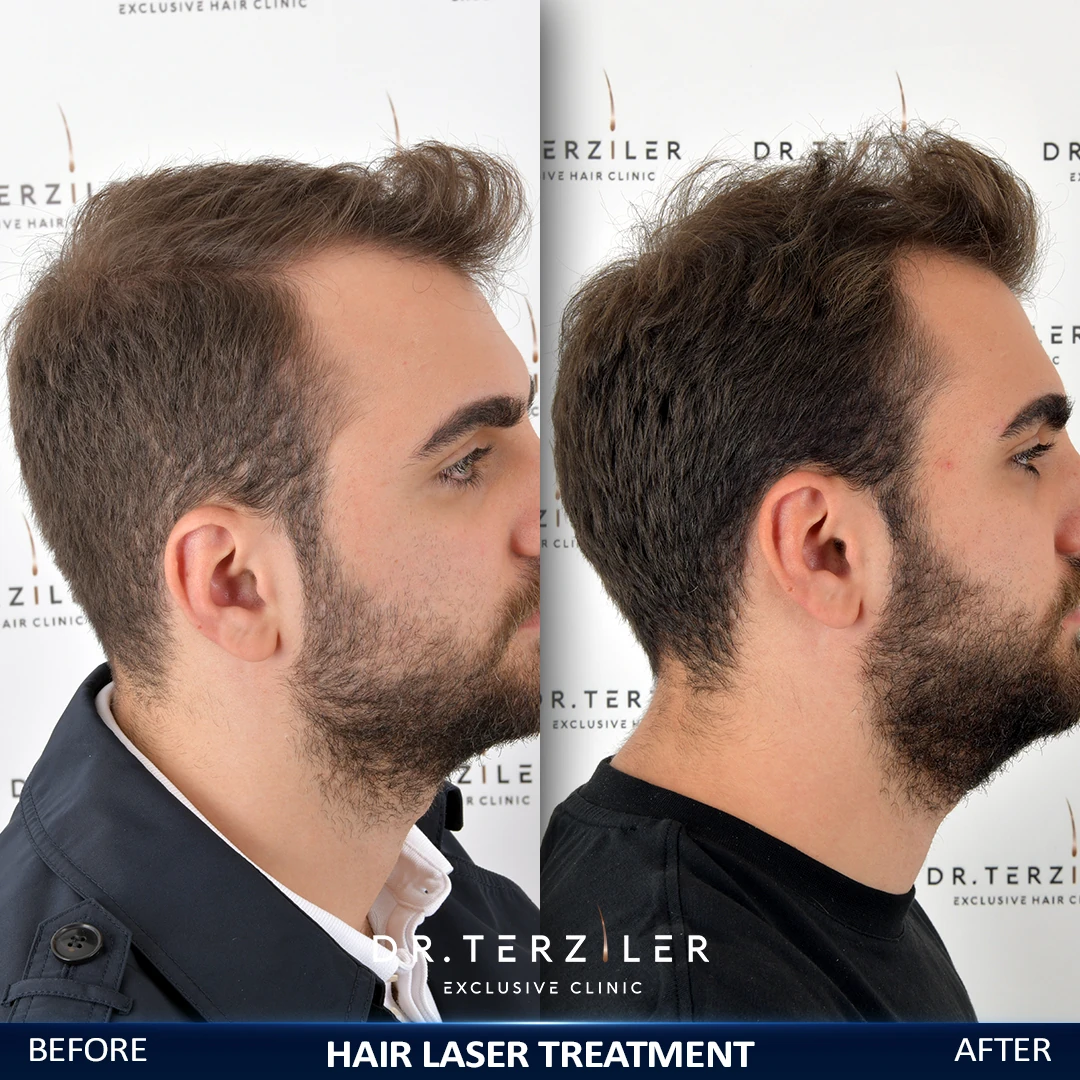
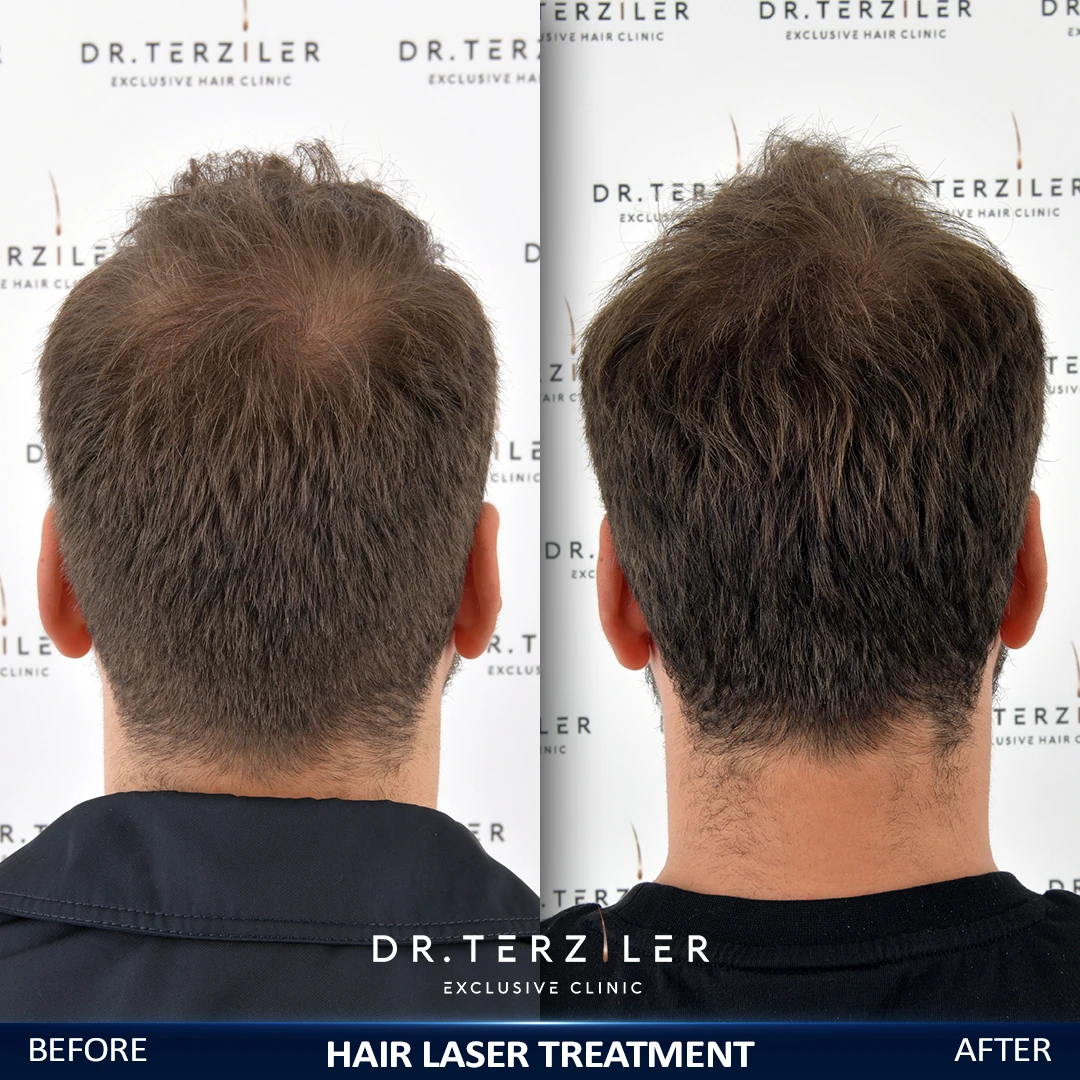
His hair is longer and styled differently in the follow-up images. These differences matter when interpreting the comparison. The photographs document appearance; they do not measure a percentage increase in density or establish how much of the change came from laser therapy alone.
For someone considering treatment, the useful lesson is to review several angles and compare the same scalp regions over time. Your diagnosis, starting density, other treatments and ability to follow the plan will also affect what is realistic.
Mustafa D. — four clinic-provided before-and-after comparisons from the hair laser gallery at Dr. Terziler Exclusive Clinic. Individual results vary; these photographs are not a controlled treatment comparison.
How should you measure your own progress?
Progress is easier to judge when the same scalp areas are photographed under comparable conditions and, where appropriate, assessed with repeat density or hair-shaft measurements. A set of attractive follow-up photographs alone cannot show how much a treatment changed your hair.
Use the same camera distance, lighting, head position and parting. Keep hair length and its dry or wet condition as similar as practical. Include the frontal hairline, both temples, top and crown rather than choosing only the most favorable angle.
Keep a dated treatment log that records device use, missed sessions and changes to other hair treatments. If several treatments change at once, acknowledge that the outcome cannot be attributed to LLLT alone. For measured assessments, ask whether the same target area and method will be used at follow-up.
This makes a review more useful: you can discuss visible change, symptoms, tolerability and adherence separately, then decide whether to continue or adjust the plan.
Are laser caps, LED helmets and clinic devices equivalent?
No. Devices differ in light source, dose, coverage, instructions and clinical evidence. Some use lasers, some LEDs and some a combination. The words “red light,” a wavelength claim or a high diode count do not establish that two devices will produce the same outcome. [6],[11],[15]
An appropriate home device may offer convenience; clinic care can provide assessment, supervision and a structured review. Neither setting guarantees a better response. Choose by the evidence and suitability of the actual device, together with a routine you can maintain.
Before committing, ask for:
- The exact device name and its intended hair-loss indication.
- Published research on that device or a clearly explained basis for applying other evidence.
- The session duration and frequency in its instructions.
- How it will reach the scalp through your hair and cover the intended areas.
- The safety instructions, including any eye-protection requirements.
- The review date, total initial cost and continuation plan.
A general-purpose skincare panel should not be assumed equivalent to a hair-growth device merely because both emit red light.
Is laser hair therapy FDA approved?
Some hair-growth devices are FDA-cleared through the 510(k) pathway. Clearance applies to a specific device and intended use; it is not blanket FDA approval of all red-light treatments or proof that a particular person will respond. The FDA describes 510(k) clearance in terms of substantial equivalence to a legally marketed device. [10]
For example, the public FDA record for one iRestore model describes its own patient criteria and treatment instructions. That record is an example of device-specific documentation, not evidence that this is the device used at our clinic. [11]
Ask for the exact model and clearance reference if a provider makes an FDA claim. Also check the applicable documentation where you live: a US clearance should not be presented as UK or Canadian authorization.
What are the side effects of LLLT for hair loss?
LLLT is usually well tolerated, but “no side effects” and “100% safe” are stronger claims than the evidence supports. Mild dryness, itching, warmth or tenderness have been reported. Safety depends on the device, correct use and your individual circumstances. [9]
Tell the clinician about your medicines, light-sensitive conditions, scalp irritation and recent procedures. Follow the model's instructions rather than increasing exposure in the hope of faster results. Treatment should not be pushed through burning, persistent irritation or eye symptoms; stop and seek appropriate advice if these occur.
If new shedding starts during treatment, it should be reviewed in context. It is not automatically evidence that the light is working or that the device is causing the problem.
Is LLLT better than minoxidil or PRP?
There is no single best treatment for every person, and the available evidence does not justify declaring LLLT universally superior to minoxidil or PRP. They involve different routines, risks and costs. The diagnosis and the outcome you want to achieve should guide the comparison. [4],[6],[13]
| Approach | What to compare |
|---|---|
| LLLT | light-based, non-surgical treatment requiring repeated use; assess the evidence for the actual device. |
| Topical minoxidil | a medicine used for pattern hair loss; suitability, application and irritation need discussion with a clinician or pharmacist. [13] |
| PRP | PRP hair treatment uses injections of platelet-rich plasma prepared from your own blood; it involves a procedure-based schedule and a separate assessment of suitability. |
| Hair transplantation | a surgical redistribution of donor follicles for appropriate candidates; it addresses a different problem from supporting existing thinning hair. |
A 2025 meta-analysis of seven randomized trials found that LLLT plus topical minoxidil increased density more than minoxidil alone, with a pooled mean difference of 6.62 hairs/cm². Variation between studies and device protocols still matters. This supports discussing combination treatment rather than assuming that everyone needs several treatments or will gain the same amount. [4]
Can LLLT replace a hair transplant or be used after one?
LLLT cannot transplant follicles into a new location or reproduce the surgical design of a hairline. Planning hair transplantation requires assessment of donor supply, recipient areas and long-term hair loss, including when DHI hair transplantation is being considered. [12],[13]
If you have had a transplant, ask your operating team whether and when a light device belongs in your recovery plan. Device contact, healing and other aftercare instructions need to be considered together. There is no universal start date that should override your surgeon's instructions.
How much does laser hair therapy cost?
Laser hair therapy cost depends on the device, clinic visits, assessment, treatment duration and any additional care. A single-session price is not enough to compare a home device with a supervised course. Ask for the full initial plan and what continuing treatment would cost.
Request a written breakdown of the consultation, device or clinic-session fees, planned reviews and any separately recommended treatments. Check whether a quoted home-device price includes the equipment itself, warranty and relevant local taxes. For clinic treatment, distinguish the proposed number of sessions from any optional continuation.
There is no one fee that accurately describes every patient's LLLT course. Ask the team for a quote after discussing your starting point and the actual treatment proposed. If surgery is also being considered, the cost of hair transplantation in Turkey should be assessed as a separate surgical budget.
Can international patients have LLLT in Istanbul, Turkey?
Yes, international patients can discuss LLLT during a consultation in Istanbul, but a short visit cannot replace the repeated use over months evaluated in hair-growth studies. Plan how treatment and follow-up would continue after you return home before committing to a course. [2],[3]
Whether you live in the United States, United Kingdom or Canada, discuss the proposed device, local availability, instructions and who would review progress. Ask how any home treatment would fit with care from your usual clinician. Do not assume that purchasing a device, remote follow-up or equipment delivery is included in a clinic visit.
The clinic's treatment process begins with hair and scalp analysis, followed by a personal plan, treatment and progress review. The medical team includes Dr. Servet Terziler and Dr. Kürşat Yalvaç. Your consultation should clarify who will assess your scalp and take responsibility for your care.
Is red light therapy worth considering for your hair loss?
LLLT is worth discussing when you have an appropriate diagnosis, realistic goals and a device-specific plan you can follow. The decision should include the likely benefit, uncertainty, time commitment and total cost, with an agreed point for reviewing progress.
Bring clear photographs, the timeline of your thinning and a list of current treatments to a consultation. Ask what the assessment suggests, what will be measured and what would make the plan change.
Which sources support this information?
- Low-Level Laser and LED Therapy in Alopecia: A Systematic Review and Meta-Analysis. 2024.
- Jimenez et al. Efficacy and safety of a low-level laser device in male and female pattern hair loss. 2014.
- Shin et al. Long-Term Efficacy and Safety of Low-Level Laser Therapy for Androgenetic Alopecia: A 12-Month Prospective Trial. 2026.
- Mawu et al. LLLT plus topical minoxidil versus minoxidil alone: systematic review and meta-analysis. 2025.
- Avci et al. Low-level laser (light) therapy for treatment of hair loss. 2014.
- Systematic review and meta-analysis of home-use LLLT devices for pattern hair loss. 2022.
- Efficacy and Safety of a Low-Level Light Therapy for Androgenetic Alopecia: A 24-Week Randomized Sham-Controlled Trial. 2018.
- International Society of Hair Restoration Surgery. A Guide to Red Light Therapy for Hair Loss.
- Nebraska Medicine. Do laser caps work for hair growth? March 31, 2026.
- US Food and Drug Administration. Premarket Notification 510(k).
- US Food and Drug Administration. iRestore model ID-500, 510(k) K222081.
- American Academy of Dermatology. Hair loss: Diagnosis and treatment.
- British Association of Dermatologists. Hair loss male pattern androgenetic alopecia.
- Health Canada. Laser Hair Removal Safety Guidelines for Facility Owners and Operators.
- Stanford Medicine. Red light therapy: What the science says. February 24, 2025.
Questions You May Have
Laser hair treatment is a non-surgical procedure that uses low-level laser technology to support the scalp and hair follicles.
For those experiencing hair loss, thinning hair or hair that is becoming finer, a treatment plan can be drawn up following a consultation with a specialist.
As the procedure does not involve any surgical intervention, it is generally carried out comfortably.
This may vary depending on the cause of the hair loss. Whilst it may be carried out on its own in some people, in other cases it may be used in conjunction with other hair treatments.
The number of sessions may vary depending on the individual’s hair type, the extent of hair loss and the treatment plan.
Yes. Following the procedure, people can usually resume their daily lives within a short time.
No. Laser hair treatment and hair transplantation are different procedures. Which treatment is suitable is determined following a hair analysis and an assessment by a specialist.
Yes, some devices improve hair density in people with pattern hair loss in controlled trials. The benefit varies, and results from one model do not establish that every red-light product works equally well. Diagnosis and a realistic follow-up plan matter.
The terms overlap. Many LLLT hair devices use red light, but products differ in their light source, dose, scalp coverage and evidence. A general red-light product should not automatically be treated as an equivalent hair-growth device.
No. Hair-growth LLLT and laser hair removal have different aims and treatment settings. Hair removal uses heat to damage follicles and reduce unwanted growth; LLLT aims to support growth in existing scalp follicles.
There is no universal session count. Research and device instructions use different schedules over months. Ask for the exact model’s protocol and an agreed review point rather than choosing treatment by a fixed number of sessions alone.
Think in months, not days. Studies have evaluated change at around 16–26 weeks, and some people may need longer to judge a cosmetic difference. Comparable photographs and measurements are more useful than frequent selfies under changing conditions. [
LLLT does not cure the underlying tendency to pattern hair loss. Continued management may be necessary, and evidence does not establish one exact period for retaining benefits after stopping. Discuss ongoing use and alternatives at review.
Yes, women with pattern hair loss have been included in controlled trials. A widening part or increased shedding still needs assessment because different conditions can look similar, and a particular device’s intended-use criteria must be checked.
It should not be offered as a way to create new follicles or guarantee restoration of a bare scalp. The evidence is more relevant to pattern thinning where follicles remain. A clinician can discuss what is realistic for the area concerned.
It is generally well tolerated, but no treatment is completely risk-free. Mild itching, dryness, warmth or tenderness can occur. Follow the device instructions and seek advice if symptoms persist or treatment causes burning or eye discomfort.
Some specific hair-growth devices are FDA-cleared through 510(k). Clearance concerns the named model and its intended use; it is not blanket approval of all red-light products or a guarantee of regrowth. Ask for the device’s actual clearance reference.
There is no universal winner. PRP involves injections; LLLT involves repeated light-device use. Compare the evidence, suitability, burden and total cost for your diagnosis. A favorable study of one protocol does not establish that it is best for everyone.
It can be considered as part of a clinician-agreed plan. A 2025 meta-analysis of seven randomized trials favored the combination over topical minoxidil alone for density, but the added benefit and routine vary. Do not change medicines solely because you purchase a device.
An appropriate home-use device can offer convenience when its instructions and intended use fit your situation. The important questions are which model, what evidence supports it, how it reaches your scalp and whether you can follow the routine consistently.
Discuss it with your operating team. Whether and when to start depends on healing, the device and your aftercare plan. It is an optional discussion about supporting hair, not a substitute for graft-placement planning or instructions from your surgeon.
Report a marked or persistent change rather than assuming it means treatment is working. The clinician may need to review the diagnosis, scalp condition, recent illness, medicines and changes to other hair treatments. Do not increase the light exposure in response.
Your journey begins today.
Contact us for a free, personalised consultation. Our team of experts will be by your side every step of the way.