



Copper Peptides for Hair Growth: GHK-Cu Hair Treatment
Copper peptide hair treatment uses copper-bound peptides, such as GHK-Cu, in formulations intended to support the scalp and existing hair follicles. Laboratory findings are encouraging, but the human evidence for scalp regrowth remains limited and product-specific. Copper peptides have not been shown to replace minoxidil or provide a clinically established DHT-blocking treatment.
Programme Process
-
Step 01
Assessment
A comprehensive health and biomarker assessment is carried out.
-
Step 02
Personal Protocol
A holistic longevity protocol is drawn up in line with your goals.
-
Step 03
Copper Peptide
The procedure is carried out safely under clinical supervision.
-
Step 04
Monitoring
Regular monitoring and protocol optimisation are carried out.
Copper Peptide Therapy
At Dr. Terziler Exclusive Clinic in Istanbul, a consultation can help establish what is causing your thinning, review the treatments you already use and discuss whether a copper-peptide approach has a reasonable role in your plan. The exact ingredient, formulation and application method matter more than the general name “peptide therapy.”
What is copper peptide therapy?
Prepared by the clinic editorial team · Evidence checked .
What should you know before considering copper peptides for hair?
Copper peptides are an emerging hair treatment category with a stronger laboratory rationale than clinical track record for scalp hair loss. A useful consultation should connect the research to the actual product being proposed, explain the uncertainty and set out how progress will be assessed.
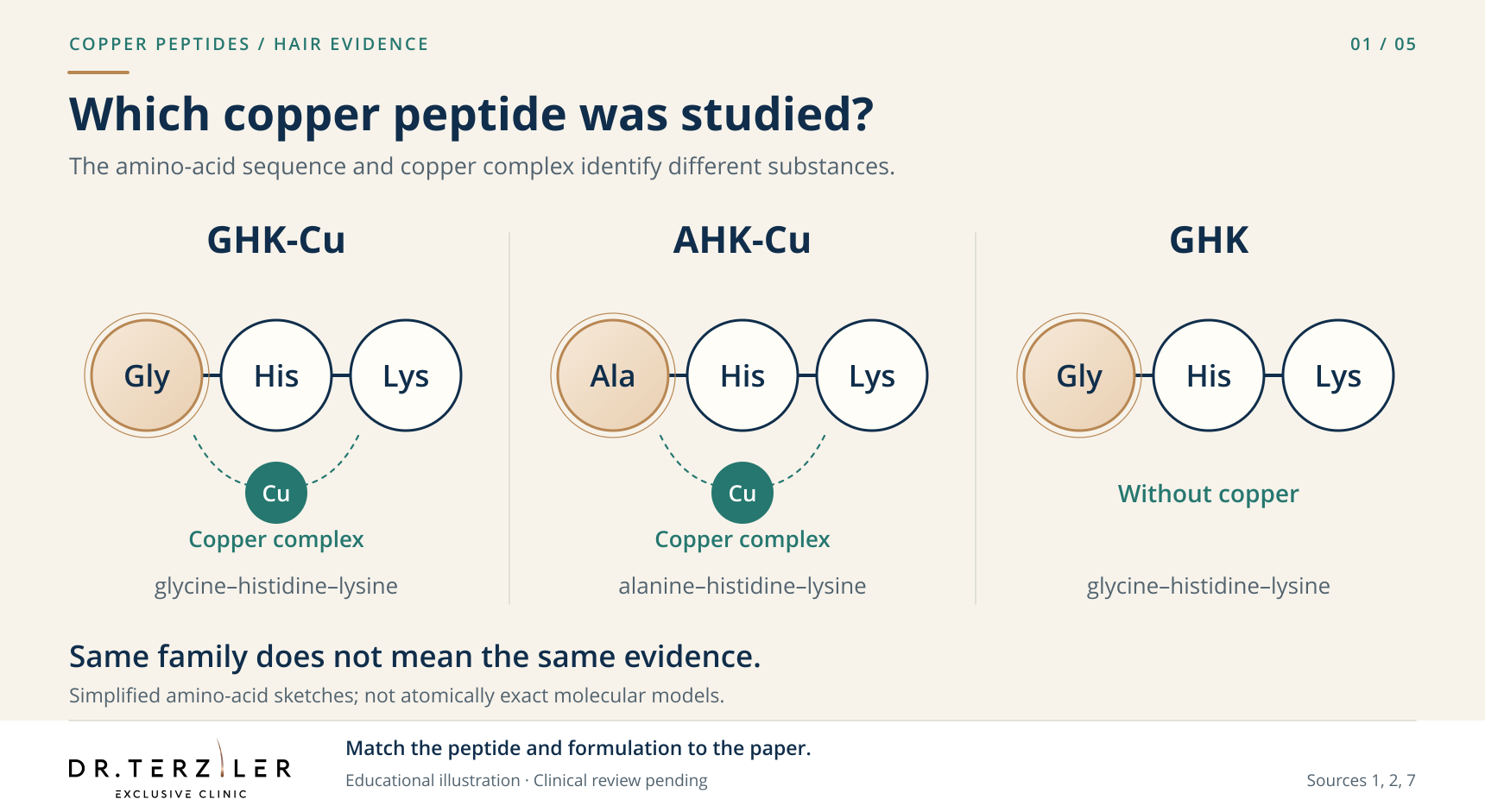
- The ingredient matters: GHK-Cu, AHK-Cu and copper-free GHK are different substances.
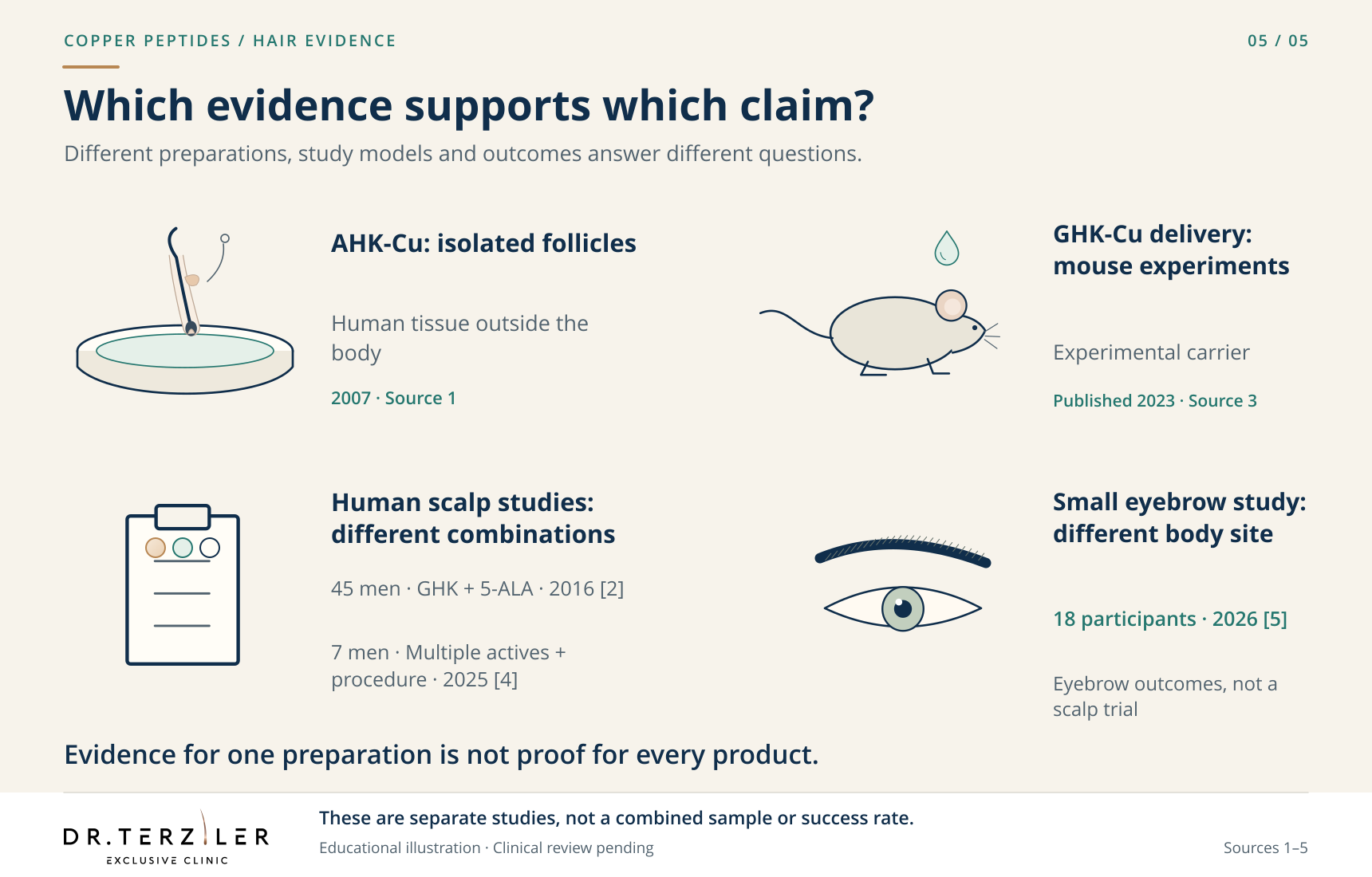
- The study matters: a hair follicle in a laboratory, an eyebrow study and a scalp treatment trial answer different questions.
- The route matters: a topical serum does not establish the safety or benefit of an injection.
- The comparison matters: improvement during several treatments does not identify which ingredient caused it.
- The diagnosis matters: gradual pattern loss, sudden shedding and an inflamed scalp need different assessments. [1] [2] [3] [4] [5] [6] [7] [8] [9]
These distinctions let you ask a more useful question than whether copper peptides “work”: does this particular product have evidence relevant to my type of hair loss, and what would we measure to decide whether it is helping?
What are copper peptides, GHK-Cu and copper tripeptide-1?
Copper peptides are short amino-acid chains that bind copper. GHK-Cu is the copper complex of glycyl-histidyl-lysine, a three-amino-acid peptide. Copper tripeptide-1 is an ingredient name commonly used for this complex in cosmetics. AHK-Cu contains alanine rather than glycine at the start of its peptide chain. [1] [6] [7]
The similar names make it easy to overgeneralise. A paper about AHK-Cu can support interest in the copper-peptide family, but it cannot, by itself, establish the effectiveness of a GHK-Cu scalp serum. Equally, a commercial “multi-peptide” blend may contain several active ingredients and may not be a copper-peptide product at all.
| Name | What it describes | What you should establish |
|---|---|---|
| GHK-Cu | GHK peptide complexed with copper | The actual formulation, intended use and application route |
| Copper tripeptide-1 | A cosmetic ingredient name commonly associated with GHK-Cu | Whether it is present in the product and what claims the finished formulation supports |
| AHK-Cu | A different copper tripeptide with alanine in its sequence | Whether the cited study actually tested AHK-Cu |
| GHK without copper | The peptide without the copper complex | Whether the research concerns GHK alone or a multi-ingredient preparation |
| Multi-peptide hair serum | A product category rather than one defined treatment | The full ingredient list and evidence for the finished product |
On a small screen, scroll the table sideways to read every column.
How might copper peptides support existing hair follicles?
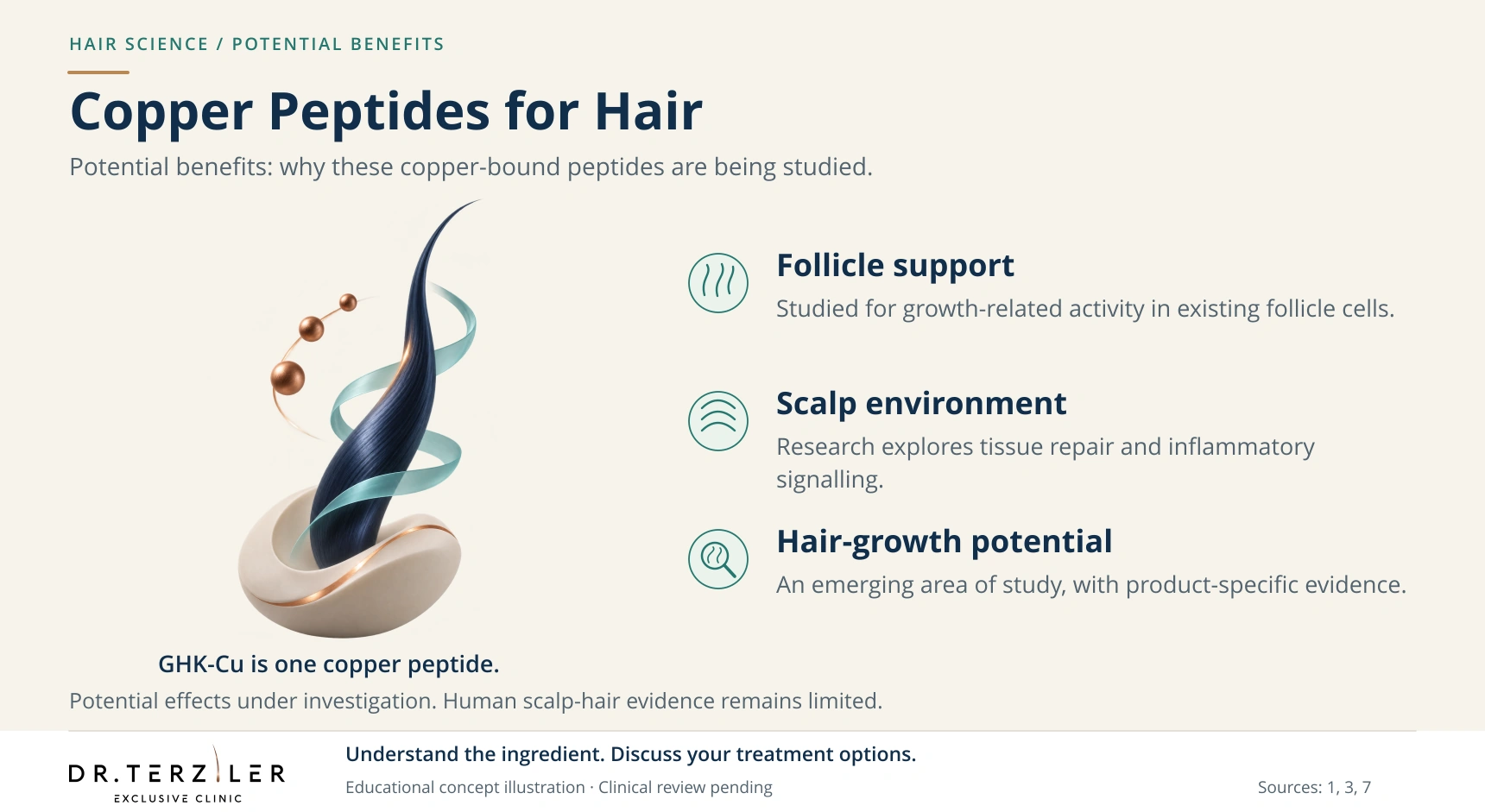
Copper peptides are being investigated for effects on the cells and signals involved in hair growth. In laboratory work, AHK-Cu increased the proliferation of dermal papilla cells, which help regulate follicle growth, and encouraged elongation of isolated human hair follicles. Those findings explain the research interest without establishing a patient-treatment result. [1]
GHK-Cu research also examines tissue repair, inflammatory signalling and delivery into the skin. A plausible mechanism can justify further study, but it does not show that a finished scalp product creates new follicles, reverses every cause of thinning or produces a predictable increase in density. The next step is to examine the human evidence for the actual preparation. [3] [6] [7]
Do copper peptides actually help hair growth?
Copper peptides have shown biological activity relevant to hair growth, and some small human studies involving related preparations report encouraging findings. However, those studies do not establish that every GHK-Cu product regrows scalp hair, or that a particular clinic protocol will work for an individual patient. [1] [2] [3] [4] [5] [6] [7] [8]
Laboratory research can test whether cells proliferate, whether an isolated follicle elongates or whether a delivery system changes skin penetration. Patient research must answer additional questions: does the treatment improve a defined form of hair loss, compared with an appropriate control, by a meaningful amount and with acceptable risks?
A fuller-looking photograph can be valuable to a patient, but it is a different endpoint from measured hair density, shaft diameter or sustained improvement after treatment stops. Those outcomes should not be combined into one universal “success rate.”
What does the most relevant research actually show?
The evidence includes different peptides, preparations and study models. Reading the material tested alongside the result prevents a promising finding from becoming a claim for an unrelated product.
| Research | What was actually tested | What it adds | Important limitation |
|---|---|---|---|
| Pyo and colleagues, 2007 | AHK-Cu in cultured cells and isolated human follicles | A laboratory signal supporting further investigation | This was not a trial of GHK-Cu treatment in patients. [1] |
| Lee and colleagues, 2016 | A 5-ALA plus GHK preparation in 45 men over six months | A controlled human study of a particular combination | It was not GHK-Cu alone; outcomes cannot be transferred to an ordinary copper-peptide serum. [2] |
| Liu and colleagues, published 2023 | GHK-Cu in an experimental microemulsion, including mouse experiments | Evidence that delivery formulation can affect performance | Animal findings and delivery improvements do not establish patient regrowth or superiority to minoxidil. [3] |
| Kuceki and colleagues, 2025 | A minoxidil–dutasteride–copper-peptide procedure in seven men | Preliminary observations from combination treatment | Retrospective, no control arm and no isolated copper-peptide effect. [4] |
| Bo and colleagues, 2026 | A GHK-Cu serum versus vehicle on opposite eyebrows in 18 participants | A small controlled cosmetic hair-growth signal | Eyebrow findings are not proof of treatment for androgenetic scalp hair loss. [5] |
On a small screen, scroll the table sideways to read every column.
The two human scalp examples need particular care. In the 2016 study, some hair-count findings were positive, but hair length and thickness did not differ significantly between the groups at six months. In the 2025 report, participants also continued topical minoxidil, and assessment relied on photographs rather than trichoscopic density measurements. Both details limit the conclusions that can be drawn about copper peptides themselves. [2] [4]
What do the sources agree on, and what remains uncertain?
Across the research reviewed here, biological plausibility is clearer than the clinical effectiveness of a standardised scalp protocol. Recent reviews repeatedly identify limited human evidence, formulation differences and the need for better controlled studies. This is a consistent reading of the evidence, rather than a formal consensus guideline recommending GHK-Cu for hair loss. [6] [7] [8]
Important unanswered questions include which formulation provides a worthwhile benefit, who is most likely to respond, how it compares directly with established treatments and whether any improvement persists. The presence of a clinical study somewhere in the peptide literature does not answer all of those questions for the product in front of you.
Is copper peptide a DHT blocker?
Copper peptides are not an established clinical DHT-blocking treatment. Research into cellular signalling or inflammation should not be described as proof that a scalp product lowers DHT or offers the same treatment effect as a medicine directed at androgen-related hair loss. [6] [7] [8] [10]
The role of DHT in pattern hair loss is relevant when discussing progressive miniaturisation. That discussion should distinguish a proposed biological mechanism from evidence that a treatment changes the condition in patients.
If you already use a prescribed treatment, a copper-peptide consultation should review how the proposed addition fits the existing plan. It should not become a reason to discontinue effective medication without discussing the change with your prescriber.
Is copper peptide better than minoxidil?
Copper peptides have not been shown to be better than minoxidil for scalp pattern hair loss in robust head-to-head patient trials. Minoxidil has an established clinical role; the evidence for GHK-Cu is more preliminary and depends heavily on the formulation and study model. [3] [6] [7] [8] [9] [10]
The comparison should remain specific to the patient and product. Someone experiencing irritation from one minoxidil vehicle may need a review of the formulation or the wider treatment plan. That experience does not establish that a copper-peptide product will be equally effective or better tolerated.
| Question | Copper-peptide approach | Minoxidil approach |
|---|---|---|
| What is the clinical evidence position? | Promising, with limited and heterogeneous human hair evidence | An established option for appropriate pattern hair loss |
| Is it a validated DHT blocker? | No established clinical DHT-blocking role | Used as a growth-promoting medicine rather than a clinical 5-alpha-reductase inhibitor |
| Can any formulation be substituted for another? | No; peptide identity and delivery differ | No; instructions depend on the specific product and formulation |
| Can benefit be promised? | No reliable universal regrowth rate or timeline | Response varies and continued treatment is often needed |
| What should guide the choice? | Diagnosis, evidence for the actual product, risks and a review plan | Diagnosis, suitability, product instructions, tolerability and follow-up |
On a small screen, scroll the table sideways to read every column.
A comparison of non-surgical hair treatment options should consider evidence, practical burden and the reason for treating, rather than treating every option as interchangeable.
Can copper peptides and minoxidil be used together?
They may appear in a combined plan, but using two products together does not automatically establish compatibility, safety or additional benefit. The clinician or pharmacist should check the finished formulations, application instructions and the condition of your scalp before advising on their use.
Do not mix separate products into the same bottle or transfer a cosmetic serum into a procedure. If several treatments start at the same time, record each one so that later photographs and symptoms can be interpreted in context.
Would a copper-peptide addition make sense in your plan?
Bring your current treatment list so the assessment can consider compatibility, practical burden and reasonable alternatives.
Who should have an assessment before considering copper peptides?
Anyone considering treatment for unexplained thinning should establish the likely cause first. A copper-peptide product should not be used to assume that all shedding is genetic pattern loss, or that a new patch, pain or inflammation can be managed as a cosmetic concern. [9] [10] [18]
The assessment can consider the distribution of thinning, when it started, scalp symptoms, hair-care practices, medicines and relevant health events. Examination may be supported by scalp imaging, and additional tests may be appropriate when the history or findings suggest a reason. A universal panel of “hair-growth biomarkers” is not a substitute for a useful clinical question. [9] [18] The clinic’s Tricho Test assessment can help organise findings about hair density, strand changes and scalp condition before treatment planning.
A changing frontal hairline and increased shedding across the whole scalp can lead to different discussions. They can also occur together. Understanding the cause and pattern of hair loss helps avoid selecting a treatment solely because its ingredient is popular.
Can copper peptides help women with thinning hair?
Women should receive the same distinction between plausible biology and demonstrated clinical benefit. Copper peptides are not a proven general solution for female pattern hair loss, postpartum shedding or other causes of thinning. Assessment should establish the condition and review suitable treatment options. [9] [10] [18]
Mention pregnancy, breastfeeding, hormone-related symptoms and changes to medicines or hair-care routines during the consultation. These details can affect the assessment and product suitability; they do not establish the cause by themselves.
Can copper peptides restore a bald hairline or treat scarring alopecia?
Current evidence does not justify promising that copper peptides will rebuild an established bald hairline or restore follicles destroyed by scarring. A new patch, loss of follicular openings, persistent redness or scalp discomfort deserves medical assessment rather than a trial-and-error product routine. [9] [18] [19]
Where a hair transplant in Turkey is being considered, donor capacity, the diagnosis and the long-term pattern need their own assessment. Transplantation relocates existing follicles; a peptide product should not be presented as a substitute for that planning or as a guarantee of graft survival.
How do topical treatment, microinfusion and injections differ?
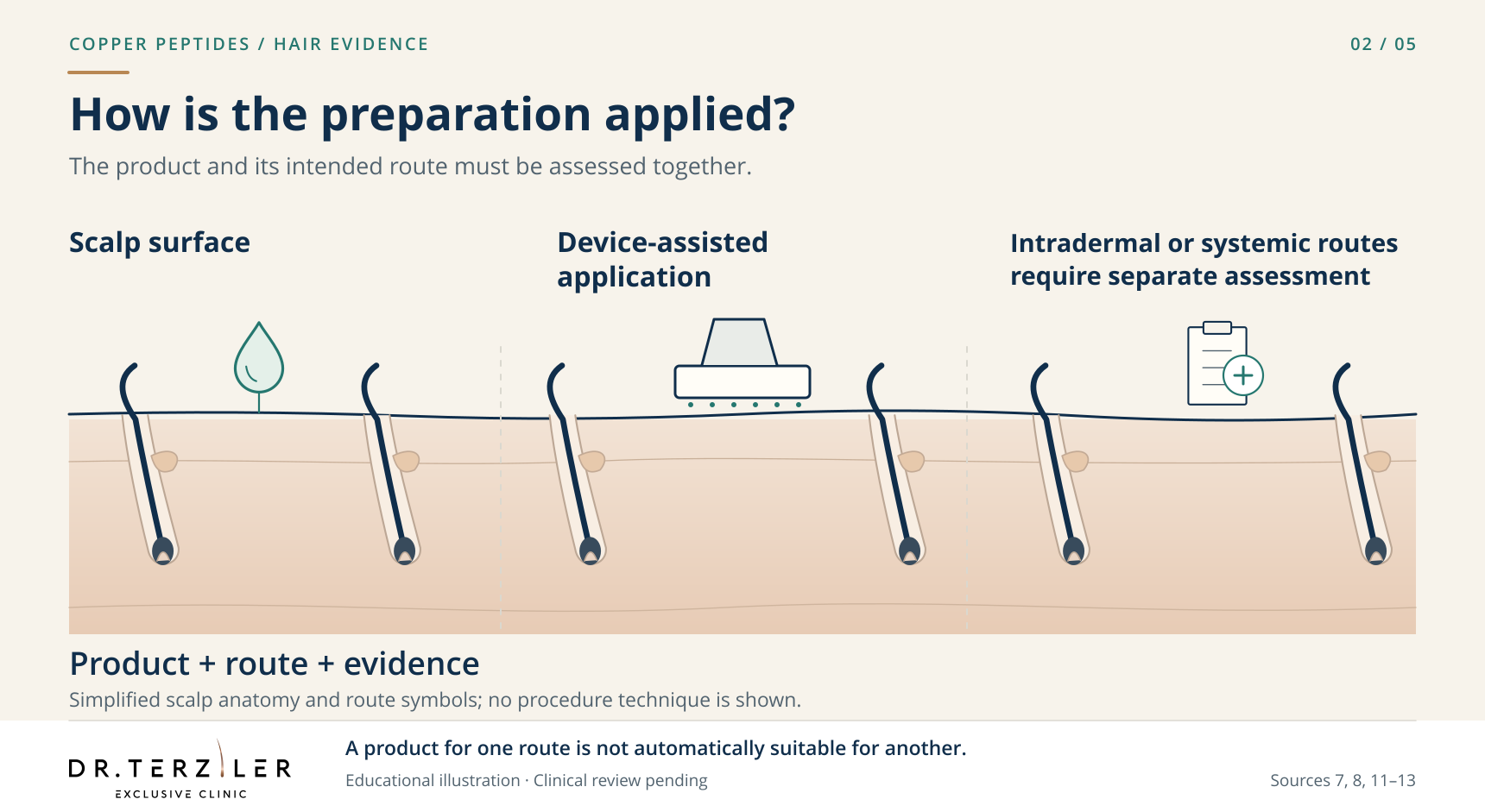
These routes deliver a product in different ways and cannot share one blanket claim of safety or effectiveness. A formulation intended for intact skin does not become suitable for microneedling or injection because it contains the same named peptide. [7] [8] [11] [12] [13]
| Approach | What it involves | What needs to be clarified |
|---|---|---|
| Topical serum or lotion | Application to the scalp surface | Finished formulation, instructions, compatibility and evidence for the intended use |
| Device-assisted application | A product used with a delivery device, including some microinfusion or needle-free systems | Exactly what the device does, the product’s intended route and evidence for that combination |
| Scalp microneedling or intradermal procedures | A procedure that disrupts the skin barrier or delivers material into it | Suitability of the preparation, infection precautions, clinician responsibility and aftercare |
| Systemic peptide injection | Administration intended to expose tissues beyond the scalp | A separate medical and regulatory question; topical hair research does not validate it |
On a small screen, scroll the table sideways to read every column.
The term “microinfusion” is not sufficiently precise on its own. Ask whether a clinic means microneedling, injection, pressure-assisted application or another method. The name of the procedure should make the route clearer, rather than conceal it.
Can copper peptides be injected, and is GHK-Cu safe to inject?
Injectable GHK-Cu is offered in some settings, but its availability is not proof of established safety or effectiveness for hair loss. The FDA identifies potential immunogenicity concerns for compounded injectable GHK-Cu associated with aggregation and peptide-related impurities, with limited human safety information. [11]
In Canada, Health Canada has specifically named GHK-Cu in warnings about unauthorised injectable peptides. A research-use label or a supplier’s purity certificate is not a substitute for an appropriately authorised, clinically suitable preparation. [13]
These are jurisdiction-specific regulatory sources. They should not be used to claim that every cosmetic copper-peptide serum is prohibited, or that a product authorised in one setting is automatically authorised in Turkey. The exact product and proposed route require verification before treatment is arranged.
Do you know which product and route are being proposed?
Ask about the preparation and application method before discussing a course or paying for treatment.
Does improved absorption mean better hair growth?
Improved delivery is a useful research finding, but it does not by itself prove better hair growth in patients. A system can increase the amount reaching a tissue without establishing the best dose, long-term safety or a clinically meaningful benefit. [3] [7] [8]
This is why a “three times better absorption” statement should not become “three times more regrowth.” The outcome measured in the study must remain attached to the number. The same distinction matters when considering exosome hair therapy, because evidence for delivery does not by itself establish regrowth.
What are the downsides and possible side effects of copper peptides?
Possible downsides include irritation from a topical formulation, uncertainty about clinical benefit, treatment cost and the practical burden of a routine that may not help. Procedures add route-specific considerations, while small studies cannot establish the frequency of uncommon or long-term adverse effects. [5] [7] [11] [12] [13] [14]
For topical products, review the whole ingredient list. Fragrances, solvents or other actives may affect tolerability independently of the peptide. A reaction to a multi-ingredient product does not identify its cause without assessment.
Stop using a product that causes a concerning reaction and seek advice. Seek urgent local care for severe symptoms such as difficulty breathing or marked facial swelling. After a procedure, worsening pain, spreading redness, discharge or feeling unwell should be assessed promptly rather than managed by adding more scalp products.
Is copper damaging to hair, and should you take copper supplements instead?
Copper is an essential nutrient, but nutritional copper, copper in environmental exposures and a copper-peptide formulation are different topics. Taking extra copper is not an evidence-based substitute for a hair-loss assessment, and excessive intake can be harmful. [15]
If a deficiency is suspected, it should be investigated and treated in the context of your health history. A cosmetic ingredient being described as “copper based” does not establish a nutritional deficiency or a need for supplementation.
Who should discuss additional precautions before treatment?
Tell the clinician about allergies, previous scalp reactions, active scalp disease, pregnancy or breastfeeding, copper-metabolism conditions and medicines or supplements you take. These details help determine whether a particular formulation or route is appropriate; they do not support one universal eligibility checklist for every copper-peptide product. [11] [12] [13] [14] [15]
Children and teenagers with hair loss need an age-appropriate medical assessment. Safety or dosing assumptions should not be borrowed from adult cosmetic products or online peptide protocols.
How often should you use copper peptides for hair growth?
There is no universally established GHK-Cu hair-growth dose, concentration or application schedule that can be applied to every product. Follow the directions for the actual formulation and the advice of the clinician responsible for your plan. A laboratory concentration is not a consumer dosing instruction. [2] [5] [7] [8]
Similarly, the schedule of a particular study is not automatically the schedule used by Dr. Terziler Exclusive Clinic. Before starting, clarify how the product is to be used, what to do if irritation develops and when progress will be reviewed.
Using more product, a stronger concentration or a more invasive application method has not been established as a reliable way to obtain more regrowth.
What should you not mix with copper peptides?
Compatibility is formulation-specific. Ask the manufacturer or pharmacist about the exact products rather than applying a universal internet rule to all copper peptides. Chemical stability, skin irritation and the evidence for treatment benefit are separate issues.
For example, The Ordinary advises against combining its own copper-peptide facial serum with direct acids, direct vitamin C, retinoids and certain strong antioxidants. That is product guidance for that formulation, not a clinical trial of hair growth and not a universal rule for all scalp products. [14]
Do not combine ingredients, change application timing or use a cosmetic serum around microneedling solely because a social-media routine recommends it. Your clinician should review current scalp treatments and provide instructions relevant to the product and procedure being proposed. Bring the ingredient lists for any hair-care products used at home to that review.
How long do copper peptides take to regrow hair, and how long do results last?
A reliable, universal time to scalp regrowth has not been established for standalone GHK-Cu treatment. Claims such as “new hair in days” or a fixed three-month transformation should not be borrowed from animal experiments, cosmetic eyebrow research or multi-treatment patient reports. [2] [3] [4] [5] [6] [7] [8]
An early change in how hair feels or styles may reflect conditioning rather than a change in follicular output. If the aim is to improve coverage, the plan should define how that outcome will be assessed and when the treatment will be reconsidered if there is no useful change.
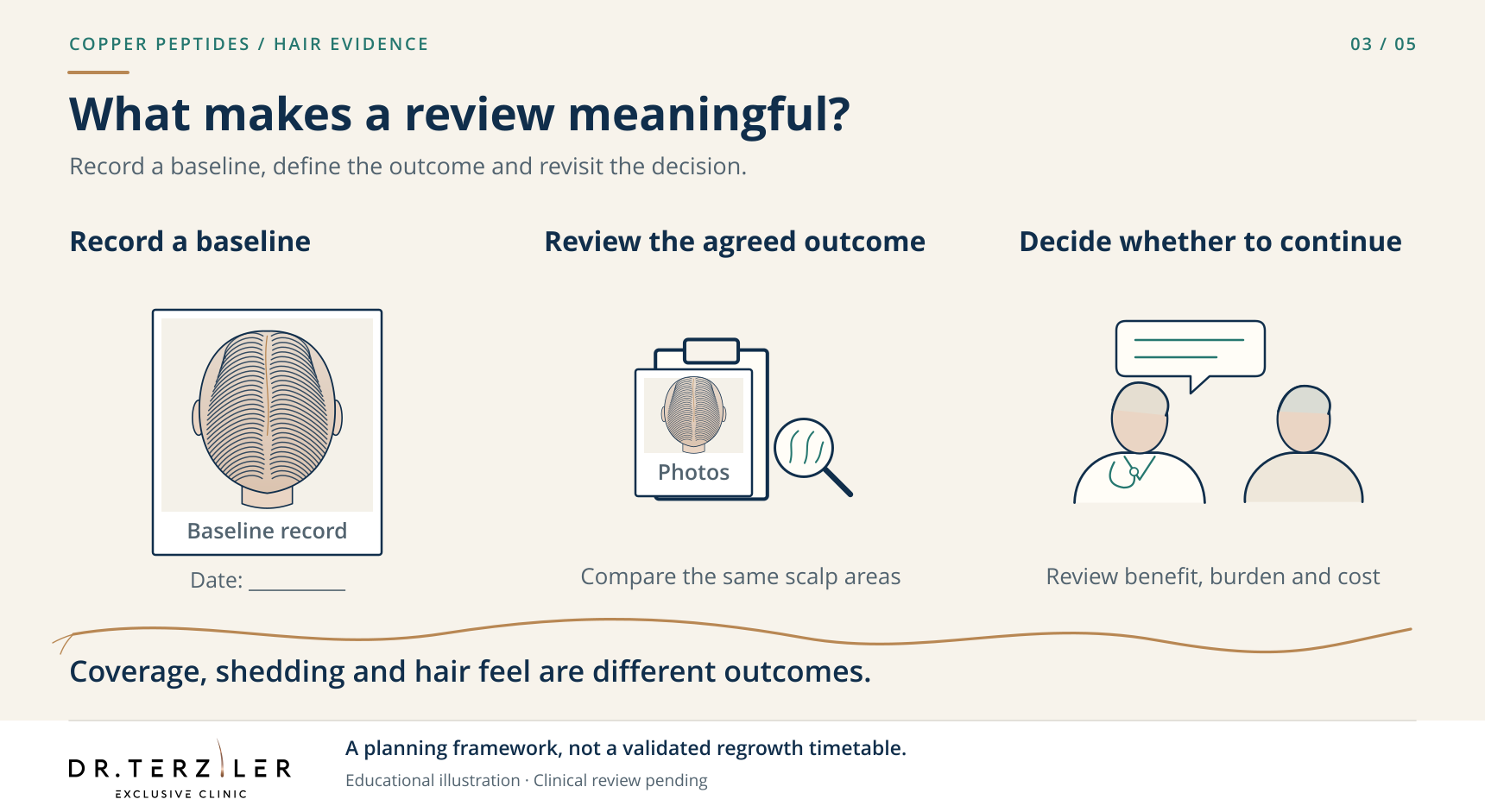
Before starting, agree on four practical points:
- The goal: less shedding, improved coverage and improved hair feel are different outcomes.
- The baseline: record the same scalp areas and relevant concurrent treatments.
- The review: decide when the clinician will assess tolerability and the intended outcome.
- The decision: discuss what would justify continuing, changing or stopping the plan.
There is also insufficient evidence to promise permanent benefit after stopping a copper-peptide regimen or to assign every patient the same maintenance interval. Ask about the expected commitment before paying for a course.
What do copper-peptide before-and-after photographs and reviews prove?
Photographs and reviews can describe an individual experience, but they do not establish the isolated effect of a copper peptide. To interpret an apparent change, you need comparable images, the time interval, the diagnosis and a record of other treatments used during the same period.
A useful result record should state the exact product and route, treatment dates, concurrent medicines or procedures and the method used to assess change. If density or shaft diameter is reported, the measurement method and scalp site should be identified. An AI estimate of visible scalp should not be relabelled as a measured hair count. [4] [18]
Similar hair length, lighting, parting, head position and dry or wet condition make comparisons easier to interpret. The front, top, crown and donor photo checklist helps organise a complete set of views rather than selecting one favourable angle.
No percentage from a small study should be presented as a clinic success rate. Equally, a hair-transplant or LLLT result should not be repurposed as a copper-peptide case. Treatment attribution is part of making the photograph useful.
For a useful comparison, record: the product, route, dates, other treatments and assessment method. Keep lighting, parting, head position and hair condition as similar as possible.
Can copper peptides be combined with PRP, red light therapy or a hair transplant?
Copper peptides may be discussed within a broader plan, but each addition needs its own purpose, evidence and practical justification. A combination result does not prove that every component is necessary, or that adding more treatments improves the outcome. A combined programme such as Diamond Hair Reset should still explain which components are proposed and what each is intended to add.
PRP hair treatment and low-level light therapy for hair loss involve different interventions and different bodies of evidence. Comparing them requires the diagnosis, the intended outcome, treatment burden and the quality of the relevant studies. It should not be reduced to a universal ranking in which the newest option is automatically best.
After a transplant, follow the team’s scalp-care and aftercare instructions before adding a new topical product or procedure. Timing and suitability need to be checked for the healing scalp; no standard peptide start date should be inferred from research on intact skin.
Which peptide is best for hair loss, and what are the “big three”?
Current evidence does not establish one universally best peptide for hair loss. A meaningful comparison needs the exact peptide, the finished product, the diagnosis and patient outcomes from a suitable study, rather than a list of popular ingredients. [1] [2] [3] [4] [5] [6] [7] [8]
When “big three” is used for minoxidil, finasteride and ketoconazole shampoo, it is informal shorthand rather than a universal prescription. A 2025 Canadian expert consensus recommended topical minoxidil and oral finasteride for appropriate androgenetic alopecia, while ketoconazole shampoo received near-consensus support. That does not make the three interchangeable or establish copper peptides as an equivalent alternative. [20]
What should happen during a copper-peptide consultation at Dr. Terziler?
A useful consultation should establish the problem being treated, explain the proposed preparation and route, compare reasonable alternatives and agree on follow-up. Our current service framework starts with individual assessment; the consultation should translate that into a plan you can understand before you decide to proceed.
Dr. Terziler Exclusive Clinic’s physicians include Dr. Servet Terziler and Dr. Kürşat Yalvaç. Ask which clinician will assess your hair, explain the proposed treatment and review your progress.


What happens during the assessment?
Bring the pattern and timeline of your hair changes, relevant health information and a list of current treatments. Previous photographs can help when their conditions are reasonably comparable. The clinician can decide whether scalp examination, imaging or further investigation is useful before discussing a treatment.
What should your individual plan explain?
The plan should name the ingredient and product, explain the proposed application method and identify the expected outcome. It should also cover limitations, product instructions, possible adverse effects, alternatives and the total expected commitment. A general promise of “cellular renewal” does not explain how your hair loss will be assessed.
What should you understand before an application or procedure?
You should understand what will be used, who will be responsible, what it is intended to achieve and what aftercare or restrictions apply. If a device or injection is proposed, ask how the preparation is intended to be delivered and what evidence supports that product-and-route combination.
How should progress and the next decision be reviewed?
Review the same scalp areas and the outcome agreed at the start. Discuss tolerability and any changes to concurrent treatment as well as photographs. Follow-up should lead to a decision about continuing or changing the plan, rather than automatically adding another course.
What would you like to discuss at your consultation?
Share what you have noticed and the treatments you already use. The team can explain what information is useful before an assessment.
How much does copper-peptide hair treatment cost?
The cost depends on the actual product, application method, number of appointments and follow-up included. A home-use serum price, a compounded prescription and an in-clinic procedure are not directly comparable purchases.
Before accepting a quote, establish whether it covers assessment, the preparation itself, any device-assisted procedure, follow-up and further products or maintenance. A lower price per vial does not explain the likely value of the whole plan.
| Ask for this in writing | Why it helps |
|---|---|
| Exact product and application method | Clarifies what you are buying |
| Number and purpose of appointments | Separates assessment, treatment and review |
| Outcome to be assessed | Makes the purpose of follow-up clear |
| Included and additional costs | Helps you compare complete plans |
| Options if the plan is unsuitable or unhelpful | Prevents an open-ended commitment |
On a small screen, scroll the table sideways to read every column.
How can patients in the USA, UK or Canada assess a clinic abroad?
Start by confirming the diagnosis, product, route and clinician responsible for the proposed care. Before travel, ask which records can be reviewed remotely, what still needs an in-person examination and how follow-up or a treatment concern will be handled after you return home.
Product marketing and regulatory categories differ between countries. FDA discussion of a compounded ingredient is not FDA approval of a finished hair-loss drug; Health Canada’s warning about unauthorised injectable peptides is not a statement about every cosmetic serum. Confirm the status of the actual preparation in the location where it will be supplied or administered. [11] [12] [13] [16] [17]
A virtual consultation can help organise questions and records. It should not be described as a complete scalp examination or as proof that treatment will be suitable when you arrive.
What else do patients ask about copper peptides for hair?
Is copper-peptide hair treatment FDA approved?
Do not interpret the sale of a copper-peptide serum, a compounded preparation or a compounding-list nomination as FDA approval of a hair-loss drug. FDA explains that compounded drugs are not FDA approved. Product identity, intended claim and route need to be checked separately. [11] [12] [16] [17]
Can you use copper peptides every day?
Some topical products are intended for regular use, but the correct routine comes from the instructions for that product. Daily use in one formulation or research study does not establish the correct schedule for another, especially when a procedure changes the application route.
Are copper-peptide shampoos equivalent to scalp serums?
No. A rinse-off shampoo and a leave-on serum have different formulations, contact times and intended uses. Evidence for one finished preparation should not be transferred to the other simply because both list a copper-related ingredient.
Does a higher percentage of copper peptide work better?
A higher label percentage does not establish greater clinical benefit. First check what the percentage refers to, the formulation and the intended application. Published concentrations from different products or study models are not a validated dose-response guide for your scalp. [7] [8]
Is shedding after copper peptides a sign that the treatment is working?
An increase in shedding is not proof of benefit from copper peptides. Review the timing, scalp symptoms and other products or medicines with the clinician rather than assuming that every new symptom is a necessary “purge.” [9] [18]
Can GHK-Cu regrow hair without another treatment?
The evidence does not currently establish a predictable standalone GHK-Cu scalp-regrowth effect. Combination reports cannot answer that question because medicines, procedures and other factors may contribute to the observed result. [2] [3] [4] [5] [6] [7] [8]
Where should you buy copper peptides for hair growth?
First clarify whether you are considering a cosmetic scalp product, a prescribed preparation or a clinical procedure. Check the intended use, manufacturer or supplying pharmacy and product instructions. Do not buy research-use powders or injectable peptides for self-treatment. [12] [13]
What should you do if you do not know whether your hair is thinning?
Record what seems different and compare with your own earlier photographs under similar conditions. A structured hair self-check can help organise those observations, while a clinical assessment can investigate their cause. New patches or scalp symptoms deserve assessment without waiting for a long photo-monitoring period. [9] [18] [19]
What is the right next step for your hair?
Discuss the cause of your thinning, the evidence for the proposed preparation and a plan for assessing progress.
Which sources support this page?
- Pyo HK et al. The effect of tripeptide-copper complex on human hair growth in vitro. Archives of Pharmacal Research. 2007.
- Lee WJ et al. Efficacy of a Complex of 5-Aminolevulinic Acid and Glycyl-Histidyl-Lysine Peptide on Hair Growth. Annals of Dermatology. 2016.
- Liu T et al. Thermodynamically stable ionic liquid microemulsions pioneer pathways for topical delivery and peptide application. Bioactive Materials. Published 2023; volume collection 2024.
- Kuceki G et al. Enhanced hair regrowth with five monthly sessions of minoxidil-dutasteride-copper peptides tattooing for androgenetic alopecia assessed by artificial intelligence and blinded evaluators. JAAD International. 2025.
- Bo SL et al. The efficacy of 2% copper peptide (GHK-Cu) serum for eyebrow hypotrichosis: a randomized, double-blind, vehicle-controlled, split-face comparative study. Procedia of Multidisciplinary Research. 2026. Poster-presentation publication; eyebrow outcomes.
- Overview of Short Peptides for Hair Loss. Biomedicines. 2026;14(4):864.
- Mateescu DM et al. GHK-Cu as a Bioactive Metallopeptide and Drug-Delivery Cargo: Coordination Chemistry, Formulation Science, Therapeutic Evidence, and a Translational Roadmap. Pharmaceutics. 2026;18(9):1077.
- A Systematic Review of the Mechanisms and Therapeutic Applications of GHK-Cu in Topical Microneedle Delivery: A Case for Expanded Clinical Trials. 2026.
- American Academy of Dermatology. Hair loss: Diagnosis and treatment.
- NHS. Hair loss.
- US Food and Drug Administration. Certain Bulk Drug Substances for Use in Compounding that May Present Significant Safety Risks. Injectable GHK-Cu entry.
- US Food and Drug Administration. Understanding the Risks of Compounded Drugs.
- Health Canada. Think twice before injecting peptides bought online: unauthorized products can seriously harm you. Updated 9 April 2026.
- The Ordinary. Multi-Peptide + Copper Peptides 1% serum. Manufacturer’s product and compatibility guidance; this is a facial cosmetic, not a scalp efficacy study.
- NIH Office of Dietary Supplements. Copper: Fact Sheet for Health Professionals.
- US Food and Drug Administration. Is It a Cosmetic, a Drug, or Both?
- US Food and Drug Administration. Bulk Drug Substances Nominated for Use in Compounding Under Section 503A. Updated 14 May 2026. Non-injectable GHK-Cu category entry is not product approval.
- NYU Langone Health. Diagnosing Hair Loss.
- American Academy of Dermatology. Hair loss: Signs and symptoms.
- Landells I et al. A Canadian Consensus on Androgenetic Alopecia: Approach and Management. Journal of Cutaneous Medicine and Surgery. 2025.
Questions You May Have
Copper peptides are biological molecules composed of copper ions and amino acids. They can be used in regenerative treatments to support cellular renewal and tissue repair.
It is a modern regenerative treatment approach designed to support skin quality, collagen production, cellular repair mechanisms and the biological environment of hair follicles.
For suitable candidates, it can be planned as a complementary part of skin rejuvenation, hair treatments and longevity programmes.
The number of sessions varies depending on the individual’s needs and the treatment plan drawn up.
Yes. It can be tailored to the individual in combination with PRP, exosomes, growth factors, NAD⁺, glutathione and other regenerative treatments.
Your journey begins today.
Contact us for a free, personalised consultation. Our team of experts will be by your side every step of the way.