Female Hair Transplant in Turkey: Olga and Aisha’s Case Studies, Cost and Results
Women lose hair in a pattern men rarely see. The part line widens, the temples thin. The hairline stays, but the volume behind it goes quiet. A female hair transplant rebuilds that volume follicle by follicle, and it works best when medication has already stopped giving you anything back. Dr. Terziler Exclusive Clinic treats around 412 female cases every 18 months, and we built the Robotic DHI machine we use on most of them.
Hair analysis, tricho test and a personalised hair transplant plan.
ADIM 02
Design
The natural hairline and density map are determined together.
ADIM 03
Hair Transplants for Women
The grafts are carefully implanted by a team of specialists using state-of-the-art technology.
ADIM 04
Follow-up & Support
Regular check-ups and regenerative support over a 12-month period.
TL;DR
A female hair transplant in Turkey costs about €3,500 to €7,000 all-inclusive in 2026 (roughly $3,800 to $7,600 / £3,000 to £6,000). For an exact, personalised quote the clinic reviews your photos on contact or WhatsApp.
Most female patients choose no-shave DHI so their existing long hair is preserved and the donor trimming stays hidden from day 1.
Women lose hair differently from men: female pattern hair loss, traction alopecia, postpartum shedding, and hairline widening need diagnosis before any surgery.
The most common female goals are hairline lowering, temple and frontal density, and thickening a widened parting.
Real, consented results matter more than promises: this page documents Olga's and Aisha's female hair transplant case studies with photos and timelines.
Dr. Terziler Exclusive Clinic is AACI-accredited and surgeon-led, and Dr. Servet Terziler is the inventor of the Robotic DHI Machine and Picasso Robotic DHI.
MEDICALLY REVIEWED BY
Dr. Servet Terziler
AACI-accredited hair transplant surgeon | ISHRS workshops | Founder & President, TUSATDER | Inventor, Robotic DHI Machine | Creator, Picasso Robotic DHI | European Property Awards Best Hair Transplant Clinic in Europe | Updated for female hair transplant patients in 2026.
Updated in 2026, August
Female patient case studies and photos are published with patient consent. Individual results vary. Clinical planning figures reflect Dr. Terziler's surgeon-led protocols and international female patient intake.
What Do Real Female Hair Transplant Results Look Like? Olga and Aisha's Case Studies
Real female hair transplant results look most convincing when they are documented over time with the patient's consent, showing the day-of-surgery hairline, the early healing days, and the mature 4-month or 12-month growth. Below, Olga's and Aisha's cases show how no-shave female DHI can rebuild a natural hairline without shaving off a woman's existing hair.
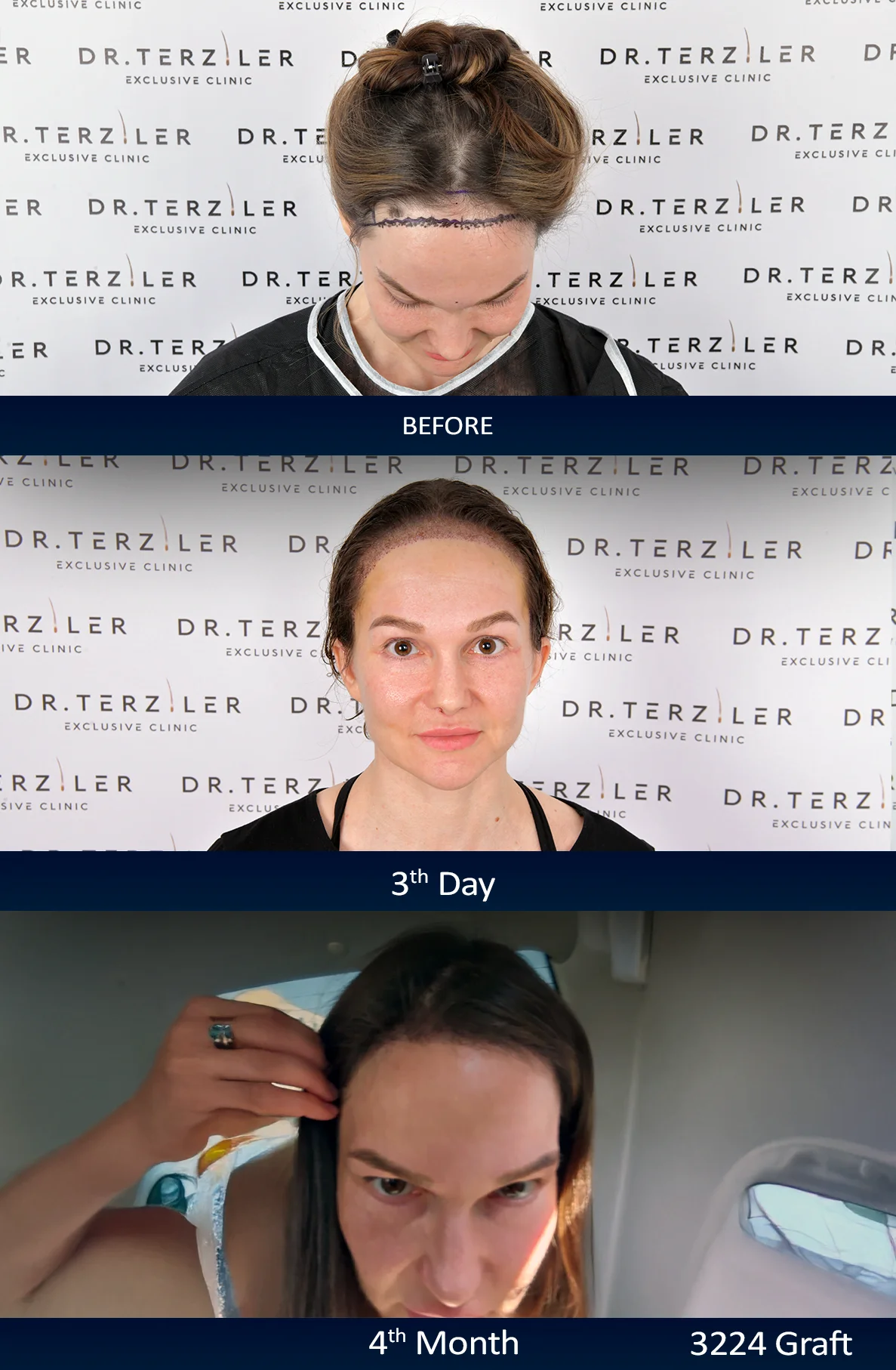
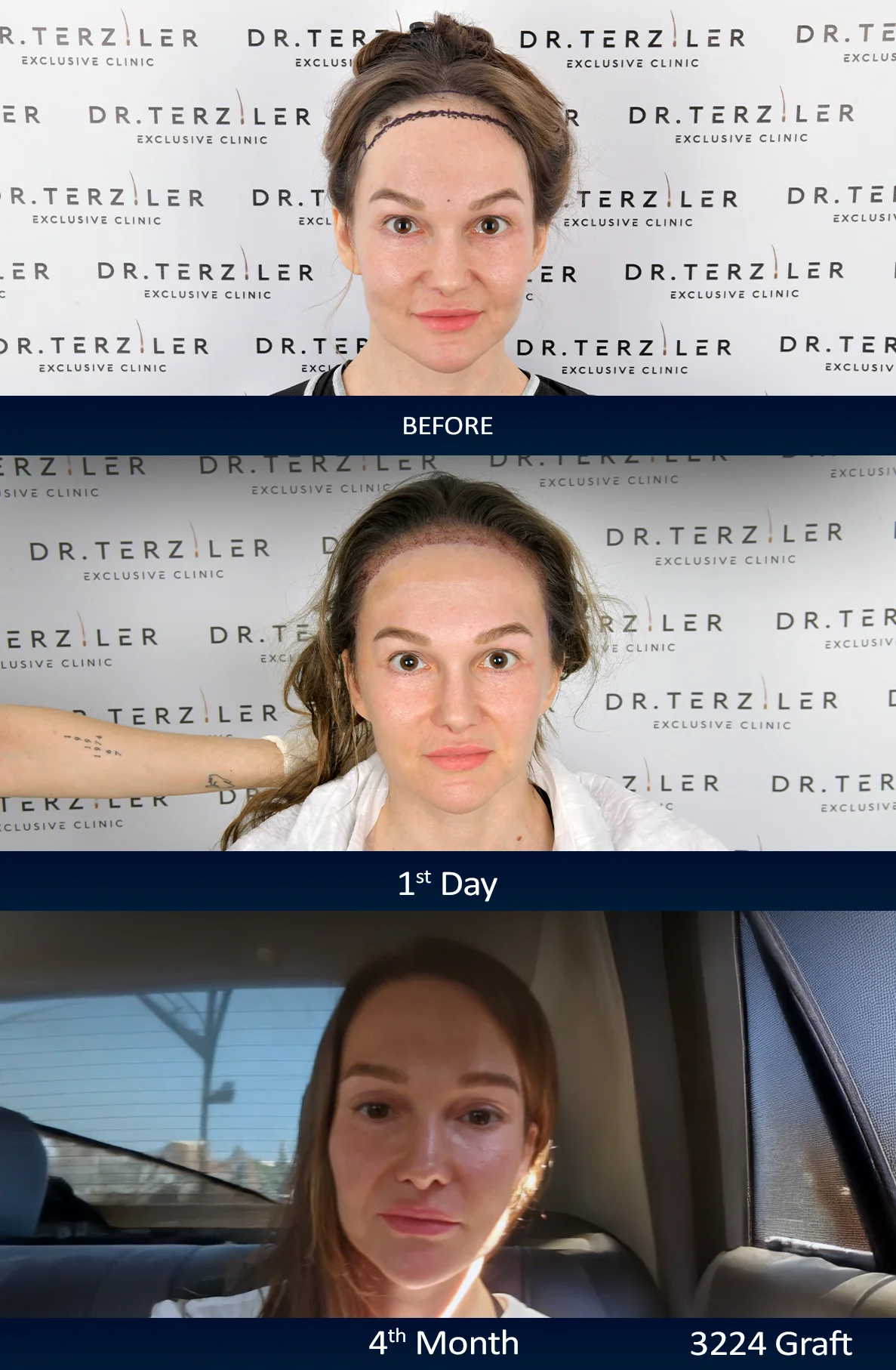
Olga's female hair transplant timeline: before, day 1, day 3, and the 4th-month frontal result after a 3,224-graft no-shave session.Frontal-area healing process for Olga's shaven-free female hairline restoration.
What Did Olga's Female Hair Transplant Journey Look Like?
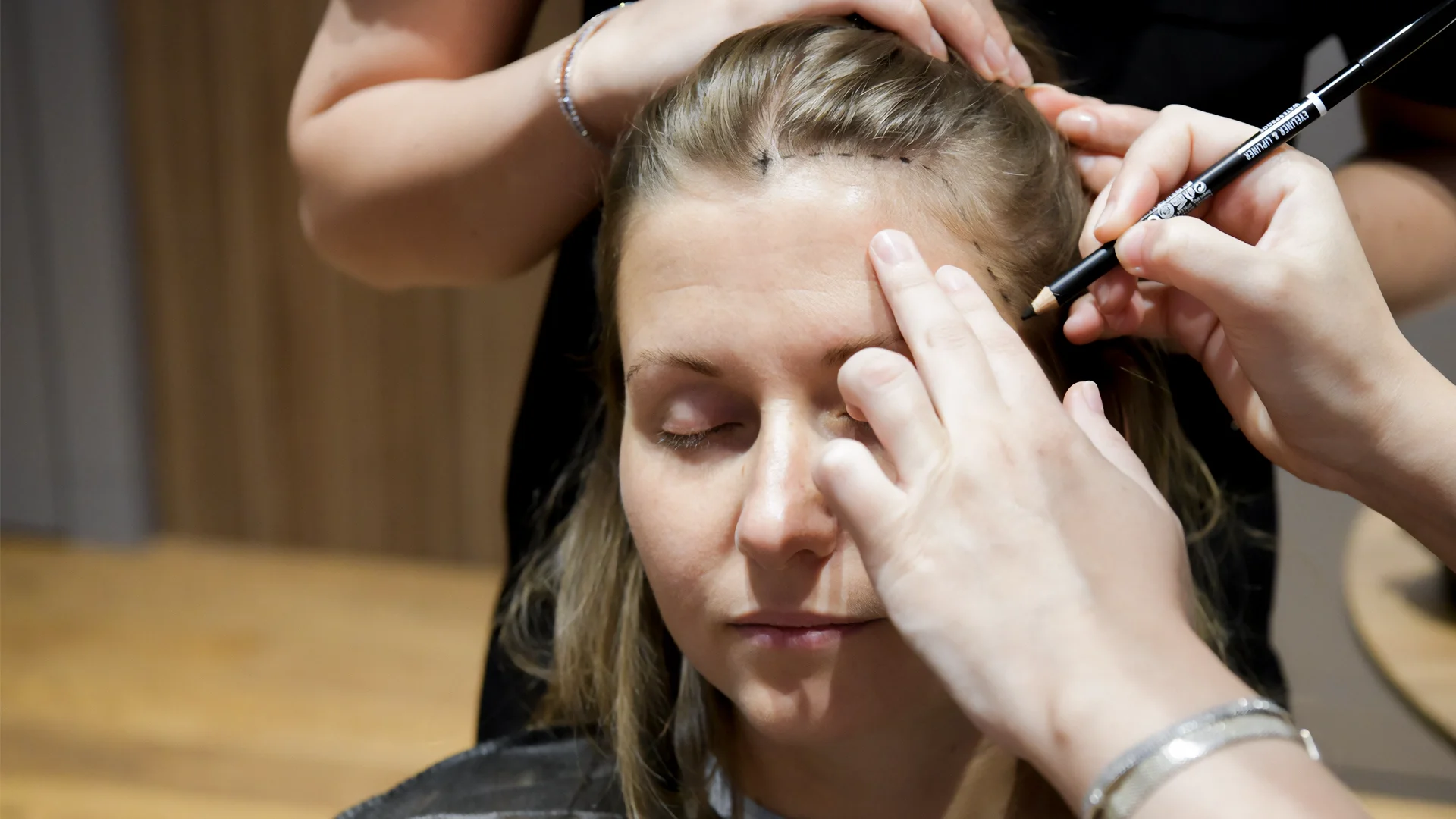
Olga's goal was to rebuild a receded frontal hairline and add temple density without shaving her long hair. The plan used a no-shave female DHI approach so she could keep her length throughout recovery.
Concern: widened frontal hairline and thinning temples
Technique: shaven-free (no-shave) female DHI
Grafts: 3,224 grafts in a single session
Documented timeline: before, day 1, day 3, and 4th month
Result focus: a soft, feminine frontal contour that looks natural once the hair is worn down or tied back
By the fourth month the transplanted frontal zone had begun filling in while the surrounding hair stayed full length, which is why the donor trimming was never visible in everyday styling. Final density and texture continue to mature toward month 12.
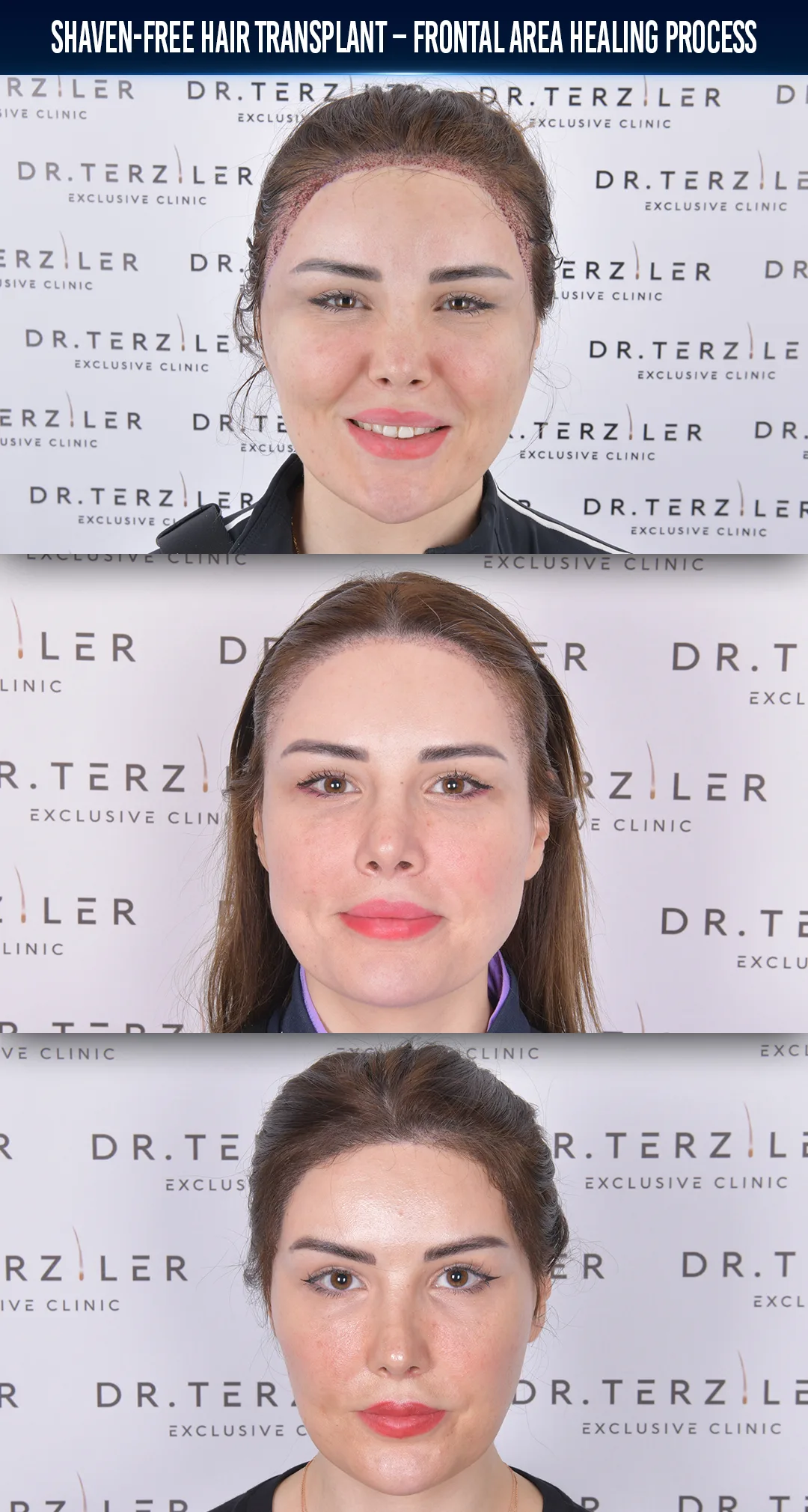
Aisha's woman hair transplant in Turkey: a natural, feminine hairline restored at Dr. Terziler Exclusive Clinic.
How Did Aisha's Woman Hair Transplant in Turkey Turn Out?
Aisha wanted to restore a feminine hairline shape and frame her face again after years of gradual frontal recession. Her plan prioritised hairline design and curl-direction control so the result would look believable from every angle.
Concern: receding frontal hairline and loss of facial framing
Technique: surgeon-led female DHI with detailed hairline design
Result focus: a hairline that looks natural in both pulled-back and worn-down styles
Aisha's case shows why hairline artistry matters more than graft count alone: the same number of grafts can look artificial or completely natural depending on angle, density gradient, and how the design respects the patient's face.
Photos of Olga and Aisha are published with patient consent. Individual results vary depending on hair loss stage, donor supply, and aftercare.
What Is a Female Hair Transplant?
A female hair transplant is a hair restoration procedure that moves DHT-resistant follicles from a woman's donor area into thinning or receded zones, most often the frontal hairline, temples, and parting, usually without shaving the existing hair.
It is a specialised form of hair transplant in Turkey because women rarely want a shaved head and usually need density added between existing hairs rather than onto a bald scalp. That is why the technique of choice for most women is DHI, and specifically unshaven (no-shave) DHI, where a Choi implanter pen slots grafts between long hairs.
How Is a Female Hair Transplant Different From a Male One?
A female hair transplant differs from a male one because women usually keep their hair long, need work between existing hairs, and require a softer, rounded hairline instead of a masculine or aggressive design.
Women also more often present with diffuse thinning rather than a clear bald patch, which makes diagnosis and candidate selection more important than in typical male pattern baldness. Hairline design is judged in pulled-back styles too, so temple density and a natural front row matter enormously.
Why Do Women Lose Hair Differently From Men?
Women lose hair differently because female hair loss is more often diffuse, hormonally influenced, and driven by causes such as female pattern hair loss, traction alopecia, postpartum shedding, thyroid issues, and iron deficiency, which must be diagnosed before surgery.
Common causes of female hair loss and how they affect hair transplant planning.
Female hair loss causes and hair transplant suitability
Cause
What it looks like
Transplant planning note
Female pattern hair loss (FPHL)
Widening parting, diffuse thinning over the crown
May be transplantable when donor is stable; medical therapy often combined
Traction alopecia
Temple and hairline loss from tight styles, ponytails, braids, extensions
Good candidate when early; scarred late-stage needs caution
Postpartum / telogen effluvium
Sudden diffuse shedding after birth, illness, or stress
Usually temporary; surgery is not indicated until it stabilises
High or masculine hairline
Naturally high forehead or receded corners
Excellent candidate for hairline lowering and temple rebuilding
Thyroid, iron, or hormonal issues
Diffuse thinning with medical triggers
Treat the underlying cause first; transplant only if loss is stable
Can a Blood Test Be Needed Before a Female Hair Transplant?
Yes. Because female hair loss is often medical, a responsible clinic may request blood work for iron, ferritin, thyroid, and hormones before recommending surgery, so a reversible cause is not missed.
Which Techniques Are Best for a Female Hair Transplant?
The best female hair transplant techniques are no-shave DHI and Robotic DHI for most women, with Sapphire FUE suitable in selected cases, because they add density between existing hairs with precise angle and direction control.
At Dr. Terziler Exclusive Clinic the most common female choice is unshaven DHI, and higher-precision cases can use Robotic DHI or Picasso Robotic DHI. Sapphire FUE can suit women who accept limited trimming or need larger sessions.
Why Do Most Women Choose No-Shave DHI?
Most women choose no-shave DHI because it preserves their existing long hair, hides the donor trimming from day 1, and lets them return to normal social life within days.
The Choi implanter pen places grafts directly between long hairs at controlled angles, which is ideal for feminine hairline design where the exit angle and softness of the front row decide whether the result looks natural.
Who Is a Good Candidate for a Female Hair Transplant?
A good candidate for a female hair transplant is a woman with stable hair loss, a healthy donor area, and a clear localised goal such as hairline lowering, temple restoration, or frontal density, once medical causes have been ruled out.
Hairline lowering: women with a naturally high forehead who want a lower, rounder hairline.
Temple and frontal restoration: loss from traction, styling tension, or early female pattern hair loss.
Stable female pattern hair loss: when the donor area is strong and the loss is not actively progressing quickly.
Scar camouflage: covering fine facelift or brow-lift scars along the hairline.
Not yet suitable: active postpartum shedding, untreated thyroid or iron issues, or a weak donor area.
Can You Get a Female Hair Transplant Without Shaving Your Head?
Yes. Most female hair transplants are performed without shaving the head, using no-shave DHI so only tiny hidden donor strips are trimmed while the rest of the hair stays long. See the full unshaven hair transplant guide for how the no-shave method works.
How Much Does a Female Hair Transplant Cost in Turkey?
A female hair transplant in Turkey costs about €3,500 to €7,000 all-inclusive in 2026 (roughly $3,800 to $7,600 or £3,000 to £6,000), depending on graft count, technique, and whether the package covers hotel, transfers, and aftercare.
The same surgeon-led procedure typically costs far more abroad. For a precise, personalised price the clinic reviews your photos first, because a fair female quote depends on your hairline goal and graft count, not a flat per-graft figure. For the wider pricing logic across techniques, see the hair transplant Turkey cost guide.
Female hair transplant cost comparison in 2026.
Female hair transplant cost Turkey USA UK Canada Germany comparison 2026
Why we do not publish a single fixed price. A female hair transplant price should reflect your graft count, hairline goal, and technique. For an exact figure the team gives you a personalised quote after reviewing your photos, so ask directly rather than relying on a flat number.
What Is Included in a Female Hair Transplant Package?
A female hair transplant package at Dr. Terziler is designed to cover the clinical and travel needs of international women patients.
Airport pickup and VIP transfer from Istanbul Airport
Accommodation in a partner hotel near the clinic, depending on package
Pre-op consultation, trichoscopy, and feminine hairline design with the surgical team
No-shave female DHI, Robotic DHI, or Sapphire FUE where clinically suitable
0.70 mm sapphire-tipped Choi implanter pen for precise between-hair placement
PRP or regenerative aftercare where included, plus a full medication kit
12-month remote follow-up with scheduled photo reviews
Multi-language interpreter support
Usually not included: flights, travel insurance, and long-term hair-loss medication.
What Does Female Hair Transplant Recovery Look Like?
Female hair transplant recovery usually takes about 7 to 10 days for initial healing, 3 to 4 months for early growth, and 12 months for the final result, with the donor area staying hidden under existing hair from day 1 in no-shave cases.
Female hair transplant recovery timeline from healing to final result
Phase
Timeline
What happens
Healing
Days 1 to 10
Crusts form and shed; first wash at the clinic on day 3; long hair hides the donor
Shedding
Weeks 2 to 6
Transplanted hairs shed while follicles stay alive; this is normal
Early growth
Months 3 to 4
New hairs appear, as seen in Olga's 4th-month photos
Density build
Months 4 to 9
The hairline thickens and the parting looks fuller
Final result
Month 12
Mature density and natural feminine hairline
When Can a Woman Return to Work After a Hair Transplant?
Most women return to work within about 5 to 7 days after a no-shave hair transplant because the donor strips are hidden under existing hair and the recipient redness fades quickly. For jobs with physical exertion the surgeon's advice should be followed.
Does a Female Hair Transplant Hurt?
A female hair transplant should not hurt during the procedure because local anaesthesia is used, though mild soreness and tightness are normal afterwards. For a fuller explanation, see does hair transplant hurt?
What Are the Risks of a Female Hair Transplant?
The main risks of a female hair transplant are temporary shock loss of surrounding native hair, an unnatural hairline if design is poor, and disappointing density if the loss was actually diffuse or medical rather than stable.
Shock loss: temporary shedding of existing hairs around the grafts, usually reversing within a few months.
Unnatural design: a hairline that is too straight, too low, or wrong-angled; this is avoidable with feminine hairline design.
Wrong candidate: transplanting into active diffuse thinning can waste grafts, which is why diagnosis comes first.
Donor limits: women with a weak donor area may not have enough supply for large goals.
What Do Female Hair Transplant Before and After Results Look Like?
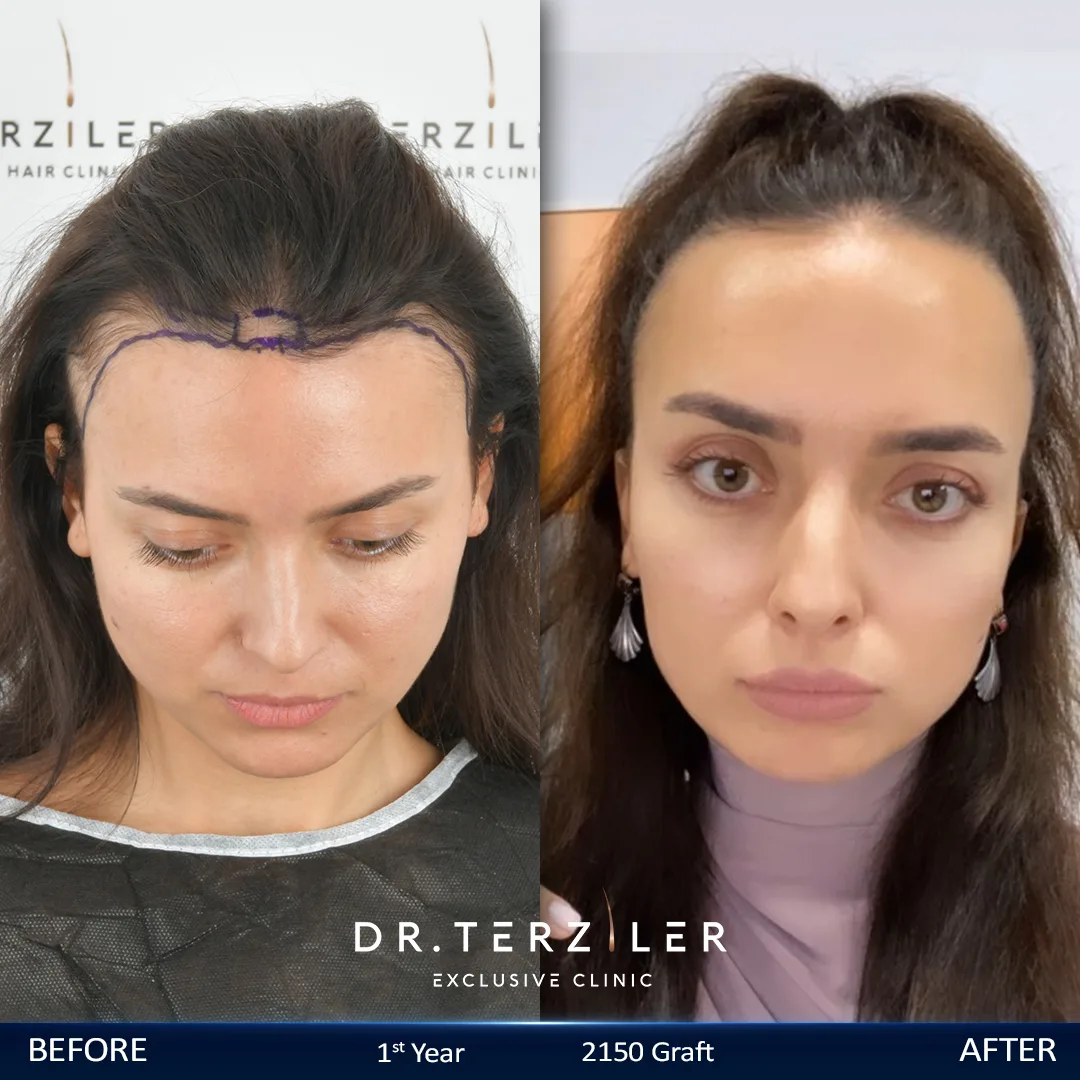
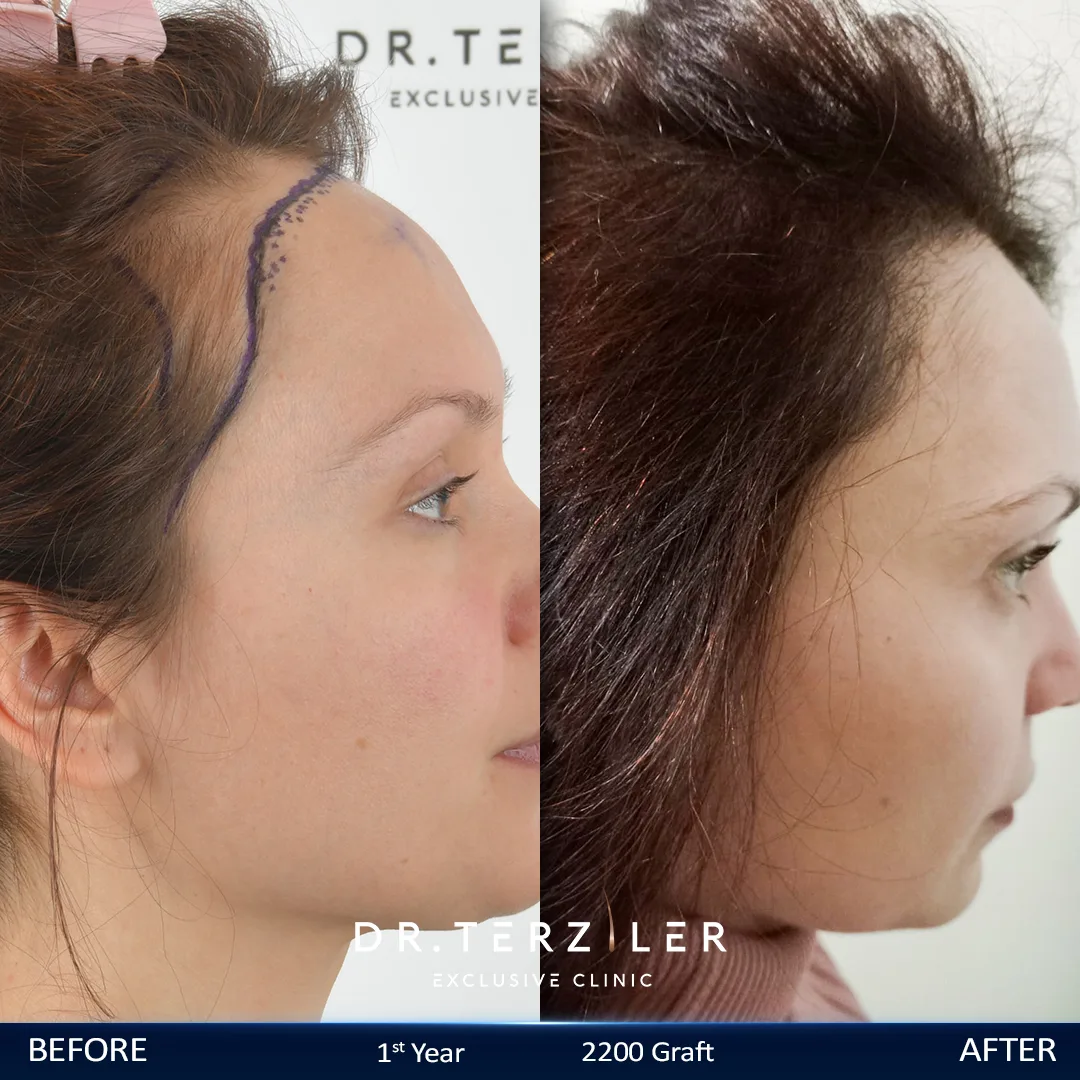
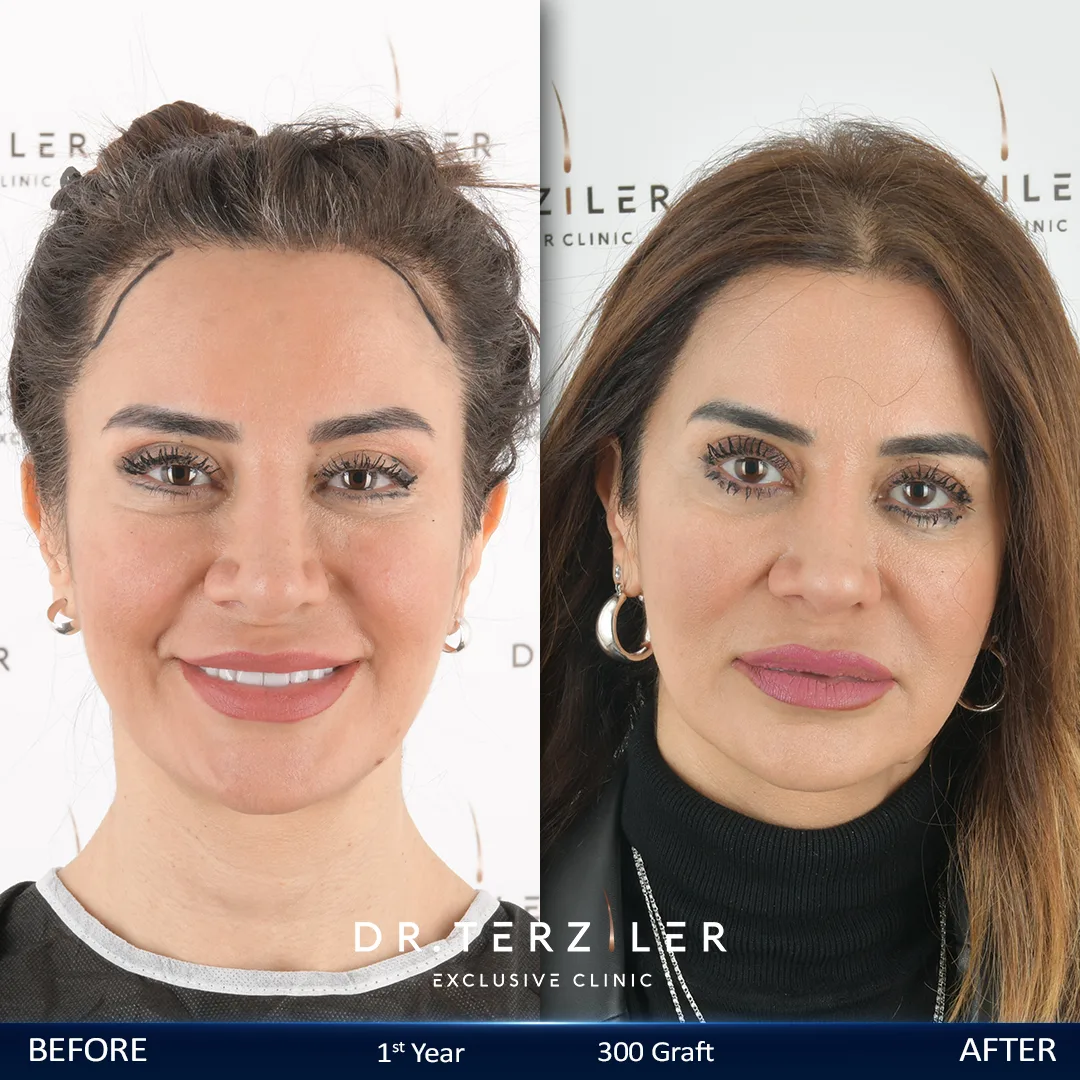
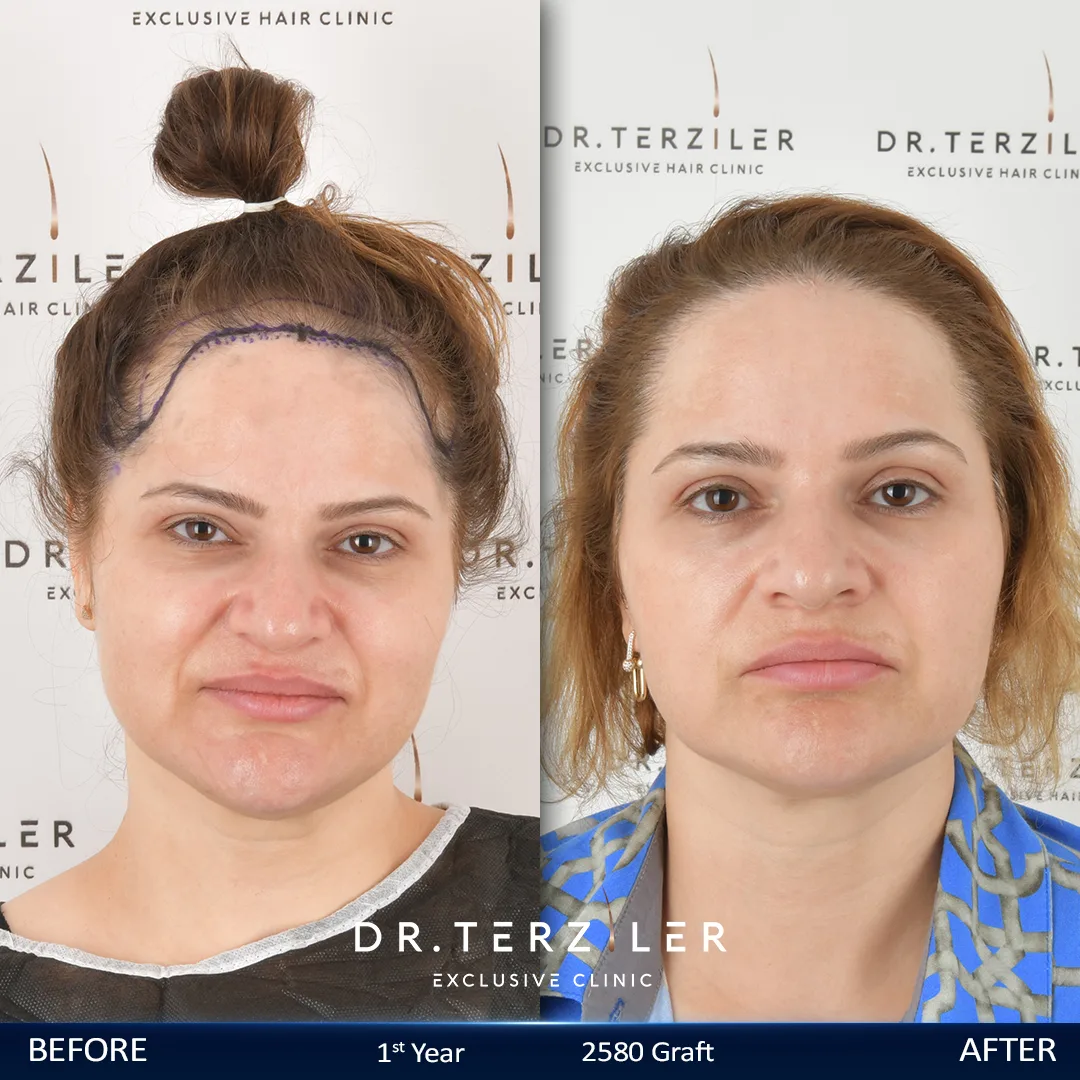
Female hair transplant before and after results should show a natural, feminine hairline, clean donor healing, and density that still looks real at 12 months, ideally documented with the graft count and technique.
Female hairline restored with no-shave DHI.
Restored frontal density for a female patient in Turkey.
Natural woman hair transplant hairline result.
4th-month female hair transplant result with no-shave DHI.
What Do Female Hair Transplant Patients Say?
The most useful female hair transplant reviews describe the concern, the no-shave technique, the hairline design, and how natural the result looked once the hair was styled normally.
★★★★★OlgaFrontal, no-shave DHI
They rebuilt my frontal hairline without shaving my hair. By the fourth month I could finally wear my hair back again with confidence.
★★★★★AishaHairline design
The hairline design was the difference. It frames my face again and looks completely natural, even pulled back.
★★★★★Marie L.Paris
I was nervous about travelling for surgery as a woman, but the no-shave plan meant nobody at work even knew.
★★★★★Sara K.London
Years of tight ponytails thinned my temples. The team restored them and explained how to protect the result.
Publish only verified, consented reviews and patient photos. Individual results vary.
Why Is Dr. Terziler a Strong Choice for Female Hair Transplant in Turkey?
Dr. Terziler Exclusive Clinic is a strong choice for female hair transplant because it is surgeon-led, AACI-accredited, focused on no-shave feminine hairline design, and led by Dr. Servet Terziler, inventor of the Robotic DHI Machine and Picasso Robotic DHI.
Women comparing clinics should ask who performs the surgery, whether the plan is no-shave, how the feminine hairline is designed, and whether the clinic can show consented female results like Olga's and Aisha's. This page is built to answer each of those directly.
Which Trust Signals Matter for Female Hair Transplant Patients?
AACI International AccreditationTurkish Ministry of Health LicensedTUSATDER Founder & PresidentInventor of the Robotic DHI MachinePicasso Robotic DHI0.70 mm Sapphire-Tipped Choi PenNo-Shave Female DHIFeminine Hairline DesignConsented Female Case StudiesPatients from 40+ Countries
Dr. Servet Terziler
AACI-accredited hair transplant surgeon | Inventor, Robotic DHI Machine | Creator, Picasso Robotic DHI | Founder & President, TUSATDER | European Property Awards Best Hair Transplant Clinic in Europe | International female patients from 40+ countries.
For female patients, the clinic's strongest positioning is the combination of no-shave technique, feminine hairline artistry, and documented, consented female case studies.
Sources
Female hair transplant planning should be supported by visible medical review, evidence on female pattern hair loss and traction alopecia, and patient-specific examination.
What Are the Most Common Questions About Female Hair Transplant?
What is a female hair transplant?+
A female hair transplant moves DHT-resistant follicles from a woman's donor area into thinning or receded zones such as the frontal hairline, temples, and parting, usually without shaving the existing hair, most often using no-shave DHI.
How much does a female hair transplant cost in Turkey?+
A female hair transplant in Turkey costs about €3,500 to €7,000 all-inclusive in 2026, roughly $3,800 to $7,600 or £3,000 to £6,000, depending on graft count and technique. For an exact price the clinic gives a personalised quote after reviewing your photos.
Can a woman get a hair transplant without shaving her head?+
Yes. Most female hair transplants are performed without shaving, using no-shave DHI where only tiny hidden donor strips are trimmed while the rest of the hair stays long, so the procedure is invisible from day 1.
Which hair transplant technique is best for women?+
For most women the best technique is no-shave DHI or Robotic DHI because it adds density between existing hairs with precise angle control. Sapphire FUE can suit selected larger cases where limited trimming is acceptable.
Can women with female pattern hair loss get a transplant?+
Sometimes. Women with stable female pattern hair loss and a strong donor area may be candidates, often combined with medical therapy. If the loss is diffuse and actively progressing, surgery may waste grafts, so diagnosis comes first.
Can a female hair transplant lower a high hairline?+
Yes. Hairline lowering is one of the most common and successful female hair transplant goals, rebuilding a lower, rounder, more feminine hairline for women with a naturally high forehead or receded corners.
Is a female hair transplant permanent?+
Transplanted follicles are taken from the DHT-resistant donor zone and keep their genetic identity, so they generally grow for life. Non-transplanted hair can still thin over time, which is why the surgeon may recommend medical support.
Does a female hair transplant hurt?+
A female hair transplant should not hurt during the procedure because local anaesthesia is used. Mild soreness, tightness, and swelling can happen afterwards and settle within a few days.
How long does recovery take for a woman?+
Initial healing takes about 7 to 10 days, transplanted hairs shed around weeks 2 to 6, early growth appears at months 3 to 4, and the final result matures at month 12. In no-shave cases the donor is hidden from day 1.
Can traction alopecia be treated with a hair transplant?+
Early traction alopecia from tight ponytails, braids, or extensions is often a good candidate for transplant. Late-stage scarred cases need cautious planning, and the styling tension that caused it must be reduced to protect the result.
Should I wait if my hair loss is postpartum?+
Yes. Postpartum shedding (telogen effluvium) is usually temporary and reverses on its own, so surgery is not recommended until the shedding has clearly stabilised and any medical cause has been addressed.
How long should I stay in Turkey for a female hair transplant?+
Most international female patients plan about 4 nights: arrival and consultation, surgery, a medical wash, follow-up, and departure. Some stay longer for extra rest or a follow-up PRP session.
SIK SORULANLAR
Questions You May Have
We plan the entire journey for you, including VIP airport transfers and hotel accommodation.
Yes, we offer several payment and installment plans, and your patient coordinator will walk you through the options.
START YOUR TRANSFORMATION
Your journey begins today.
Contact us for a free, personalised consultation. Our team of experts will be by your side every step of the way.