Hair Transplant Without Shaving
Developed for those who wish to undergo a hair transplant but do not want to have their hair completely shaved off, the shave-free hair transplant offers a modern solution to hair loss without compromising on a natural appearance.
Operational Process
-
ADIM 01
Consultation
Hair structure, the extent of hair loss and the capacity of the donor area are assessed in detail. Suitability for a shave-free hair transplant is determined on an individual basis.
-
ADIM 02
Design
The area to be transplanted is planned by analysing facial features, existing hair density and the natural hairline. The aim is to create a natural-looking result that blends in with the existing hair.
-
ADIM 03
Hair Transplant Without Shaving
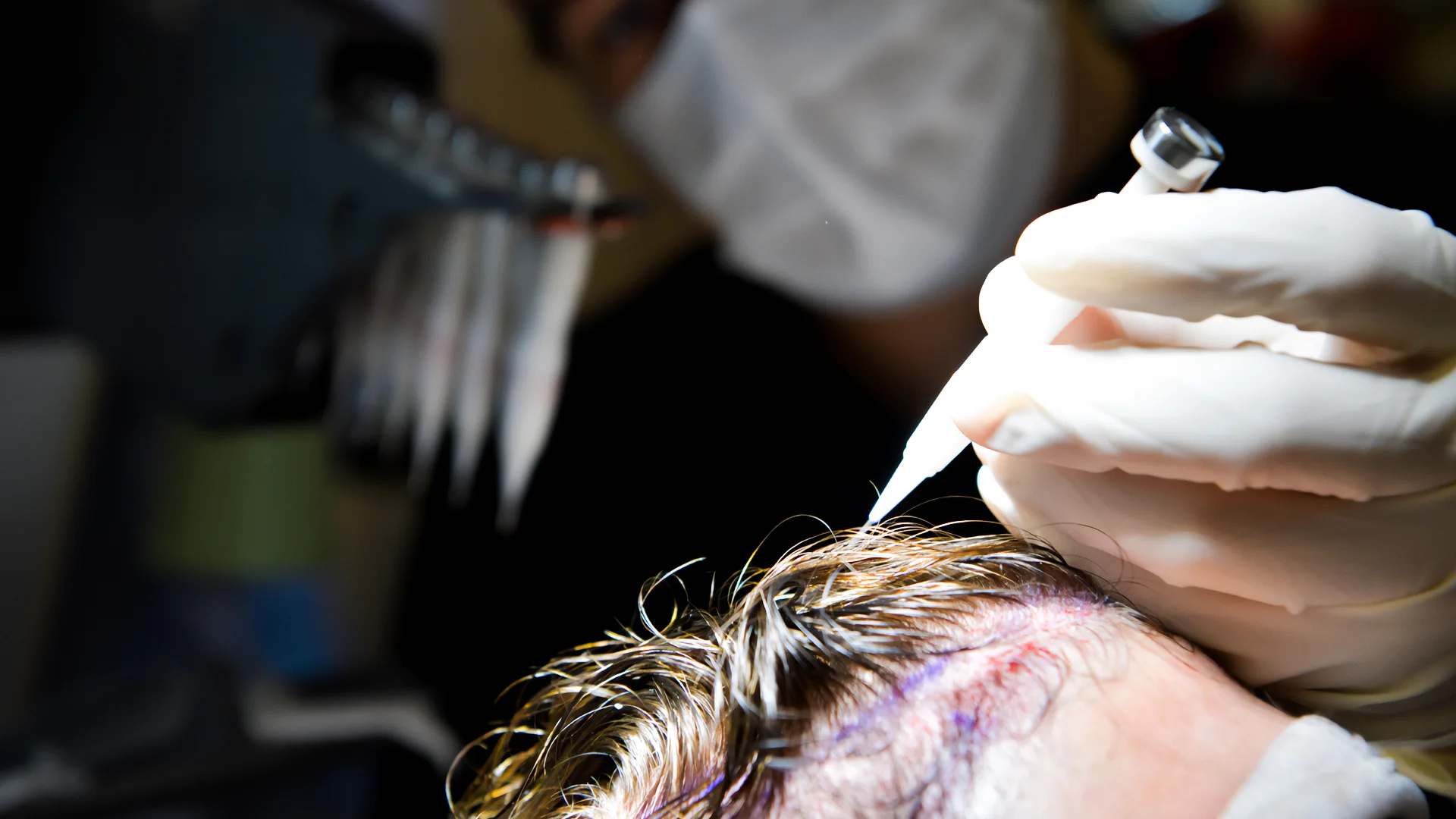
The prepared hair follicles are implanted into the designated areas, taking into account their natural growth directions and angles. Throughout the procedure, the aim is to preserve the hair’s existing appearance as much as possible.
-
ADIM 04
Follow-up & Support
Regular check-ups and regenerative support over a 12-month period.
Hair Transplant Without Shaving
What is Shave-Free Hair Transplantation?
Shave-Free Hair Transplantation is a modern hybrid hair transplantation approach carried out in suitable candidates whilst largely preserving the existing hair length. The primary aim of the procedure remains the extraction of healthy hair follicles from the donor area and their transplantation into the areas in need. The difference lies in the pre-operative planning and implementation strategy. The aim of this method is not merely to transplant hair. It is to preserve the natural appearance of the existing hair as much as possible after the operation, to create a seamless transition between the transplanted and existing hair, and to support the individual in continuing their social life more comfortably. However, there is an important point to note. Shave-free hair transplantation may not be suitable for everyone. The correct method cannot be determined without a detailed assessment of the extent of hair loss, the capacity of the donor area, the number of grafts to be transplanted and the structure of the hair strands. For this reason, the pre-operative consultation process is one of the most important stages of the treatment.It Is Possible to Rejuvenate Without Disrupting Your Life
Some procedures are assessed not only from a health perspective but also because of their impact on daily life. A common reason given by many people who put off having a hair transplant is that they do not want those around them to notice the procedure.- An important meeting
- A hectic work schedule
- Working in front of the camera
- Social circle
- Or simply not feeling ready.
Unseen Details Create Natural Results
A successful no-shave hair transplant begins long before the procedure on the day of the operation. Firstly, the direction of the hair is examined. Its density is assessed. The thickness of the hair strands is analysed. The distribution of bald patches is determined. The capacity of the donor area is calculated. When all this data is brought together, a personalised plan is drawn up. At Dr Terziler Exclusive Clinic, no hair transplant is carried out using standard templates. This is because, even if two people’s hair loss appears the same, the character of their hair, the direction of growth and their facial anatomy may be completely different. This is precisely why the pre-operative design process forms the foundation for achieving a natural-looking result. The aim is not merely to cover the bald patches, but to ensure that the new hair blends harmoniously with the existing hair.Your Hair Can Stay Long – The Plan Remains the Same
One of the most common misconceptions about shave-free hair transplants is that this method is a completely different procedure from traditional hair transplantation. In fact, it is not the fundamental principle of the operation that changes, but the way the procedure is planned. Healthy hair follicles are still carefully harvested. Grafts are still placed one by one. Natural hair growth angles are still preserved. However, all these procedures are organised in such a way as to preserve the appearance of the existing hair as much as possible. For this reason, the procedure requires both technical expertise and meticulous work. Particularly when grafts are implanted amongst existing hair, selecting the correct angle and direction is one of the key factors that directly influences the aesthetic outcome.Who Opts for Shave-Free Hair Transplantation?
| Lifestyle | Advantages |
| Office workers | May aim to return to work more quickly. |
| Those with a busy social life | May wish to keep changes to their appearance to a minimum. |
| People with long hair | Can largely maintain their current hair length. |
| Female patients | In suitable candidates, it may not be necessary to cut the hair completely. |
| Those who value a natural appearance | Planning can be carried out to complement your existing hair. |
Naturalness Sometimes Means Going Unnoticed
A well-planned hair transplant is often not noticeable at first glance.- People sense a change in your face.
- You look more refreshed.
- You look younger.
- But they cannot quite put their finger on why.
Questions You May Have
Shave-free hair transplantation is a hair transplant technique that can be performed without the need to shave the hair completely or to any specific extent, and is the preferred approach for suitable patients.
No. Suitability is assessed based on factors such as the extent of hair loss, the capacity of the donor area, hair length and the number of grafts required.
The key difference lies in the preparation of the hair and the planning of the procedure prior to the operation. With the no-shave method, the aim is to preserve the hair’s existing length as much as possible.
A natural-looking result depends on many factors, such as the correct hairline design, the placement of grafts at the correct angles and in the correct directions, and personalised planning, all of which take precedence over the technique used.
The time it takes to return to work varies depending on the individual, the nature of the procedure and the working conditions. In particular, for jobs requiring physical exertion, the doctor’s advice should be followed.
It may not be suitable for every candidate for a hair transplant. Following the initial consultation and hair analysis, the most suitable method is determined based on the individual’s hair structure and needs.
Your journey begins today.
Contact us for a free, personalised consultation. Our team of experts will be by your side every step of the way.