





Erectile Dysfunction After 40: Causes, Vascular ED, Low Testosterone, Diagnosis and Treatment Options
About 322 million men worldwide will have erectile dysfunction by 2025, yet fewer than 25% ever seek treatment. Erectile dysfunction affects approximately 52% of men aged 40 to 70, making it one of the most prevalent male health conditions globally according to “Massachusetts Male Aging Study” (Feldman et al., J Urol 1994). In 80% of cases the cause is vascular: blood cannot fill the corpora cavernosa adequately. Psychogenic ED accounts for roughly 20% of cases. Clinically proven treatments include low-intensity shockwave therapy (Li-ESWT), PRP injection (P-Shot), and oral PDE5 inhibitors. Most cases are treatable without surgery

MEDICALLY REVIEWED BY
Op. Dr. Doğukan Sökmen
Urologist & Men’s Sexual Health Specialist – Dr. Terziler Exclusive Clinic, Istanbul
Last updated: May 2026
What Erectile Dysfunction Actually Is
Erectile dysfunction (ED) is the consistent inability to achieve or maintain a penile erection sufficient for satisfactory sexual intercourse for a minimum duration of three months. Clinicians categorize this condition into primary ED, where a man has never achieved an erection, and secondary ED, where a man loses previous erectile capacity.
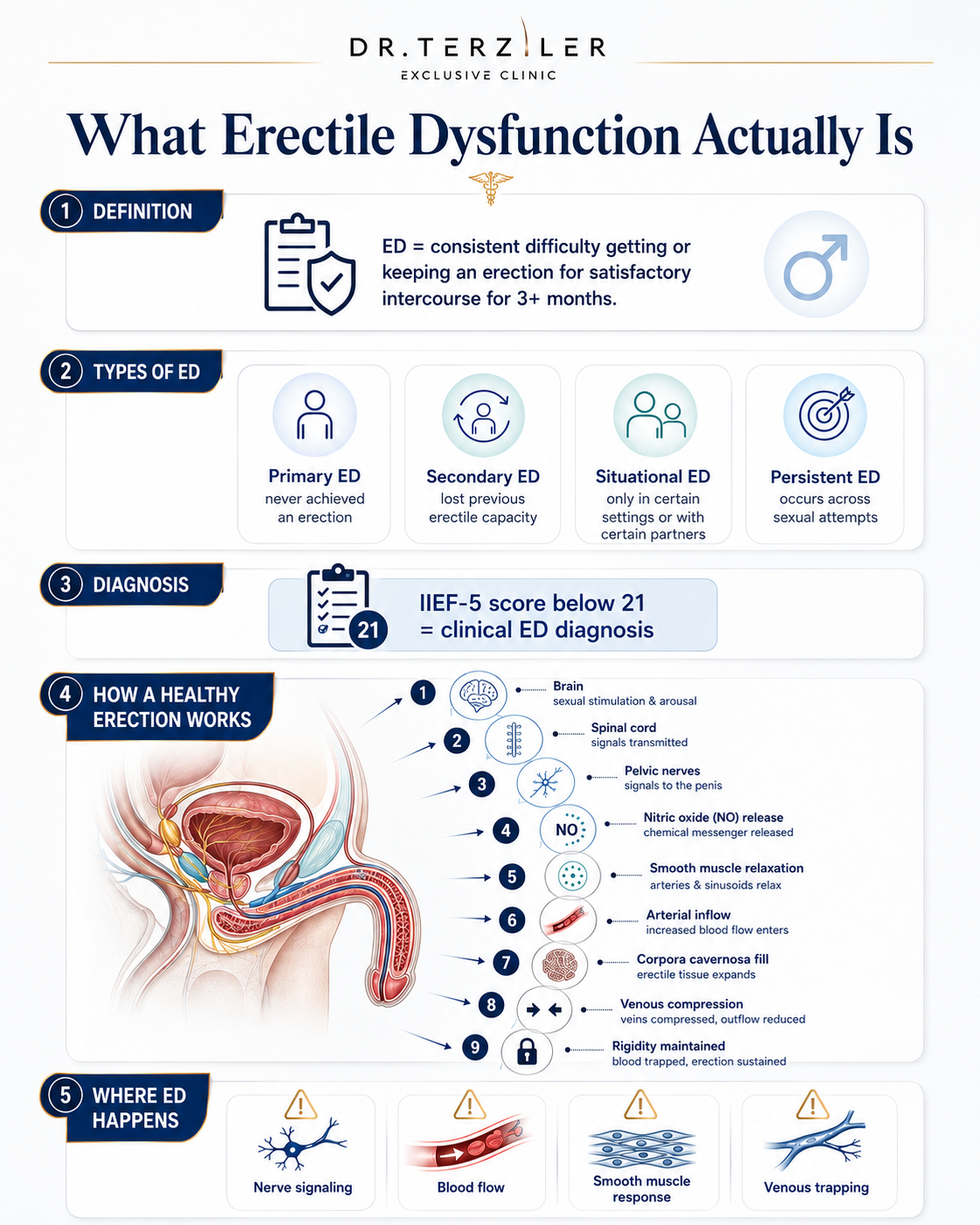
The disorder further divides into situational ED, which occurs only during specific contexts or with certain partners, and persistent ED, which manifests across all sexual attempts. An International Index of Erectile Function (IIEF-5) score below 21 establishes a formal clinical diagnosis of erectile dysfunction.
The underlying mechanism of a healthy erection relies entirely on coordinated neurovascular changes. Sexual stimulation prompts the brain to send signals down the spinal cord to the pelvic nerve plexus. These nerve endings release nitric oxide (NO) directly into the non-striated muscle cells of the penis.
Nitric oxide triggers smooth muscle relaxation within the cavernous arteries. This relaxation allows a rapid inflow of arterial blood to fill the expandable corpora cavernosa spaces. The expanding tissue compresses the surrounding venules against the rigid tunica albuginea sheath.
This venous occlusion traps blood inside the penis to maintain necessary structural rigidity. A breakdown at any stage of this pathway results in erectile failure.
How Common Is Erectile Dysfunction After 40 ?
One in three men over the age of 40 experiences some degree of erectile dysfunction.
1 in 3
One in three men over the age of 40 experiences some degree of erectile dysfunction.
Global projection
Global projections estimate that the total number of affected individuals will reach 322 million men by 2025.
Vascular origin
In most cases, the underlying issue is impaired blood flow, endothelial function, or microvascular damage.
Many individuals experience erectile dysfunction at 40 due to early endothelial damage. The Massachusetts Male Aging Study provides the baseline age-banded prevalence data for modern urology:
| Age Group | Prevalence | Severity |
|---|---|---|
| 40 – 49 | 40% | Mild to Moderate |
| 50 – 59 | 48% – 52% | Moderate to Persistent |
| 60 – 69 | 57% – 65% | Significant |
| 70+ | >70% | Advanced / Complete |
Global projections estimate that the total number of affected individuals will reach 322 million men by 2025. This widespread growth highlights the urgent need for accessible, root-cause clinical interventions rather than temporary symptomatic management.
The medical context in Turkey shows a particularly high incidence of specific lifestyle risk factors. The adult male smoking rate stands at approximately 30%. High regional rates of type 2 diabetes and metabolic syndrome directly accelerate microvascular degradation.
These systemic sexual health challenges elevate the baseline risk of organic ED across the population. This environment positions Istanbul-based clinical intervention as a locally vital and highly specialized sector.
Private ED Screening After 40
If you are noticing a decline in your erection quality after age 40, early clinical screening can identify underlying vascular issues before they worsen. Complete our secure diagnostic contact form to schedule a private medical assessment.
What Are the Root Causes of Erectile Dysfunction and Why It Happens?
Erectile dysfunction develops when chronic medical conditions, psychological stressors, or specific pharmaceuticals disrupt the delicate balance of blood flow and nerve signaling required for penile tumescence.
Vascular and Endothelial Factors (80% of Cases)
Erectile dysfunction is a cardiovascular warning sign.
Read more
Penile arteries (1-2 mm) develop atherosclerosis 3-5 years before coronary arteries, making ED an early predictor of cardiac events. (Princeton Consensus III, J Sex Med 2012.) Penile arteries are much smaller than coronary arteries, meaning they show cholesterol plaque accumulation much earlier. Patients with vascular erectile dysfunction exhibit reduced arterial inflow during sexual stimulation.
Hormonal Imbalances
Low total serum testosterone, also known as hypogonadism, correlates directly with erectile dysfunction in 25% to 40% of affected men.
Read more
Secondary hormonal causes include elevated estradiol levels, thyroid dysfunction, and high prolactin secretion. A comprehensive blood panel is mandatory to diagnose these complex endocrine disruptions accurately.
Neurogenic Disruptions
Damage to peripheral nerve pathways prevents the transmission of arousal signals from the brain to the pelvic organs.
Read more
Post-prostatectomy ED rates vary significantly based on whether the surgeon performs a nerve-sparing or non-nerve-sparing procedure. Additionally, diabetes-related peripheral neuropathy affects up to 35% to 50% of diabetic men. Multiple sclerosis and traumatic spinal cord injuries also block these vital electrical impulses.
Psychogenic Triggers
Acute performance anxiety, clinical depression, and chronic relationship conflicts trigger the sympathetic nervous system.
Read more
This response releases adrenaline, which constricts the smooth muscles of the penis and prevents blood inflow. Clinical psychologists classify this condition as psychological erectile dysfunction. Treatment for psychological erectile dysfunction focuses on reducing performance anxiety and breaking negative thought patterns. Pure psychogenic ED accounts for approximately 20% of total cases. However, psychological stress frequently co-exists with organic vascular causes. Treating only one layer while ignoring the other produces poor clinical results.
Medication-Induced ED
Several widely prescribed drugs interfere directly with the biochemical pathways of an erection.
Read more
Common culprits include selective serotonin reuptake inhibitors (SSRIs), beta-blockers, thiazide diuretics, and anti-androgens. Finasteride use is linked to a controversial condition known as persistent post-finasteride syndrome. Ongoing clinical research continues to investigate these long-term neurosteroid changes without causing unnecessary alarmism.
Talk Through Your Symptoms Privately
You can discuss your specific symptoms and medical history in complete confidence. Click the button to connect directly with our medical coordination team for immediate guidance.
When Does Erectile Dysfunction Become a Medical Problem ?
Erectile failure requires formal clinical intervention when the inability to achieve or maintain an erection persists for three months or longer. The European Association of Urology (EAU) guidelines classify this duration as chronic erectile dysfunction.
Occasional erection issues lasting under three months are typically situational and remain physiologically normal during periods of acute fatigue or temporary emotional stress. However, sudden-onset erectile dysfunction in a man under the age of 40 serves as a critical medical red flag.
This abrupt change often indicates acute vascular disease, early-stage diabetes, or severe endocrine pathology. Young patients experiencing sudden erectile failure require an urgent medical workup. A qualified erectile dysfunction doctor can run specialized tests to identify these systemic dangers early.
Book a Diagnostic ED Appointment
Do not ignore persistent changes in your sexual health. Fill out our online appointment form to book a private consultation with a specialist.
Diagnosis: What an ED Assessment Includes
A professional erectile dysfunction assessment at Dr. Terziler Exclusive Clinic utilizes multi-disciplinary diagnostics to pinpoint the precise physiological source of the erection failure.
IIEF-5 Questionnaire
Patients complete the validated International Index of Erectile Function scoring sheet to quantify their recent erection frequency and maintenance success.
Comprehensive Blood Panel
Laboratory technicians measure serum total testosterone, luteinizing hormone (LH), follicle-stimulating hormone (FSH), prolactin, and thyroid-stimulating hormone (TSH) to evaluate the endocrine system.
Metabolic and Diabetes Screening
The medical team measures HbA1c and fasting blood glucose levels to detect hidden insulin resistance or active peripheral neuropathy risks.
Penile Bi-Phasic Doppler Ultrasound
This specialized imaging test serves as the clinical gold standard for diagnosing vascular ED.
Read more
A peak systolic velocity (PSV) measurement under 25 centimeters per second confirms arterial insufficiency.
Cardiovascular Risk Stratification
Physicians apply the Princeton Consensus III guidelines to analyze the patient’s cardiac safety before clearing them for specific treatments.
Ask About ED Diagnostics
If you want to learn more about our comprehensive blood panels or ultrasound scheduling, click the WhatsApp link to chat with our clinic coordinators right now.
What Are the Treatment Options for Erectile Dysfunction?
Modern urology provides a tiered spectrum of therapies ranging from temporary oral pills to advanced non-surgical regenerative protocols and permanent surgical implants. Patients searching for how to fix erectile dysfunction can select from multiple evidence-based clinical options. The optimal selection depends on the underlying etiology of the vascular or neural damage.
Oral PDE5 Inhibitors (First-Line Therapy)
Oral phosphodiesterase type 5 (PDE5) inhibitors include widely used medications such as Sildenafil (Viagra), Tadalafil (Cialis), and Vardenafil (Levitra).
Read more
These medications block the PDE5 enzyme to prevent the degradation of cyclic guanosine monophosphate (cGMP) in the penile tissue. This action prolongs smooth muscle relaxation and enhances blood inflow during sexual stimulation.
These pills prove effective in 60% to 70% of men presenting with mild to moderate erectile dysfunction. However, oral PDE5 inhibitors do not address the underlying vascular root cause of the disease. They treat the temporary symptoms only, requiring a man to take a pill before every sexual encounter.
Low-cost generic options are now widely available across global markets. The major limitation of this first-line therapy is its high failure rate of approximately 30% to 35% in patients with advanced organic vasculogenic ED. Men with severely blocked penile arteries or damaged nerves do not generate enough baseline nitric oxide for these medications to work.
Low-Intensity Shockwave Therapy (Li-ESWT)
Low-intensity extracorporeal shockwave therapy delivers targeted acoustic waves directly into the penile shaft and crural tissue areas.
Read more
These mechanical pulses travel through the skin to create controlled micro-stress at the cellular level. This stress activates specific cellular signaling pathways that trigger the release of vascular endothelial growth factors.
Low-intensity shockwave therapy is the only non-surgical erectile dysfunction treatment shown in randomised controlled trials to stimulate angiogenesis in penile vascular tissue, addressing the root cause rather than masking symptoms. Over a course of treatment, the body grows entirely new micro-capillaries within the corpora cavernosa. This process permanently increases the physical blood flow capacity of the penis.
A standard clinical protocol consists of 6 to 12 brief sessions completed in an outpatient setting. The procedure requires no local anesthesia, causes no pain, and involves zero patient downtime. It remains the premier non-surgical option for restoring spontaneous, natural erections.
P-Shot (Platelet-Rich Plasma)
The Platelet-Rich Plasma (PRP) procedure, known as the P-Shot, introduces highly concentrated autologous growth factors directly into the corpora cavernosa tissue.
Read more
Medical staff draw a small sample of the patient’s blood and spin it in a specialized medical centrifuge. This process isolates the platelets, which hold high concentrations of vital regenerative proteins.
These proteins include Platelet-Derived Growth Factor (PDGF), Vascular Endothelial Growth Factor (VEGF), and Transforming Growth Factor-beta (TGF-beta). Clinical studies demonstrate significantly improved IIEF-5 scores at 6 months post-treatment. These concentrated growth factors actively repair aged endothelial linings and rejuvenate the cavernous smooth muscle tissue. (Levy et al., J Sex Med 2021.)
Combining Li-ESWT with P-Shot injections creates a powerful synergistic effect within the erectile tissue. The acoustic shockwaves prepare the vascular architecture, while the PRP delivers the essential raw material for cellular repair.
RESET Performance Protocol
Op. Dr. Doğukan Sökmen performs this advanced combination therapy at Dr. Terziler Exclusive Clinic under the proprietary RESET Performance Protocol.
Testosterone Replacement Therapy (TRT)
Testosterone Replacement Therapy is medically indicated only when repeatable laboratory blood tests confirm serum levels below 300 ng/dL alongside clear clinical symptoms of hypogonadism.
Read more
TRT effectively restores low libido, improves daily energy levels, and upregulates nitric oxide synthase expression in the pelvic tissue.
Testosterone replacement therapy alone does not cure advanced vasculogenic erectile dysfunction. If the penile blood vessels are physically blocked by plaque, optimizing hormone levels will not restore structural rigidity. Physicians frequently combine TRT with PDE5 inhibitors or shockwave therapy to achieve an additive therapeutic effect.
Clinical delivery methods include regular intramuscular injections, daily topical gels, or long-acting transdermal patches. Patients on TRT require ongoing medical monitoring of their hematocrit levels and prostate-specific antigen (PSA) markers to ensure long-term safety.
Vacuum Erection Device (VED)
The vacuum erection device is a non-invasive, mechanical tool designed to pull blood into the penis using negative pressure.
Read more
The patient places a clear plastic cylinder over the flaccid penis and uses a manual or motorized pump to draw out the air. This vacuum creates a pressure differential that forces blood to fill the cavernous spaces.
Once full engorgement is achieved, the patient slides a flexible silicone tension ring onto the base of the penis to retain the blood. This mechanical system proves effective in 80% to 90% of users when operated correctly.
Clinical data strongly supports the use of vacuum pumps for early penile rehabilitation following radical prostatectomy surgery. The mechanical stretching prevents tissue fibrosis and maintains length during nerve recovery. The best vacuum pump for erectile dysfunction must feature certified safety valves to prevent tissue injury.
Penile Implant (Surgical Option)
Penile prosthesis surgery represents the final therapeutic choice when all conservative, non-invasive treatments have failed to produce rigidity.
Read more
This procedure involves surgically placing either malleable semi-rigid rods or an inflatable fluid-filled system directly inside the damaged corpora cavernosa chambers.
Long-term clinical data shows excellent patient satisfaction rates, ranging between 92% and 98% for modern three-piece inflatable devices. The penile prothesis surgical cost in Turkey ranges from EUR 5,000 to EUR 12,000, depending on the complexity of the implant hardware. Because this procedure permanently alters the internal erectile chambers, it is reserved strictly as a last resort.
What Is the Latest Treatment for Ed?
The clinical frontier of reproductive medicine focuses tightly on cellular regeneration.
Read more
Understanding what is the latest treatment for ed helps patients discover modern alternatives to surgical intervention. The combination of low-intensity shockwave therapy and autologous PRP (the RESET Protocol) represents the most evidence-supported advance in current daily practice.
Emerging therapies currently in Phase II clinical trials include Stromal Vascular Fraction (SVF) stem cell therapy, which uses adipose-derived cells to rebuild tissue. Researchers are also investigating experimental gene therapies designed to directly target and increase endothelial nitric oxide synthase (eNOS) expression.
Find Your Treatment Tier
If you want to find out which specific treatment tier aligns with your current IIEF score, click the WhatsApp button to request a fast, private review from our urological team.
How Much Does an Erectile Dysfunction Surgery Cost and Is It Worth It?
The financial investment required for erectile dysfunction surgery varies dramatically based on geographic location and the type of prosthesis selected. Performing a penile implant procedure in the United States costs between $15,000 and $20,000.
Undergoing the exact same surgery using identical medical hardware in Turkey costs between EUR 5,000 and EUR 12,000. The regional differences in erectile dysfunction surgery cost reflect lower hospital operational overheads in Istanbul.
For men who still respond to conservative therapies, surgery is not medically indicated. Surgical intervention becomes worth the cost only after a patient has fully exhausted first-line pills, Li-ESWT, and advanced PRP courses without success.
For comparison, non-surgical options like the RESET Performance Protocol at Dr. Terziler Exclusive Clinic start from a much lower price point. This non-invasive combination plan avoids the permanent structural alterations and infection risks associated with open surgery.
Get Transparent ED Treatment Pricing
We offer transparent pricing structures for both our advanced regenerative protocols and surgical packages. Fill out our contact form to receive a detailed breakdown tailored to your medical needs.
Can Erectile Dysfunction Be Cured?
Erectile dysfunction can be fully cured when treatments successfully reverse the underlying physical pathology rather than simply masking the symptoms. The ultimate success rate depends heavily on the specific cause and the structural stage of the condition.
Early to Intermediate Vasculogenic ED
Early to Intermediate Vasculogenic ED: Low-intensity shockwave therapy produces durable, long-term remission in approximately 50% to 60% of men at a 12-month clinical follow-up. These patients successfully regain spontaneous erectile function and no longer require any pre-intercourse medication.
Advanced Fibrotic ED
Advanced Fibrotic ED: Long-term diabetes or severe tissue scarring makes vascular reversal significantly harder to achieve. While these cases are heavily improvable with combined regenerative protocols, a total standalone cure is less common.
Pure Psychogenic ED
Pure Psychogenic ED: This condition remains highly treatable and fully curable. Combining Cognitive Behavioral Therapy (CBT) with short-term, low-dose PDE5 inhibitor support breaks the performance anxiety cycle and restores normal neural pathways permanently.
Modern multi-disciplinary urological care allows most men to achieve sustained, drug-free improvements. A clinical “cure” is no longer a simple binary yes or no question. It is an attainable goal achieved through targeted tissue regeneration.
ED and Relationships
Erectile failure is an interpersonal medical challenge that directly affects the psychological well-being of both partners. 60% of partners of men suffering from ED report reduced sexual satisfaction and increased relationship conflict (Fisher et al., J Sex Marital Ther 2005)
Many couples face the emotional question of can a man with erectile dysfunction satisfy a woman during intimate encounters. Partner support reduces a man’s performance anxiety, which improves his response to medical therapies like Li-ESWT or medication.
The condition frequently leads to miscommunications, emotional distance, and unnecessary feelings of rejection or inadequacy for the partner. Data consistently demonstrates that couples who address erectile dysfunction together achieve significantly better treatment outcomes.
Address your medical and relationship needs in complete privacy. Book a confidential consultation today to begin a structured, shared treatment pathway.
Start a Confidential Treatment Pathway
Address your medical and relationship needs in complete privacy. Book a confidential consultation today to begin a structured, shared treatment pathway.
Why Choose Istanbul for ED Treatment
Istanbul has established itself as a premier global destination for advanced reproductive medicine and regenerative urology. The city features more than 50 internationally accredited, JCI-accredited healthcare institutions that maintain strict operational standards.
Dr. Terziler Exclusive Clinic offers a sophisticated, discreet environment utilizing advanced medical technologies. The clinic holds formal AAACI accreditation, and its medical specialists actively participate in international urology conferences to implement the latest clinical updates.
Choosing Istanbul provides substantial cost savings of 40% to 60% compared to private clinics in the United Kingdom or the United States for identical non-surgical regenerative protocols. Furthermore, international patient packages are fully inclusive.
Every package bundles the initial diagnostic blood panel, penile ultrasound mapping, the personalized treatment protocol, and structured post-therapy follow-up care into a single managed itinerary.
Plan Your Istanbul ED Treatment Visit
Our international patient coordination team handles all aspects of your visit, including scheduling, translation services, and clinic transfers. Submit your inquiry via our secure web form to start planning your treatment.
FAQS About ED
Erectile dysfunction is the persistent inability to achieve or maintain a penile erection firm enough for satisfactory sexual intercourse. This condition must last for three months or longer to receive a formal clinical designation. The underlying problem involves a breakdown in the vascular, neural, or hormonal mechanisms that control blood flow into the penis.
Organic vascular disease causes erectile dysfunction in the majority of men over 40. Atherosclerosis restricts blood flow through the small penile arteries over time. Additional common causes include type 2 diabetes, low testosterone levels, high chronic stress, and side effects from common blood pressure or depression medications.
Yes, erectile dysfunction can be cured permanently if it is caught in the early or intermediate stages of vascular disease. Low-intensity shockwave therapy grows new blood vessels to restore natural blood flow permanently. Psychogenic causes are also fully curable through targeted therapy and short-term medication support.
The latest clinical treatment is the combination of low-intensity shockwave therapy and autologous platelet-rich plasma injections, known as the RESET Protocol. This non-surgical treatment combines acoustic wave tissue stimulation with local growth factors to repair damaged blood vessels. Advanced stem cell therapies remain in active clinical trials.
The total cost depends heavily on whether you require non-surgical regenerative protocols or open surgery. Non-surgical shockwave and PRP packages in Turkey are highly cost-effective compared to Western Europe. Permanent penile prosthesis surgery in Istanbul ranges from EUR 5,000 to EUR 12,000, saving patients up to 60%.
Yes, low-intensity shockwave therapy works exceptionally well for men with vasculogenic erectile dysfunction. Multiple randomized controlled trials prove that acoustic waves stimulate new blood vessel growth inside the cavernous tissue. The therapy provides lasting improvements in erection firmness without requiring pills or anesthesia.
Yes, a specialist can design several advanced treatments if oral medications fail. Blocked arteries often prevent pills from working correctly. An erectile dysfunction doctor can provide advanced alternatives, including low-intensity shockwave therapy, autologous P-Shot injections, precise intracavernous medication mixtures, or permanent surgical implants.
Sources
Prevalence and cardiovascular risk
- Feldman et al. (1994) – Massachusetts Male Aging Study – prevalence of erectile dysfunction in men aged 40-70.
- Ayta et al. (1999) – The likely worldwide increase in erectile dysfunction between 1995 and 2025. BJU Int.
- Princeton Consensus III (2012) – Miner et al. – ED as cardiovascular risk marker. J Sex Med.
Hormones and regenerative therapy
Surgery, partner outcomes and guidelines
- Rajpurkar & Dhabuwala (2003) – Penile implant satisfaction rates 92-98%. J Urol.
- Fisher et al. (2005) – Partner experience of erectile dysfunction. J Sex Marital Ther.
- EAU Guidelines – Male Sexual Dysfunction (2023) – European Association of Urology – diagnostic and treatment framework.
- NIH / NIDDK – Erectile Dysfunction – National Institute of Diabetes and Digestive and Kidney Diseases.
About Dr. Terziler Clinic
Located in Istanbul, Turkey, Dr. Terziler Exclusive Clinic is an AAACI-accredited, premium medical clinic offering men’s sexual health, longevity, regenerative urology and advanced aesthetic treatments for international patients.