Exosome Treatment for Hair Loss: A Doctor-Led, Evidence-Based Guide
Exosome hair therapy uses tiny cell-signaling particles to tell weakening hair follicles to regenerate. Early evidence is promising but limited, and no exosome product is FDA approved for hair loss. It is a non-surgical, investigational option, best for early to moderate thinning and as support after a hair transplant. A diagnosis should come before any injection.
Treatment Process
-
ADIM 01
Consultation & Analysis
Your needs are identified through a hair and scalp analysis.
-
ADIM 02
Personal Plan
A personalised treatment protocol and session plan will be drawn up for you.
-
ADIM 03
Exosome Applications
The procedure is carried out comfortably by a team of specialists.
-
ADIM 04
Results Tracking
Progress is monitored through regular checks and the plan is updated.

MEDICALLY REVIEWED BY
Founder of Dr. Terziler Exclusive Clinic, AACI-accredited hair restoration surgeon and inventor of the Robotic DHI machine.
What Is Exosome Therapy for Hair?
Exosome therapy for hair loss applies microscopic cell-signaling vesicles to the scalp so their growth-factor messages reach weakening follicles and push them back into an active growth phase. It is a non-surgical, cell-free, investigational treatment — not a stem-cell injection and not FDA-approved.
Exosomes are microscopic vesicles that cells use to send messages to each other. Think of them as tiny delivery packages filled with growth factors, proteins and genetic signals. In exosome therapy for hair loss, exosomes taken from stem cells are applied to the scalp so those signals reach your hair follicles. The goal is simple: wake up weakening follicles and push them back into an active growth phase.
One point clears up most of the confusion online. Exosomes are not stem cells. They are the signals that stem cells release. That is why exosome hair therapy is often described as a cell-free, non-surgical hair loss treatment — it delivers the messengers without the cells themselves. This is also different from PRP, which uses growth factors concentrated from your own blood.
How Does Exosome Therapy for Hair Loss Work?
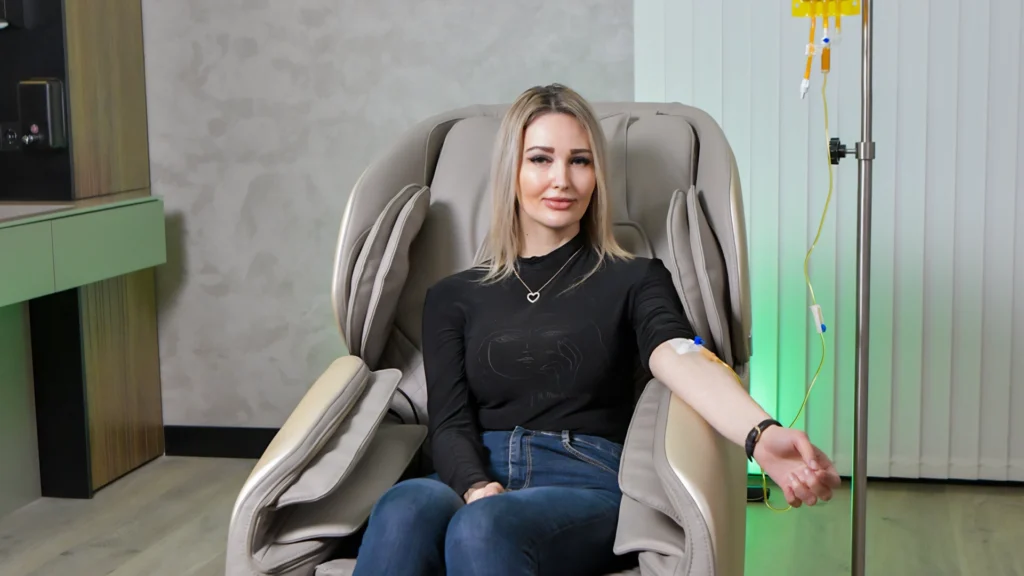
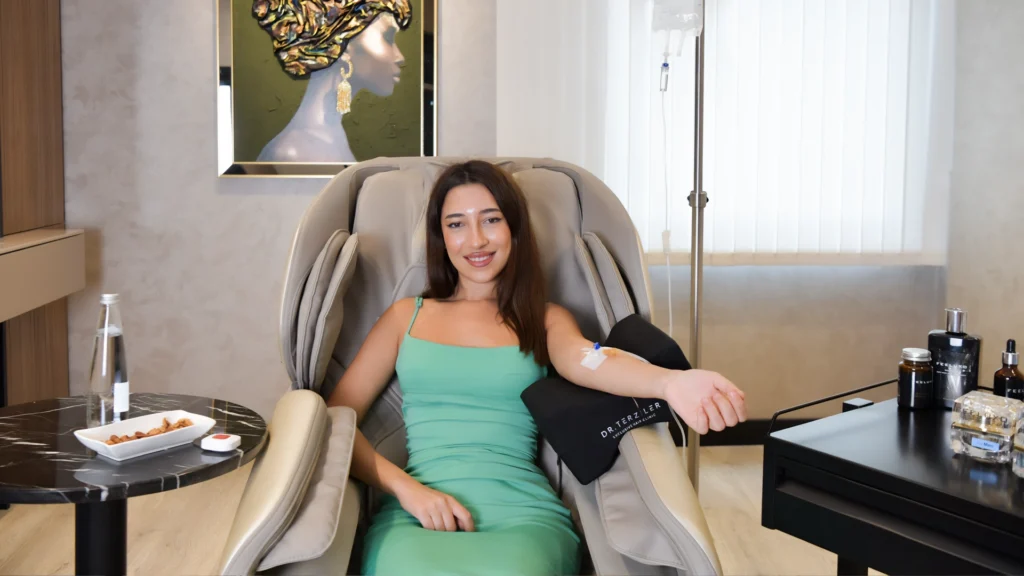
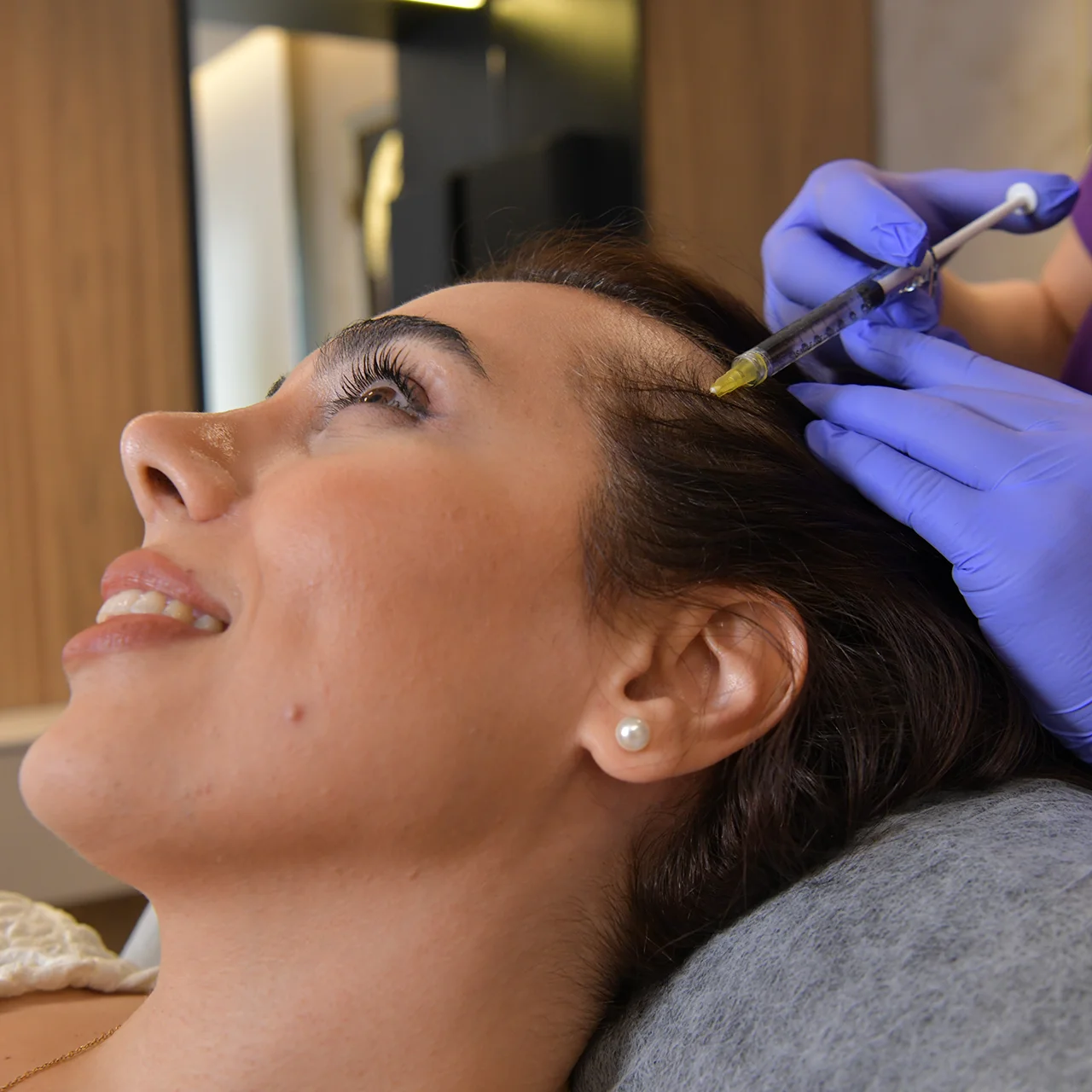
Exosome hair therapy is delivered with microneedling or fine injections into the scalp during a ~30-minute session, usually after a numbing cream. The exosomes spread around the follicles and release signals that, in theory, extend the growth phase, calm inflammation and improve blood supply — with the aim of thicker, stronger hair over the following months.
Delivered into the scalp
Applied via microneedling or fine injections after a numbing cream, so the exosomes reach the skin around the follicles.Signals are released
The vesicles release growth factors and messages meant to extend the follicle's growth phase and calm inflammation.Follicles respond slowly
Over three to six months the aim is less shedding first, then thicker, stronger strands — not an overnight change.Where Do the Exosomes Come From, and Why the Source Matters
The exosome source is the single biggest quality variable. Exosomes are harvested from stem-cell sources such as adipose (fat) tissue, dermal papilla cells or umbilical cord tissue, and the source, purity and quality control change what is actually inside the product.
This is the part almost no one explains, and it is the part that decides your result. A 2025 systematic review graded the evidence by exosome source, which tells you that not all exosome treatments are the same thing (Clin Cosmet Investig Dermatol 2025). A serious clinic knows its source and will tell you. If a provider cannot say where their exosomes come from, that is your answer.
Do Exosomes Actually Work for Hair Loss? What the Evidence Really Says
The early results are promising, but the human evidence is still limited. Most data comes from laboratory and animal studies. A systematic review found 16 studies on exosomes for hair, and only one was a clinical study in humans (Gupta, J Cosmet Dermatol 2023).
That one clinical study treated 39 people with pattern hair loss and reported higher hair density and thickness (Gupta, J Cosmet Dermatol 2023). An earlier review of 47 studies found no clinical trials specific to hair growth at the time (J Cosmet Dermatol 2022).
Our own experience adds to it. In our clinic, most patients who follow the full exosome hair therapy plan tell us they are satisfied with the result, usually noticing less shedding first and a fuller look over three to six months. This is our patients' feedback, not a clinical trial, and results still vary from person to person.
“Exosome hair therapy is a promising tool, not a miracle. The human evidence is still early, but we constantly get satisfied results from our patients. So we use exosomes for hair loss as an adjunct after diagnosis, never as a stand-alone cure. If a clinic promises guaranteed regrowth from an injection, walk away.”
Is Exosome Hair Therapy Safe, and Is It FDA Approved?
No. There are no FDA-approved exosome products for hair loss, or for any use (US FDA, 2019). In studies so far exosome therapy has been well tolerated, with mostly mild effects such as redness or swelling; the real risk is an unregulated product from an unknown source, injected by someone unqualified.
So what about the scary questions people search, like the “dark side of exosomes” or whether they are cancerous? The honest answer is that in the studies done so far, exosome therapy has been well tolerated, with mostly mild effects and no serious reactions reported to date (Gupta, J Cosmet Dermatol 2023). The real risk is the setting: an unregulated product, an unknown source, an unqualified injector. In a doctor-led clinic the source is controlled, the handling is sterile, and a physician decides if it is right for you.
Exosome Therapy vs PRP vs Stem Cells vs Minoxidil
No single hair loss therapy is proven best for everyone — they are different tools for different situations. The right choice depends on your diagnosis, not on which treatment a clinic wants to sell. The table below compares the main options honestly.
| Treatment | Evidence | FDA status | Blood draw? | Best for |
|---|---|---|---|---|
| Exosome therapy | Early, mostly preclinical | Not approved | No | Adjunct, post-transplant support, early thinning |
| Hair PRP | Meta-analysis support | Not a drug (own blood) | Yes | Early to moderate thinning, more clinical history |
| Low-Level Laser Therapy | Randomized-trial support | FDA-cleared (devices) | No | Diffuse thinning, painless, ongoing sessions |
| Growth Factor Therapy | Emerging | Not approved | No | Early thinning, direct signal and nutrient delivery |
| Stem cell therapy | Investigational | Varies | Varies | Selected cases (exosomes are the signals stem cells release) |
| Copper Peptide (GHK-Cu) | Supportive, mostly cosmetic | Cosmetic, not a drug | No | Scalp health and strengthening, adjunct |
| Hair and Nail Cocktail | Supportive (nutritional) | Not a drug | No | Diffuse shedding linked to nutrient gaps |
| Diamond Hair Reset | Clinic combination protocol | Not a drug | No | Intensive reset course, maintenance |
| Minoxidil (reference) | Strong trial data | FDA-approved | No | Proven first-line topical, decades of data |
A quick way to think about it: PRP uses your own blood and has more clinical history. Exosomes are newer and need no blood draw, but are still investigational. Minoxidil is the proven, FDA-approved baseline. Many patients combine approaches, for example PRP or exosomes alongside a medical plan — matched to a diagnosis, not a sales target.
How Many Sessions Are Needed, and How Long Do Results Last?
Most protocols use three to five sessions of about 30 minutes each, spaced a few weeks apart. Results are not permanent: a course can support the scalp for several months, and most clinics suggest maintenance about once a year.
| Stage | What to expect |
|---|---|
| Sessions | Usually 3 to 5, about 30 minutes each |
| Spacing | A few weeks between sessions |
| First changes | Less shedding first, then density over 3 to 6 months |
| Maintenance | Often about once a year, based on a repeat assessment |
| Permanent? | No — results fade without upkeep and a medical plan |
Because hair loss is an ongoing process, upkeep and a medical plan protect what you gain. Anyone who promises a one-time permanent fix from an injection is not being straight with you.
How Much Does Exosome Hair Therapy Cost?
Exosome hair therapy costs less in Turkey than in the United States or the United Kingdom for a comparable protocol — because clinic and living costs are lower, not the quality. Price depends on the number of sessions and the exosome source.
| Where | Typical range (per course) | Notes |
|---|---|---|
| Turkey | Markedly lower than US and UK | Doctor-led, transparent, often bundled with other care |
| US / UK | Several times higher | Same protocol, higher clinic and living costs |
Figures are typical market ranges for context, not a fixed quote. Dr. Terziler Exclusive Clinic gives you a written, all-in price before you decide.
Vague pricing is a red flag, so ask any clinic for the full number in writing. If you are weighing a full plan, our hair transplant Turkey cost page lays out pricing in plain numbers, and our treatment packages show what a combined plan can include.
Who Is a Good Candidate for Exosome Therapy, and Who Is Not?
Exosome therapy suits people with early to moderate thinning who still have living follicles, and it can support hair after a transplant. It cannot regrow hair on a fully bald, scarred scalp, because there are no follicles left to signal.
A good fit if you have…
- Early to moderate thinning with living follicles
- A thinning crown or widening part, not a bald scalp
- Recently had, or are planning, a hair transplant (as support)
- A diagnosis first — the real cause identified before treatment
Wait or avoid if you…
- Have a fully bald, scarred scalp with no follicles left
- Are pregnant or breastfeeding
- Have an active scalp infection
- Are in active cancer treatment
If a clinic offers you exosomes for a shiny bald crown, walk away. Women with diffuse thinning should have hormonal and thyroid causes ruled out first, which is why we start with diagnosis. A Tricho Test measures your hair density and the health of your follicles, so we treat the real cause — not a guess.
“Before we ever recommend exosome treatment, we measure the scalp and find the real cause. Half the people who ask us for exosomes need something different, and we tell them.”
What Do Exosome Hair Therapy Before and After Results Look Like?
Real exosome results are gradual and modest. In the first weeks you usually notice less shedding; over three to six months the hair can look denser and strands can feel thicker, especially across a thinning crown or part. What you will not see is new hair on bald skin or a dramatic overnight change.
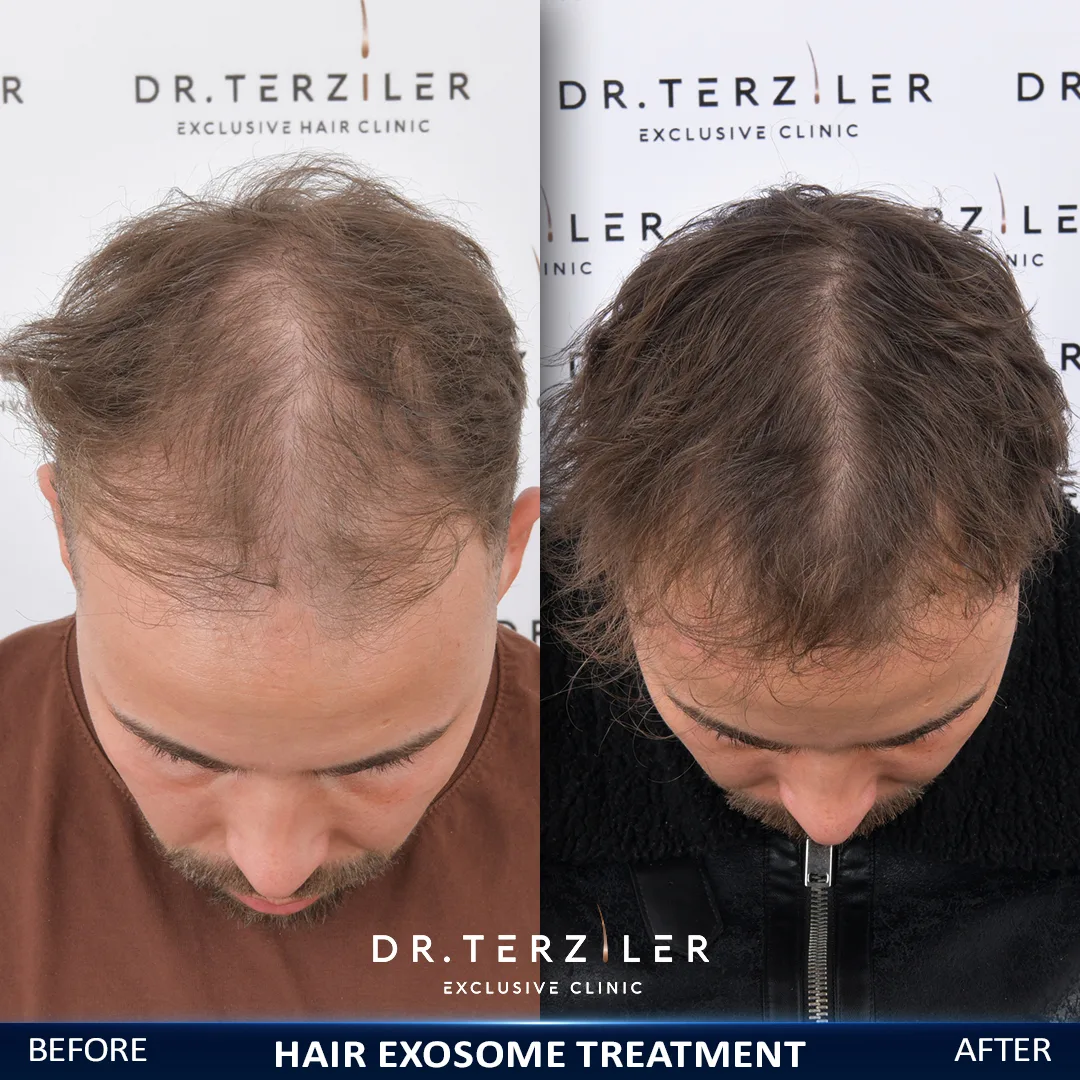
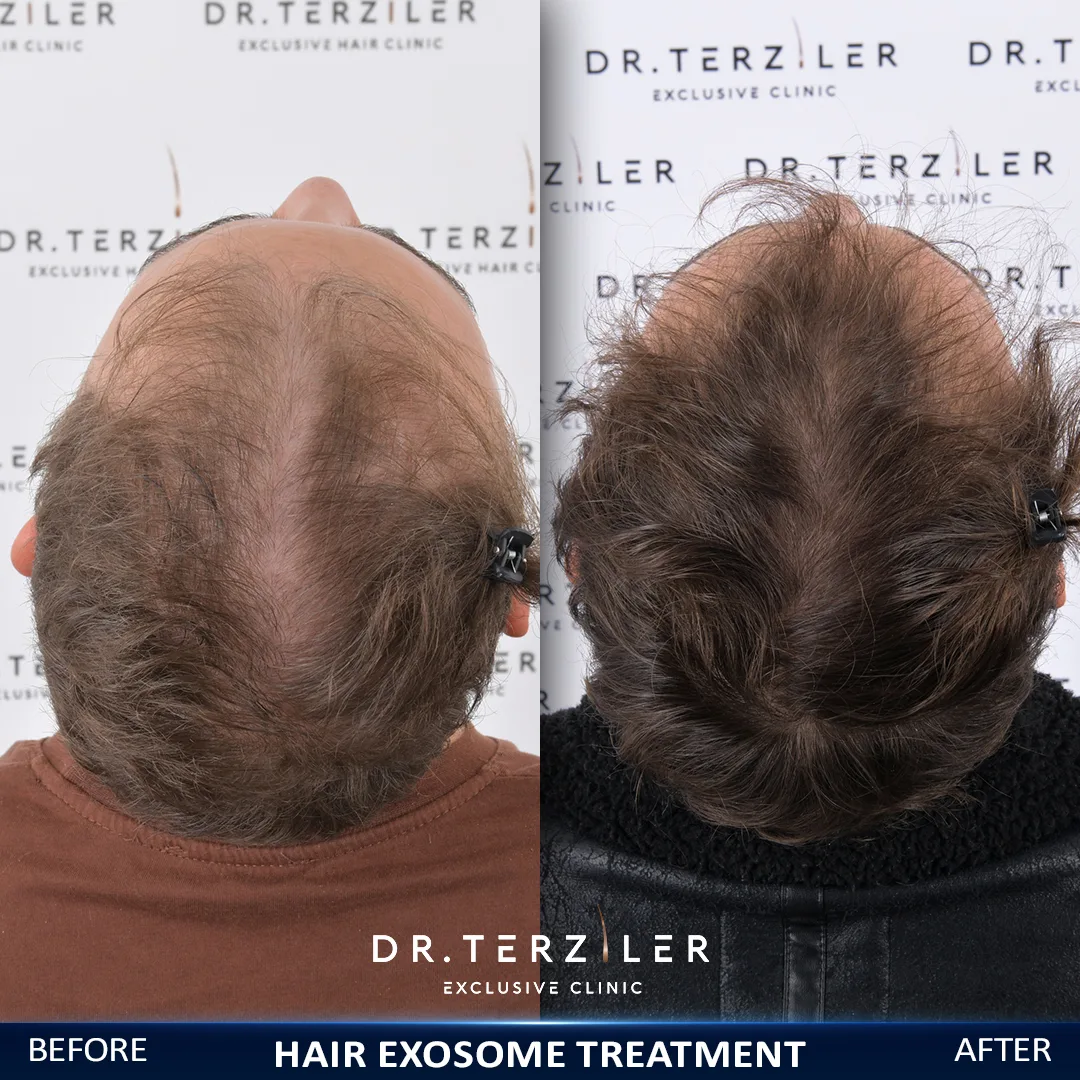
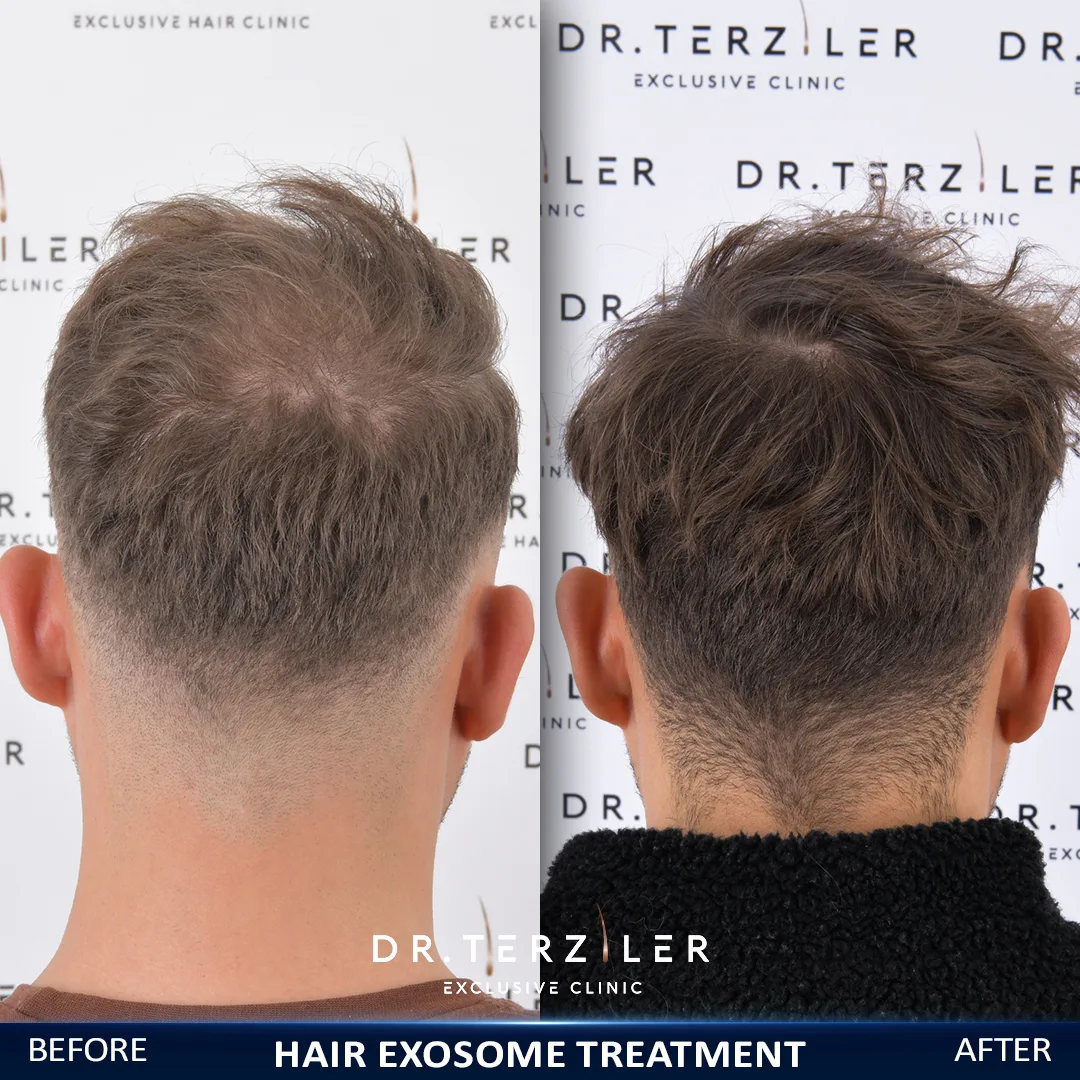
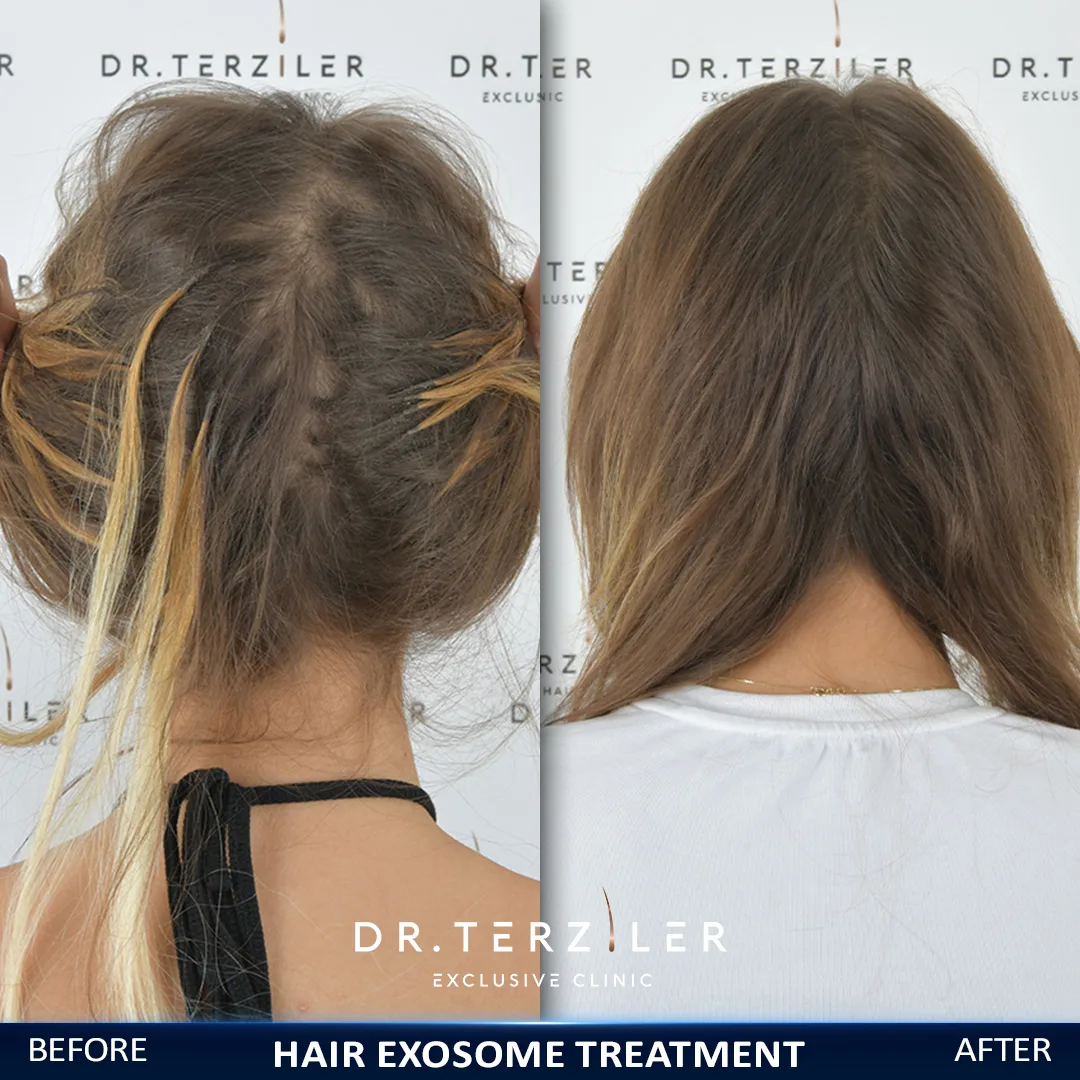
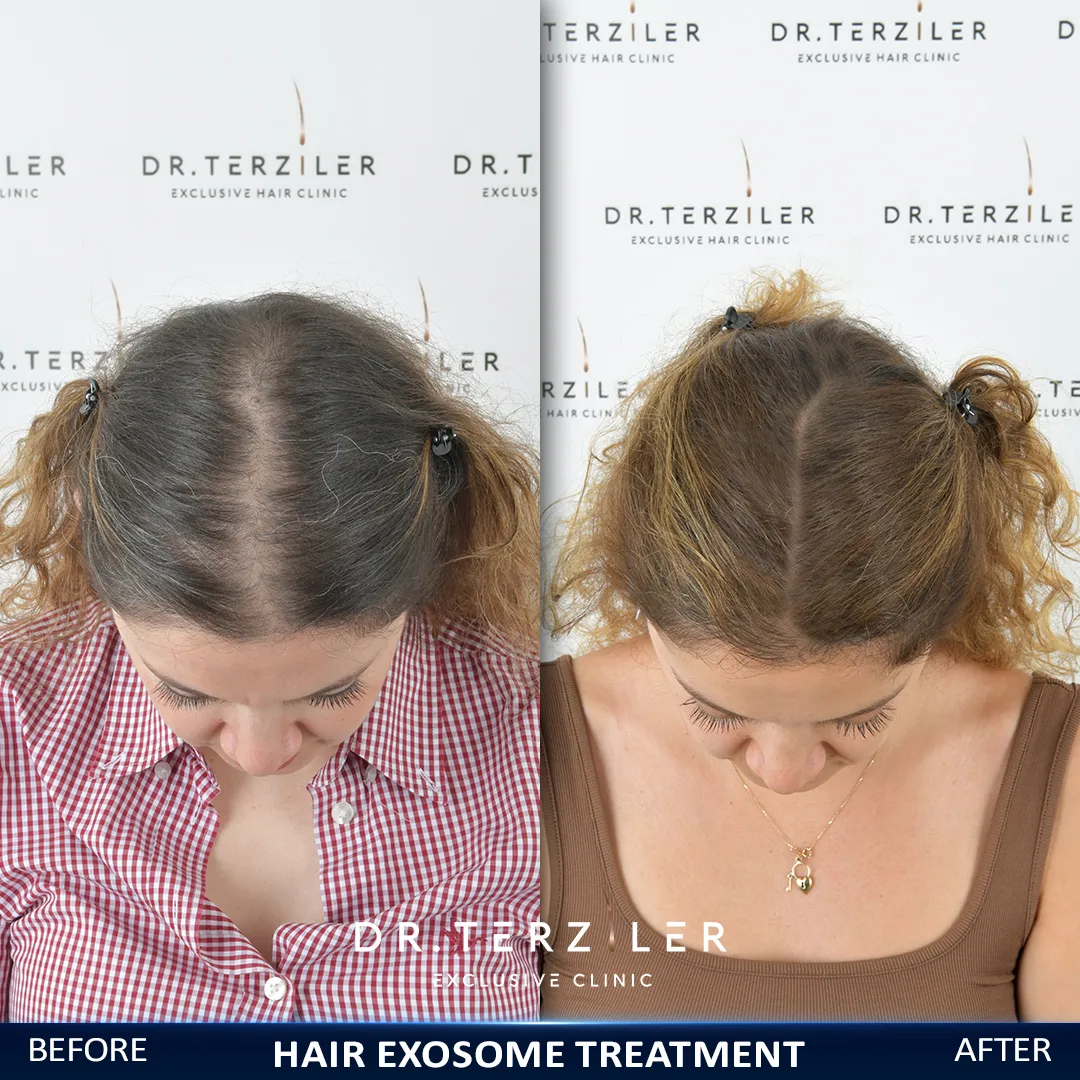
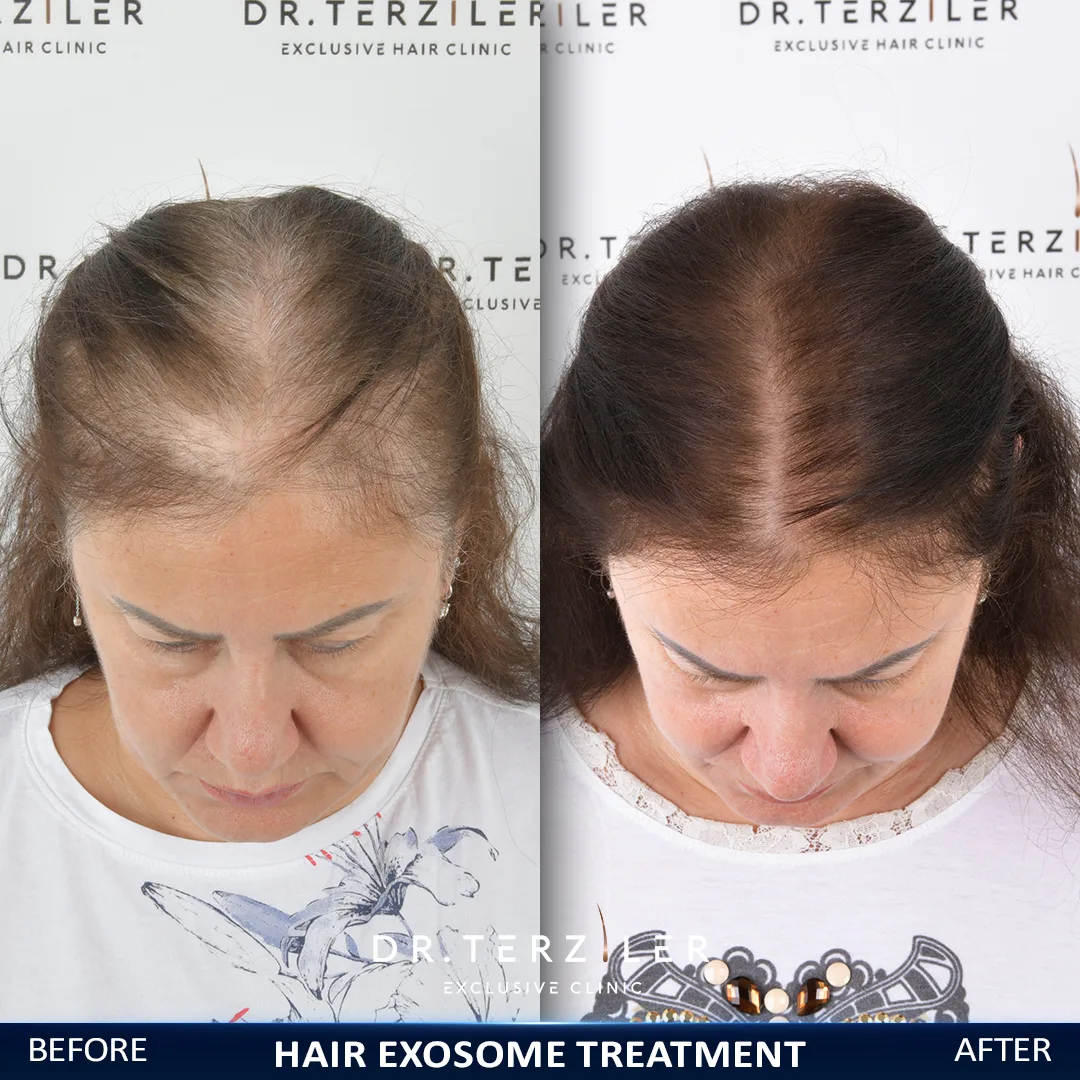
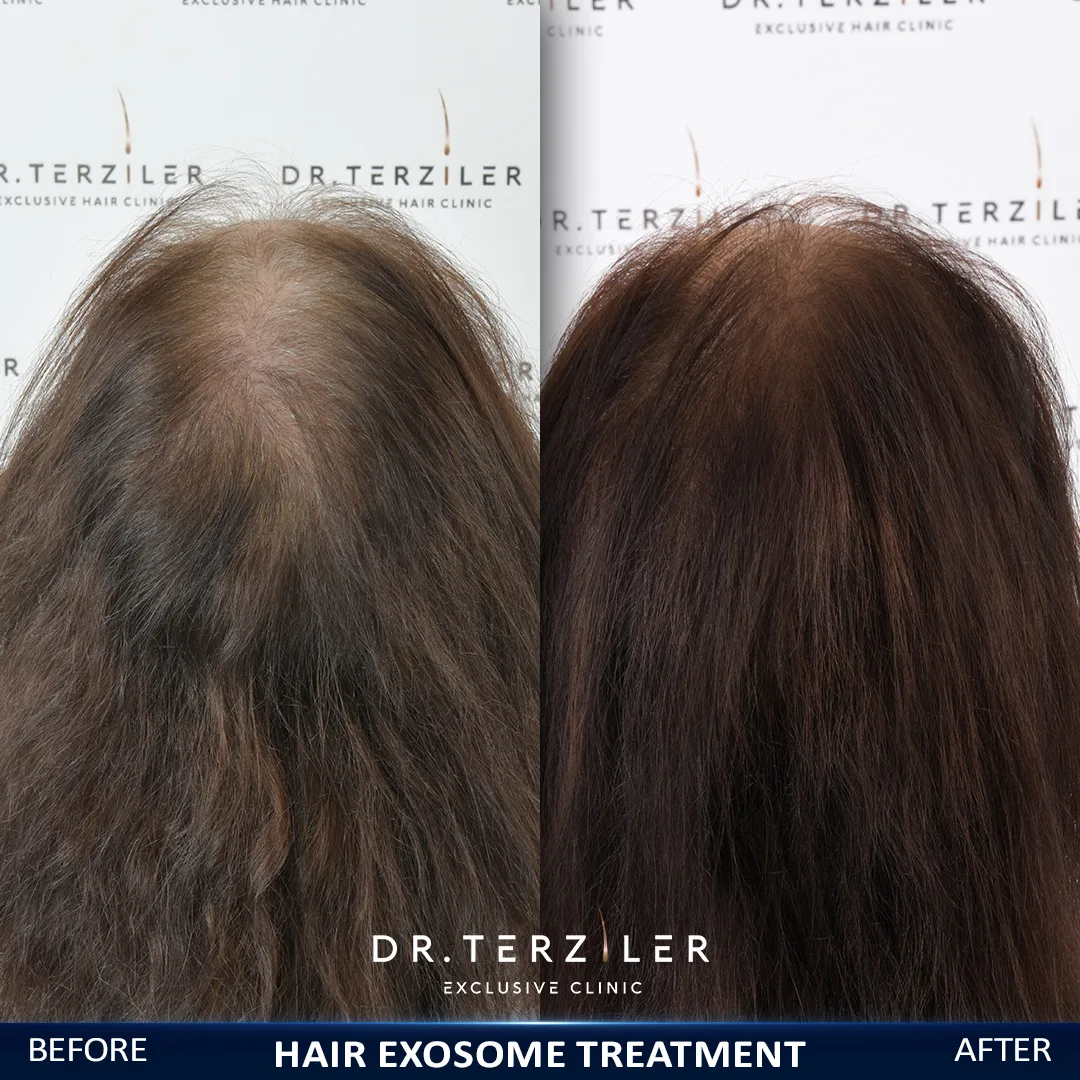
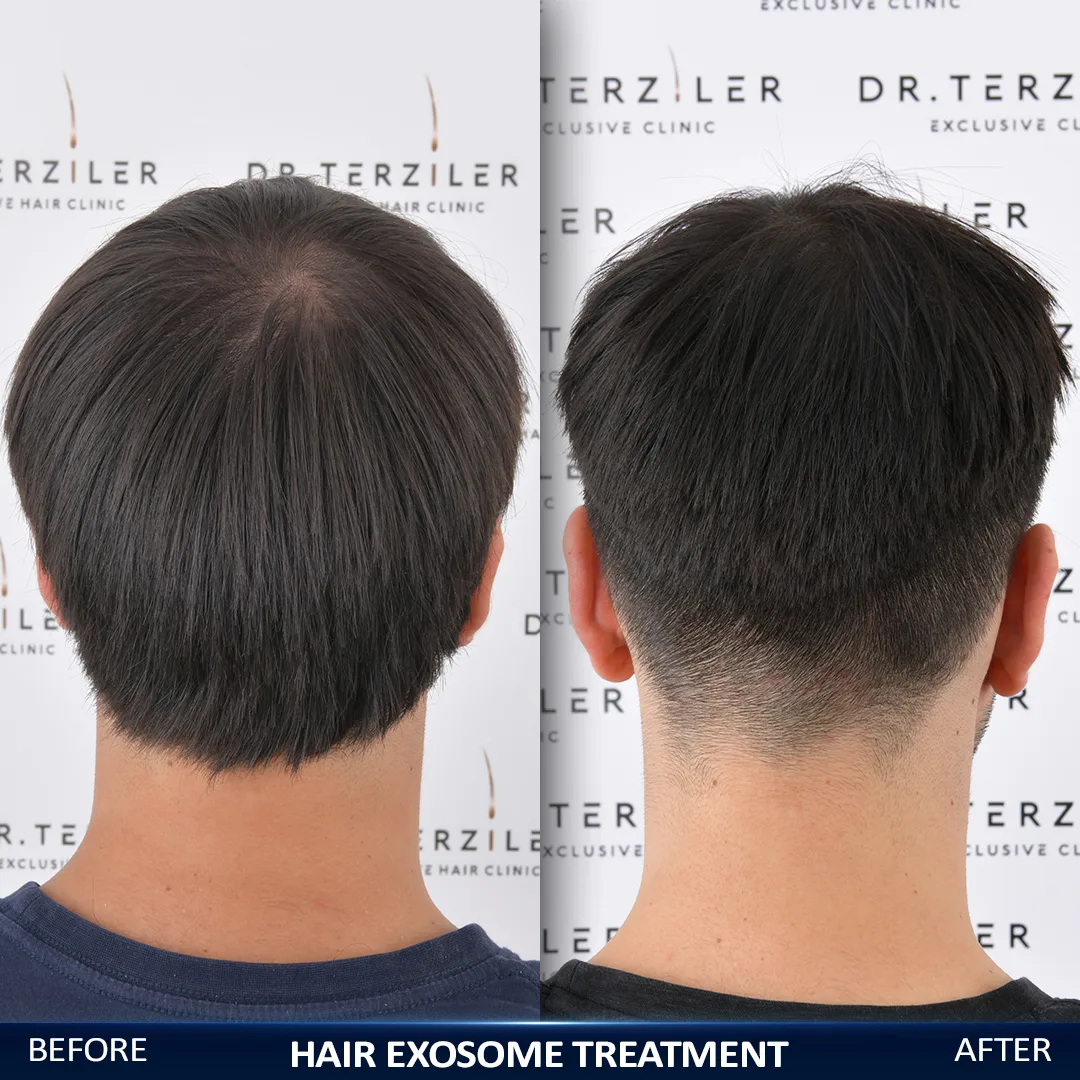
Published with patient consent. Treatment named, no density retouching. Results depend on your stage, follicle health and how consistent you are with the plan. When you review any clinic's gallery, check three things: same lighting and angle, a stated time gap, and the treatment named.
How Exosome Therapy Fits a Doctor-Led Plan at Dr. Terziler
We do not sell injections — we build plans. Before any exosome session, a Tricho Test and, when needed, bloodwork show us the real cause of your hair loss. Then a doctor decides whether exosome therapy fits, whether to combine it with other treatments, or whether you would be better served by something else entirely.
Dr. Terziler Exclusive Clinic is a doctor-led, AACI-accredited hair transplant clinic in Turkey, founded by Dr. Servet Terziler, who invented the Robotic DHI machine the clinic uses. Exosome therapy here is offered only as an evidence-graded, adjunct option after a Tricho Test, never as a guaranteed cure. That is the difference between a clinic and a sales desk.
What a doctor-led exosome plan includes
- Tricho Test to measure density and follicle health
- Bloodwork when a medical cause is suspected
- Doctor's decision on whether exosomes fit — or not
- Controlled, named exosome source and sterile handling
- A combined plan (PRP, laser, medical support) where useful
- A written, all-in price before you decide
When Exosomes Are Not Enough: Exosome Therapy vs a Hair Transplant
A hair transplant and exosome therapy solve different problems. A hair transplant permanently moves your own DHT-resistant follicles into thinning or bald areas; exosome therapy supports the follicles you still have.
For early thinning, exosomes and other non-surgical care can be enough to hold and improve your hair. For hair that is already gone, a transplant is the durable answer, and exosome therapy can support healing and the surrounding native hair. At our clinic the grafts are placed with our patented Robotic DHI system, which controls the depth, angle and direction of every implant. Exosome therapy is one part of the toolkit, not the whole plan — and which path fits you is a conversation with a doctor, not a checkout button.
Get an Honest Answer About Exosome Therapy for Your Hair
Exosome hair therapy can help the right person at the right stage, and it can waste money for the wrong one. The only way to know which you are is to measure first. Send us your details and a doctor will tell you, honestly, whether exosome therapy fits your hair — and what a realistic plan and price look like.
Frequently Asked Questions
Do exosomes work for hair loss?
Early evidence is promising but limited. Most data comes from lab and animal studies, and only a small number of patients have been studied. One clinical study of 39 people reported higher hair density and thickness (Gupta, J Cosmet Dermatol 2023). Larger human trials are still needed.
Is exosome hair therapy FDA approved?
No. There are no FDA-approved exosome products for any use, including hair loss. In 2019 the FDA warned the public after serious adverse events in patients treated with unapproved exosome products (US FDA, 2019). Clinics offer it as an investigational treatment.
What is the dark side of exosomes?
The concerns are regulation and quality, not the biology. No exosome product is FDA approved, quality varies by source, and long-term data is thin. Serious adverse events have been reported from unapproved products (US FDA, 2019). A regulated, doctor-led setting lowers the risk.
Are exosomes for hair loss safe?
In studies so far exosome therapy has been well tolerated, with mild effects like redness or swelling. The real risk comes from unregulated products and unqualified providers. Safety depends on the exosome source, sterile handling, and a doctor administering it.
How long does exosome hair therapy last?
Results are not permanent. A course can support the scalp for several months, and most clinics suggest maintenance about once a year. Because hair loss is ongoing, upkeep and a medical plan protect the result.
How many sessions of exosomes are needed for hair?
Most protocols use three to five sessions, about 30 minutes each, spaced a few weeks apart. Your doctor sets the exact number after a Tricho Test.
Which is better, exosomes or PRP?
Neither is proven superior for hair. PRP uses your own blood and has more clinical history. Exosomes are newer, need no blood draw, and are still investigational. A doctor should match the choice to your diagnosis.
Do exosomes work better than minoxidil?
They are different tools. Minoxidil is FDA approved with decades of data. Exosomes are new and investigational. Exosome therapy is not a proven replacement for minoxidil, though a doctor may combine approaches.
Is exosome therapy permanent, or better than a hair transplant?
Exosome therapy is not permanent and does not replace a transplant. A transplant permanently moves DHT-resistant follicles into bald areas, while exosomes support the hair you still have. For advanced loss, a transplant is the durable option.
How much does exosome hair therapy cost?
It costs less in Turkey than in the US or UK for a comparable protocol, because clinic and living costs are lower, not the quality. Price depends on the number of sessions and the exosome source. Ask for a written, all-in price.
Sources
- US Food and Drug Administration. Public Safety Notification on Exosome Products, 6 December 2019. fda.gov
- Gupta AK, Wang T, Rapaport JA. Systematic review of exosome treatment in hair restoration. J Cosmet Dermatol. 2023. PubMed 37381168
- Exosome therapy in hair regeneration: a literature review of the evidence. J Cosmet Dermatol. 2022. PubMed 35441799
- Exosomes and Hair Regeneration: A Systematic Review of Clinical Evidence Across Alopecia Types and Exosome Sources. Clin Cosmet Investig Dermatol. 2025. PMC12433634
Questions You May Have
As topical or local anaesthesia can be administered prior to treatment, the procedure is generally carried out comfortably.
Your journey begins today.
Contact us for a free, personalised consultation. Our team of experts will be by your side every step of the way.