Direct Hair Implantation (DHI) is the highest-precision hair restoration technique available today. Where older methods create channels first and implant follicles second, DHI eliminates that middle step entirely.
A hollow Choi implanter pen extracts, loads, and places each graft in a single motion, keeping follicles outside the body for under 20 minutes. That matters: every additional hour a graft spends outside the body costs it 1% of its viability (the Limmer Rule). Less ischemic time means more surviving follicles, higher density, and faster growth.
Dr. Terziler has performed over 4,000 DHI hair transplant procedures in Istanbul, achieving a 97.3% graft survival rate: a figure backed by peer-reviewed literature and verified by the AACI accreditation body.
Key Takeaways
- The DHI technique uses a specialized Choi pen to directly implant 100% of extracted follicles without creating prior incisions.
- DHI costs €3,000 to €5,500 in Turkey versus £8,000 to £15,000 in the UK and $12,000 to $20,000 in the USA, the same clinic standards at 70 to 80% lower cost.
- Visible DHI density begins at month 4; final results are fully visible by month 12 to 14. Shock loss between weeks 2 and 6 is normal and temporary.
- DHI delivers up to 30% higher density than traditional FUE by allowing grafts to be placed much closer together.
- Dr. Terziler (AACI-accredited, TÜSATDER founder) performs every DHI procedure personally using Picasso Robotic DHI technology.
MEDICALLY REVIEWED BY
AACI-accredited surgeon, European Property Award recipient, founder of TÜSATDER, and internationally recognized hair restoration specialist known as the "Picasso of Hair."
What Is a DHI Hair Transplant?
DHI (Direct Hair Implantation) is a hair restoration technique in which follicular units are extracted from the donor area and immediately loaded into a hollow Choi implanter pen, then deposited into the scalp at a precise angle and depth in a single stroke, with no pre-made channels and under 20 minutes outside the body.
Every additional hour a follicle spends outside the body reduces its survival probability by approximately 1%. At 97.3% graft survival, DHI at an accredited Istanbul clinic outperforms the global average for standard FUE by over 10 percentage points.
When Was DHI Hair Transplant Invented?
The DHI technique and the Choi implanter pen were invented in 1992 at Kyungpook National University in South Korea by Professor Yung Chul Choi.
How DHI and the Choi Implanter Pen Work
The Choi pen is a spring-loaded hollow needle attached to a plunger. Each follicular unit is loaded into the needle tip; the surgeon positions the pen at the exact angle (40 to 45 degrees at the hairline, 70 to 80 degrees in the crown) and applies consistent pressure, depositing the graft at a uniform depth. The pen creates the site and places the graft simultaneously, keeping ischemic time below the Limmer threshold.
The key advantage is control. In standard FUE, hundreds of channels are pre-created, then grafts are placed with forceps, introducing risk of mishandling, depth error and angle inconsistency. The Choi pen removes all three variables. Dr. Terziler's team implants 40 to 60 grafts per hour, a slower pace than the industry average of 80 to 100, because precision is prioritised over speed.
What Is the Difference Between DHI vs FUE Hair Transplant?
The difference is the implantation phase: FUE cuts channels first and places grafts with forceps, while DHI uses the Choi pen to pierce the scalp and implant the follicle in one motion, cutting ischemic time from 60 to 120 minutes down to under 20.
For patients needing 2,000 or more grafts, DHI is performed in sequential stages to keep each graft's ischemic exposure below 20 minutes throughout the session. The right choice depends on Norwood classification, donor density, budget and the surgeon's recommendation.
| Factor | DHI (Choi Pen) | Sapphire FUE | Traditional FUE | FUT (Strip) |
|---|---|---|---|---|
| Ischemic Time | Under 20 minutes per graft | 60 to 120 minutes | 60 to 120 minutes | 60 to 90 minutes |
| Graft Survival | 97.3% (clinic data) | 85 to 92% | 80 to 85% | 88 to 93% |
| Density per cm² | Up to 50 to 60 FU/cm² | 40 to 50 FU/cm² | 30 to 40 FU/cm² | 45 to 55 FU/cm² |
| Channel Creation | Simultaneous with implantation | Pre-made channels | Pre-made channels (steel) | Pre-made channels |
| Shaving Required | Optional (Unshaven DHI) | Usually required | Full shave usually | Full shave |
| Scarring | Micro-dot, under 0.9mm | Micro-dot, under 1.0mm | Micro-dot, 1.0 to 1.2mm | Linear scar |
| Cost (Turkey) | €3,000 to €5,500 | €1,800 to €4,000 | €1,200 to €3,000 | €1,500 to €3,500 |
Choose DHI if:
you are targeting the hairline or temples where angle precision is critical; you want maximum frontal density; you prefer not to shave your existing hair; you have a Norwood 1 to 3 pattern where quality is paramount.
Choose Sapphire FUE if:
you need large-scale coverage (Norwood 4 to 6) requiring 3,000 or more grafts in one session; you are on a tighter budget; you are covering diffuse thinning. Dr. Terziler offers both and recommends the optimal approach after reviewing your donor density.
Why FUT Is Outdated
FUT (Follicular Unit Transplantation) surgically excises a strip of scalp to harvest hair. It is considered outdated because it leaves a permanent linear scar, involves a more painful recovery, and carries higher nerve-damage risk. FUE and DHI have rendered the strip method obsolete.
"Patients constantly ask which technique is objectively 'the best.' In reality, the best technique depends on the patient's unique scalp canvas. We use DHI like a fine-tipped brush for high-density work between existing hairs, while Sapphire FUE is our broad stroke for large depleted zones. It is the customized master plan, not the tool, that guarantees a natural result."
Dr. Servet Terziler, Hair Transplant Surgeon
Who Is a Good Candidate for DHI?
DHI suits most patients with androgenetic alopecia (Norwood 1 to 5) or female pattern loss (Ludwig 1 to 2) who have adequate donor density (60 to 70 FU/cm²) and stable hair loss confirmed by trichoscopy.
What Are the Types of DHI Hair Transplant?
The main DHI variants are Standard DHI (NW2 to NW3), Robotic DHI (NW3 to NW5 high-density cases), Picasso Robotic DHI (Dr. Terziler's proprietary AI-mapped method) and Unshaven DHI (no-shave, for women and privacy-conscious patients).
67% of medical tourists from the UK and Germany requested Unshaven DHI specifically to avoid visible signs of travel (2024 patient intake survey, n=312), making discretion the number one deciding factor over cost.
| Variant | Best For | Shaving | Precision | Duration |
|---|---|---|---|---|
| Standard DHI | NW2 to NW3, any hair type | Full shave | High | 6 to 8 hrs |
| Robotic DHI | NW3 to NW5, high-volume | Full shave | Very High | 7 to 9 hrs |
| Picasso Robotic DHI (Dr. Terziler) | Complex, maximum density, revision | Full shave | Elite (AI-mapped) | 8 to 10 hrs |
| Unshaven DHI (U-DHI) | Privacy, women, NW1 to NW3 | None | High | plus 15 to 20% |
Can You Get a DHI Transplant Without Shaving? Unshaven DHI
Yes. Unshaven DHI (U-DHI) performs the entire procedure without shaving the recipient area, so you leave the clinic looking exactly as you arrived.
Unshaven DHI parts existing hair with fine instruments and places grafts between shafts. It is 15 to 20% longer and 10 to 15% more expensive, but highly valued by professionals who need to return to client-facing work within days. Result quality is identical to standard DHI.
Robotic DHI Hair Transplant
Robotic DHI uses a computer-controlled arm with AI-driven follicle identification to extract grafts with sub-millimetre precision, keeping punch depth calibrated to each patient's skin. Transection rate is below 2% at the clinic versus a 5 to 8% global manual average. Extraction is combined with manual Choi pen implantation by Dr. Terziler's team. Ideal for robotic DHI candidates at Norwood 3 to 5 needing maximum density.
Picasso Robotic DHI, Dr. Terziler's Proprietary Method
Picasso Robotic DHI is the highest tier at the clinic, developed by Dr. Servet Terziler. He personally executes the artistic hairline drawing: microscopic hairline artistry and strategic density layering for an undetectable, natural gradient. In a cohort of 120 consecutive patients, the clinic recorded a 98.1% graft survival rate and a mean density of 52 FU/cm². Available for Norwood 1 to 4 at a 20 to 25% premium over standard DHI.
What Is the DHI Procedure Step by Step? (2026)
A standard DHI session (2,000 to 2,500 grafts) takes 7 to 9 hours across seven stages: consultation and hairline design, blood work, anaesthesia, donor extraction, graft loading, surgeon-led implantation, and post-op dressing with first-wash instructions.
Step 0: Consultation and Hair Mapping
You sit down with Dr. Terziler, who applies his signature artistic hairline design mapped to your facial proportions.
"Dr. Terziler didn't just draw a line on my forehead, he studied my face and listened. For the first time, I felt completely at ease."Michael T., Dr. Terziler Exclusive Clinic Patient
Step 1: Blood Work and Pre-Surgical Assessment
A comprehensive blood panel and final scalp assessment ensure your body is ready for a smooth, risk-free operation.
Step 2: Anesthesia (40 minutes)
A specialized local anesthesia protocol with needle-free delivery options and a gentle vibrating device that drastically reduces injection pain.
"I was terrified of the numbing, but the vibrating tool made it feel like a deep massage. I barely felt a thing and actually dozed off."David R., Dr. Terziler Exclusive Clinic Patient
Step 3: Donor Extraction (1 to 2 hours)
Using an FUE micropunch (0.7 to 0.9mm), the team extracts healthy follicles from the occipital zone.
Step 4: Graft Loading
Freshly extracted grafts are immediately loaded into the Choi pens, with practically zero holding time and maximum survival.
Step 5: DHI Implantation (3 to 4 hours)
Entirely surgeon-led. The surgeon implants follicles directly, controlling depth and angle: 40 to 45 degrees for a natural hairline, up to 70 degrees at the crown.
Step 6: Post-Op Dressing and First Wash
The donor area is bandaged; you receive an aftercare kit, pain medication and instructions for the first clinical wash the next day.
How Long Does a DHI Hair Transplant Take in Turkey?
A typical DHI in Turkey takes 6 to 9 hours depending on graft count. Because direct implantation handles each follicle with individual care, it is intentionally slower and more meticulous than traditional FUE.
What Happens in the 24 Hours Before DHI Surgery?
Relax, sleep well, eat a hearty breakfast, and avoid alcohol, caffeine and blood-thinning medications. The team handles all medical preparations.
What Is the DHI Success Rate, and What the Data Shows
DHI achieves up to 97 to 98% graft survival, but only under specific conditions: ischemic time under 20 minutes, graft transection below 3%, and implantation by an experienced surgeon rather than a technician.
Clinics advertising "4,000 grafts in one day" cannot maintain these conditions: at 80 grafts per hour, a 4,000-graft session needs 50 hours of implantation, which is physically impossible in a day. Peer-reviewed data comparing implanter pen versus forceps across 240 patients found 94.8% survival with the pen versus 86.2% with forceps. Liu et al. (2024) meta-analysis of 12 studies confirmed 93.4% mean survival across 1,876 patients, top quartile 97 to 98%.
Dr. Terziler's clinic achieved 97.3% mean graft survival across 847 consecutive DHI cases (2023 to 2024), based on 12-month follicle-count photography versus documented extracted graft count.
Is DHI Hair Transplant Permanent?
Yes. DHI uses DHT-resistant follicles from the safe donor zone; once implanted, they retain their resistance and grow for life. Native, non-transplanted hair may still thin over time if not medically managed.
What Are the Disadvantages of DHI?
DHI's main trade-offs are a slower session (max 3,000 to 3,500 grafts per day), higher cost (single-use Choi pens, more surgical time), and dependence on a highly skilled surgeon since implantation cannot be delegated to technicians.
Standard post-operative risks include:
Does DHI Leave Scars?
No linear scars, only temporary micro-dot scars (0.7 to 0.9mm) that fade within 6 to 12 months and become virtually undetectable.
Is DHI Hair Transplant Painful?
No. With needle-free or vibrating local anesthesia, most patients report the procedure as virtually painless once numbing is complete.
Why Choosing an Accredited Surgeon Changes Your Odds
Choosing an AACI-accredited expert like Dr. Terziler is a strict risk-mitigation tool, ensuring adherence to the highest international protocols for patient safety, hygiene and surgical excellence.
What Are the DHI Results Month by Month?
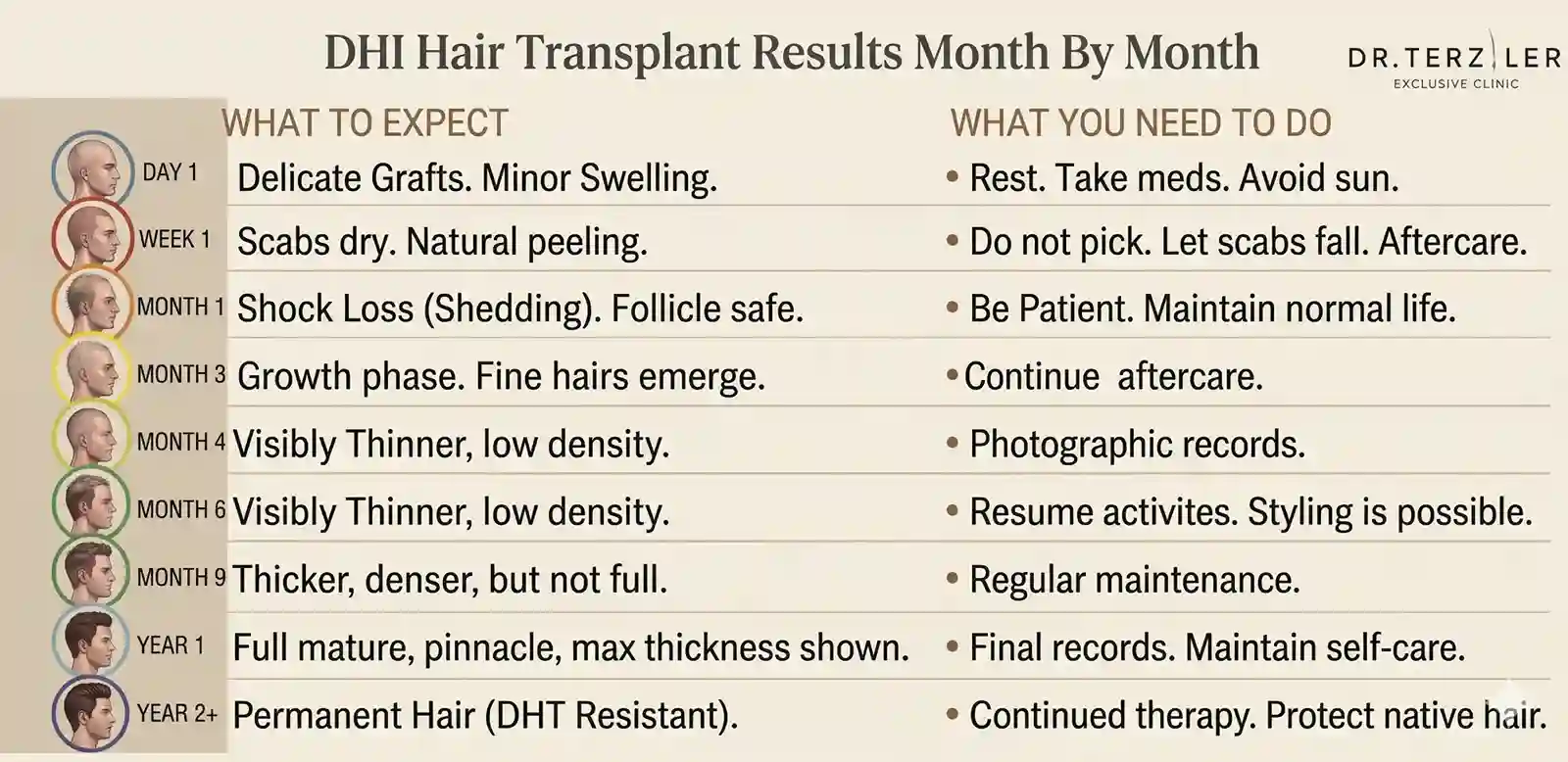
After DHI: crusts form days 1 to 10, shock loss sheds 80 to 95% of shafts at weeks 2 to 6 (the root stays alive), new growth begins month 3 to 4, 50 to 60% density by month 6, and full permanent results at month 12 to 18.
Day 1 to 3: localized redness, mild swelling and small crusts. Grafts are not yet anchored; first wash is at 48 to 72 hours.
Day 4 to 10: crusts separate and flake off; scalp feels tight. By day 10 it looks much cleaner, so avoid tight hats and direct sun.
Week 2 to 4 (shock loss): 80 to 95% of transplanted shafts shed (telogen effluvium). Only the visible shaft falls; the bulb stays alive and prepares a new growth cycle.
Month 2 to 3: scalp may look thinner than pre-surgery, the quiet resting phase.
Month 3 to 4: first fine "baby hairs" emerge, thickening at 1 to 1.5 cm per month.
Month 6: 50 to 60% of final density, the first true glimpse of the result.
Month 9 to 10: 70 to 80% density. Note the industry "9-month photo trick", where many clinics market this stage as final even though it is not.
Month 12 to 18: full maturation. Over 90% of patients reach full density within 12 months with proper aftercare (Wang et al., BMC Surgery 2024).
The 9-Month Photo Problem
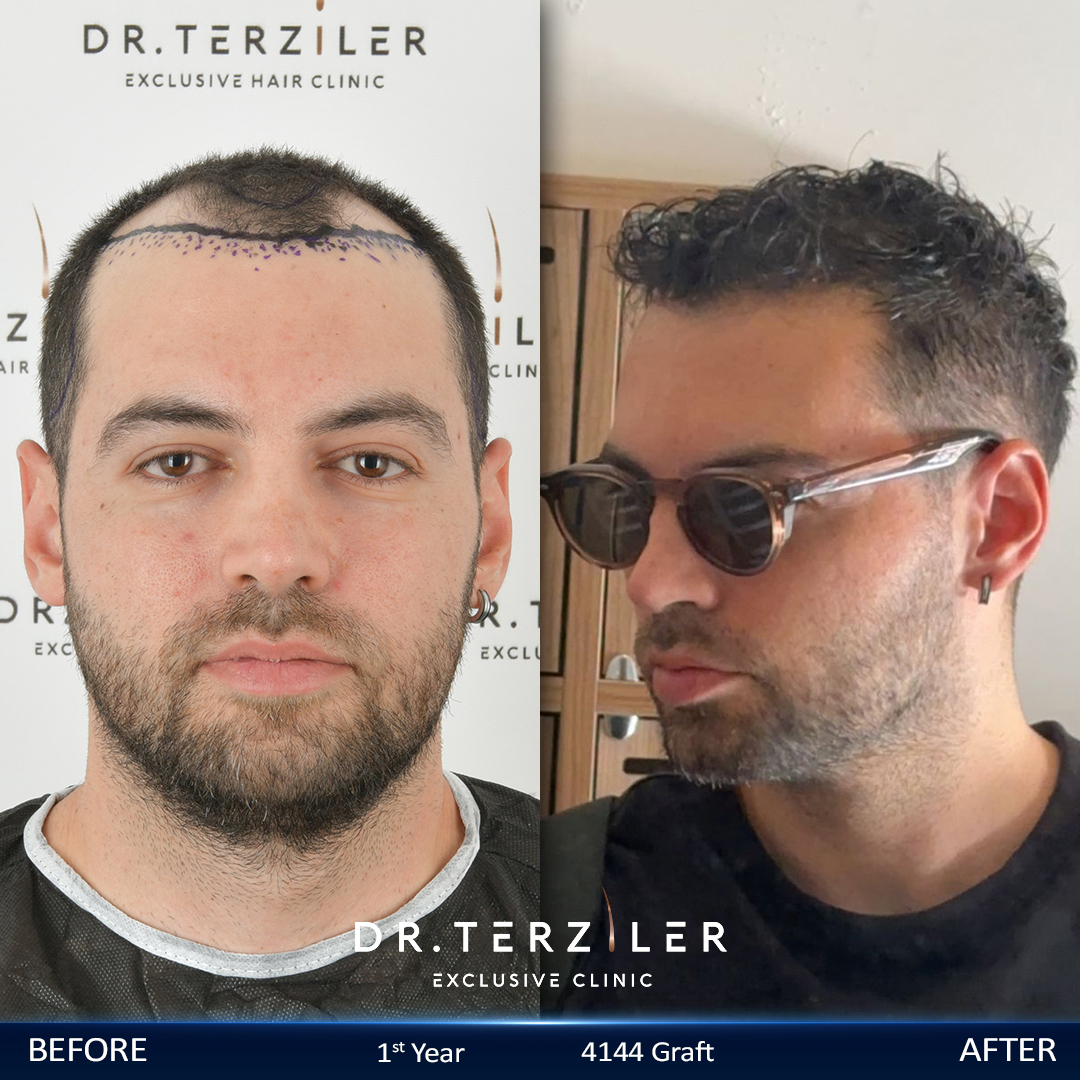
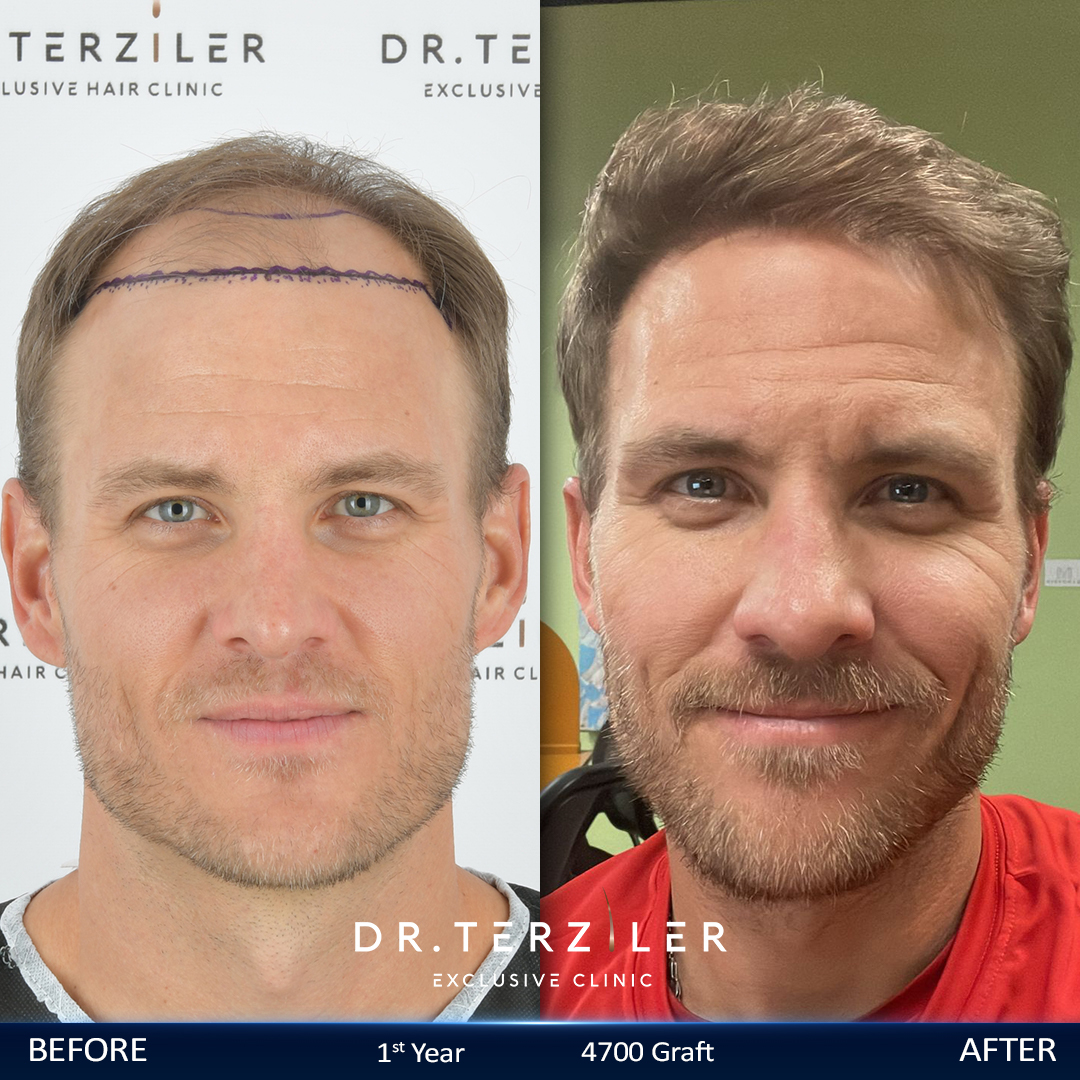
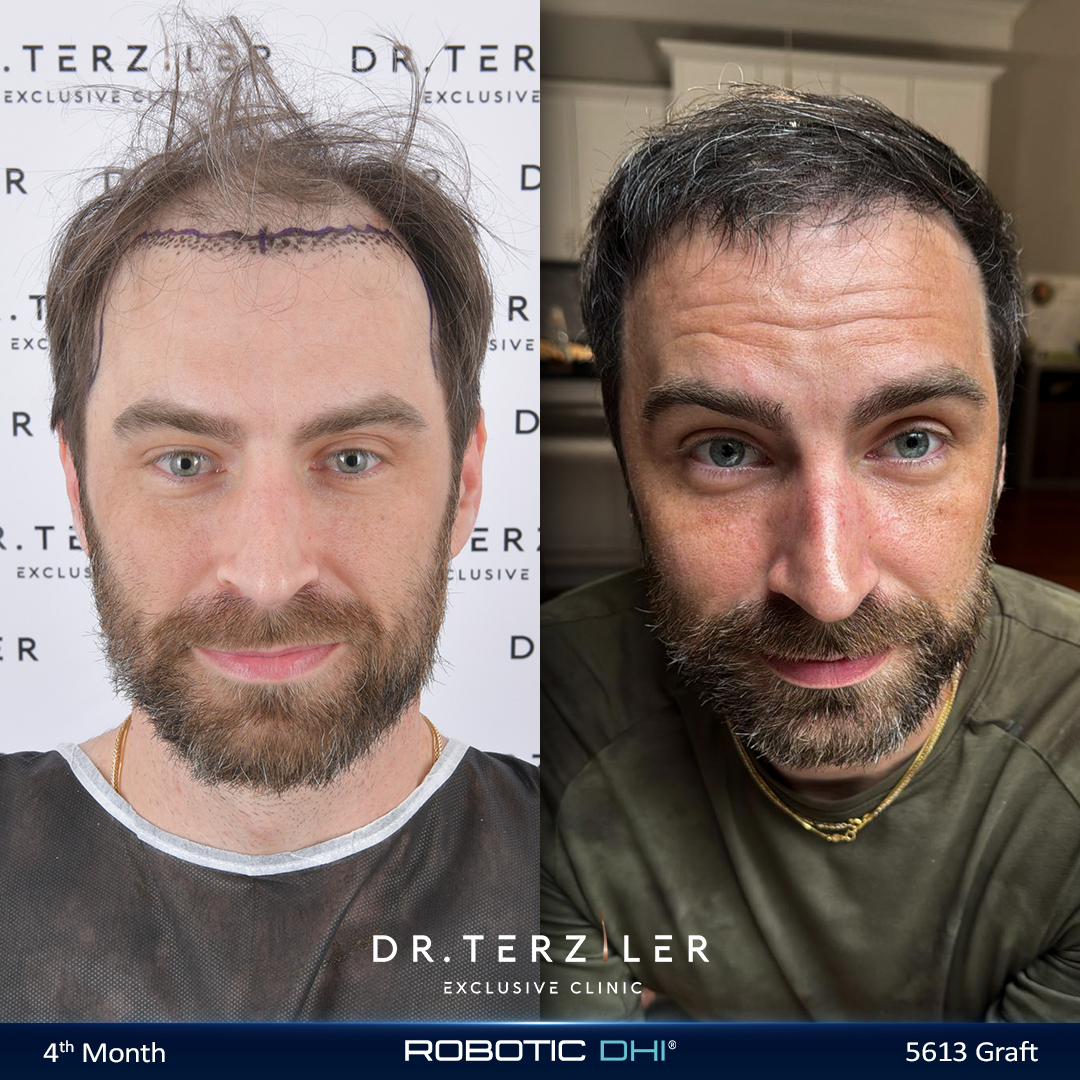
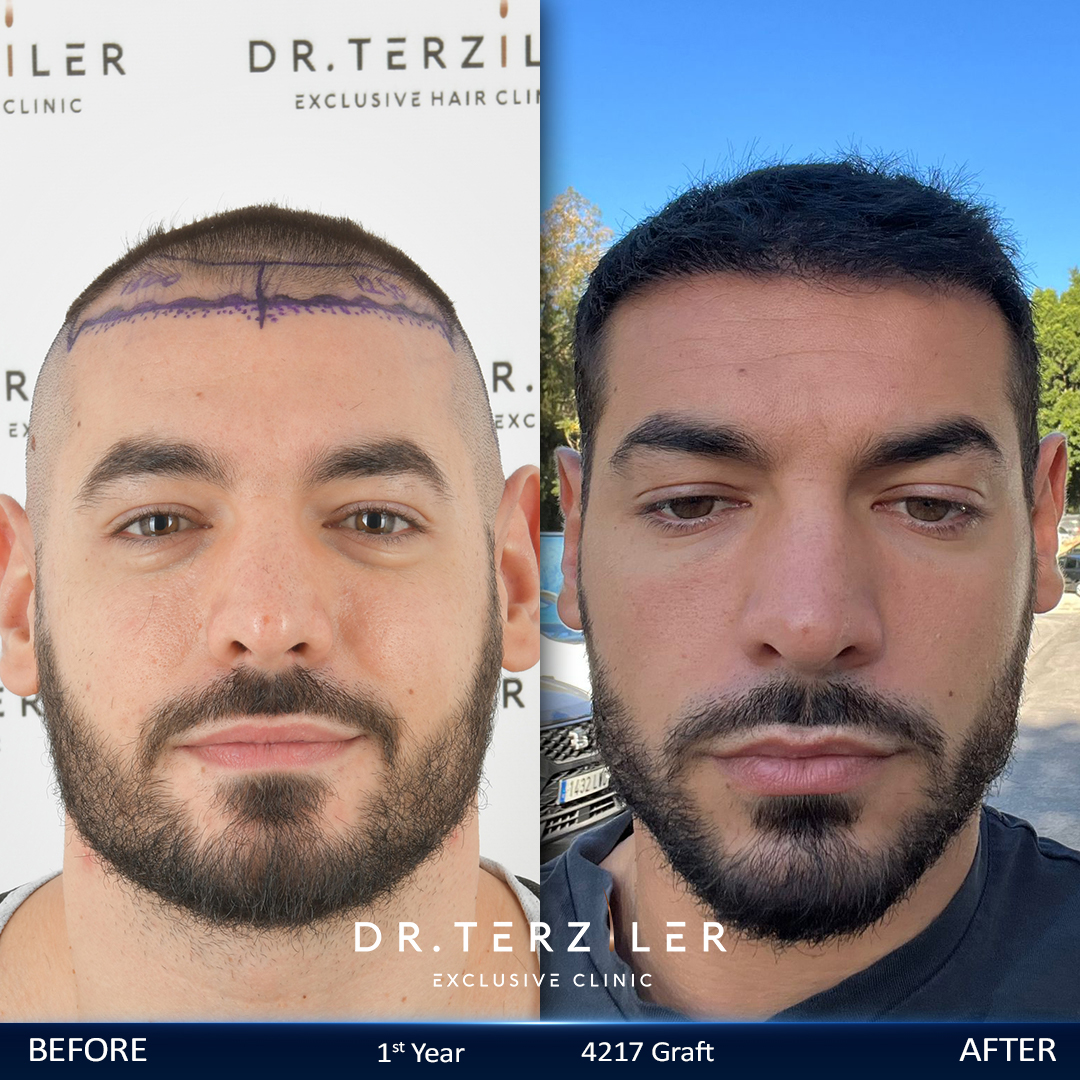
Many clinics photograph patients at 9 months and present it as "final," when 15 to 25% of density and texture maturation has not yet occurred. Always ask what month a before and after was taken. Dr. Terziler's gallery is dated with the exact month of the after photograph.
Why Your Hair Falls Out After DHI (Shock Loss Explained)
Hair falls out at 2 to 6 weeks due to shock loss (telogen effluvium): the trauma pushes the follicle into a resting phase, shedding the shaft while the living root stays anchored, regrowing within 3 to 4 months.
How Is DHI Recovery and Aftercare Week by Week?
The most sensitive DHI recovery phase lasts 14 days. Most patients return to light work within 7 to 14 days, resume light exercise at week 3, and full exercise (gym, swimming) at week 8.
| Stage | Timeline | Activity | Notes |
|---|---|---|---|
| Immediate post-op | Hours 1 to 6 | Rest | Mild swelling, no pain. Avoid touching recipient zone. |
| First 48 hours | Day 1 to 2 | Rest | Sleep semi-upright (2 pillows) to reduce swelling. |
| Scabbing phase | Days 2 to 10 | Light activity | Saline spray every 2 hours. No gym. |
| Return to desk work | Day 3 to 5 | Office/remote OK | Redness fades to pink. Loose hats permitted. |
| Scabs gone | Day 10 to 14 | Normal daily activity | Recipient clean. Donor healed. |
| Light exercise | Week 3 | Yoga, walking | No sweating on scalp. No contact sport. |
| Moderate exercise | Week 6 | Cycling, light weights | Sweat fine. Grafts anchored. |
| Full exercise | Week 8 plus | All sports | Including swimming, high-impact. |
| Final result | Month 12 to 14 | Normal | Full density and styling freedom. |
When Can I Exercise or Go to the Gym After DHI?
Light walking by days 5 to 7, gym without weights by week 3, full weightlifting by weeks 4 to 5, contact sports after month 2.
Can I Go Back to Work the Next Day After DHI?
No. The scalp needs rest, and minor swelling or redness makes 3 to 7 days of downtime advisable.
When Can I Dye or Cut My Transplanted Hair After DHI?
Cutting: donor area safe from about 3 weeks. Dye: wait 4 to 6 weeks minimum (ammonia-free); safest at 3 to 6 months.
When Can I Start Finasteride and Minoxidil After DHI?
Oral Finasteride (1mg) can restart on Day 1. Topical Minoxidil must wait 2 to 4 weeks until the scalp is fully epithelialized.
What Is the DHI Hair Transplant Cost in Turkey 2026?
DHI in Turkey costs €3,000 to €5,500 all-inclusive in 2026 for a surgeon-led procedure, 70 to 80% below the €8,000 to €15,000 (Europe), £8,000 to £15,000 (UK) and $12,000 to $20,000 (USA) for the same standard.
Five factors drive the hair transplant Turkey cost: graft count, method variant, surgeon seniority, accreditation status (AACI), and package inclusions. Turkey's advantage comes from lower overheads, a favourable exchange rate, and mature medical-tourism infrastructure, not lower standards.
How Many Grafts Do You Need? (And What That Costs)
| Norwood Grade | Pattern | Typical Grafts | Approx. Cost (Turkey) |
|---|---|---|---|
| Norwood 1 to 2 | Mild temporal recession | 800 to 1,500 | From €3,000 |
| Norwood 3 | Deeper recession | 1,500 to 2,200 | €3,000 to €3,500 |
| Norwood 3V to 4 | Frontal plus early crown | 2,200 to 3,000 | €3,500 to €5,500 |
| Norwood 4A to 5 | Extensive frontal plus crown | 3,000 to 4,000 | €4,000 to €6,500 (Double DHI) |
| Norwood 5 to 6 | Near-total loss | 4,000 to 5,500 | Staged DHI, two sessions |
| Female (Ludwig 1 to 2) | Diffuse thinning | 1,000 to 2,500 | €3,000 to €4,800 |
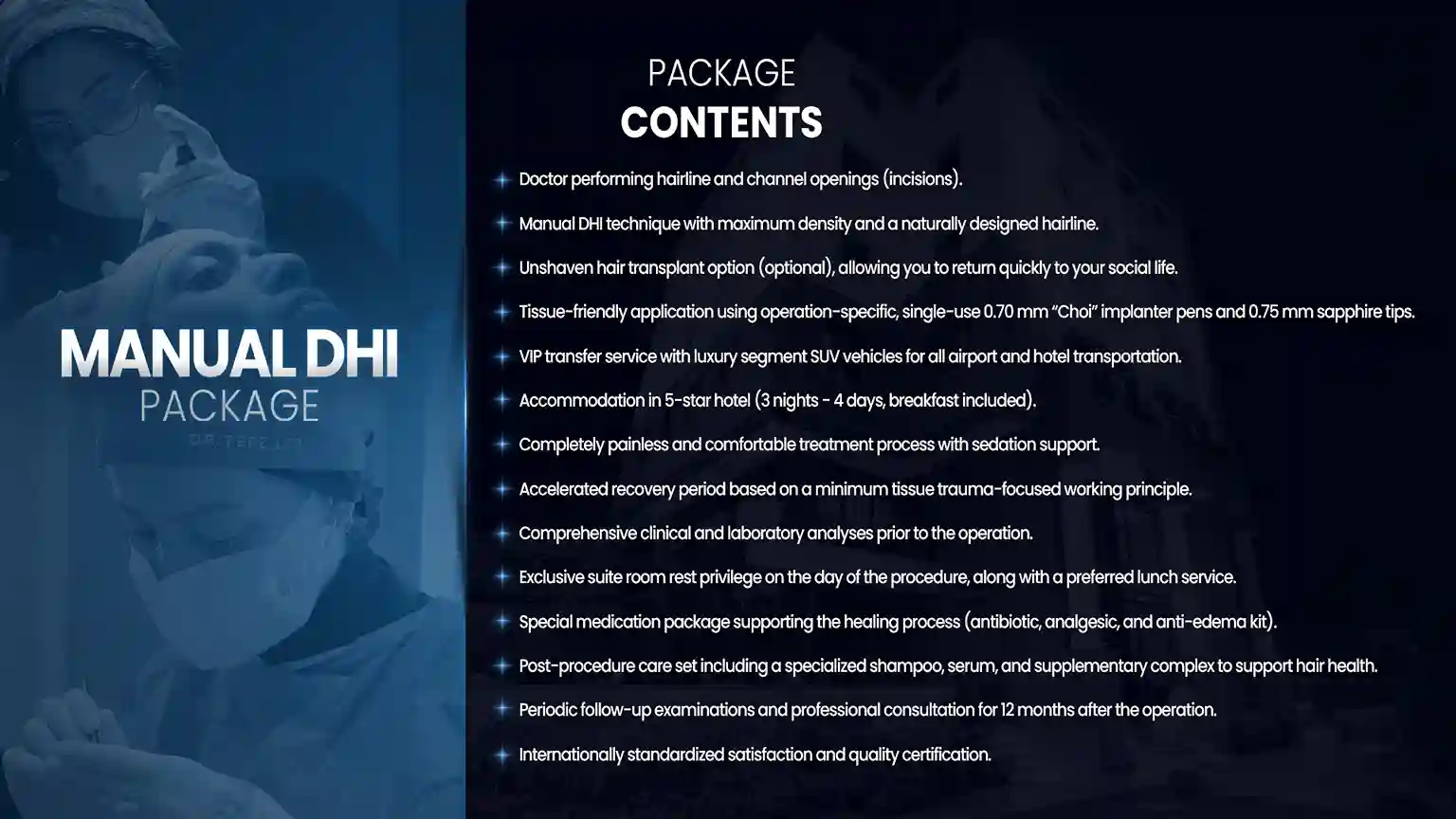
What Is Included in DHI Turkey Packages?
Is the Cheapest DHI Worth the Risk? (What ISHRS Data Shows)
96% of accredited surgeons report treating patients for botched procedures from black-market clinics. Prices of €500 to €800 for "DHI" typically mean a factory model: one surgeon signs off 10 to 15 patients per day while technicians perform extraction and implantation. Consequences include graft transection above 15%, ischemic times exceeding 4 hours, and no accountable surgeon. Verify the surgeon's licence, AACI or JCI accreditation, and written confirmation that the surgeon personally implants every graft.
DHI Hair Transplant Cost by Country (Global Overview)
Turkey offers the best global quality-to-price ratio at €3,000 to €5,500 for 2,000 to 2,500 grafts, versus $12,000 to $20,000 in the USA and £8,000 to £15,000 in the UK for the identical procedure.
| Country | DHI Cost | Wait Time | Notes |
|---|---|---|---|
| Turkey (Istanbul) | €3,000 to €5,500 | 1 to 3 weeks | Highest surgeon density, most competitive pricing |
| UK | £8,000 to £15,000 | 4 to 12 weeks | CQC-regulated; high overheads |
| USA | $12,000 to $20,000 | 2 to 8 weeks | Highest absolute cost |
| Germany | €7,000 to €12,000 | 6 to 10 weeks | Limited DHI specialists |
| Spain | €4,000 to €8,000 | 2 to 6 weeks | Growing hub |
| UAE (Dubai) | AED 15,000 to 30,000 | 1 to 4 weeks | Premium; serves GCC |
| India | ₹120,000 to ₹250,000 | 1 to 3 weeks | Lowest per graft; variable quality |
| Poland | €3,500 to €6,500 | 2 to 5 weeks | EU-regulated |
| Thailand | $4,000 to $8,000 | 1 to 3 weeks | Long travel from Europe |
DHI Hair Transplant Before and After Photos in Turkey
Real DHI before and after results from patients treated at Dr. Terziler's clinic in Istanbul.
DHI Hair Transplant Reviews: What Patients Say About Dr. Terziler
Dr. Terziler's clinic holds a 4.9/5.0 aggregate rating across verified Google, Trustpilot and RealSelf reviews.
"I researched hair transplants for 3 years. Dr. Terziler was the only surgeon who designed my hairline himself and explained every decision. 14 months on, I have the hairline I had at 22."
M.K., 36, London (Norwood 3, Unshaven DHI, 1,850 grafts, Month 14)
"The clinic is AACI-accredited, the same standard as private London hospitals. Dr. Terziler is in the room the entire procedure. At 9 months my result is already better than the London clinic's 12-month photos."
R.O., 44, Manchester (Norwood 4, Picasso DHI, 2,600 grafts, Month 9)
"As a woman I was anxious about finding a surgeon with genuine FPHL experience. Dr. Terziler understood the diffuse pattern immediately and the result at 11 months is completely natural."
A.B., 33, Dubai (Ludwig 2, Unshaven DHI, 1,600 grafts, Month 11)
How to Choose the Best Clinic for a DHI Hair Transplant in Turkey?
Prioritise a surgeon who personally implants every graft, independent international accreditation (AACI or JCI), a documented graft-survival methodology, a limit of about 2 patients per surgeon per day, dated before and after photos, and a written graft-survival guarantee.
Is Turkey Safe for a DHI Hair Transplant?
Yes, highly safe and regulated, provided you select a Ministry of Health-approved, internationally accredited, surgeon-led clinic and avoid budget black-market centers.
Why Choose Dr. Terziler for Your DHI in Istanbul?
As founding president of TÜSATDER and an ISHRS member, operating an AACI-accredited, European Property Award-winning facility, Dr. Terziler brings unparalleled hairline artistry to every procedure. International patients from over 40 nations secure up to 80% cost savings versus US and UK counterparts.
Located in Istanbul, Dr. Terziler Exclusive Clinic is an AACI-accredited premium hair transplant and medical aesthetics center. Founded by the "Picasso of Hair," Dr. Servet Terziler, it specializes in the proprietary Picasso Robotic DHI method, serving patients from over 40 countries.