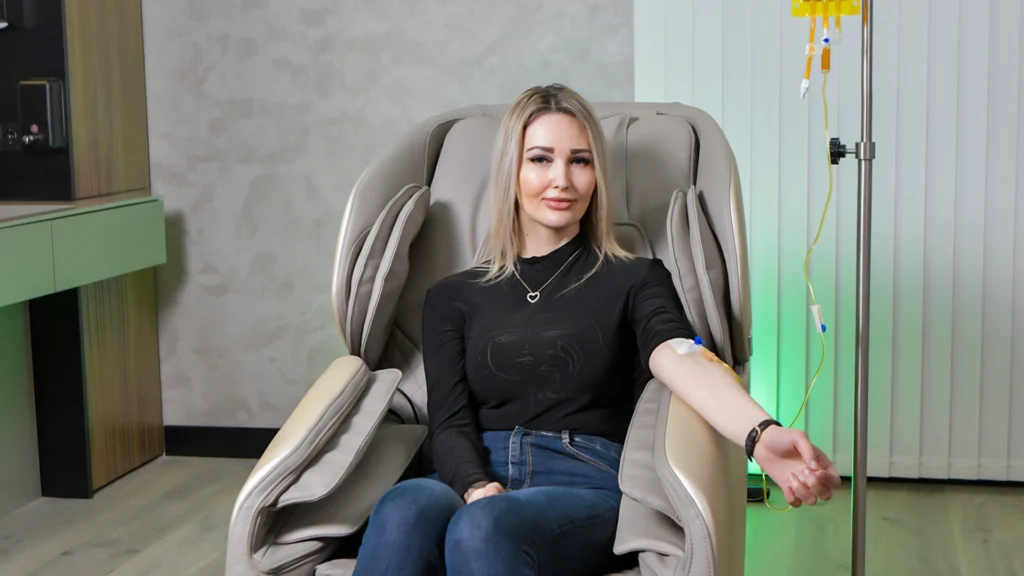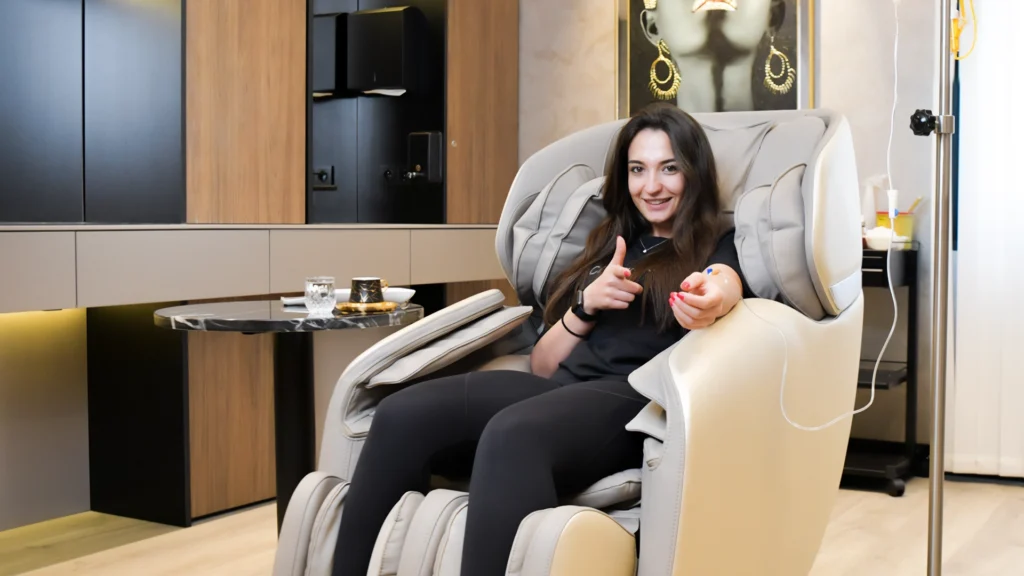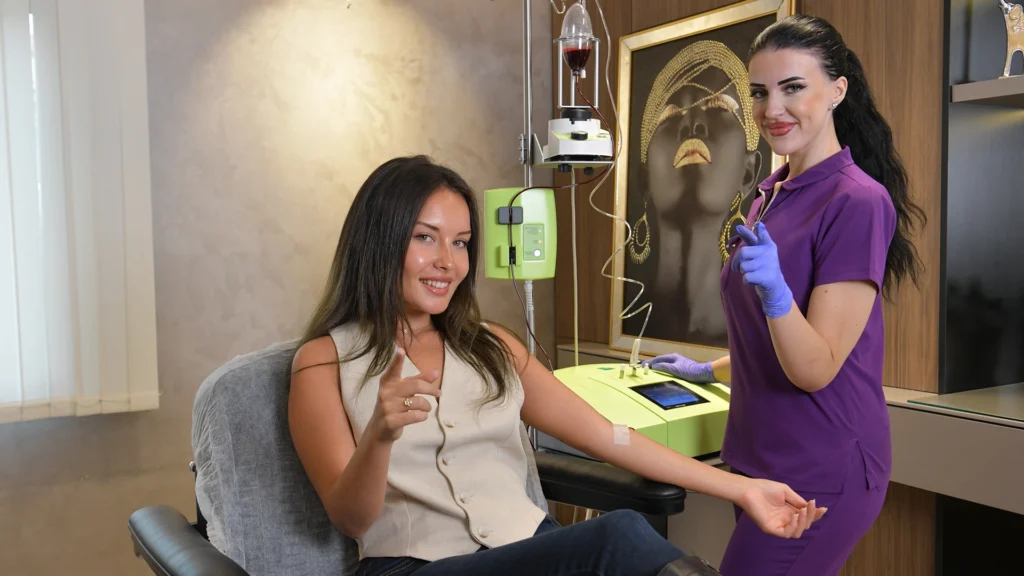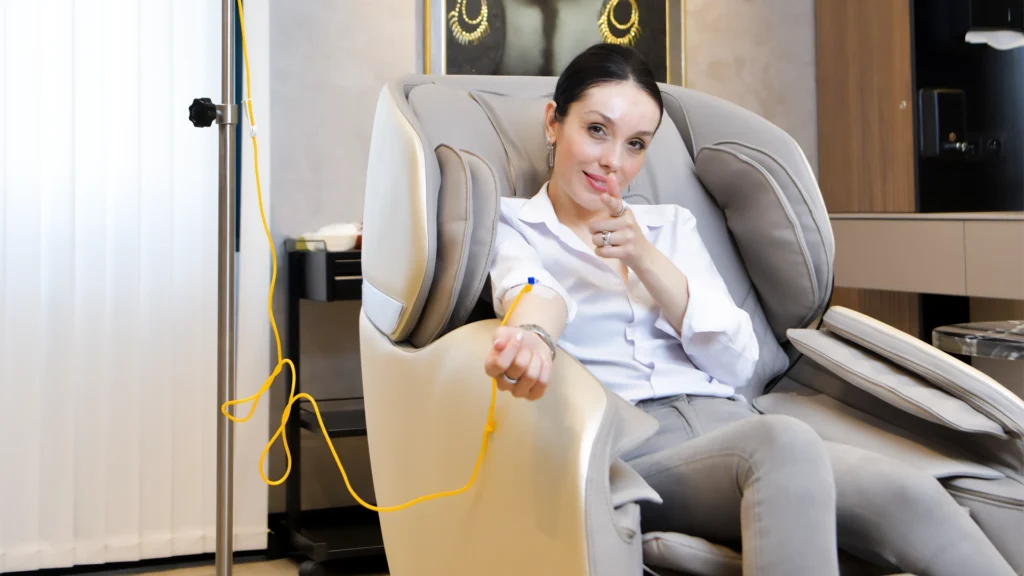


A hair transplant does not hurt once the scalp is numb. In our patient survey (212 patients), surgery scored 0.5 out of 10 on average. The only sharp moment is the numbing injections, rated 3.6 out of 10, which take 3 to 8 minutes in total. Soreness peaks on days 1 and 2 and most patients are pain-free by day 7.
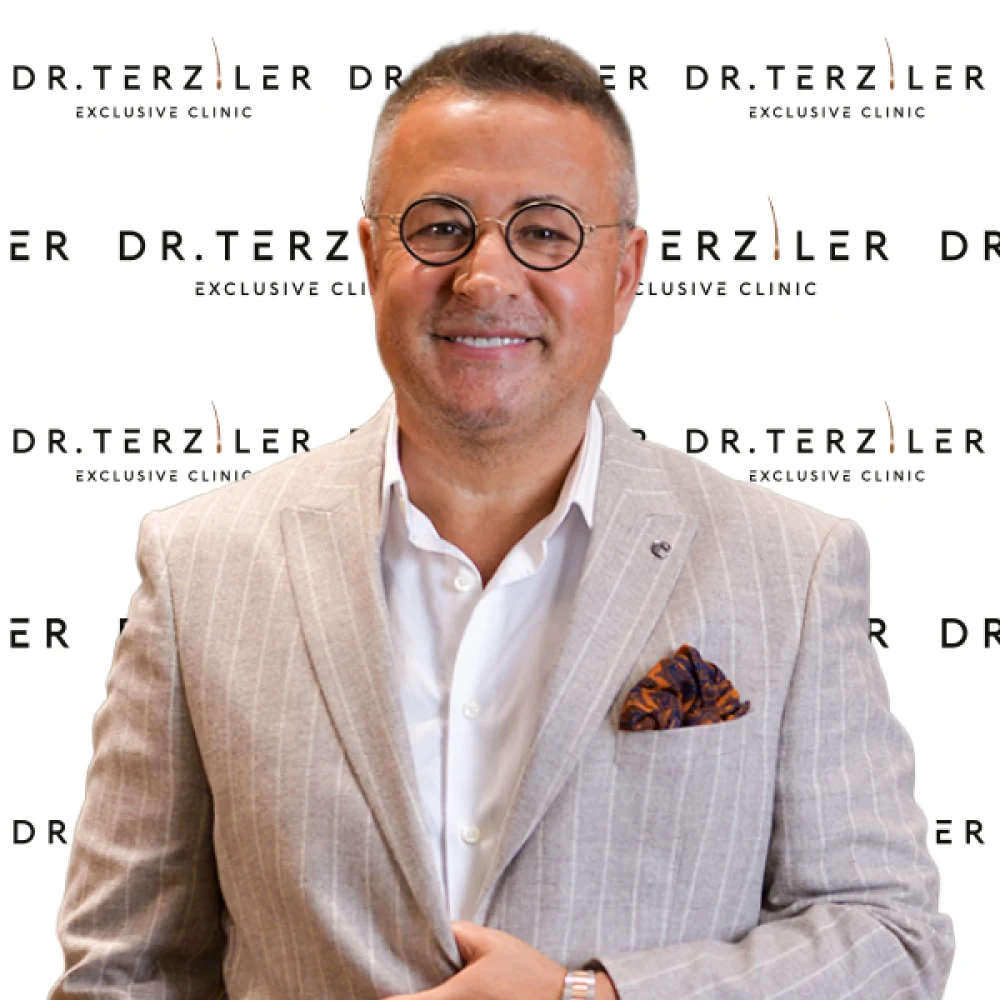
Physician and clinic founder. Hair-restoration planning and clinical responsibility. ISHRS Live Surgery Workshop participant and trainer.
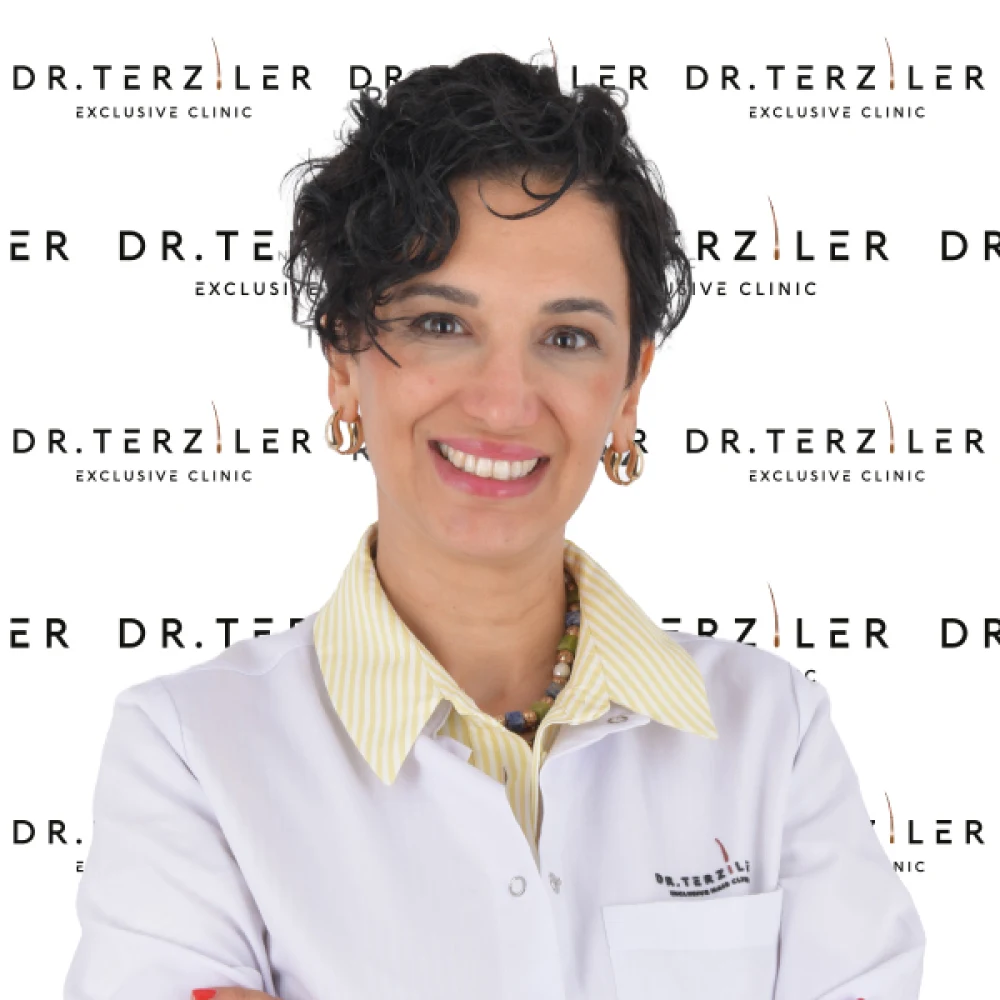
Anesthesiology and resuscitation specialist. Anesthesia assessment and sedation support when clinically indicated.
Does a Hair Transplant Hurt During the Procedure?
Once the scalp was numb, our patients rated extraction 0.6/10 and implantation 0.3/10 on average. These clinic-reported results come from our Patient Comfort Survey of 212 patients. Pressure, vibration and gentle movement can still be noticeable. Tell the team immediately if you feel stinging, burning or cutting so treatment can pause and the anesthesia can be checked.
Knowing what you may feel makes surgery day easier to picture. During FUE harvesting, a small punch releases individual follicular units from the donor area. During implantation, those grafts are placed into the recipient area. Numbing is tested before these stages begin.
Anesthetic top-ups depend on the treated area, the duration of surgery and your response. They are not determined by a universal graft-count threshold. Our clinic plans approximately 6 to 8 hours for a typical session, including the necessary stages and breaks; your appointment can differ.
Local anesthesia controls sensation in the scalp. IV sedation can help with anxiety when medically appropriate. They have different roles, and sedation does not replace local numbing. The NHS describes hair transplantation under local anesthetic and sedation. [NHS: hair transplant]
See how the clinic explains the procedure: Surgery-day comfort guide.
How Painful Is a Hair Transplant on a Scale of 1 to 10?
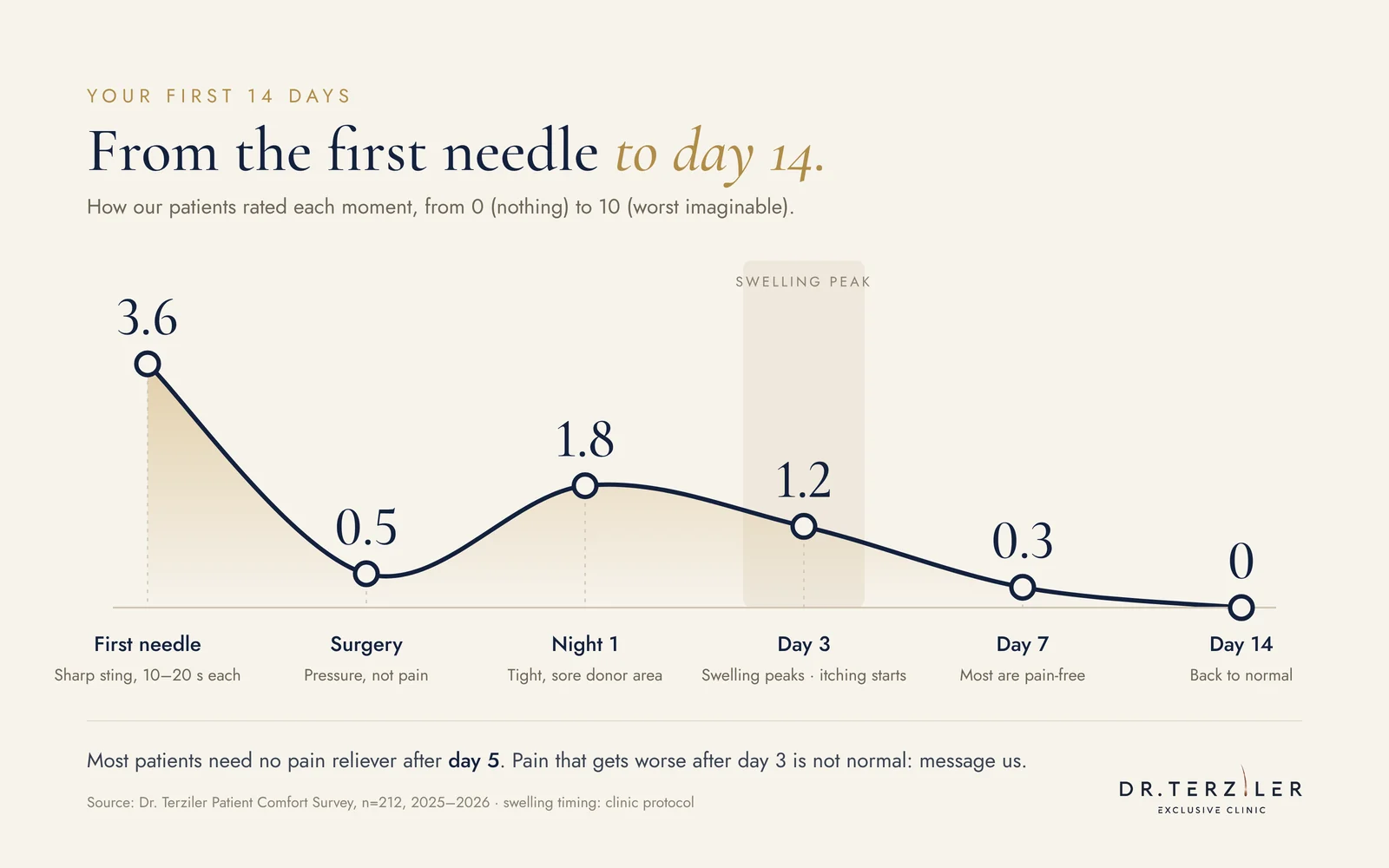
Our patients rated numbing injections 3.6/10, surgery once numb 0.5/10, the first night 1.8/10 and day 7 0.3/10 on average. These results come from the Dr. Terziler Patient Comfort Survey of 212 patients.
- Once the scalp was numb
- 0.5 / 10 mean pain
- First numbing injections
- 3.6 / 10 mean pain
- Less pain than expected
- 87% of survey respondents
| Moment | Our patients: mean pain / 10 | Rated it 0–2 | What the stage can feel like |
|---|---|---|---|
| First numbing injections | 3.6 / 10 | 34% | A brief sting or burning feeling can occur as local anesthetic is given. The clinic plans around 3 to 8 minutes for the initial numbing stage; timing and sensitivity vary. |
| Graft extraction | 0.6 / 10 | 96% | Pressure, vibration and mild pulling can be noticeable in the donor area. Sharp pain is a reason to tell the team immediately. |
| Graft implantation | 0.3 / 10 | 98% | You may be aware of touch and movement in the recipient area. Effective local anesthesia should prevent sharp procedural pain. |
| The first night | 1.8 / 10 | 79% | As anesthesia wears off, the back of the scalp may feel sore, tight or tender. The recipient area can feel sensitive. |
| Around day 3 | 1.2 / 10 | 88% | Early soreness should generally be settling. Forehead swelling or itching may be more noticeable even while pain improves. |
| Around day 7 | 0.3 / 10 | 99% | Many patients are comfortable by day 7. Mild tenderness when pressed can last until day 14. Significant persistent pain needs review. |
On a numeric rating scale, 0 means no pain and 10 means the worst pain imaginable. Your own score is useful for telling the team when something changes. It is not interchangeable with a score from a different study or a different rating tool.
Robotic DHI patients who chose initial needle-free numbing rated day 1 at 0.9/10 on average in the clinic’s reported subgroup. This observation does not prove that needle-free delivery or Robotic DHI caused lower pain than another method.
A 2019 study followed 241 patients, including 202 FUT and 39 FUE cases, using a Wong-Baker Faces scale on postoperative days 1, 2, 3, 4, 5 and 7. FUE patients reported less postoperative pain than FUT patients. Its results should not be relabeled as a Dr. Terziler 0–10 patient survey. [Kim, Na & Park, 2019]
How much pain do you expect?
Choose your expected pain level, then compare it with our patients’ reported average once the scalp was numb.
Your expectation and our patient results
Your estimate: 5/10. Our patients rated surgery 0.5/10 on average once the scalp was numb. The initial numbing injections averaged 3.6/10.
Your estimate is an expectation, not a medical pain assessment. The comparison uses a clinic cohort average, not a prediction for you. Survey method: n=212. Your selection stays on this page. It is included in a WhatsApp draft only when you open the link; no message is sent automatically.
The slider needs JavaScript. You can still read every timeline stage below or use the contact links.
Tap through your comfort timeline
Six moments, with actual patient-reported averages from our 212-patient clinic survey. Your own experience may differ.
First numbing injections
Mean patient-reported pain3.6 / 10
Rated this stage 0–234%
A brief sting or burning feeling can occur as local anesthetic is given. The clinic plans around 3 to 8 minutes for the initial numbing stage; timing and sensitivity vary.
Discuss the first-stage needle-free option, slow delivery and the planned comfort measures before surgery. The doctor checks the numb area before proceeding.
Source: Dr. Terziler Patient Comfort Survey, n=212. Clinic-reported data; individual results vary.
Graft extraction
Mean patient-reported pain0.6 / 10
Rated this stage 0–296%
Pressure, vibration and mild pulling can be noticeable in the donor area. Sharp pain is a reason to tell the team immediately.
Check local anesthetic coverage, adjust positioning, pause when requested and give an anesthetic top-up when medically needed.
Source: Dr. Terziler Patient Comfort Survey, n=212. Clinic-reported data; individual results vary.
Graft implantation
Mean patient-reported pain0.3 / 10
Rated this stage 0–298%
You may be aware of touch and movement in the recipient area. Effective local anesthesia should prevent sharp procedural pain.
Test numbness and respond to any return of sharp sensation. DHI and Robotic DHI describe implantation approaches, not a guarantee of zero discomfort.
Source: Dr. Terziler Patient Comfort Survey, n=212. Clinic-reported data; individual results vary.
The first night
Mean patient-reported pain1.8 / 10
Rated this stage 0–279%
As anesthesia wears off, the back of the scalp may feel sore, tight or tender. The recipient area can feel sensitive.
Use only your written medication plan. Sleep at about 45° for the first 3 nights and avoid pressure on the grafts.
Source: Dr. Terziler Patient Comfort Survey, n=212. Clinic-reported data; individual results vary.
Around day 3
Mean patient-reported pain1.2 / 10
Rated this stage 0–288%
Early soreness should generally be settling. Forehead swelling or itching may be more noticeable even while pain improves.
Follow the washing and spray instructions. Use a protected cold pack on the temples or forehead only if directed, never on grafts. Report worsening symptoms.
Source: Dr. Terziler Patient Comfort Survey, n=212. Clinic-reported data; individual results vary.
Around day 7
Mean patient-reported pain0.3 / 10
Rated this stage 0–299%
Many patients are comfortable by day 7. Mild tenderness when pressed can last until day 14. Significant persistent pain needs review.
Continue the prescribed washing and activity plan. Do not test graft security by pulling hair or picking crusts. Contact the team if progress stalls or reverses.
Source: Dr. Terziler Patient Comfort Survey, n=212. Clinic-reported data; individual results vary.
What Is the Most Painful Part of a Hair Transplant?
The initial numbing injections were the highest-rated stage in our survey, averaging 3.6/10. Once the scalp is numb, the aim is to prevent sharp pain during harvesting and implantation. The first-stage numbing process at our clinic is planned around 3 to 8 minutes, rather than the full surgical session.
Some people find injections near the hairline or temples more noticeable than those at the back of the scalp. The number of injections, delivery technique, treated area and your sensitivity all matter. A dental numbing injection may be a useful description of the sensation, but it does not predict your score.
How Do Surgeons Reduce Injection Pain?
The medical team can discuss the initial needle-free delivery option, carefully paced local injections and other suitable measures. A needle-free initial stage does not mean the entire appointment involves no needles. IV sedation, for example, requires an intravenous cannula.
Injection technique and anesthetic formulation can influence discomfort. A small single-blind, split-scalp study of 25 patients compared two local anesthetic mixtures and found different injection-pain scores. It did not establish a universal pain score or prove that all needle-free systems work the same way. [Mohmand, Ahmad & Jabeen, 2021]
How Painful Is It After a Hair Transplant?
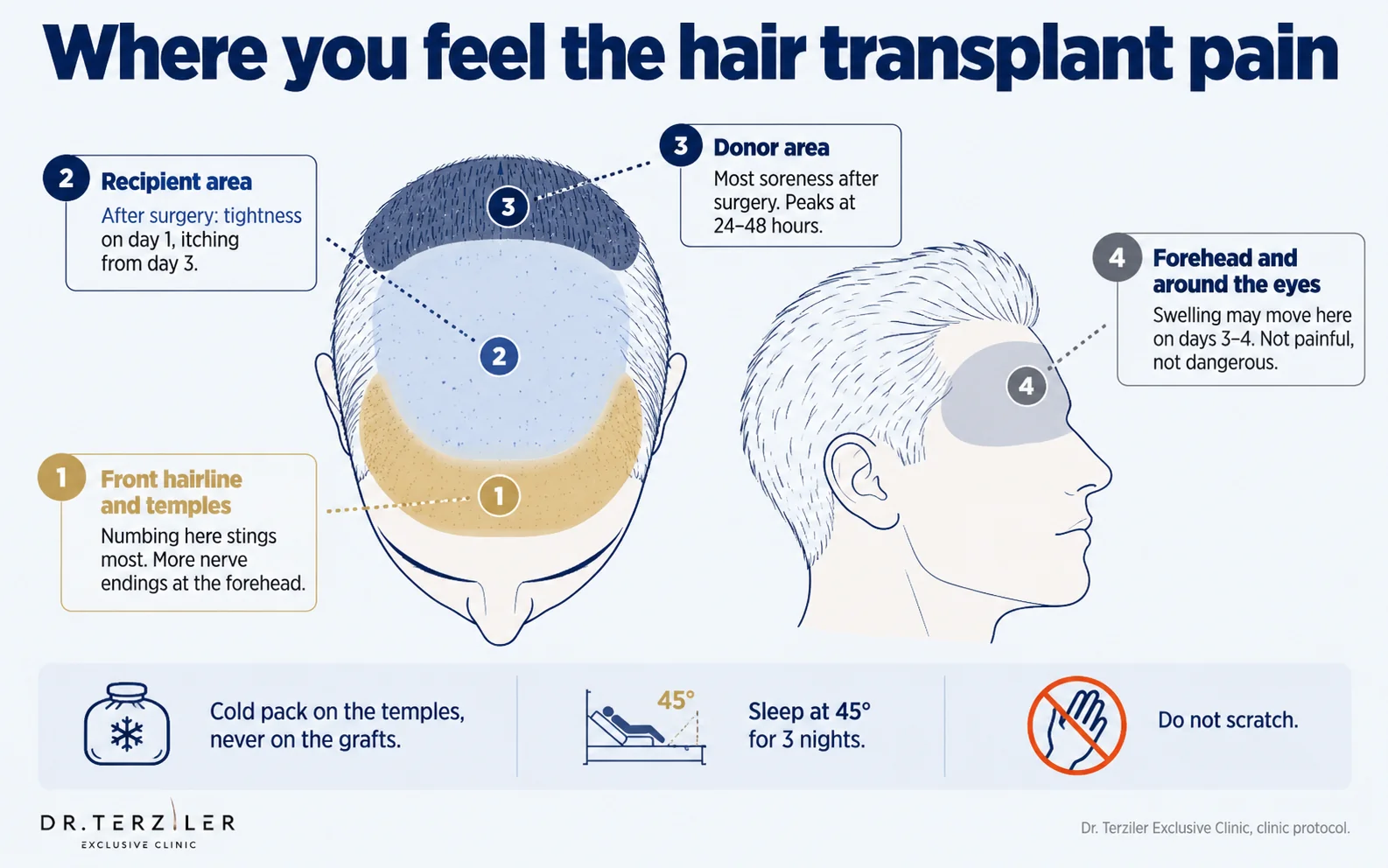
Our patients rated the first night 1.8/10, day 3 1.2/10 and day 7 0.3/10 on average. Soreness is usually most noticeable in the first 24 to 48 hours. Most patients are pain-free by day 7; mild tenderness when pressed can last until day 14. Severe, persistent or worsening pain deserves a clinical review.
| When | What you may notice | Your care plan |
|---|---|---|
| Days 1–2 | Donor-area soreness, tightness, mild throbbing or a headache as numbness wears off. | Use only the prescribed pain-relief plan. Sleep at about 45° for the first 3 nights. Avoid pressure and rubbing. |
| Days 3–4 | Soreness should be easing. Forehead swelling or itching may be more noticeable. | Follow the clinic’s washing and spray instructions. A cold pack may be used on temples or forehead if directed, never on the grafts. |
| Days 5–7 | Improving comfort, crusts and variable itching. | Do not pick crusts or scratch. Pain-reliever use depends on symptoms and your written plan, not an automatic day-5 cutoff. |
| Days 8–14 | Many patients are pain-free, although the donor area may still be tender to touch. | Ask the clinic about continued discomfort, new pain or persistent swelling. Follow the clearance plan for exercise and normal hair care. |
| Week 3 onward | Transplanted hairs can shed during the recovery process. | Shedding by itself should not cause escalating pain. Report painful bumps, spreading redness or other new symptoms. |
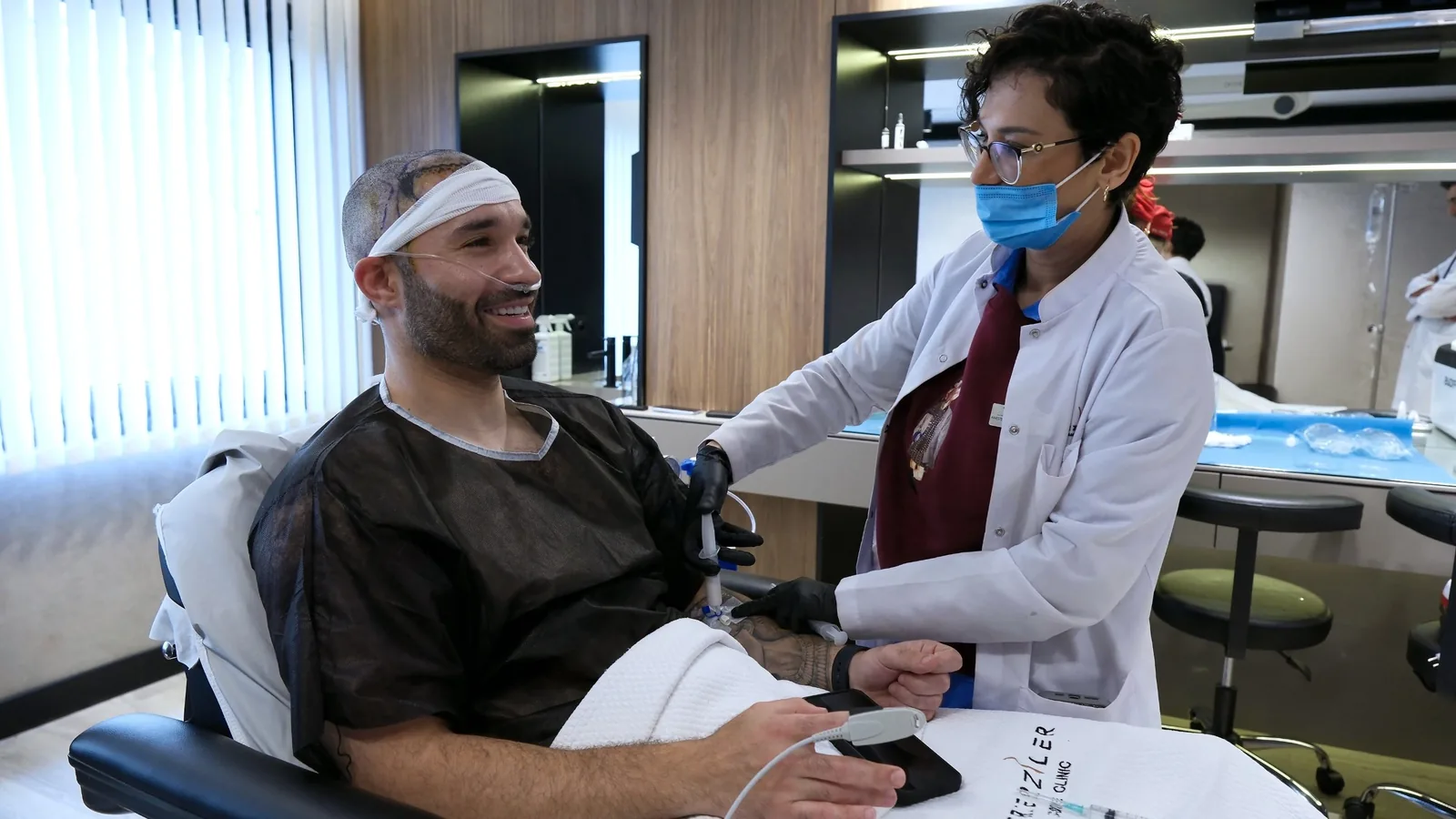
The donor and recipient areas can feel different. The donor zone has many small harvesting wounds after FUE and can feel tender when your head rests against a pillow. The recipient area may feel tight initially and itchy as it heals. Neither itching nor a headache should automatically be dismissed as a harmless healing sign.
Positioning during a 6-to-8-hour appointment can also leave the neck or shoulders stiff. Ask for positioning adjustments and breaks during surgery. Do not massage the grafted scalp to relieve neck tension.
Where Does It Hurt the Most After a Hair Transplant?
The donor area at the back or sides of the scalp is often the main source of postoperative tenderness. Robotic DHI is an implantation system, so it should not be credited with a proven reduction in extraction pain. Donor comfort depends on the harvesting plan, tissue handling and individual healing.
For surgery-day and first-night preparation: Read the first-night guide.
What Is the Difference Between Hair Transplant Pain, Swelling and Itching?
Pain, swelling and itching can follow different timelines. Improving soreness can coexist with forehead swelling or itching. A new or worsening symptom needs more attention than a symptom that is mild and steadily settling.
| Sensation | Possible recovery pattern | Contact the team when… |
|---|---|---|
| Pain or tightness | Often more noticeable in the first 1–2 days. | It is severe, increases, does not respond to the prescribed plan or returns after improving. |
| Swelling | Can become noticeable around the forehead or eyes over the first few days. | It is sudden, severe, painful, one-sided or associated with fever or redness. Vision changes need urgent assessment. |
| Itching | May develop as the scalp heals and crusts form. | Itching is intense, a rash spreads, or there are painful or pus-filled bumps. |
| Redness | Some local redness can occur around healing sites. | Redness spreads, feels increasingly hot or is accompanied by fever or discharge. |
| Headache | May accompany early scalp tenderness or positioning discomfort. | It is severe, unusual, persistent or associated with other concerning symptoms. |
Swelling is not automatically dangerous, but “day 3 swelling” is not a diagnosis. Likewise, itching is not proof that every graft is healing normally. Keep the scalp care gentle, avoid scratching and send the clinic a clear description if symptoms concern you.
“Is this normal?” Recovery check-in
Choose your day and symptom to see when to contact the team. This tool cannot diagnose a complication or clear you medically.
Contact the clinic if you are unsure
Severe or worsening pain, fever, pus or spreading redness need prompt clinical advice. Breathing difficulty, fainting, vision changes or bleeding that will not stop need urgent local medical assessment.
No answers are stored or sent in the background. WhatsApp opens a draft for you to review. If you had surgery elsewhere, contact your own surgical team first. For urgent symptoms, seek local medical care and do not wait for a message reply.
The interactive check needs JavaScript. Use the warning signs and contact guidance in the table below.
What Are the Pain Management Options and What Does Your Surgeon Do?
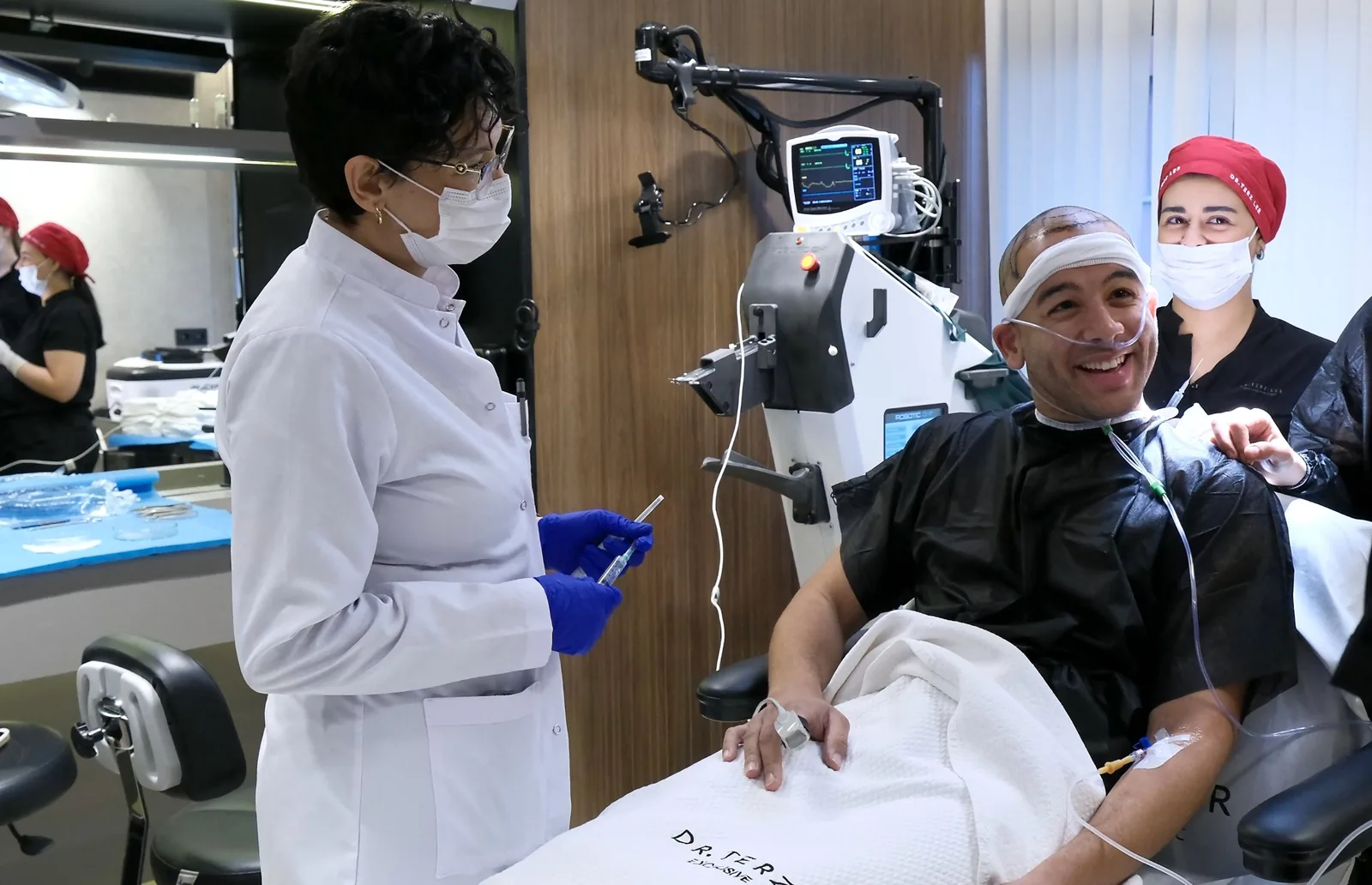
Your comfort plan combines local scalp anesthesia, monitoring, positioning, breaks and appropriate postoperative pain relief. At Dr. Terziler Exclusive Clinic, IV sedation support is provided by anesthesiologist Dr. Semra Uludemir when clinically indicated.
Local anesthesia
The doctor selects and tests the anesthetic plan for the donor and recipient areas. Anesthetic top-ups are based on your response and the procedure.
First-stage comfort options
Ask about initial needle-free delivery and other suitable measures. These can reduce the fear of the first stage, but do not make every injection unnecessary.
IV sedation assessment
The anesthesiologist reviews your history, medications, previous reactions and suitability. Follow the clinic’s fasting, escort and travel instructions.
Breaks and recovery support
Agree on a pause signal. Position changes and a clear written aftercare plan are part of a practical comfort discussion.
Sedation is a spectrum. With lighter sedation you may stay awake and communicate; with a deeper level you may be drowsier or remember less. The selected level and monitoring depend on the anesthesiologist’s assessment. It is inaccurate to promise that every patient remains fully awake or feels exactly the same. [American Society of Anesthesiologists]
FUE vs FUT vs DHI: Which Hair Transplant Technique Hurts Less?
Technique differences matter most during recovery, while effective local anesthesia is intended to prevent sharp pain during surgery. FUE and FUT describe harvesting methods. DHI and Robotic DHI describe implantation approaches. These are not interchangeable categories.
| Method | What changes | Comfort context |
|---|---|---|
| FUT (strip harvesting) | A strip of donor scalp is removed and the wound is closed. | A linear wound and closure can create donor tightness. The 2019 comparative study found higher postoperative pain than FUE. |
| FUE and Sapphire FUE | FUE harvests individual follicular units. “Sapphire” usually refers to the blade used for recipient-site creation, not the extraction punch. | Small harvesting sites can still be sore. A sapphire blade alone does not establish a lower pain score. |
| DHI and unshaven transplantation | DHI uses an implanter for graft placement. Shaving choices concern preparation and appearance. | Donor comfort still depends on harvesting. There is no verified pain ranking in this guide proving DHI is always less painful than FUE. |
| Robotic DHI and Picasso Robotic DHI | The clinic’s system assists the implantation stage and planned placement parameters. | It should not be described as robotic extraction or as proven to produce the least donor pain. |
Graft survival and discomfort are separate outcomes. The clinic reports 90–97% survival for DHI and broader Robotic DHI, and reports 98.1% at 12 months for Picasso Robotic DHI in an internal audit of 120 cases. These clinic-reported figures are not independently verified comparative evidence and do not establish a pain advantage.
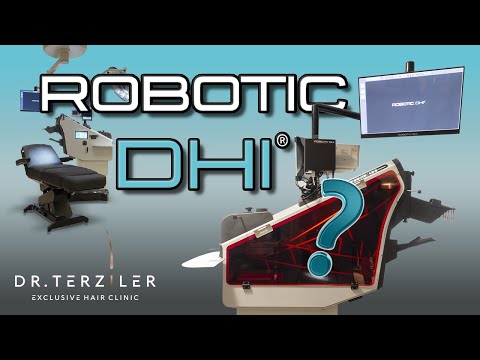
Video summary: The clinic introduces its Robotic DHI system and shows the equipment used in treatment. The device relates to the implantation stage. The footage does not measure postoperative pain or compare patient groups.
Text access: This paragraph is an editorial summary, not a verbatim transcript. Open the original video on YouTube.
How Bad Does a Beard, Moustache or Eyebrow Transplant Hurt?
Facial injections can feel sensitive, but local anesthesia is still used to prevent sharp pain during implantation. The treated facial area and your donor zone may have different aftercare needs. A scalp pain score should not be copied into a facial-transplant estimate.
How Painful Is an Eyebrow Transplant?
An eyebrow transplant requires work around a sensitive area close to the eyes. Ask how local numbing is given, how the eyes are protected and which swelling or vision symptoms require immediate advice. We do not have a verified eyebrow-specific pain average to publish here.
How Bad Does a Beard Transplant Hurt?
For a beard transplant, the cheeks or chin can feel tender after numbing wears off. Ask about touching the face, shaving, sleeping and cleaning. Tell the team if soreness increases or you notice discharge or spreading redness.
What About Moustache Transplant Pain?
A moustache transplant is planned for the upper-lip area, which can be sensitive during numbing. The doctor should explain the local anesthesia plan and how to avoid rubbing or disturbing the recipient area afterward.
What Are the Factors That Affect How Much Pain You Feel?
Your anxiety, prior experiences, scalp condition, procedure length and medical history can change the comfort plan. Age, sex or a technique label alone cannot predict your pain.
| Factor | Why it matters | What to discuss |
|---|---|---|
| Anxiety or needle phobia | Fear and loss of control can make the first stage harder. | A pause signal, a clear explanation, first-stage comfort measures and sedation suitability. |
| Procedure length and graft plan | A longer appointment may need additional positioning support, breaks and anesthetic reassessment. | The planned session length and how top-ups are decided. |
| Migraine, chronic pain or other medical conditions | Your usual symptoms and medication can affect planning. | Your full history, allergies, current medicines and previous anesthetic reactions. |
| Previous transplant or scalp scarring | Scarred or previously treated tissue needs individual assessment. | Where you have had surgery and what the prior recovery was like. |
| Hair type and donor anatomy | Follicle curvature and donor characteristics affect harvesting choices. | A suitable punch and extraction plan, rather than an unsupported robotic pain claim. |
Our Afro hair transplant guide discusses planning for tightly curled follicles. Other curly-hair patterns also need individual donor assessment. The graft and donor-planning guide explains why the safe plan is personal.
How Painful Is a Hair Transplant for a Female?
Women receive an individual comfort plan just as men do. Our overall survey mean once the scalp was numb was 0.5/10. We do not report separate female and male averages here, so that figure should not be treated as a female-specific result. The female hair transplant guide covers female-specific assessment and treatment options.
Tell the doctor what happened during earlier injections or operations, including any time local anesthesia seemed ineffective. That history is more useful for your care than trying to fit yourself to an online average.
What Helps With Hair Transplant Pain?
Use the pain reliever prescribed or approved for you, protect the grafts and follow the clinic’s written instructions. If the plan is not controlling the pain, contact the team instead of increasing doses or adding another medicine yourself.
| Measure | Practical instruction | Important limit |
|---|---|---|
| Pain relief | Use only your personal medication plan. | Do not copy someone else’s dose, combine sedatives or add medicines without checking. |
| Sleep and pressure | Sleep at about 45° for the first 3 nights, using the support advised by the clinic. | Avoid rubbing or pressing the recipient area against the pillow. |
| Cold pack | If directed, use a wrapped cold pack on the temples or forehead. | Never place it on the grafts, apply direct ice or press on the recipient area. |
| Washing and sprays | Use the products and method in your written instructions. | Do not scratch, pick scabs, rub vigorously or add gels and remedies on your own. |
| Alcohol | Avoid alcohol for the first 5 days under the clinic protocol. | Resume only with team approval and no medication or sedation-related restriction. |
| Rest and activity | Follow the agreed return-to-work and exercise plan. | Do not treat one calendar day as permission for heavy exercise or scalp contact. |
Why Can’t You Take Ibuprofen After a Hair Transplant?
Some surgical teams restrict ibuprofen and other NSAIDs because of bleeding and other patient-specific risks. Ibuprofen temporarily affects platelet function, but it is not universally forbidden after every operation. The decision and restart date depend on your medical history, the procedure and your surgeon’s instructions. [UKCPA: perioperative ibuprofen]
Do not stop prescribed aspirin or another blood thinner on your own. Stopping can also be dangerous. Your surgeon and the prescribing clinician should agree on the perioperative plan. There is no universal “safe again on day 14” rule. [NHS: aspirin]
Optional PRP, exosome treatment and stem-cell treatment require separate discussions about suitability, evidence, products and cost. They are not established routine pain-relief treatments and should not be promoted as necessary after day 10.
Can Grafts Be Dislodged After 7 Days?
Graft security improves over the first days, but day 7 is not permission to scratch or test the grafts. Be especially careful during the first 72 hours and follow the washing instructions through the full recovery period.
A study of 42 patients tested mechanical graft anchoring. Pulling an adherent scab could dislodge grafts longer than pulling a hair alone; no grafts were dislodged by the study’s testing at day 9. These observations support careful crust care, not a promise that injury is impossible after a fixed day. [Bernstein & Rassman: graft anchoring]
- First 72 hoursProtect against rubbing, pressure and accidental contact.
- Days 3–5Keep washing gentle. Leave crusts alone.
- Days 5–7Continue the written protocol. Do not pull hairs to check stability.
- Days 7–14Follow the team’s instructions before resuming normal hair care or contact activities.
Can I Masturbate After a Hair Transplant?
The clinic’s activity protocol allows consideration of sexual activity or masturbation after day 5, if you feel well and your treating team has cleared it. Keep activity gentle, avoid straining, heavy sweating and any rubbing or pressure on the scalp. A different instruction from your surgeon takes priority.
There is no good evidence here that a particular orgasm-related blood-pressure rise “pushes grafts out.” The practical concern is early exertion, accidental scalp contact and your individual recovery. Ask the team before restarting if you still have pain, swelling, bleeding or medication-related restrictions.
How Does Hair Transplant Pain Compare to Other Common Procedures?
A dental numbing injection can help explain the brief sting, but it cannot predict your hair transplant pain score. Tattoo pain, dental surgery and cosmetic operations involve different tissues, anesthetic plans and recovery patterns.
| Comparison | What it helps explain | Why a numeric ranking can mislead |
|---|---|---|
| Dental numbing | A brief sting followed by a numb treatment area. | Injection sites, treatment duration and individual sensitivity differ. |
| Tattoo session | How people describe skin sensations in ordinary language. | Tattooing and transplantation use different tissue handling and anesthetic plans. |
| PRP scalp injections | Why several injections can create brief discomfort. | PRP is a different procedure and is not a validated proxy for surgery pain. |
| Rhinoplasty or liposuction | Why anesthesia and postoperative symptoms need separate discussion. | Different operations cannot be ranked using unrelated study averages. |
The useful question is what happens at each stage of your own appointment: first numbing, harvesting, implantation and the first night. A personal plan is more informative than a chart claiming every transplant hurts less than every dental implant.
What Do Patients Say About Hair Transplant Pain?
In our clinic survey, 87% of respondents said surgery hurt less than they expected. Individual patient stories can help you prepare questions, but they are not controlled comparative evidence. A review about the first week, a final result and an anesthesia experience answer different questions.
When reading a patient account, look for the procedure date, technique, stage of recovery and original source. Check whether the writer describes the injections, the numb procedure or postoperative soreness. Read critical reviews as well as positive ones.
Ask about the first needle
“How did you feel during numbing, and what did the team do when you were uncomfortable?” This is a consultation prompt, not a patient quotation.
Ask about the first night
“What medication instructions did you receive, and could you reach the clinic if symptoms changed?” This is a consultation prompt, not a patient quotation.
You can read original public accounts on Dr. Terziler’s Trustpilot profile. Individual reviews do not establish a clinic-wide pain score, prove that one method hurts least or guarantee your result.
For patients considering hair transplant in Turkey, ask how follow-up works after you fly home and where you should seek care locally if urgent symptoms develop.
When Does Post-Op Pain Signal a Problem?
Severe or worsening pain, fever, pus and spreading redness need prompt clinical advice, whatever day it is. Pain that returns after improving also deserves review. Do not wait for a particular temperature threshold before asking for help.
| Situation | Next step |
|---|---|
| Mild tenderness that is steadily improving | Follow your written aftercare plan. Contact the team if you are unsure or progress stops. |
| Severe, persistent or worsening pain | Contact your surgical team promptly for assessment. Do not just increase medication. |
| Fever, pus, hot or spreading redness, painful bumps | Request same-day clinical advice. Do not squeeze bumps or start leftover antibiotics. |
| Unexpected swelling, new bleeding or other unusual symptoms | Contact the clinic. The NHS advises contacting the clinic for severe pain or unexpected symptoms. |
| Breathing trouble, throat swelling, fainting, vision changes or bleeding that will not stop | Seek urgent local medical assessment or contact local emergency services. Do not wait for WhatsApp. |
A clinician may need photographs, an examination or further tests to identify the cause. A red bump is not enough to diagnose folliculitis, and this page cannot choose an antibiotic. Contact your own surgical team first if your procedure was performed elsewhere.
I’m Terrified of Needles. Can I Still Get a Hair Transplant?
Needle anxiety can be planned for before surgery day. In our patient survey, 87% of respondents reported less pain than expected. Tell the medical team how the fear affects you, particularly if you faint, panic or have previously postponed treatment.
1. Brief the team early
Describe what triggers the fear and what has helped before. Agree on a pause signal and decide how much procedural detail you want to hear.
2. Plan the numbing stage
Discuss the clinic’s initial needle-free option and whether topical or other comfort measures are appropriate. “Needle-free first stage” does not mean a needle-free appointment.
3. Assess IV sedation
Ask Dr. Semra Uludemir about suitability, monitoring, fasting and the IV cannula. Sedation is a medical decision, not something to arrange by self-medicating.
4. Know the next step
If you are not ready, ask for another discussion before committing to treatment. A clear explanation should make the choice easier to make.
Frequently Asked Questions
Does a hair transplant hurt?
In the Dr. Terziler Patient Comfort Survey of 212 patients, surgery averaged 0.5/10 once the scalp was numb, while initial numbing injections averaged 3.6/10. These are clinic-reported cohort results, not a guarantee. Tell the team immediately if you feel sharp pain during the procedure.
How painful is a hair transplant on a scale of 1 to 10?
Our 212-patient clinic survey recorded mean scores of 3.6/10 for numbing, 0.5/10 for surgery once numb, 1.8/10 for the first night, 1.2/10 for day 3 and 0.3/10 for day 7. Procedure stages and recovery are separate experiences, and individual scores vary.
What is the most painful part of a hair transplant?
The initial numbing injections were the highest-rated stage in our clinic survey, averaging 3.6/10. The clinic plans around 3 to 8 minutes for the first numbing stage, with individual variation. Once numb, you may feel pressure or vibration rather than sharp pain.
How bad is the pain after a hair transplant?
Our patients rated the first night 1.8/10 and day 3 1.2/10 on average. Most patients in the clinic survey needed no pain reliever after day 5. Follow your own prescribed plan; severe or worsening pain, fever, pus or spreading redness need prompt clinical advice.
How long does pain last after a hair transplant?
Most patients are pain-free by day 7; mild tenderness when pressed can last until day 14. Our clinic survey mean was 0.3/10 on day 7. Recovery varies, and persistent, severe or worsening pain should be reviewed.
Why can’t you take ibuprofen after a hair transplant?
Some surgical teams restrict ibuprofen because of bleeding and other patient-specific risks. It is not universally prohibited after every operation. Use only the medication plan approved for you, and ask your surgeon when it can be started or resumed.
Can grafts be dislodged after 7 days?
Graft security improves over the first days, but day 7 is not permission to scratch or test the grafts. Be especially careful during the first 72 hours. Follow the clinic’s washing and activity instructions through recovery.
Is it safe to have sex or masturbate after a hair transplant?
The clinic protocol allows consideration of sexual activity or masturbation after day 5 if you feel well and your treating team has cleared it. Avoid strenuous exertion, heavy sweating and scalp contact. Individual instructions take priority.
Is DHI hair transplant less painful than FUE?
FUE describes harvesting, while DHI describes implantation. DHI can use FUE-harvested grafts, so the labels do not create a reliable pain ranking. This guide does not establish that DHI or Robotic DHI produces less donor pain than other FUE approaches.
What painkiller can I take after a hair transplant?
Use the pain reliever and schedule prescribed or approved for you. Do not add another medicine, copy a dose online or stop prescribed aspirin or blood thinners without medical advice. Contact the clinic if the approved plan does not control the pain.
What does a hair transplant feel like during the procedure?
Once the scalp is numb, you may feel pressure, vibration and gentle movement. Sharp stinging, burning or cutting should be reported immediately so the team can pause and check anesthesia. The clinic plans around 6 to 8 hours for a typical session, with individual variation.
Will I be awake with IV sedation?
Light IV sedation may allow you to stay awake and communicate. With deeper sedation you may be drowsier or remember less. The anesthesiologist selects the level and monitoring according to your medical assessment; sedation does not replace local scalp anesthesia.
Sources and evidence
Research findings, clinic instructions and patient experiences answer different questions. The references below are linked from the relevant sections.
- NHS: hair transplant. Public patient guidance on anesthesia, recovery and when to contact the clinic. It is not a Dr. Terziler patient survey.
- Kim, Na & Park, 2019. Kim YS, Na YC, Park JH. Comparison of postoperative pain according to the harvesting method used in hair restorative surgery. Archives of Plastic Surgery. 2019;46(3):241–247. DOI: 10.5999/aps.2018.00843. Observational comparison, 241 patients; Wong-Baker Faces scale, not a clinic 0–10 survey.
- Mohmand, Ahmad & Jabeen, 2021. Mohmand MH, Ahmad M, Jabeen M. Pain perception of a new Ahmad-Humayun solution for local anesthesia in hair transplantation: One step ahead. Journal of Cosmetic Dermatology. 2021;20(1):222–226. DOI: 10.1111/jocd.13442. Small split-scalp study, 25 patients; not a needle-free device comparison.
- American Society of Anesthesiologists. Patient information explaining the range of IV sedation and the anesthesiologist’s role. It does not establish a hair-transplant pain score.
- Bernstein & Rassman: graft anchoring. Bernstein RM, Rassman WR. Graft anchoring in hair transplantation. Dermatologic Surgery. 2006;32(2):198–204. DOI: 10.1111/j.1524-4725.2006.32033.x. Mechanical anchoring observations in 42 patients, not permission to test grafts yourself.
- UKCPA: perioperative ibuprofen. UK Clinical Pharmacy Association, Handbook of Perioperative Medicines. Ibuprofen. Perioperative decisions depend on bleeding risk and the individual procedure.
- NHS: aspirin. NHS patient information on aspirin, bleeding and continuing prescribed low-dose treatment unless advised otherwise.
- AACI accreditation record. American Accreditation Commission International. Certificate C150-2022-ACC-TR-IEEA for Dr. Terziler Exclusive Clinic. Current certificate validity through December 21, 2028; facility accreditation does not guarantee an individual outcome.
- Dr. Terziler: surgery-day patient guide. Clinic-produced instructions for procedure stages, IV sedation, breaks and the first night. Clinic instructions are not peer-reviewed comparative evidence.
- Dr. Terziler Patient Comfort Survey. Dr. Terziler Patient Comfort Survey. 212 patients, January 2025–September 2026. Numeric rating scale, 0–10. Procedure stages rated the following day; recovery days rated during same-day WhatsApp follow-up. Clinic-reported results, not peer-reviewed or an independently controlled comparison.