





What Is a Hair Transplant? The Complete 2026 Guide (FUE, DHI, Robotic, Cost & Recovery)
A hair transplant is the only clinically proven method that permanently replaces hair where it has gone, by relocating DHT-resistant follicles from the back of your scalp to areas where they are needed. This guide covers everything about hair transplants: how the procedure works, every current technique, how many grafts your case requires, what recovery looks like week by week, how much it costs in the USA compared to Turkey, and what current research says about long-term results.
What You Need to Know About Hair Transplants
- A hair transplant permanently relocates DHT-resistant follicles to thinning areas. Results last for life.
- FUE and DHI are the two dominant modern techniques. Robotic DHI achieves 97.3% graft survival at Dr. Terziler Exclusive Clinic (n=180, ISHRS-aligned, 2024).
- Hair transplant cost in the USA is $8,000-$25,000 vs Turkey $2,000-$5,500 all-inclusive. Per graft cost in USA is $3.00-$4.50 vs Turkey $0.70-$1.10
- Hair transplant recovery is 3-5 days for returning to office work in 3-5 days; full results visible at 12-18 months.
- Crown, beard, eyebrow, and female hair transplants are available; technique varies by area.
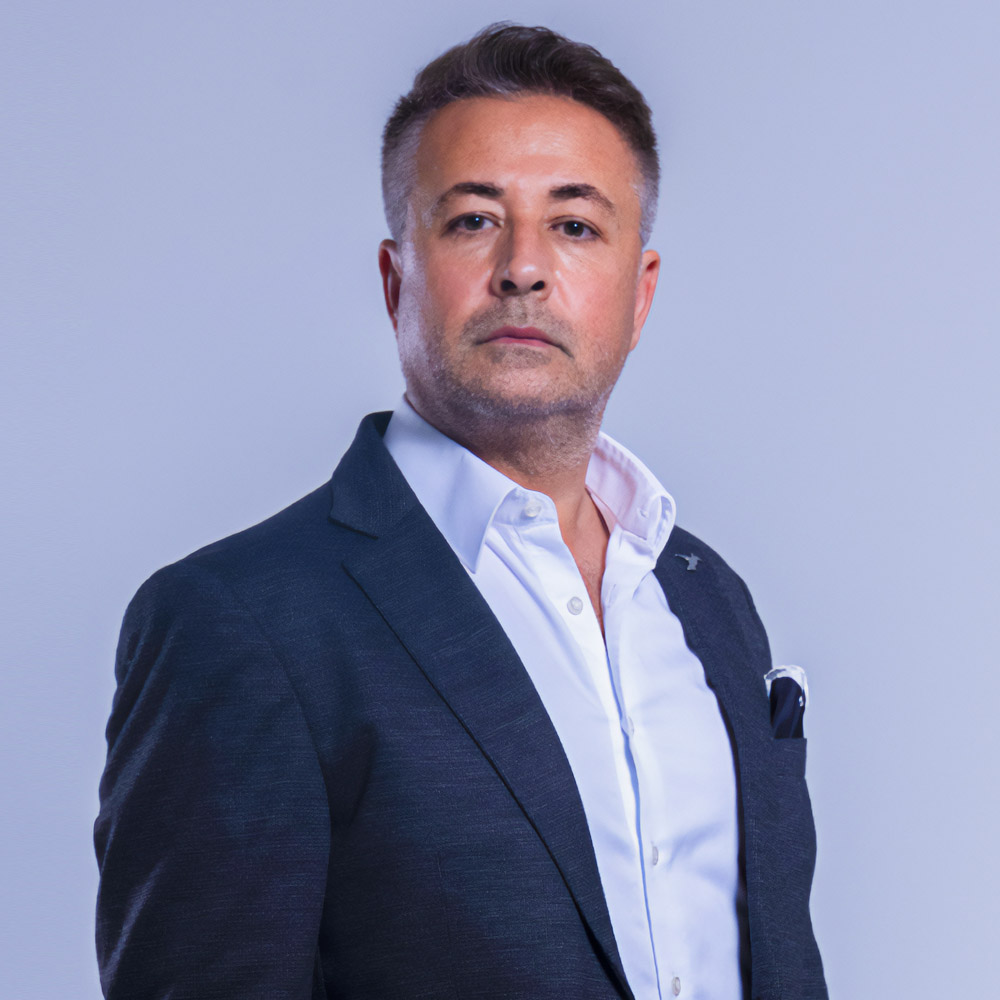
MEDICALLY REVIEWED BY
Dr. Servet Terziler
Dr. Servet Terziler, AACI-Accredited Hair Transplant Surgeon | Founder of TÜSATDER (Turkish Hair Transplant Surgeons Association) | Inventor of Picasso Robotic DHI | ISHRS Member | 35+ years clinical experience | European Property Awards: Best Hair Transplant Clinic in Europe | Patients from 40+ countries.
Updated May 2026
How Does a Hair Transplant Work?
A hair transplant works by extracting individual follicular units from the donor area at the back and sides of the scalp, where follicles are genetically DHT-resistant, and surgically transplanting them into thinning or bald areas. Dihydrotestosterone (DHT), converted from testosterone by the 5-alpha reductase enzyme, binds to androgen receptors in follicles at the top of the scalp and causes progressive miniaturisation until follicles become permanently dormant. The follicles at the back and sides of the scalp lack these same androgen receptors. They are genetically resistant to DHT regardless of where on the scalp they are placed.
A hair transplant surgeon exploits this by harvesting follicles from the safe donor zone and reimplanting them into areas of loss. The relocated follicle retains its DHT-resistance permanently and grows for life in its new position. What the procedure does not do is create new hair or stop the thinning of non-transplanted native follicles. Combining surgery with finasteride or minoxidil gives the most durable long-term outcome.
The back and sides of the scalp provide DHT-resistant follicles. Once relocated, these follicles keep the same genetic behavior in the recipient area.
For a personalised assessment, Dr. Servet Terziler offers a free consultation, online or in person, at his AACI-accredited Istanbul clinic.
Send your photos and the story of your hair loss. You get a clear graft estimate and technique recommendation before making any decision.
What Is a Follicular Unit?
A follicular unit is the basic transplant unit. It contains 1 to 4 hairs sharing a single follicle base. Each follicular unit must be extracted intact. Severing it during extraction, a complication called transection, permanently destroys the follicle. Punch diameter precision is the primary technical variable that determines transection risk. Dr. Terziler uses a 0.75mm punch versus the industry standard of 0.9 to 1.0mm, which reduces tissue trauma and preserves graft integrity.
Why Is the Donor Area Permanent?
Donor permanence is encoded in the follicle's own DNA. A follicle extracted from the occipital zone retains its DHT-resistance wherever it is reimplanted. It grows, cycles, and survives for life in its new position. This principle, called donor dominance, was established by Dr. Norman Orentreich in 1959 and remains the biological foundation of every hair transplant technique used today.
What Are the 7 Steps of a Hair Transplant?
A hair transplant procedure does not require general anaesthesia. Patients remain awake throughout, can watch films or rest, and go home the same day. The standard protocol at leading clinics such as Dr. Terziler's follows these seven steps:
Step 1 – Free Consultation and Eligibility Assessment
The surgeon evaluates your Norwood or Ludwig stage, assesses donor density using a FotoFinder trichoscope, reviews blood test results, and establishes a realistic graft count and technique recommendation. Consultation does not obligate surgery.
Step 2 – Hairline Design and Donor Mapping
AI-assisted hairline design using the Picasso system maps the recipient zone according to facial proportions. The surgeon draws the hairline on the scalp. The patient reviews and approves it before anaesthesia is administered. Graft count is finalised at this stage.
Step 3 – Pre-Operative Preparation
Blood thinners stop 7 to 10 days prior. Alcohol stops 3 days prior. No fasting is required, as only local anaesthesia is used. The patient washes their hair on the morning of surgery and wears comfortable loose clothing.
Step 4 – Local Anaesthesia Administration
Topical numbing is applied first. Then a fine needle delivers local anaesthetic. The initial pinch lasts 3 to 5 seconds. After that, the patient feels zero pain throughout the procedure. Duration is typically 4 to 8 hours.
Step 5 – Graft Extraction (FUE, DHI, or Robotic)
Each follicular unit is extracted individually using the chosen technique. Dr. Terziler's 0.75mm micro-punch minimises donor trauma. AI-guided extraction patterns prevent uneven donor depletion. Every graft is inspected under a microscope. Damaged grafts are discarded.
Step 6 – Graft Storage in UV+GF Preservation Chamber
Extracted grafts are stored in a UV+Growth Factor enriched solution, a proprietary protocol developed by Dr. Terziler, that maintains graft viability for up to 9 hours. The industry standard is 4 to 6 hours. This extended viability window enables sessions of 5,000 grafts or more without compromising survival.
Step 7 – Implantation and Post-Operative Dressing
Grafts are implanted at 40 to 45 degrees following the natural direction of hair growth. DHI patients receive Choi pen implantation. The donor area receives a bandage. Antibiotics, anti-inflammatories, and a written aftercare sheet are provided. WhatsApp follow-up support continues for 12 months.
What Are the Types of Hair Transplant? All Techniques Explained (2026)
FUE (Follicular Unit Extraction), DHI (Direct Hair Implantation), Sapphire FUE, Unshaven DHI, FUT (Follicular Unit Transplantation), Stem Cell PRP support, Robotic DHI, Hybrid DHI, BHT (Body Hair Transplant), and Micro FUE are ten techniques in clinical use for hair transplantation in 2026. All modern techniques use your own follicles, no donor match is needed. The right technique depends on your degree of hair loss, whether you can shave your head, session size, and the density result you are targeting. The most advanced technique currently available is Robotic DHI, which combines a 0.75mm AI-guided Choi pen with UV+GF graft preservation and achieves 97.3% graft survival in clinical practice at Dr. Terziler Exclusive Clinic, Istanbul.
A cleaner visual summary of the same data, using only brand-safe colours and compact cards.
Reliable modern baseline for large sessions with pre-made recipient channels.
Choi pen implantation reduces handling and supports dense hairline work.
AI-guided extraction plus DHI implantation at Dr. Terziler Clinic.
| Technique | Extraction | Implantation | Shave Required | Graft Survival | Best For |
|---|---|---|---|---|---|
| FUE | 0.75-1.0mm punch | Pre-made channels | Full | 90-95% | Large sessions, budget-conscious |
| Sapphire FUE | 0.75-1.0mm punch | Sapphire crystal channels | Full | 90-95% | Faster healing than standard FUE |
| DHI | 0.75mm punch | Choi pen (direct) | Often no | 93-96% | Hairline, density, women |
| Robotic DHI | 0.75mm AI-guided | 0.75mm Choi pen | Often no | 97.3% (n=180) | Best available – Dr. Terziler clinic |
| Unshaven DHI | Manual DHI | Choi pen | No | 93-96% | Women, professionals, privacy |
| Micro FUE | <0.80mm punch | Pre-made channels | Full | 90-95% | Short hair wearers, 2nd/3rd sessions |
| FUT (Strip) | Strip excision | Microscope dissection | Full | 88-93% | Norwood 6-7, max graft yield |
| Hybrid DHI | FUE extraction | Choi pen | Partial | 93-96% | Norwood 4-5, mega sessions |
| BHT | Beard/chest punch | Choi pen / channels | Partial | 80-90% | Depleted scalp donor, Norwood 6-7 |
FUE Hair Transplant: Follicular Unit Extraction
FUE is the global standard for hair transplantation. A motorised rotary punch with a diameter of 0.75 to 1.0mm individually extracts each follicular unit from the donor zone under local anaesthesia. Extracted grafts are stored in a preservation solution and then implanted into pre-made recipient channels. FUE leaves no linear scar. The extraction points are tiny diffuse puncture wounds that become near-invisible at hair lengths above 3mm. Standard FUE requires full head shaving. Graft survival under optimal conditions reaches 90 to 95%. Dr. Terziler uses a 0.75mm micro-punch versus the industry standard 0.9 to 1.0mm, reducing the transection rate and producing a cleaner, less traumatised donor area. FUE suits most male and female candidates with Norwood 2 to 6 hair loss and adequate donor density.
Sapphire FUE Hair Transplant: FUE with Sapphire Crystal Blades
Sapphire FUE is not a different extraction technique. It is a refinement of the implantation phase only. Instead of steel blades to open recipient channels, the surgeon uses V-shaped sapphire crystal blades. Sapphire is harder and smoother than surgical steel. It creates smaller, more precise incisions with cleaner edges, reducing tissue trauma and post-operative inflammation, and enabling tighter control over the implantation angle of each graft. Healing is 20 to 30% faster than steel-channel FUE. The extraction phase of Sapphire FUE hair transplant is identical to standard FUE. Patients who want faster healing at the FUE price point, rather than DHI, are the ideal candidate for Sapphire FUE.
DHI Hair Transplant: Direct Hair Implantation
DHI uses a Choi implanter pen to extract and immediately implant grafts in a two-stage process, eliminating the pre-channel creation step required in standard FUE. The surgeon loads each extracted graft into the Choi pen and inserts it directly into the scalp, simultaneously creating the channel and depositing the follicle in a single motion. FUE follows a three-stage process: extract, store, then implant into a pre-made channel. DHI's two-stage workflow dramatically reduces out-of-body time per graft, which is the primary variable in graft survival. DHI Hair Transplant enables density of up to 60 follicular units per cm2 and can be performed without shaving in many cases. It is the preferred technique for hairline and frontal zone restoration, adding density into existing hair, and for patients who cannot shave.
Robotic Hair Transplant: ARTAS, NeoGraft, and Robotic DHI
Robotic hair transplant systems use AI-assisted platforms to improve consistency in punch angle, depth, and spacing during extraction. The most established commercial system globally is the ARTAS iX by Restoration Robotics (now Venus Concepts), which uses stereo-imaging to score follicular units in real time. ARTAS uses a 0.9mm punch and is limited to FUE workflow only. It does not use Choi pen implantation. NeoGraft is a pneumatic vacuum-assisted FUE system that provides extraction consistency without true AI guidance. ARTAS in the USA costs between $10,000 and $20,000 per session. Both systems represent the first generation of robotic hair surgery: surgeon-supervised, not autonomous, limited to the extraction phase.
Robotic DHI, developed by Dr. Servet Terziler, builds significantly on this foundation. It combines AI-guided extraction with a 0.75mm Choi pen implantation and UV+GF preservation chamber storage, extending graft viability to 9 hours compared to the industry standard of 4 to 6 hours. The Robotic DHI hair transplant result is 97.3% graft survival (n=180, ISHRS-aligned, 2024), versus ARTAS achieving 90 to 95% with its 0.9mm extraction punch and FUE-only implantation.
See a more aesthetic hair transplant version of Robotic DHI here: Picasso Robotic DHI
Micro FUE: Ultra-Small Punch for Minimal Donor Scarring
Micro FUE uses a punch diameter below 0.80mm, smaller than the standard FUE punch range, to minimise donor site scarring. The extraction marks become invisible within weeks in most patients, even at very short hair lengths such as a grade 1 clipper. Micro FUE is ideal for patients who wear their hair very short, those undergoing second or third sessions where donor density is already reduced, and for high-precision frontal zone work where donor visibility is a specific concern. The limitation is that the smaller punch restricts the number of grafts extractable per session. Instruments below 0.80mm carry a higher risk of follicle damage with larger grafts containing three or four hairs. Micro FUE hair transplant suits sessions under 2,500 grafts.
FUT: Follicular Unit Transplantation (Strip Method)
FUT is the original hair transplant method, introduced commercially in the 1990s. A strip of scalp tissue, typically 1 to 1.5cm wide and 10 to 25cm long, is surgically excised from the donor area, dissected under a microscope into individual follicular units, and implanted into recipient zones. FUT provides the highest single-session graft yield, often 4,000 to 6,000 grafts, and graft survival is high because follicles are never individually punch-extracted. The trade-off is a permanent linear scar across the back of the head, visible at hair lengths below 1 to 2cm. Trichophytic wound closure reduces scar visibility but does not eliminate it. FUT hair transplant is now considered a legacy technique by most ISHRS surgeons. It remains appropriate for Norwood 5 to 7 patients who need maximum graft yield and are not concerned with wearing their hair short. FUE and DHI do not produce a linear scar.
Unshaven DHI: Hair Transplant Without Shaving Your Head
Unshaven DHI allows the entire procedure to be performed without shaving the recipient area and, in smaller sessions under 2,000 grafts, without shaving the donor area. Existing long hair covers both extraction and implantation zones throughout recovery. Most people around the patient notice nothing. Unshaven hair transplant is the preferred choice for women, for whom full shaving is cosmetically and socially unacceptable, and for professionals who cannot take visible downtime. Sessions above 2,500 grafts typically require a partial donor shave. The Choi pen is essential for unshaved implantation because it does not need pre-made channels. Recovery is identical to standard DHI. Results and graft survival are equivalent to shaved DHI when performed by an experienced surgeon. Not shaving does not mean reduced outcomes.
Hybrid Hair Transplant: Combined FUE Extraction + DHI Implantation
Hybrid DHI combines the extraction speed of FUE with the implantation precision of the Choi pen in a single session. It is used for large sessions requiring 3,500 to 5,500 grafts where pure DHI implantation cannot complete within the viable graft window. The extraction phase uses standard FUE for rapid harvesting. Grafts are then implanted using the Choi pen, retaining all DHI advantages in the recipient zone: no pre-made channels, precise angle control, and maximum density. Hybrid DHI achieves the same implantation quality as pure DHI with the session size flexibility of FUE extraction. It is the preferred approach for Norwood 4 to 5 patients seeking comprehensive single-session coverage.
BHT (Body Hair Transplant) for Completely Bald People
Body hair transplant (BHT) uses follicles from the chest, beard, abdomen, or legs as donor tissue when the scalp donor zone is depleted or insufficient. Body Hair Transplant (BHT) is the primary surgical option for Norwood 6 and Norwood 7 patients who cannot achieve adequate coverage using scalp donor hair alone.
Scalp donor capacity at Norwood 6 to 7 typically yields 4,000 to 5,000 extractable grafts lifetime. A full scalp restoration at this stage requires 6,000 to 9,000 grafts. BHT closes this gap by supplementing scalp grafts with body hair. The chest and beard are the highest-quality BHT donor sites: beard follicles produce hair with a calibre and texture closest to scalp hair and show graft survival rates of 85 to 92% in BHT-specialist hands. Leg, arm, and abdominal hair are thinner and finer; they are used for density fill in secondary zones, not primary hairline construction.
BHT grafts behave differently from scalp grafts after transplantation. Chest hair retains its original growth cycle (2 to 4 months of active growth followed by rest) rather than adopting the scalp's longer anagen phase. This means BHT hair does not grow as continuously as scalp-origin transplanted hair, and the cosmetic result is a natural-looking density rather than uniform long coverage. Patients should understand this biological distinction before choosing BHT as their primary strategy.
BHT is not a standalone solution. It works best as a supplement to scalp FUE or DHI in a staged multi-session plan. A FotoFinder trichoscope assessment of both scalp donor density and body donor quality is the starting point for any completely bald patient considering BHT.
What Is a Crown Hair Transplant?
A crown hair transplant addresses hair loss at the vertex, the circular zone at the top of the scalp. Crown restoration is technically more demanding than hairline work for one specific biological reason: crown hair grows at nearly 90 degrees to the scalp surface in a radial, spiral pattern emanating from a central point. The surgeon must vary implantation angle continuously across the crown, matching the exact direction and rotation of natural growth at every single insertion point. Hairline hair grows at 10 to 20 degrees in a consistent direction, which is comparatively straightforward. The radial growth pattern of the crown also means it requires higher graft density per cm2 than the frontal zone to achieve the same visual fullness, because radially arranged hairs do not stack visually the same way directionally aligned frontal hairs do.
Crown-only restoration requires 800 to 2,500 grafts depending on the area of loss. A combined hairline and crown session, the most common presentation at Norwood 4 to 5, requires 2,500 to 4,500 grafts. Crown results typically take longer to appear than hairline results: patients often see strong frontal density at 6 months while the crown continues developing until months 12 to 18. This is a normal feature of crown biology, not a sign of graft failure. FUE, DHI, and Robotic DHI are all suitable for crown work. The Choi pen's precise angle control makes DHI the preferred technique for dense crown restoration.
How Many Grafts Do You Need? Norwood Scale Hair Transplant Guide (2026)
The number of grafts required for a hair transplant is determined primarily by the extent of your hair loss, measured using the Norwood scale for men or the Ludwig scale for women, and the total area you wish to cover. Graft estimates are always a range because donor density, recipient area size, hair calibre, and desired density goals vary between patients. The figures below represent Dr. Terziler's clinical averages from 620 consultations conducted between 2023 and 2024. A FotoFinder trichoscope donor density scan is mandatory before any graft count is confirmed.
A quick visual guide for expected graft volume. Final planning still requires donor density mapping.
| Norwood Stage | Hair Loss Pattern | Grafts Needed | Sessions | Turkey Cost (All-Incl.) |
|---|---|---|---|---|
| Norwood 2-3 | Temple recession, hairline retreat | 500-1,500 | 1 | $1,500-$3,000 |
| Norwood 3-4 | Hairline + early crown thinning | 1,500-2,500 | 1 | $2,500-$4,000 |
| Norwood 4 | Defined horseshoe pattern | 2,500-3,500 | 1 | $3,000-$4,500 |
| Norwood 4-5 | Frontal + crown zones merging | 3,500-4,500 | 1 | $3,500-$5,000 |
| Norwood 5-6 | Large unified bald area | 4,500-6,000 | 1-2 | $4,500-$7,000 |
| Norwood 6-7 + BHT | Extensive loss, scalp donor limited | 6,000+ | 2-3 | $6,000-$9,000 |
A proper graft count changes everything: budget, technique, timing and expectations. Send your photos and get a written estimate.
500-1,500 Grafts Hair Transplant: Early Hair Loss (Norwood 2-3)
Early-stage candidates with temple recession or minor hairline retreat require 500 to 1,500 grafts targeting the hairline and temple zones. This range produces the highest results per graft in terms of visual impact, because the hairline is what others see first. A 1,000-graft DHI session restores a natural hairline at Norwood 2 to 3 for $1,500 to $3,000 all-inclusive in Istanbul. The ideal minimum age for this stage is 25 to 27, to ensure the loss pattern is stable.
1,500-2,500 Grafts Hair Transplant: Moderate Hair Loss (Norwood 3-4)
Norwood 3 to 4 is the most common consultation range. 1,500 to 2,500 grafts covers both the hairline and early crown thinning in a single DHI session. A 2,000-graft hair transplant is the global benchmark for this stage, available in Turkey at $2,500 to $4,000 all-inclusive versus a UK average of £6,000 to £10,000 for an equivalent session.
2,500-3,500 Grafts Hair Transplant: Significant Hair Loss (Norwood 4)
Norwood 4, the classic horseshoe pattern, requires 2,500 to 3,500 grafts to address frontal recession and crown in a single session. A 3,000-graft hair transplant is the most common range for international medical tourists.
3,500-4,500 Grafts Hair Transplant: Advanced Hair Loss (Norwood 4-5)
At Norwood 4 to 5, frontal and crown zones merge into a single large area requiring 3,500 to 4,500 grafts. Pre-operative FotoFinder donor density mapping is essential at 4000 grafts range. Turkey all-inclusive cost for a 4,000-graft hair transplant: $3,500 to $5,000.
4,500-6,000 Grafts Hair Transplant: Extensive Hair Loss (Norwood 5-6)
Norwood 5 to 6 requires 4,500 to 5,500 grafts achievable in a single day with Picasso Robotic DHI and UV+GF preservation, with a second session at 6 to 12 months for crown density completion. A 5,000-graft hair transplant in Turkey costs $4,500 to $7,000 all-inclusive for both sessions combined.
6,000+ Grafts Hair Transplant: Mega Sessions for Norwood 6-7 with BHT
Norwood 6 to 7 requires 2 to 3 sessions over 12 to 24 months, supplemented by Body Hair Transplant (BHT) using beard follicles as supplemental donor where scalp supply is insufficient. The goal at this stage is meaningful coverage and facial framing, not the full density of a Norwood 1. Best candidates have beard density of at least 30 follicular units per cm2.
What Areas Can Be Treated with a Hair Transplant? All Hair Transplant Types by Area
Hair transplantation is not limited to the scalp. Any area of the body where permanent, natural-looking hair growth is desired can be treated using follicular unit principles. Leading clinics treat all areas below using FUE or DHI adapted to the precision requirements of each zone.
All area-specific sections are kept from the source document and organised into a compact comparison format.
Covered in the comparison table below.
Covered in the comparison table below.
Covered in the comparison table below.
Covered in the comparison table below.
Covered in the comparison table below.
Covered in the comparison table below.
| Treatment Area | Details |
|---|---|
| Scalp: Hairline, Frontal Zone, and Crown |
The scalp covers three zones: the hairline and frontal third, the mid-scalp, and the crown. Each zone requires a different graft count, implantation angle, and session timing. Hairline restoration has the highest visibility impact per graft transplanted. Crown coverage requires higher density per cm2 due to the radial growth pattern. All three zones can be addressed in one session for Norwood 2 to 4. Norwood 5 to 6 patients typically require two sessions. FUE, DHI, and Picasso Robotic DHI are all suitable for scalp restoration. |
| Beard Transplant |
Beard transplantation uses scalp donor hair from the occipital zone, reimplanted into the beard via FUE or DHI. It suits patchy beard growth, sparse or absent beard due to genetics, traction damage, or acne scarring. Typical sessions run 500 to 2,500 grafts. DHI is preferred for beard transplant because beard hairs emerge at a very low exit angle of 10 to 20 degrees that standard FUE implantation tools cannot reliably replicate. The Choi pen's directional precision makes it the right instrument for this zone. Full results are visible at 9 to 12 months. Recovery after a beard transplant involves 5 to 7 days of redness and light crusting. |
| Eyebrow Transplant |
Eyebrow transplantation is one of the most technically demanding hair procedures. DHI with the Choi pen is strongly preferred over FUE for eyebrow work. Sessions run 200 to 600 grafts per eyebrow. Suitable patients include those with overplucked brows, alopecia areata affecting the eyebrows, thyroid-related brow loss, burn or surgery scarring, and congenitally sparse brows. The critical challenge: eyebrow hairs grow at angles of 10 to 20 degrees to the skin surface and change direction multiple times across the brow arch. A surgeon experienced in eyebrow DHI replicates this complex pattern with the Choi pen. Eyebrow transplant results take 9 to 12 months. Transplanted eyebrow hairs grow faster than natural eyebrows because they are scalp donor hair, so periodic trimming is necessary. |
| Moustache and Sideburn Transplant |
Moustache and sideburn restoration uses the same DHI technique as beard transplantation. Typical sessions are 100 to 500 grafts per area. Ideal patients include those with patchy moustaches, absent or thin sideburns due to genetics, or facial hair loss from surgical scarring or injury. Sideburn reconstruction is particularly common for patients who have undergone facelift surgery that caused hairline displacement. Single-session treatment of both moustache and sideburns simultaneously is feasible for sessions under 800 grafts. Recovery after a moustache or sideburn transplant is 5 to 7 days. |
| Female Hair Transplant: DHI Without Shaving |
Women represent 15.3% of all hair transplant patients globally, according to the ISHRS 2024 Census, a figure rising year-on-year as awareness of no-shave DHI grows. Female hair loss most commonly presents as Ludwig Scale I to III androgenic alopecia: diffuse thinning at the crown and mid-scalp. Traction alopecia from tight hairstyles is the second most common presentation. Unshaven DHI is the standard technique for female hair transplant because it does not require full shaving. Existing hair covers the treatment site throughout recovery, maintaining complete social privacy. The alopecia type must be confirmed before surgery. Androgenic alopecia is the ideal transplant candidate for woman hair transplant. Diffuse scarring alopecia and active alopecia areata are not suitable candidates without specialist assessment. Hormonal evaluation is recommended for women under 45. Sessions run 500 to 3,000 grafts. |
| Afro and Curly Hair Transplant |
Afro-textured and tightly curled hair follicles have a curved root structure that curves beneath the skin surface. A straight extraction punch follows a linear path and will miss or sever the curved root, causing transection. Safe extraction of Afro-type follicles requires a surgeon with specialist experience in curved-follicle extraction and the use of a curvilinear punch technique or a modified extraction angle. DHI is strongly preferred for Afro hair transplant patients. The natural coil provides an advantage: fewer grafts are needed to create the visual appearance of density, because coiled hair occupies more space per follicle than straight hair. Most standard clinics lack the specific training for Afro follicle extraction. Verifying your surgeon's documented experience with this hair type before booking is essential. |
What Causes Hair Loss? Types of Alopecia Explained
Hair loss is not one condition. It is a category of conditions with different mechanisms, different prognoses, and critically different responses to hair transplant surgery. Establishing the correct alopecia diagnosis before surgery is a non-negotiable clinical step. Operating on the wrong alopecia type produces poor results and can harm the patient.
The key question is not only how much hair is missing, but whether the condition is stable enough for surgery.
Androgenic alopecia with predictable Norwood or Ludwig pattern.
Traction or stable scarring alopecia after remission and tissue assessment.
Active alopecia areata or telogen effluvium should be treated medically first.
Androgenic Alopecia: Male and Female Pattern Hair Loss
Androgenic alopecia is the most common form of hair loss, affecting approximately 50% of men over 50 and 25% of women over 40. DHT binds to androgen receptors on follicles at the top of the scalp, triggering progressive miniaturisation of each hair shaft over successive growth cycles until the follicle becomes permanently dormant. The donor zone at the back and sides of the scalp lacks these receptors. Androgenic alopecia is the ideal hair transplant candidate because the donor zone is DHT-resistant and the loss pattern is predictable using the Norwood (male) or Ludwig (female) scale. Medical treatment with finasteride (men) and minoxidil (both sexes) slows native hair progression and is recommended alongside surgery. Source: PMC6676805.
Alopecia Areata: Patchy Autoimmune Hair Loss
Alopecia areata is an autoimmune condition in which T-lymphocytes attack hair follicles, causing sudden patchy circular bald spots anywhere on the scalp or body. Unlike androgenic alopecia, it does not follow a predictable pattern and can spontaneously remit and recur unpredictably. Hair transplantation is generally NOT recommended while alopecia areata is active. The transplanted follicles are exposed to the same immune attack that caused the original loss, and surgical trauma can trigger a new flare in some patients. Patients must be in sustained clinical remission for a minimum of 2 years before surgery is considered. Alternative treatments for Alopecia Areta include topical and injectable corticosteroids, minoxidil, and JAK inhibitors such as baricitinib and ritlecitinib, both FDA-approved in 2022 for alopecia areata.
Traction Alopecia: Hair Loss From Persistent Tension
Traction alopecia is caused by repeated mechanical tension from tight hairstyles: braids, cornrows, weaves, tight ponytails, and hair extensions. It presents as hairline recession along the frontal and temporal edges. Early-stage traction alopecia is reversible. Removing the tension source allows follicles to recover. Sustained tension over years causes permanent follicle destruction and fibrosis. At the fibrotic stage, hair transplant is viable, but the surgeon must confirm that scarred tissue retains sufficient blood supply for graft survival. DHI is preferred for traction alopecia repair because the Choi pen minimises incision trauma to already-damaged tissue. Internal link:
Scarring Alopecia (Cicatricial Alopecia)
Scarring alopecias are inflammatory conditions that permanently destroy hair follicles and replace them with scar tissue. Primary types include lichen planopilaris (LLP), frontal fibrosing alopecia (FFA), and central centrifugal cicatricial alopecia (CCCA). Secondary causes include burns, surgical incisions, radiation, and trauma. Hair transplant into scarred tissue is technically possible but requires careful assessment. The scar tissue in Scarring Alopecia must have sufficient blood supply to sustain grafts, and the underlying inflammation must be in remission for a minimum of 12 to 24 months before surgery. Transplanting into active scarring alopecia causes graft failure. When correctly timed, DHI into stable scar tissue can restore meaningful hair coverage.
Telogen Effluvium: Diffuse Temporary Hair Shedding
Telogen effluvium is a reversible, diffuse hair shedding triggered by a physiological shock that pushes a large proportion of follicles into the resting phase simultaneously. Triggers include severe illness, surgery, post-partum hormonal changes, crash dieting, thyroid dysfunction, iron deficiency, and intense psychological stress. Telogen Effluvium presents as dramatic but diffuse hair thinning across the entire scalp, not the patterned recession of androgenic alopecia. In the majority of cases, hair regrows fully within 6 to 12 months of the trigger resolving. Hair transplant is NOT appropriate while telogen effluvium is active. Patients must wait for complete stabilisation before transplant planning. Blood tests covering ferritin, TSH, T3/T4, and CBC are standard pre-operative screening to rule out reversible telogen causes.
How Much Does a Hair Transplant Cost in 2026?
Hair transplant cost varies dramatically by country, clinic type, surgeon experience, and technique. Turkey's hair transplant cost per-graft of $0.70 to $1.20 is 3 to 5 times lower than UK rates and 4 to 6 times lower than the USA. This price difference exists because surgical technician salaries, clinic overheads, and administrative costs are structurally lower in Turkey, not because quality is lower. A board-certified Istanbul surgeon performing 300 procedures per year has more practical DHI experience than most UK or US surgeons performing 30 to 50. Volume builds the specific motor memory that precision work demands.
A clean brand-colour comparison. Figures are broad mid-range estimates and final pricing depends on technique and patient plan.
| Country | Avg Per Graft | 3,000 Grafts Total | Surgeon Annual Volume | All-Inclusive | Accreditation |
|---|---|---|---|---|---|
| Turkey (Istanbul) | $0.70-$1.20 | $2,500-$8,000 | 200-400 cases/yr | Yes (hotel, transfers) | AACI, TİTCK, ISHRS, Turkish Ministry of Health |
| USA | $3.00-$4.50 | $9,000-$20,000 | 30-80 cases/yr | No | ISHRS, ABHRS, state boards |
| UK | $2.00-$3.50 | $6,000-$12,000 | 30-70 cases/yr | No | GMC, CQC, ISHRS |
| Germany | $2.50-$4.00 | $8,000-$15,000 | 50-100 cases/yr | No | German Society HT, ISHRS |
| Spain | $1.50-$3.00 | $5,000-$10,000 | 50-120 cases/yr | Partial | ISHRS Spain, MoH |
| Mexico | $1.00-$2.00 | $3,500-$7,000 | Varies widely | Partial | SSA, ISHRS Mexico |
No vague package talk. Share your case and receive a personalised quote based on your graft count and technique.
Bosley Hair Transplant Cost vs Turkey
Bosley is the largest hair restoration franchise in the USA, with over 70 clinic locations. A Bosley hair transplant costs between $6,000 and $15,000 per session for 2,000 to 3,000 grafts, using FUE technique. Bosley operates a franchise model with variable surgeon quality and no proprietary technique differentiator. Turkey all-inclusive DHI for the same graft range costs $2,500 to $8,500. The cost difference is $3,500 to $10,500 per session in favour of Turkey, before accounting for the flight, which is approximately $800 to $1,500 roundtrip from the USA.
How Much Does a Hair Transplant Cost in the USA City-by-City vs Turkey?
American patients searching for hair transplant clinics in their city face some of the highest hair restoration prices in the world. The table below shows average costs for a 3,000-graft session in major US cities compared to Dr. Terziler's all-inclusive Istanbul package, including hotel and airport transfers.
| City | Avg Cost (3,000 grafts) | Technique Available | Turkey (All-Incl.) | Net Saving vs Turkey |
|---|---|---|---|---|
| New York City | $15,000-$25,000 | FUE, ARTAS, some DHI | $3,500-$8,000 | $10,000-$20,000 |
| Los Angeles | $12,000-$22,000 | FUE, ARTAS, some DHI | $3,500-$8,000 | $8,500-$17,000 |
| Miami | $10,000-$18,000 | FUE, some DHI | $3,500-$8,000 | $6,500-$13,000 |
| Chicago | $10,000-$16,000 | FUE, ARTAS | $3,500-$8,000 | $6,500-$11,000 |
| Houston | $9,000-$15,000 | FUE, some DHI | $3,500-$8,000 | $5,500-$10,000 |
| Atlanta | $8,000-$14,000 | FUE | $3,500-$8,000 | $4,500-$9,000 |
Hair transplant flight from the USA to Istanbul is approximately $800 to $1,500 roundtrip. Even after accounting for the flight, patients save between $4,000 and $18,500 compared to local pricing, while accessing the Picasso Robotic DHI technique, which is not available anywhere in the USA.
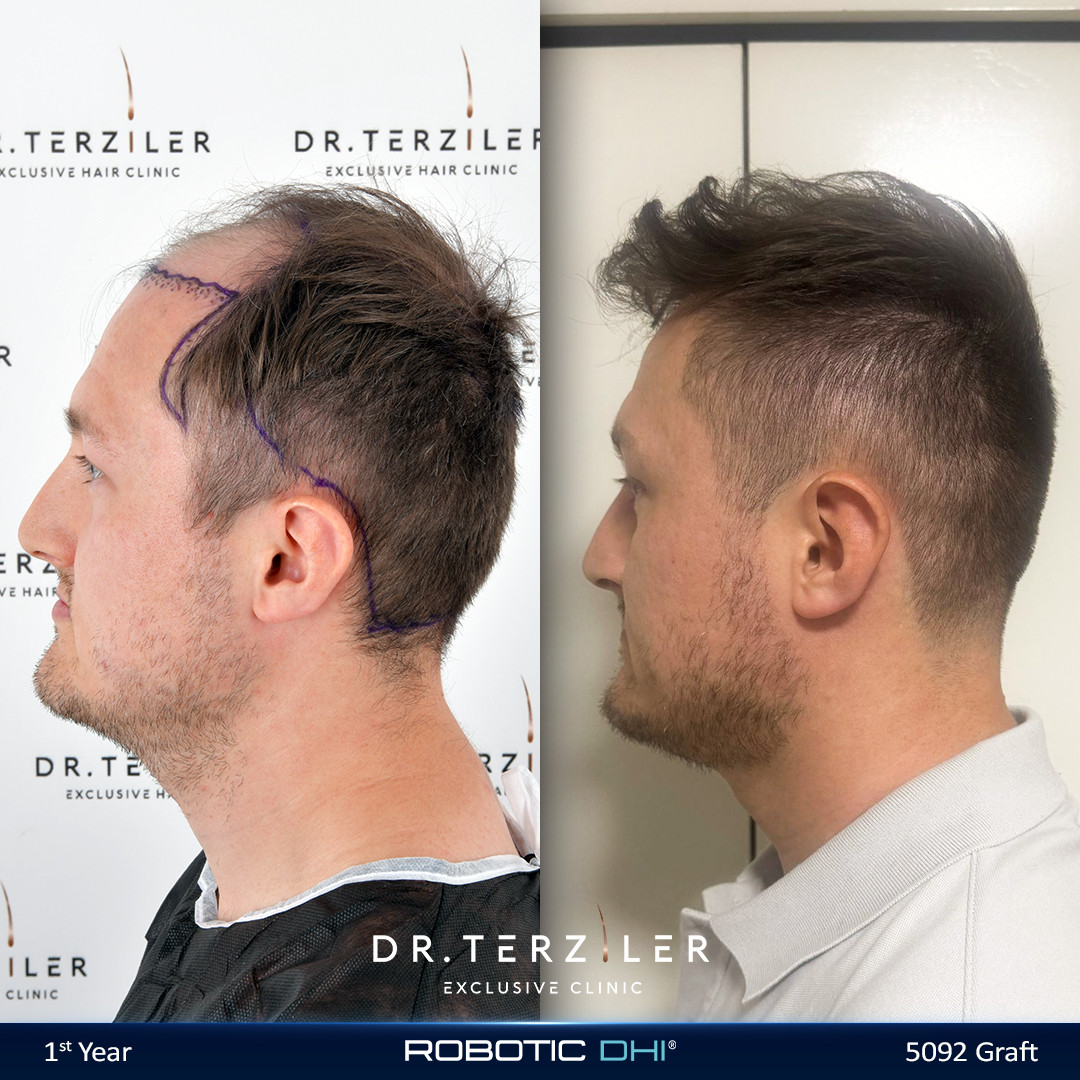
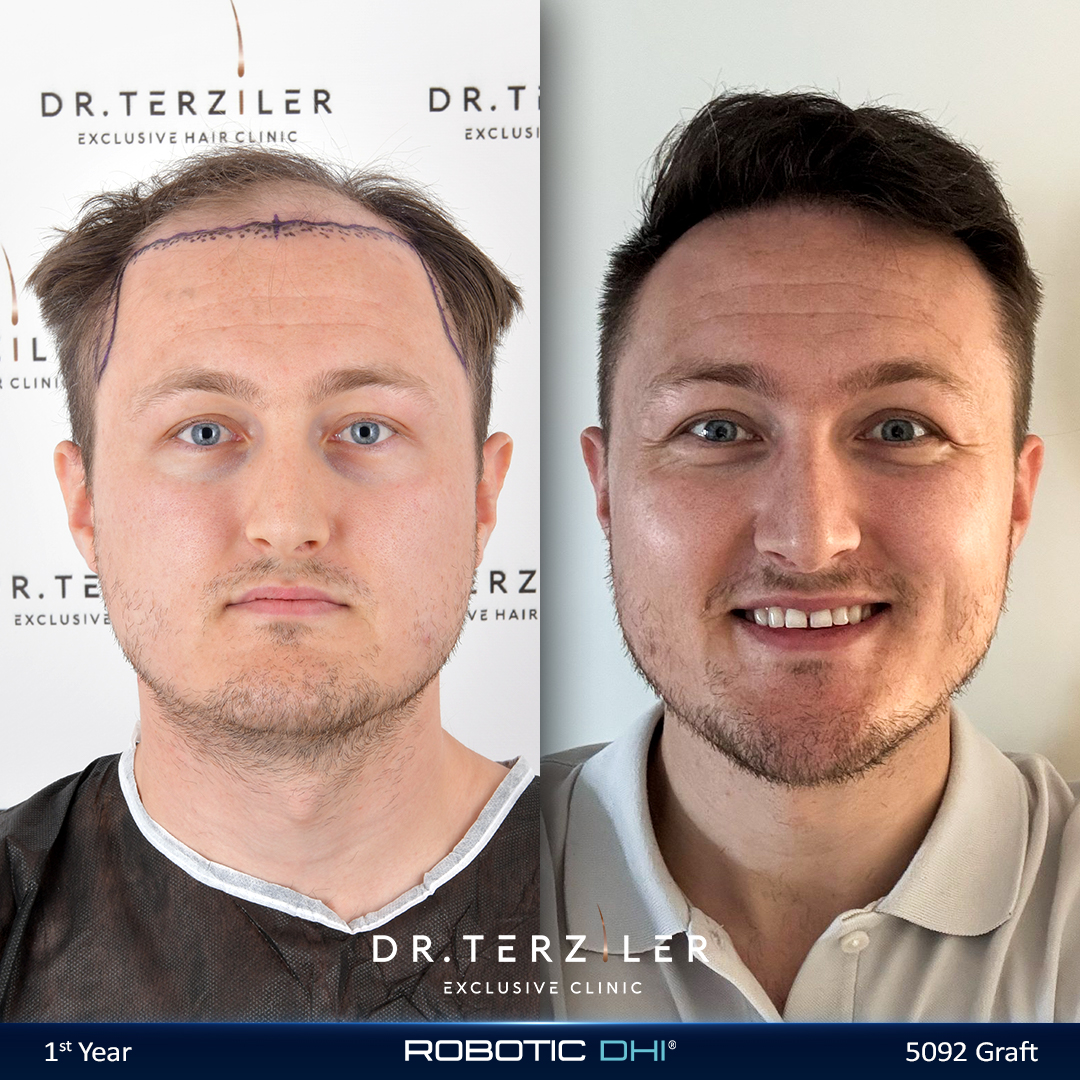
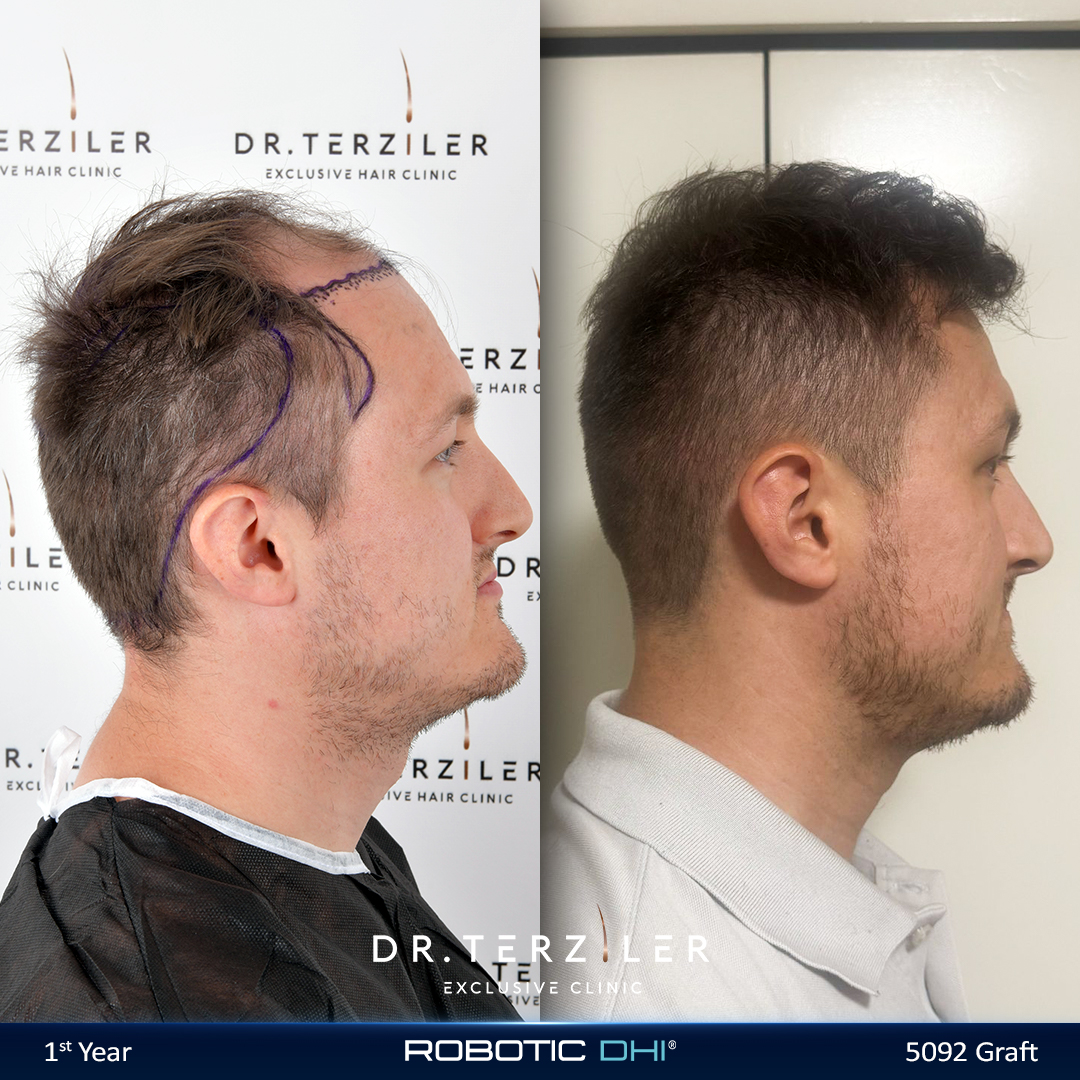
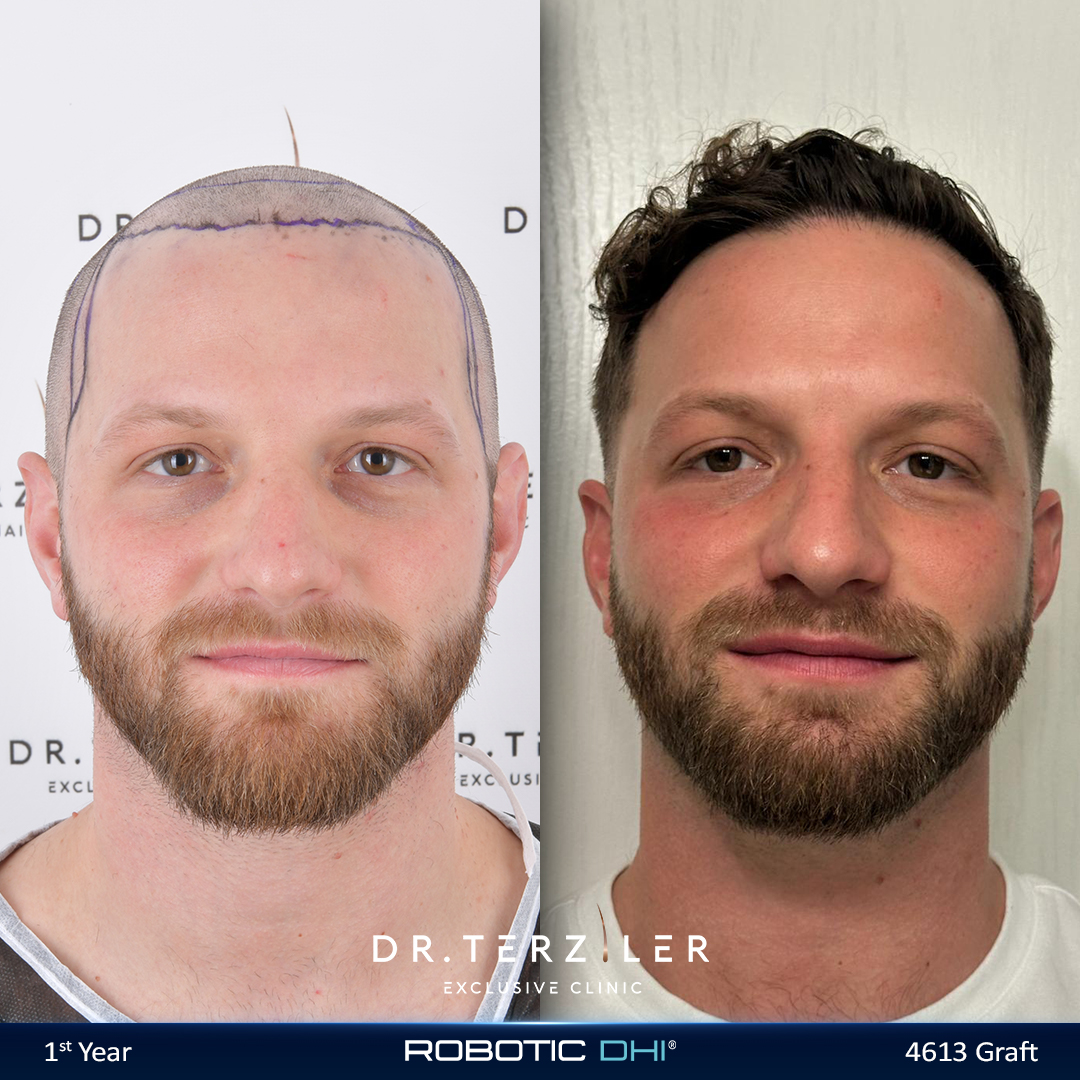
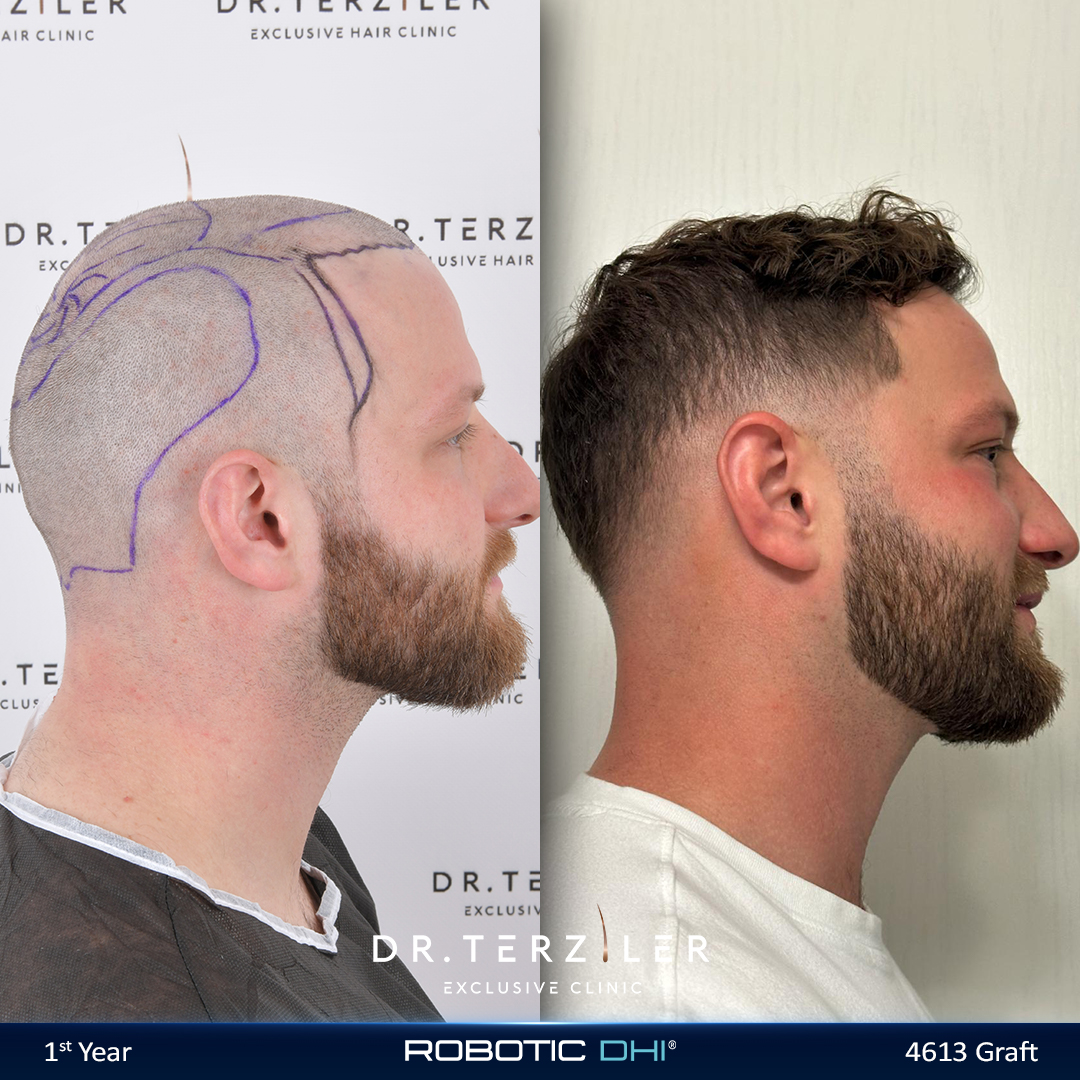
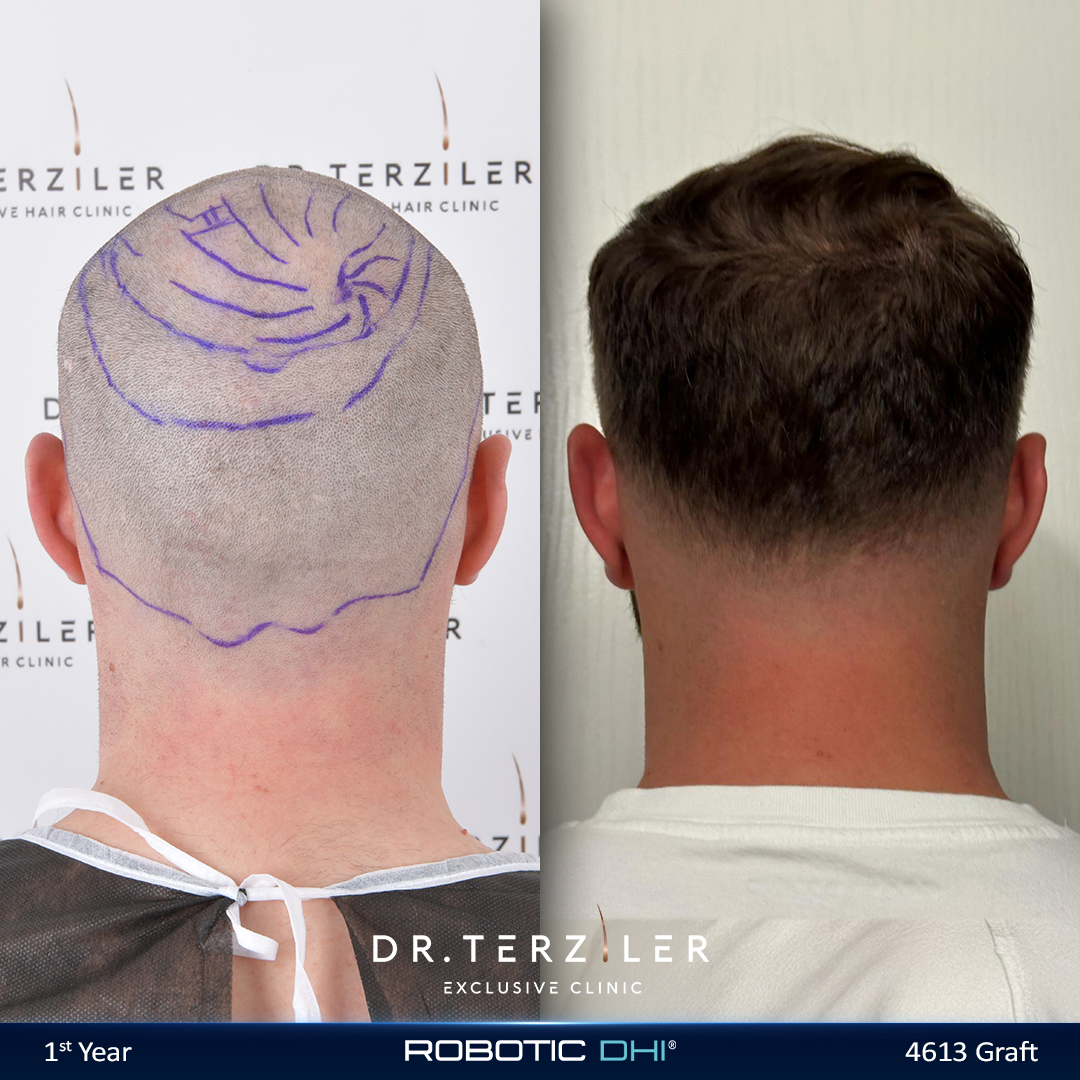
What Hair Transplant Before and After Results Really Look Like
Hair transplant before and after photographs are the most important evidence you can review when evaluating a clinic.
Am I a Good Candidate for a Hair Transplant?
A hair transplant works when the patient is biologically and physiologically suited to surgery. Not every person experiencing hair loss is a candidate, and operating on the wrong patient produces poor results regardless of technique or surgeon quality. Use the checklist below to self-assess before booking a consultation.
Send your photos on WhatsApp and our medical team will tell you whether a transplant makes sense for your case.
Is There an Age Limit for Hair Transplant?
There is no upper age limit. Dr. Terziler has performed successful procedures on patients in their 70s, provided general health supports surgery under local anaesthesia. At older ages, hair loss is typically stable, which is ideal for transplant planning. The minimum recommended age is 25 for men with male pattern baldness, to ensure the final loss pattern is established before a permanent hairline is designed. There is no medical reason a healthy 65-year-old cannot have a hair transplant.
Can Patients on Finasteride or Minoxidil Get a Hair Transplant?
Yes. Patients already using finasteride or minoxidil are typically excellent candidates. Medication use demonstrates engagement with hair retention and often means progressive loss has been slowed or stabilised. Continue finasteride through surgery and the post-operative period. Pause minoxidil 3 to 5 days before the procedure and restart 2 weeks post-op. Patients using dutasteride follow the same protocol as finasteride.
Is a Hair Transplant Permanent?
Yes. A hair transplant is permanent, with one important nuance. Transplanted follicles are permanently DHT-resistant and will not fall out due to pattern baldness. They grow, cycle, shed seasonally, and regrow exactly as they did in the donor zone, for life. This is the fundamental biological guarantee of the procedure.
The nuance is that your non-transplanted native hair continues its own biological trajectory. If you are Norwood 3 at age 30, you may be Norwood 4 or 5 by age 50, with the transplanted zones remaining dense while surrounding native hair thins further. This is why many patients benefit from a second session 10 to 15 years later as native loss progresses, and why finasteride is recommended alongside surgery as a long-term native hair protection strategy. A statistically significant density reduction in the transplanted zone over 4 years documented in patients not using finasteride, confirming the value of combined medical and surgical management. (PMC8061642)
Does Transplanted Hair Fall Out?
Transplanted hair sheds in weeks 2 to 6 post-surgery as follicles adjust to their new position. This is called telogen shock loss and is normal. The hair shaft falls, but the root remains alive. New growth from the transplanted root begins at months 2 to 3. At months 12 to 18, the full final density is present and permanent. The transplanted follicle does not fall out due to DHT. Adjacent native hair may thin over the coming years as androgenic alopecia progresses.
Will Transplanted Hair Go Grey?
Yes. Transplanted follicles are genetically your own hair. They will grey at exactly the same rate as the rest of your scalp hair as you age. This is considered a positive by most patients, as the transplanted area blends naturally with native greying. You can dye transplanted hair exactly as you would native hair, starting from month 3 post-procedure.
What Does Hair Transplant Recovery Look Like? Week-by-Week Timeline
Hair transplant recovery is predictable, manageable, and much shorter than most patients expect. The majority return to office-based work within 3 to 5 days. The critical healing window is the first 10 days. By day 14, the transplanted zone is healed and grafts are anchored. Full density is not visible until 12 to 18 months, but the recovery itself is complete within weeks.
A compact patient journey visual without oversized bars or distracting lines.
| Timeline | What Happens | Density | What to Do / Avoid |
|---|---|---|---|
| Days 1-3 | Swelling, redness, small crusts forming around grafts | – | Sleep elevated (2 pillows). Saline spray every hour. Take antibiotics + anti-inflammatories. |
| Day 3 | First gentle wash with provided shampoo | – | Use fingertips only. No direct shower pressure on grafts. |
| Days 4-7 | Swelling peaks then subsides. Crusts begin softening. | – | Light walking is fine. No gym. Avoid direct sun on scalp. |
| Week 2 | Crusts fall. Grafts are anchored. Donor area healing. | – | Most office workers return to work. Hats: loose hat from Day 14. |
| Month 1 | Shock loss begins in 60-80% of patients | 0-10% | Shock loss is normal. Roots are alive. Do not panic. |
| Months 2-3 | New growth begins emerging from transplanted roots | 20-30% | Continue minoxidil (restarted Week 2). Hair fibres safe from Month 2. |
| Month 6 | Significant density visible | 60-70% | Normal hat use is fine. Gym and swimming fully resumed. |
| Months 12-18 | Full final result | 100% | Crown results typically complete by Month 15-18. Results are permanent. |
What Is Shock Loss After a Hair Transplant?
Shock loss is the temporary shedding of transplanted and native hairs caused by the physiological stress of surgery. It affects 60 to 80% of patients in weeks 2 to 4 after the hair transplant procedure. Shock loss looks alarming but is not a sign of failure. The follicle roots remain alive in the scalp. The hair shaft sheds because the follicle enters the telogen (resting) phase in response to surgical trauma, and resting follicles shed their hair shafts as a normal part of the growth cycle. 95% of patients experiencing shock loss see full recovery by months 4 to 6. Native hairs adjacent to the transplanted zone can also shed temporarily through a related mechanism called native shock loss, which also resolves within the same timeframe. If no regrowth is visible by month 6, consult your surgeon. Absence of growth at that point is not shock loss; it warrants clinical assessment.
When Can I Wear a Hat After a Hair Transplant?
You can wear a loose, soft hat from Day 14 post-hair transplant surgery. The hat must not press on or rub the grafted area. From Month 1, a normal fitted hat is safe. In the first 14 days, do not place any material that presses down on the transplanted zone. Grafts are mechanically secure within 10 to 14 days but can be disturbed by friction and compression in the first 2 weeks.
When Can I Exercise After a Hair Transplant?
Light walking is safe from Days 4 to 7 after a hair transplant. Low-intensity gym work is safe from Week 2. Heavy lifting, contact sports, and intense cardio that elevates blood pressure significantly should wait 4 weeks minimum. Swimming in chlorinated water or the sea should wait 4 to 6 weeks post-surgery to prevent infection and folliculitis during the healing phase.
When Can I Fly After a Hair Transplant?
Flying the day after hair transplant surgery is standard for international patients. Cabin pressure does not affect graft survival. Dr. Terziler provides a protective headband, saline spray kit, and travel aftercare instructions for the flight home.
What Are the Risks and Side Effects of a Hair Transplant?
Hair transplantation performed by a qualified surgeon in an accredited clinic is a safe procedure. Like all surgery, it carries real risks. The most important step a patient can take to minimise risk is choosing the right surgeon. Poor outcomes are overwhelmingly associated with under-qualified or technician-led procedures, not with the procedure itself when properly performed.
Most issues patients worry about are temporary healing effects. Permanent problems are mainly linked to poor planning, over-harvesting, or technician-led surgery.
Swelling, redness, crusting, and shock loss during early recovery.
Folliculitis or irritation, usually managed with clinic guidance.
Infection, poor survival, unnatural hairline, or donor over-harvesting.
| Risk / Side Effect | Frequency | Duration | Notes |
|---|---|---|---|
| Shock loss (temporary shedding) | 60-80% of patients | Weeks 2-4; resolves by Month 4-6 | Normal biological response. Not failure. |
| Swelling and redness | Near-universal | Days 1-5 | Resolves fully with anti-inflammatories. |
| Folliculitis (ingrown hairs) | 2-5% of patients | Weeks 2-8 | Managed with antibiotics. Rare in DHI. |
| Infection | <1% (AACI-accredited clinics) | If occurs, 2-4 weeks with antibiotics | Risk dramatically reduced by sterile protocol. |
| Poor graft survival (<80%) | Rare at surgeon-led clinics | Permanent | Primary cause: technician-led procedures, poor storage. |
| Unnatural hairline | Rare at expert clinics | Permanent without correction | Caused by incorrect angle or poor design. Dr. T uses AI hairline mapping. |
| Donor over-harvesting | Rare with FotoFinder mapping | Permanent visible thinning | Prevented by pre-op donor density assessment. |
| Linear scar (FUT only) | 100% of FUT patients | Permanent | FUE and DHI produce no linear scar. |
The 4.7% major hair transplant complication rate cited in PMC8997317 (n=3,000+ patients) is a whole-of-market figure that includes unregulated hair mill procedures. At AACI-accredited, surgeon-led clinics, the rate is substantially lower. The ISHRS reports a 6.9% overall repair rate across all clinic types globally.
Does a Hair Transplant Hurt?
No. The procedure itself is painless after anaesthesia is administered. The anaesthesia phase involves a mild pinch sensation for approximately 3 to 5 seconds as the fine needle is introduced. After full numbing, patients feel pressure but not pain throughout. Post-operative discomfort is typically rated 3 to 4 out of 10 for the first 1 to 3 days and is managed with paracetamol or ibuprofen. The vast majority of patients describe the experience as far easier than they anticipated.
What Is a Hair Transplant Gone Wrong?
A hair transplant gone wrong typically results from one of three causes: a poorly designed hairline that looks artificial, over-harvesting of the donor zone producing visible thinning at the back, or graft failure due to poor storage or technician-only implantation. These outcomes are almost exclusively associated with unaccredited hair mills, where technicians perform the entire procedure without surgeon involvement. At AACI-accredited clinics with surgeon-led protocols, these complications are rare. If you are researching after a poor result, Dr. Terziler offers corrective hair transplant consultations.
Why Do 1 Million Patients Per Year Choose Turkey for a Hair Transplant?
Istanbul is the world's largest hair transplant hub by volume, performing more procedures annually than any other single city on earth. Five structural factors converged to make hair transplant Turkey the dominant destination for medical tourism, and those factors have strengthened over the past decade.
What Is the Best Hair Transplant Clinic? (How to Choose)
The best hair transplant clinic is the one where a qualified, experienced surgeon personally performs every stage of your procedure, from hairline design to final implantation, using documented techniques and transparent outcome data. There is no single global ranking, but the criteria for identifying a genuinely excellent clinic are consistent and verifiable. Ask every clinic you are considering these five questions directly:
Red flags: clinics that cannot answer any of these questions clearly, prices below $1,000 all-in for a full session (unsustainable at any quality standard), and clinics that do not mention who performs the implantation. Hair mills, clinics where technicians perform the entire procedure without surgeon involvement, produce the overwhelming majority of poor outcomes in the industry.
Surgeon role, graft survival, donor limits, accreditation, pricing: send them directly and get clear answers.
What Celebrity Hair Transplant Cases Tell Us
Celebrity hair transplant cases have done more to normalise hair restoration than any medical study. When high-profile figures are open about their procedures, millions of people realise that natural-looking results are achievable, and that the stigma attached to hair loss surgery is significantly outdated. The cases below are discussed publicly or have been widely reported. We do not speculate about individuals who have not confirmed procedures.
Elon Musk underwent a visible transformation between the late 1990s and mid-2000s, moving from a clearly thinning Norwood 3 to 4 to a full, natural hairline. The transition, photographed extensively, is consistent with FUE or early DHI technique. The result has held for over 20 years. Wayne Rooney was one of the first public figures to openly discuss his hair transplant, in 2011, undergoing FUE with visible natural results. John Travolta's dramatic change in hairline over the years is consistent with a multi-session FUE or DHI programme. Elon Musk, Justin Bieber, and LeBron James are among the most searched celebrity hair transplant names globally. Their results collectively demonstrate that when a qualified surgeon performs the procedure, the outcome is indistinguishable from natural hair.
What clinical analysis of these cases confirms: the most natural-looking results are consistently associated with low-angle implantation (10 to 20 degrees at the hairline), precise follicle density matching the surrounding native zone, and correct follicle direction mapping. These are exactly the variables that AI-guided Picasso Robotic DHI controls with the precision of a 0.75mm Choi pen.
What Is the Future of Hair Transplant? (2026-2030)
The future of hair transplantation includes hair follicle cloning, gene therapy targeting the Wnt/beta-catenin signalling pathway, and next-generation AI-guided robotic systems. Commercial availability of true follicle cloning is projected no earlier than 2035. Current best practice remains FUE, DHI, and Picasso Robotic DHI. Patients who delay surgery waiting for cloning technology will forgo years of natural-looking growth available today.
No vertical blue line, no overdesigned timeline. Just a clean snapshot of what is available now and what is still research-stage.
FUE, DHI, Sapphire FUE, Robotic DHI, and Picasso Robotic DHI.
Better AI mapping, adaptive robotic extraction, and 3D scalp planning.
True follicle cloning may become commercially realistic, but it is not a current service.
Hair Follicle Cloning and Neogenesis: The Research Frontier
Hair follicle cloning aims to grow entirely new follicles from a patient's own cells, bypassing the finite donor supply limitation. Three organisations are leading this work. Stemson Therapeutics (USA) is developing iPSC (induced pluripotent stem cell)-derived hair follicle organoids, with animal model results published in Nature Communications. Hair Clone Ltd (UK) is banking patient dermal papilla cells for future amplification and reimplantation when the technique becomes commercially viable. Kyocera and the Riken Institute (Japan) published an organoid hair follicle methodology in Nature Communications 2023 that successfully regenerated follicles in mouse models. Human clinical trial data is expected 2027 to 2029. Realistic commercial availability: 2035 or later. Any clinic claiming to offer hair cloning as a commercial service today is misrepresenting research-phase science.
Gene Therapy and the Wnt Signalling Pathway
The Wnt/beta-catenin signalling pathway is a master regulator of hair follicle development and cycling. A 2021 study from Seoul National University (PMID:30607569, Journal of Investigative Dermatology) identified the CXXC5 protein as a suppressor of Wnt signalling in the scalp and demonstrated that inhibiting CXXC5 with a peptide drug (PTD-DMB) produced significant hair regrowth in mouse models. Human trials have not yet been approved. A separate approach using Wnt pathway activators to convert miniaturised follicles back to terminal follicles is in preclinical development at multiple institutions. Expected timeline to clinical availability: 2030 to 2035 for optimistic scenarios.
AI-Assisted Planning and Next-Generation Robotic Systems
Current robotic systems, including ARTAS iX, NeoGraft, and Picasso Robotic DHI, are surgeon-assisted rather than autonomous. The next generation will integrate real-time follicular density mapping, adaptive punch pressure control that adjusts to follicle depth per extraction, full pre-operative 3D scalp modelling, and intraoperative graft survival tracking. Dr. Terziler's Picasso system already incorporates AI hairline mapping and AI-guided extraction pattern planning. The 0.75mm precision and 97.3% survival rate in the 2024 cohort represent current best-in-class. Within the next 5 years, these capabilities will become increasingly automated. Full robotic autonomy without surgeon oversight is unlikely before 2030, as regulatory approval for autonomous surgical robotics is a lengthy separate process from technical development.
Hair Transplant FAQ
Transplanted follicles retain DHT-resistance permanently and will not fall out due to pattern baldness. Native hair adjacent to the transplant continues its own miniaturisation. PMC8061642 documents a 4-year statistically significant density reduction in patients not using finasteride. Combining surgery with finasteride protects long-term density. Results are permanent; the overall appearance may evolve as native hair progresses.
The procedure itself is painless after local anaesthesia. Patients report a mild pinch for 3 to 5 seconds during numbing, then zero pain throughout. Post-operative discomfort is rated 3 to 4 out of 10 on average and is managed with paracetamol or ibuprofen. The first sleep night is typically the most uncomfortable due to positioning requirements.
FUE and DHI achieve 90 to 95% graft survival under optimal conditions. Picasso Robotic DHI at Dr. Terziler Exclusive Clinic achieves 97.3% graft survival (n=180, ISHRS-aligned, 2024). Success correlates with punch size, graft storage protocol, and whether the surgeon personally performs implantation.
Transplanted hairs shed in weeks 2 to 6 (normal shock loss). New growth begins at months 2 to 3. Approximately 30% density is visible by month 3, 70% by month 6, and the full final result appears at months 12 to 18. Crown results typically reach full expression at months 15 to 18.
Shock loss is temporary shedding of transplanted and native hairs caused by surgical trauma pushing follicles into the resting phase. It affects 60 to 80% of patients in weeks 2 to 4. Follicle roots remain alive. 95% of patients experiencing shock loss see full recovery by months 4 to 6. It is not failure.
Yes. DHI without full shaving is the preferred technique for women. Ideal candidates have stable Ludwig I to III androgenic alopecia. Women represent 15.3% of global hair transplant patients (ISHRS 2024). Unshaven DHI allows complete social privacy throughout recovery. Hormonal evaluation is recommended for women under 45.
Yes. Flying the day after surgery is standard for international patients. Cabin pressure does not affect graft survival. Dr. Terziler provides a protective headband, saline spray, and travel aftercare kit. Most international patients fly home the day after their procedure.
Contemporary Islamic scholars generally consider autologous hair transplantation permissible (halal). It restores a natural function rather than constituting cosmetic deception or using non-own material. Dr. Terziler's clinic addresses this question routinely for patients from Muslim-majority countries.
No. Extracted follicles do not regenerate at the extraction site. Donor supply is finite. A safe extraction limit of 50 to 60% of available follicular units must be respected. Over-harvesting causes visible donor thinning, which is why FotoFinder trichoscope pre-operative density mapping is mandatory.
Light walking is safe from Days 4 to 7. Low-intensity gym work is safe from Week 2. Heavy lifting and contact sports: 4 weeks minimum. Swimming in chlorinated pools or the sea: 4 to 6 weeks post-surgery.
Avoid hair fibres for the first 4 to 6 weeks. They can block follicle openings during the critical healing phase. After Month 2, cosmetic fibres are safe to use during the growth phase while waiting for final density.
Anabolic steroids increase DHT levels, which accelerates native hair miniaturisation around grafts. Transplanted follicles remain DHT-resistant. Disclose TRT or steroid use at consultation. Finasteride can offset the native hair risk. Timing of surgery relative to the TRT cycle can be optimised.
Islamic scholars classify hair transplantation as a medical procedure that does not break the fast. Anaesthesia is injected, not oral. Scheduling outside Ramadan is a practical recommendation due to the post-operative care routine, not a religious requirement.
Yes, via Body Hair Transplant (BHT) using beard, chest, or back hair as supplemental donor. Results are less dense than scalp-to-scalp procedures. 2 to 3 sessions over 12 to 24 months are needed. Best candidates have beard density of at least 30 follicular units per cm2.
Five essential questions: (1) Will you personally design my hairline and perform the full implantation? (2) What is your published graft survival rate and how was it measured? (3) Is your clinic AACI or JCI accredited? (4) What is my safe maximum extraction based on a FotoFinder donor density scan? (5) What is included in the all-inclusive package, line by line?
A loose, soft hat is safe from Day 14. It must not press on or rub the grafted area. A normal fitted hat is safe from Month 1 onward. In the first 14 days, avoid any material that presses on the transplanted zone.
Yes. Transplanted follicles are genetically your own hair. They will grey at exactly the same rate as the rest of your scalp hair. This is a positive feature: the transplanted area blends naturally with native greying. You can dye transplanted hair exactly as you would native hair, starting from Month 3.
Controlled diabetes is not a contraindication. Well-managed Type 1 or Type 2 diabetes with an HbA1c below 8.0% is compatible with hair transplant surgery under local anaesthesia. Uncontrolled diabetes is a relative contraindication due to impaired wound healing and infection risk. Dr. Terziler requires a full blood panel pre-operatively. HbA1c is among the standard tests for all patients.
Sneezing during implantation is a common patient anxiety. The surgeon simply pauses and resumes. It does not damage grafts in progress. In the 72 hours after surgery, a strong sneeze does not dislodge anchored grafts. Implanted grafts are held by tissue compression, not sutures. A sneeze produces less mechanical force than the gentle Day 3 washing protocol.
A limited scalp donor zone does not automatically disqualify a patient. Body Hair Transplant (BHT) using beard follicles can supplement limited scalp supply significantly. At Norwood 6 to 7 with restricted scalp donor, a combination of maximum safe scalp extraction and BHT from the beard zone can still produce meaningful coverage. A FotoFinder trichoscope assessment and beard density evaluation at consultation determines what is safely achievable.
Wait 7 to 10 days before having sex after a hair transplant. The reason is not graft disturbance – implanted grafts anchor within 72 hours. The concern is elevated heart rate and blood pressure, which increase scalp blood flow and oedema risk during the first week. Light, non-strenuous activity is acceptable from Day 7. Vigorous or high-exertion activity should wait until Day 10 to 14.
The same rule applies as for sexual activity: wait 7 to 10 days after a hair transplant. The clinical reason is cardiovascular: orgasm raises blood pressure and heart rate, increasing scalp vasodilation during the critical early healing window. It does not directly dislodge grafts, which are held by tissue compression. Gentle activity after Day 7 carries negligible risk. Most clinics avoid stating this explicitly, which is why patients search for it.
Alcohol must stop 3 days before surgery and should not resume for at least 7 days post-procedure. Alcohol is a vasodilator: it expands blood vessels, increases bleeding risk, and prolongs oedema. It also impairs the early immune response that protects healing grafts from infection. From Day 10 onwards, moderate alcohol consumption is acceptable for most patients.
Smoking should stop at least 2 weeks before surgery and ideally for 4 weeks after. Nicotine causes vasoconstriction, it narrows the blood vessels that supply oxygen and nutrients to healing grafts. Studies show graft survival rates drop measurably in active smokers versus non-smokers undergoing the same procedure. Vaping carries the same vasoconstriction risk as cigarettes. Source: PMC6020869.
The first gentle wash is performed on Day 3 using the clinic-provided shampoo. Direct shower pressure must not hit the transplanted zone for the first 10 days. A cup or soft spray is used instead. From Day 10 to 14, a normal shower is safe. The donor area at the back can tolerate normal water pressure from Day 7 onward, as it heals faster than the recipient zone.
Wait a minimum of 4 weeks before applying any chemical hair dye to the scalp. Hair dye contains ammonia, hydrogen peroxide, and other compounds that penetrate the skin barrier. During the first month, the scalp skin is still in active repair. Chemical exposure before full epidermal integrity is restored risks folliculitis, contact dermatitis, and graft irritation. Semi-permanent and natural dyes carry lower but not zero risk.
Avoid direct sun exposure on the transplanted scalp for 4 weeks minimum. UV radiation increases scalp inflammation, delays healing, and can permanently hyperpigment scar tissue in the donor and recipient zones. When outdoors in the first month, wear a loose hat (permitted from Day 14) or use SPF 50+ sunscreen on healed skin only, not on active crusts. Turkey's sun intensity makes this especially relevant for international patients treated in Istanbul.
Dr. Servet Terziler invented the Picasso Robotic DHI system. Unlike ARTAS, which was developed by Restoration Robotics in the USA and is limited to the extraction phase only, Picasso Robotic DHI integrates AI-assisted guidance throughout both extraction and implantation. Dr. Terziler designed and built the system based on 20+ years of DHI surgical experience, then founded TÜSATDER (Turkish Hair Transplant Surgeons Association) to set national education standards. No other surgeon has invented a robotic hair transplant system in clinical use.
Bosley is the largest hair transplant chain in the USA, operating since 1974. Its per-session cost ranges from $8,000 to $15,000 using standard FUE. The technique used is conventional FUE without Choi pen implantation, and the graft survival benchmark Bosley publishes is not verified against third-party measurement. A 3,000-graft Bosley session costs approximately what a 4,000-graft Picasso Robotic DHI session at Dr. Terziler Clinic costs including flights and accommodation from the USA. The question is not whether Bosley is competent, it is whether the cost premium reflects measurable outcome advantage. Published research does not support a survival rate advantage for US chain clinics over ISHRS-member surgeons in Turkey.
ARTAS iX is a robotic FUE system made by Restoration Robotics (now Venus Concepts) that uses stereo-imaging to score and extract follicular units with a 0.9mm punch. It is surgeon-supervised, not autonomous. ARTAS covers extraction only; implantation is performed manually by technicians after extraction. It does not use Choi pen implantation. ARTAS in the USA costs $10,000 to $20,000. It produces consistent extraction scoring, which reduces transection in the right donor density conditions, but it offers no implantation precision advantage over skilled manual DHI. Picasso Robotic DHI, developed by Dr. Servet Terziler, provides AI assistance across both extraction and implantation phases, a scope of robotic guidance that ARTAS does not offer.
Sources and Citations