





For many people struggling with hair loss, the path to a permanent solution is blocked by one major obstacle: needle phobia and fear of pain.
While modern techniques like FUE and Sapphire FUE are minimally invasive, standard procedures still require the administration of local anesthesia. This involves multiple injections into the scalp using traditional needles. For patients with a low pain threshold or a deep-seated anxiety about medical environments, the thought of these initial injections is enough to make them postpone the surgery indefinitely.
Fortunately, modern hair restoration has evolved to eliminate this final barrier. A painless hair transplant via sedation allows you to completely bypass the discomfort of surgery, providing an effortless, stress-free path to a restored hairline.
Here is everything you need to know about how sedation transforms a hair transplant into a completely painless experience.
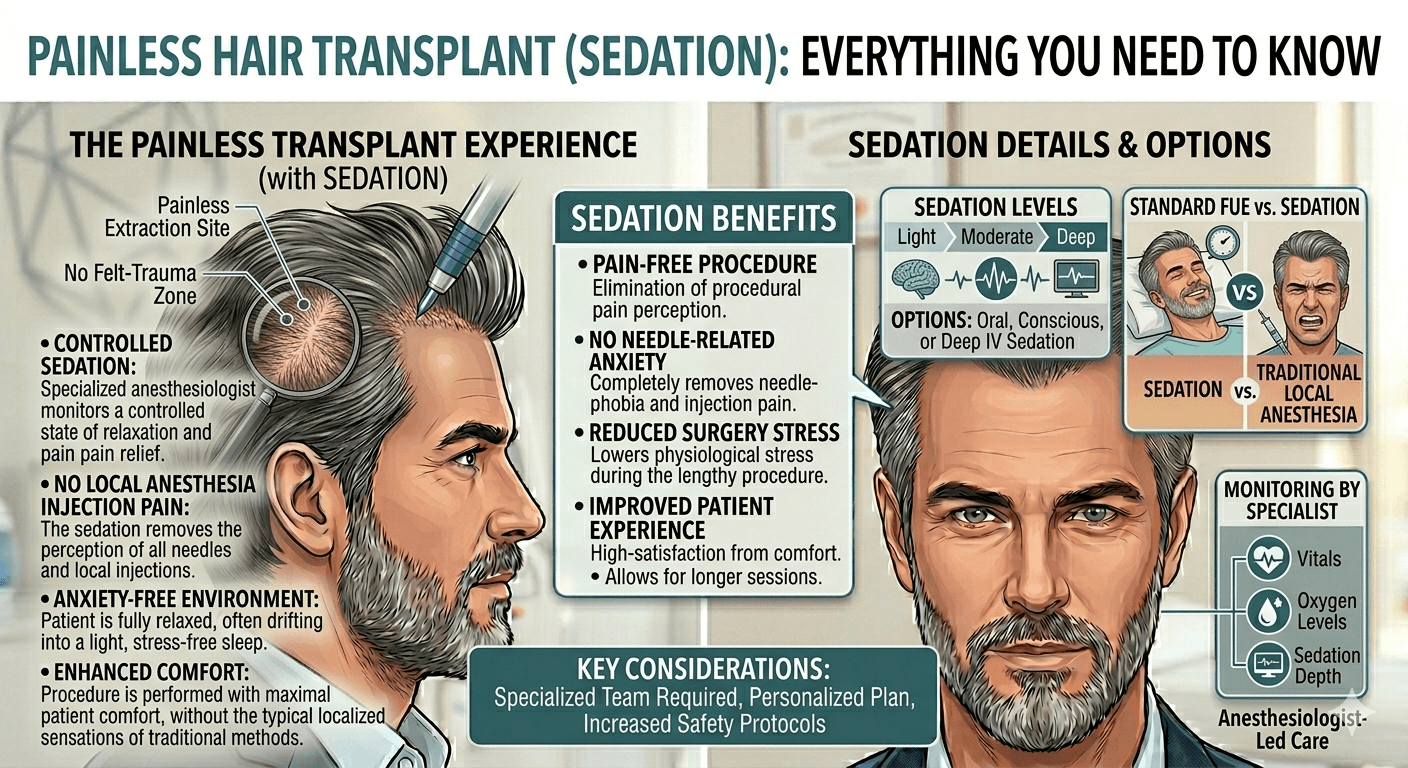
What is a Sedation Hair Transplant?
To understand how sedation works, it helps to distinguish it from general anesthesia (which is used in heavy orthopedic or abdominal surgeries).
In a standard hair transplant, you are fully awake, and local anesthesia is injected directly into your scalp to numb the area. While you feel nothing during the extraction and implantation, the initial 5 to 10 minutes of receiving those numbing injections can be stinging and uncomfortable.
With a sedation hair transplant, a certified anesthesiologist administers a calibrated blend of sedative medications—usually intravenously (via an IV) or orally—right before the surgery begins.
This shifts you into a state of conscious sedation (twilight sleep). Within seconds, your anxiety melts away, your body relaxes completely, and your pain perception drops to zero. While you remain technically conscious and able to follow simple instructions from the medical team, you enter a deeply peaceful, dream-like state.
While you are under this brief sedation, the surgeon administers the local anesthesia to your scalp. You do not feel, notice, or even remember the needles touching your skin.
The Benefits of Choosing Sedation
Opting for sedation during your hair restoration procedure offers several significant advantages that extend far beyond simple pain relief.
1. Absolute Zero Pain
The primary benefit is the complete elimination of physical discomfort. By the time the sedation wears off a few minutes later, your entire scalp is already 100% numb from the local anesthesia. You experience the entire day without ever feeling a single prick or sting.
2. Psychological Comfort and Reduced Anxiety
For patients dealing with medical anxiety, a fast-beating heart and high blood pressure can complicate a surgical procedure. Sedation induces deep mental tranquility, turning what could have been a highly stressful day into a relaxed, calm experience.
3. Time Warp Effect
Sedative medications have a natural, temporary amnestic effect. This means that while you are awake during the rest of the day—watching TV, listening to music, or chatting with the doctors—the hours fly by in what feels like mere minutes. A 6-to-8-hour surgery passes comfortably in a flash.
4. Perfectly Controlled Blood Pressure
Anxiety spikes your adrenaline, which elevates blood pressure and can cause increased bleeding during the harvesting phase. By keeping you completely relaxed, sedation stabilizes your heart rate and blood pressure, reducing bleeding, optimizing graft survival conditions, and making the surgeon’s work exceptionally clean.
Step-by-Step: The Sedation Process on Surgery Day
A painless hair transplant follows a highly structured safety protocol overseen by medical professionals:
Step 1: Pre-Op Assessment
Before any sedative is administered, a dedicated anesthesiologist reviews your medical history, checks your current vitals, and calculates the exact dosage required based on your body weight, age, and health profile.
Step 2: Administering the Sedation
A tiny, painless IV line is established or a mild oral sedative is given. Within less than a minute, you will feel a warm wave of deep relaxation wash over your body. Your eyes will feel heavy, and you will drift into a peaceful “twilight” sleep.
Step 3: Scalp Numbing (The Hidden Step)
While you are resting comfortably in this worry-free state, the surgeon applies the local anesthetic across your donor and recipient areas. Even if your eyes are open and you are mildly aware of your surroundings, your pain receptors are entirely switched off.
Step 4: The Main Procedure
Once the scalp is fully numbed, the sedation is safely dialed down or discontinued. You gently wake up completely refreshed, with zero grogginess. Your scalp is entirely numb, and the medical team can seamlessly proceed with extracting and implanting the grafts using advanced Sapphire FUE or DHI methods while you sit comfortably.
Am I a Good Candidate for Sedation?
Almost anyone who wants a completely comfortable surgical experience can opt for sedation, but it is especially recommended for:
- Individuals with a severe phobia of needles or medical tools.
- Patients with a very low pain tolerance or highly sensitive scalps.
- Anyone experiencing high levels of pre-surgery anxiety or panic.
During your pre-operative consultation, your medical history will be thoroughly screened to ensure you have no contraindications (such as severe respiratory or cardiovascular conditions) that would prevent the safe use of light sedatives.
Final Thoughts: A New Standard of Comfort
A hair transplant is an investment in your self-esteem, and the journey to getting your confidence back shouldn’t have to be a painful or frightening ordeal. Thanks to modern conscious sedation, dental-grade needle phobia is no longer a reason to suffer from hair loss.
At Dr. Terziler Clinic, we believe that luxury care means prioritizing your emotional and physical comfort just as much as your surgical outcome. By integrating elite, physician-monitored sedation protocols into our advanced hair restoration therapies, we ensure that you receive the most natural, dense, and permanent results while experiencing an absolutely flawless, peaceful, and entirely painless day from start to finish.
Frequently Asked Questions (FAQ)
Is sedation the same as being put to sleep under general anesthesia?
No. General anesthesia puts you into a deep, unconscious state where you cannot breathe on your own and require a breathing tube. Conscious sedation is much lighter and safer; you remain entirely capable of breathing independently, speaking, and responding to commands, but your mind is completely relaxed and decoupled from pain.
Are there any side effects after the sedation wears off?
Because modern, fast-acting sedatives are used, the medication clears your system very quickly once the initial numbing process is complete. You will not experience severe nausea or heavy grogginess. Some patients feel mildly relaxed or sleepy for a few hours post-op, which actually helps them rest comfortably during their ride home.
Can I drive myself home after a sedation hair transplant?
No. Even though the heavy effects of the sedative wear off within an hour of administration, trace amounts remain in your system for the rest of the day, which can subtly slow down your reflexes. For your own safety, you must arrange for a friend, family member, or a clinic-provided transport service to take you back to your hotel or home.
How long does the sedation actually last during the surgery?
The sedation is primarily used to cover the local anesthesia administration phase, which takes about 10 to 15 minutes. Once your scalp is thoroughly numbed and immune to pain, the sedation is stopped. The local anesthesia itself keeps your scalp completely numb and pain-free for the remaining 6 to 8 hours of the transplant.
Do I need to fast before a painless hair transplant with sedation?
Yes. To ensure maximum safety during conscious sedation, you will typically be advised to avoid eating any solid foods or drinking heavy liquids for roughly 6 to 8 hours prior to your scheduled surgery time. Your clinic will provide you with specific, exact fasting guidelines based on your individual medical plan.