





The hard part is behind you—the surgery went flawlessly, and your new hairline is masterfully drawn. Now, the future of your hair restoration depends entirely on how you care for those fresh grafts at home.
During the first two weeks, your new hair follicles are incredibly fragile. They are resting in delicate micro-channels without a secure blood supply, held in place only by natural tissue adhesion. A single incorrect wash, harsh rub, or blast of high water pressure can permanently dislodge a graft, leaving a permanent gap in your final results.
Washing your head after surgery can feel incredibly intimidating, but it doesn’t have to be a source of anxiety. This step-by-step guide breaks down the exact medical protocol to keep your scalp pristine, accelerate healing, and protect your investment safely.
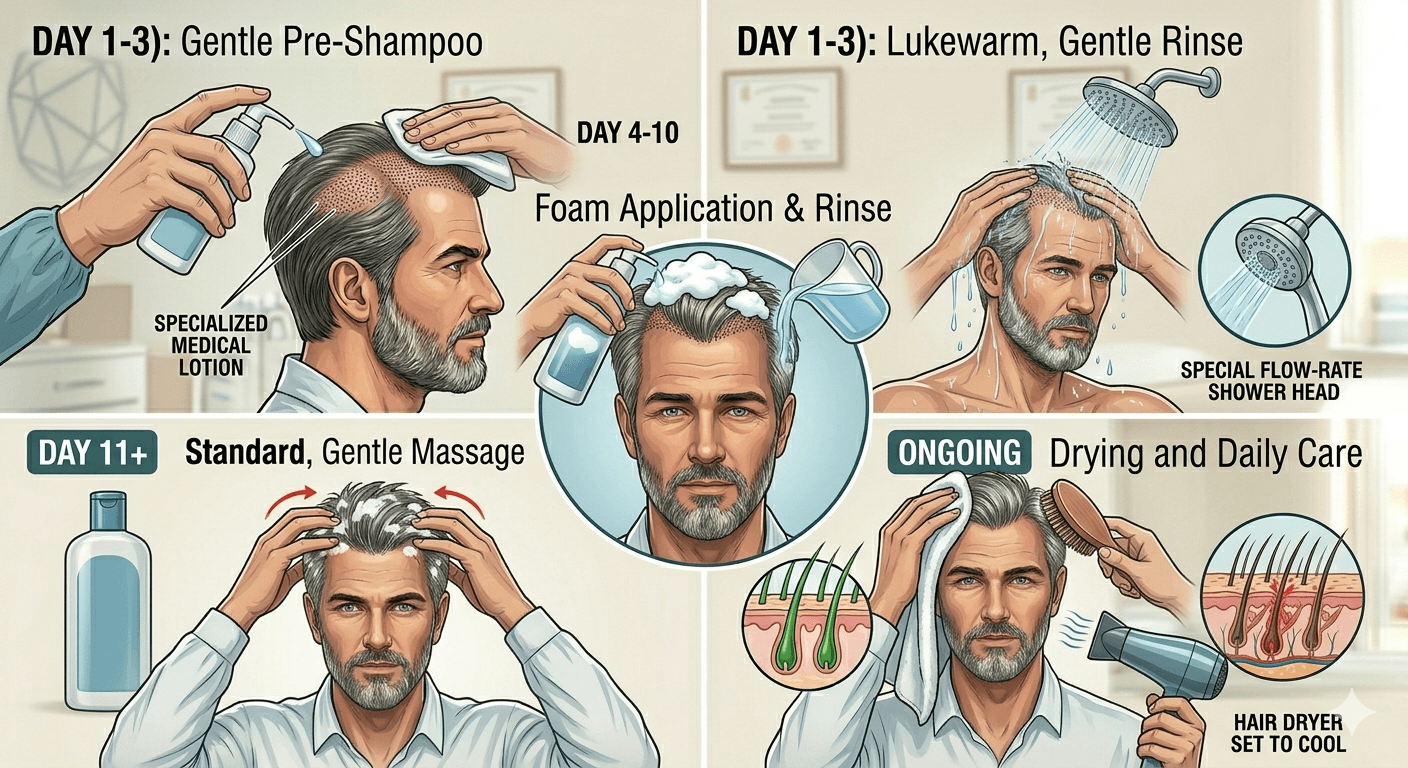
Why Is Post-Op Hair Washing So Critical?
Many patients assume the safest option is to avoid washing their head altogether to prevent touching the grafts. However, skipping washes is highly dangerous.
As your scalp heals, it naturally produces dried blood, crusts, and fluid buildup that form micro-scabs around the grafts. If you leave these scabs untouched, they will harden, tighten, and suffocate the fresh follicles, blocking new hair from piercing the skin.
Furthermore, sebum and sweat create a breeding ground for bacteria. Gentle, systematic washing keeps the scalp sterile, dissolves crusts naturally, and boosts local blood circulation—which is exactly what your fresh roots need to thrive.
The Step-by-Step Washing Protocol (Days 3 to 14)
Unless your clinic states otherwise, you will typically begin washing your hair at home on Day 3 post-surgery. You will repeat this delicate process once every day until day 14.
Step 1: Apply the Moisturizing Lotion or Foam
Your clinic will provide a specialized, chemical-free moisturizing lotion or a pH-neutral foam.
- The Action: Gently dab the lotion or foam across your recipient area (the fresh grafts). Do not rub, drag, or slide your fingers across the skin. For the donor area at the back, you can apply it a bit more freely.
- The Wait: Let the lotion sit on your scalp for 20 to 30 minutes. This allows the formula to deeply hydrate the skin, soften the crusts, and ease post-op tightness.
Step 2: The First Gentle Rinse (The Cup Method)
Never allow a standard, high-pressure shower head to spray your recipient zone directly. The heavy pressure will rip the grafts right out of their incisions.
- The Action: Fill a clean cup or pitcher with lukewarm water (never hot, never freezing).
- The Execution: Hold the cup close to your head and gently pour the water over your scalp, letting it glide down to rinse away the moisturizing lotion completely.
Step 3: Lather and Dab the Shampoo
Next, you will use the specialized medical shampoo provided by your doctor.
- The Action: Pour a small amount of shampoo into your palms and rub your hands together until it forms a thick, rich lather.
- The Execution: Gently tap the soapy foam onto your recipient area using a soft, up-and-down patting motion. Always use the pads of your fingers, never your fingernails. For the donor area at the back, you may gently massage with tiny circular motions to clean out dried blood.
- The Rinse: Use the cup method with lukewarm water again to rinse all the soap away completely.
Step 4: Drying With Extreme Care
Air-drying is the absolute safest method. However, if you are cold or need to dry it manually, you must follow strict safety steps.
- The Rule: Never rub your head with a standard bath towel. The loops in the fabric can easily snag a graft and pull it out.
- The Alternative: Take a sheet of clean, ultra-soft paper towel or a lint-free microfiber cloth and gently press it down on the scalp to absorb excess moisture.
Golden Rules for Post-Op Hair Washing
To ensure your scalp heals flawlessly, commit these absolute boundaries to memory:
- Avoid Hairdryers: Do not use electric hairdryers for at least two to three weeks. The hot air can dry out the delicate grafts, damage healing skin cells, and burn areas that are still temporarily numb from local anesthesia.
- Check the Water Temperature: Extremely hot water causes local inflammation and expands blood vessels, which can trigger delayed bleeding around fresh incisions.
- Say No to Hard Water: If your home has incredibly high water pressure or heavy mineral content, continue using bottled or filtered water from a jug for your daily rinses.
Final Thoughts: The Bridge to Your Final Results
Mastering the post-op wash is a brief, 14-day investment of patience that yields a lifetime of thick, rich hair growth. It requires a gentle hand and absolute discipline, but watching your scalp transform from red and scabby to clean, pink, and healthy is incredibly rewarding.
At Dr. Terziler Clinic, we treat your aftercare with the exact same elite medical precision as the surgery itself. We do not expect you to guess your way through your recovery; we provide a complete, premium post-op kit containing pH-balanced formulations, alongside step-by-step video tutorials and direct medical monitoring. This ensures your washing routine is entirely stress-free, protecting your delicate grafts perfectly to deliver the most dense, flawless, and completely natural results possible.
Frequently Asked Questions (FAQ)
What should I do if a scab refuses to fall off by Day 10?
Do not scratch or pick at it with your fingernails. By Day 10, your hair grafts are safely anchored beneath the skin, meaning you can slowly increase the pressure of your finger pads during the shampoo phase. Gently massage the stubborn scabs in a soft, circular motion while lathered up to help them slide off naturally.
I noticed a short hair shaft falling out while washing my head. Did I lose a graft?
If it happens after Day 5 and there is absolutely no bleeding, you did not lose a graft. This is a completely healthy phase called shock loss. The temporary stress of surgery causes the short hair shaft to shed, but the vital living root remains perfectly safe, alive, and healthy deep under your skin, ready to grow a permanent new hair strand in a few months.
When can I finally stand directly under a normal shower head?
You should strictly avoid direct shower pressure on your recipient zone for the first 14 days. By Day 15, your skin is fully closed and the grafts are securely integrated, meaning you can safely return to taking standard showers under normal, moderate pressure.
Can I use a baby shampoo instead of the clinic’s shampoo?
While baby shampoo is gentle and free of heavy perfumes, it is not optimized for a healing surgical wound. The medical shampoo provided by your clinic contains specific anti-inflammatory, anti-bacterial, and healing agents designed to soothe irritated skin and keep the follicle pores clear. Stick strictly to your clinic’s kit for the first two weeks.
How many times a day should I wash my hair after a transplant?
Washing your head once a day is the perfect global standard. Over-washing can strip away the scalp’s natural oils, leaving your skin excessively dry, flaky, and prone to severe itching, while under-washing allows sebum and scabs to build up, hindering the growth of the new follicles.