





You have spent hours in the surgery chair, spent weeks meticulously washing your scalp with a cup, and finally gotten past the scabbing phase. Naturally, you are ready to get back outside, jump in a pool, or enjoy a vacation.
However, sunlight and swimming pools are two of the greatest stealth threats to your healing hair grafts.
Exposing your fresh scalp to UV rays or chlorinated water too early can quietly sabotage your final density, trigger severe irritation, or cause infection. To protect your investment, you need to understand exactly why these elements are risky and follow a strict, medically proven timeline for a safe return.
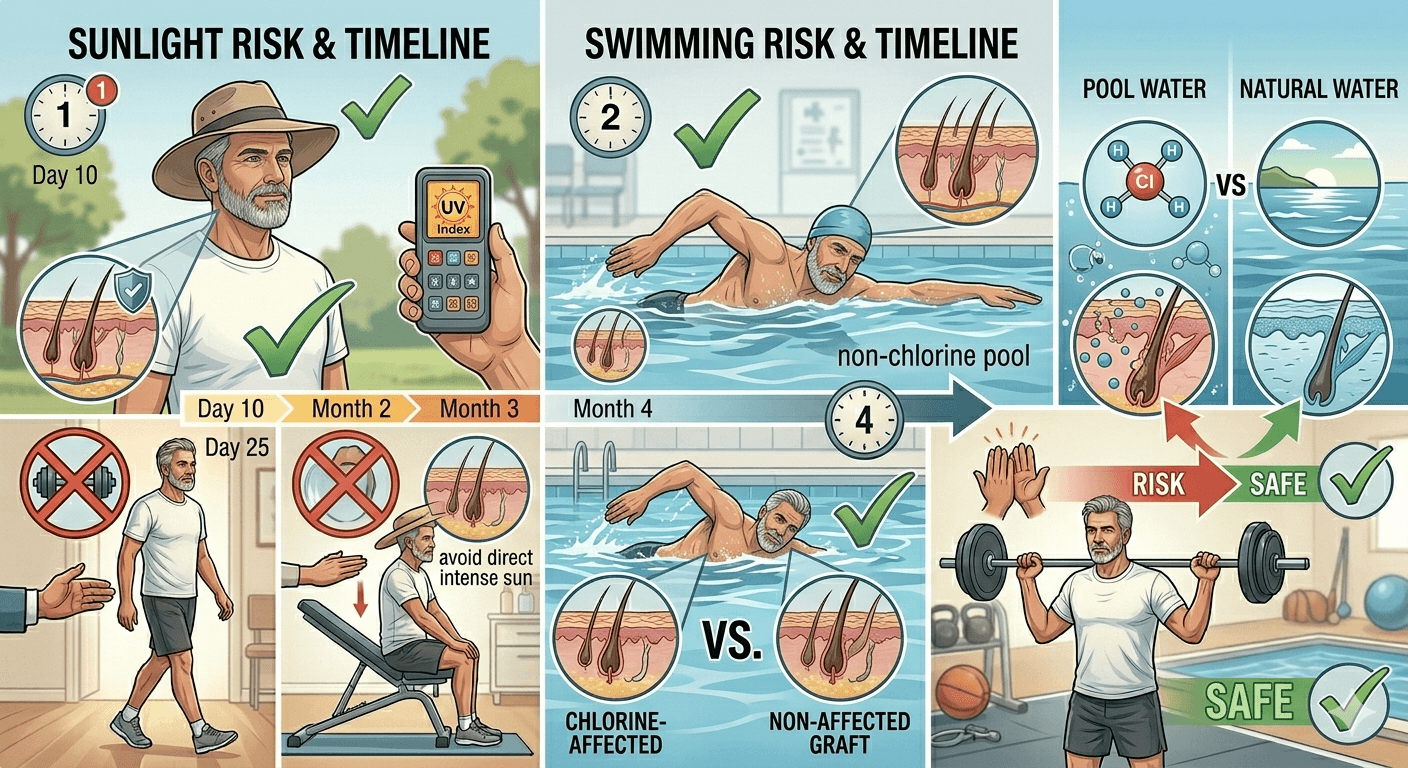
Part 1: The Danger of Sunlight (The Silent Graft Killer)
Many patients assume that once the scabs are gone by day 10, the skin is completely healed. In reality, your scalp is still in a state of deep, vulnerable cellular repair.
Why is UV light so dangerous?
- Destruction of New Cells: Your newly relocated follicles are working hard to build a permanent connection to your scalp’s blood supply. Strong ultraviolet (UV) radiation penetrates the skin and can damage the DNA of these fragile root cells, potentially killing the graft before it ever sprouts.
- Hyperpigmentation (Dark Staining): Healing skin contains a high concentration of active melanocytes (the cells that produce skin pigment). If exposed to direct sunlight, these cells overreact, leaving you with permanent, dark, patchy skin staining (post-inflammatory hyperpigmentation) across your new hairline.
- The Lack of Protection: Normal skin has melanin to defend itself from the sun. Your newly operated scalp temporarily loses this defensive barrier, making it burn significantly faster and deeper than regular skin.
The Sunlight Protection Timeline
| Phase | Safety Protocol |
| Days 1 to 14 | Absolute Sun Avoidance. Stay indoors during peak hours. If you must go outside, use a handheld umbrella to create physical shade. No sunscreens or hats are allowed yet, as they can compress or suffocate the fresh grafts. |
| Weeks 3 to 8 | Strictly Protected Exposure. You can step into the sun briefly, but you must wear a loose, breathable, wide-brimmed bucket hat (do not wear tight baseball caps that rub the hairline). |
| Month 2 & Beyond | The Sunscreen Era. Once your incisions are fully sealed and scabs are completely gone, you can apply a fragrance-free, mineral SPF 30+ or 50+ sunscreen to both the recipient and donor zones. |
The Golden Rule: Keep your scalp shaded from intense, direct sunbathing or tanning beds for at least 3 to 6 months post-op.
Part 2: The Danger of Swimming Pools (Chemical and Biological Risks)
Submerging your head in water is a major milestone that requires a healthy dose of discipline. Pools present a double-edged sword: chemical irritation and biological exposure.
Why are pools so dangerous early on?
- Chemical Burn from Chlorine: Chlorine is a powerful disinfectant. While it keeps bacteria at bay, it is incredibly harsh on open micro-wounds and healing skin. Early chlorine exposure can strip away the scalp’s natural protective oils, cause severe contact dermatitis (skin rash), and weaken the graft structures.
- Softeners of Anchors: In the first 10 to 14 days, your grafts are held in place by dried micro-clots and tissue adhesion. Submerging your head in water softens these crusts prematurely, causing the grafts to loosen and float right out of their micro-channels.
- Infection Breeding Grounds: Despite chlorine, public pools, hot tubs, and water parks harbor resilient pathogens. Submerging a healing scalp with thousands of open micro-punctures into public water significantly spikes your risk of a deep follicle infection.
The Swimming Safety Timeline
Strict No-Swim Zone
Days 1 to 14
Absolutely no swimming of any kind. Do not submerge your head in baths, hot tubs, or pools. Stick strictly to gentle, low-pressure cup rinses at home as instructed by your clinic.
Conditional Bathers
Weeks 3 to 4
You can wade in water or use a private pool, but you must keep your head strictly above the surface. Do not splash, dive, or allow water to touch your scalp. Do not wear tight swim caps yet, as the friction of pulling them on can tear out grafts.
Low-Risk Swimming
Month 1 (Day 30+)
You can officially begin swimming and submerging your head in standard chlorinated pools or the ocean, as the skin is fully closed and the grafts are anchored. However, limit your sessions to 30–45 minutes to avoid over-drying the sensitive tissue.
Olympic & High-Chlorine Pools
Month 3+
Heavily chlorinated public indoor pools, competitive Olympic pools, and commercial hot tubs contain exceptionally high chemical concentrations. Wait a full 3 months before diving into these environments to ensure absolute safety.
Pro-Tips for Your First Swim
Once your surgeon gives you the green light to jump back into the pool or ocean (typically around the 4-to-6-week mark), use these three steps to keep your scalp safe:
- Wear a Silicone Cap (Gently): Choose a smooth, loose-fitting silicone swim cap rather than a tight latex one. Apply it with extreme care to avoid rubbing your hairline.
- The 5-Minute Fresh Rinse: The moment you step out of the pool or ocean, immediately rinse your entire head with clean, lukewarm fresh tap water. This stops chlorine or salt crust from drying out and baking onto your healing scalp.
- Apply Sunscreen Post-Swim: If swimming outdoors, remember that water washes away sunscreen. Apply a water-resistant SPF 50+ to your scalp 20 minutes before getting in, and reapply immediately after rinsing off.
Final Thoughts: Protect Your Masterpiece
Think of your hair transplant like a fresh piece of fine art—you wouldn’t leave a pristine painting out in a rainstorm or bake it under a desert sun. Sacrificing a few weeks of sunbathing and swimming is a small price to pay for a lifetime of thick, flawless hair density.
At Dr. Terziler Clinic, we match our world-class surgical execution with meticulous postoperative monitoring. We track your healing milestones week-by-week, advising you exactly when your unique scalp is ready to handle the sun, the sea, or the pool safely. This elite tier of personalized medical care takes the guesswork out of your summer or vacation planning, ensuring your investment transitions into a masterpiece of dense, lifetime growth.
Frequently Asked Questions (FAQ)
What should I do if my scalp accidentally gets sunburned after a transplant?
If you get a sunburn on your healing scalp during the first 2 months, it can damage the developing blood vessels feeding your new grafts. Immediately cool the area with a damp, cold cloth (do not rub) and contact your clinic. Avoid applying heavy over-the-counter after-sun gels unless explicitly approved by your surgeon, as they can clog pores.
Is ocean water safer than chlorinated pool water?
Ocean water is natural, but it is not sterile. While salt water can help dry out scabs in late healing stages, open sea water contains various marine bacteria. You should treat the ocean with the exact same caution as a pool: do not submerge your head under the water until at least Day 30 post-surgery to completely eliminate the risk of deep infection.
When can I safely use a sauna, steam room, or hot tub?
You must wait a minimum of 1 month before entering saunas, steam rooms, or hot tubs. The intense combination of high heat, heavy humidity, and sweat causes extreme expansion of blood vessels in the scalp and softens skin tissues prematurely, creating a high-risk environment for swelling, graft damage, or bacterial infection.
Can I use regular commercial sunscreen on my newly transplanted area?
No, not initially. Regular cosmetic sunscreens often contain heavy chemical UV filters, alcohol, and synthetic perfumes that will severely irritate your sensitive post-op skin. For the first 3 months, strictly use a fragrance-free, mineral-based (Zinc Oxide or Titanium Dioxide) SPF 50 sunscreen designed for sensitive or baby skin.
Why is a bucket hat recommended over a standard baseball cap for sun protection?
A standard baseball cap has a rigid, stiff front panel that presses directly against the frontal hairline and temples—the exact zones where fresh grafts are usually placed. A bucket hat, however, is soft, loose, and sits higher on the skull, completely covering the head from the sun without creating any friction or pressure on your new hairline.