




After weeks of careful washing, sleeping at awkward angles, and watching your scalp heal, your hair will eventually start to grow back. However, because your native hair continues to grow at its normal pace while your newly transplanted grafts take time to anchor and sprout, you will soon find yourself dealing with an uneven, messy look.
Naturally, you will want to head to the barber for a trim. But before you let anyone near your head with a pair of scissors or clippers, you need to understand that your first post-op haircut is a medical milestone, not just a cosmetic routine.
Your newly relocated hair follicles and the healing skin around them remain highly sensitive for months. Trimming your hair too early or using the wrong tools can permanently damage the roots, disrupt blood supply, or cause painful skin irritations.
This guide breaks down the exact medical timeline and safety rules for booking your first haircut without risking your final density.
Why Is an Early Haircut So Risky?
During a hair transplant, thousands of micro-incisions are made across your scalp. Even after the scabs fall off, the deep tissue layers beneath the surface continue to heal for up to a year.
- The Threat of Clippers (Mechanical Trauma): Hair clippers work by pulling hair shafts into a moving metal blade close to the skin. If clippers are used too early on the recipient area, the vibration and pulling action can tear the fragile, maturing roots right out of their internal anchors.
- Bacterial Infection: Barber shops use tools that cut multiple clients’ hair daily. If your barber uses a blade or comb that hasn’t been completely sterilized on a scalp that still has open micro-wounds or pink, healing pores, it can cause a severe bacterial infection or folliculitis (inflamed hair follicles).
- Friction and Pressure: Standard hair cutting involves combing the hair firmly, pulling sections tight, and pressing blades against the skin. This friction can easily irritate a healing scalp.
The Definitive Post-Op Haircut Timeline
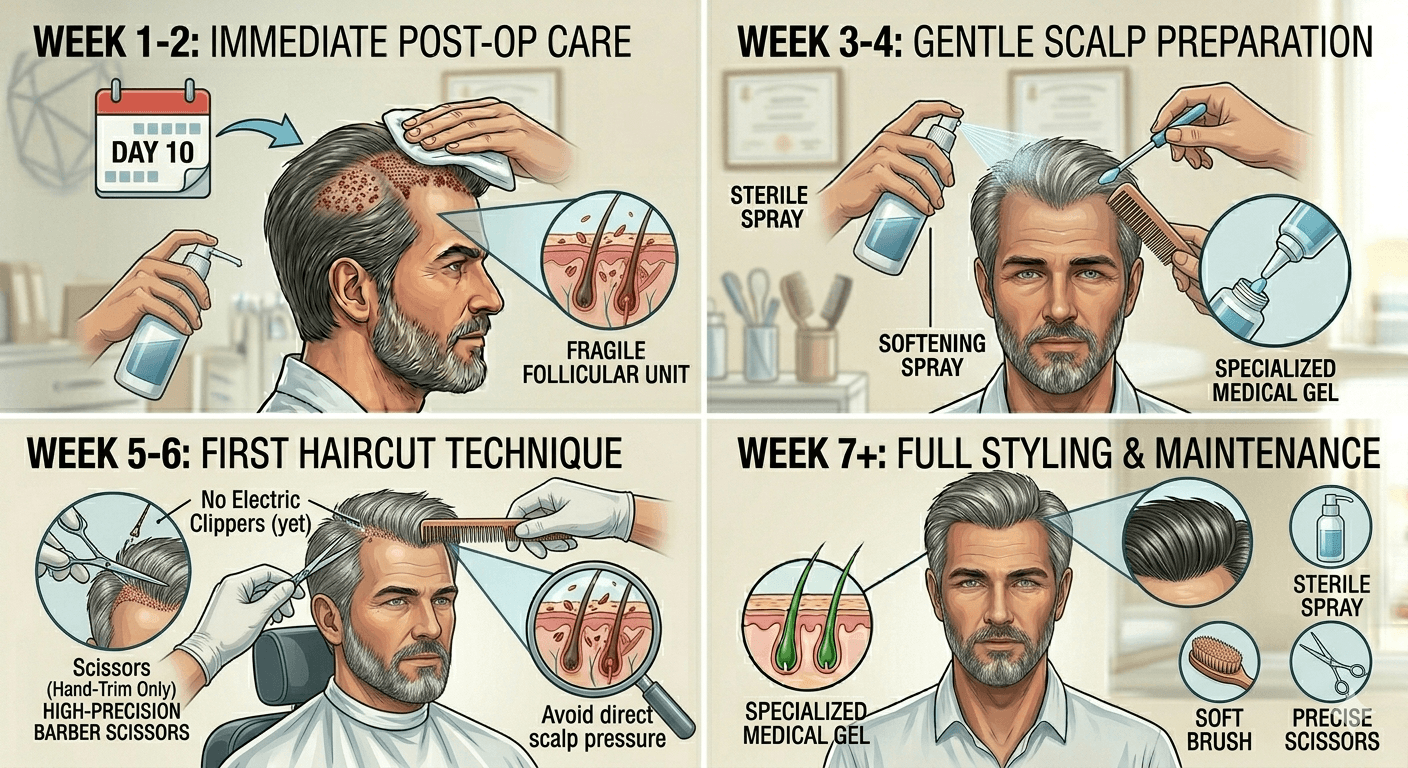
Because your donor zone (the back and sides) and your recipient zone (the top and hairline) heal at completely different speeds, they follow two distinct haircutting schedules:
| Timeline | Donor Area (Back & Sides) | Recipient Area (Top & Hairline) | Approved Tools |
| Days 1 to 30 | Strictly No Cuts. | Strictly No Cuts. | None |
| Month 1 (Day 30+) | Safe to Trim. | Strictly No Cuts. Leave the top completely untouched. | Scissors Only (Donor area only) |
| Month 3 | Safe to cut normally. | Safe to Trim. A light, superficial cleanup is allowed. | Scissors Only (Across the entire head) |
| Month 6 | Safe to cut normally. | Safe to cut normally. | Clippers & Razors are now safe everywhere. |
Step-by-Step Instructions for Your Barber
When you finally sit in the barber’s chair for your first trim (around Month 3), you must act as the manager of your own scalp. Do not assume your barber knows the rules of hair transplant aftercare. Give them these explicit clinical instructions:
- Strictly No Clippers on Top: Tell your barber that the top of your head and your hairline are scissors-only zones. No electric trimmers, clippers, or edgers should touch the transplanted area until at least month 6.
- Sanitize the Tools on the Spot: Polite but firmly ask your barber to sanitize their scissors and combs with a medical-grade disinfectant spray right in front of you before they touch your skin.
- Gentle Combing Only: Instruct them to use a wide-toothed comb and to be incredibly gentle. They must not pull, tug, or create high tension on the hair shafts when lifting sections to cut them.
- Keep the Blades Away from the Skin: The scissors should cut only the lengths of the hair. The metal blades should not scrape, nick, or press firmly against the pink skin of your scalp.
What About Hair Dye, Bleach, and Styling Products?
A haircut often comes with styling, washing, or coloring. However, chemical treatments have their own strict safety boundaries:
- Hair Styling Products (Wait 1 Month): You can return to using mild, water-soluble hair gels, waxes, or pomades after day 30, provided your scabs are completely gone. Ensure you wash the product out thoroughly before bed so it doesn’t clog your pores.
- Hair Dye and Bleach (Wait 6 Months): Commercial hair dyes and bleaching agents are loaded with harsh chemicals like ammonia and hydrogen peroxide. Applying these to a healing scalp can cause chemical burns, severe allergic reactions, and permanent damage to developing hair follicles. Wait until your grafts are fully mature before changing your hair color.
Final Thoughts: Protect Your Transition
The journey to full hair transplant results is a marathon, not a sprint. While navigating the uneven, patchy growth of the “ugly duckling” phase can be frustrating, rushing to get a sharp fade or a buzz cut too early is never worth the risk of losing permanent grafts. Staying disciplined for just a few months ensures your roots anchor flawlessly.
At Dr. Terziler Clinic, we monitor your hair restoration progress long after your surgery day. Our medical aftercare team provides clear, personalized milestones based on how fast your skin is healing, telling you exactly when it is safe to visit your barber. This elite, comprehensive tracking removes all risk from your styling choices, ensuring your hair transitions smoothly into a dense, natural, and permanent masterpiece.
Frequently Asked Questions (FAQ)
What happens if my barber accidentally uses clippers on my new hairline at month 2?
If clippers are used prematurely, immediately check your scalp for any signs of bleeding, extreme redness, or skin abrasions. If the skin remains dry and intact, you likely avoided serious damage, but the vibration may have stressed the roots. Stop the haircut immediately, switch to scissors, and contact your clinic to report the incident.
Why can the donor area be cut with scissors earlier than the recipient area?
The donor area at the back and sides of your head only experiences follicle extraction, meaning there are no delicate new roots sitting on the surface waiting to be dislodged. The extraction points close up completely within days. While the area may feel numb or tender, it can safely handle a gentle scissor trim by day 30 to help blend your hair lengths.
Can I cut or shave my own hair at home to save time?
It is highly recommended to avoid DIY haircuts during the first 6 months. Cutting your own hair makes it incredibly difficult to see the exact angles of your scalp, significantly increasing the risk of accidentally scratching your skin, applying too much pressure, or using the wrong tools on your delicate recipient area.
My scalp still looks slightly pink at month 3. Can I still get a scissor haircut?
Yes, a light scissor trim is perfectly safe at month 3 even if your scalp has a lingering pink hue, as long as the barber is gentle and avoids scraping the skin. The pinkness is just a sign of healthy, increased blood flow and active cellular healing, which will continue to fade over the coming months.
When can I get a clean shave or a “skin fade” with a razor blade?
You must wait a minimum of 6 months before getting a skin fade, a clean razor shave, or using a traditional straight razor anywhere near your transplanted zone. Razor blades scrape off the topmost protective layer of the skin, which can cause severe micro-tears, ingrown hairs, and dangerous infections on a healing scalp.