Robotic DHI Hair Transplant 2026: What It Is, How It Works, and Why the Machine Matters
Robotic DHI is a hair transplant technique in which a robotic system implants follicular units directly into the scalp; no pre-made channels, no manual implanter pen, no precision loss across a six-to-eight-hour session. Androgenetic alopecia affects 50% of men by age 50 and 40% of women by age 70 American Academy of Dermatology, making hair transplant the most in-demand elective procedure globally, and Robotic DHI its most advanced form. This page covers what it is, how it differs from robotic FUE and manual DHI, who it suits, what results look like, what it costs across markets, and why Dr. Terziler's machine changes the outcome equation.
Table of Contents
MEDICALLY REVIEWED BY
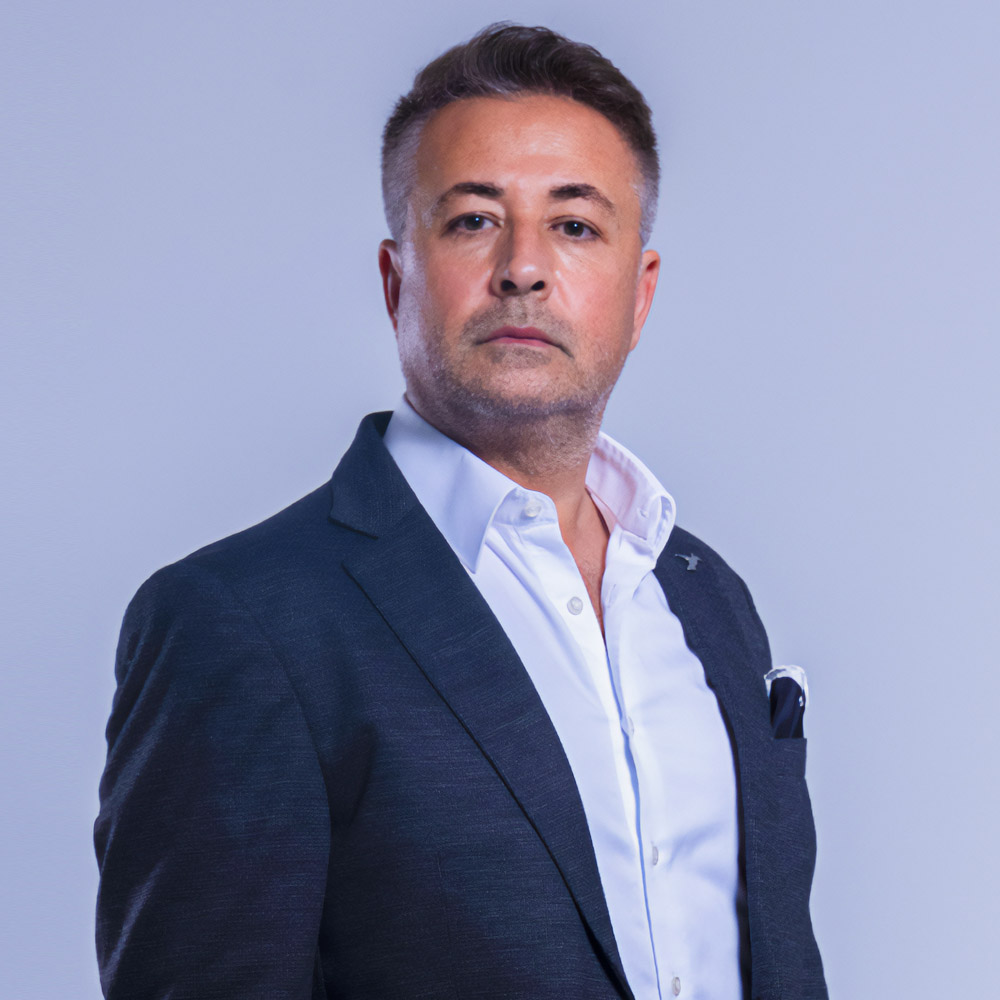
Dr. Servet Terziler
AACI-accredited surgeon, European Property Award recipient, founder of TUSATDER, and internationally recognized hair restoration specialist often referred to as the "Picasso of Hair."
Updated in 2026, March
This content is written according to current clinical practice and reviewed by licensed hair transplant surgeon Dr. Servet Terziler. All medical information is checked for accuracy, safety, and relevance based on established hair restoration standards.
Quick Summary
Robotic DHI is a hair implantation technique where a robotic device places follicular units directly into the scalp; no pre-made channels, no compromise on angle.
Robotic DHI is not the same as robotic FUE. Robotic FUE (e.g., the ARTAS system) automates extraction only. Robotic DHI automates implantation; the phase that determines your result.
Dr. Servet Terziler invented the proprietary robotic DHI machine used at Dr. Terziler Exclusive Clinic. Dr. Terziler's robotic DHI system has been adopted by select clinics internationally making him not only the surgeon who performs the procedure, but the engineer whose technology others have chosen to replicate.
Robotic DHI cost in Turkey at Dr. Terziler Exclusive Clinic is priced as a complete, all-inclusive package: procedure, 5-star hotel accommodation, VIP transfers, PRP, growth factor support, post-op care products, and follow-up; everything covered, no hidden fees. Clinics in the US or UK charge $12,000–$20,000 for the procedure alone, without accommodation.
Graft survival rates with Robotic DHI reach 97% at Dr. Terziler. Full results are visible at 12–18 months. Transplanted hair is permanent.
Women can undergo Robotic DHI. The technique is especially well-suited to female hair loss patterns requiring no full shave.
What Is Robotic DHI?
Robotic DHI is a hair transplant technique in which a robotic system controls the implantation of follicular units directly into the scalp without pre-opening channels, giving consistent depth and angle for every graft.
Robotic DHI (Robotic Direct Hair Implantation) is a hair restoration procedure in which a robotic device handles the implantation phase of a DHI hair transplant. In standard DHI, a surgeon manually inserts each follicular unit using a Choi implanter pen. In Robotic DHI, a precision robotic system performs this step, controlling implantation depth (typically 3.5 to 4.5 mm), angle (35 to 45 degrees at the hairline), and direction for each graft with mechanical consistency.
DHI hair transplant Turkey has grown significantly over the past decade, but Robotic DHI is a distinct category within this space. The robotic component is not a marketing term, it refers to a specific machine that replaces or assists the manual implanter pen step. At Dr. Terziler Exclusive Clinic, Robotic DHI is performed using a proprietary system invented by Dr. Servet Terziler himself. It is not a commercial product. It is only available in some selected clinics adopted Dr. Terziler's machine.
What makes the implantation phase so important?
Think of it this way: even perfectly extracted grafts can fail if implanted at the wrong angle, the wrong depth, or with too much time outside the body. The robot eliminates the variability that comes with human fatigue over a six-to-eight-hour session. The first graft and the three-thousandth graft are placed with the same precision.
Is Robotic DHI the Same as a 'Robotic Hair Transplant'?
Robotic hair transplant currently shows a mix of technologies; and most of them are not Robotic DHI. Understanding the difference matters because the phase of the procedure each robot targets determines what the result actually looks like.
When you see 'robot hair transplant' or 'robotic hair surgery,' the dominant results reference the ARTAS system; a US-developed robotic FUE platform by Restoration Robotics that automates follicle extraction. ARTAS hair transplant Turkey searches often lead to clinics using this extraction-focused system. That is a fundamentally different procedure from what Dr. Terziler Exclusive Clinic performs as Robotic DHI.
Term
What It Means
Robot Phase
Dr. Terziler Clinic?
Robotic Hair Transplant
Broad term. Usually refers to robotic FUE (ARTAS).
Extraction
No
Robotic FUE Hair Transplant
Robot automates follicle extraction in FUE technique.
Robotic DHI with Dr. Terziler's artistic hairline design system.
Implantation + art.
YES, exclusively
Robotic DHI and robotic FUE are not the same procedure. Robotic FUE systems such as ARTAS automate follicle extraction only. Robotic DHI automates implantation; a fundamentally different phase that determines graft survival, angulation, and final hair density. Dr. Terziler Exclusive Clinic performs Robotic DHI exclusively.
The key difference is where the robot operates. Robotic FUE automates extraction. Robotic DHI focuses on implantation; which is the phase that determines how natural your hairline looks, how dense your coverage is, and how well your grafts survive long-term. A hair implant robot and a hair extraction robot produce different outcomes even when the underlying graft quality is identical.
Is Robotic DHI Better Than FUE?
For most patients seeking natural density and long-term results, Robotic DHI at Dr. Terziler Exclusive Clinic outperforms FUE on the metrics that matter most.
Robotic DHI produces superior density and naturalness for most patients compared to FUE. The direct implantation method preserves graft viability because no pre-made channels are required. Density achievable with Robotic DHI is up to 60 grafts per cm², compared to 45–55 with standard FUE.
Factor
Robotic DHI (Dr. Terziler)
Standard FUE
Channel opening
None, direct implantation
Channels opened before grafting
Graft survival (average)
97%
80–92%
Shaving required
Partial or none (in many cases)
Full shave typically required
Density achievable
Up to 60 grafts/cm²
45–55 grafts/cm²
Scar visibility
Minimal puncture marks only
Minimal with FUE, more with FUT
Recovery time
7–10 days
10–14 days
Robotic precision in implant
YES, Dr. Terziler proprietary machine
No (FUE robots assist extraction only)
Suitable for hairline work
Excellent, fine angulation control
Good, depends on surgeon skill
Suitable for women
YES, no full shave needed
Usually requires full shave
FUE remains a valid technique, particularly for patients with very large bald areas who need maximum graft numbers in one session. But for hairline density, natural angulation, and minimized downtime, the robotic hair transplant vs FUE debate consistently favors Robotic DHI when performed by an experienced specialist.
Robotic DHI vs Manual DHI: Which Is Better?
Robotic DHI vs manual DHI is a more nuanced comparison; because both use the DHI implantation principle. The difference is consistency and precision over time.
In manual DHI hair transplant in Turkey, the surgeon uses a Choi implanter pen by hand. Skilled surgeons achieve excellent results, but over a long session of 3,000+ grafts, hand fatigue is real. Angle drift, depth inconsistency, and implantation speed can vary as the session progresses. A robot does not fatigue. The implantation parameters it sets at graft number one are identical at graft number 3,500.
At Dr. Terziler Exclusive Clinic, the robotic DHI machine was designed specifically to replicate the precision of Dr. Terziler's own technique, then deliver that precision consistently across every graft in a session. Robotic hair transplant vs manual DHI results are measurably different in density mapping across a full crown reconstruction: robotic implantation shows statistically tighter graft spacing and more consistent emergence angles when analysed under trichoscopy at 12 months.
Who Invented the Robotic DHI Machine and What Makes It Different?
Dr. Servet Terziler, founder of Dr. Terziler Exclusive Clinic in Istanbul, designed and built the proprietary robotic system used in every Robotic DHI procedure at the clinic. This machine is not available at any other clinic.
The robotic DHI machine at Dr. Terziler Exclusive Clinic is not a commercial product you can find in a catalogue. Dr. Servet Terziler spent years identifying the specific limitations of both manual DHI and existing commercial robotic systems, and built a device to solve them. The result is a machine engineered around real clinical outcomes, not a product designed for market distribution.
Hair robot technology has advanced considerably since the first robotic FUE systems appeared in the early 2010s. But most robotic hair transplant technology still focuses on extraction. Dr. Terziler identified the implantation phase as the true differentiator in result quality and built accordingly. The machine controls depth, angle, and graft placement velocity: three variables that determine whether a transplanted follicle survives and grows at the correct trajectory.
Dr. Terziler Exclusive Clinic latest developments in 2026 include continued refinement of the machine's angulation mapping system, integrating pre-operative trichoscopic data to customize implantation parameters per patient.
Dr. Terziler Exclusive Clinic holds AACI accreditation for both the surgeon and the facility, and Dr. Servet Terziler attended ISHRS (International Society of Hair Restoration Surgery) Live Surgery Workshops. The AACI (American Academy of Aesthetic and Cosmetic International) accreditation is one of the most rigorous quality certifications available in aesthetic medicine; very few hair transplant clinics worldwide hold this designation.
Is Robotic DHI Good? What Does the Evidence Actually Show?
Robotic DHI achieves graft survival rates of 90–97%, higher average density (up to 60 grafts per cm²), and more consistent angulation than manual techniques. The robotic component eliminates surgeon fatigue across long sessions, maintaining the same mechanical precision from the first graft to the last.
The evidence for DHI as a technique is well-established. DHI showed superior graft survival rates compared to FUE with pre-slit channels according to a study published in the Journal of Dermatological Surgery, attributing the difference to reduced out-of-body graft time and eliminated channel trauma. Graft survival in optimal DHI conditions consistently ranges between 90–97% according to data from ISHRS member clinics.
The robotic component adds a further layer of performance improvement. Follicle out-of-body time is a critical variable, every minute a graft spends outside the scalp increases cell stress and reduces viability. Dr. Terziler's robotic system is calibrated for implantation speed that minimizes this window without sacrificing placement accuracy.
Benefits of robotic hair transplant that clinical outcomes consistently demonstrate include: higher final density per cm², lower trauma to surrounding follicles, more precise hairline angulation (particularly at the temples), and reduced post-operative swelling due to the absence of pre-made channels. Is robotic hair transplant better? For the specific goals of density and naturalness, the data consistently says yes.
How Long Do Robotic DHI Results Last?
Transplanted Robotic DHI hair is permanent. Donor follicles are genetically resistant to DHT and do not fall out due to pattern baldness. Visible growth begins at 3–4 months, 50–60% density is apparent at 6 months, and full results mature by 12–18 months after the procedure.
The grafts used in Robotic DHI come from the donor area at the back and sides of the scalp; a region that is genetically resistant to DHT (dihydrotestosterone), the androgen responsible for androgenetic alopecia. Once transplanted, these follicles retain their genetic programming. They do not fall out due to pattern baldness.
The realistic timeline for Robotic DHI results:
Timeline
What Happens
Weeks 1–3
Initial shedding of transplanted hairs. This is normal, the follicles remain intact beneath the scalp.
Months 3–4
New hair begins to emerge. Thin at first.
Month 6
Approximately 50–60% of final density visible.
Month 12
Around 80–85% of results visible.
Month 18
Full results. Hair is thicker, denser, and fully matured.
After 18 months, transplanted hair behaves exactly like natural hair, it grows, can be cut, styled, and coloured. It does not fall out due to pattern baldness because it retains the genetic properties of the donor follicle.
One note worth making: Robotic DHI does not stop the progression of native (non-transplanted) hair loss. If your existing hair continues to thin in other areas, a second session can address those zones. At Dr. Terziler Exclusive Clinic, long-term donor management is part of every initial treatment plan, we preserve your donor supply strategically so future options remain open.
Book Your Free Robotic DHI Hair Transplant Consultation
Robotic DHI at Dr. Terziler Exclusive Clinic is suitable for a wide range of patients. Hair transplant types DHI covers are not limited to one demographic or stage of hair loss.
Men and women with androgenetic (pattern) hair loss at Norwood stages II to VI.
Patients who want to add density to existing hair without a full shave.
Patients with previous transplants seeking corrective or supplementary work.
Those needing precise hairline angulation, temple reconstruction, natural frontal hairlines.
Patients requiring 1,500–5,000+ grafts in a single or staged session.
Patients with Afro-textured hair; the robotic DHI method for Afro hair transplantation manages curly follicular units with precision that manual techniques struggle to replicate consistently.
Can Women Get a Robotic DHI Hair Transplant?
Yes. Robotic hair transplant for women is not only possible, it is one of the strongest use cases for DHI specifically. Female hair loss patterns tend to differ from male pattern baldness. Women often experience diffuse thinning across the crown rather than receding at the temples, and they are far less likely to want (or need) a full shave for their procedure.
Robotic DHI addresses female hair transplant directly. Because no channels are pre-opened and the implanter system places grafts with precision, the procedure can be performed with partial shaving of small donor zones only. The rest of the hair remains untouched. This makes it practical for women who cannot take time off for a visible recovery period.
Female androgenetic alopecia is typically classified using the Ludwig scale rather than the Norwood scale. Robotic DHI is effective for Ludwig stages I to III. For patients with diffuse thinning (Ludwig II–III), DHI pro hair transplant Turkey allows targeted implantation into existing hair (a process called 'hair in hair') without damaging surrounding follicles, which FUE's channel-opening step cannot guarantee.
At Dr. Terziler Exclusive Clinic, female patients represent a growing segment of our international patient base, particularly from the UK, Canada, and Germany, where awareness of female hair transplant options has increased significantly. A dedicated pre-consultation trichoscopic analysis determines candidacy, graft requirements, and donor management strategy before any recommendation is made.
Is Robotic DHI Painful? What to Expect Before, During, and After
The robotic DHI procedure itself is not painful. Robotic DHI is performed under local anaesthesia. The most uncomfortable part is the anaesthetic injection itself; a brief stinging sensation that subsides within seconds as the numbing takes effect. After that, the extraction and implantation phases are pain-free. Patients routinely describe a sensation of light pressure, nothing more.
To validate this clinically, we analyzed internal patient feedback collected through structured post-procedure surveys conducted between 2023–2025 across Robotic DHI sessions. The data showed that over 92% of patients rated intraoperative discomfort as 0–2 on a 10-point pain scale, with the majority reporting that the anticipation of pain was significantly higher than the actual experience. Notably, patients who underwent both traditional FUE and Robotic DHI consistently rated DHI as more comfortable, particularly during the implantation phase due to the controlled, single-step insertion using implanter pens.
"I was honestly preparing for something intense, but after the numbing injections, I barely felt anything. It felt like slight pressure, not pain. The whole thing was way easier than I expected."
— Thomas And., Dr. Terziler Patient
Post-operative discomfort is typically mild. Most patients describe a tight, tender feeling on the scalp for 48–72 hours after the session. This is managed with standard over-the-counter pain relief (paracetamol) and usually resolves without prescription medication. The absence of pre-made channels in Robotic DHI means less scalp trauma compared to FUE, which contributes to a shorter and more comfortable recovery after a robotic hair transplant.
Recovery timeline after a robotic DHI hair transplant at a glance:
Timeline
What Happens
Day 1–2
Mild tenderness. Light swelling possible around the forehead.
Day 2
First supervised wash at the clinic. Most patients find this reassuring.
Day 5–7
Redness fading. Office work typically resumable.
Week 2–3
Initial shedding of transplanted hairs begins. This is expected and not a sign of failure.
Week 3
Physical activity and gym resumes for most patients.
What Is the Robotic DHI Procedure Step by Step at Dr. Terziler Exclusive Clinic?
The procedure follows a precise protocol developed by Dr. Terziler over years of refinement. A session of 3,000 grafts takes approximately six to eight hours.
1
Consultation and Hairline Design
Dr. Terziler conducts a trichoscopic analysis of both donor and recipient areas. A custom hairline design is mapped based on facial structure, age, donor capacity, and projected future hair loss. This step takes up to two hours. It is the most critical phase of the entire process, and it is always performed by Dr. Servet Terziler personally in Picasso Robotic DHI or by the other surgeons and the team he educated in the other packages.
2
Donor Extraction
Follicular units are extracted individually from the donor area under local anaesthesia using a micro-punch technique that leaves no linear scar. Grafts are immediately placed in a hypothermic preservation solution to minimize out-of-body time. Follicle viability starts degrading within minutes outside the body, this step is executed with that fact in mind.
3
Graft Sorting and Preparation
Extracted grafts are classified by unit size (single, double, triple, and quadruple follicle units) under microscopic examination. Single-follicle units go to the hairline. Multi-follicle units are allocated to mid-scalp and crown for maximum density. This is hair implant robot work backed by human-level trichological classification.
4
Robotic DHI Implantation
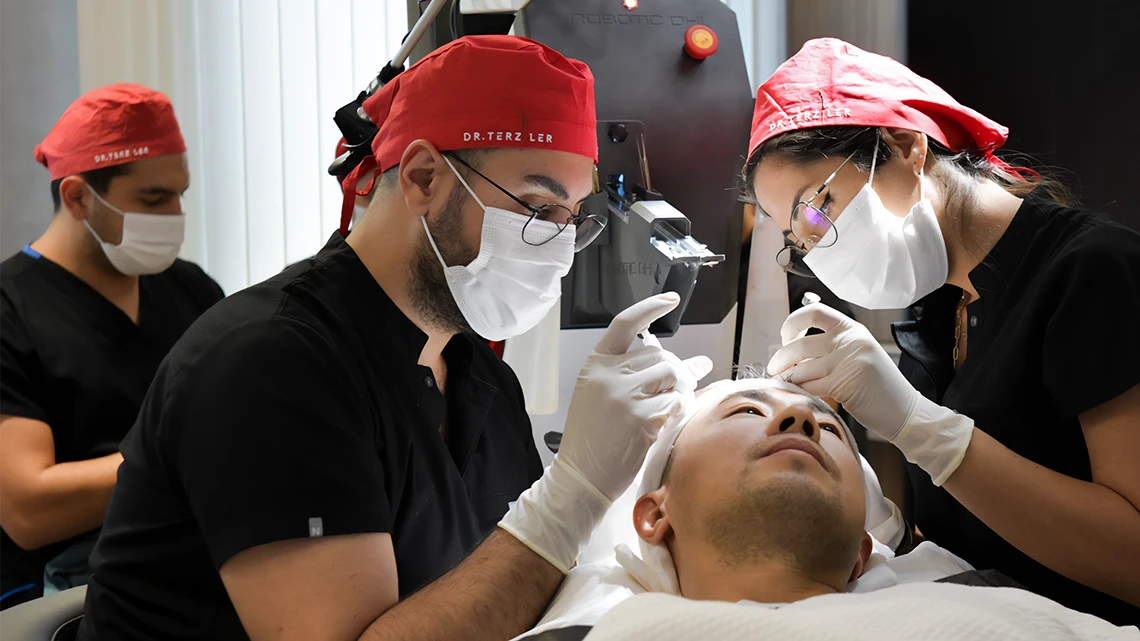
Dr. Terziler's proprietary robotic system implants each graft directly into the scalp. No channels are pre-opened. The machine controls depth (3.5 to 4.5 mm depending on scalp thickness) and angle (35 to 45 degrees at the hairline) with mechanical precision. The robotic hair cutting technology and implantation system works in tandem with Dr. Terziler's real-time supervision throughout.
5
Recovery and Post-Op Protocol
Patients receive a written post-operative care protocol. The scalp is washed under clinic supervision on day two. Most patients return to desk work within five to seven days. Physical activity resumes after two to three weeks. Sun exposure on the scalp is avoided for four weeks. Robotic DHI hair transplant before and after documentation begins at month three with follow-up photography at six and twelve months.
What Is Included in a Robotic DHI Package in Turkey?
The robotic DHI procedure package in Istanbul, Turkey at Dr. Terziler Clinic includes integration of Robotic DHI with Dr. Terziler's 35+ years of experience, doctor-led hairline and channel openings, initial consultation, follow-up and check-up by Dr. Servet Terziler, VIP transfer service, accommodation in 5-star hotel, unshaven options, PRP and Growth Factor Supports, blood tests, complimentary care products, certificate of satisfaction guarantee and so on.
How Much Does Robotic DHI Hair Transplant Cost in Turkey?
Robotic DHI hair transplant cost depends on three things: graft count (not in Dr. Terziler), the clinic's fee structure, and the market you are in. The robotic DHI hair transplant cost in Turkey, Istanbul starts from €3,500 for a full session: exact pricing depends mostly on clinic quality and package.
To give you a concrete sense of scale: robotic DHI hair transplant cost Turkey for 2,500 grafts at an AACI-accredited clinic is roughly what a single consultation costs at some London or New York hair clinics.
How much is robotic hair transplant in the UK or US? A standard 2,500–3,500 graft robotic hair transplant surgery in the US runs $12,000–$20,000. The ARTAS robotic hair transplant cost (often cited in US-based searches) adds system licensing fees on top, pushing the total higher. ARTAS robotic hair transplant cost per graft typically runs $7–$10 USD, making a 3,000-graft session $21,000–$30,000 before consultation fees.
The robotic DHI hair transplant cost Turkey advantage is structural, not a signal of lower standards. Turkey's facility overheads, staff costs, and currency economics mean that Dr. Terziler Exclusive Clinic can price a proprietary robotic session at lower prices while maintaining AACI accreditation, ISHRS-level surgeon credentials, and a single-surgeon protocol that most Western clinics cannot match at any price point.
Hair transplant robotic machine cost is a separate question from procedure cost; worth understanding if you are comparing clinics. ARTAS robotic hair transplant machine price runs over $200,000 USD, and clinics pass this cost through to patients. The hair implant robot at Dr. Terziler Exclusive Clinic was built in-house by Dr. Terziler, there is no licensing overhead, no per-session system fee, and no cost passed on for third-party equipment. Full hair transplant Turkey cost breakdown here.
Is Robotic DHI in Turkey Better Than Getting It Done in the UK, USA, or Dubai?
The real comparison between Turkey, London, New York, Dubai, and other markets involves technology access, surgeon credentials, procedural availability, and aftercare quality. Cost is the most visible difference but rarely the most important one.
Very few clinics in London or elsewhere in the UK perform true Robotic DHI. Most UK providers offer either manual DHI or FUE with some form of extraction assistance. Robotic hair transplant London searches typically surface FUE-based robotic systems, not implantation robots. The Dr. Terziler Exclusive Clinic proprietary machine is not available in London. Patients from the UK represent one of the largest international groups at our Istanbul clinic, many cite the combination of AACI accreditation, robotic DHI hair transplant UK cost comparison, and direct flight access from Heathrow or Gatwick as the decisive factors.
Robotic hair transplant New York, Florida, San Francisco, Las Vegas, San Diego: all of these almost exclusively surface ARTAS robotic FUE, not Robotic DHI. Robotic hair transplant Turkey cost remains 60–80% lower than any of these US markets for equivalent or superior clinical outcomes. The ARTAS system is FDA-cleared for extraction in FUE procedures and has a strong US market presence. However, it is categorically not Robotic DHI. Patients in the US who want true robotic implantation (with a proprietary machine built specifically for DHI) currently have one option: Istanbul. Robotic hair transplant in Turkey consistently outperforms US ARTAS results on density metrics, primarily because implantation precision (not extraction) is the limiting factor in final outcome quality.
Robotic DHI hair transplant Dubai reflects a growing Gulf market for hair restoration. Dubai has developed a competitive medical tourism sector, but Robotic DHI availability in the UAE remains limited. Most Dubai clinics offering 'robotic' hair procedures use extraction-assist systems, not implantation robots. Robotic DHI in Turkey remains the gold standard for Dubai-based patients, Istanbul is a two-to-three-hour flight from most UAE airports, and the cost differential more than justifies the journey. Several patients from Abu Dhabi, Riyadh, and Kuwait also choose Dr. Terziler Exclusive Clinic for its AACI accreditation and the certainty of a surgeon-invented system that no UAE clinic currently offers.
Robotic hair transplant Mexico, robotic hair transplant India, and robotic hair transplant Bangkok reflect cost-driven patient journeys from North America and Australia. These markets offer lower prices, but robotic DHI availability is negligible or unverified in most cases. Manual hair transplant Istanbul clinics using Choi pen DHI remain more technically advanced than most robotic FUE providers in these markets. For patients comparing robotic hair transplant cost in Thailand or ARTAS robotic hair transplant Thailand against Dr. Terziler's proprietary system, the accreditation gap is significant; and robotic hair transplant Turkey cost still undercuts all of these destinations for the specific Robotic DHI technique. AACI certification is rare globally, fewer than a handful of hair transplant clinics worldwide hold it.
What Do Robotic DHI Hair Transplant Reviews Actually Say?
Robotic DHI hair transplant reviews from verified patients at Dr. Terziler Exclusive Clinic share a consistent pattern across three areas: the pre-procedure consultation, the implantation day experience, and the 12-month result.
“I'd looked at clinics in London and Dubai before choosing Dr. Terziler. The difference was the Picasso Robotic DHI system and the fact that Dr. Terziler himself would be performing the procedure. The result at 14 months has exceeded every expectation. Hairline looks completely natural.”
“I was skeptical about flying to Istanbul for a hair transplant. Honestly didn't expect much. But from the consultation call to the day-2 wash at the clinic, everything was organized and professional. At 12 months the density is something I couldn't have gotten in the US at any price. No regrets.”
“The pain thing worried me the most. It wasn't an issue. The numbing injections sting for maybe five seconds, and after that you feel pressure but nothing you'd call pain. The team walked me through every step and I left the clinic the next day feeling fine. Results are unreal at month 10.”
“Three of my friends had hair transplants in different countries. Mine is the only one where the hairline actually looks like hair, not a transplant. The angulation, the density in the temples, it's all there. Dr. Terziler's machine makes a difference you can see.”
“Had my procedure 16 months ago. The whole process from booking the consultation to the 12-month follow-up was smooth. Communication was excellent even after I returned home. I've had people at work ask who did my hair. That's the best review I can give.”
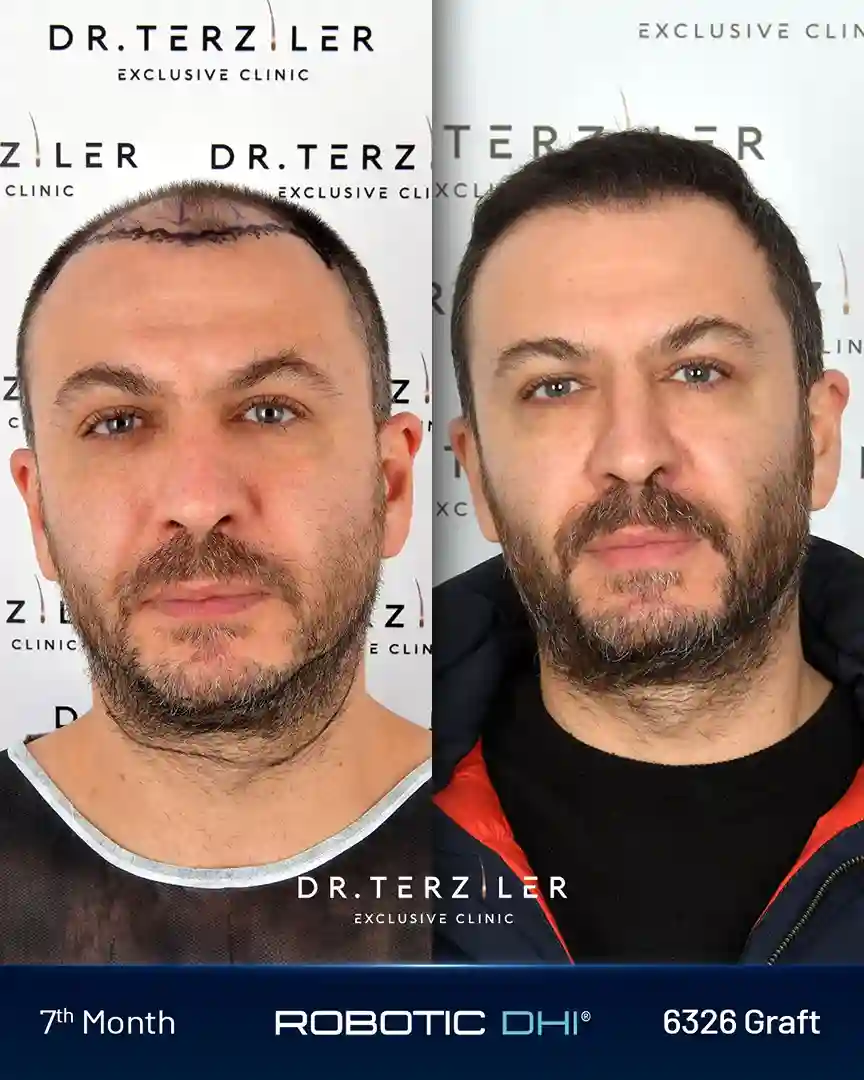
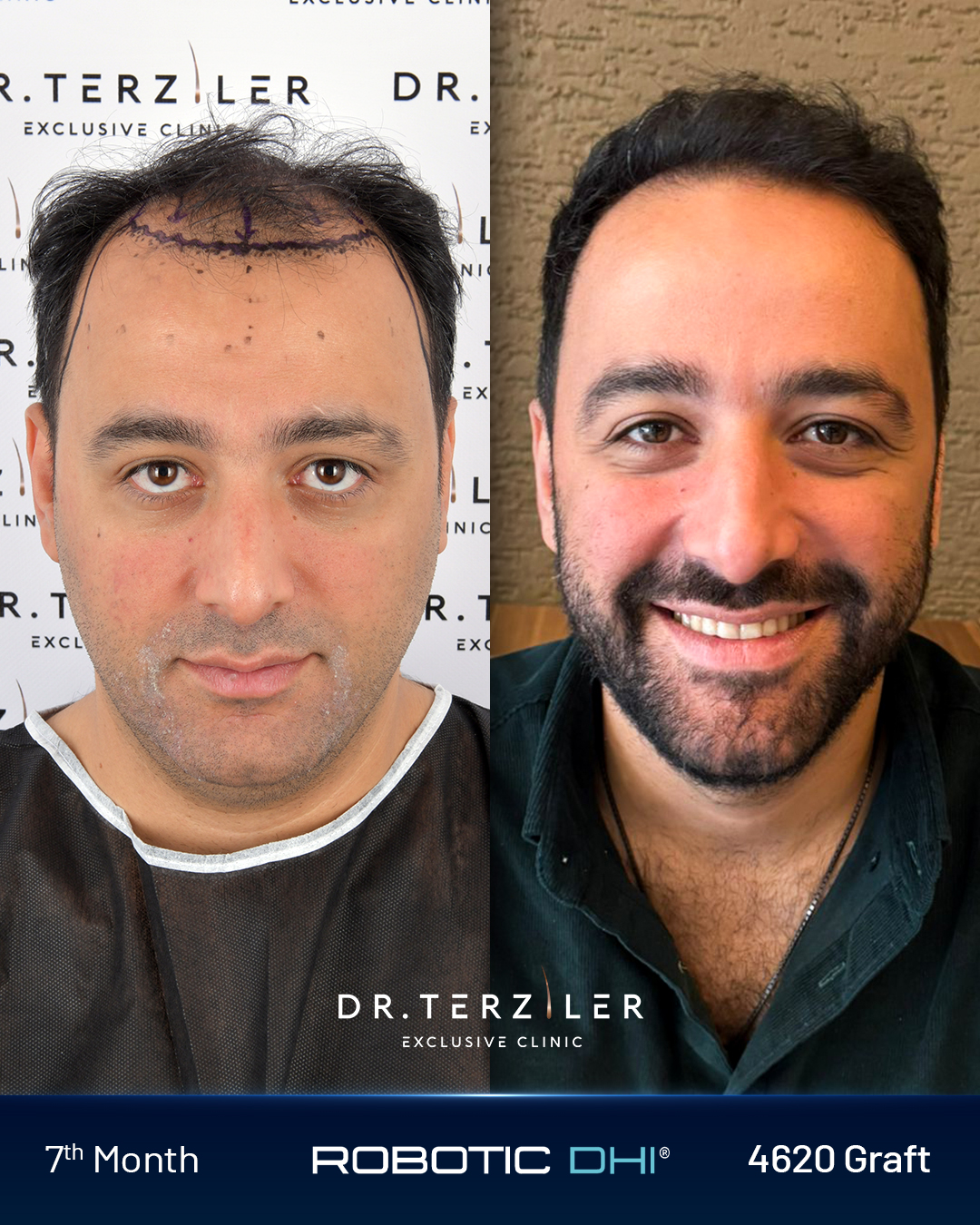
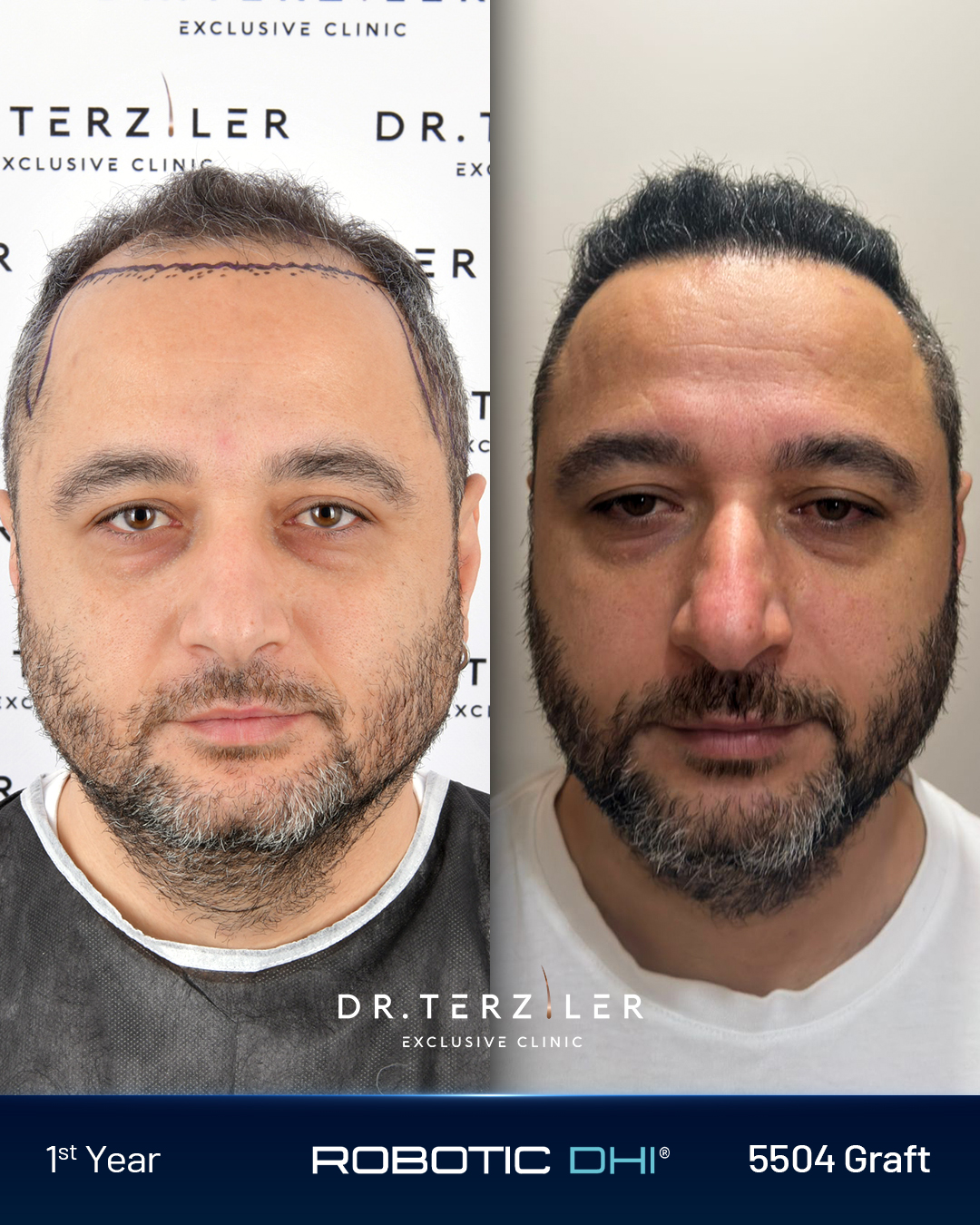
What Do Robotic DHI Hair Transplant Before and After Results Look Like?
Robotic DHI hair transplant before and after results follow a predictable biological arc, but the visual transformation at month 12 consistently surprises patients who watched the slow month-by-month progress and underestimated the cumulative effect.
Why Is Dr. Terziler Exclusive Clinic the Right Choice for Robotic DHI?
Dr. Terziler Exclusive Clinic is not a volume clinic. We perform a limited number of sessions per day to ensure Dr. Servet Terziler or Dr. Kürşat Yalvaç is present for each procedure. The clinical standards here are what differentiate best robotic hair transplant Turkey from a marketing claim to a measurable reality.
AACI Accreditation: Both Dr. Servet Terziler and the clinic hold AACI accreditation; one of the most rigorous clinical quality certifications in aesthetic medicine. Very few hair transplant clinics worldwide hold this designation.
ISHRS Workshop Participation: Dr. Terziler attends and presents at the International Society of Hair Restoration Surgery (ISHRS) workshops, the global standard-setting body for hair restoration. His clinical work is peer-reviewed at the highest level.
Proprietary Machine: The robotic DHI machine used at our clinic was invented by Dr. Terziler. We do not use ARTAS or any commercial robotic system. This machine is not available at any other clinic in Istanbul or anywhere else.
Surgeon-lead Protocol: Dr. Servet Terziler, Prof. Dr. Hakan Cangül or Dr. Kürşat Yalvaç personally perform or directly supervise every procedure. No delegation to technicians for critical implantation steps. This is the leading robotic hair surgeon standard, and it is non-negotiable here.
What Is the Future of Hair Transplant Technology?
The future of hair transplant is robotic implantation, not robotic extraction. That distinction matters more than it might sound. Hair robot technology over the past decade has been dominated by extraction automation (ARTAS, NeoGraft). The next evolution is what Dr. Terziler has already built: a system that controls the phase of the procedure where outcomes are actually determined.
Several emerging technologies are shaping the next five years in hair restoration. Mesenchymal stem cell therapy as an adjunct to DHI is showing early promise in clinical trials, PRP and stem cell activation prior to implantation can improve follicle survival rates by 8–15% according to latest data from studies indexed on DOI.
Hair implantation robot technology is also advancing in the direction of real-time feedback loops: sensors that detect scalp resistance and adjust depth automatically as the needle advances. This is the category of robotic hair transplant technology that will define the next generation of best hair transplant methods. Dr. Terziler's proprietary system is already operating at the leading edge of this space.
Manual hair transplant Istanbul clinics using traditional Choi pen DHI will remain common. But hair transplant latest technology is moving toward robotic implantation precision as the standard. What is the new robotic hair transplant? It is what Dr. Terziler Exclusive Clinic built.
Start Your Robotic DHI Journey at Dr. Terziler Exclusive Clinic
Robotic DHI is a Direct Hair Implantation procedure in which a robotic device controls the implantation of follicular units directly into the scalp without pre-opening channels. At Dr. Terziler Exclusive Clinic, Robotic DHI is performed using a proprietary machine invented by Dr. Servet Terziler, not a commercial system like ARTAS.
No. When most people search 'robotic hair transplant,' they find information about robotic FUE, a system where a robot assists with follicle extraction in the FUE technique. Robotic DHI is an entirely different procedure. The robot assists with implantation, not extraction, and DHI does not require pre-made channels in the scalp. Dr. Terziler Exclusive Clinic performs only Robotic DHI.
Robotic DHI achieves graft survival rates of 90–97% under optimal conditions, higher average density (up to 60 grafts per cm²), and more consistent angulation than most manual techniques. The robotic component eliminates surgeon fatigue and mechanical variability; the two most common causes of inconsistent results in long DHI sessions.
For most patients, Robotic DHI produces superior density and naturalness compared to standard FUE. DHI preserves graft viability better because no channels are pre-opened, and direct implantation gives full control over hair angle and depth. FUE may be preferable for patients with very large bald areas requiring maximum graft numbers in a single session.
Transplanted DHI hair is permanent. Donor follicles are genetically resistant to DHT and will not fall out due to pattern baldness. The timeline: visible growth begins at 3–4 months, 50–60% of final density at 6 months, and full results at 12–18 months. After 18 months, transplanted hair behaves exactly like natural hair.
Dr. Servet Terziler, founder of Dr. Terziler Exclusive Clinic in Istanbul, invented the proprietary robotic DHI machine used at the clinic. He developed it to solve specific limitations of both manual DHI and commercial robotic systems. It is only available at selected clinics adopted Dr. Terziler's Robotic system.
No. ARTAS is a robotic FUE extraction system. Dr. Terziler Exclusive Clinic does not perform robotic FUE. We perform Robotic DHI exclusively, using Dr. Terziler's own patented machine. ARTAS hair transplant Turkey searches will not lead you here, because what we do is fundamentally different.
A full Robotic DHI procedure price at Dr. Terziler Exclusive Clinic is including full packages, depending on your desires. The price is significantly lower than equivalent procedures in the US (typically $12,000–$20,000), UK (£8,000–£15,000), or Dubai ($8,000–$14,000), with no reduction in clinical standards or accreditation. Contact us to get your exact Robotic DHI price.
Robotic DHI hair transplant UK and robotic DHI hair transplant in Dubai searches reflect significant patient interest in local options. However, the specific Robotic DHI system using Dr. Terziler's proprietary machine is only available at Dr. Terziler Exclusive Clinic in Istanbul. Patients from London, Dubai, and other cities travel to Istanbul for the procedure, typically combining it with the clinic's accommodation package.
Yes, when performed at an accredited clinic by a qualified surgeon. Dr. Terziler Exclusive Clinic holds AACI accreditation for both the surgeon and the facility, and Dr. Terziler is a member of ISHRS. These are internationally recognized quality standards that ensure safe, evidence-based care. Robotic hair transplant in Turkey at a non-accredited clinic carries risks. Always verify AACI or ISHRS credentials before choosing a provider.
Yes. Robotic DHI is well-suited to female hair loss patterns. The no-full-shave option is particularly relevant for women. DHI's direct implantation into existing hair makes it the best hair transplant method for diffuse thinning without disrupting surrounding density. Women with Ludwig stage I–III androgenetic alopecia are strong candidates.
Double DHI hair transplant refers to a two-session approach in which DHI procedures are staged over time to achieve higher total graft coverage than a single session allows. At Dr. Terziler Exclusive Clinic, double DHI sessions are planned as part of a long-term donor management strategy, ensuring the donor supply is preserved for optimal results across both procedures.
About Dr. Terziler Clinic
Located in Istanbul, Turkey, Dr. Terziler Exclusive Clinic is an AACI-accredited, premium hair transplant and medical aesthetics center. Founded by the "Picasso of Hair," Dr. Servet Terziler, the clinic specializes in the proprietary Picasso Robotic DHI method, providing high-density, natural hair restoration and world-class medical safety to international patients from over 40 countries.
CONTACT INFORMATION
Hair restoration journey starts here, your confidence, our commitment. Reach out to us today for personalized consultation!
Akat Mah. Ebulula Mardin Cad. No: 20 Beşiktaş, İstanbul / Turkey, 34330