




Best Hair Transplant Turkey 2026: Cost, Guide, Results
Turkey is the world's leading destination for hair transplant surgery, performing 1.2 million procedures per year, more than the entire UK and USA combined; because of unmatched surgeon density, AACI-standard clinical quality, all-inclusive cost structures, and a 35-year track record of specialisation (ISHRS Annual Census 2024). This guide covers what hair transplant Turkey actually means, costs in 2026, what every all-inclusive package includes, how to tell a safe clinic from a factory clinic. And the one question everyone types at 2am before booking: is it worth it? The short answer is yes: at the right clinic. The longer answer is below.
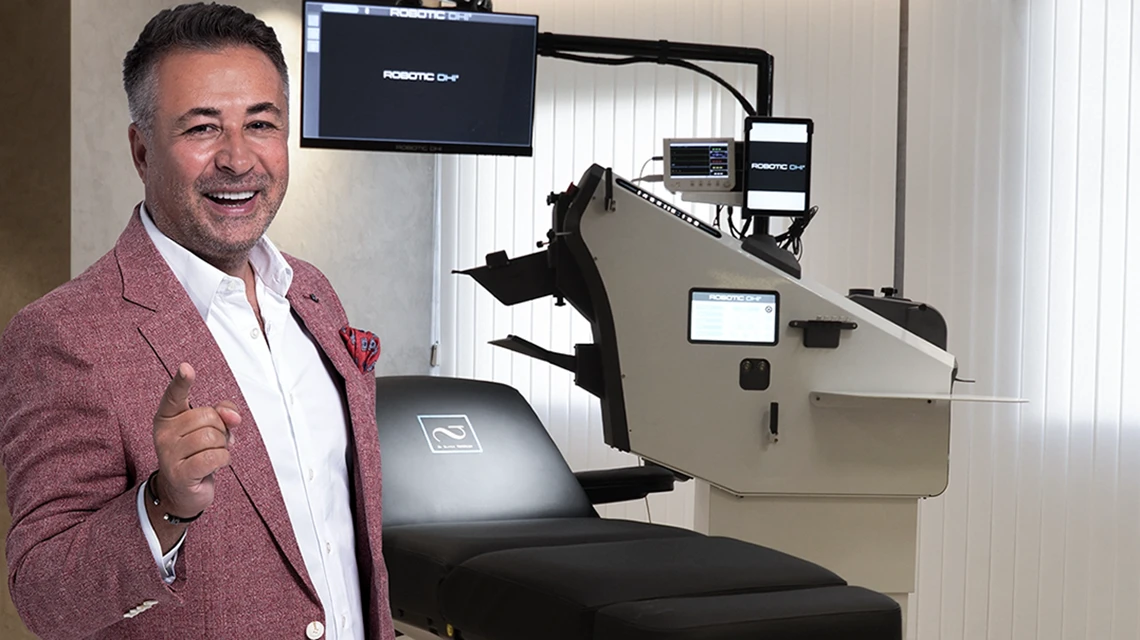
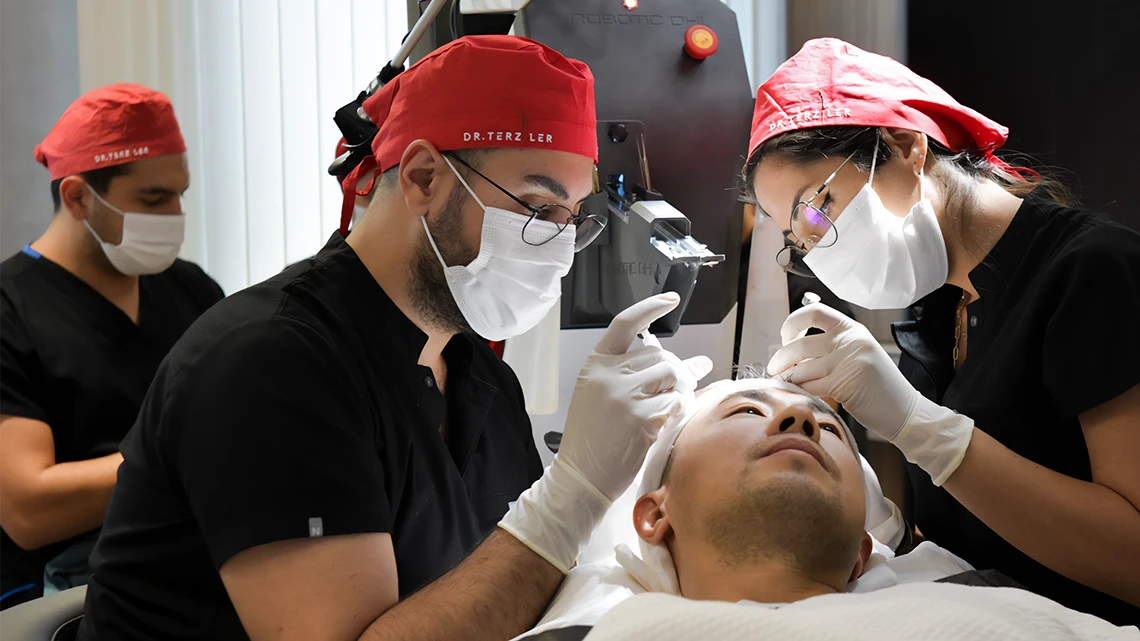
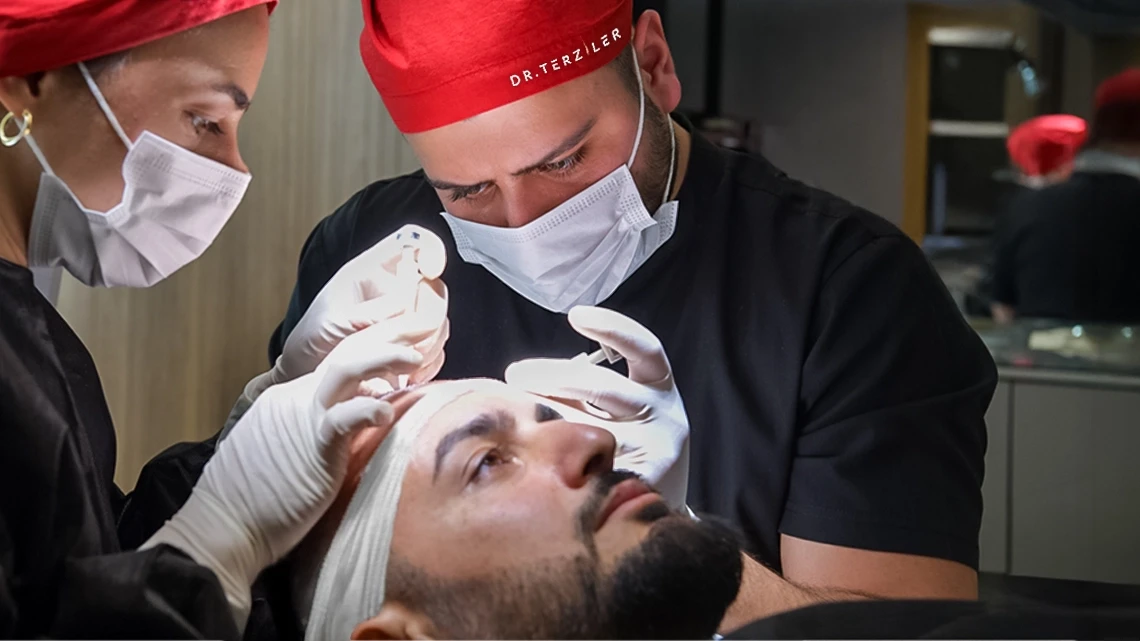

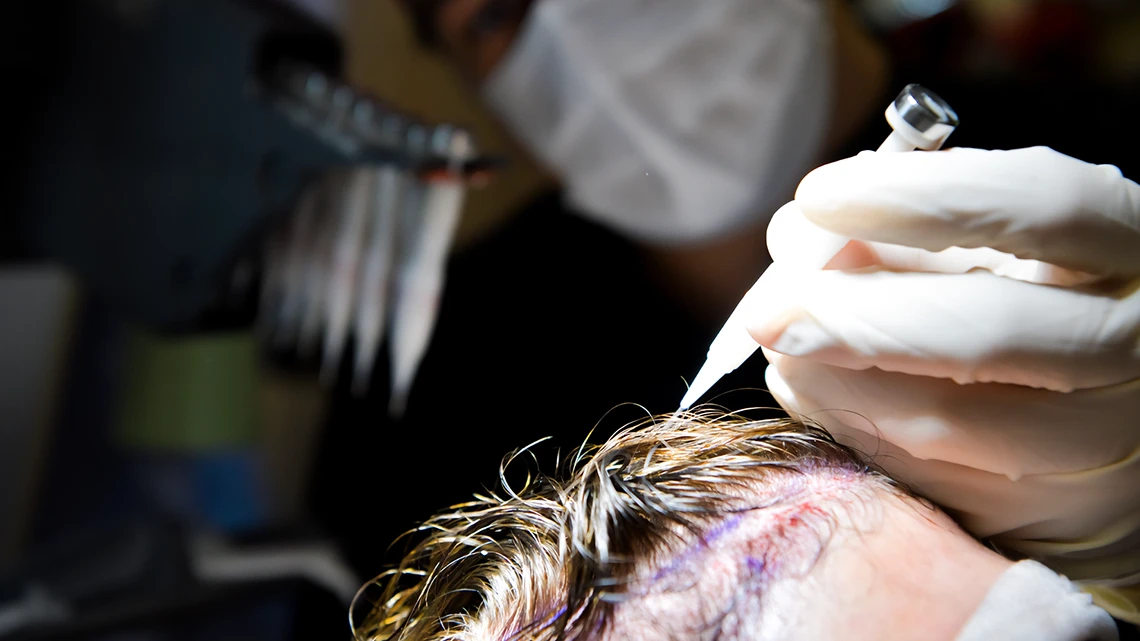
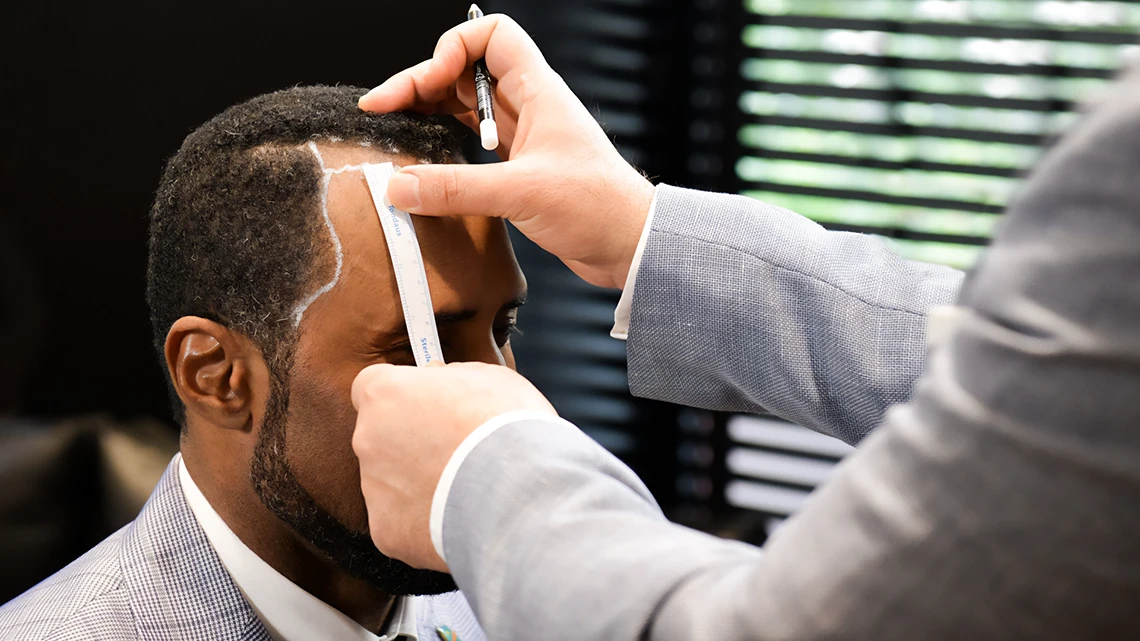
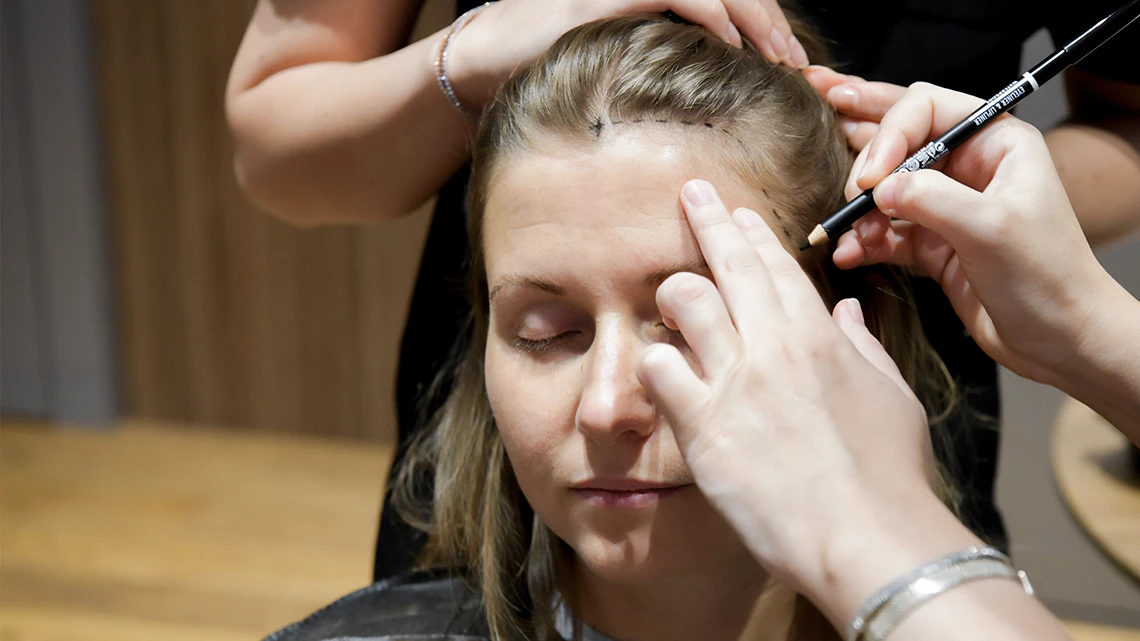
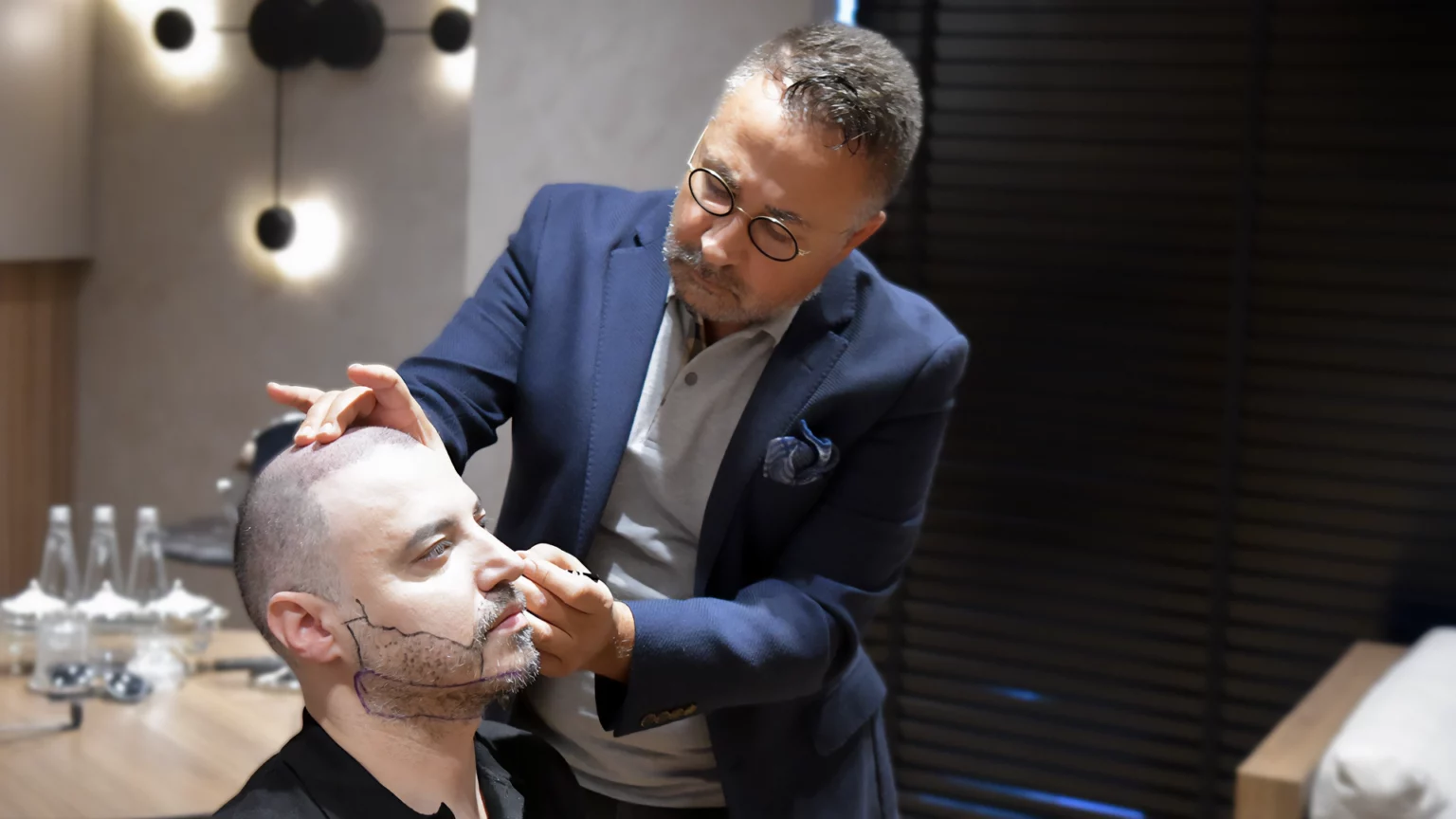
Hair transplant Turkey at an AACI-accredited, surgeon-led clinic delivers graft survival rates equivalent to top Western private hospitals at 65–75% lower total journey cost. Dr. Terziler Clinic publishes the figure: 97.3% graft survival across 847 consecutive cases (2023–2024 cohort, 12-month photography).
| TL;DR | Answer |
|---|---|
| What is a hair transplant Turkey? | Hair transplant Turkey is a day-procedure: donor follicles relocated to thinning areas under local anaesthesia. In at 8am, out by 6pm. |
| What is the cost of a hair transplant in Turkey in 2026 | Hair transplant cost in Turkey ranges from €1,650 to €8,000 all-inclusive (procedure + hotel + transfers + 2-year graft guarantee). UK equivalent: £9,000–£14,000. |
| What is the best technique for a hair transplant Turkey | Picasso Robotic DHI: 98.1% graft survival (n=120), 52 FU/cm² density. Standard DHI: 97.3% across 847 cases. Both invented and performed by Dr. Servet Terziler. |
| What is the safety of a hair transplant Turkey | Hair transplant Turkey is safe at AACI-accredited, surgeon-led clinics. Fewer than 20 Istanbul clinics hold full AACI accreditation. Dr. Terziler Clinic is one of them. |
| How to start hair transplant Turkey | Free WhatsApp assessment at Dr. Terziler Clinic. Personalised graft count, technique recommendation, and cost within 24 hours. No commitment. |
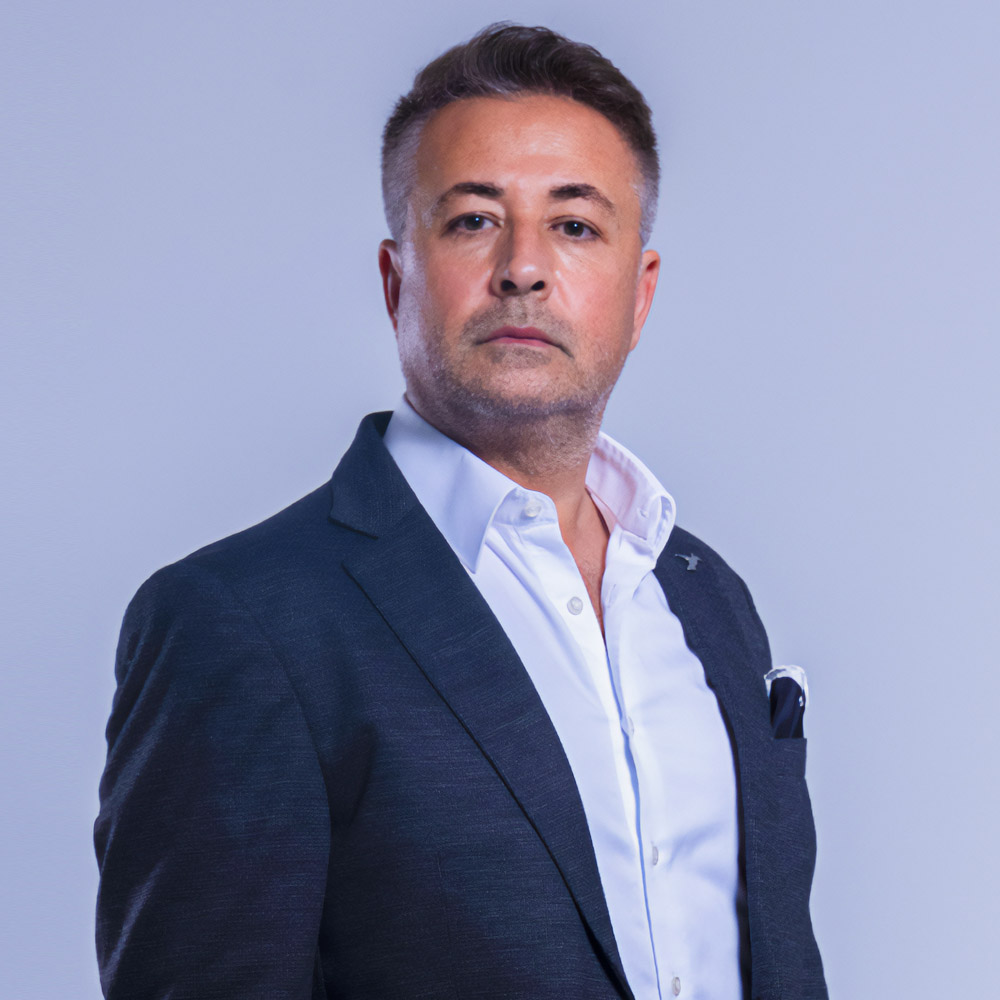
MEDICALLY REVIEWED BY
Dr. Servet Terziler
AACI-accredited surgeon, European Property Award recipient, founder of TUSATDER, and internationally recognized hair restoration specialist often referred to as the "Picasso of Hair."
Updated in 2026, June
Why Did 1.2 Million Patients Choose Turkey for a Hair Transplant in 2025?
A UK patient Googles "hair transplant" and sees £10,000–£14,000 quotes. They add the word "Turkey" and see €2,000–€4,500 for the same procedure, all-inclusive. Hair transplant tourism to Turkey is more than a trend. Istanbul performs more procedures annually than the UK and USA combined; 1.2 million in 2025 according to the ISHRS Annual Census. That scale exists because of five structural advantages that no other city in the world currently replicates simultaneously.
- Surgeon density:
A DHI specialist in Istanbul performs 300–400 procedures per year. The same specialist in London performs 30–40. Fixed clinical costs (laboratory space, specialist equipment, trained support staff) divide across a much larger patient volume. The savings reach the patient as lower procedure pricing. Not lower standards. Lower overhead.
- Structural cost difference (not lower standards):
Clinic rent, surgical staff salaries, and compliance overhead are significantly lower in Istanbul than in London or New York. An AACI-accredited DHI procedure costs €2,500–€6,500 in Istanbul versus £9,000–£14,000 at a comparable London clinic. Same clinical protocol. Different operating-cost base.
- Regulation:
TİTCK (Turkey's Medicines and Medical Devices Agency, equivalent to the UK's MHRA) legally mandated physician-led procedures in 2023; a regulation specifically prohibiting technician-only implantation. AACI international accreditation, held by fewer than 20 Istanbul clinics, audits 1,200+ clinical standards every three years via on-site inspection. Both are independently verifiable, not self-reported.
- All-inclusive model:
Turkey's hair transplant market evolved around complete patient journeys. The hair transplant turkey all inclusive package has: procedure, hotel, transfers, aftercare kit, and follow-up in one transparent price. UK and US clinics typically itemise each element separately, adding £1,500–£2,500 to the headline figure.
- Track record:
Dr. Terziler's 35 years of practice includes patients who underwent DHI procedures in the late 1990s whose transplanted hairlines remain unchanged today. A 35-year longitudinal outcome is a clinical record no newer market can claim.
Dr. Terziler Clinic embodies all five factors: AACI-accredited, TİTCK-registered, founded by Dr. Servet Terziler; a surgeon who invented the Robotic DHI machine, chairs TÜSATDER, and has practised hair transplant surgery for 35+ years.
How Is Hair Transplant Turkey Surgery Performed?
Hair transplant Turkey is performed using techniques that offer natural results with minimal discomfort. The most commonly used methods are FUE (Follicular Unit Extraction) and DHI (Direct Hair Implantation), both of which are minimally invasive and do not leave visible scars.
The process starts with a detailed consultation, scalp analysis, and donor assessment. The surgeon checks donor density, hair calibre, hairline shape, and the size of the thinning area. After that, the team calculates the graft count and the surgeons design a hairline that fits the patient's age, facial proportions, and future hair-loss pattern. Local anaesthesia is then applied so the procedure can be performed with minimal pain.
DHI is not a separate extraction method. It is an implantation method used after FUE graft collection. In standard FUE, the surgeon opens the recipient channels first and then places the grafts into those sites. In DHI, the graft is loaded into a Choi implanter and placed directly into the recipient area in one step. This gives tighter control over angle, direction, and dense hairline work.
Hair transplant surgery in Turkey at Dr. Terziler Clinic usually takes 6 to 8 hours, depending on the number of grafts. After the procedure, patients can return to their hotel on the same day.
Want your surgery plan reviewed before you book?
Start My Hair Transplant Turkey AssessmentWhat Is the Hair Transplant Turkey Cost 2026?
Hair transplant cost turkey 2026 ranges from €1,650 to €8,000 all-inclusive in 2026. That cost of hair transplant Turkey covers the procedure, local anaesthesia, two nights in a 4-star partner hotel, dedicated VIP airport transfer, post-operative care kit, the Day 3 first-wash clinic appointment, and a written 2-year graft survival guarantee. Items billed separately at most UK clinics.
The midpoint for a standard hair transplant Turkey cost 2,500–3,000 graft DHI session at an AACI-accredited clinic sits at €3,000–€5,000. Picasso Robotic DHI (Dr. Terziler's proprietary system) is priced at €7,500. FUE starts at €1,650 for lower graft counts. The full hair transplant Turkey price breakdown is below.
| Technique | Cost Range (€) | Graft Survival | Key Feature |
|---|---|---|---|
| FUE (Sapphire) | €1,650 – €4,000 | 93–95% | Sapphire blade, minimal scarring |
| DHI | €2,300 – €5,500 | 97.3% (n=847) | Channel-free Choi pen, no pre-made channels |
| Robotic DHI | €5,500 | 98.1% (n=120) | AI-assisted extraction + Choi pen implantation |
| Picasso Robotic DHI | €5,500 | 98.1% (n=120) | 0.75mm pen, UV+GF 9hr viability, 52 FU/cm² |
| FUT (Strip) | €1,400 – €3,300 | 91–94% | Linear scar, high graft yield per session |
| Unshaven DHI | €3,500 – €4,000 | 97.3% | No head shave, identical clinical results |
| Female Hair Transplant | €1,800 – €5,000 | 97.3% | DHI / Unshaven DHI, Ludwig scale I–III |
| Afro / Curly Hair | €3,000 – €6,000 | 97%+ | Modified 1.0–1.2mm punch, adapted angle protocol |
| Beard (Partial) | €1,500 – €4,000 | 97%+ | 1,000–2,000 grafts, occipital donor only |
| Full Beard | €2,000 – €5,000 | 97%+ | 1,500–3,000 grafts, DHI protocol |
| Moustache | €1,000 – €5,000 | 97%+ | 100–500 grafts per area, 10–20° angle |
| Eyebrow | €2,000 – €5,000 | 97%+ | 150–400 grafts/brow, 15–20° precision |
| Sideburn / Facial | €2,000 – €4,000 | 97%+ | 200–600 grafts per side |
| BHT Add-On | €1,000 – €3,000 | varies | Body hair supplement for NW6–7 |
| Hairline Top-Up | €1,500 – €3,500 | 97%+ | Density reinforcement session |
How Much Does Hair Transplant Cost Per Graft in Turkey in 2026?
Hair transplant cost per graft in Turkey ranges from €0.80 to €2.20 depending on technique, compared to £3.50–£8.00 per graft at UK clinics. The per-graft figure at DHI level (€1.00–€1.70) represents the best clinical value in the market: 97.3% graft survival at that price point is not replicated elsewhere.
| Technique | Cost Per Graft (€) | (£) | Notes |
|---|---|---|---|
| Sapphire FUE | €0.80–€1.30 | £0.70–£1.10 | Best value for large graft counts (NW5–6) |
| DHI | €1.00–€1.70 | £0.85–£1.50 | 97.3% survival, best value outcome per graft |
| Unshaven DHI | €1.40–€1.80 | £1.20–£1.60 | Premium for no-shave privacy option |
| Picasso Robotic DHI | €1.50–€2.20 | £1.30–£1.90 | Highest survival (98.1%) + 52 FU/cm² density |
How Much Do 2,000 Grafts Cost in Turkey?
2000 grafts hair transplant cost Turkey is €1,800–€3,200 at Dr. Terziler Clinic depending on technique; FUE at the lower end, DHI at the upper. This graft count suits Norwood 2–3 presentations with limited temple recession. A 2,000-graft DHI session is typically completed in 5–6 hours.
How Much Do 3,000 Grafts Cost in Turkey?
3000 grafts hair transplant Turkey is €2,500–€4,200 at an AACI-accredited clinic. This is the most common graft count for Norwood 3–4 presentations and covers full frontal hairline restoration in a single day at Dr. Terziler Clinic.
How Much Do 4,000 Grafts Cost in Turkey?
4000 grafts hair transplant cost in Turkey is €3,200–€5,500, completed over one to two days under Dr. Terziler's double DHI protocol; safely delivering 4,000+ grafts while maintaining graft viability. The UV+Growth Factor preservation used in Picasso Robotic DHI extends viability to 9 hours, making large single-session procedures clinically viable.
How Much Do 5,000 Grafts Cost in Turkey?
5000 grafts hair transplant cost Turkey is €3,800–€7,000 depending on technique and whether body hair supplementation is needed. Norwood 5–6 presentations typically require this range. Dr. Terziler's FotoFinder trichoscope pre-operative mapping confirms available donor supply before any 5,000-graft commitment.
Can I Finance a Hair Transplant in Turkey?
Hair transplant financing in Turkey is available through UK medical loan brokers whose products extend to overseas procedures. Formal in-clinic financing is not currently offered at Dr. Terziler; however, the patient coordinator team provides advice on UK medical finance options on request.
How Does Hair Transplant Turkey Compare with the UK, USA, Germany and Mexico?
Hair transplant cost in Turkey is 65–75% lower than UK, USA, or German procedures; including all travel costs.
| Country | Avg Cost 2,500 Grafts | Wait Time | Accreditation | Active Surgeons |
|---|---|---|---|---|
| Turkey (Istanbul) | €2,300–€4,500 | 1–4 weeks | TİTCK / AACI | 1,200+ |
| United Kingdom | £8,000–£14,000 | 4–12 weeks | CQC | ~150 |
| USA | $12,000–$20,000 | 2–8 weeks | ABHRS | ~300 |
| Germany | €8,000–€12,000 | 6–12 weeks | DGDC | ~80 |
| Spain | €5,000–€9,000 | 4–8 weeks | SECP | ~60 |
| Poland | €3,500–€5,500 | 2–6 weeks | varies | ~40 |
| UAE (Dubai) | $6,000–$10,000 | 2–4 weeks | JCI | ~60 |
| India | €1,200–€2,500 | 1–2 weeks | NABH | ~200 |
| Thailand | €2,500–€4,500 | 1–2 weeks | JCI | ~50 |
| Mexico | $3,500–$6,000 | 1–4 weeks | varies | ~80 |
| Hungary | €3,000–€5,500 | 2–6 weeks | varies | ~30 |
| South Korea | $6,000–$10,000 | 2–4 weeks | KHRS | ~100 |
| Australia | AUD $15,000–$25,000 | 8–16 weeks | AHPRA | ~50 |
| Patient Origin | Turkey Procedure | Return Flights | Hotel | Total Journey | Home Country Cost | Net Saving |
|---|---|---|---|---|---|---|
| UK (London) | ~£2,700 | £130 (LHR–IST) | £0 (included) | ~£2,830 | £9,000–£14,000 | £6,170–£11,170 |
| USA (New York) | ~$3,500 | $600 (JFK–IST) | $0 (included) | ~$4,100 | $12,000–$20,000 | $7,900–$15,900 |
How Does Hair Transplant Turkey Cost Compare with the UK?
Hair transplant cost in Turkey versus the UK shows a £6,170–£11,170 net saving for UK patients after including return flights. The comparison is simple: Dr. Terziler Clinic DHI procedure at approximately £2,700 all-inclusive plus a £130 return flight equals £2,830. A CQC-regulated UK surgeon-led clinic charges £8,000–£14,000 for the same clinical standard. The hotel is included in Turkey. It is not included in the UK figure.
How Does Hair Transplant Turkey Cost Compare with the USA?
Hair transplant cost in Turkey versus the USA delivers a $7,900–$15,900 net saving for US patients. A JFK–Istanbul return flight averages $600. With hotel included in the Dr. Terziler package, the total Turkey journey is approximately $4,100 against a US clinic equivalent of $12,000–$20,000.
How Does Hair Transplant in Mexico Compare with Turkey?
Hair transplant in Mexico costs $3,500–$6,000 for 2,500 grafts; comparable on price to Turkey's mid-range. The key difference is institutional depth: Turkey has 35+ years of surgeon specialisation, AACI international accreditation available at fewer than 20 top Istanbul clinics, and published longitudinal graft survival data. Mexico's market does not currently match this at scale.
How Does Hair Transplant in India Compare with Turkey?
Hair transplant cost in India (€1,200–€2,500) is lower than Turkey at the headline level. However, India's market has fewer internationally-accredited specialist clinics, shorter published longitudinal outcome data, and less English-speaking patient infrastructure for international visitors. Turkey's cost-to-quality ratio at the AACI-accredited tier remains the strongest in the global market.
What's Included in a Hair Transplant Turkey All-Inclusive Package?
A hair transplant Turkey all-inclusive package at Dr. Terziler Clinic covers every logistical and clinical element of the international patient journey at a single fixed price. No surprise itemisation on the day.
| Package Element | Dr. Terziler Clinic | Typical Budget Istanbul Clinic |
|---|---|---|
| Procedure (surgeon-led) | ✓ Dr. Terziler personally | Often technician-led implantation |
| Anaesthesia (vibrating device) | ✓ Included (vibrating protocol) | Standard injection or billed separately |
| Hotel (4-star, 2 nights) | ✓ Partner hotel, 10 min from clinic | Extra €150–€350 or basic option |
| VIP Airport Transfer | ✓ Dedicated vehicle, not shared | Shared minibus or extra fee |
| Pre-Op FotoFinder Trichoscope | ✓ Included (all cases) | Rarely offered at basic clinics |
| Post-Op Care Kit | ✓ Saline spray, shampoo, foam, lotion | Sold separately €80–€180 |
| Day 3 First-Wash Appointment | ✓ Included at clinic | Charged separately or by video only |
| Written 2-Year Graft Guarantee | ✓ With documented photography | Rarely offered in writing |
| 12-Month Video Follow-Up | ✓ Included | Charged or unavailable |
| Personal WhatsApp Coordinator | ✓ 7 days/week | Business hours only or none |
| Airport Security Medical Note | ✓ Provided before departure | Rarely provided |
Want the full all-inclusive quote before choosing dates?
Ask for My Hair Transplant Turkey QuoteWhat Hidden Costs Do Budget Hair Transplant Clinics Omit?
The gap between a low headline price and a genuine all-inclusive figure is typically €800–€1,500 at Istanbul budget hair transplant clinics in Turkey. Before booking, request a fully itemised written quotation covering: anaesthesia, pre-operative blood tests, post-operative care kit, airport and hotel transfers, Day 3 appointment, and follow-up consultations. If a clinic hesitates to itemise, that hesitation is the answer.
What Does VIP Transfer Actually Mean in a Hair Transplant Turkey Package?
VIP transfer in a hair transplant Turkey package means a dedicated private vehicle for you; not a shared minibus collecting multiple post-operative patients from different hotels. At Dr. Terziler Clinic, every transfer is individual. No waiting. No close contact with strangers while your recipient area is freshly bandaged. The hair transplant clinic in Turkey vehicle is tracked and your coordinator confirms your location at each point.
What Should You Expect from the Partner Hotel?
Dr. Terziler Clinic partners with a 5-star hotel within 10 minutes of the clinic in central Istanbul. Quiet, private, suitable for post-operative recovery. Breakfast included. The hair transplant clinic in turkey team is on WhatsApp around the clock for any post-procedure concern. Most patients describe the first evening as mild tightness (manageable with the analgesics in the care kit) and are sleeping normally by Day 2.
What Should You Know About Flying to Turkey for a Hair Transplant?
Flying to Turkey for a hair transplant is safe, simple, and requires almost no planning beyond booking the flight. For hair transplant Turkey travel, Istanbul Airport (IST) handles direct routes from most major UK, European, and US cities. The clinic coordinates every transfer from the moment you land.
How Should You Book Your Flight to Turkey for a Hair Transplant?
Book your outbound flight to arrive the day before your procedure; you need a full night's rest before a 7–9 hour surgery day. Istanbul has two airports: Istanbul Airport (IST) on the European side (closest to most clinics, handles most international routes) and Sabiha Gökçen (SAW) on the Asian side. For the majority of international patients, IST is the correct airport. The clinic confirms pickup logistics for both.
Return flights should be booked no earlier than Day 4. Day 3 is the first-wash clinic appointment: do not rush it. UK budget returns from London average £100–£180. US connections via Turkish Airlines from JFK average $450–$700 return.
What Happens at Istanbul Airport After Your Transplant?
After your hair transplant Turkey airport arrival, a dedicated VIP driver meets you at arrivals with your name displayed. You travel directly to the hotel; no shared vehicles, no hunting for a taxi. On Day 0 (arrival day), you check in, rest, and receive a coordinator call confirming the procedure schedule. Consultation and FotoFinder trichoscope mapping happen at the clinic on arrival day. The procedure is the following morning.
On departure day (Day 3–4), the VIP vehicle collects you from the clinic sign-off appointment and transfers you directly to the airport. The clinic provides a medical travel note for security before you leave.
What Can and Can't You Do When Flying Home After a Hair Transplant?
Flight back after hair transplant Turkey is safe from Day 2 onward. Air pressure changes do not dislodge grafts: grafts anchor within 24–48 hours. The real in-flight risks are dehydration and scalp contact. Drink 2+ litres of water. Apply saline spray to the recipient area every 90 minutes. Do not lean your scalp against the headrest. Book a window seat.
What Should You Tell Airport Security About Your Scalp?
Turkish airport security is entirely familiar with post-operative hair transplant patients. They see hundreds per week at Istanbul Airport. If you have a bandage or dressing, inform the officer before scanning; a visual check replaces the pat-down. Carry the clinic's medical note in your jacket pocket. Metal detector arches have no effect on grafts or healing.
What Is the Exact In-Flight Care Protocol After a Hair Transplant?
The exact in-flight care protocol after a hair transplant is to hydrate continuously, apply saline spray every 90 minutes, prevent scalp contact, and carry the full post-operative kit in hand luggage.
Saline spray on recipient area every 90 minutes (small bottle in hand luggage, not checked)
Drink water continuously; avoid alcohol and diuretic drinks
No overhead air vent directed at your scalp
Travel neck pillow supporting under the chin or neck, not pressed against the scalp
Do not touch, scratch, or examine the recipient area during the flight
If a scab loosens, leave it. Do not attempt to remove it
Carry the full post-op kit in hand luggage, not checked baggage
How Long Should You Stay in Turkey After a Hair Transplant?
The minimum stay after a hair transplant in Turkey is 3 nights. Day 0: arrive and consult. Day 1: procedure. Day 2: rest at hotel. Day 3: first-wash clinic appointment and sign-off. Day 4: fly home. Most UK and US patients book 5 nights: the extra two days allow visible redness to reduce before returning to client-facing work. Remote workers can work from the hotel from Day 2 after a hair transplant in Turkey.
What to pack to get a hair transplant in Turkey:
button-front or zip-up shirt (nothing over your head post-procedure), loose trousers, travel neck pillow, saline spray (pocket-size for hand luggage), zip-up hooded top for the journey home (loose hood protects grafts from wind), comfortable flat shoes. Leave jewellery and watches at home: easier at security, nothing to catch on the recipient area.
Hair Transplant Turkey Before and After: What Are the Real Results at 12 and 18 Months?
Hair transplant Turkey before and after photography at Dr. Terziler Clinic is always documented at month 12 or later; never at month 9, which represents only 75–85% of final density and systematically overstates the result. Every case image at this clinic is dated, standardised in angle and lighting, and available for direct pre/post follicle count comparison.
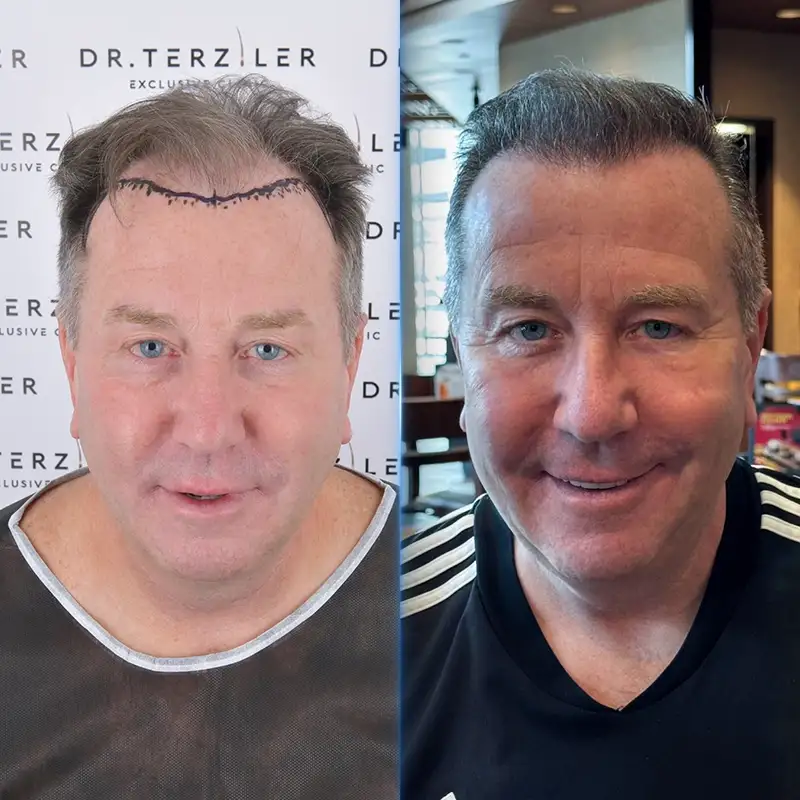
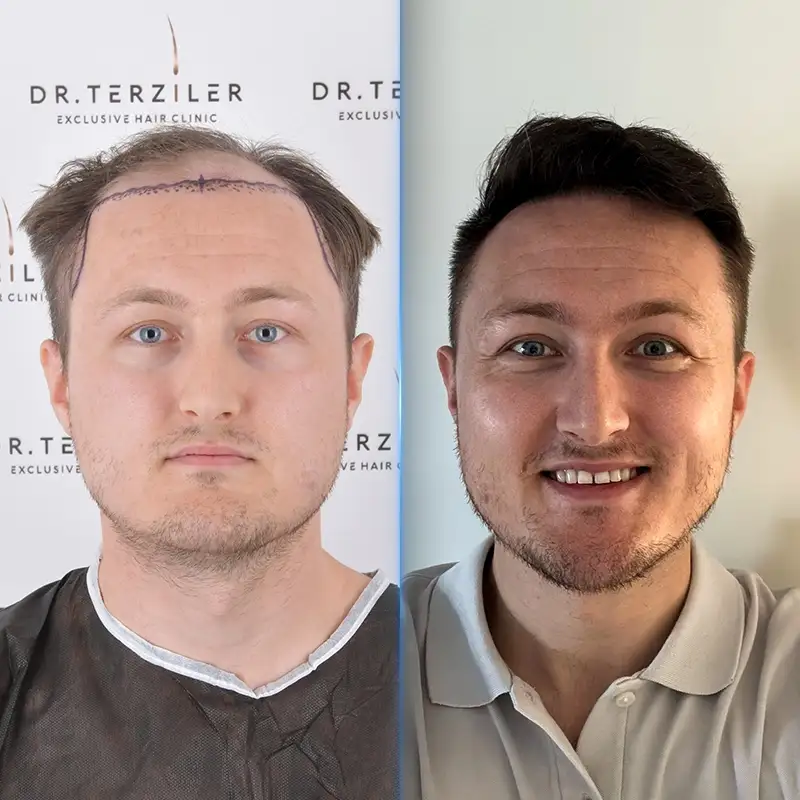
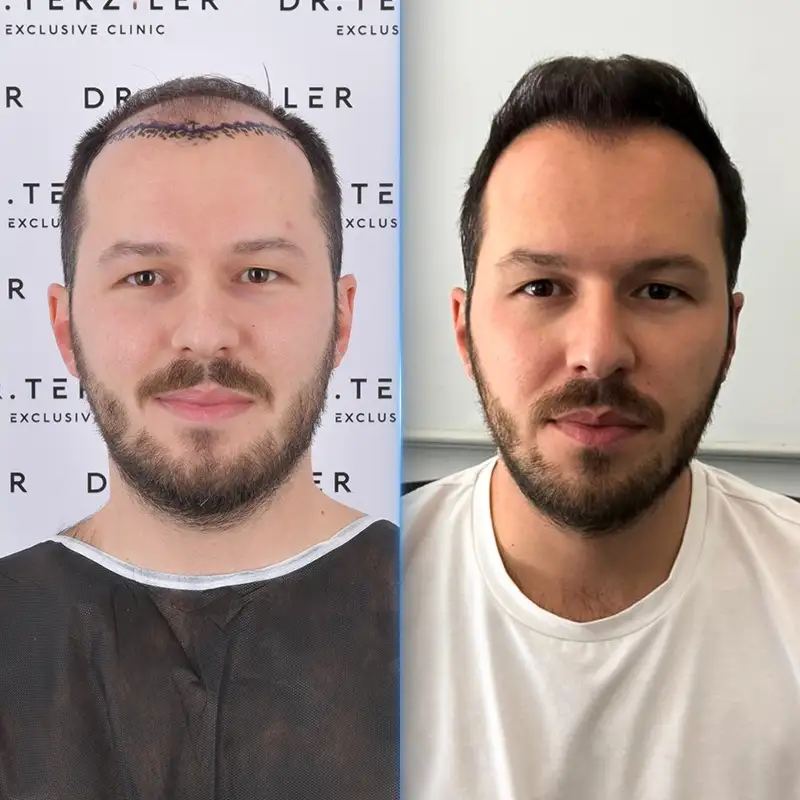
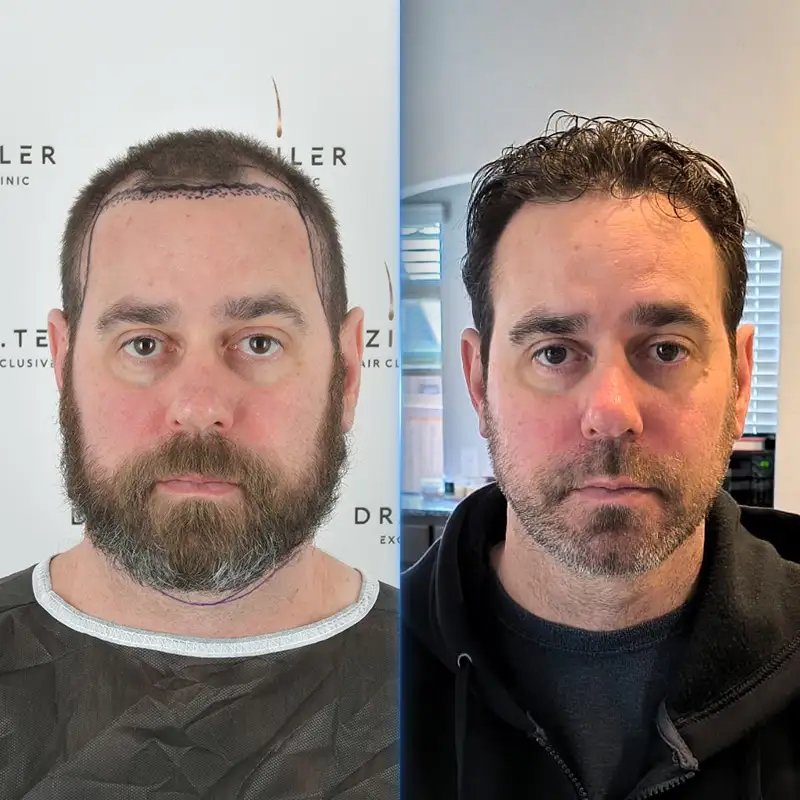
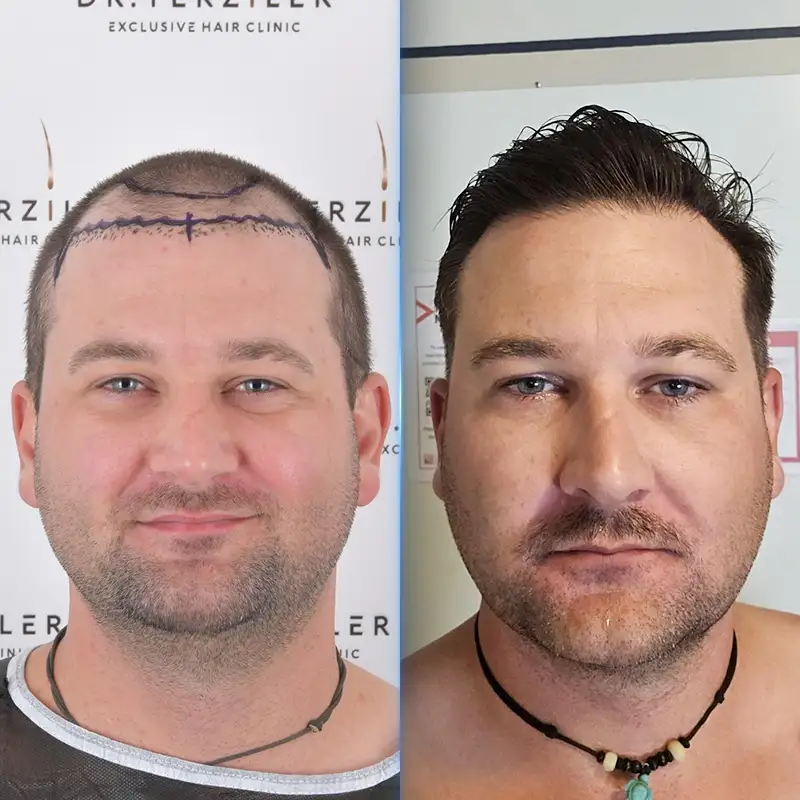
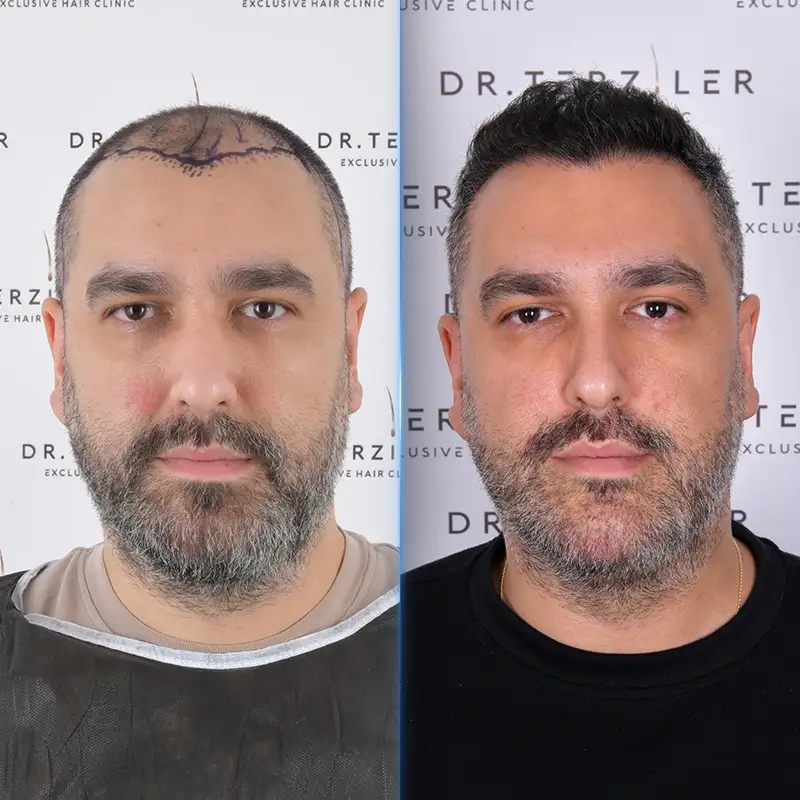
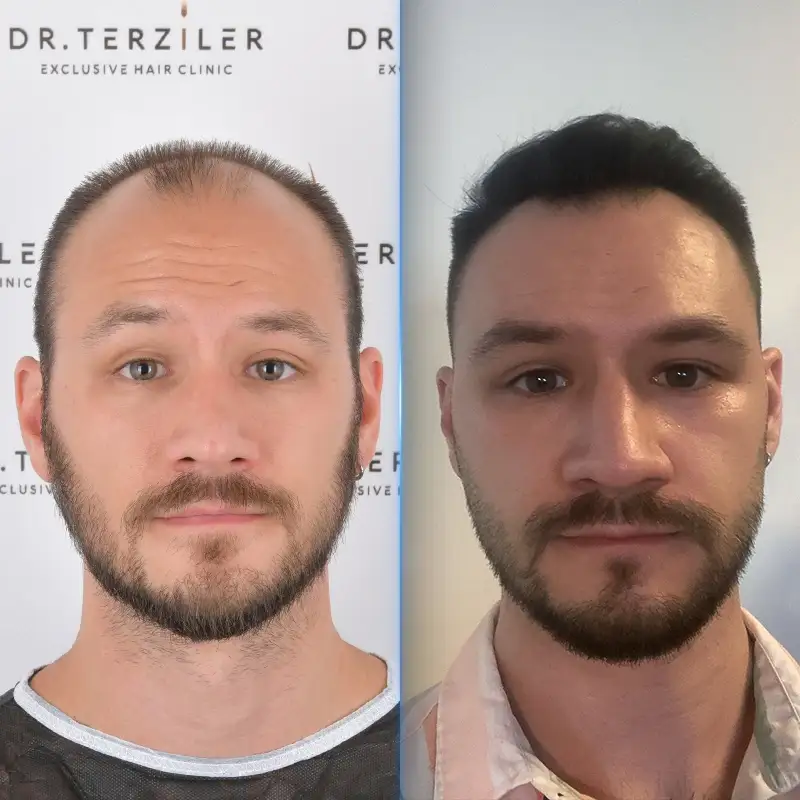
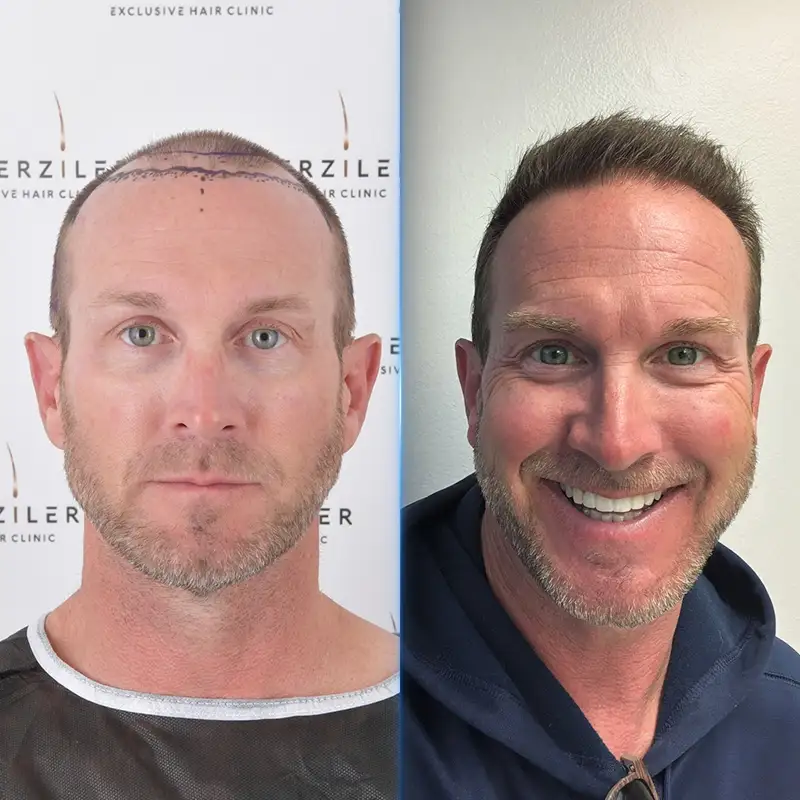
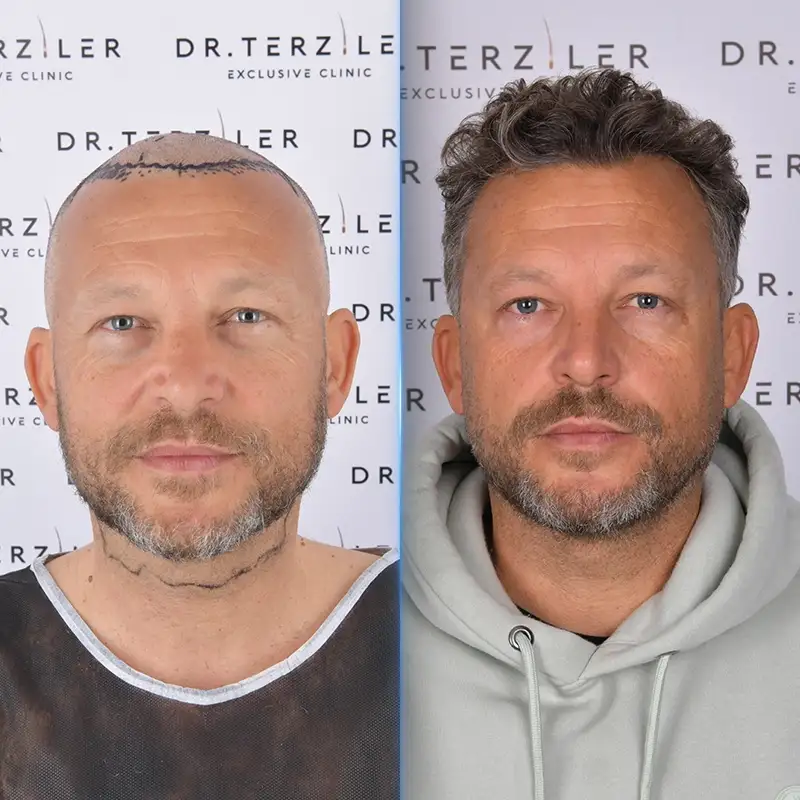
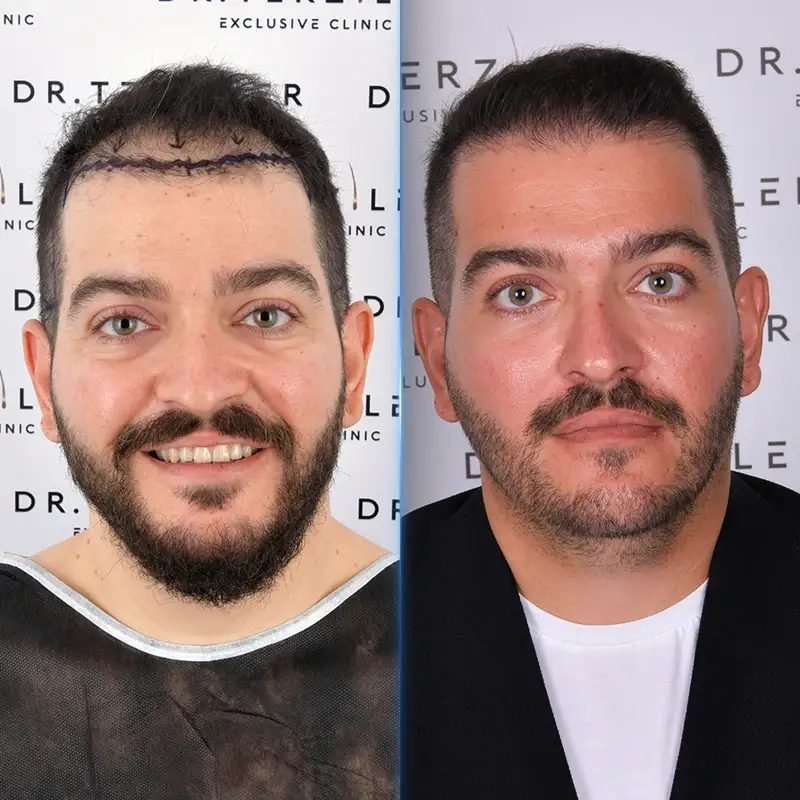
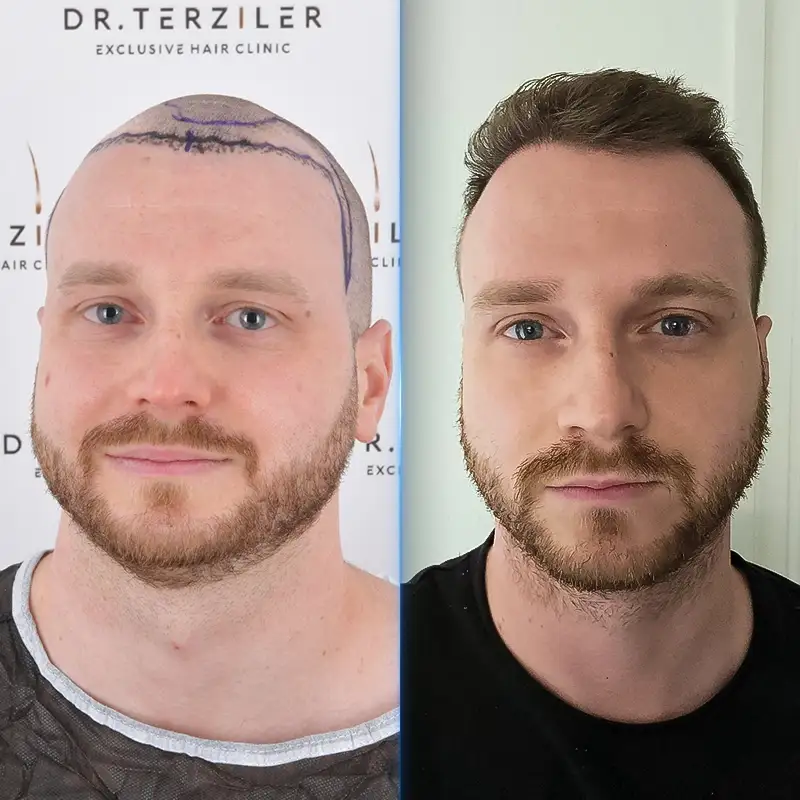
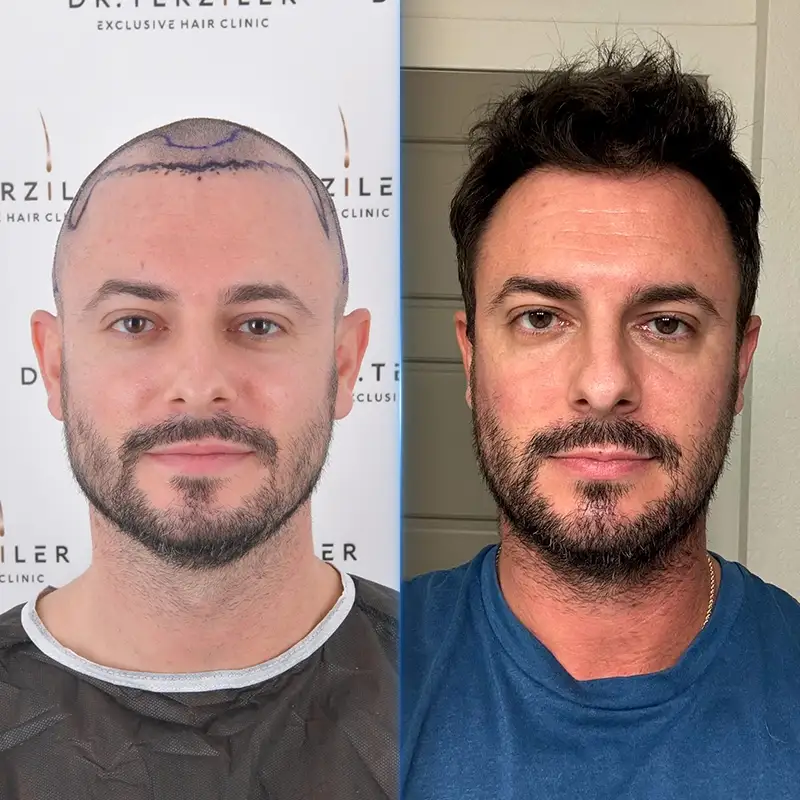
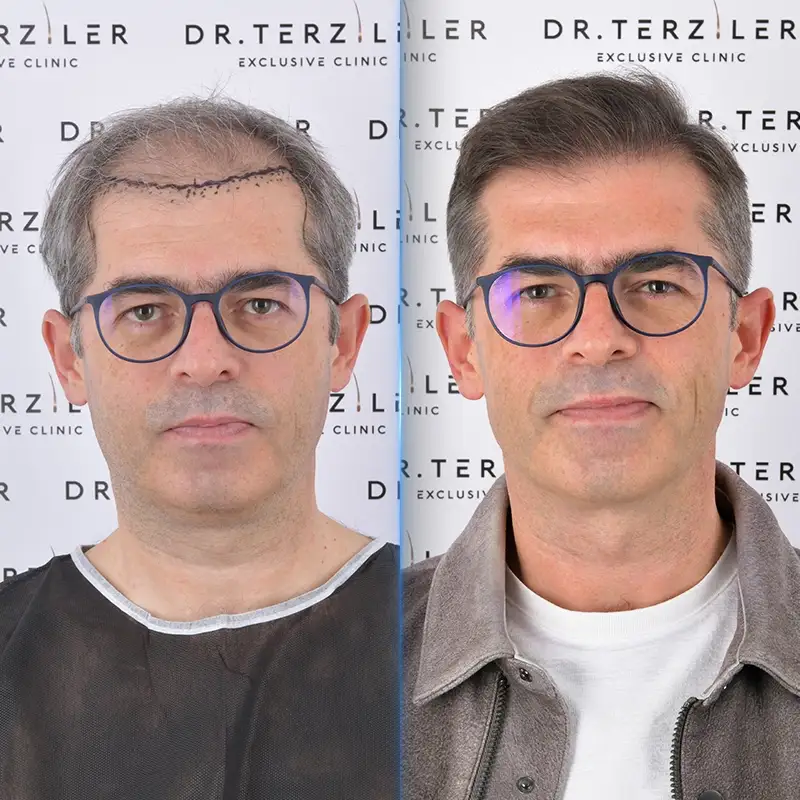
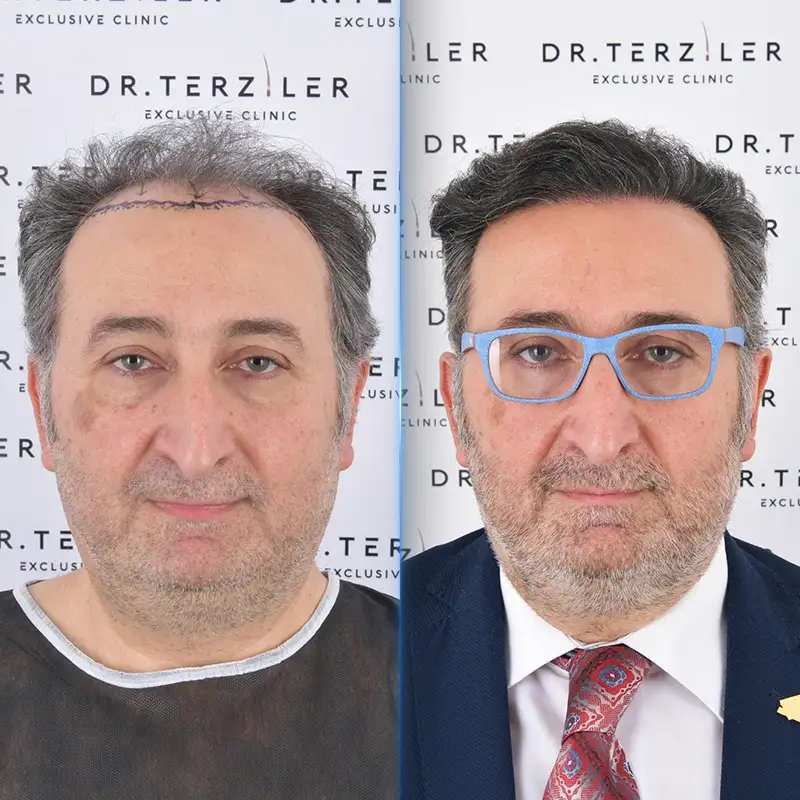
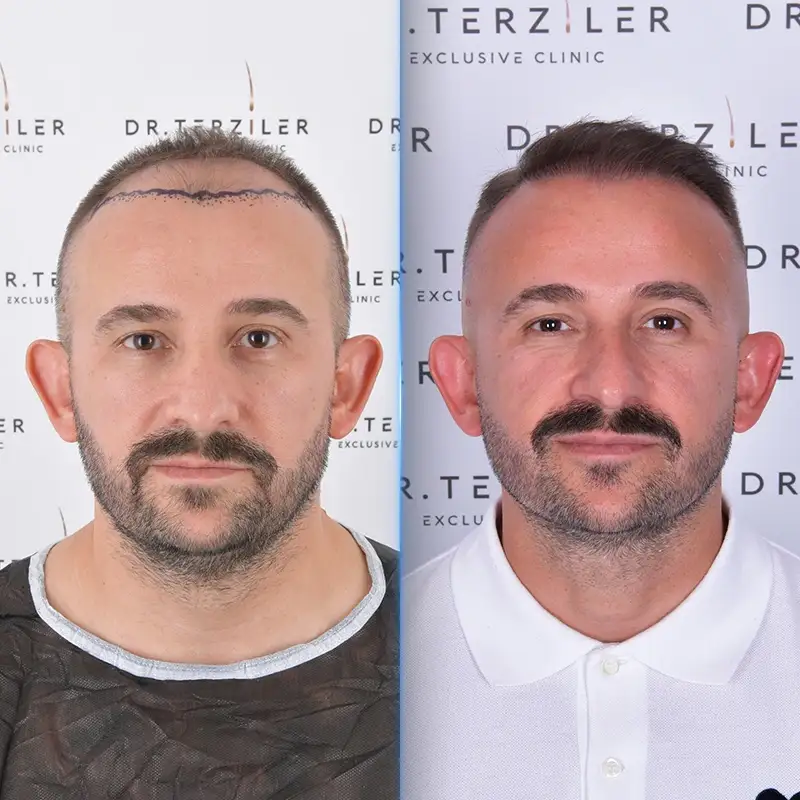
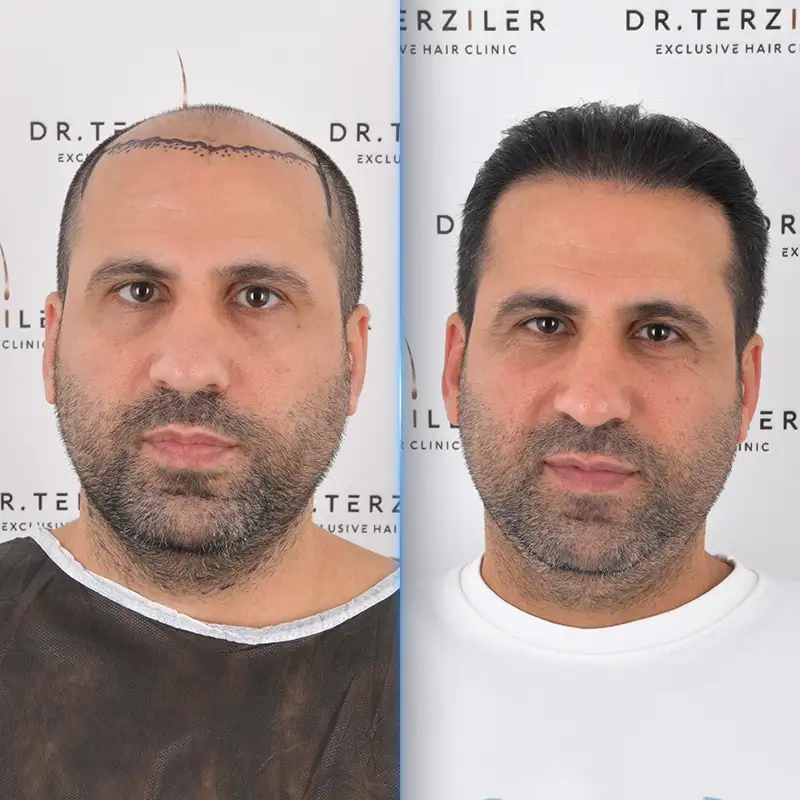
The month 9 problem is industry-wide. Most Istanbul clinics take "final" photos at months 8–9 when growth looks compelling but is not complete. Month 12 is the clinical finish line. Choosing a clinic that documents month-12 hair transplant turkey results with a consistent photography protocol is a more reliable quality signal than any single marketing claim.
Is Turkey Safe for a Hair Transplant? The Honest, Clinical Answer
Hair transplant surgery in Turkey is safe at AACI-accredited, TİTCK-registered, surgeon-led clinics, and carries documented, significant risks at unregistered volume clinics. Both things are true simultaneously. The distinction matters.
When hair transplant Turkey goes wrong, it is mostly about unlicensed or technician-led clinics called hair mills.
Local anaesthesia carries near-zero mortality risk when administered by a trained physician. Every documented fatality in Turkish hair transplant tourism has involved unregistered operators performing procedures without trained anaesthesia support in non-clinical environments. This is not a reflection of Turkish medical standards. It is the black market operating alongside regulated clinics. The two are not the same.
What Actually Goes Wrong in Turkey and Why?
The documented failures in Turkish hair transplant tourism share three characteristics: technician-led implantation without surgeon oversight, factory scheduling (more than 5 patients per surgeon per day), and absent infection control standards. The ISHRS documents a 6.9% corrective surgery rate at non-accredited clinics annually. At AACI-accredited clinics, the corrective rate is below 1%.
The graft transection rate at quality DHI clinics using a 0.75mm punch is below 2%. At unaccredited volume clinics, it exceeds 15%. That 13-percentage-point gap equals 325 lost grafts per 2,500-graft session; grafts extracted, damaged, and never grown. Dr. Terziler Exclusive Clinic uses the world's thinnest choi pen with 0.70mm punch.
The 2-Patient Rule:
One surgeon cannot perform quality DHI implantation on more than 2 patients in a standard 8-hour day. Any clinic scheduling 4–6 surgical procedures per surgeon per day (which many Istanbul volume clinics do) is necessarily delegating implantation to unqualified technicians. Ask any clinic directly: "How many patients does the surgeon personally treat in one day?" The answer tells you everything.
What Is The Failure Rate Of Hair Transplant Turkey?
There is no official failure rate for hair transplant Turkey. In qualified, surgeon-led FUE and DHI practice, outright failure should be uncommon, and the ISHRS 2025 census found that 67% of members reported achieving the desired result with one procedure on average. The real red flag is the black market: repair cases linked to prior black-market transplants averaged 10% in 2024, up from 6% in 2021. In clinical terms, "failure" usually means poor density, wrong angulation, donor overharvesting, visible scarring, or an unnatural hairline, not simply that every graft died. Reputable clinics (like Dr. Terziler) have success rates well above 95%.
What Is the Enforcement Gap Between TİTCK and AACI Standards?
TİTCK mandated physician-led procedures in 2023. Enforcement across Istanbul's 400+ registered facilities remains inconsistent. AACI international accreditation operates on a different mechanism: independent on-site inspection every three years against 1,200+ clinical standards. There is no shortcut to an AACI certificate. Dr. Terziler Clinic holds AACI accreditation, TİTCK registration, and TÜSATDER founding membership. That is the highest verifiable quality stack in the Turkish market.
What Does AACI Accreditation Actually Mean?
AACI accreditation requires compliance with 1,200+ clinical standards across patient safety, infection control, staff qualification, equipment maintenance, documentation, and governance; independently audited on-site every three years. Fewer than 20 Istanbul clinics hold it. Most clinics that claim to be "internationally accredited" are referring to far less rigorous certifications. AACI is the benchmark. Verify directly.
Read the NHS guidance on hair transplant safety (what to check before booking)
The 6-Point Safety Checklist:
- AACI or JCI accreditation, verify at aacihealthcare.com (not self-reported)
- Named surgeon on all documentation; surgeon personally designs hairline and performs implantation
- Published graft survival rate with sample size and methodology
- Written 2-year graft survival guarantee with documented photography protocol
- Maximum 2 patients per surgeon per day, ask this question directly
- Pre-operative trichoscope consultation for individual graft count calculation
Dr. Terziler Clinic satisfies all six criteria:
AACI accredited ✓ | Named surgeon: Dr. Servet Terziler ✓ | Published data: 97.3% survival, n=847, 12-month photography ✓ | Written 2-year guarantee ✓ | Max 2 patients/day ✓ | FotoFinder trichoscope ✓
What Technique Is Best for a Hair Transplant in Turkey?
Hair transplant techniques in Turkey range from FUE (the most widely performed method globally), including Micro FUE for lower donor trauma, to Robotic DHI, the most advanced, invented by Dr. Servet Terziler himself. The right technique depends on three things: hair loss pattern, donor density, and the density result the patient is targeting. The comparison table below covers the key criteria for each.
| Technique | Scarring | Channel-Free | Graft Survival | Max Density | Cost (€) |
|---|---|---|---|---|---|
| FUE | Minimal dots | No | Technique-dependent | Moderate | €1,650–€4,000 |
| Sapphire FUE | Minimal dots | No | ~93–95% | Moderate | €2,000–€5,000 |
| DHI | Minimal dots | Yes (Choi) | 97.3% (n=847) | High | €2,300–€5,500 |
| Unshaven DHI | Minimal dots | Yes | 97.3% | High | €3,500–€4,000 |
| Robotic DHI | Sub-minimal | Yes | 98.1% (n=120) | 52 FU/cm² | €5,500 |
| FUT Strip | Linear scar | No | ~91–94% | Moderate | €1,400–€3,300 |
Unsure whether DHI, Micro FUE or Robotic DHI fits you?
Find My Hair Transplant Turkey TechniqueWhat Is DHI Hair Transplant in Turkey?
DHI hair transplant in Turkey is the preferred technique at AACI-accredited clinics for patients requiring high density and a precisely engineered hairline. The world's thinnest Choi implanter pen at Dr. Terziler Clinic places each graft directly into the scalp without pre-made channels; this reduces the ischemic (out-of-body) time between extraction and implantation, which is the primary mechanism behind the higher survival rate. Shorter ischemic time equals more surviving grafts. Dr. Terziler's DHI cohort (n=847, 2023–2024) achieves 97.3% graft survival at 12-month photography. The cost of a DHI hair transplant in Turkey is between €2,300–€5,500.
Is FUE Hair Transplant in Turkey Still a Good Option?
Yes, FUE hair transplant in Turkey remains a reliable option for patients who need broad coverage at a lower cost, but it is the older and less implantation-controlled method compared with DHI. In FUE, follicular units are extracted individually and recipient channels are created as a separate surgical stage before implantation. DHI retains individual follicular extraction but places grafts directly with a Choi implanter, giving the surgeon more immediate control over angle, direction and depth during placement.
FUE hair transplant in Turkey was formally described as a minimally invasive extraction method in 2002 and remains one of the world's most established hair restoration techniques. Its age does not make it ineffective: a two-centre observational study reported a 4% transection rate and meaningful density improvement when FUE was performed with controlled extraction, graft hydration and careful implantation. The difference is procedural evolution, not automatic inferiority. Rassman et al., Dermatologic Surgery 2002; retrospective two-centre FUE study.
What Is Robotic DHI Hair Transplant in Turkey?
Robotic DHI in Turkey combines AI-assisted extraction with manual DHI implantation. The robotic extraction system maps each follicular unit via high-resolution imaging, calculates the optimal extraction angle for each individual follicle, and extracts with sub-millimetre precision, reducing transection rates below 1%. Implantation is performed manually by Dr. Terziler using the Choi pen. Robotic accuracy for extraction. Human artistic control for implantation. A robotic DHI hair transplant in Turkey costs €5,500.
What Makes Picasso Robotic DHI Turkey's Most Advanced Hair Transplant?
Picasso Robotic DHI is a proprietary hair transplantation system invented by Dr. Servet Terziler. It combines AI-assisted extraction, a 0.75mm Choi pen (the world's thinnest commercially used implanter), and UV+Growth Factor graft preservation that extends viability to 9 hours; compared to the industry standard of 4–6 hours. That extended viability window is what makes 4,000+ graft single-session procedures clinically safe.
Clinical results across 120 consecutive cases: 98.1% graft survival, 52 FU/cm² recipient density. Neither figure is published by any competitor clinic. Dr. Terziler is known as the "Picasso of Hair"; a title given by his patients, rooted in 35 years of precision, the belief that every hairline is an individual architectural design, and AI-guided angle mapping that produces follicle angles between 15–45 degrees, replicating natural growth geometry.
Picasso Robotic DHI clinical data (not published by any competitor): 98.1% graft survival | n=120 consecutive cases | 52 FU/cm² recipient density | UV+Growth Factor viability: 9 hours (vs 4–6hr industry standard) | 0.75mm Choi pen | AI-guided angle mapping | Personalized + artistic hairline drawn by Dr. Servet Terziler | Dr. Terziler Clinical Cohort 2023–2024
What Is Sapphire FUE Hair Transplant in Turkey?
Sapphire FUE in Turkey uses a sapphire-tipped blade to create recipient channels: producing smaller, smoother incisions than standard steel punches, reducing tissue trauma and accelerating post-operative healing. Sapphire FUE in Turkey is suitable for patients who prefer not to shave completely, and for those seeking hairline restoration at the lower end of the average cost of hair transplant in Turkey range. Cost of a sapphire FUE in Turkey is €2,000–€5,000.
Can You Get an Unshaven DHI Hair Transplant Without Shaving Your Head?
Unshaven hair transplant in Turkey allows a full DHI procedure without shaving the head. Existing hair conceals the procedure site throughout the recovery period; critical for patients in public-facing professions, women, and those who prefer complete privacy. The results of unshaven DHI in Turkey are clinically equivalent to standard DHI. The technique requires additional surgical time. Cost of an unshaven DHI hair transplant in Turkey is between €3,500–€4,000.
How Does Female Hair Transplant in Turkey Work?
Female hair transplant in Turkey is most effectively performed using DHI (specifically the Unshaven DHI variant) which preserves existing hair length throughout the procedure and suits the diffuse thinning patterns (Ludwig scale I–III) most common in women.
Women rarely present with the frontal recession pattern of male Norwood cases. Female hair loss is typically diffuse; thinning across a wider area at lower density per region. This requires individual graft placement between existing follicles without disrupting them. Dr. Terziler's thinnest Choi pen (0.70mm) in hair transplant Turkey market creates the smallest possible implantation site, minimising visible impact on surrounding hair during recovery.
DHI is the preferred technique for female hair transplant in Turkey because: the Choi pen allows precise placement between existing follicles without pre-made channels; no full head shave is required for the unshaven variant; and diffuse patterns suit DHI's individual graft control better than bulk extraction. Hair transplant for long hair in Turkey is achievable specifically via unshaven DHI.
Dr. Terziler's clinic treats female patients under the same AACI-accredited surgical protocol as male cases; same surgeon, same facility, same graft survival standard. Cost: €1,800–€5,000.
How Does Afro, Black and Curly Hair Transplant in Turkey Work?
Afro hair transplant in Turkey requires technical modifications that most standard DHI clinics are not equipped to deliver. Afro-textured follicles have a curved anatomy below the scalp surface; a C-shaped or S-shaped curve that standard circular punches at standard extraction angles transect (damage) at rates of 15–30%. That is three to six times higher than straight hair. At those transection rates, a 2,500-graft session loses 375–750 grafts before a single one is implanted.
Dr. Terziler's clinic performs afro and curly hair transplants using a modified DHI protocol with pre-operative FotoFinder trichoscope mapping of follicle curvature. Modified punch size: 1.0–1.2mm. Adjusted extraction angles calculated individually per follicular unit. Result: transection rates below 3% for afro-textured hair; a benchmark most Istanbul volume clinics cannot approach and few will disclose.
Ask any clinic that claims to do afro hair transplants in Turkey: "What punch size do you use and what is your transection rate for curly/afro cases?" The answer will immediately tell you whether they have genuine experience with curved follicle anatomy or are applying a standard protocol to hair that requires a modified one.
Cost for an afro hair transplant in Turkey is between €3,000–€6,000 depending on graft count and donor density.
How Does Facial Hair Transplant in Turkey Work for the Beard, Eyebrows, Moustache and Sideburns?
Facial hair transplant in Turkey demands the highest angle precision of any hair procedure. A 2-degree directional error in follicle placement is visible on the face in a way it simply is not on the scalp. FUE implantation cannot achieve the angle consistency that facial work requires. DHI with the Choi pen, guided by AI angle mapping, is the only technique that delivers reliable facial results.
How Does a Beard Transplant in Turkey Work?
Beard transplant in Turkey uses scalp donor follicles from the occipital zone, implanted via DHI Choi pen into the beard area. 1,500–3,000 grafts covers partial to full beard restoration. Dr. Terziler's clinic uses only occipital scalp hair for beard procedures; not the patient's beard hair as supplemental scalp donor. This ensures angle and calibre consistency: occipital hair matches beard calibre closely; beard-to-beard transfer introduces inconsistency.
The cost of a beard transplant in Turkey is €1,500–€4,000 (partial), €2,000–€5,000 (full beard). Same AACI-accredited facility and surgeon-led standard as scalp procedures.
How Does an Eyebrow Transplant in Turkey Work?
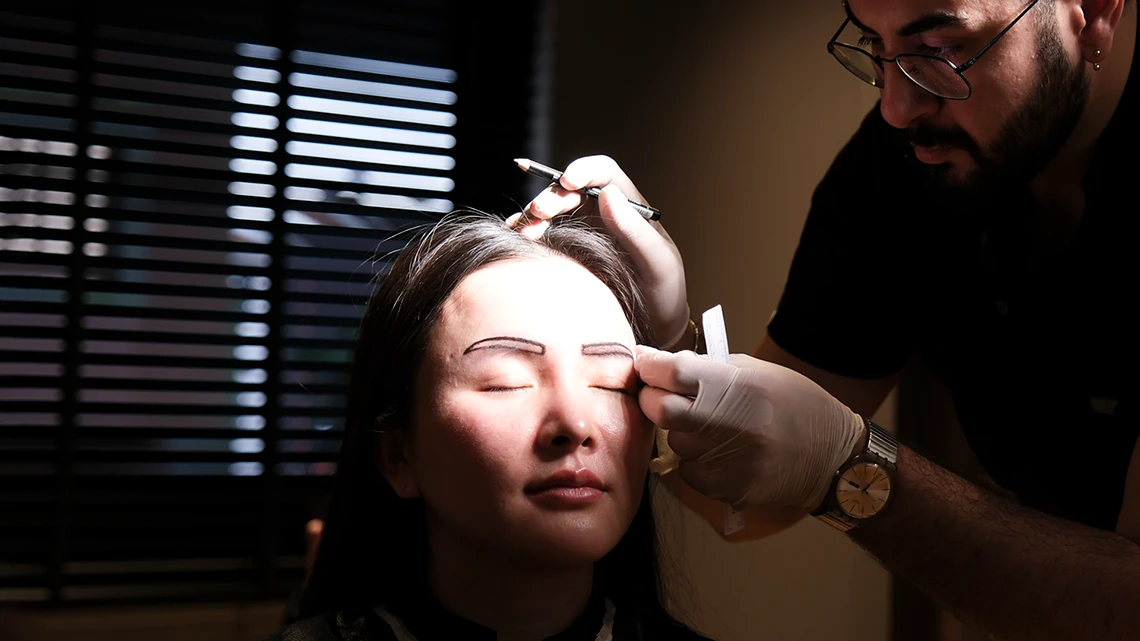
Eyebrow transplant in Turkey is the most technically demanding hair procedure performed at Dr. Terziler Clinic. Follicle angle (15–20 degrees), growth direction, and natural curl must precisely replicate the existing brow pattern; requirements that FUE implantation cannot meet. DHI with the Choi pen is essential. 150–400 grafts per brow is typical. Eyebrow transplant in Turkey is suitable for sparse brows, alopecia-related loss, over-plucked brows, and post-injury scarring. Cost: €2,000–€5,000 for both brows.
How Do Moustache and Sideburn Transplants in Turkey Work?
Moustache transplant in Turkey uses 100–500 grafts per area, implanted at a 10–20 degree angle. Sideburn restoration in Turkey uses 200–600 grafts per side. Both procedures can be combined with a beard transplant on the same day. DHI is mandatory. The cost of a moustache hair transplant in Turkey is €1,000–€5,000; sideburn/facial is €2,000–€4,000.
Planning beard, eyebrow, moustache or sideburn restoration?
Ask About Facial Hair TransplantDoes a Hair Transplant Hurt in Turkey?
No, a hair transplant in Turkey does not hurt during surgery. Local anaesthesia numbs the scalp completely within 5 minutes of injection, and the procedure itself scores 0-1/10 on the VAS pain scale throughout.
The anaesthesia injection is the only uncomfortable moment; most patients rate it 2-3/10, lasting 10-20 seconds. Post-operative soreness peaks at 24-48 hours and resolves for most patients within 7 days.
Does a Hair Transplant Hurt?See the complete clinical breakdown by procedure phase, anaesthesia stage and technique. Open guide"I expected the numbing stage to be the hardest part, but it was surprisingly comfortable. It felt almost like nothing."S. McCann, Dr. Terziler Patient
Over 95% of patients described the anaesthesia phase as painless or near-painless in a hair transplant Turkey clinic surgery according to the 2024 Dr. Terziler Clinic patient intake survey.
Post-operative discomfort is mild tightness managed with over-the-counter paracetamol. Analgesic use typically stops by Day 3. Patient-reported outcomes in hair transplant procedures confirm this timeline (PMID: 30607569).
Needle-Free Hair Transplant Turkey: Pain-Free Anaesthesia Protocol
Needle-free hair transplant in Turkey describes the vibrating anaesthesia delivery system used at Dr. Terziler Clinic: a device that stimulates competing nerve signals during the injection phase, reducing perceived pain to near-zero.
The mechanism of needle-free hair transplant in Turkey is established in neurophysiology. Gate control theory of pain (Melzack and Wall, 1965): vibration stimulates large-diameter Aβ nerve fibres, which inhibit pain signal transmission from the small-diameter fibres carrying the injection sensation at the dorsal horn level. The device exploits this mechanism. The result: 95%+ of patients at Dr. Terziler Clinic rated the anaesthesia phase as painless or near-painless in the 2024 patient intake survey.
Topical anaesthetic cream applied to the scalp 45–60 minutes before injection
Vibrating needle device activated against the scalp surface: competing nerve signal initiated (Aβ fibre stimulation)
Micro-injection of local anaesthetic into donor and recipient zones: 12–15 minutes total
Full anaesthesia confirmed: procedure begins
Patient experiences mild pressure only throughout surgery: no pain
Post-operative discomfort is mild tightness managed with over-the-counter analgesics. Most patients describe the first 24–48 hours as soreness, not pain. Analgesic use typically stops by Day 3. PMID 30607569 (FACE-Q patient-reported outcomes for hair transplant procedures).
What Do Verified Hair Transplant Turkey Reviews Say?
Dr. Terziler Clinic holds a 4.9/5.0 rating from 1000+ verified patient reviews for hair transplant Turkey reviews. The most cited elements across reviews: hairline design precision, the transparency of the pre-operative consultation, and the accuracy of the final graft count versus what was promised.
"My barber asked if I'd always had that hairline. That's the only review I needed to give."
J.M., UK: DHI, 2,800 grafts: ⭐⭐⭐⭐⭐
"Dr. Terziler spent 45 minutes on my hairline design before a single graft was extracted."
T.K., Germany: Picasso Robotic DHI, 3,200 grafts: ⭐⭐⭐⭐⭐
"Back in client meetings on Day 4. Nobody noticed. That was the plan."
A.L., USA: Unshaven DHI, 1,900 grafts: ⭐⭐⭐⭐⭐
What Happens After Getting a Hair Transplant in Turkey?
| Timeline | What Happens |
|---|---|
| Day 1 | Grafts placed. Recipient area red, visible pin-point implantation sites. |
| Week 1 | Scabbing forms. Do not touch, rub, or pick. |
| Weeks 2–4 | Shock loss begins, transplanted hairs fall. Expected, temporary. |
| Months 2–3 | Follicles dormant. No visible growth. The psychologically hardest phase. |
| Month 4 | First new hairs emerge. Fine, slightly kinked initially. |
| Month 6 | 50–60% density. The shape of the final result is visible. |
| Month 9 | 75–85% density. Most clinics take "final" photos here. Do not be misled. |
| Month 12–14 | Full result. Dr. Terziler standardised photography taken and provided in writing. |
What Is the Recovery Timeline After Hair Transplant Turkey?
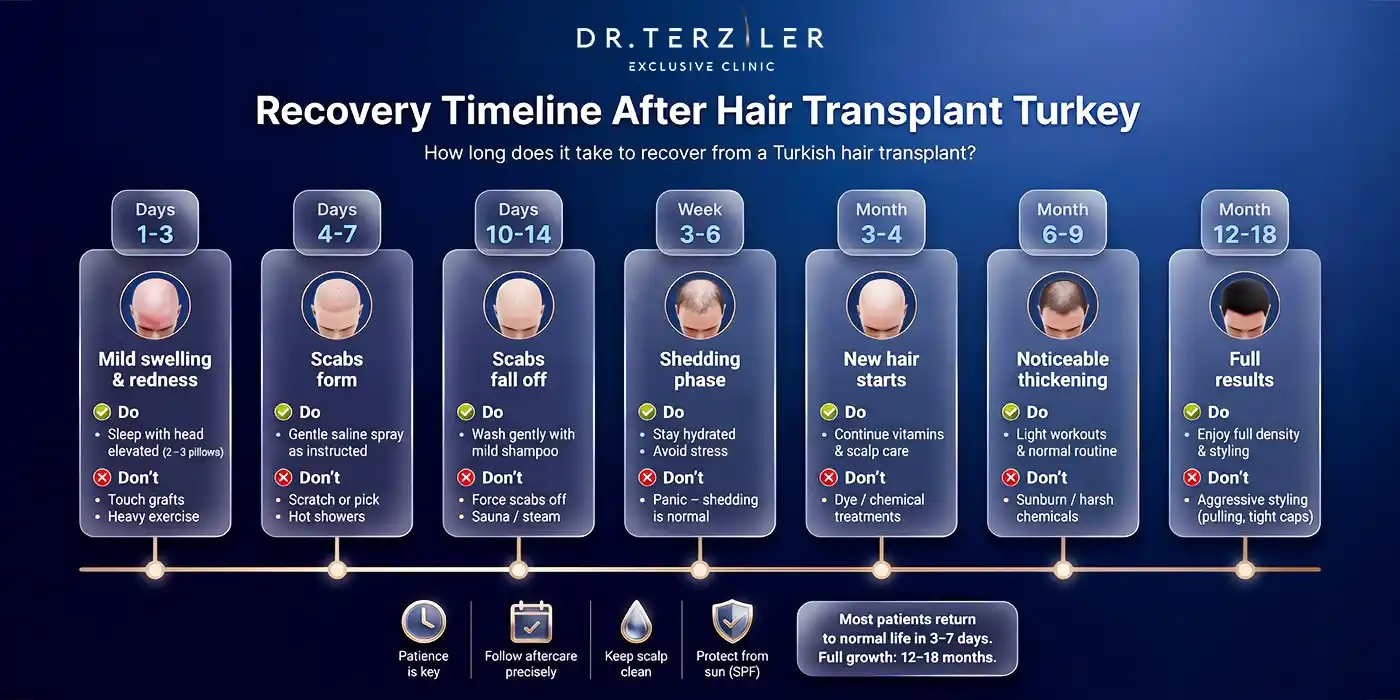
The recovery timeline after hair transplant Turkey has a similar, clear and predictable week-by-week timeline for almost each patient.
How Long Does It Take to Recover from a Turkish Hair Transplant?
Recover from a Turkish hair transplant takes around 3 months for the donor areas to fully heal. Most patients return to normal daily life within a few days, while scabs usually fall off by days 10 to 14. Temporary shedding often starts in weeks 3 to 6, new growth usually begins around months 3 to 4, and fuller visible results develop between months 12 and 18.
Want aftercare guidance for your travel dates?
Ask About Recovery TimelineWhat Happens to Your Hair 10 and 20 Years After a Hair Transplant in Turkey?
Hair transplant results in Turkey are permanent. Transplanted follicles are genetically DHT-resistant; they do not respond to the male pattern baldness hormone signal. A 4-year longitudinal study confirms stable graft density in transplanted zones at four-year follow-up with no meaningful follicle count reduction.
10 years after a hair transplant in Turkey: the transplanted zone is unchanged. Non-transplanted adjacent follicles may have continued thinning; which is why finasteride continuation post-procedure is routinely recommended to protect native hair. A second session 10–15 years later addresses any new loss in untreated areas, using remaining donor reserves documented at the 12-month follow-up.
20 years after a hair transplant in Turkey: Dr. Terziler's 35-year practice includes patients who underwent DHI procedures in the late 1990s. Those transplanted hairlines are unchanged at long-term review. The transplanted follicle at age 35 is the same follicle at age 60, growing in the same position at the same rate.
Published evidence: PMC8061642 (4-year longitudinal, n=79, stable graft density confirmed); Wang et al., BMC Surgery 2024 (PMID 38352219): 90%+ full density at 12 months with proper aftercare protocol. Dr. Terziler Cohort 2023–2024: 97.3% survival, n=847, 12-month standardised photography.
How Do You Choose the Best Hair Transplant Clinic in Turkey?
Safe clinic checklist: choose a hair transplant Turkey clinic only if it can verify six things: AACI or JCI accreditation, a named surgeon, published graft-survival data, a written guarantee, maximum two patients per surgeon per day, and pre-operative trichoscope mapping.
- 1AACI or JCI accreditation
Verify the clinic in a public accreditation registry, not only on its own website.
- 2Named surgeon on all documents
The surgeon should be visible before booking and responsible for the medical plan.
- 3Published graft survival data
Ask for sample size, timing, and photography method behind the survival claim.
- 4Written 2-year graft guarantee
The guarantee should be written and tied to documented pre/post photography.
- 5Maximum 2 patients per surgeon per day
Higher daily volume usually means technician-led implantation risk.
- 6Pre-op trichoscope mapping
FotoFinder or equivalent mapping protects donor area and confirms realistic graft count.
The easiest single filter: any hair transplant Turkey clinic unable to name its graft survival rate with a sample size and methodology is not operating at the standard the top tier requires. That eliminates most of Istanbul's 400+ registered facilities immediately. Top hair transplant clinics Turkey 2026 like Dr. Terziler Exclusive Clinic need to fulfill all related criteria in the table.
Why Is Dr. Servet Terziler Turkey's Most Awarded Hair Transplant Surgeon?
There are 400+ registered hair transplant clinics in Istanbul. One surgeon invented the technique that defines the premium tier. Dr. Servet Terziler (the Picasso of Hair) is that surgeon.
Dr. Terziler has practiced hair transplant surgery Turkey for 35+ years. He invented the Robotic DHI Machine and Picasso Robotic DHI, the system combining AI-assisted extraction, a 0.70mm Choi pen, and UV+Growth Factor preservation achieving 98.1% graft survival across 120 consecutive cases. He founded TÜSATDER (Turkish Health Tourism Association) to establish voluntary clinical standards above TİTCK minimums. Dr. Servet Terziler and Dr. Terziler Exclusive Clinic hold AACI international accreditation, among the few in the Hair Transplant Turkey market.
Distinctions & Awards of Dr. Terziler in Hair Transplant Turkey:
Recognized for exceptional clinical design and service flow within public-facing interior spaces.
Honored by Quality of Magazine as the premier center for high-standard hair restoration.
Awarded by Klass Magazine for sustained excellence in hair transplant surgery Turkey.
Recipient of the annual award for peak professional achievement in the field.
Nationally recognized for pioneering surgical techniques and patient results.
| Credential | Detail |
|---|---|
| AACI International Accreditation | Full accreditation: 1,200+ standards, independent on-site audit every 3 years |
| TÜSATDER | Founder and President: Turkish Health Tourism Association, voluntary standards above TİTCK |
| ISHRS: Live Surgery Workshop | 19th Annual ISHRS Live Surgery Workshop | Matt L. Leavitt DO | Lake Faith Surgery Center, Maitland, Florida | April 17–20, 2013 | 34.55 AMA PRA Category 1 Credits™ |
| Luxury Network International Awards | Best Hair Transplant Surgeon |
| Golden Summit Awards | Best Hair Transplant Doctor |
| European Property Award | Best Medical Clinic |
| ReGen Membership | Advanced regenerative hair medicine network |
| Dünya Newspaper | "Good Living" column; editorial and cultural authority signal |
| Clinical Data | 97.3% graft survival n=847 | 98.1% Picasso Robotic DHI n=120 | 52 FU/cm² density achieved |
| Verified Reviews | 4.9/5.0 - 1000+ verified patient reviews |
| @drterziler - 143,000 real followers |
ISHRS Live Surgery Workshop - International Surgical Certification: Dr. Terziler's 34.55 AMA PRA Category 1 Credits™ at the 19th Annual ISHRS Live Surgery Workshop (Lake Faith Surgery Center, Maitland, Florida; led by Matt L. Leavitt DO, ABHRS) represent hands-on international surgical competence verification at the highest professional level in hair restoration medicine. This is a live-surgery accreditation, not a course certificate. It is publicly verifiable through the ISHRS and the AMA Physician Recognition Award system.
Ready for a personalised graft count and technique plan?
Book My Hair Transplant Turkey AssessmentWhat Are the Most Frequently Asked Questions About Hair Transplant Turkey?
Turkey is the world's largest hair transplant destination; 1.2 million procedures in 2025, more than the UK and USA combined (ISHRS). At AACI-accredited, surgeon-led clinics, clinical outcomes are equivalent to Western private hospitals at 65–75% lower total journey cost. The filter for best hair transplant Turkey clinic selection is accreditation status, not geography.
People choose Turkey for hair transplants because of surgeon specialisation density (Istanbul holds more trained hair transplant surgeons than the rest of Europe combined), 35 years of institutional history, AACI accreditation at top clinics, all-inclusive packages, and procedure costs 65–75% lower than UK or US equivalents. The savings are structural (high volume across specialist infrastructure) not a quality reduction.
Hair transplant cost in Turkey is lower because specialist volume is higher: an Istanbul DHI surgeon performs 300–400 procedures per year versus 30–40 in London. Fixed hair transplant Turkey cost divides across more patients. The savings reach the patient as lower prices, not lower standards. AACI-accredited Turkish clinics use identical equipment, anaesthesia protocols, and graft survival benchmarks to top Western private facilities.
Hair transplant cost in Turkey ranges from €1,650 to €8,000 all-inclusive in 2026 depending on technique and graft count. The all-inclusive price covers procedure, anaesthesia, hotel, transfers, care kit, and a written 2-year graft survival guarantee. UK equivalent: £9,000–£14,000. Full breakdown: drterziler.com/hair-transplant-turkey/cost/
A hair transplant Turkey all-inclusive package at Dr. Terziler Clinic includes: procedure (surgeon-led), anaesthesia (vibrating device protocol), 2-night 4-star hotel, dedicated VIP airport transfer, pre-op FotoFinder trichoscope consultation, post-op care kit, Day 3 first-wash clinic appointment, written 2-year graft survival guarantee, 12-month video follow-up, and a personal WhatsApp coordinator available 7 days/week.
Hair transplant surgery in Turkey is safe at AACI-accredited, TİTCK-registered, surgeon-led clinics. Documented risks are concentrated at unregistered volume clinics. Six-point safety checklist: (1) AACI accreditation verified at aacihealthcare.com, (2) named surgeon, (3) published graft survival data with methodology, (4) written 2-year guarantee, (5) max 2 patients per surgeon per day, (6) pre-op trichoscope mapping. Dr. Terziler Clinic satisfies all six.
AACI accreditation requires compliance with 1,200+ clinical standards across patient safety, infection control, staff qualification, equipment, and governance; audited on-site every 3 years by independent inspectors. Fewer than 20 Istanbul clinics hold it. It is not a marketing claim; it is a verifiable status at aacihealthcare.com. It eliminates the majority of documented clinical risk.
Picasso Robotic DHI achieves the highest published graft survival in Turkey: 98.1% across 120 consecutive cases, 52 FU/cm² density. Standard DHI achieves 97.3% across 847 cases at Dr. Terziler Clinic. The best technique for any individual patient depends on hair loss pattern, donor density, and target outcome; assessed at the free WhatsApp consultation.
Minimum stay after a hair transplant in Turkey is 3 nights: Day 0 (arrive + consult), Day 1 (procedure), Day 2 (rest), Day 3 (first-wash + sign-off). Most international patients book 5 nights to allow visible redness to reduce before returning to a client-facing role. Remote workers can work from the hotel from Day 2.
Flying home on Day 2 is medically possible; grafts are anchored and air pressure does not cause dislodgement. However, Day 3 is strongly recommended as the minimum because the first-wash clinic appointment and written sign-off occur on Day 3. Leaving without that appointment means leaving without post-operative clearance.
Grafts are not affected by air pressure. During the flight: apply saline spray to the recipient area every 90 minutes, drink 2+ litres of water, avoid leaning the scalp against the headrest (travel neck pillow), do not touch or scratch the recipient area, avoid alcohol, and book a window seat to minimise contact. Dr. Terziler provides a medical travel note for airport security.
Hair transplant success rate at Dr. Terziler Clinic is 97.3% graft survival across 847 consecutive cases (2023–2024, 12-month photography). Picasso Robotic DHI achieves 98.1% across 120 cases. The ISHRS 2024 Annual Census documents a 6.9% corrective surgery rate at unaccredited clinics; implying a meaningful failure proportion at non-AACI facilities.
Hair transplant results from Turkey are permanent. Transplanted follicles are DHT-resistant and do not respond to male pattern baldness signals. A 4-year longitudinal study (PMC8061642, n=79) confirms stable density in transplanted zones at four-year follow-up. Non-transplanted adjacent follicles may continue thinning independently over time.
The transplanted hair continues to grow naturally at 20 years. Dr. Terziler's 35-year practice includes patients whose transplanted hairlines from the 1990s are unchanged today. Non-transplanted native follicles may thin further with age; which is why finasteride continuation and a possible second session 10–15 years later are commonly recommended.
Beard transplant in Turkey is available at Dr. Terziler Clinic using DHI and occipital scalp donor hair. Cost: €1,500–€4,000 (partial), €2,000–€5,000 (full beard). 1,500–3,000 grafts for full coverage. Same AACI-accredited standard as scalp procedures. Full guide: drterziler.com/beard-transplant-turkey/
Financing is available through UK medical loan brokers whose products cover overseas procedures. Dr. Terziler Clinic requires 20–30% deposit to hold a date, with the balance due before surgery. Some patients use 0% purchase credit cards for the deposit. In-clinic financing is not currently available; the coordination team advises on UK medical finance options on request.
Turkey offers a £6,170–£11,170 net saving over the UK after flights; at equivalent or superior clinical outcomes at the AACI-accredited tier. Turkey's top clinics publish graft survival datasets the UK market does not match at scale. The risk in Turkey is real but concentrated entirely at non-accredited facilities. AACI accreditation eliminates that risk category.
Light walking and sightseeing in Istanbul are safe from Day 3–5. Restrictions: direct sun on the recipient area must be avoided for 2 weeks (medical hat required); Turkish baths (hammam) are prohibited for 6 weeks; swimming is prohibited for 4 weeks; alcohol should be avoided for 72 hours post-procedure. Dr. Terziler's team provides written tourist activity guidelines.
Turkish barbershop visits are unsafe until month 3 at the earliest. Open razors at the neck and temples risk contact with the recipient area before full graft anchoring (week 4). From month 3, barbershop visits are safe. Dr. Terziler provides a "barbershop clearance" note at the 3-month follow-up appointment.
Wear a button-front or zip-up shirt; nothing pulled over your head post-procedure. Loose trousers, no tie or tight collar. Bring a zip-up hooded top for the return journey to protect grafts from wind. Leave jewellery and watches at the hotel. The clinic provides a protective medical cap for outdoor transfers.
Light rain on the scalp within 48 hours of a hair transplant is not ideal but does not cause graft failure. Dr. Terziler provides a protective cap for outdoor transfers. By Day 3, gentle water contact during the prescribed washing routine is clinically required. Istanbul weather is not a clinical concern for hair transplant outcomes.
The procedure is medically possible during Ramadan. Contemporary Islamic scholars consider it a medical procedure that does not break the fast. However, post-operative requirements (2-hourly saline spray, adequate hydration, protein intake) are significantly harder to maintain while fasting. Dr. Terziler recommends scheduling 4–6 weeks before or after Ramadan for comfort, not for religious reasons.
Minimum: 4 days off work (Day 0 arrive, Day 1 procedure, Day 2 rest, Day 3 sign-off, Day 4 fly home). Realistically most patients take 5–7 days to allow visible redness to reduce. Remote and desk workers can work from the hotel from Day 2.
Norwood 7 patients can receive a hair transplant using Body Hair Transplant (BHT); supplementing limited scalp donor supply with beard, chest, or back hair. 2–3 sessions over 12–24 months are typical. The goal is coverage and facial framing. Dr. Terziler uses FotoFinder trichoscope to calculate exact safe extraction limits before accepting Norwood 7 cases.
At surgeon-led clinics with AI-guided angle mapping, a hair transplant result is indistinguishable from natural hair at 12 months. The visible tells of a poor transplant (overly straight hairlines, plug clumping, unnatural direction) result entirely from non-surgeon-led implantation. Dr. Terziler's angle mapping produces 15–45° follicle variation, replicating natural growth geometry. Most patients' families cannot identify the transplanted zone at 12 months.
No, if extraction stays within safe limits: 50–60% of available follicular units maximum. Exceeding this (common at factory clinics promising unlimited grafts) causes permanent visible thinning in the donor zone. Dr. Terziler uses FotoFinder trichoscope pre-operatively to calculate the precise safe extraction maximum before confirming any graft count.
Dr. Terziler provides a written 2-year graft survival guarantee backed by documented pre- and post-operative photography. If survival falls below the guaranteed threshold at 12-month assessment, corrective procedures are provided. ISHRS 2024 documents a 6.9% corrective surgery rate at non-accredited clinics. A written guarantee with photography protocol is the most direct accountability a clinic can offer.
Second and third sessions are common as natural hair loss progresses over years. Prerequisite: adequate remaining donor density assessed by FotoFinder trichoscope. Patients with aggressive previous procedures may have depleted donor reserves. Dr. Terziler's team assesses remaining capacity honestly before committing to a second session. Minimum interval between sessions: 12 months.
No alcohol for 72 hours before surgery; alcohol thins blood and increases surgical bleeding risk. No alcohol for 72 hours post-procedure: vasodilation increases scalp swelling and can disrupt graft anchoring. After 72 hours, moderate alcohol is generally safe. Dr. Terziler's aftercare guide includes specific alcohol guidance in writing.
Most experienced surgeons, including Dr. Terziler, advise against surgery before age 23. Hair loss at 20 is rarely stable, future Norwood progression cannot be predicted, meaning a hairline at 20 may look mismatched at 30. ISHRS recommends a minimum of 12 months of documented stable hair loss before proceeding. Exceptions exist for scarring alopecia where the loss pattern is already final.
Finasteride (1mg) can be continued through and after surgery; it does not interfere with graft survival and continues protecting native follicles. Minoxidil should be paused on the recipient area for 14 days post-surgery to allow scabbing to complete without irritation; resume from Day 14. Many patients start or restart finasteride immediately post-procedure to protect non-transplanted hair.
Dr. Servet Terziler specialises in advanced DHI hair transplantation using the Picasso Robotic DHI system: a proprietary technique he invented combining AI-assisted extraction, a 0.75mm Choi pen, and UV+Growth Factor preservation achieving 98.1% graft survival (n=120). He is the founder of TÜSATDER, an AACI accreditation holder, an ISHRS member, and is internationally known as the "Picasso of Hair."
For patients who choose an AACI-accredited, surgeon-led clinic: yes, the data supports it. Turkey's top-tier clinics deliver equivalent or superior graft survival to UK and US centres at 65–75% lower total journey cost. The risk is concentrated at non-accredited facilities; choosing on accreditation status and published survival data eliminates the vast majority of documented risk. Dr. Terziler's written 2-year guarantee is the most direct clinical accountability available.
Graft survival is documented by 12-month standardised follicle count photography, taken at the same angle and lighting as the pre-operative baseline. Dr. Terziler performs this at the 12-month video follow-up and provides the result in writing with photo documentation. Any clinic unable to produce a documented 12-month survival assessment cannot credibly claim a graft survival rate.
At a surgeon-led clinic with AI-guided angle mapping, a hair transplant result at 12 months is clinically indistinguishable from natural hair. Natural-looking hairlines require follicles at 15–45 degrees matching the existing scalp's growth vectors; achievable only when the surgeon controls implantation personally. Dr. Terziler's AI-assisted mapping calculates every angle before the first graft is placed.
Located in Istanbul, Turkey, Dr. Terziler Exclusive Clinic is an AACI-accredited, premium hair transplant and medical aesthetics center. Founded by the "Picasso of Hair," Dr. Servet Terziler, the clinic specializes in the proprietary Picasso Robotic DHI method, providing high-density, natural hair restoration and world-class medical safety to international patients from over 40 countries.