




FUE Hair Transplant: The Complete Guide to Follicular Unit Extraction
You've seen the FUE hair transplant before-and-afters. You've typed 'FUE hair transplant cost' into Google at midnight. You've read three articles that all say roughly the same thing. This one won't. Below is everything that actually matters about follicular unit extraction: the procedure, the cost breakdown, the metrics clinics don't publish, and why some of the world's most respected hair surgeons have already moved beyond standard FUE.
Quick Summary About FUE Hair Transplant
- FUE hair transplant is a surgical technique that removes individual follicular units from the donor scalp using a micro-punch tool (0.6-1.0 mm), leaving no linear scar.
- FUE hair transplant cost ranges from EUR 1,800 to EUR 5,200 all-inclusive in Turkey, $5,000 to $18,000 in the USA, and GBP 6,000 to GBP 20,000 in the UK.
- FUE hair transplant is best for patients wanting short post-op hairstyles, Norwood Stage 2-6 candidates, and those seeking scarless donor zone recovery.
- FUE hair transplant graft survival rate is 97.3% at Dr. Terziler Exclusive Clinic (AAACI accredited, 847 consecutive cases). Industry average at surgeon-led clinics: 92-98%.
- FUE hair transplant recovery takes 7-10 days for scab resolution, 3-5 weeks for shock shedding, 3-4 months for first visible regrowth, and 12-18 months for final density.
- FUE hair transplant pain rates 2-3/10 during procedure after anesthesia, and 3-4/10 for post-operative donor soreness, resolving within 3-5 days for most patients.
MEDICALLY REVIEWED BY
Dr. Servet Terziler
Dr. Servet Terziler (AAACI accredited, ISHRS Education Workshop faculty) developed the Robotic DHI system.
Updated May 2026
How many grafts would your hairline actually need?
Get a free hair analysis from Dr. Terziler's clinical team. Send a photo of your hairline on WhatsApp and receive a personalised graft count, technique recommendation, and all-inclusive Turkey package price within 24 hours.
Get My Free Hair AnalysisWhat Is FUE? Follicular Unit Extraction
FUE (Follicular Unit Extraction) extracts individual hair follicles one by one from the donor scalp using a micro-punch (0.6–1.0 mm), leaving no linear scar, and implants them into thinning areas. Recovery is in 3–5 days. Results are in12–18 months. Session time is 6–10 hours for 2,000–4,000 grafts.
FUE stands for Follicular Unit Extraction. It is a surgical hair restoration technique in which individual follicular units (naturally occurring clusters of one to four hair strands) are extracted directly from the donor scalp and transplanted into thinning or bald areas. Each follicular unit is removed with a micro-punch tool, typically 0.6 to 1.0 mm in diameter.
The word 'follicular' refers to the hair follicle: the small skin organ that produces a hair shaft. 'Unit' refers to the natural grouping: follicles grow in groups of 1, 2, 3, or 4 in most scalps. 'Extraction' is self-explanatory, but the key word here is individual, unlike FUT (Follicular Unit Transplantation, the strip method), FUE harvests each unit separately.
FUE accounts for approximately 73% of all hair transplant procedures performed globally as of 2024 according to the International Society of Hair Restoration Surgery (ISHRS). Turkey alone performs over 1.2 million procedures annually, more than the UK and USA combined.
How FUE Hair Transplant Works: Step by Step
A FUE session has six distinct phases. Understanding each one helps you ask better questions at consultation, and identify clinics cutting corners.
Step 1: Donor Area Preparation
The occipital and parietal scalp (back and sides) are shaved to 0.5–1 mm. This exposes follicle angle and depth. Local anesthesia is administered; a topical numbing cream is typically applied 30 minutes before injection to reduce the sting.
Step 2: Extraction
The surgeon uses a motorized or manual punch to score around each follicular unit at the precise angle of natural hair growth. The follicle is then lifted with fine forceps. Punch size, rotation speed, and insertion depth are the three variables that separate elite surgeons from everyone else: errors here cause transection (accidental follicle severing).
Step 3: Graft Storage
Extracted grafts go into a holding solution. Plain saline at room temperature causes meaningful graft degradation after 4 hours. Elite clinics use HypoThermosol® or ATP-enriched solutions at 4°C, which maintain graft viability for up to 24 hours. Most clinics never tell patients what their grafts are sitting in.
Step 4: Channel Creation
The surgeon creates micro-incisions (channels) in the recipient area. Angle, direction, and depth of these channels determine the final hairline design and how natural the hair grows. Standard FUE creates all channels first, then places grafts.
Step 5: Implantation
Grafts are placed into each channel using fine forceps. A session of 3,000 grafts typically takes 6–8 hours total, with a team handling graft preparation simultaneously while the surgeon performs extractions.
Step 6: Healing
Scabbing over recipient sites resolves in 7–10 days. Shock shedding (the loss of transplanted hairs) occurs at weeks 3–5 and is completely normal. Visible regrowth starts at months 3–4. Final density appears at 12–18 months.
Source: PMC/NCBI: Review of Factors Affecting the Growth and Survival of Follicular Grafts (PMC2956960)
Want to see your own FUE journey before booking?
Share your photos and receive a personalised timeline, graft count and technique recommendation from Dr. Terziler's clinical team.
Request Free ConsultationHow Much Does FUE Hair Transplant Cost?: Turkey vs USA vs UK
The cost of FUE hair transplant varies by geography, graft count, clinic tier, and what's included in the package. Here is an honest 2026 breakdown.
| Country | 2,000 Grafts | 3,000 Grafts | 5,000 Grafts | Package |
|---|---|---|---|---|
| Turkey (Istanbul) | €1,800–€2,800 | €2,200–€3,600 | €3,500–€5,200 | Hotel, transfers, aftercare included |
| United Kingdom | £6,000–£10,000 | £8,000–£14,000 | £12,000–£20,000 | Usually no accommodation |
| United States (avg) | $5,000–$9,000 | $7,000–$12,000 | $10,000–$18,000 | Varies by state: NYC/LA premium |
| New York City | $8,000–$15,000 | $11,000–$20,000 | $16,000–$28,000 | Beverly Hills similar |
| Mexico (main alternative) | $3,500–$6,000 | $4,500–$8,000 | $7,000–$12,000 | Quality varies significantly |
| Germany | €5,000–€8,500 | €7,000–€12,000 | €10,000–€17,000 | Fewer volume-experienced surgeons |
Hair transplant Turkey's price advantage is structural: surgeon salaries, facility overhead, and government medical tourism incentives create a genuine 60–75% price differential versus the UK or USA. It is not a quality indicator in either direction. A €1,200 'budget clinic' in Istanbul and a properly accredited clinic like Dr. Terziler both operate in Turkey, the comparison is meaningless without looking at AAACI accreditation, surgeon credentials, and graft survival data.
The cheapest country for FUE hair transplant, per graft, is typically Turkey for the combination of all-in cost + medical standards. Thailand and India are cheaper in absolute numbers but have fewer internationally certified surgeons and significantly less peer-reviewed outcome data.
What would FUE cost for your specific case?
Send your photos on WhatsApp and get an exact package price from Dr. Terziler's clinical team within 24 hours.
Get My Cost EstimateWhat Is the Difference Between FUE vs FUT?: The Scar That Changes Everything
FUT (Follicular Unit Transplantation) removes a horizontal strip of scalp tissue from the donor zone. Follicular units are then dissected from that strip under a microscope. The wound is sutured, leaving a permanent linear scar.
FUE leaves no linear scar. The micro-punch creates circular extraction points, tiny white dots that are nearly invisible at any hair length beyond 3 mm. That one difference explains why FUE now dominates globally.
| Factor | FUE | FUT |
|---|---|---|
| Scarring | Tiny white dots (~1mm each, nearly invisible) | Single linear scar (3–30cm depending on graft count) |
| Max grafts per session | 4,500 | 4,500 (higher graft density per unit) |
| Recovery | 3–5 days to desk work | 7–14 days + suture removal at day 10 |
| Donor trauma | Diffuse, spread across donor zone | Concentrated at one strip |
| Short hair suitability | Excellent, dots invisible | Poor, linear scar visible |
| Cost | Typically 10–30% higher | Lower |
| Best candidate | Most patients, especially those wearing short hair | Patients needing maximum yield, comfortable with scar |
| Global trend | 73% of all procedures (ISHRS 2024) | Declining; 22% of procedures |
FUT hair transplant is not obsolete. Repair specialists still use it when maximum donor yield is critical and the patient has already accepted the scar trade-off. But for first-time patients choosing between the two in Turkey, FUE is the standard starting point.
FUE vs DHI vs Sapphire FUE: Which Technique Is Actually Better?
This is the comparison that matters more than FUE vs FUT in 2026, because it determines what you actually get done in Turkey.
DHI (Direct Hair Implantation) uses the identical extraction method as FUE. The difference is in implantation. Standard FUE creates recipient channels first using a blade or needle, then places grafts using forceps. DHI hair transplant uses a Choi implanter pen that creates the channel and places the graft simultaneously in a single motion.
Sapphire FUE uses blades made from synthetic sapphire crystal instead of steel to create recipient channels. Sapphire FUE hair transplant is harder and can be ground to a finer edge, creating smaller, cleaner incisions. This may reduce trauma and accelerate healing. Graft survival outcomes are comparable to standard FUE when performed by equally skilled surgeons, the tool matters less than the hand using it.
Standard FUE
DHI uses the identical extraction method as FUE. Standard FUE creates recipient channels first using a blade or needle, then places grafts into those channels using forceps.
Sapphire FUE
Sapphire FUE uses blades made from synthetic sapphire crystal instead of steel to create recipient channels. Sapphire FUE hair transplant is harder and can be ground to a finer edge.
Robotic DHI
Robotic DHI is the best choice in this comparison for precision-led cases because it pairs robotic-assisted extraction with DHI implantation at Dr. Terziler Exclusive Clinic.
FUE or Robotic DHI: which one fits your scalp?
Request a free clinical assessment. Dr. Terziler's team will recommend the right technique based on your Norwood stage, donor density, and graft requirement.
Get My Free Technique AssessmentWhat Is No-Shave FUE Hair Transplant and Who It's For?
'No-shave FUE' (also called unshaven FUE or shaveless FUE) is a variant of standard FUE in which the donor area is not fully shaved. Instead, individual hairs are trimmed at the extraction point while surrounding hair remains at its normal length.
It is the most privacy-preserving hair transplant option available. Patients can return to social and professional settings immediately post-procedure without the tell-tale closely shaved donor zone.
The trade-offs
No-shave FUE takes significantly longer. A session that would take 6 hours with full shaving may take 8–10 hours without, because each follicle must be individually trimmed and the extraction site is harder to visualize. This increases surgeon fatigue and, at some clinics, the transection rate. It also costs approximately 20–35% more than standard FUE.
Who is it for?
- Patients in professional or public roles who cannot take extended time off without explanation
- Women with FUE who want to avoid visible shaving at the back of the head
- Smaller sessions (under 2,000 grafts) where coverage is manageable without full shaving
- Patients who want to evaluate results discreetly before revealing the procedure
Important
No-shave hair transplant options with an inexperienced team dramatically increases transection risk. The follicle is harder to see, the punch angle is harder to control. If a clinic offers no-shave FUE at the same price as standard FUE, ask about their transection rate.
What Is Micro FUE and How Does It Dıffers From Traditional FUE?
Micro FUE uses punch tools of 0.6-0.7 mm diameter, compared to the 0.8-1.0 mm punches in standard FUE. The smaller punch reduces extraction wound size, minimizes visible scarring in the donor zone, and allows higher-density extraction without depleting the donor area. Micro FUE requires greater surgical precision and extended procedure time, but produces nearly invisible donor site marks even at 1-2 mm hair lengths.
At Dr. Terziler Exclusive Clinic, Micro FUE precision is integrated into the Robotic DHI protocol for maximum donor preservation.
FUE for Crown and Hairline: How Many Grafts Do You Need?
Hairline transplant (1,800 US monthly searches) and crown restoration are the two most common reasons patients choose FUE. The graft count requirement differs significantly between them.
Frontal hairline only
Norwood Stage: II–III
Best single-session result area
Hairline + temples
Norwood Stage: III–IV
Most common first-session request
Crown only
Norwood Stage: IV–V
Crown takes longer to fill, lower density
Hairline + mid-scalp
Norwood Stage: IV–V
Two-session approach sometimes better
Diffuse thinning (full scalp)
Norwood Stage: V–VI
Often split across two sessions
FUE crown hair transplant
Norwood Stage: V
Crown grafts need wider angle placement
A simple rule of thumb: each cm² of bald scalp requires approximately 40–65 grafts to achieve natural density. A fully bald area of 50 cm² needs 2,000–3,250 grafts. Your consultation should include a digital density map, not just a visual estimate.
How many grafts do you need?
The honest answer requires a scalp analysis. Online calculators give approximations at best. The Norwood-Hamilton scale is the starting point: not the end.
Get My Graft EstimateFUE Hair Transplant Recovery Timeline: Month by Month
The most Googled post-procedure questions are about what's normal and what isn't after a FUE hair transplant procedure. Here is the complete honest timeline.
Swimming after FUE hair transplant
Swimming after FUE hair transplant: avoid pools, sea, and hot tubs for a minimum of 4 weeks. Chlorine and saltwater can introduce infection to unhealed follicle sites. Most clinics say 3–4 weeks; conservative surgeons say 6 weeks.
Have a recovery question specific to your case?
Message Dr. Terziler's clinical team directly on WhatsApp. They respond within business hours.
Ask Us on WhatsAppWhat Are the Risks of FUE Hair Transplant?
FUE hair transplant is a low-risk surgical procedure, but it is still surgery. Serious complications are rare at accredited clinics. The real risks most patients don't hear about are not infection or scarring, they are poor technique decisions that compound quietly over years.
The single largest risk factor in FUE is not the technique itself, it is the qualification of the person performing it. In markets including Turkey, a significant proportion of FUE procedures are performed by technicians, not surgeons. AAACI-accredited and ISHRS-affiliated clinics require surgeon-led extraction and implantation throughout. At non-accredited clinics, the surgeon may be present only for consultation.
Is FUE hair transplant safe?
Yes. FUE hair transplant is a clinically established and low-risk surgical procedure. At AAACI-accredited, surgeon-led clinics, the serious complication rate is below 1%. The procedure has been performed globally for over two decades, with more than 700,000 annual procedures in Turkey alone as of 2024 (ISHRS World Hair Transplant Congress data).
The primary safety variables are: surgeon qualification, graft handling protocols (HypoThermosol or ATP-enriched storage reduces graft degradation by up to 30% vs plain saline), and donor zone management. Patients with underlying scalp conditions, autoimmune disorders, or active androgenetic alopecia progression require additional assessment before FUE is recommended.
FUE is not safe at the same rate across all providers. The gap between a 97% graft survival rate at a surgeon-led accredited clinic and a 70-80% rate at a technician-led budget clinic is not a marketing claim, it is a function of transection control, sterile technique, and implantation precision. Choosing a clinic with AAACI or ISHRS accreditation removes the majority of safety risk.
Is a FUE Hair Transplant Painful?
The procedure itself is not painful once local anesthesia takes effect, the injection is the most uncomfortable moment. Post-operative pain in the donor area rates 3–4 out of 10 for most patients, resolving within 5–7 days with standard oral painkillers.
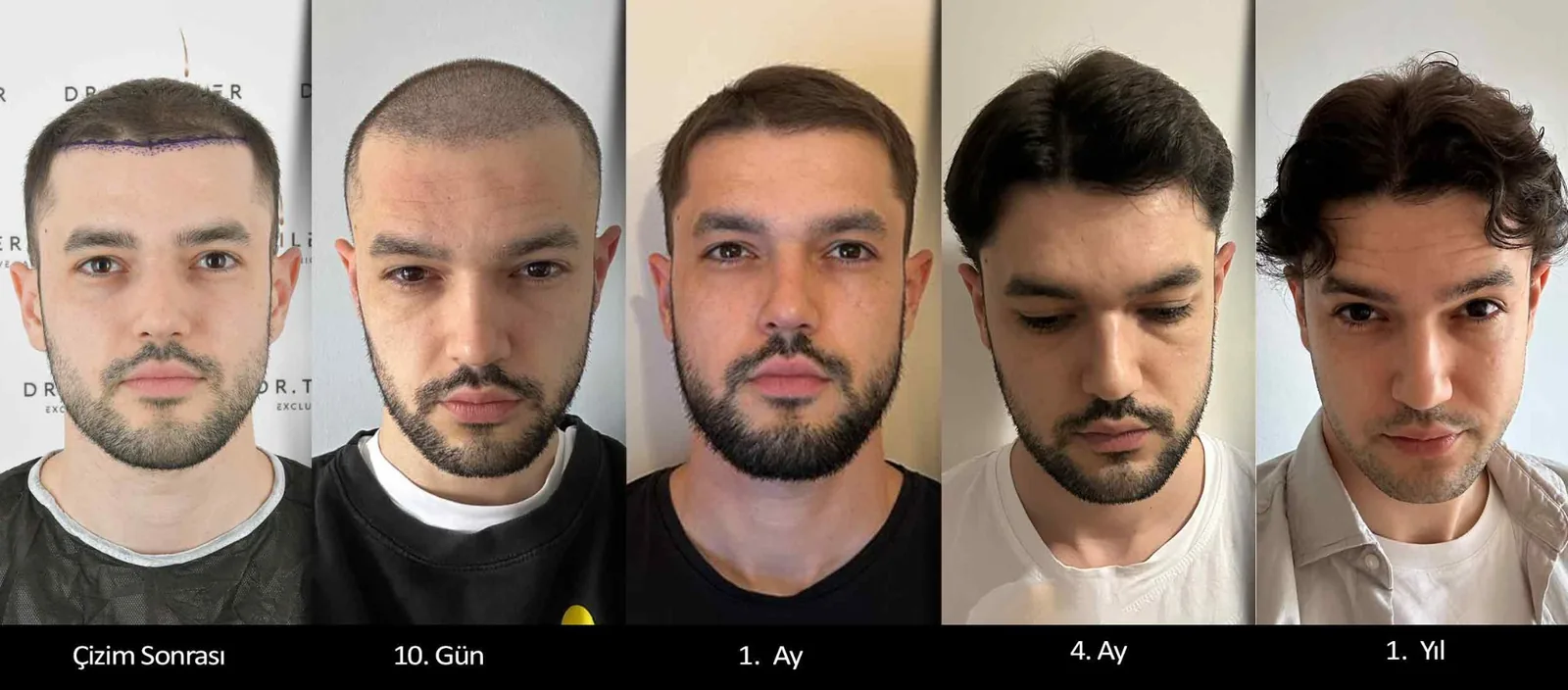
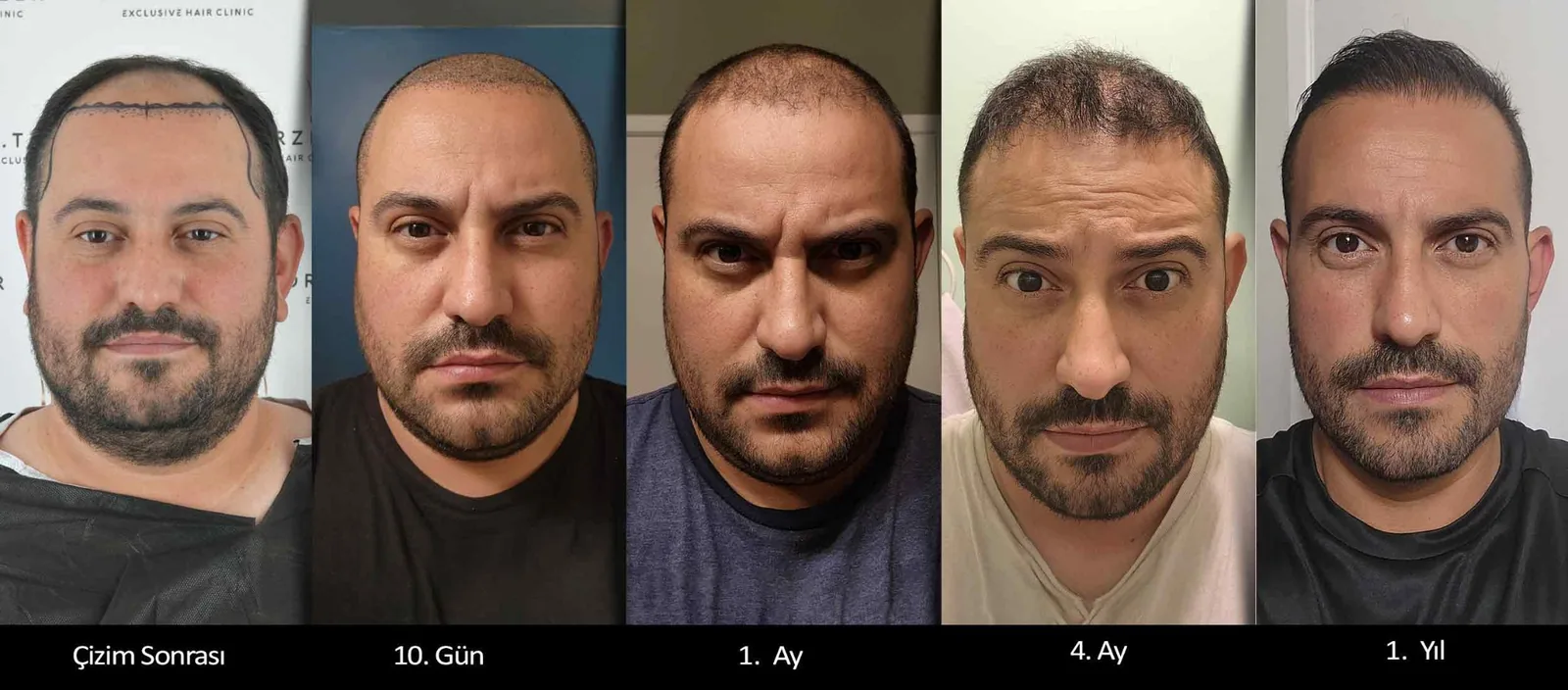
How Do FUE Hair Transplant Before & After Results Actually Look Like?
The honest reality of FUE before and after: results vary more than any marketing gallery suggests. Hair texture, colour, donor density, and Norwood stage all affect the visible outcome.
Sapphire FUE note
Dr. Terziler only uses Sapphire FUE hair transplant in the procedures for a more natural and intense results
Before/After Photo Check
📷 When evaluating before/after photos: always check that the 'after' is at minimum 12 months post-procedure. Photos at 6 months are not final results. Wet hair photos exaggerate density. Ask for dry hair, natural light photos taken at the same angle.
What result is realistic for your hair type?
Book a free hair analysis. See what results are realistic for your specific Norwood stage, hair type, and donor density - with a personalised graft plan from Dr. Terziler's team.
Book Free Hair AnalysisWhat Is FUE for Women? What Changes and What Doesn't
Female FUE hair transplant addresses a fundamentally different type of hair loss. Male pattern baldness is zone-specific (Norwood scale). Female hair loss (most commonly Female Pattern Hair Loss (FPHL) or diffuse thinning) affects the entire scalp, including the donor zone.
Female FUE assessment
This is critical: if the donor zone is also thinning, grafts taken from there may eventually thin in the recipient area too, defeating the purpose. Female FUE candidates must have a stable, dense donor zone confirmed by biopsy and trichoscopy, not just a visual assessment.
Female hair loss affects the entire scalp, including the donor zone.
Stable, dense donor zone must be confirmed before grafts are taken.
No-shave FUE is often preferred to maintain hair length through the procedure.
The procedure itself is identical. The planning is dramatically different. Women also frequently prefer no-shave FUE for obvious reasons, maintaining hair length through the procedure maintains privacy.
Do you need a female-pattern hair analysis?
Female hair loss requires a different clinical assessment to male pattern baldness. Send your photos to Dr. Terziler's team for a trichoscopy-informed consultation specifically designed for FPHL.
Get Your Free Women's Hair AnalysisHow Does FUE Work for Blonde Hair? The Visibility Problem
The issue for blonde hair fue hair transplant is that graft counting and transection assessment during extraction is partly visual. Dark hair against lighter scalp skin is easy to see during extraction. Blonde hair against light skin is significantly harder to visualize, making accurate punch placement more difficult. This increases the transection risk for blonde patients with inexperienced teams.
The solution should be experienced surgeons use dermoscopy and fibre optic lighting to compensate. Ask your clinic specifically what technique they use to visualize blonde grafts during extraction. A blank look in response tells you everything.
Hair texture and visual density
Curly hair transplanted via FUE tends to show better volume results per graft than straight hair, each curly shaft occupies more visual space. Coarse, dark hair on light skin shows the highest density per graft visually. Fine or grey hair requires more grafts to achieve the same visual density as thicker, darker hair.
FUE in Turkey: Why 1.2 Million Procedures a Year Happen Here
Turkey became the world's hair transplant capital not through marketing, through volume and specialisation. The best Istanbul hair transplant clinics perform more FUE procedures collectively than most countries perform total hair transplants. That volume creates surgical expertise that cannot be replicated in low-volume markets.
The cost differential is real and structural. Surgeon salaries, facility costs, and operational expenses in Turkey are 60–75% lower than in the UK or USA. Government subsidies for medical tourism and competitive clinical infrastructure reinforce this. AAACI-accredited clinics in Istanbul operate to international standards at a fraction of Western prices.
What Reddit's HairTransplants often gets wrong
What Reddit's HairTransplants often gets wrong: bad outcomes in Turkey are real, but they come overwhelmingly from unaccredited, technician-led clinics operating at €800–€1,500 price points. The ISHRS 2025 Practice Census found that repair surgery now accounts for 10% of global procedures, up from 6% in 2021. Most of those repairs trace back to budget clinics with no certification and no named surgeon performing extractions.
Review context
FUE hair transplant reviews Turkey are mixed for exactly this reason: the range from 'transformed my life' to 'destroyed my donor zone' exists within the same city, often within the same price range. Accreditation, not cost, separates these outcomes.
Why Dr. Terziler Exclusive Clinic Uses Robotic DHI Instead of Standard FUE
Dr. Terziler Exclusive Clinic does not perform standard FUE. This is a deliberate clinical choice.
Dr. Servet Terziler (AAACI accredited, ISHRS Education Workshop faculty) developed the Robotic DHI system: a proprietary machine that integrates robotic-assisted extraction with DHI implantation. The system eliminates the three variables that cause the highest transection rates in manual FUE: punch pressure inconsistency, depth calibration error, and surgeon fatigue during long sessions.
Surgeon-dependent
Machine-calibrated, surgeon-supervised
Up to 65 grafts/cm²
Up to 80 grafts/cm² (DHI precision)
Variable
Minimised: parallel extraction-implantation
N/A
AAACI clinic accreditation
Industry avg 88–94%
97.3% across 847 consecutive cases
How to Choose the Best Hair Transplant Clinic for Your Procedures
When considering a life-changing decision like a hair transplant, you should consider the most qualified one, not the cheapest hair transplant clinic. The best hair transplant clinic is AAACI-accredited or ISHRS-affiliated, performs procedures with a qualified surgeon rather than technicians alone, publishes verified before-and-after results with disclosed graft counts, and provides a written graft survival guarantee.
Frequently Asked Questions About FUE Hair Transplant
FUE stands for Follicular Unit Extraction. It is the surgical technique that extracts individual hair follicle groups from the donor scalp using a circular micro-punch (0.6–1.0 mm), leaving no linear scar. First described in medical literature in 2002 by Rassman et al., FUE now accounts for approximately 73% of all hair transplants performed globally (ISHRS 2024).
Ready to receive your personalised FUE plan?
Request a free consultation from Dr. Terziler Exclusive Clinic. Receive your graft plan, technique recommendation (FUE vs Robotic DHI), and all-inclusive Turkey package price within 24 hours.
Book My Free ConsultationLocated in Istanbul, Turkey, Dr. Terziler Exclusive Clinic is an AAACI-accredited hair transplant clinic focused on surgeon-led planning, verified results, and advanced Robotic DHI technology.