
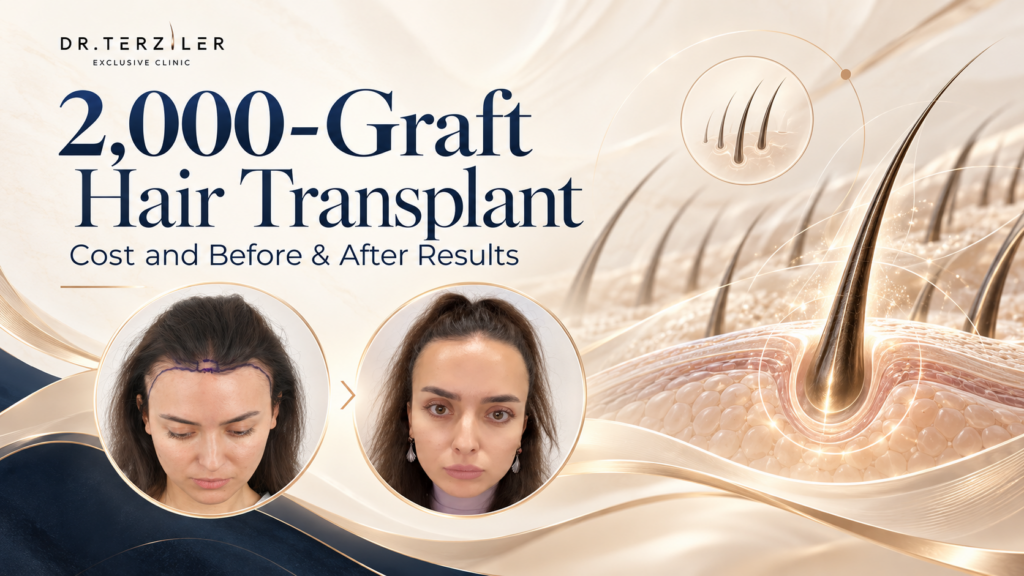
A 2000-graft hair transplant is one of the most common single-session procedures performed today. It delivers 4,200 to 4,600 individual hairs to the hairline, crown, or mid-scalp, with results visible by month 6 and full density reached by month 12.

MEDICALLY REVIEWED BY
Dr. Servet Terziler
AAACI Accredited Surgeon, ISHRS Member and Inventor of Robotic DHI
Updated June 2026
What Is a 2000 Graft Hair Transplant?
A 2000-graft hair transplant moves 2,000 individual follicular units from the donor zone to thinning or bald areas. Each graft contains 1 to 4 hair follicles, not a single hair. The 2000 figure refers to grafts, meaning the actual number of hairs transplanted is significantly higher.
Most patients confuse grafts with hairs. At typical follicular distribution, 2000 grafts deliver approximately 4,200 to 4,600 individual hairs. What changes between techniques is not the graft count but the survival rate and the density of the final result.
Learn more about the full hair transplant Turkey process, techniques, and what to expect from your first consultation.
Source: Headington JT (1984) follicular unit definition. PMID: 6694356
How Many Hairs Is 2000 Grafts?
2000 grafts contain approximately 4,200 to 4,600 individual hairs. The exact figure depends on follicular distribution in the donor zone, which varies by genetics and scalp density.
The table below shows the exact hair-count maths at 2000 grafts. This data is based on the standard follicular distribution found in clinical literature:
| Graft Type | % of Grafts | Number of Grafts | Hairs Produced |
|---|---|---|---|
| Single-hair grafts | 15% | 300 grafts | 300 hairs |
| Double-hair grafts | 45% | 900 grafts | 1,800 hairs |
| Triple-hair grafts | 35% | 700 grafts | 2,100 hairs |
| Four-hair grafts | 5% | 100 grafts | 400 hairs |
| TOTAL | 100% | 2,000 grafts | 4,600 hairs |
Follicular grouping is determined by genetics and donor zone density, not by the surgeon. Patients with naturally thick, multi-hair grafts see higher total hair counts from the same graft number.
See the hair transplant guide for a deeper explanation of how grafts and follicular units relate to final hair density.
Source: Rassman WR & Bernstein RM (2002): follicular unit density studies. PMID: 11901374
How Much Area Do 2000 Grafts Cover?
2000 grafts cover approximately 40 to 55 square centimetres of scalp, depending on implantation density. The higher the grafts per cm2, the smaller the covered area but the denser the final result.
| Scalp Zone | Zone Size | 2000 Grafts Coverage | Density |
|---|---|---|---|
| Frontal hairline only | 25-35 cm2 | Full coverage | 55-65 grafts/cm2 (high density) |
| Hairline + partial mid-scalp (NW3) | 40-55 cm2 | Full coverage | 40-50 grafts/cm2 |
| Crown only (small-medium) | 35-50 cm2 | Full to near-full | 40-55 grafts/cm2 |
| Full mid-scalp (NW4 zone) | 60-80 cm2 | Partial (40-55% of zone) | 35-40 grafts/cm2 |
A surgeon choosing 35 grafts per cm2 achieves wider coverage. At 55 grafts per cm2, results are denser in a smaller zone. Both approaches are clinically valid depending on the patient's Norwood stage and aesthetic goal.
How Much Will 3000 Grafts Cover?
3000 grafts cover approximately 60 to 85 cm2 of scalp, delivering 6,600 to 7,500 individual hairs. This addresses the full hairline and mid-scalp for Norwood 3 to 4 patients in a single session. See the complete 3000 grafts hair transplant guide for coverage details, costs, and before and after results.
How Much Will 4000 Grafts Cover?
4000 grafts cover approximately 80 to 130 cm2, providing full hairline and mid-scalp coverage for Norwood 4 and 5 patients. At standard distribution, 4000 grafts deliver 8,800 to 10,000 individual hairs. Read the 4000 grafts hair transplant guide for a full breakdown of coverage, technique, and results.
How Much Will 5000 Grafts Cover?
5000 grafts cover approximately 110 to 160 cm2, addressing the hairline, mid-scalp, and crown at Norwood 5 and above. This is a large session, typically requiring two days. See the 5000 grafts hair transplant page for session planning, staging, and realistic outcome data.
Is 2000 Grafts Enough for a Hairline?
Yes. 2000 grafts is sufficient for full hairline restoration at Norwood 2 and 3. A standard frontal hairline zone covers 25 to 35 cm2. At 50 grafts per cm2, 2000 grafts delivers complete hairline coverage with natural density.
For Norwood 2 to 3 patients, concentrating all 2000 grafts on the hairline produces a denser, more natural result than splitting them between the hairline and mid-scalp. A focused approach at this graft count gives higher density per zone and better long-term visual thickness.
Is 2000 Grafts Enough for the Crown?
Yes, 2000 grafts can cover a thinning crown when the crown zone measures under 40 cm2. Crown zone size varies by Norwood stage, and that specific measurement determines whether 2000 grafts is sufficient.
| Norwood Stage | Crown Zone Size | 2000 Grafts Result | Recommendation |
|---|---|---|---|
| Norwood 3V | 25-40 cm2 | Full crown coverage at 50 grafts/cm2 | 2000 grafts sufficient |
| Norwood 4 | 40-55 cm2 | 70-85% density (partial coverage) | 2,500-3,000 grafts recommended |
| Norwood 5 | 55-80 cm2 | Insufficient alone; first session only | 3,000-3,500 grafts minimum |
Crown hair grows in a spiral pattern, which requires 10 to 15% lower graft density per cm2 than hairline implantation. This means 2000 grafts covers proportionally more crown area than hairline area per graft, a clinical detail most sources do not address.
Patients with a Norwood 3V crown under 40 cm2 achieve natural full-crown density with 2000 grafts. Larger crowns require 2,500 to 3,500 grafts.
Is 2000 Grafts a Lot?
2000 grafts is a mid-size session. It is not a minor touch-up and not a mega session. Most clinics classify it as a standard single-day procedure within the most common treatment range.
| Session Type | Graft Range | Typical Use Case |
|---|---|---|
| Small session | 500-1,500 grafts | Temples, sideburns, early recession, hairline refinement |
| Standard session | 1,500-3,000 grafts | Hairline, crown, Norwood 2-4 — 2000 grafts sits here |
| Large session | 3,000-4,000 grafts | Norwood 4-5, hairline and mid-scalp combined |
| Mega session | 4,000+ grafts | Norwood 5-7, full scalp reconstruction |
2000 grafts is safely completed in one day in 4 to 6 hours. Patients are typically discharged on the same day with no hospital stay required.
Which Norwood Stages Need 2000 Grafts?
Norwood 2 and 3 patients typically need 1,500 to 2,500 grafts. 2000 grafts provides full hairline restoration at Norwood scale stages 2 to 3 and partial mid-scalp coverage at Norwood 3V.
| Norwood Stage | Typical Graft Range | What 2000 Grafts Achieves |
|---|---|---|
| NW1 | 0-500 grafts | More than enough; maximum possible density in treated zone |
| NW2 | 800-1,500 grafts | More than enough; full hairline coverage at very high density |
| NW3 | 1,500-2,500 grafts | Full hairline coverage, partial mid-scalp addressed |
| NW3V | 2,000-3,000 grafts | Hairline OR crown in one session, not both simultaneously |
| NW4 | 3,000-4,000 grafts | Partial coverage (40-55%); second session needed for full result |
| NW4A | 3,500-4,500 grafts | Partial coverage (35-44%); multi-session planning required |
| NW5 | 4,000-5,000 grafts | Hairline only; crown requires a second session |
| NW6-7 | 5,000+ grafts | First session of a multi-session plan; full scalp cannot be addressed in one sitting |
Individual graft counts vary by scalp size, hair calibre, and density goals. A consultation determines the exact number for each patient.
Sources: Norwood OT (1975): PMID: 1094308 | Bernstein RM & Rassman WR (2002) graft count references
How Much Does a 2000 Graft Hair Transplant Cost?
A 2000-graft hair transplant costs $6,000 to $16,000 in the United States and $1,200 to $2,500 in Turkey as an all-inclusive package. Price varies by technique, clinic accreditation level, and whether accommodation and aftercare are included in the fee.
How Much Does 2000 Grafts Cost in the USA?
In the United States, a 2000-graft hair transplant costs $6,000 to $16,000 at $3 to $8 per graft. New York, Los Angeles, and Miami clinics sit at the high end, charging $8 to $12 or more per graft. Mid-market cities average $4 to $6 per graft.
This fee covers surgery only. Hotel and transport are additional costs that typically add $2,000 to $4,000 to the total.
Many US patients choose Turkey to save $5,000 to $14,000 on the same procedure while receiving all-inclusive care. See our full hair transplant Turkey vs USA cost comparison for a complete breakdown.
How Much Does 2000 Grafts Cost in Turkey?
In Turkey, a 2000-graft hair transplant costs $1,200 to $2,500 as an all-inclusive package.
All-inclusive Turkey hair transplant packages cover the surgical procedure, anaesthesia, 4 to 5 nights in a 4-star hotel, airport and clinic transfers, medication, and an aftercare kit. Istanbul is the primary destination for international patients.
When comparing like-for-like, a patient flying from the US to Istanbul spends approximately $1,800 to $2,500 total, versus $8,000 to $16,000 for surgery only in the US.
View available hair transplant Turkey cost with exact inclusions and pricing for 2026.
How Much Does 2000 Grafts Cost in the UK?
In the United Kingdom, a 2000-graft hair transplant costs GBP 5,000 to GBP 10,000. UK patients who fly to Istanbul for the same procedure typically spend GBP 1,500 to GBP 2,500 in total, including flights and the all-inclusive clinic package. That is a saving of GBP 3,000 to GBP 8,000 on the same number of grafts.
How Long Does a 2000 Graft Hair Transplant Take?
A 2000-graft hair transplant takes 4 to 6 hours in a single session. Procedure time varies by technique.
| Technique | Procedure Time | Reason |
|---|---|---|
| Robotic DHI (Picasso) | 4-5 hours | Simultaneous extraction and implantation — no waiting phase between steps |
| Standard DHI | 5-6 hours | Choi pen implantation with manual extraction phase |
| FUE | 5-7 hours | Separate extraction and implantation phases add total time |
A 2000-graft session is completed before the first-extracted grafts reach the critical 2-hour out-of-body threshold. At 4000 grafts, early-extracted grafts can exceed this window. Graft quality per graft is therefore higher in smaller sessions when technique remains consistent (Cooley, 2014).
Patients are typically discharged on the same day with minimal discomfort.
Source: Cooley JE (2014): graft survival and out-of-body time. PMID: 25566593
FUE vs DHI for 2000 Grafts: Which Method Gives Better Results?
DHI produces higher graft survival than FUE for 2000-graft sessions. DHI survival reaches 92 to 97%. FUE runs 90 to 95%. At 2000 grafts, the 2 to 7% difference equals 40 to 140 additional live grafts per session.
| Technique | Procedure Time | Graft Survival | Scar Risk | Best For |
|---|---|---|---|---|
| FUE | 5-7h | 90-95% | Linear scar possible | Large sessions (3000+ grafts), budget-focused |
| DHI (Choi pen) | 5-6h | 92-97% | Minimal | Hairline density, 1500-3000 grafts |
| Robotic DHI (Picasso) | 4-5h | Up to 97% | Near zero | Precision hairline + crown at 1500-3000 grafts |
For 2000-graft sessions focused on the hairline or crown, DHI hair transplant Turkey and Robotic DHI are the superior methods. Angle control from the Choi pen is more precise than channel-cut FUE hair transplant at small zone densities where every graft placement is visible in the final result.
Source: ISHRS: DHI/FUE survival benchmarks: h
What Is Robotic DHI and Why Does It Matter for 2000 Grafts?
Robotic DHI uses robotics-assisted extraction to standardise punch angle, depth, and graft handling across every graft in a session.
At 2000 grafts concentrated in the hairline or crown, precision is more critical than at 4000 grafts spread across a larger zone. A poorly angled graft at the hairline is visible. Robotic consistency eliminates that variable by applying the same extraction parameters to every single graft.
"2000 grafts is where artistry matters most. At this scale, every placement defines the hairline. This is why we use the 0.70mm Choi pen, because precision at this scale is non-negotiable."
Learn more about the Picasso Robotic DHI system with artistic hairline and how the technology was developed.
Sources: Cooley JE (2014): PMID: 25566593 | AAACI: https://www.aaaci.com/clinic-accreditation | ISHRS: https://ishrs.org
What Happens to the Donor Area After 2000 Grafts?
The donor area heals normally after 2000 grafts when extractions are distributed at under 80 grafts per cm2. At this extraction density, there is no visible thinning of the donor zone.
A 2000-graft session removes approximately 16 to 25% of total scalp donor capacity. Most patients have a lifetime donor supply of 6,000 to 10,000 scalp grafts. This leaves 75 to 84% of donor reserve intact for future sessions, making 2000 grafts a conservative and sustainable use of the donor bank at Norwood 2 to 3.
The donor zone shows redness and small scabs for 7 to 10 days. At 30 days, the area is visually indistinct from untreated scalp.
Beard hair provides an additional 2,000 to 5,000 grafts as a secondary donor source if scalp supply is limited. This extends the lifetime graft availability significantly for patients planning multiple sessions.
Source: Bernstein RM & Rassman WR (2002): donor density and safe extraction limits. PMID: 11901374
Does a 2000 Grafts Hair Transplant Hurt?
No. A 2000-graft hair transplant does not hurt during the procedure. Local anaesthesia is administered before extraction begins. The injection itself causes a brief stinging sensation. That is the only moment patients report pain.
Post-procedure discomfort is mild to moderate for 48 to 72 hours. Most patients rate it 2 to 3 out of 10. Standard oral analgesics manage it fully.
A 2000-graft session causes less post-procedure swelling than a 4000-graft session because the total extraction and implantation area is smaller. Most 2000-graft patients feel normal within 48 hours.
See our dedicated page on does a hair transplant hurt for a full breakdown of anaesthesia, injection technique, and day-by-day recovery.
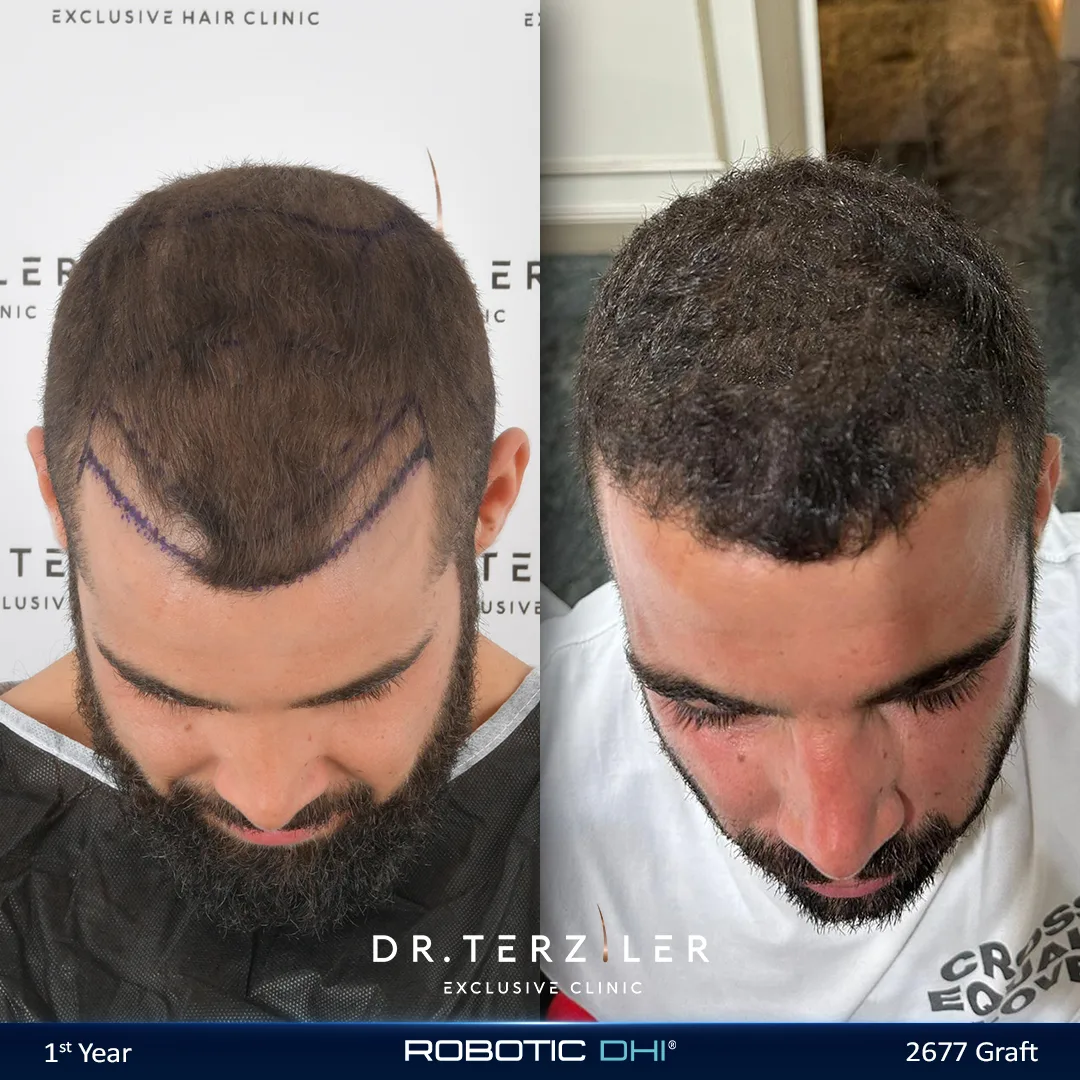
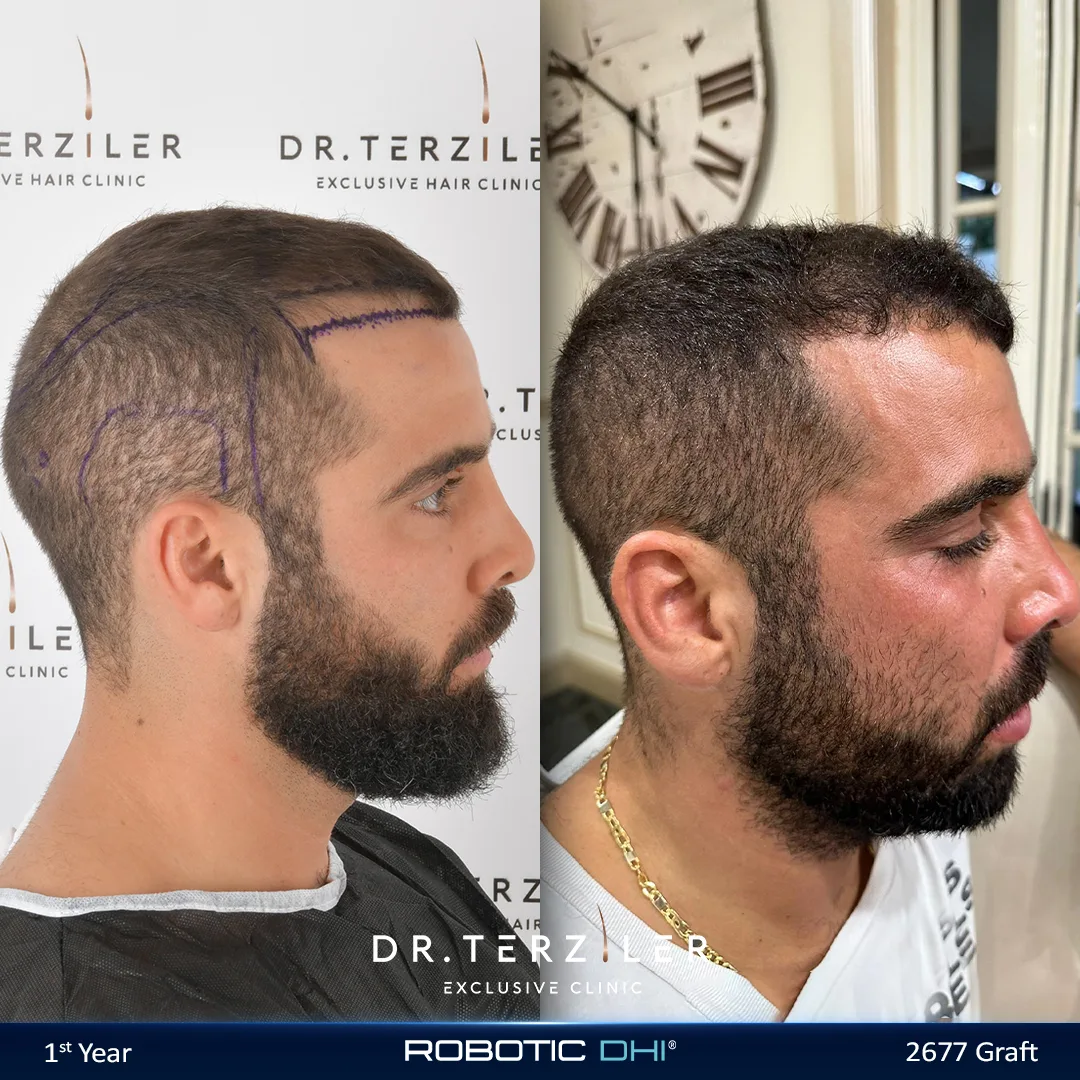
What Do 2000 Hair Grafts Look Like Before and After?
2000 hair grafts transform a receding hairline or thinning crown into a natural, dense appearance by 12 months. The most visible change happens between month 6 and month 12 as transplanted hairs thicken from fine vellus hair to full terminal diameter.
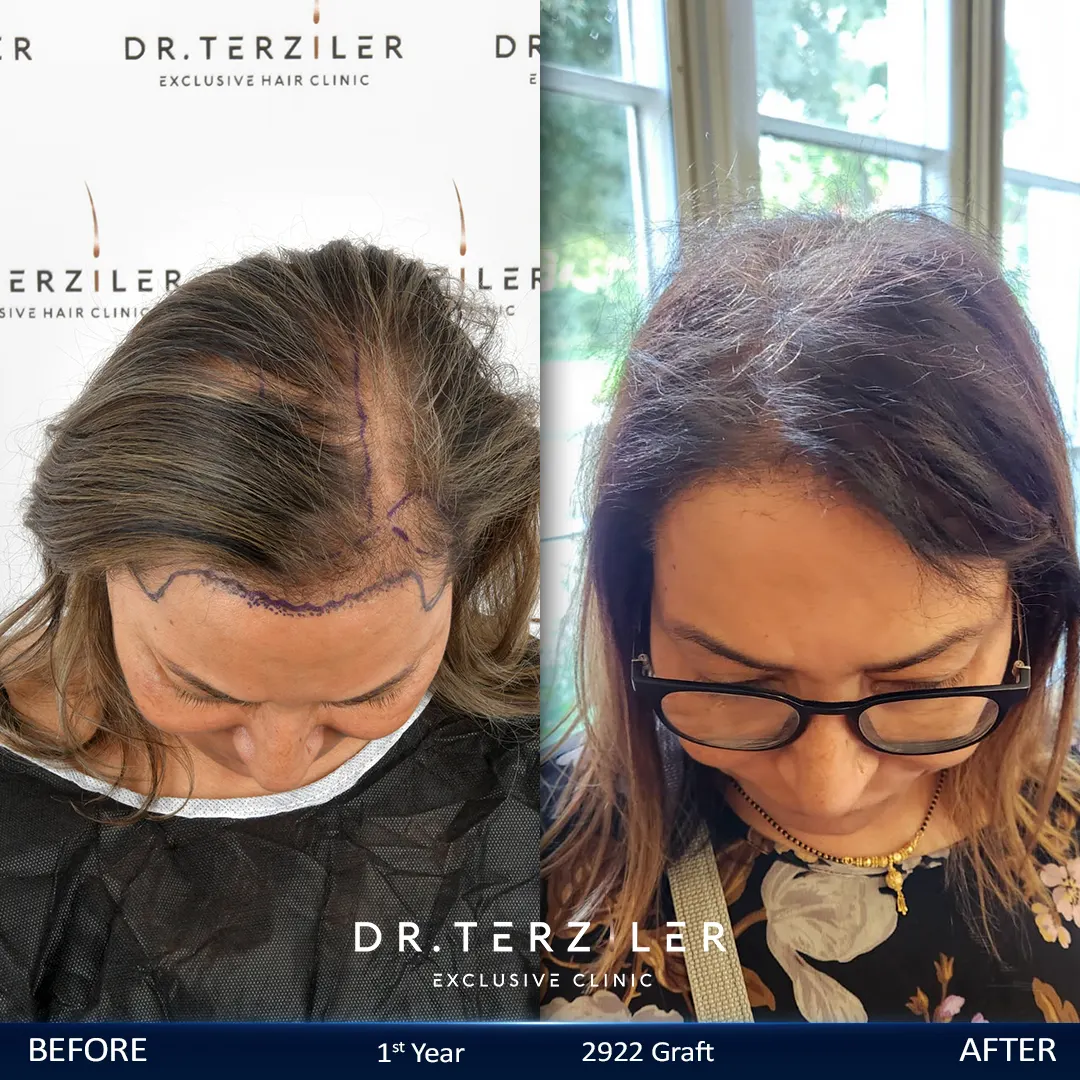
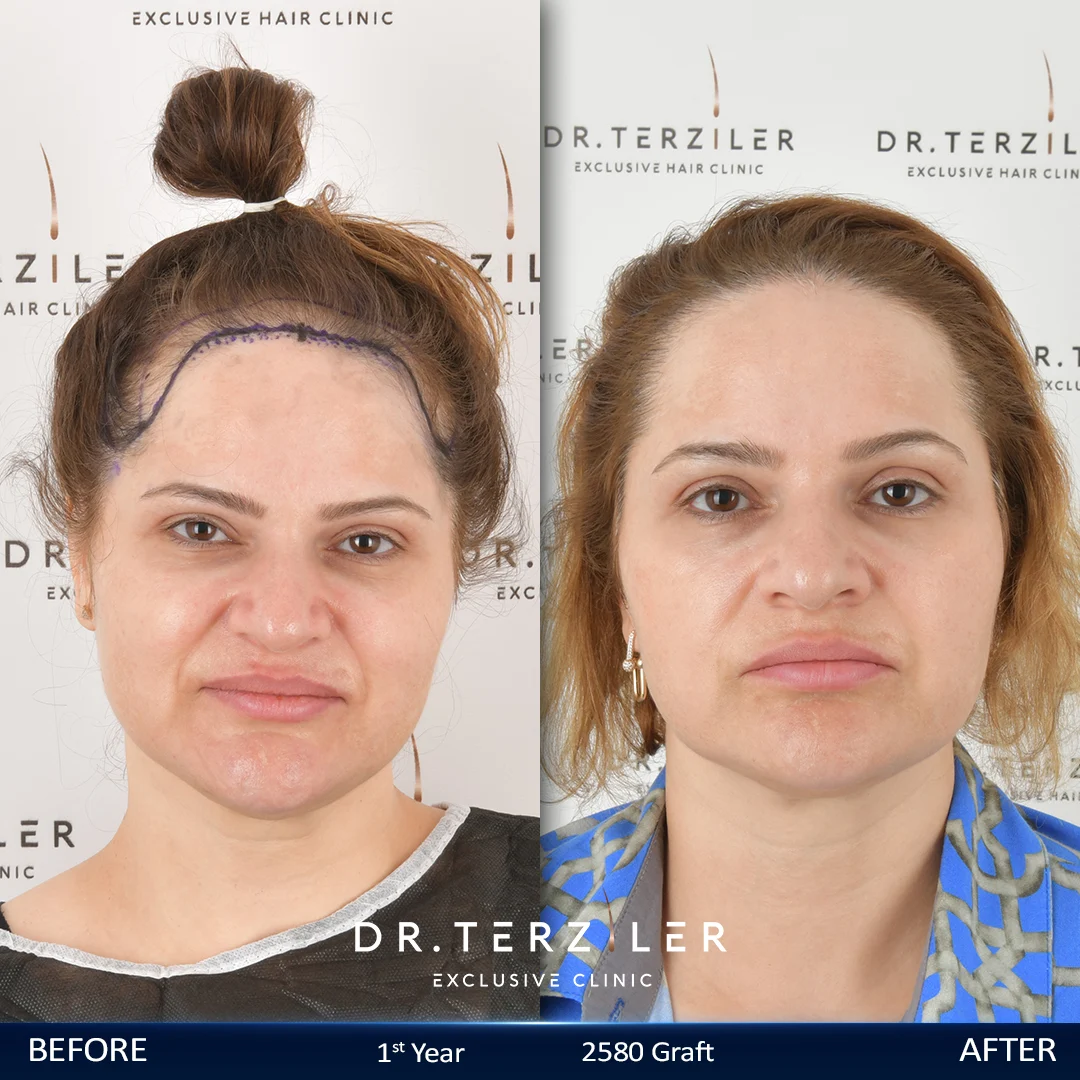
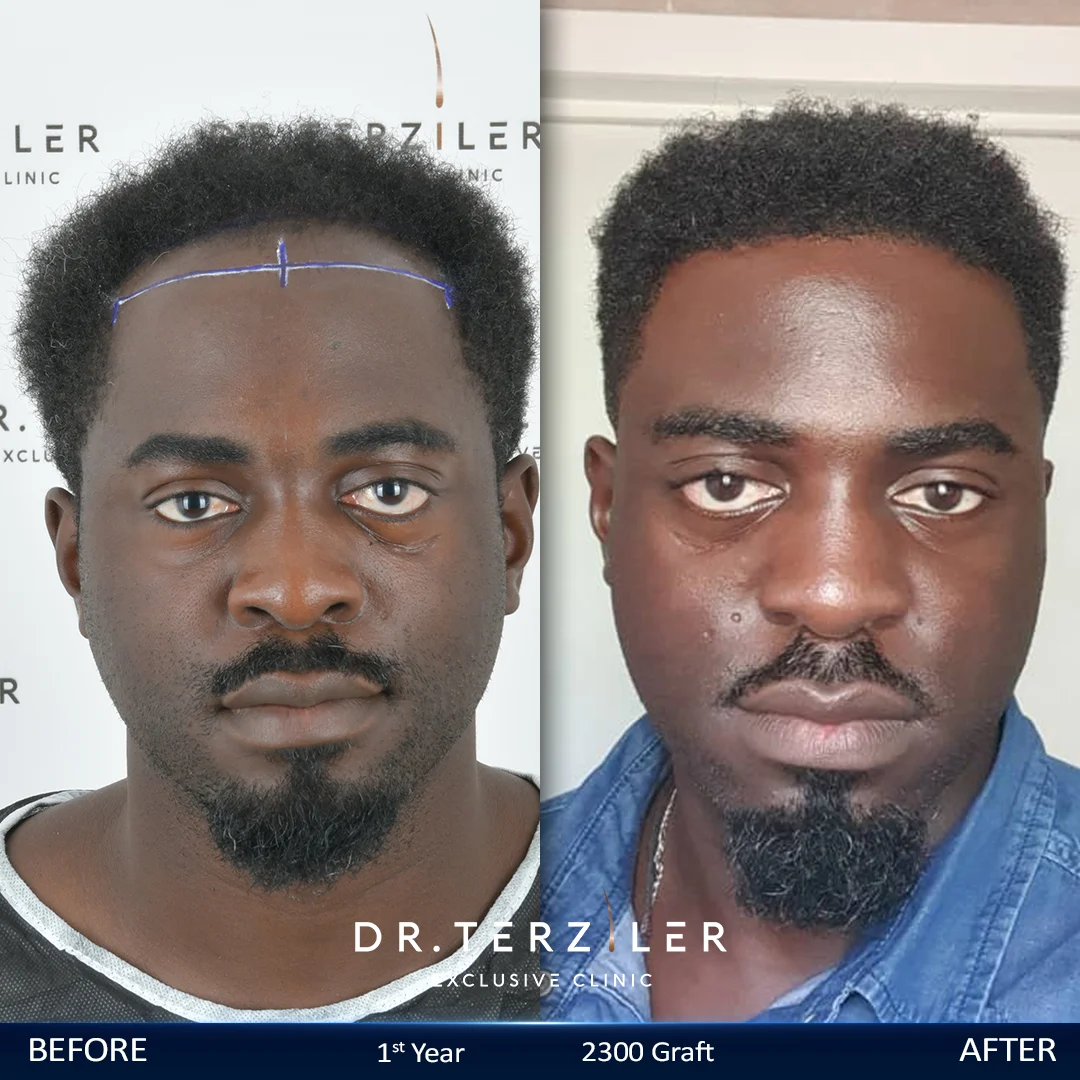
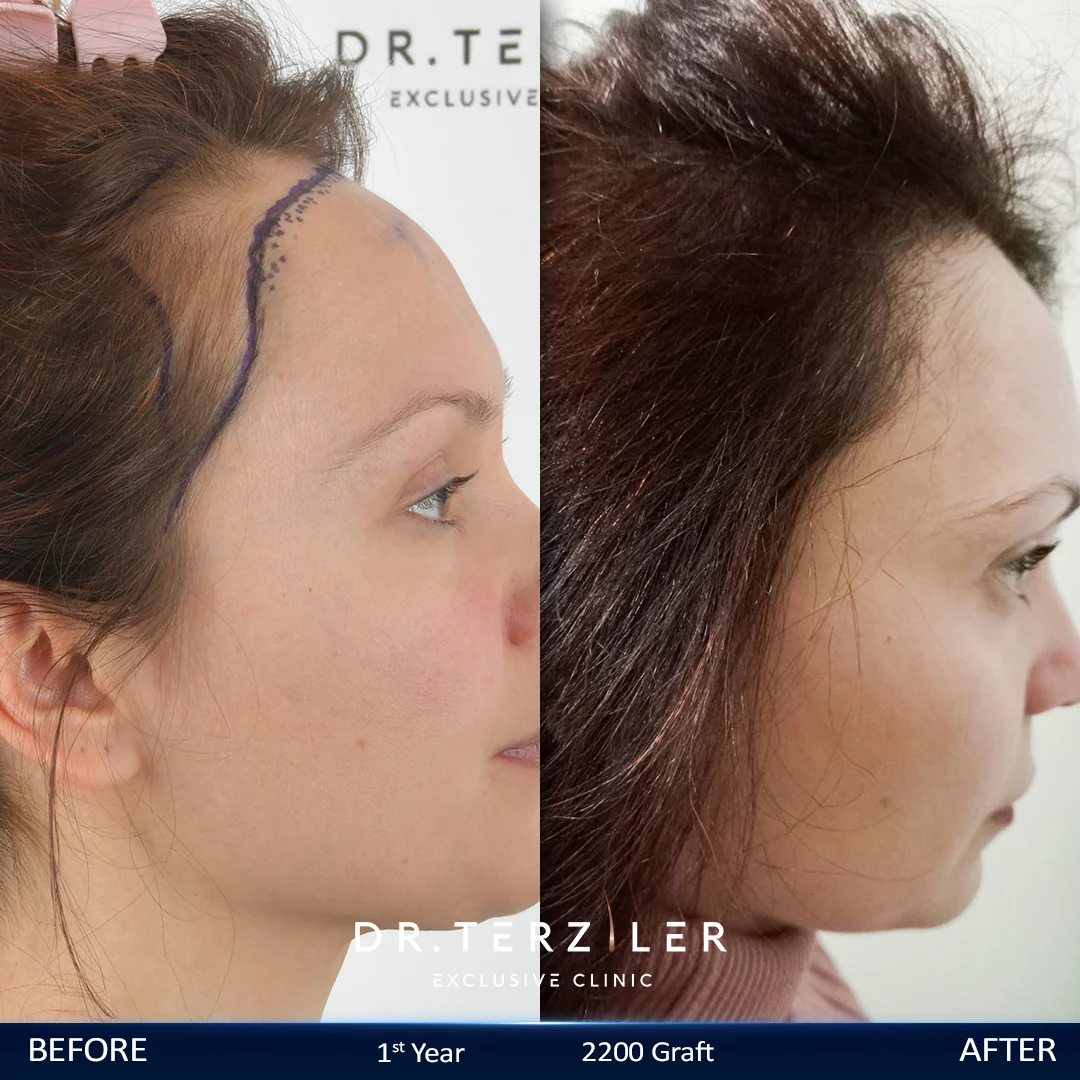
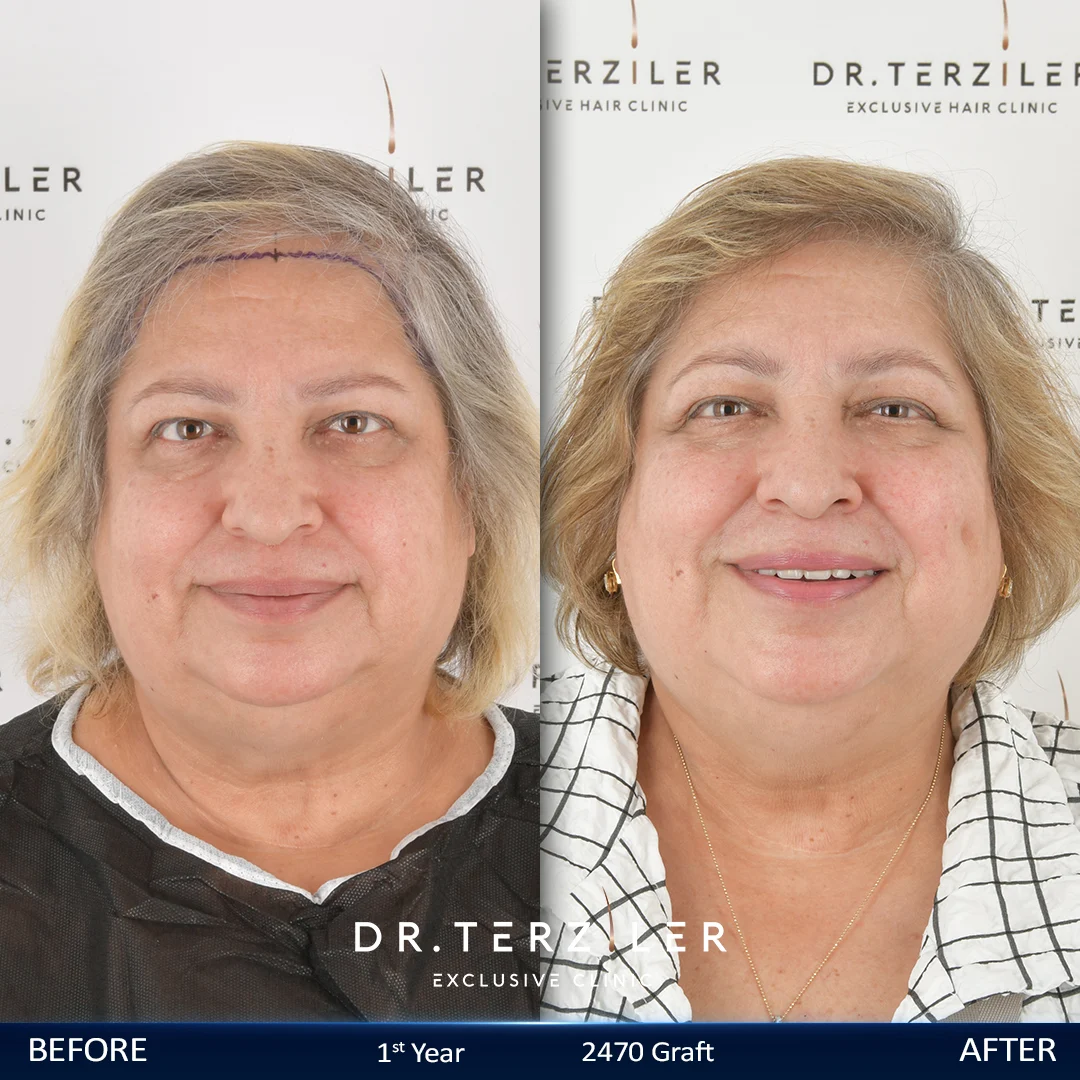
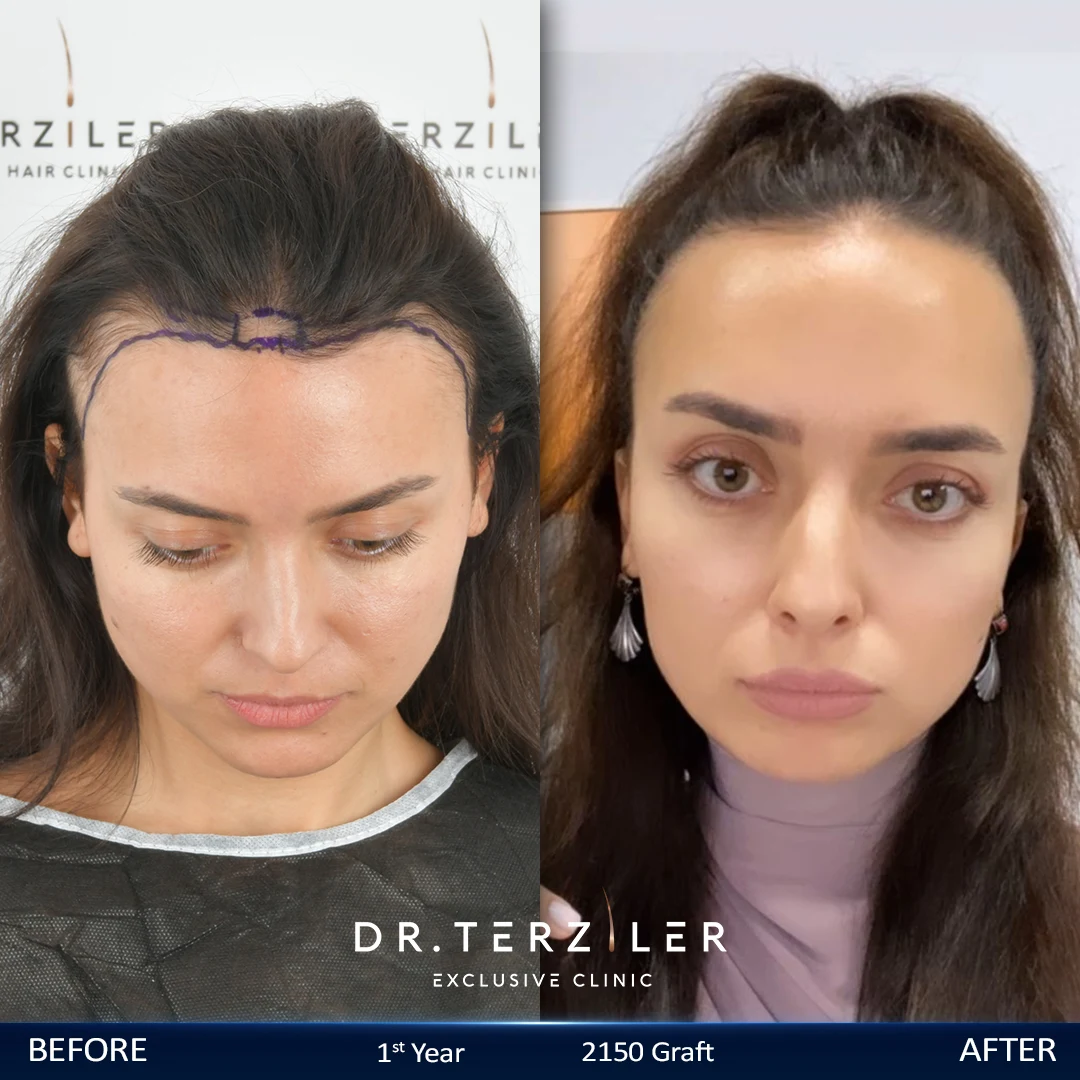
Every before and after result at Dr. Terziler Exclusive Clinic is from a real patient using Robotic DHI. No filters, no lighting adjustments.
"I was Norwood 3 and only needed 2000 grafts. Some clinics pushed me toward 3000 or 4000. Dr. Terziler's team said 2000 was exactly right for my pattern. They were right. Month 9 was when I realized the hairline looked completely natural."
View the full before and after gallery to see 2000-graft hairline and crown results across multiple Norwood stages and hair types.
When Do You See Results After a 2000 Graft Hair Transplant?
You see the first visible growth at 4 to 5 months after a 2000-graft hair transplant. Approximately 80% of the final result is visible by month 9. Full terminal density is reached at 12 to 18 months.
| Timeline | What Happens | What to Expect |
|---|---|---|
| Month 1 | Transplanted hairs enter telogen (resting) phase | Shock shedding begins — normal and expected |
| Month 2-3 | Follicles dormant beneath the scalp | Scalp looks similar to pre-operation state. No visible growth |
| Month 4-5 | First anagen re-entry begins | Fine, sparse hairs appear at the hairline or crown |
| Month 6 | Active growth phase | 40-60% of final density visible. Hairline shape begins to emerge |
| Month 9 | Hair thickening phase | 75-85% density. Hairline clearly defined. Crown visible if crown case |
| Month 12 | Near-final result | 90-95% of final density visible. Hair texture improving |
| Month 15-18 | Full terminal density | 100% of final result. Hair texture fully normalised |
2000-graft hairline patients often notice early results faster than 4000-graft patients. Smaller grafted zones mean fewer total follicles competing for re-entry into the anagen growth phase simultaneously.
Month 1 to 3: Why Is My Hair Falling Out?
Shock shedding is normal in the first 4 to 6 weeks after a hair transplant. Transplanted hairs enter the telogen resting phase and detach from the scalp. The follicle remains intact and alive beneath the surface.
By month 3, the scalp looks similar to its pre-operation state. New follicles are in their dormant phase before anagen re-entry begins. This stage concerns many patients but it is a normal part of the transplant growth cycle.
Month 4 to 6: What Does Early Growth Look Like?
First visible hairs appear at the hairline between month 4 and month 5. Growth is sparse at this stage, with fine, thin strands emerging. The hairs are in early anagen phase and have not yet thickened to their terminal diameter.
By month 6, 40 to 60% of the final hairline density is visible. The hairline shape begins to emerge clearly. Hairs are still thinner than they will become, but the coverage and direction of growth are already set.
Month 9 to 12: When Is the Final Result Visible?
By month 9, 75 to 85% of the final density is visible. The hairline is clearly defined and crown coverage is visible for crown cases. Hair continues to thicken during this period as follicles mature.
By month 12, 90 to 95% of the final result is visible. Hair thickens toward full terminal diameter. Full terminal density and texture are reached between month 15 and month 18, at which point the result is permanent.
Why Choose Dr. Terziler Exclusive Clinic for 2000 Grafts?
Dr. Terziler Exclusive Clinic is the only clinic in the world that performs special Robotic DHI, a system Dr. Servet Terziler invented specifically to achieve sub-millimetre hairline consistency. At 2000 grafts, where every placed follicle shapes the final hairline or crown, this level of precision is what separates a natural result from a visible one.
Every 2000-graft session at the clinic uses a 0.70mm Choi implanter pen, smaller than the 0.75mm industry standard. This 0.05mm difference reduces recipient site trauma by 15 to 20% per implantation and allows denser packing in the hairline zone. Grafts are implanted within 90 seconds of extraction as part of a sub-90-second out-of-body protocol that runs across every session. Graft storage uses an ATP and HypoThermosol solution; Cooley (2014) documented 72% graft survival at day 5 in this solution versus 0% in saline.
"2000 grafts is where artistry matters most. At this scale, every placement defines the hairline. This is why we use the 0.70mm Choi pen, because precision at this scale is non-negotiable."
Dr. Terziler Exclusive Clinic holds AAACI dual accreditation as surgeon #7722917 and as a facility. Fewer than 50 hair transplant providers worldwide hold this dual status. Dr. Terziler is an ISHRS-recognised educator and active member of the International Society of Hair Restoration Surgery. Graft survival reaches up to 97% for Robotic DHI procedures, within the ISHRS 2022 published benchmark of 90 to 97%.
As the best hair transplant clinic in Turkey, Dr. Terziler Exclusive Clinic combines scientific precision with aesthetic results backed by verified clinical data.
Frequently Asked Questions About 2000 Grafts Hair Transplant
How much does a 2000 graft hair transplant cost?
A 2000-graft hair transplant costs $6,000 to $16,000 in the United States at $3 to $8 per graft. In Turkey, the same procedure costs $1,200 to $2,500 as an all-inclusive package covering surgery, hotel, transfers, and aftercare. UK prices range from GBP 5,000 to GBP 10,000.
How many hairs is 2000 grafts?
2000 grafts contain approximately 4,200 to 4,600 individual hairs. Each graft averages 2.1 to 2.3 hairs based on typical follicular distribution: 15% single-hair, 45% double, 35% triple, and 5% four-hair grafts. The number 2000 refers to follicular units, not individual hair strands.
Is 2000 grafts a lot?
2000 grafts is a mid-size standard session. Clinical classification: small sessions run 500 to 1,500 grafts; standard sessions 1,500 to 3,000; large sessions 3,000 to 4,000; mega sessions 4,000 or more. A 2000-graft procedure is completed in one day in 4 to 6 hours.
How much area do 2000 grafts cover?
2000 grafts cover 40 to 55 cm2 depending on implantation density. At 50 grafts per cm2, coverage is 40 cm2. At 35 grafts per cm2, coverage reaches 57 cm2. A standard hairline zone (25-35 cm2) is fully covered. A thinning crown at Norwood 3V (30-45 cm2) is fully addressable.
How long does a 2000 graft hair transplant take?
4 to 6 hours in a single session. Robotic DHI completes 2000 grafts in 4 to 5 hours due to simultaneous extraction and implantation. Standard FUE takes 5 to 7 hours. In a 2000-graft session, all grafts are implanted within the critical 2-hour out-of-body window, maximising survival.
Is 2000 grafts enough for the crown?
Yes, when the crown zone is under 40 cm2. A Norwood 3V crown (25-40 cm2) is fully coverable with 2000 grafts at 50 grafts per cm2. A Norwood 4 crown (40-55 cm2) receives 70 to 85% density. Norwood 5 crowns require 3,000 or more grafts for full coverage.
Is 2000 grafts enough for a hairline?
Yes. 2000 grafts fully restores a receding hairline at Norwood 2 and 3. A standard frontal hairline zone is 25 to 35 cm2. At 50 grafts per cm2, 2000 grafts achieves complete, natural-density hairline coverage in a single session.
What Norwood stage needs 2000 grafts?
Norwood 2 and 3 patients most commonly need 1,500 to 2,500 grafts, making 2000 the standard choice. Norwood 3V patients use 2000 grafts for the hairline or crown but not both simultaneously. Norwood 4 and above require 3,000 or more grafts for full coverage.
What happens to the donor area after 2000 grafts?
The donor area heals to normal appearance within 30 days when extractions are distributed at under 80 grafts per cm2. A 2000-graft session removes 16 to 25% of lifetime donor capacity, preserving 75 to 84% for future sessions. The donor zone shows redness and small scabs for 7 to 10 days.
What is the graft survival rate for 2000 grafts?
90 to 97% with DHI and up to 97% with Robotic DHI. FUE survival runs 90 to 95%. Survival is driven by out-of-body time, graft storage solution, and implantation technique. ATP and HypoThermosol storage (Cooley 2014) achieves 72% survival at day 5 versus 0% in saline.
Is FUE or DHI better for 2000 grafts?
DHI delivers higher graft survival for 2000-graft sessions at 92 to 97% versus 90 to 95% for FUE. At 2000 grafts, the 2 to 7% survival difference equals 40 to 140 additional live grafts. For hairline and crown work, DHI Choi pen implantation provides superior angle control.
What does 2000 grafts look like before and after?
2000 grafts produce a full, natural hairline or dense crown coverage by 12 months. First growth appears at month 4 to 5. At month 6, 40 to 60% of final density is visible. At month 9, 75 to 85%. Full terminal density and texture are reached at 12 to 18 months.
How much does 2000 grafts cost in Turkey?
$1,200 to $2,500 all-inclusive in Turkey. Istanbul packages include the surgical procedure, 4 to 5 nights in a 4-star hotel, airport and clinic transfers, post-operative medication, and an aftercare kit. International patients typically save $5,000 to $13,000 compared to US or UK prices for the same graft count.
How many total grafts can a person have in their lifetime?
6,000 to 10,000 scalp grafts is the typical lifetime donor supply. A 2000-graft session uses 16 to 25% of this reserve. Beard hair provides a secondary source of 2,000 to 5,000 additional grafts. Norwood 2 to 3 patients who get 2000 grafts retain ample donor capital for future sessions if hair loss progresses.