





Completing your hair transplant surgery is a massive milestone, but it is only the first step in your hair restoration journey. Once the grafts are placed, your body enters a highly demanding phase of cellular regeneration. Your scalp must repair thousands of microscopic incisions, rebuild complex networks of blood vessels, and push dormant hair follicles into an active growth phase.
To fuel this intense biological process, your body requires an abundance of specific micronutrients. While a balanced diet is the foundation of health, targeted nutritional supplementation can act like high-quality fertilizer for a newly planted garden.
Using clinically proven vitamins and minerals after your procedure helps accelerate skin tissue healing, reduces post-op inflammation, prevents early shedding, and maximizes the thickness and density of your final results.
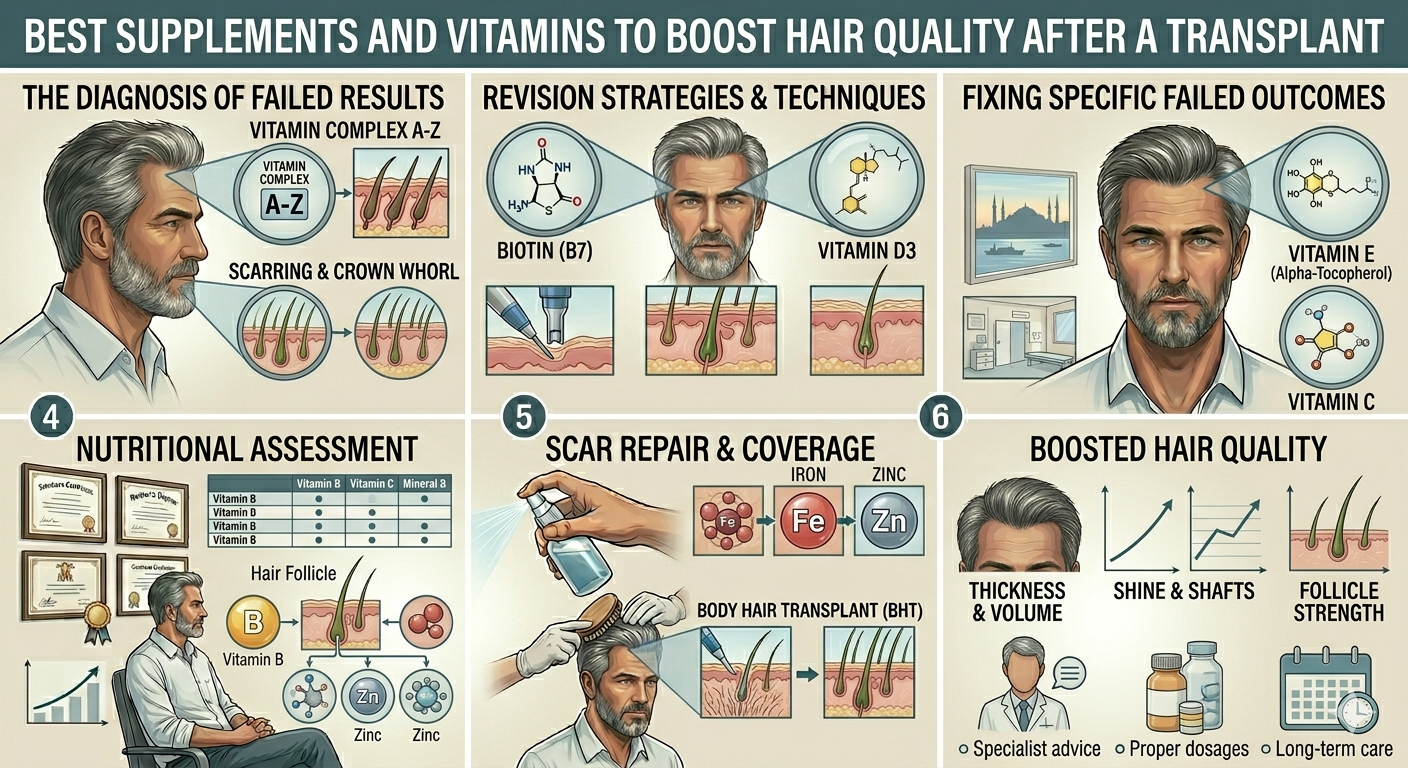
The Top 5 Essential Nutrients for Post-Op Hair Growth
To build strong, thick hair shafts and speed up scalp recovery, your daily supplement regimen should feature these five powerhouses:
1. Biotin (Vitamin B7)
Biotin is arguably the most famous nutrient in hair care, and for good reason. It is a fundamental coenzyme required for the synthesis of keratin, the primary structural protein that makes up over 90% of your hair strands.
- The Post-Op Benefit: Supplementing with Biotin increases the structural elasticity of your newly growing hair shafts, preventing the fine, early sprouts from becoming brittle and snapping off prematurely.
2. Zinc
Zinc is a vital trace mineral that plays an indispensable role in cellular division, protein synthesis, and immune function.
- The Post-Op Benefit: Zinc acts as a powerful tissue healer. It accelerates the closing of micro-incisions in both the donor and recipient zones. Furthermore, Zinc regulates the activity of the sebaceous glands around your new follicles, keeping your healing scalp clear of excess sebum, dandruff, and folliculitis infections.
3. Vitamin C
Vitamin C is a potent antioxidant that neutralizes free radicals and reduces the localized oxidative stress caused by surgical trauma.
- The Post-Op Benefit: Vitamin C is a mandatory cofactor for the body’s natural production of collagen, the structural matrix that gives strength and elasticity to skin tissue and blood capillaries. It also boosts your body’s ability to absorb iron, which is critical for carrying oxygen directly to your fresh roots.
4. Iron
Iron is the primary engine behind the production of hemoglobin, the protein in red blood cells that transports oxygen throughout your body.
- The Post-Op Benefit: Newly relocated hair follicles have an incredibly high metabolic demand for oxygen as they anchor into the scalp. If your iron levels are low, your roots become starved of oxygen, which can cause transplanted grafts to remain dormant for longer or shed aggressively.
5. Vitamin D3
Vitamin D3 acts more like a hormone than a traditional vitamin, regulating hundreds of cellular pathways throughout your body—including the lifecycle of your hair.
- The Post-Op Benefit: Clinical studies show that Vitamin D3 is deeply involved in follicle neogenesis (the awakening and creation of new hair pathways). Maintaining optimal D3 levels helps pull dormant grafts out of their post-surgical shock phase and shifts them into the active growth (anagen) phase smoothly.
Specialized Supporter Matrix
Beyond standard vitamins, specific herbal extracts and amino acids can be added to your routine to protect your new hair from hormonal damage and boost blood circulation:
| Supplement Type | Primary Source / Compound | Clinical Mechanism of Action |
| Natural DHT Blockers | Saw Palmetto / Pumpkin Seed Oil | Mildly inhibits 5-alpha-reductase, protecting native and newly transplanted hair from genetic thinning. |
| Amino Acids | L-Cysteine / L-Methionine | Delivers essential sulfur molecules directly to the hair matrix to increase overall hair thickness and speed up growth rate. |
| Circulation Boosters | Ginkgo Biloba / Marine Collagen | Dilates the microscopic capillaries in the scalp, ensuring a steady stream of nutrients reaches the base of each follicle bulb. |
The Safe Supplementation Timeline
You cannot begin taking every supplement immediately after stepping out of the operating room. Certain vitamins can interfere with blood clotting and healing if taken too early. Follow this structured medical timeline:
- Days 1 to 7 (The Safe Window): Stop all high-dose Vitamin E, Omega-3 fish oils, and Ginseng. These supplements act as natural blood thinners, which can trigger delayed bleeding around fresh incisions or cause grafts to dislodge. Stick strictly to the standard medications provided by your clinic.
- Day 8 to Month 3 (The Healing Phase): Introduce Vitamin C, Zinc, and low-dose B-complex vitamins to accelerate skin tissue repair and clear out scabs naturally.
- Month 3 to Month 12 (The Volumetric Surge): This is the peak growth window. Introduce high-dose Biotin, Vitamin D3, Iron (if blood panels show a deficiency), and natural DHT blockers like Saw Palmetto to maximize hair caliber, density, and length.
Final Thoughts: Fueling Your Transformation
Taking high-quality vitamins and supplements is a simple, highly effective way to take active control of your hair transplant recovery. By nourishing your body from the inside out, you provide your relocated hair roots with the exact molecular building blocks they need to anchor deeply, grow rapidly, and mature into a thick, permanent frame for your face.
At Dr. Terziler Clinic, we do not view nutrition as an afterthought; we treat it as an integral branch of our advanced medical protocol. Every premium procedure we execute is paired with an expertly curated, medical-grade post-operative kit containing scientifically formulated hair vitamins, rich Biotin serums, and targeted scalp care lotions. By blending world-class surgical artistry with comprehensive metabolic support, we ensure your grafts thrive flawlessly—yielding the absolute peak of dense, natural, and permanent lifetime growth.
Frequently Asked Questions (FAQ)
Should I get a blood test before starting a post-transplant vitamin routine?
Yes, absolutely. Getting a comprehensive blood panel before or immediately after your surgery is highly recommended. Randomly megadosing on minerals like Iron or Zinc when your body doesn’t need them can cause toxicity and disrupt your stomach, whereas targeted supplementation based on a real deficiency (like low Ferritin or Vitamin D) will yield far greater benefits for your hair growth.
Can I take standard over-the-counter prenatal or multivitamin tablets instead?
While standard multivitamins are fine for general health, they are not optimized for a healing surgical scalp or hair root generation. Hair-specific supplements contain much higher, targeted concentrations of Biotin, L-Cysteine, and Zinc designed to speed up keratin production, making them significantly more effective during your 12-month recovery journey.
When can I safely resume taking my daily Omega-3 Fish Oil and Vitamin E supplements?
You can safely return to your normal routine of taking Omega-3 fish oils, Vitamin E, and Ginkgo Biloba supplements on Day 10 post-surgery. By this point, all your micro-channels have completely sealed, the risk of post-op bleeding has passed, and the blood-thinning properties of these supplements will actually benefit you by boosting scalp microcirculation.
Does taking supplements stop the post-transplant “shock loss” phase?
No supplement can entirely stop the shock loss phase, as shedding is a mandatory, natural physiological response to the physical trauma of being relocated. However, maintaining optimal vitamin levels ensures that the follicle bulbs remain highly healthy beneath the skin, allowing them to cycle through the resting phase much faster and sprout new hair sooner.
Can I start taking Finasteride or Minoxidil along with my vitamins?
Pharmaceutical interventions like Finasteride (a medical DHT blocker) and Minoxidil (a topical or oral blood flow booster) are incredibly effective at boosting hair quality, but they require a direct prescription and explicit timing from your surgeon. Typically, clinics allow oral Finasteride to continue uninterrupted, while topical Minoxidil must be avoided for the first 14 to 30 days to protect the healing, sensitive skin pores.