




For fitness enthusiasts, bodybuilders, and athletes, the thought of taking a break from the gym can be incredibly challenging. If working out is an integral part of your daily routine, you are likely eager to return to your weights, running tracks, or football pitches as quickly as possible.
However, when it comes to recovering from a hair transplant, the gym is one of the most dangerous environments you can step into too early.
During the first few weeks, your newly implanted hair grafts are extremely fragile. They do not have a secure blood supply or structural anchoring yet; they are simply resting inside micro-channels. Forcing your body into physical exertion prematurely can drastically impact your final results.
This guide outlines the definitive medical timeline for returning to exercise safely, ensuring you can protect your investment while staying fit.
The Core Medical Risks of Early Exercise
To understand why a temporary break from fitness is mandatory, you have to look at how exercise impacts your body’s internal systems:
1. Elevated Blood Pressure (Graft Popping)
When you lift heavy weights or engage in intense cardio, your blood pressure spikes dramatically. This surge pushes blood heavily toward your head. Because your micro-incisions are still healing, this intense internal pressure can literally force the fresh, delicate grafts right out of their channels—a phenomenon known as “graft popping.”
2. Excessive Sweating (Infection Risk)
Sweat is not sterile. When you perspire heavily, sweat runs down your scalp, carrying oils, sebum, and environmental bacteria directly into your unhealed, microscopic wounds. This creates an ideal breeding ground for local infections, inflammation, and folliculitis, which can permanently destroy the hair roots before they even sprout.
3. Physical Straining and Stretching
Exercises that require you to bend over (like deadlifts or squats) force an immense amount of blood to rush to your face. Furthermore, any exercise that stretches the back of your neck can pull on the healing donor area, causing discomfort, widening FUE extraction marks, or elongating traditional FUT linear scars.
The Definitive Fitness Return Timeline
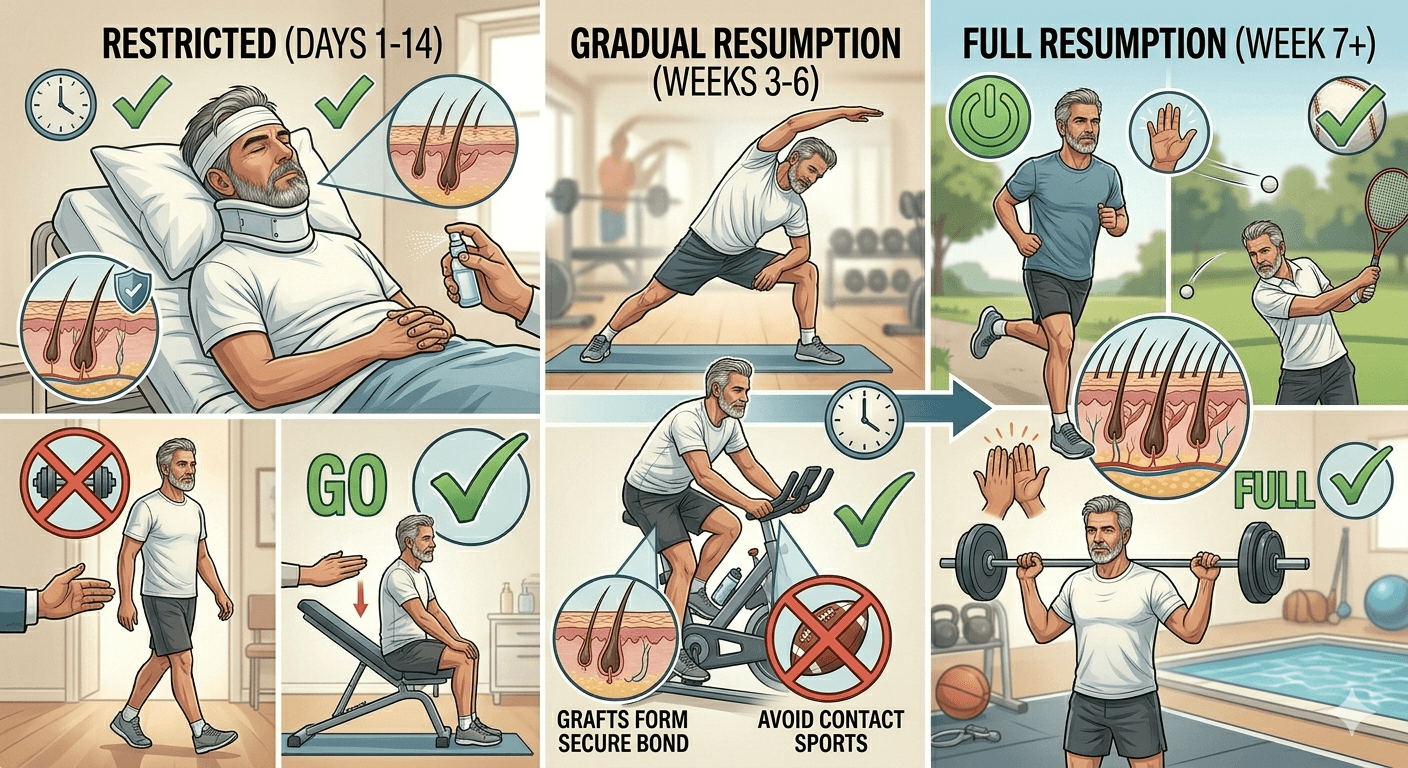
Recovery is a step-by-step process. You cannot go from surgery straight back to heavy powerlifting. Instead, you must ease your body back into motion using a structured, phased approach:
Phase 1: Days 1 to 7 (Absolute Rest)
- Allowed: Very light, short walks at a slow pace on a flat surface (strictly indoors or in the shade).
- Banned: Everything else. No running, lifting, bodyweight exercises, or straining. Avoid anything that raises your heart rate or causes a single drop of sweat to form on your brow.
Phase 2: Days 8 to 14 (Light Cardio)
By the second week, your swelling has subsided and the micro-scabs are starting to solidify.
- Allowed: Moderate-paced walking on a treadmill, light stretching, or stationary cycling at a low resistance setting.
- Banned: Heavy breathing, intense sweating, jogging, and weightlifting. Keep your heart rate under 100 BPM.
Phase 3: Weeks 3 & 4 (Light Resistance & Gym Work)
By Day 14, the grafts are considered safely anchored and embedded beneath the skin layers. However, the skin itself is still highly sensitive and healing.
- Allowed: Light dumbbell work (using 50% of your normal weight), bodyweight squats, yoga, and jogging at a moderate pace.
- Banned: Heavy compound lifts (deadlifts, bench press), high-intensity interval training (HIIT), and heavy sweating.
Phase 4: Day 30 and Beyond (Full Return)
- Allowed: You can officially return to your regular, high-intensity workouts, heavy powerlifting, and aggressive training schedules.
Special Exceptions: Swimming and Contact Sports
While your skin is fully closed by week 4, specific activities carry unique environmental and physical risks that require a much longer waiting period:
- Swimming (Wait 1 Month): Public swimming pools are full of harsh chemicals like chlorine, which can severely irritate dry, healing skin tissue. Natural bodies of water like lakes or oceans carry microscopic bacteria that can cause deep infections in pores that are still maturing.
- Contact Sports (Wait 2 to 3 Months): Sports like football, basketball, boxing, or martial arts involve high risks of direct trauma to the head. An accidental elbow, a stray ball, or friction from a helmet can permanently obliterate whole sections of your transplanted area, even months after the surgery.
Final Thoughts: Focus on the Long-Term Gain
Taking a 2-to-4-week break from intense training might feel like you are losing progress, but it is a remarkably minor sacrifice when compared to securing a lifetime of dense, natural hair. Prioritizing your scalp’s healing phase ensures that your roots anchor perfectly, setting the stage for maximum growth.
At Dr. Terziler Clinic, we understand that our patients are dynamic, active individuals who value their physical fitness. We design customized post-operative timelines tailored specifically to your chosen sport or athletic routine. By combining advanced surgical execution with personalized tracking, we ensure you return to the gym or the field with complete safety—delivering the most dense, flawless, and completely permanent final results possible.
Frequently Asked Questions (FAQ)
What should I do if I accidentally sweat during a light walk in the first week?
If you notice sweat beginning to form on your scalp during the first 7 days, immediately stop what you are doing, move into an air-conditioned or cool space, and let your skin dry naturally. Do not use a rough towel to wipe the sweat away, as rubbing can easily dislodge the fresh grafts. You can gently dab around your forehead with a soft paper towel if needed.
Why are heavy compound lifts like squats and deadlifts banned for a full month?
Heavy compound movements require massive intra-abdominal pressure, causing you to hold your breath and strain violently (the Valsalva maneuver). This action instantly spikes your cranial blood pressure to extreme levels, forcing blood into the scalp capillaries which can effortlessly dislodge fresh grafts or disrupt the healing tissues in your donor and recipient zones.
When can I start wearing a sweatband or a gym hat to work out?
You should strictly avoid tight sweatbands, tight baseball caps, or compression skullcaps for at least 1 month post-op. Fabric rubbing against a sensitive, healing scalp during exercise creates heavy friction and traps heat and bacteria. After day 14, you may wear a very loose-fitting, adjustable cap, but keep it off during active exertion.
Does pre-workout or caffeine impact my hair transplant recovery?
Yes, heavily. You should completely avoid caffeine, pre-workout supplements, and energy drinks for at least 3 to 5 days before and after your surgery. Caffeine is a natural stimulant that dilates blood vessels and increases heart rate and blood pressure, which can lead to increased bleeding during harvesting and implantation, or delayed healing post-op.
I am a professional athlete. Is there any way to shorten this exercise timeline?
Biological healing cannot be rushed by willpower. Regardless of your physical conditioning, human skin tissue takes a baseline number of days to knit back together and anchor relocated follicles. Violating these timelines always risks permanently damaging your final hair density, so following the phased return under your clinic’s guidance is non-negotiable.