

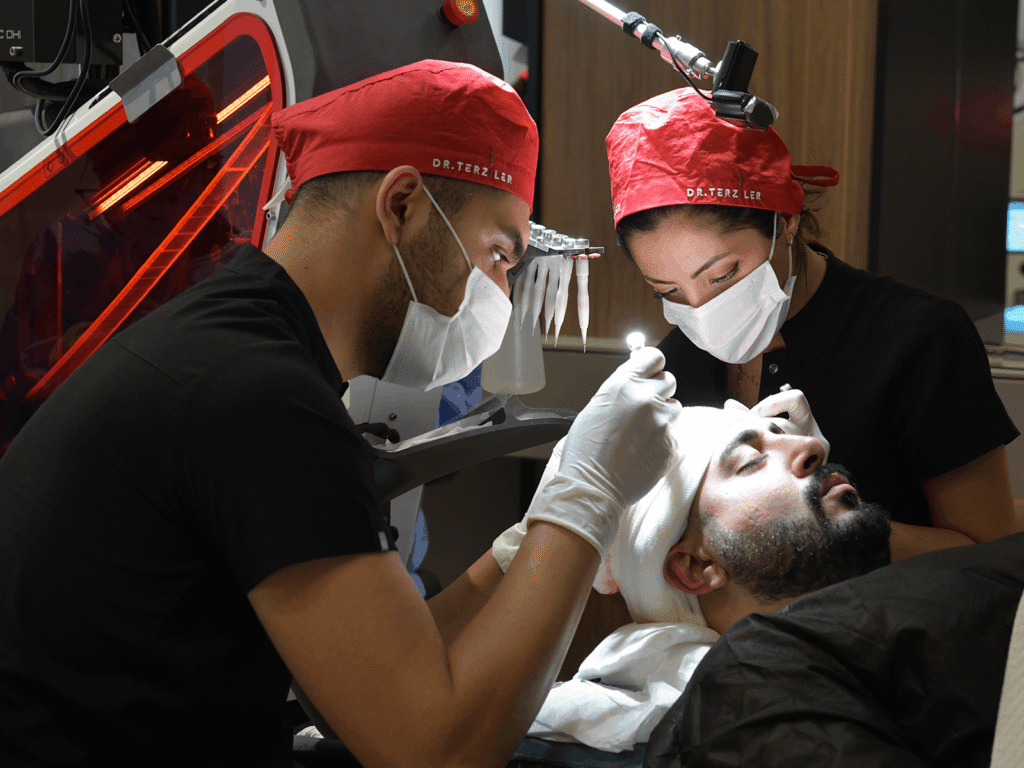
The day you step out of your hair transplant surgery, you are looking at a masterfully drafted outline of your future hairline. However, getting from that initial surgical blueprint to a thick, sweeping head of permanent hair is a biological journey that requires a healthy dose of patience.
A hair transplant is a long-term investment, and your new follicles must cycle through distinct phases of hibernation, shedding, sprouting, and maturing before they deliver their true impact.
If you are currently tracking your recovery or planning your procedure, this definitive month-by-month timeline outlines exactly what is happening beneath your skin and when you will cross the finish line to your final, glorious results.
The Month-by-Month Growth Journey
Hair restoration does not happen overnight. Your follicles act like seeds planted in a garden—they require a baseline number of months to wake up, anchor, and grow.
Month 1: The “Ugly Duckling” Phase
This is the most psychologically challenging month of the entire process.
- What Happens: In the first two weeks, your scalp heals, and the micro-scabs flake off entirely. Then, around week 3 or 4, you will experience shock loss. This is a completely normal process where the newly transplanted hair shafts (and sometimes surrounding native hairs) shed as the follicles enter a temporary hibernation mode.
- The Look: Your scalp will look patchy, pink, and bare. Remember: your hair roots are perfectly safe and alive deep under the skin; they are simply resetting their growth cycles.
Months 2 & 3: The Quiet Hibernation
During this phase, you might feel like absolutely nothing is happening.
- What Happens: Your scalp returns to its normal skin tone as the post-op pinkness fades away. The transplanted follicles remain in their resting (telogen) phase, silently building a permanent connection to your scalp’s blood supply.
- The Look: You will essentially look exactly as you did before your surgery. Do not panic—this is the calm before the storm of regrowth.
Months 4 & 5: The First Sprouts (The Awakening)
This is the milestone where your patience finally pays off.
- What Happens: The dormant follicle bulbs wake up and begin pushing brand-new, permanent hair through the surface of the skin.
- The Look: You will notice fine, soft, baby-like hairs (often called “peach fuzz”) starting to break through. Because these initial hairs emerge at different times, the texture might feel slightly thin, fine, or wiry at first.
Months 6 to 9: The Volumetric Surge
This is the phase of major visual transformation.
- What Happens: By month 6, roughly 50% to 60% of the transplanted grafts have sprouted. Over the next three months, these hair shafts undergo a dramatic maturation process. They grow longer, their internal diameters thicken significantly, and they begin to take on your natural hair texture and curl pattern.
- The Look: You will experience a massive wave of visual density and coverage. Your friends and family will start noticing a profound difference in your appearance.
Months 12 to 15: The Final Victory
- What Happens: By the one-year mark, 90% to 100% of the transplanted hairs have sprouted and fully matured. The final 3 months are all about texture refinement, as the hairs soften, lose any initial wiriness, and blend seamlessly with your native hair.
- The Look: This is your final, permanent result. Your new hairline is dense, fully integrated, and completely undetectable as a transplant.
Summary Timeline of Results
To visualize the entire arc of your transformation at a glance, map your expectations across this standard clinical progression:
| Timeframe | Growth Percentage | Visual Expectation |
| Month 1 | 0% (Shedding) | Patchy, bare, and pink skin. |
| Months 2–3 | 0% (Resting) | Looks identical to your pre-surgery baseline. |
| Months 4–5 | 20% – 30% | Fine, soft, baby-like hairs start to pierce the skin. |
| Months 6–9 | 50% – 70% | Rapid thickening, major coverage, and texture development. |
| Months 12–15 | 95% – 100% | Final Result. Maximum visual density, fullness, and maturity. |
Why Do the Crown and Hairline Grow at Different Speeds?
It is incredibly common for patients to notice that their front hairline looks full and dense by month 7, while their crown (the vertex at the top-back of the head) still looks thin and patchy.
This variation comes down to local blood circulation. The front of the scalp has an exceptionally rich, aggressive network of blood vessels. The skin on the crown, however, is naturally thicker and has a lower baseline blood supply. Because of this, follicles placed in the crown take longer to establish their roots, meaning the crown’s timeline is often delayed by 3 to 6 months compared to the hairline, reaching full maturity at month 15 to 18.
Final Thoughts: The Signature of Patience
A hair transplant is a beautifully rewarding journey, but it is fundamentally tied to human biology. You cannot rush the growth of a follicle any more than you can rush the changing of the seasons. Staying disciplined during the bare months and trusting the process ensures you reach your goal with complete peace of mind.
At Dr. Terziler Clinic, we do not simply wish you well on your surgery day and leave you to wonder about your progress. We stand beside you for the entire 12-to-15-month journey. Through our elite postoperative tracking protocols, scheduled medical follow-ups, and custom hair growth therapies, we actively monitor your follicle development month-by-month—ensuring your transformation is flawless, stress-free, and results in the absolute peak of natural, lifetime density.
Frequently Asked Questions (FAQ)
Is there any way to accelerate the growth timeline after surgery?
While you cannot force human biology to skip steps, you can optimize the environment for growth. Clinically proven options like Platelet-Rich Plasma (PRP) therapy, low-level laser therapy (LLLT), and doctor-approved supplements (like Biotin or custom hair vitamins) boost local blood flow and cellular activity, helping follicles transition out of the resting phase slightly faster.
What if I don’t see any hair growth at all by Month 4?
Do not worry or panic. The 4-month mark is simply the average awakening time. Every individual’s healing speed is different due to genetics, age, and metabolism. It is completely normal for some patients to experience a delayed awakening, where visible sprouting only begins around month 5 or 6.
Why does the newly sprouted hair look so wiry, curly, or frizzy?
When new hair shafts first pierce the scalp, the skin tissue is still slightly tight and scarred from the surgery. This compresses the hair as it emerges, making it look wiry, kinky, or mismatched in texture. As the scalp tissue fully softens and you begin to gently wash and trim the hair, it will normalize and match your native hair texture perfectly by month 12.
Does shock loss happen to everyone during the first month?
Yes, shock loss affects roughly 95% of hair transplant patients. It is a universal, mandatory physiological reaction to the trauma of relocation. Even if you are one of the rare individuals who doesn’t experience complete shedding, the hairs will still temporarily stop growing before resetting into a new cycle.
How do I know if my hair transplant has failed at Month 6?
At Month 6, you are only seeing about half of your true result, so patchy areas or asymmetry are completely normal and expected. True graft failure can only be accurately diagnosed by your surgeon at the 12-to-15-month mark. If you have concerns at month 6, the best step is to compare your scalp against your baseline photos during a scheduled clinic check-up.