




Hair Transplant Gone Wrong: Signs, Causes, and How to Fix It
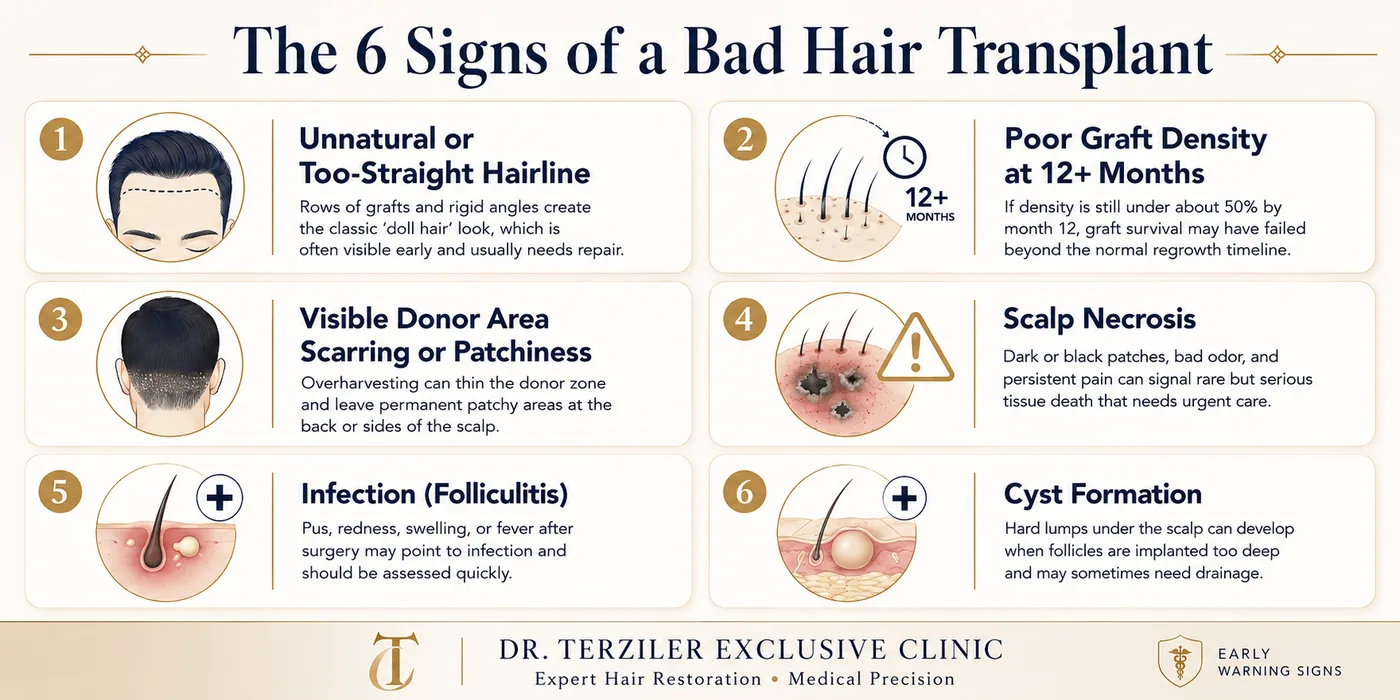
A hair transplant goes wrong when grafts fail to survive, the hairline looks artificial, or the donor area is permanently damaged. The 6 key signs are: unnatural hairline, poor density at month 12, visible donor scarring, scalp necrosis, infection, and cyst formation. At accredited clinics, graft survival exceeds 98%. ISHRS data links 96% of botched cases to unlicensed operators. True permanent failure affects 1.97% of patients (Ghimire et al., JNMA 2018, PMC8997317). Most patients who report failure at month 3 are experiencing normal shock loss, which resolves by 6 months.
Quick Answer
A hair transplant goes wrong when grafts fail to survive, the hairline looks artificial, or the donor area is permanently damaged. The 6 key signs are: unnatural hairline, poor density at month 12, visible donor scarring, scalp necrosis, infection, and cyst formation. At accredited clinics, graft survival exceeds 98%. ISHRS data links 96% of botched cases to unlicensed operators. True permanent failure affects 1.97% of patients (Ghimire et al., JNMA 2018, PMC8997317). Most patients who report failure at month 3 are experiencing normal shock loss, which resolves by 6 months.

MEDICALLY REVIEWED BY
Dr. Servet Terziler
AAACI Accredited Surgeon, ISHRS Member and Inventor of Robotic DHI
Updated June 2026
You did your research, booked the clinic, flew to Istanbul. Twelve months later, nothing has grown. Or something has grown, but it looks nothing like the before and after images you were shown. You are not alone, and you are not without options.
Patient-reported permanent failure rate after hair transplantation. Most patients who report 'failure' at month 3 are experiencing temporary shock loss. True permanent graft death is rare in accredited surgical settings.
of documented botched hair transplant cases in Turkey between 2018-2022 were performed by unlicensed technicians or non-surgical staff, not by certified surgeons.
Maximum time harvested follicular units can survive outside the body before ATP depletion causes irreversible cell death. Clinics using extended implantation sessions risk graft viability loss beyond this window.
What Does a Hair Transplant Gone Wrong Look Like?
A hair transplant result is considered gone wrong when the aesthetic outcome is detectably artificial, the density is insufficient for the patient's target zone, or structural damage has occurred in the donor area, assessed at 14 months post-surgery when final growth is established.
| Sign | Technical Name | How to Detect | Timeline |
|---|---|---|---|
| Pluggy hairline | Large graft cluster implantation | Wet the hair and comb back. Multi-hair grafts at the hairline are visible as clumps. | Visible from month 6 |
| Hairs growing forward | Angle mapping error | Photograph the hairline from the side. Hairs should angle back at 30-45 degrees. Forward-pointing hairs indicate a technique error. | Visible from month 6 |
| Moth-eaten density | Graft survival failure | Use consistent indoor light (bathroom, not sunlight). Patchy areas in zones that should have coverage. | Assess at month 14 |
| Striped donor area | FUT linear scarring | Scar line visible when hair is short. Parallel stripe across the back of scalp. | Permanent unless revised |
| Bald patches in donor zone | Overharvesting / FUE scarring | Visible thinning when hair is very short. Donor density clearly lower than the sides. | Permanent |
| Ingrown hairs or cysts | Embedded grafts | Painful lumps along hairline or crown. Follicle implanted too deep. Requires drainage. | Weeks post-op |
Worried your result is actually failing?
Send your timeline, photos and graft count. A repair assessment can separate normal shock loss from a true failed hair transplant.
Natural hairlines are irregular. Follicles emerge at different angles, depths, and micro-spacings. A bad hair transplant hairline runs in a uniform straight line, often with multi-hair grafts placed in the very front row. Surgeons call this the 'doll hair' effect. It is permanent without repair. The wet hair test reveals it instantly: wet the hair, comb it back, and the artificial clustering of grafts becomes visible as clumps rather than individual strands. A bad hair transplant hairline is one of the most searched images online for this reason.
At Dr. Terziler Exclusive Clinic, hairline design in Picasso Robotic DHI is performed personally by Dr. Servet Terziler, known in the field as the Picasso of Hair. Each hairline is drawn by hand with artistic precision before a single graft is placed. The clinic uses the world's thinnest implant pen, the 0.70mm Choi pen, which allows individual follicle placement at the exact angle, depth, and direction that mimics natural growth. This level of control is what makes the difference between a hairline that is detectable and one that is not.
If density remains under 50% of the transplanted area at month 12, grafts have failed. But the timeline matters. Normal recovery follows a fixed sequence: shedding at weeks 2-6, first regrowth at weeks 8-14, full density between months 12-18. Assessing density at month 3 and declaring failure is a mistake. Assessing at month 12 with no density is a confirmation. Signs of a failed hair transplant at month 12 include sparse islands of growth, uneven distribution across the transplanted zone, and hairline asymmetry.
Overharvesting strips the donor zone below 40 FUs per cm2. Round bald patches appear in the back and sides of the scalp. This is the most common cause of permanent, irreversible damage from unregulated FUE hair transplant. Patients with short hair or shaved styles see it immediately. At Dr. Terziler Exclusive Clinic, pre-op follicle density mapping ensures extraction never exceeds 45% of donor density per zone, protecting the natural appearance of the donor area.
Scalp necrosis is tissue death caused by insufficient blood supply to the recipient area. Symptoms include dark or black patches on the scalp, persistent pain, and in severe cases an unpleasant odour. It is rare, affecting 0.1-0.5% of patients, but it is serious and requires immediate surgical intervention. It occurs almost exclusively at facilities where too many recipient sites are created too densely in a single session, cutting off vascular supply to the subdermal tissue.
Pus, swelling, and fever in the first two weeks indicate post-operative infection. ISHRS data documents a folliculitis rate of 1-3% across hair transplant procedures globally. At facilities with inadequate sterilisation, this rate rises significantly. Staphylococcus aureus is the most common pathogen. Signs are pustules at graft sites by days 7-14. Infection from a bad hair transplant causes both scarring and permanent graft loss if untreated.
Follicles implanted too deep develop epidermal cysts, appearing as hard lumps beneath the scalp skin. They typically emerge along the hairline or crown within weeks of the procedure. Most resolve on their own within 3-6 weeks. Persistent cysts require drainage by a clinician. Cyst formation is a sign of incorrect implantation depth, not a normal post-op outcome.
Need a quick repair opinion?
Send photos in natural light and the month you are currently in. The team can tell you whether it looks like shock loss, low density or donor damage.
What Are the Botched Hair Transplant Scenarios?
The botched hair transplant scenarios below are three cases that are representative examples based on Dr. Terziler Exclusive Clinic's post-consultation patient survey data.
SCENARIO A
The Budget Clinic Patient
James found his clinic on a hair transplant aggregator site. The total package, including flights and hotel, cost EUR 1,100. Two thousand grafts were performed in a converted apartment in Istanbul by a technician he later learned had no medical qualification.
At month 18: thin coverage in the crown, pluggy grafts visible at the hairline in natural light, and the donor area showing visible stripes. Forty percent of his posterior scalp follicles were gone permanently.
The technician extracted grafts past the 50% donor density threshold. Hairline grafts were implanted at a perpendicular angle instead of the natural 30-45 degrees, producing a flat, artificial pattern. Neither the extraction volume nor the angle was reviewed by a qualified surgeon.
THIS IS A HAIR TRANSPLANT GONE WRONG. Recovery requires a repair procedure.
SCENARIO B
The Technically Botched Result
Marc chose an accredited clinic with strong reviews. His mistake was not knowing that the lead surgeon was not present when his hairline was designed.
At month 12: hair grew forward and flat instead of angled back. Crown density measured 35 FU/cm2 while the mid-scalp registered 18 FU/cm2 under trichoscopic analysis. In certain lighting conditions, the result looked moth-eaten.
An angle mapping error produced hairs growing in the wrong direction. Density distribution was uneven because no pre-op zone mapping was performed. Neither issue is visible at the time of surgery. Both appear only after growth.
THIS IS A FAILED HAIR TRANSPLANT CAUSED BY SURGICAL TECHNIQUE, NOT PATIENT BIOLOGY.
SCENARIO C
The Panic Patient (Shock Loss Mistaken for Failure)
Ryan had FUE at a reputable clinic. By week 8, most transplanted hairs had shed. Convinced the procedure had failed, he posted a hair transplant gone wrong video online. It received 4,000 views.
At month 5, the same follicles began producing new growth. At month 14, his density was full and his hairline looked natural. The video is still online.
What happened was telogen effluvium: shock loss. Surgical trauma pushed follicles from anagen (growth phase) into telogen (resting phase). The hair shaft detached. The follicle remained alive. Regrowth started at month 5.
THIS IS NOT A FAILED HAIR TRANSPLANT. It is a misunderstood biological process affecting 40-95% of transplant patients.
Had a result like one of these scenarios?
Book a free repair consultation with trichoscopic donor assessment and hairline review before planning any corrective surgery.
What Are the Top 11 Reasons Hair Transplants Fail (And How They Are Prevented)
Hair transplant failure has 11 top documented clinical causes. The most common are graft dehydration outside the body (contributing to approximately 30% of failures), donor overharvesting (25%), wrong implantation angle (15%), and procedures performed by unlicensed technicians (20%). At Dr. Terziler Exclusive Clinic, each cause has a specific prevention protocol.
| Cause | Clinical Mechanism | % of Failures | Dr. Terziler Prevention |
|---|---|---|---|
| 1. Graft dehydration | Grafts outside the body lose ATP. Viability drops from 100% at extraction to near zero at 6 hours. Assembly-line clinics extract 3,000+ grafts, leave them on a tray for 2-4 hours, then begin implantation. | 30% | Robotic DHI: grafts implanted within minutes of extraction. No waiting tray. HypoThermosol storage if any delay occurs. |
| 2. Donor overharvesting | Extracting more than 50% of follicular units from any donor zone leaves the area below the safe density floor of 40 FU/cm2. Result: permanent visible thinning in the back and sides. | 25% | Pre-op density mapping for every patient. Extraction never exceeds 45% of donor density per zone. Documented and shared with the patient. |
| 3. Wrong implantation angle | Hair emerges from the scalp at 15-45 degree angles depending on zone. Implanting at the wrong angle produces hairs growing upward or outward. Correction requires complete re-extraction and reimplantation. | 15% | Robotic DHI punch maintains consistent depth and angle. Manual angle error is eliminated. Each zone mapped pre-operatively. |
| 4. Unqualified technicians | ISHRS 2022: 96% of botched Turkey cases linked to non-medical staff performing extractions and implantations. Legal in some interpretations of Turkish law, catastrophic in surgical outcomes. | 20% | Dr. Servet Terziler performs all procedures personally. Zero delegation of the surgical process. Patients can verify in consultation. |
| 5. Hairline design error | The 'grass man look': multi-hair grafts placed at the very front row of the hairline. Produces an unnatural, perceptible pattern. Singles must form the first 1-2 rows. | 5% | Digital hairline design by Dr. Terziler personally before any extraction begins. Mapped and agreed with the patient. |
| 6. Lichen Planopilaris (LPP) | The only cause of true immunological rejection of autologous grafts. Active LPP attacks transplanted follicles. Undiagnosed LPP before surgery = predictable failure. | Rare (<1%) but 100% avoidable | Full trichoscopic LPP screening before accepting any patient. LPP must be in clinical remission for 12+ months before approval. |
| 7. Shock loss mismanagement | Telogen effluvium affects 40-95% of transplant patients. Shedding at weeks 2-8, dormancy at months 3-4, regrowth from month 5. Misdiagnosed as failure, patients seek unnecessary second procedures. | 0% (not failure) | Every patient receives a written growth timeline. Month-by-month expectations documented. WhatsApp follow-up at months 1, 3, 6, 12. |
| 8. Mega-session overload | Sessions exceeding 3,000 grafts in one sitting create hypoxic conditions in the recipient scalp. Cumulative vascular trauma reduces graft take rates for all grafts in the session. | 5% | Maximum 2,500-3,000 grafts per session based on donor density. Cases requiring more split into two sessions. |
| 9. Poor candidacy assessment | Active androgenetic alopecia progresses. Transplanting into an unstable hairline produces grafts that outlast the surrounding native hair, creating an island effect in 5-10 years. | <5% | Norwood staging and DHT sensitivity assessment pre-op. Patients with unstable loss are counselled on medication first. Cases that are not yet stable are declined. |
| 10. Recipient site over-density | Implanting more than 45 FU/cm2 in one session cuts blood supply to existing native follicles and new grafts simultaneously. Net hair count decreases. | 5% | Recipient site density capped at 35-45 FU/cm2. More is not better. The biology is the limit, not the sales target. |
| 11. Post-op infection | Unsterilised instruments, unhygienic environment, patient non-compliance. Folliculitis kills grafts and causes scarring. ISHRS documents a 1-3% rate globally. | 5% | JCI-standard hospital. Single-use sterile instruments only. Written aftercare protocol plus video follow-up within 24 hours of procedure. |
Lichen Planopilaris (LPP) is an autoimmune condition that causes the immune system to attack hair follicles, including transplanted ones. It is the ONLY documented mechanism by which the immune system can reject autologous hair grafts (grafts from your own scalp). Without LPP, it is biologically impossible for the immune system to reject transplanted follicles: the body does not produce antibodies against its own tissue. Clinics listing 'graft rejection' as a general surgical risk, without specifying LPP, are medically inaccurate. Proper pre-surgical trichoscopy identifies and rules out LPP. Lajevardi et al., JEADV 2021.
Surgeons rarely discuss maximum slit density because it limits the number of grafts per session. But the evidence is clear: implanting more than 45 FU/cm2 in one session induces vascular compromise in the subdermal plexus. The result: newly placed grafts AND existing native follicles lose blood supply and die. Net hair count decreases. This is why 'more grafts = better results' is false marketing, not surgery. Source: Rose & Nusbaum, Hair Transplant Forum International, 2014.
What Does Overharvesting Mean and Why Is It Bad?
Overharvesting means extracting too many follicles from the donor area, exceeding the safe threshold of approximately 45-50% of available follicles in any zone. This leaves the donor area, typically the back and sides of the scalp, with visible round bald patches. It is permanent and the most common cause of irreversible damage from FUE procedures performed without pre-op density mapping.
Was your donor area overharvested?
Ask for a trichoscopic donor assessment before another clinic extracts more grafts from the same area.
What Is the Biology of Hair Transplant Graft Failure?
A transplanted hair follicle begins dying the moment it leaves the scalp. Adenosine triphosphate (ATP), the energy molecule that keeps follicular cells alive, depletes within 2 to 6 hours of removal from the blood supply. Once ATP is gone, cell membranes collapse and the follicle cannot be revived.
Every hour a graft spends in a storage tray, its viability decreases. Storage medium significantly affects survival time according to Research by Cooler et al. (Dermatologic Surgery, 2016). Saline solution, the most common medium at commercial clinics, provides the shortest viable window. HypoThermosol, a commercially available hypothermic medium, extends viability by reducing cellular metabolism. Clinics using refrigerated, ATP-supplemented storage media document 15-20% higher graft survival rates. Assembly-line facilities extract 3,000 grafts in the morning, leave them on a tray for 2-4 hours, then begin implantation. This timeline kills a proportion of grafts before they are ever placed. At Dr. Terziler Exclusive Clinic, Robotic DHI technology implants grafts within minutes of extraction. No waiting tray is used.
Hair transplants use the patient's own follicles. This is called an autologous procedure. The immune system does not produce antibodies against the patient's own tissue. Graft rejection, in the immunological sense applied to organ transplants, is biologically impossible in hair restoration. The single documented exception is Lichen Planopilaris (LPP), an autoimmune disorder that attacks hair follicles including transplanted ones. Clinics that list 'graft rejection' as a general surgical risk category, without specifying LPP, are medically inaccurate. This principle was established by Dr. Norman Orentreich in 1959 and is the foundational science of hair transplantation.
In 1959, Dr. Norman Orentreich discovered that follicles transplanted from the DHT-resistant donor zone retain their original genetic programming regardless of where they are placed on the scalp. (Source: Orentreich 1959, PMC: 13596976.) Donor follicles from the back and sides of the head are genetically resistant to dihydrotestosterone (DHT), the hormone responsible for androgenetic hair loss. When these follicles are placed in the frontal scalp or crown, they keep this resistance permanently. They grow. They do not fall out when surrounding native hair thins. This is why hair transplant results are permanent, not because of the new location, but because of the follicle's own genetics.
Donor dominance also explains a common patient concern: 'Can the transplanted hair fall out like my native hair?' No, provided the donor zone is DHT-resistant, which is confirmed by a qualified surgeon before the procedure.
Shock loss is telogen effluvium caused by surgical trauma. The trauma of extraction and implantation pushes follicles from anagen (active growth phase) into telogen (resting phase). The hair shaft detaches and falls out. The follicle remains alive. Regrowth begins when the follicle re-enters anagen, typically between months 4-7. Shock loss affects between 40% and 95% of hair transplant patients to some degree. It does not require intervention. Failure is only diagnosed when no regrowth has occurred by month 12.
The distinction matters because patients experiencing shock loss at month 2 frequently search 'hair transplant gone wrong' and 'failed hair transplant.' These patients have not failed. They are in a normal biological phase. Correct management is patience, written reassurance, and scheduled follow-up, not a second procedure.
Confused between shock loss and failure?
Send your recovery month and photos. The clinical team can explain whether your timeline is still normal or needs assessment.
Turkey Hair Transplant Gone Wrong: What Is Really Happening
A hair transplant gone wrong in Turkey is not caused by Turkey. It is caused by unlicensed facilities operating outside medical regulation. ISHRS data shows 96% of documented botched cases in Turkey originated at facilities with no qualified surgeon present.
Turkey is not the problem. The black market is.
Turkey's Ministry of Health classifies hair transplantation as a medical procedure requiring surgeon supervision. Enforcement is inconsistent. The country's popularity as a destination for affordable procedures has attracted a large number of unlicensed operators: procedures performed in apartments, converted hotel rooms, and shared facilities with no sterile environment, no qualified surgeon, and no regulatory oversight.
ISHRS World Congress 2022 presented outcome data from reported hair transplant complications in Turkey. Among documented failures, 96% originated at facilities with no qualified surgeon present. Technician-performed procedures in unregulated settings accounted for the overwhelming majority of botched results.
The British Association of Aesthetic Plastic Surgeons (BAAPS) published 2021 audit data showing a 44% rise in UK patients requiring corrective surgery after procedures in Turkey. Both datasets describe the same specific problem: the unaccredited, black-market segment of the market. They do not describe accredited surgical clinics. The award-winning hair transplant facilities in Turkey, Istanbul with AAACI-accredition, which meet the same standards applied in Western Europe and North America, produce outcomes comparable to those achieved in those markets.
NOTE ON TURKEY SAFETY: Choose a clinic by accreditation, not by price or country. AAACI accreditation (verifiable at the AAACI registry) is the highest independent cosmetic surgery standard in Turkey. ISHRS membership requires peer review and ethical compliance. These credentials are specific, verifiable, and meaningful. Generic claims such as 'certified' or 'approved' without named accrediting bodies are not.
Choosing a clinic in Turkey after a bad result?
Ask which accreditation, surgeon involvement and repair protocol you should verify before booking.
Can I Sue for a Bad Hair Transplant?
In most countries, yes. A botched medical procedure may constitute medical negligence. Pursuing legal action against a clinic in Turkey from abroad is legally complex and typically time-consuming. Your first step is to obtain a written independent assessment from a qualified surgeon documenting the failure with trichoscopic evidence. Photograph your scalp from day one post-procedure, tracking progress or lack of it at each milestone. Consult a medical negligence solicitor in your home country with this documentation. Turkish consumer law (through TURMOB) provides dispute resolution mechanisms for medical tourists, but outcomes vary.
What Are the Real Patient Evidences? Failed Hair Transplant Repairs
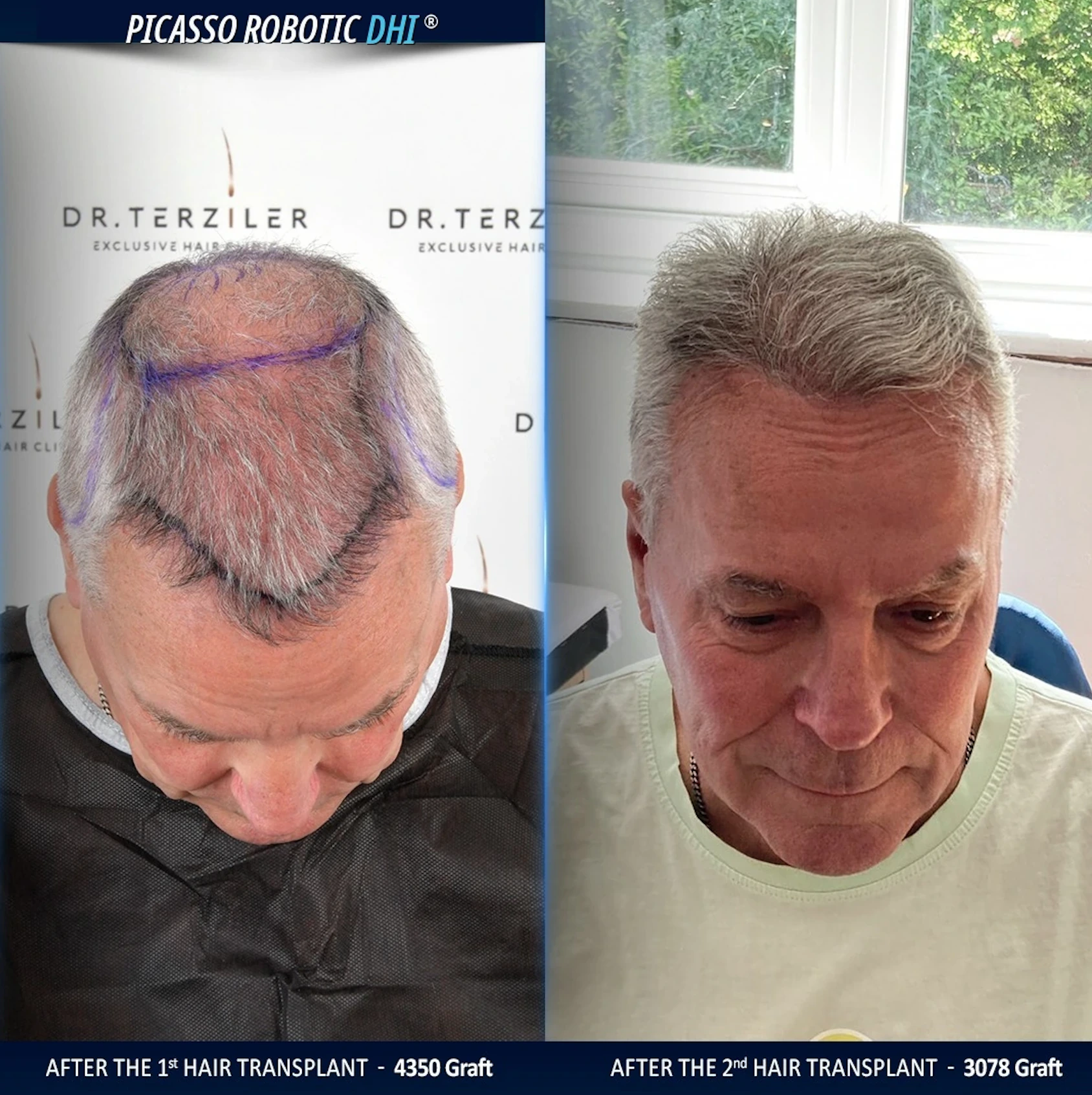
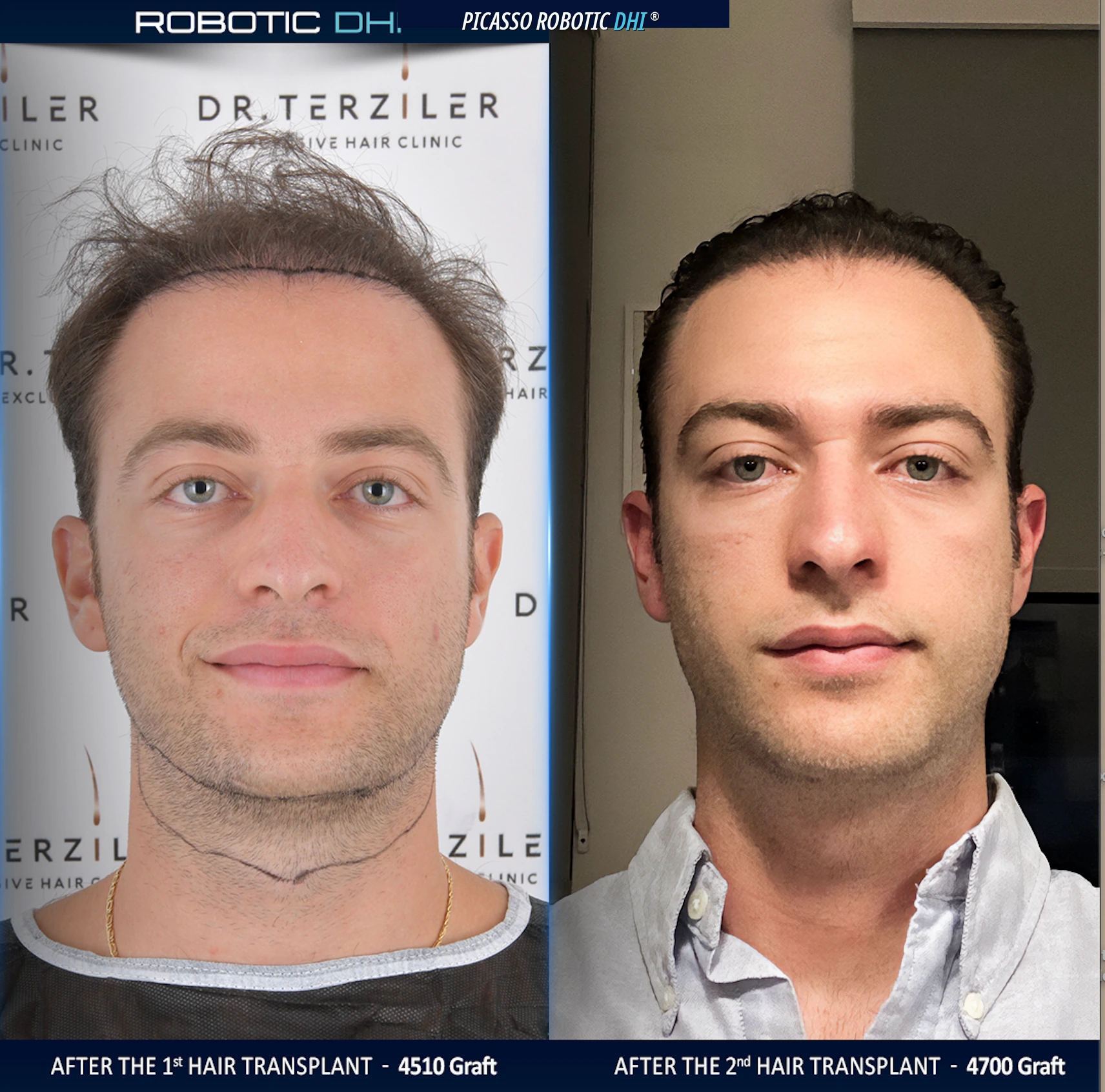
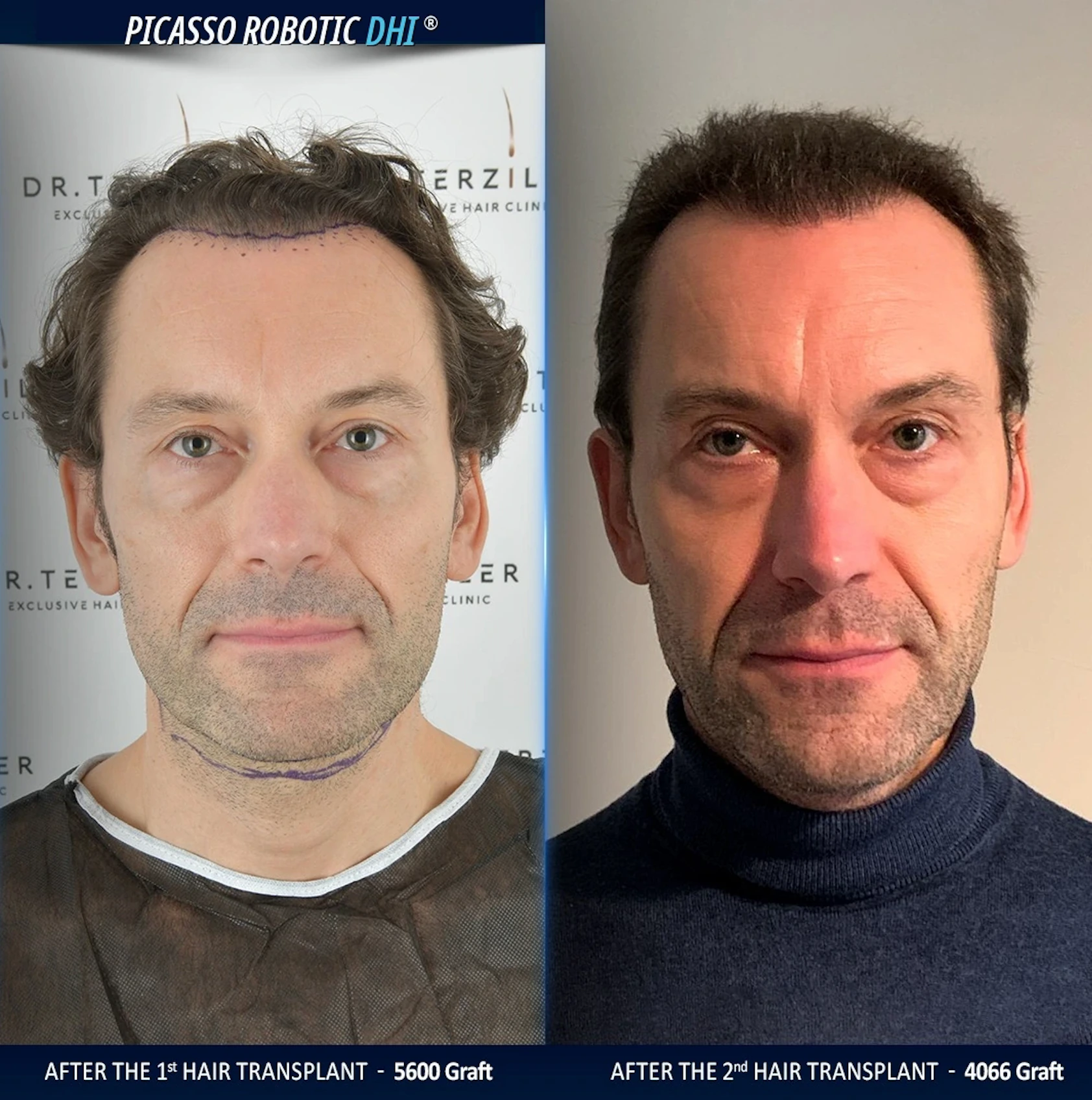
Dr. Terziler Exclusive Clinic accepts repair consultations from patients whose previous hair transplants, at any clinic anywhere in the world, produced poor outcomes. All revision assessments include trichoscopic analysis of existing donor density and digital hairline mapping before any procedure is recommended.
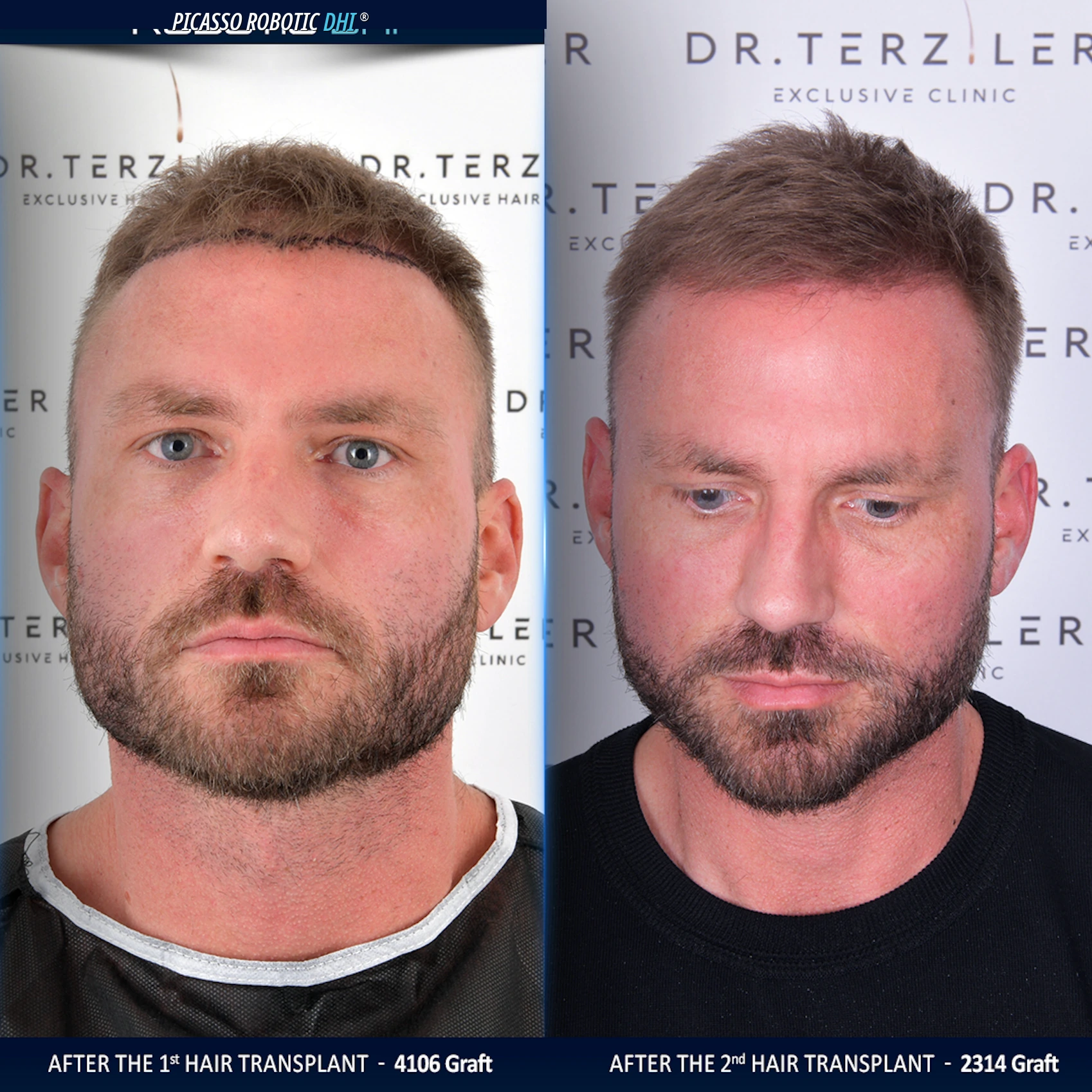
Da. Fritz DRESBACH, a 34-year-old patient from Germany underwent FUE hair transplantation in Istanbul. At month 12, insufficient follicular emergence was documented in the transplanted zone. Trichoscopic analysis confirmed graft death. The patient presented to Dr. Terziler Exclusive Clinic for revision assessment. Donor density in the posterior scalp was assessed at 58 FU/cm2, indicating sufficient reserve for a repair procedure. Robotic DHI revision was performed. Results pending final 14-month assessment.
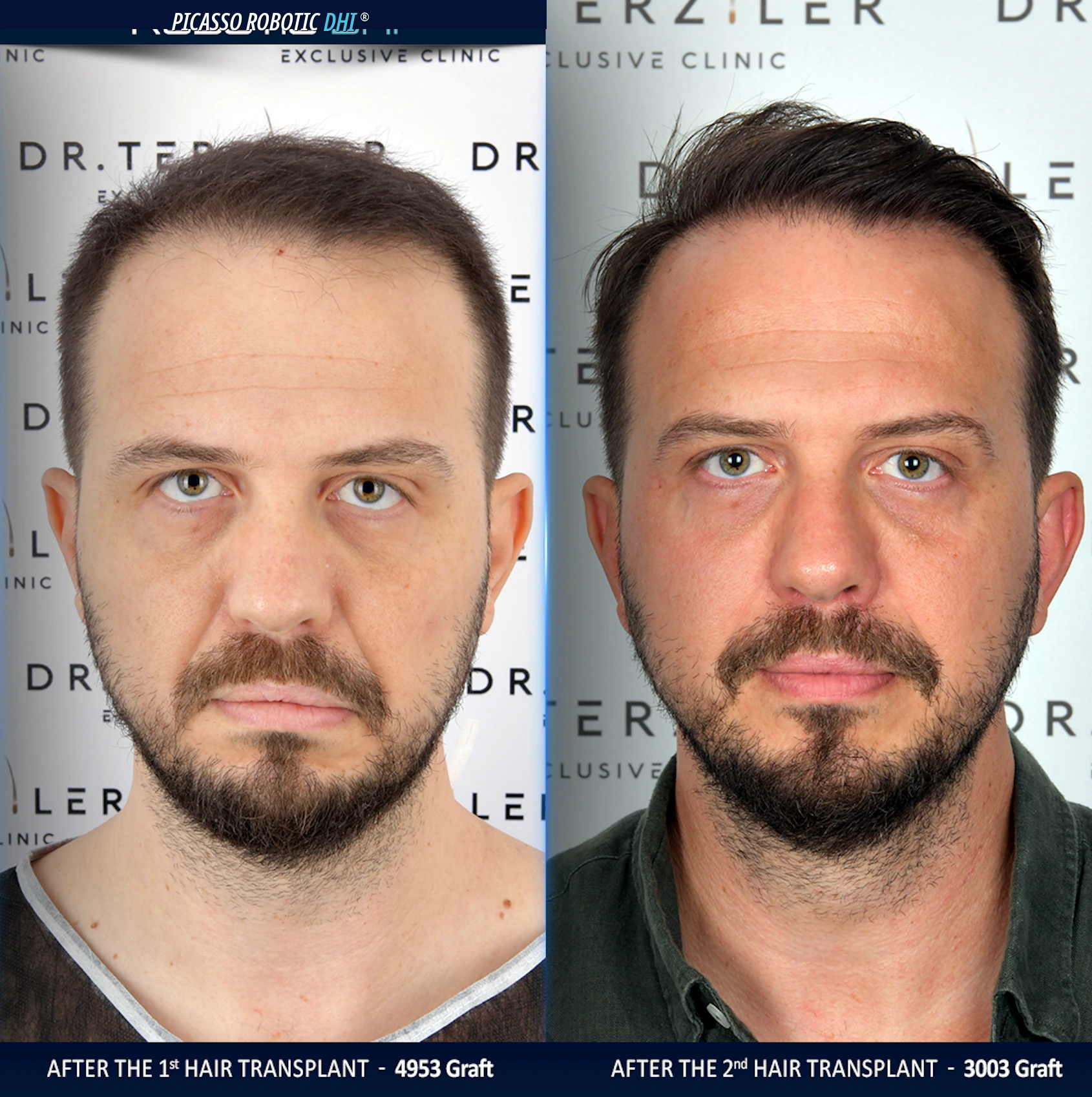
Oguz C., our patient from Turkey had a hairline transplant 2 years earlier that produced large, visible graft clusters along the frontal hairline. Multi-hair grafts in the front row created a markedly artificial appearance. Dr. Terziler performed extraction of the multi-graft clusters and reimplantation as single-hair units in the first two rows, with double and triple units placed progressively further back. Final result assessed at month 14.
Dr. Terziler Exclusive Clinic performs hair transplant repair procedures for patients whose previous surgeries produced poor results. Repair cases at the clinic include correction of wrong implantation angles, redistribution of unevenly placed grafts, and restoration of overharvested donor areas. All revision assessments include trichoscopic analysis of existing donor density and digital hairline mapping before any procedure is planned. View verified before and after results from here.
Want a case-based repair review?
Send your previous clinic report, graft count and 12-month photos. The repair team can assess whether a revision is possible.
What's Normal vs What's Not for the Failure Timeline
This section answers the queries 'hair transplant 6 months no density', '7 months after hair transplant no density', and '7 months hair transplant still thin.'
| Timepoint | NORMAL | WARNING SIGN |
|---|---|---|
| Days 1-14 | Redness, scabbing, mild swelling, implanted hairs visible as stubble above the scalp surface. | Fever above 38.5C, pus, excessive pain, dark skin patches. See a clinician immediately. |
| Month 1 | Shock loss begins. Implanted hairs shed completely. This is expected and normal. | No shedding at all. Grafts may be permanently embedded but non-growing (assess at month 12). |
| Months 2-3 | Scalp looks similar to pre-op or worse. This is the aesthetic low point. It is normal. | Significant swelling or persistent scabbing at month 2. New bald patches in the donor zone. |
| Months 4-6 | Fine, thin hairs begin emerging. Density is approximately 20-30% of final result. | No hair emergence whatsoever in the transplanted zone at month 5. Completely bald where grafts were placed. |
| Months 7-9 | Density increases visibly. Approximately 40-60% of final result. Hair texture still fine. | Density stuck under 20%. Patchy islands without coverage. Significant asymmetry. |
| Month 12 | Approximately 80% of final density. Hairline shape fully visible. | Under 50% density. Multiple patchy areas. Hairline asymmetry. Request a surgeon assessment. |
| Month 18 | Final result. 100% density assessment is now valid and reliable. | Same issues as Month 12 still present. Confirmed failed hair transplant. Repair consultation needed. |
Month 3 is the lowest aesthetic point in hair transplant recovery. Shock loss has completed, new hair has not yet emerged, and the scalp may look worse than it did before the procedure. This is entirely normal. Most patients see the first signs of new growth at months 4-5. Full density assessment is only valid at months 12-18. A bad result at month 3 means nothing. A bad result at month 14 confirms a failed procedure and requires a surgeon assessment.
No, shock loss (telogen effluvium) is temporary shedding of both transplanted and surrounding native hair, beginning 2-6 weeks post-op and resolving by month 4. It is a normal physiological response to surgical stress. The follicle is alive. The hair shaft has detached. Shock loss is not failure. Failure is diagnosed only after month 12 if growth has not returned.
If a transplant looked good at month 12 but deteriorated after year 1, the cause is almost always progressive native hair loss around permanent grafts, not graft failure itself. Transplanted hair survives because of donor dominance (genetic DHT resistance). Surrounding native hair does not share this protection if the patient has active androgenetic alopecia. Transplanted hair stays. Native hair thins. This creates an island effect, a dense transplanted zone inside a progressively thinning frame of native hair. A complementary second procedure, or medical management with finasteride, addresses this.
At month 3, 6 or 12 and unsure what is normal?
Send your current month and photos in indoor light. The team can tell you whether to wait, monitor or book a repair assessment.
Can a Hair Transplant Gone Wrong Be Fixed?
Most hair transplants gone wrong can be fully or partially corrected through a revision procedure, provided sufficient donor hair remains. The correction method depends on the original failure mode: angle errors require extraction and re-implantation, density gaps require additional grafts, and scarring may require FUE scar revision or Scalp Micropigmentation (SMP).
Dr. Terziler Exclusive Clinic performs hairline repair for both men and women. Female hair transplant patients presenting with unnatural frontal density, post-procedure thinning, or misplaced grafts along the temporal line require the same precision-first approach as any revision case, with hairline redesign carried out personally by Dr. Servet Terziler before any corrective implantation begins.
NOTE ON DONOR AVAILABILITY: Repair is only possible if sufficient donor follicles remain. Severely overharvested patients, common after black-market FUE, may have limited or no surgical repair options. Pre-repair trichoscopic donor assessment is the first and essential step before any revision is planned.
| Problem | Repair Method | Success Rate | Dr. Terziler Approach |
|---|---|---|---|
| Wrong angle hairline | Robotic DHI revision: extract and re-implant at correct angle | 85-92% correction rate | Robotic DHI precision-maps each follicle's natural emergence angle before placement./ |
| Pluggy grafts | FUE extraction of multi-hair grafts + reimplant as singles at hairline | High if donor available | Hairline redesign using single-hair DHI hair transplant grafts in first 2 rows. |
| Low density / poor graft take | Additional FUE or DHI session | Depends on donor supply | Donor assessment via trichoscopy + HypoThermosol storage protocol. |
| Donor area damage | SMP or FUE scar camouflage | Variable | SMP available at clinic. FUE revision for zones with intact vascular supply. |
| FUT hair transplant linear scar | FUE scar revision + SMP | Good for camouflage | FUE over scar tissue where blood supply is confirmed. |
| LPP-related failure | Cannot be reversed. Medical management of LPP first. | LPP must be in remission 12+ months before any revision | Full trichoscopic LPP screening before accepting revision patients. |
Need to know if your case can be fixed?
A revision plan depends on donor availability, scarring and the original failure mode. Request a donor assessment first.
How Much Does a Hair Transplant Correction Cost in Turkey vs UK vs USA?
Hair transplant correction costs range from €1,500–€8,000 in Turkey, £13,000–£25,000 in the UK, and $15,000–$30,000 in the USA for the same procedure volume. See the full hair transplant correction cost in Turkey breakdown here.
| Procedure | Turkey (AAACI Accredited) | United Kingdom | United States |
|---|---|---|---|
| DHI Revision (2,000 grafts) | EUR 2,500-6,000 | GBP 8,000-15,000 | USD 12,000-20,000 |
| Trichoscopy + Donor Assessment | Included at no charge | GBP 200-500 | USD 300-600 |
| AAACI / JCI Accreditation | Available (Dr. Terziler) | CQC regulated | JCAHO regulated |
| Surgeon-performed (not technician) | Yes (Dr. Servet Terziler) | Varies by clinic | Varies by clinic |
Prices vary by graft count and complexity. Consult for an exact assessment.
After a failed first transplant, most surgeons recommend waiting a minimum of 12-18 months before a repair procedure. This allows the scalp to fully heal and any residual shock loss to resolve before a donor assessment is conducted. If donor reserves are adequate and the scalp is free of infection or active scarring, a repair procedure can produce excellent results. The waiting period is not about the grafts; it is about the scalp tissue recovering full vascular capacity.
The best revision clinics hold AAACI or ISHRS-recognised accreditation, employ surgeons who perform procedures personally rather than delegating to technicians, and conduct pre-revision trichoscopic donor analysis before accepting any case. Accepting a case without a donor assessment is itself a clinical red flag. The best hair transplant correction clinics in Turkey like Dr. Terziler Exclusive Clinic accepts free repair consultations from patients treated at other clinics worldwide. No referral is required
Comparing correction costs across countries?
Ask for a revision estimate based on graft count, donor reserve and whether the first procedure damaged the donor area.
Why Choose Dr. Terziler Exclusive Clinic for Hair Transplant Repair
Dr. Terziler Exclusive Clinic stands out in hair transplant repair for four documented, verifiable reasons. See the all differentiations of Dr. Terziler below.
| Differentiator | What It Means | How to Verify |
|---|---|---|
| Picasso Robotic DHI | Dr. Servet Terziler invented the robotic arm used in Picasso Robotic DHI. Documented graft survival: 98.1%. The robotic system eliminates angle error, controls extraction depth, and implants within minutes of extraction. | Patent documentation. Published in hair restoration literature. Verifiable in consultation. |
| AAACI Accreditation | American Academy of Aesthetic and Cosmetic International accreditation. The highest independent cosmetic surgery standard in Turkey. Very few Istanbul clinics hold this accreditation. | AAACI accreditation registry. Verifiable online. |
| ISHRS Workshops | International Society of Hair Restoration Surgery. Membership requires peer review and compliance with surgical ethics standards. | ISHRS member directory. Verifiable online. |
| Surgeon-performed only | Dr. Servet Terziler performs all procedures personally. No delegation of the surgical process to technicians. This is the standard; it is not the norm at most high-volume commercial clinics. | Confirmed by patients in consultation before booking. |
| Repair specialisation | Dr. Terziler accepts repair cases from patients who had failed procedures at other clinics, including clinics in Turkey, the UK, and the USA. | Free repair consultation available. No referral required. |
| Written growth timeline | Every patient receives a written month-by-month growth timeline at discharge. No other Istanbul clinic offers this in writing. | Provided to all patients post-procedure. Ask to see a sample in consultation. |
Ready for a surgeon-led repair assessment?
Submit your photos and previous operation details. Dr. Terziler Exclusive Clinic accepts repair consultations from patients treated at other clinics worldwide.
Frequently Asked Questions
Signs appear at specific timepoints. At month 3, shock loss is normal and does not indicate failure. At month 12, failure is confirmed if density remains under 50% of the implanted area, the hairline looks patchy or unnatural, or donor area damage is visible. The only definitive assessment is a trichoscopic examination by a qualified surgeon at month 12 or later. Self-assessment using the wet hair test and consistent indoor lighting provides an early indication.
A failed hair transplant shows sparse or patchy growth with visible gaps between grafts. The hairline may appear too straight, too low, or asymmetrical. In FUE failures, the donor area often shows circular bald patches from overharvesting. In technically botched results, hair may grow in the wrong direction, forward instead of back. In severe cases, dark necrotic patches or permanent scarring appear. Bad hair transplant results pictures and failed hair transplant photos are available in the Dr. Terziler before and after gallery.
Yes, in most cases. A repair transplant using DHI or FUE can add density to patchy areas and redesign an unnatural hairline. Donor area damage is harder to correct and depends on remaining follicle reserves. A qualified surgeon must assess remaining donor reserves before any repair is planned. Dr. Terziler Exclusive Clinic accepts repair consultations from patients treated at other clinics worldwide. Assessment is free.
The most common causes are graft dehydration from extended time outside the body before implantation (contributing to approximately 30% of failures), wrong implantation angle (15%), donor overharvesting (25%), and procedures performed by unlicensed technicians without surgeon supervision (20%). ISHRS data links 96% of botched cases in Turkey to unlicensed, black-market facilities. Hair transplant failure from biology, meaning graft rejection, is almost impossible in the absence of Lichen Planopilaris.
Turkey has produced world-class hair transplant surgeons and is a legitimate destination for the procedure. However, ISHRS data shows 96% of reported failures in Turkey originate from unlicensed facilities. Safety depends on clinic accreditation, not on the country. AAACI-accredited clinics in Istanbul meet international surgical standards. The question to ask every clinic is not 'Are you based in Turkey?' but 'What specific accreditation does your lead surgeon hold, and who performs the procedure?'
At accredited clinics with experienced surgeons, permanent failure rates are under 5%. At unlicensed facilities, failure can affect 20-30% of patients. Using Robotic DHI, Dr. Terziler Exclusive Clinic documents 98.1% graft survival, significantly above the 85-95% industry benchmark cited in published studies. The hair transplant failure rate at any specific clinic depends on surgeon qualification, technique used, and post-operative protocol, not on the procedure type alone.
Shock loss, also called telogen effluvium, is temporary shedding of both transplanted and surrounding native hair. It typically begins 2-6 weeks post-op and resolves by month 4. It is a normal physiological response to surgical stress. The follicle is alive. The hair shaft has detached. Shock loss is NOT failure. Signs of failed hair transplant, by contrast, include zero regrowth at month 12 and permanent absence of hair in the transplanted zone.
If a transplant looked good at month 12 but deteriorated later, the cause is almost always progressive native hair loss around permanent grafts, not graft failure itself. Transplanted hair survives because donor dominance protects it from DHT. Surrounding native hair does not share this protection. As native hair thins, the transplanted zone becomes an island of density inside a progressively bald frame. A complementary second session or finasteride use may prevent or correct this.
Overharvesting means extracting more than 50% of available follicles from any donor zone, dropping density below the safe floor of 40 FU/cm2. The donor area, typically the back and sides of the scalp, shows visible round bald patches. This damage is permanent. It is the most common cause of irreversible harm from FUE procedures performed without pre-operative density mapping and extraction rate planning. Overharvesting also reduces the number of follicles available for future sessions or repairs.
After a failed first transplant, most surgeons recommend waiting a minimum of 12-18 months before a repair procedure. This allows the scalp to fully heal and stabilise, and any shock loss to resolve before a donor assessment is conducted. If donor reserves are adequate and the scalp is free of infection or active scarring, a repair procedure can produce excellent results. Dr. Terziler performs a free trichoscopic donor assessment before confirming any repair procedure.
In most countries, yes. A botched medical procedure may constitute medical negligence. Pursuing legal action against a Turkish clinic from abroad is complex and time-consuming. Obtain a written independent assessment from a qualified surgeon documenting the failure with trichoscopic evidence. Document your progress photographically from day one. Consult a medical negligence solicitor in your home country with this documentation. Turkish consumer law provides dispute resolution through TURMOB, though outcomes vary significantly by case.
At accredited surgical facilities, hair transplantation carries minimal systemic risk. It is performed under local anaesthesia. No general anaesthesia is required. Serious complications, including scalp necrosis and systemic infection, are extremely rare at regulated clinics and occur in under 0.5% of cases. Deaths from hair transplants globally are documented almost exclusively at unregistered facilities that use general sedation without qualified anaesthesia support.
Month 3 is the lowest aesthetic point in recovery. Shock loss has completed, new growth has not yet emerged, and the scalp often looks worse than before the procedure. This is completely normal and expected. Most patients see the first signs of new hair at months 4-5. Do not assess your result before month 12. Bad hair transplant results at month 3 routinely become good results by month 14.
Yes, within the first 10-14 days post-procedure. Excessive scalp sweating can dislodge newly-implanted grafts, which are not yet anchored, and increases the risk of infection at graft sites. After the first two weeks, sweating does not harm established grafts. Patients should avoid strenuous exercise, saunas, steam rooms, and direct sun exposure for 14 days post-procedure. After day 14, normal activity can resume gradually.
A botched hair transplant is a procedure that produced results significantly below the expected clinical standard. This means: an unnatural hairline, poor graft survival (under 80% of implanted grafts), visible donor area damage, or medical complications including necrosis or persistent infection. The term 'botched' indicates surgical error or negligence rather than normal post-operative variation. Shock loss, temporary density concerns in early months, and minor redness are not signs of a botched result.
Still unsure if your transplant failed?
Use the form to send your month-by-month photos, symptoms and donor-area concerns for a structured repair consultation.
Sources
Located in Istanbul, Turkey, Dr. Terziler Exclusive Clinic is an AAACI-accredited hair restoration, medical aesthetics, longevity, regenerative medicine and sexual health clinic. The clinic offers physician-led FUE, DHI, Robotic DHI and hair transplant repair pathways for international patients.